What It Really Means When Lubber Grasshoppers Take Over Your Florida Garden
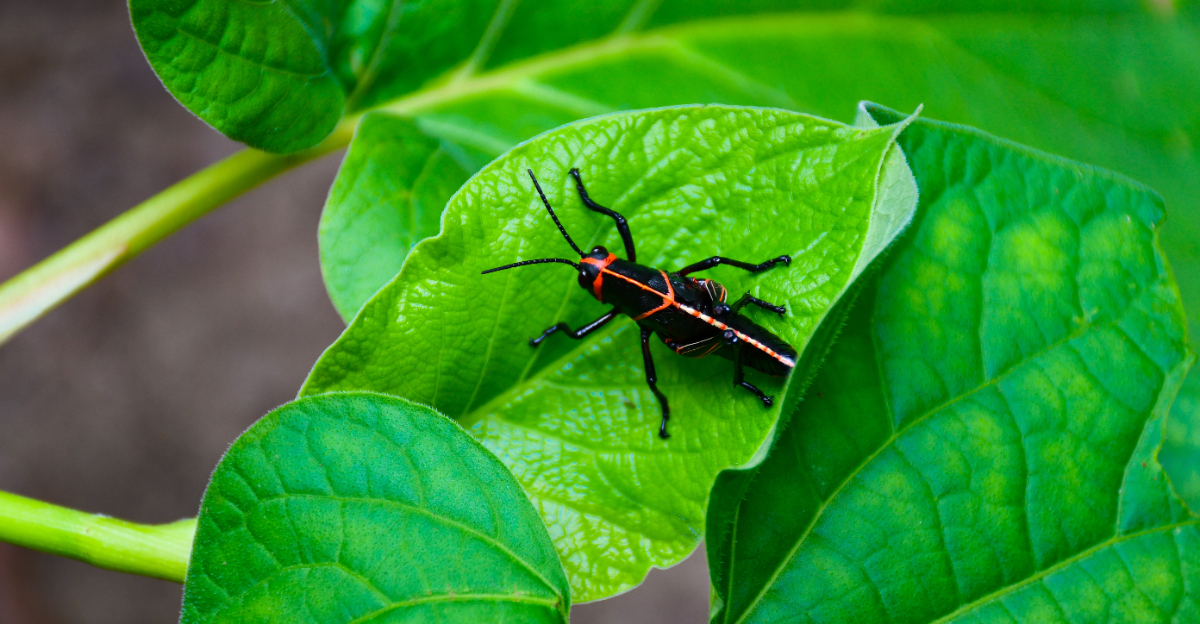
Your garden did not lose those leaves by simple accident overnight. An oversized insect crossed your lawn without a shred of hesitation this morning.
Its sheer size alone changes the way you look at your yard. Bright yellow and black markings make this visitor on your lawn impossible to miss.
Florida yards like yours face this insect more than most other states. Warm winters let its numbers climb in your area instead of thinning out.
Populations building quietly across Florida often explode before you notice the shift. Weight and size make this pest impossible for you to underestimate for long.
Slow movement fools you into thinking the real damage can wait. Bold color works as your built-in warning sign.
Damage spreads fast after this insect settles into your favorite beds. Each yard tells a slightly different story after that happens to yours. What happens next decides how much of this damage you can still stop.
A Warning Sign Hiding In Plain Sight Across Your Landscape
Something is off in your garden, and the clues are everywhere. Chewed leaves, missing foliage, and big colorful insects lounging without a care are all red flags.
When lubber grasshoppers take over your Florida garden, it signals a seasonal surge that catches many homeowners off guard. These insects are not subtle, and spotting them early changes everything.
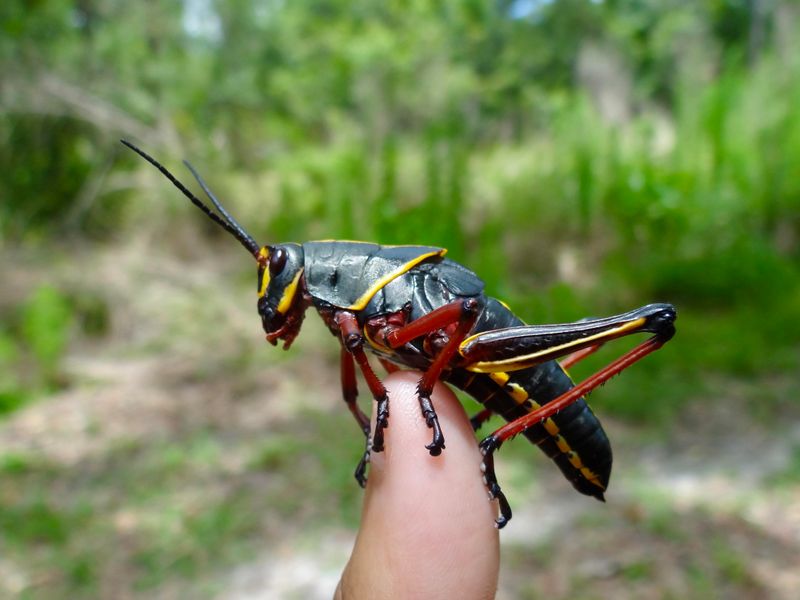
The bright orange and black coloring is actually a warning to predators, not a decoration. Nature designed their look to say “back off,” which is why birds and lizards tend to leave them alone.
Most gardeners notice the damage before they notice the insects themselves. Ragged edges on leaves, stripped stems, and hollowed-out plants are the earliest clues that something has moved in.
Lubber grasshoppers thrive in warm, humid conditions, making Florida yards a perfect home for them. The long growing season and abundant plant life give them everything they need to multiply fast.
Damp soil, drainage ditches, and shaded garden edges tend to show the first signs. Checking these spots on a regular basis gives you an early advantage.
A few chewed leaves rarely stay isolated for long. After feeding starts, nearby plants usually show similar damage within just a few days.
Spotting the warning signs early gives you a fighting chance. When you know what to look for, you can act before the population spreads out of control across your entire landscape.
The Real Reason They Show Up In Such Large Numbers
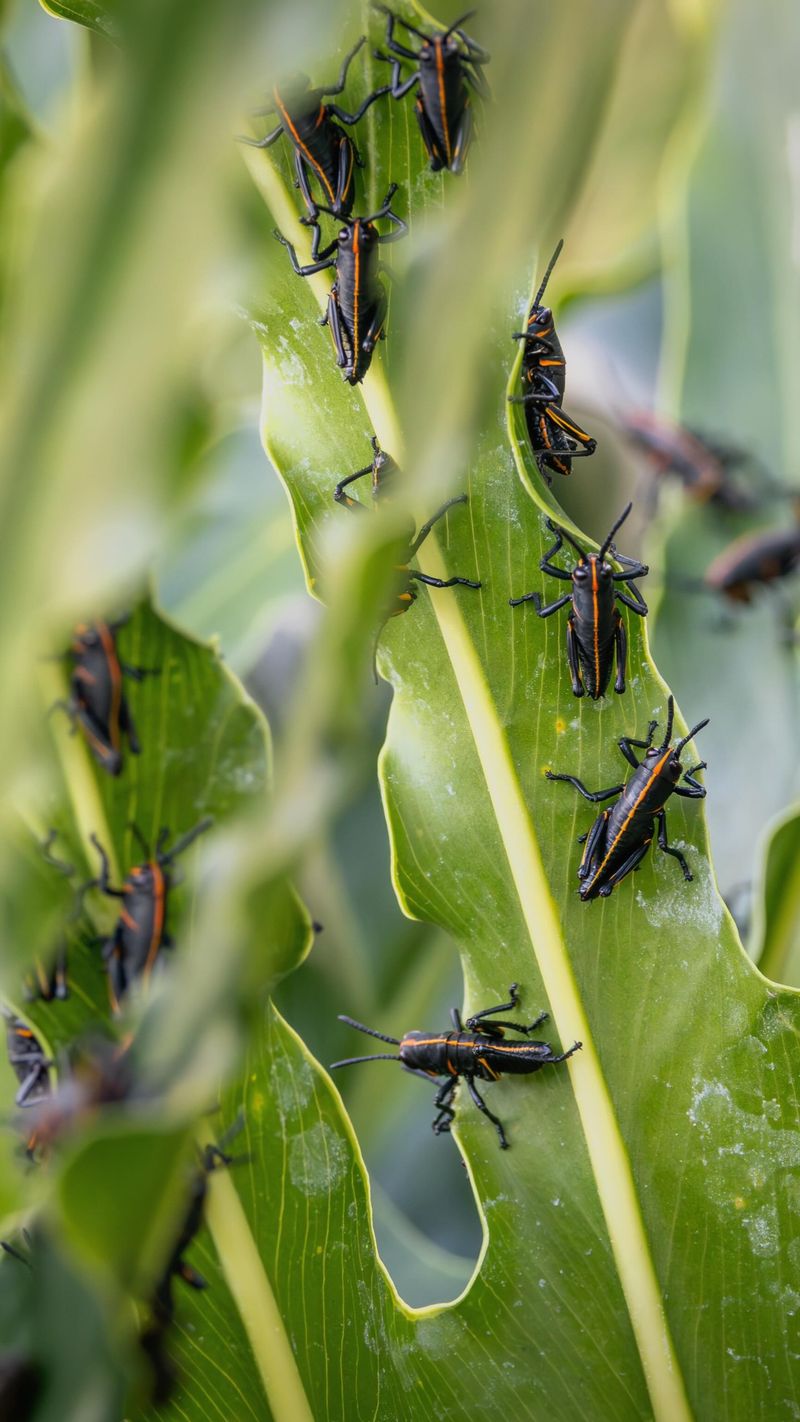
Seeing one lubber grasshopper is startling enough. Seeing fifty of them moving through your yard in a slow, unstoppable wave is something else entirely.
These insects hatch in large groups from eggs laid just below the soil surface. A single female can deposit multiple egg pods, each containing dozens of eggs, making population spikes almost inevitable.
Warm winters across Florida allow more eggs to survive than in colder climates. That means each spring brings a fresh wave of hungry nymphs ready to feed on whatever is growing nearby.
The nymphs, which are the juvenile stage, tend to cluster tightly together right after hatching. That group behavior is why gardeners often find dozens of tiny black grasshoppers packed onto a single plant.
Your Florida Garden Changes Every Week. Your Plan Should Too.
Gardening in Florida changes quickly throughout the season. Every Friday you’ll receive a simple weekly plan showing exactly what to plant, prune, fertilize, harvest, and protect so you never miss the right timing.
As they grow, they spread out across the yard but remain active feeders throughout the warm months. By summer, those tiny hatchlings have grown into large, bold adults that are much harder to manage.
Drainage ditches, weedy fields, and open woodland edges near your property often act as staging grounds. Populations tend to build there quietly before moving into cultivated beds.
Egg pods stay buried through the cooler months, protected from most weather swings. That hidden stretch is exactly why numbers can seem to appear out of nowhere by spring.
The reason they appear in such high numbers helps you plan ahead for next season. A soil treatment where eggs are laid during fall and winter can reduce how many hatch come spring.
The Massive Orange And Black Insect Behind The Damage
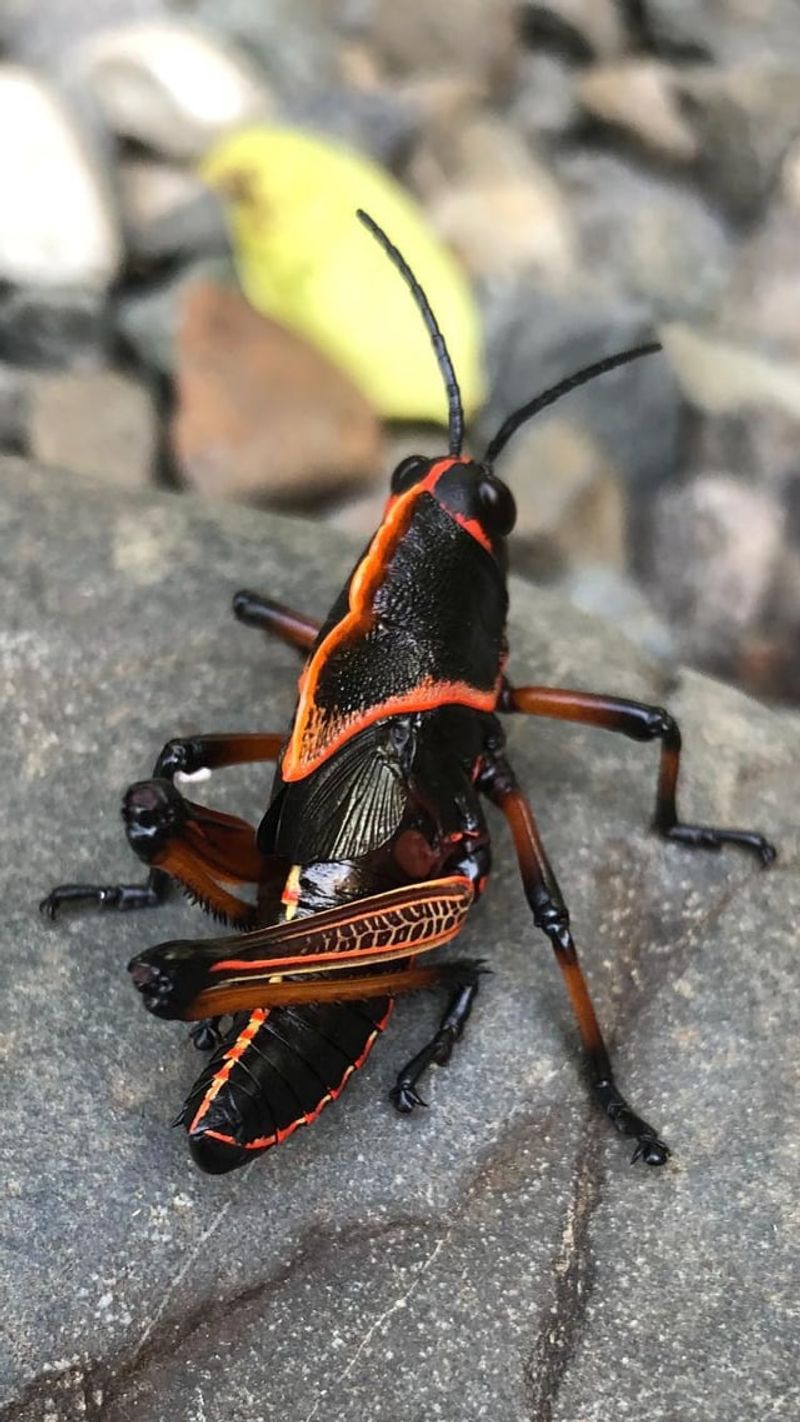
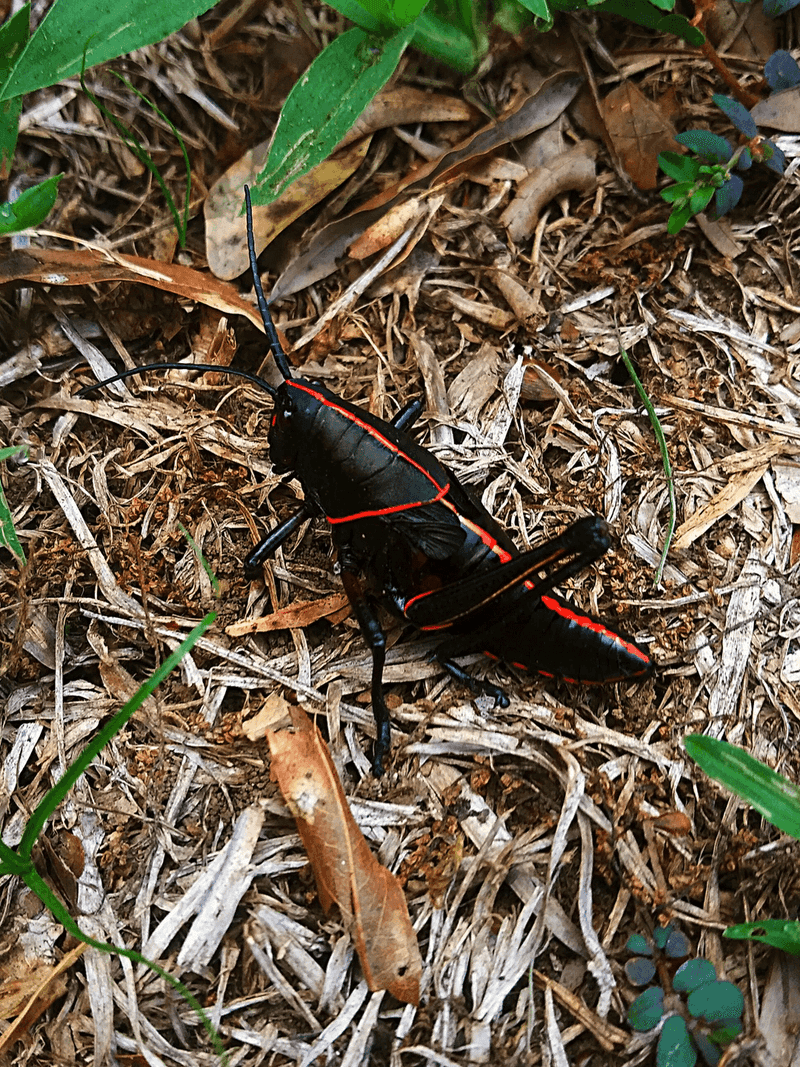
There is no mistaking an eastern lubber grasshopper once you have seen one up close. Adults can grow up to three inches long, making them one of the largest grasshopper species in North America.
Their bold coloring is not just for show. The orange, yellow, and black patterns signal to predators that their body contains toxic compounds absorbed from the plants they eat.
Despite their size, lubbers are surprisingly slow movers. They rarely fly, preferring to lumber along the ground or climb plant stems at a leisurely pace that almost seems careless.
That slow movement is actually a survival strategy. When threatened, they release a foul-smelling foam from their bodies that deters most animals from making a meal of them.
Females are noticeably larger than males and can be identified by their rounder, heavier abdomens. Males are slimmer but just as colorful, and both sexes feed aggressively throughout the growing season.
Young nymphs look almost nothing like the adults they become. Solid black bodies with yellow or red stripes make this early stage easy to identify on close inspection.
A single generation completes its life cycle each year in Florida. That slower pace is part of why populations can build steadily across an entire season.
A clear picture of what you are dealing with changes how you approach the problem. These insects are built to survive, and their biology explains why casual swatting or spraying rarely puts a dent in their numbers.
Traits That Make Control So Difficult
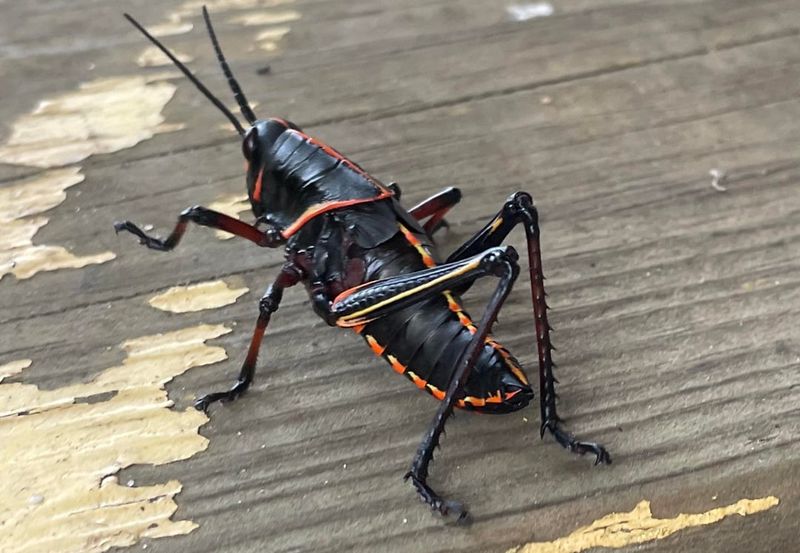
Most pest control methods that work on other insects barely slow lubber grasshoppers down. Their toxic body chemistry makes them resistant to many natural predators and some common pesticides.
Chemical sprays can work, but only when applied at the right stage. Young nymphs in the early black stage are far more vulnerable than fully grown adults, which have built up stronger defenses.
By the time most gardeners notice the problem, the insects have already grown into harder-to-treat adults. That timing gap is one of the biggest reasons infestations feel so out of control so quickly.
Their slow movement actually works against gardeners in a sneaky way. Because they do not scatter quickly, it is easy to underestimate how many are present until the damage becomes severe.
Standard insect repellents and organic sprays tend to have minimal effect on lubbers. Their thick outer shell limits how well contact treatments penetrate, letting many walk through sprayed areas largely unaffected.
Their diet plays a role too. Feeding on toxic plants like oleander and pokeweed adds extra chemical defenses that make them unappealing to most predators.
Size alone makes manual removal more demanding than with smaller pests. A single adult can require more effort to manage than an entire cluster of newly hatched nymphs.
Consistent manual removal combined with early-stage treatment offers the best results. Patience and timing matter far more than the strength of any single product you choose to apply.
The Plants They Target Most In Florida Yards
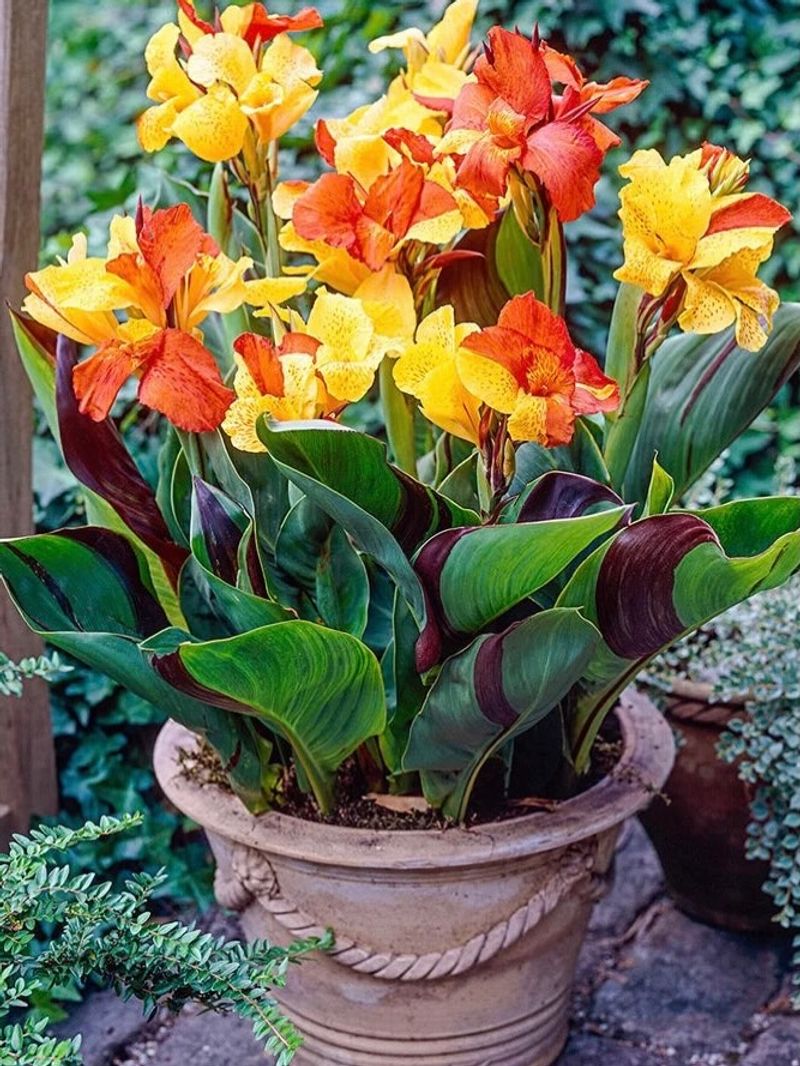
Lubber grasshoppers are not picky eaters, but they do have clear favorites. Knowing which plants attract them most helps you protect what matters most in your garden.
Amaryllis, canna lilies, and crinum lilies top their preferred menu. These ornamental plants are popular across Florida landscapes, which is partly why lubber populations tend to concentrate in residential areas.
Vegetables are not off-limits either. Beans, peas, and leafy greens like lettuce and kale are frequently targeted, especially when planted near ornamental beds where lubbers already have a foothold.
Narcissus and swamp lilies are also high on their list, particularly for young nymphs. Their soft foliage makes feeding easy and efficient for an insect that prefers slow, steady meals.
Native grasses and sedges can serve as early feeding grounds before lubbers move into garden beds. Keeping wild areas near your yard trimmed and managed reduces the chances of a large group migrating inward.
Citrus leaves and oleander also show up on their menu, even though oleander contains compounds toxic to most other animals. Lubbers absorb these toxins without harm, adding to their own defenses.
Not every plant in your yard carries equal risk. Vegetables like pepper, eggplant, and okra tend to see far less feeding than amaryllis or crinum.
Strategic plant placement can actually work in your favor. Surrounding vulnerable plants with less-favored options like pepper or okra may reduce how often lubbers target your prized specimens.
Natural Ways To Keep Their Population In Check
Going the natural route takes more effort, but it protects your garden without introducing harsh chemicals near edible plants or pollinators. A few smart habits can make a noticeable difference over time.
Hand-picking is the most effective organic method available, especially for young nymphs. Drop them into a bucket of soapy water and dispose of the contents away from your garden beds.
Neem oil spray applied directly to nymphs can disrupt their growth and feeding patterns. It works best when applied in the early morning before temperatures climb too high and the solution evaporates quickly.
Loggerhead shrikes are one of the few predators equipped to handle lubbers. They impale the insect and let it sit before feeding, giving the toxins time to break down first.
Tilling the soil in fall disrupts egg pods buried just below the surface. Exposing those eggs to cold air, birds, and dry conditions reduces how many survive to hatch the following spring.
Timing your hand-picking for early morning improves results significantly. Lubbers move more slowly in cooler temperatures, making them far easier to catch and remove.
Rotating between hand-picking and neem oil applications throughout the season covers different life stages effectively. No single method handles nymphs and adults equally well.
Consistency is the real secret to keeping lubber grasshoppers from taking over your Florida garden again. A seasonal routine of monitoring, removing, and treating early puts you firmly in charge of your landscape.