Why Carolina Wrens Keep Searching North Carolina Porch Planters And What They’re Hunting
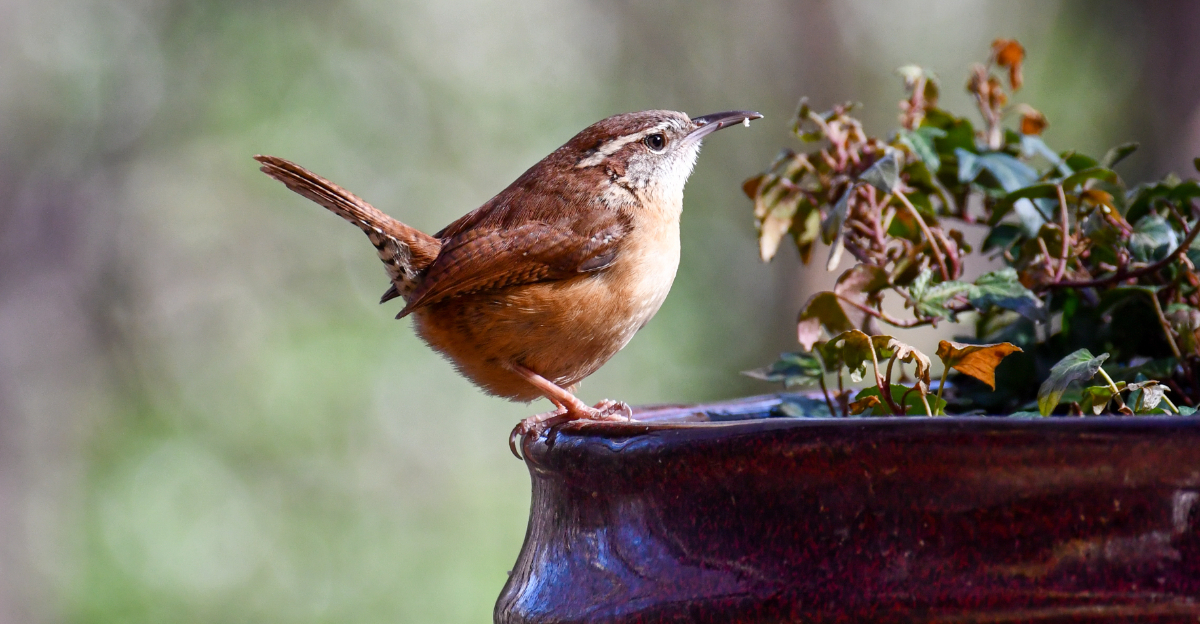
Carolina wrens investigating porch planters are almost always searching for insects hiding among the soil, leaves, and stems rather than showing interest in the plants themselves.
These curious, active birds feed heavily on spiders, beetles, and other small insects that often gather in the moist, sheltered conditions planters provide.
Porch planters create an appealing microhabitat, offering shade and humidity that attract the very insects wrens rely on for food. Watching a wren hop through a planter and toss aside soil or mulch is typically just part of their thorough hunting process.
Their presence actually benefits gardeners, since wrens help naturally control insect populations without any extra effort required. Avoiding pesticide use near porch plants helps protect these helpful visitors while they forage.
Providing a small brush pile nearby can encourage wrens to stick around even longer. Their frequent visits are a good sign your porch garden is supporting a healthy mix of insect activity.
1. Dense Planter Foliage Is Perfect For Searching
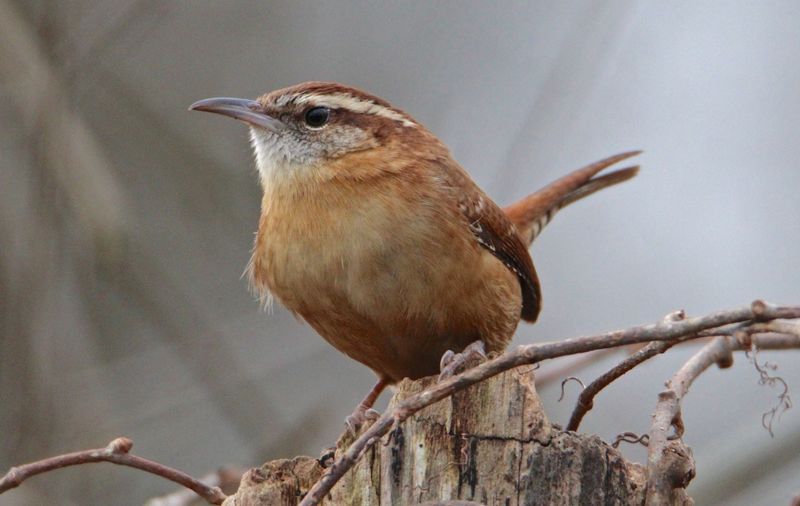
Most birds scan open ground for food, but Carolina Wrens think differently. They are built for tight spaces, and a planter overflowing with dense foliage is exactly the kind of environment their instincts push them toward.
Their short, curved bills are perfectly shaped for probing into leaf clusters, small crevices, and tangled stems where other birds simply cannot reach.
Porch planters in North Carolina tend to grow thick and lush, especially in the warmer months. Hostas, ferns, petunias, and trailing vines create layer after layer of hiding spots.
Insects and spiders know this too, so they tuck themselves deep into the foliage where they feel safe. Carolina Wrens figured this out a long time ago.
When a wren hops into your planter, it moves with quick, jerky motions, flipping leaves, peeking under stems, and investigating every shadow. It is not random wandering.
The bird is following a very deliberate search pattern, working through the plant section by section. Gardeners who watch closely often notice the wren revisiting the same planter multiple times a day, which tells you the hunting is good.
The thick coverage also gives the wren a sense of security while it forages. Predators have a harder time spotting a small bird tucked inside a full, leafy planter.
So the foliage serves two purposes at once, offering both food and a degree of protection. That combination makes your porch plants almost irresistible to any Carolina Wren passing through the neighborhood.
2. Caterpillars Are A Favorite Find
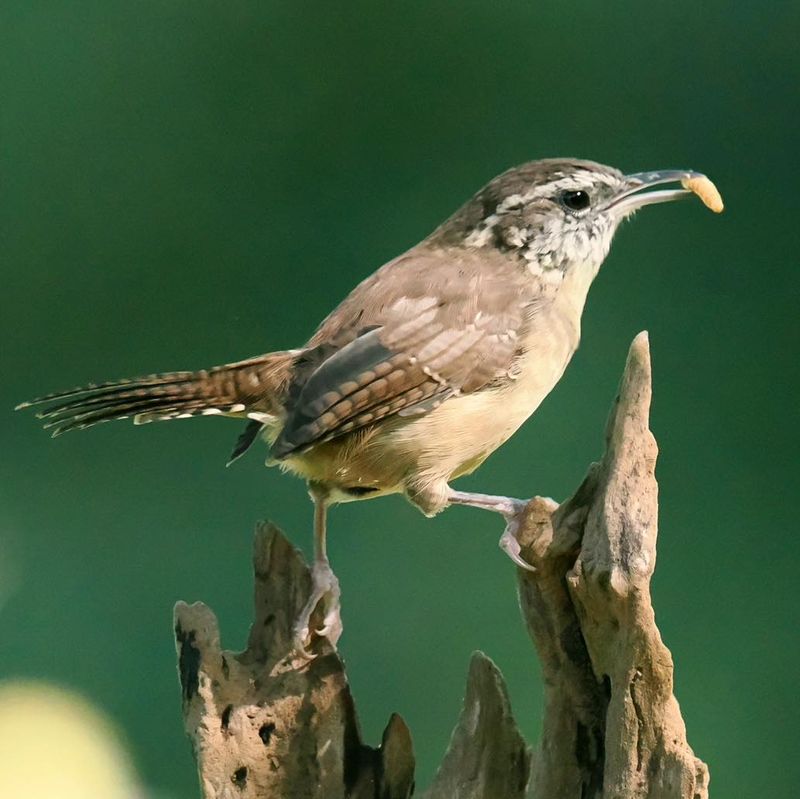
Caterpillars might look harmless to us, but to a Carolina Wren, they are one of the most exciting discoveries a planter can offer. Soft-bodied, protein-packed, and slow-moving, caterpillars are an easy and rewarding catch.
Wrens actively search the undersides of leaves and along stems where caterpillars like to rest and feed during the day.
North Carolina porches host a wide variety of moth and butterfly species, and their larvae end up on potted plants regularly. Geraniums, impatiens, and herbs are especially popular targets for egg-laying moths.
Once those eggs hatch, tiny caterpillars begin feeding, and that activity creates small movements and damage that a sharp-eyed wren picks up on almost immediately.
Your North Carolina Garden Changes Every Week. Your Plan Should Too.
Gardening in North Carolina changes quickly throughout the season. Every Friday you’ll receive a simple weekly plan showing exactly what to plant, prune, fertilize, harvest, and protect so you never miss the right timing.
What makes caterpillars such a valued food source is their nutritional content. They are high in fat and protein, which gives wrens a solid energy boost.
During breeding season, parent wrens bring caterpillars back to the nest to feed their chicks, so a planter full of them becomes a reliable supply point. You might even see a wren carrying a caterpillar away rather than eating it on the spot.
Gardeners sometimes get frustrated seeing caterpillars on their plants, but having a wren patrol the area naturally keeps populations in check without any sprays or chemicals.
Watching the bird flip a leaf and snag a caterpillar in one smooth motion is genuinely impressive.
Carolina Wrens are efficient, focused hunters, and your porch plants give them a reliable hunting ground that keeps them coming back again and again.
3. Beetles Make Planters Worth Checking
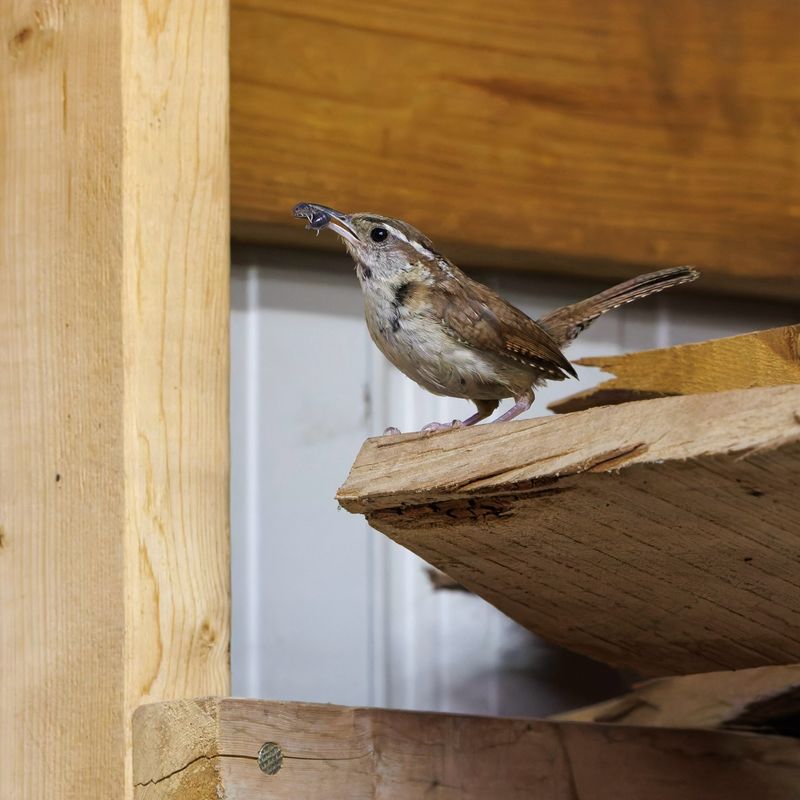
Beetles are one of the most common insects on the planet, and your porch planters are likely home to more of them than you realize.
Carolina Wrens know this, and they probe around pot edges, bark mulch, and dense foliage specifically because beetles tend to hide in exactly those kinds of spots.
A wren working the edge of a planter is almost always checking for beetle activity.
Many beetle species are nocturnal, but they tuck themselves into cracks and crevices during daylight hours. The gap between a pot and its saucer, the space where soil meets the rim, and the underside of bark chips are all prime beetle hideouts.
A wren’s bill is strong enough to pry into these spaces, and the bird has the patience to work through them methodically.
Bark beetles, ground beetles, and weevils are among the species wrens commonly target. Some of these beetles are considered garden pests, so a wren patrolling your pots is actually doing your plants a favor.
Weevils in particular can damage roots and foliage, so having a natural predator check in regularly is genuinely useful for any gardener.
There is something almost mechanical about the way a wren searches for beetles. It taps, probes, and listens, sometimes pausing as if processing what it senses before striking.
Researchers believe wrens may actually detect beetle movement through vibration in addition to sight.
That sensory skill makes them remarkably effective hunters in the layered, complex environment that a well-planted porch planter provides throughout the growing season.
4. Leafhoppers Hide Among Tender Growth
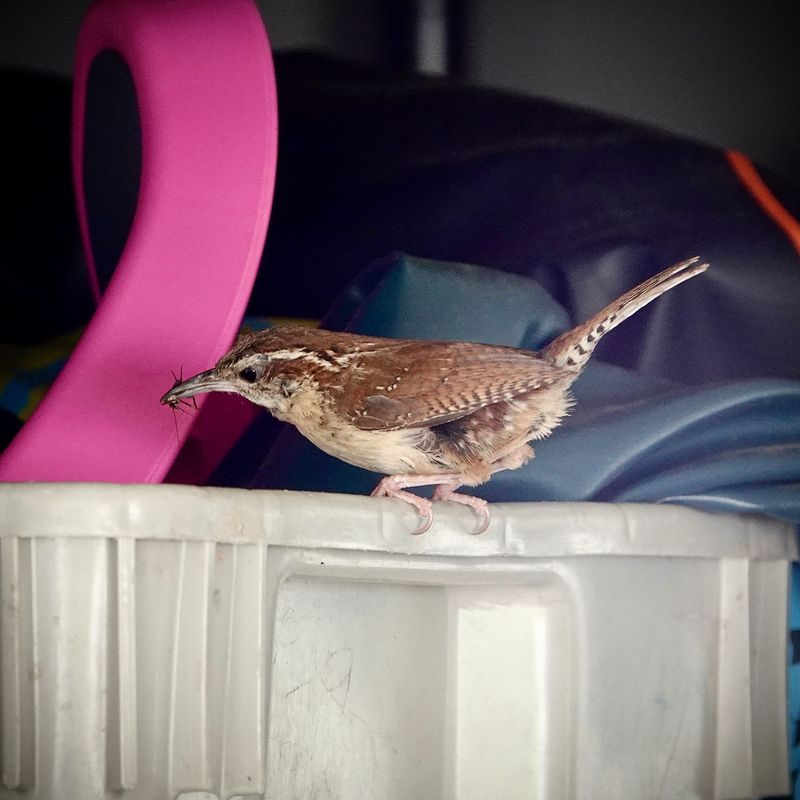
Leafhoppers are tiny, fast, and incredibly sneaky. They blend into green plant growth so well that most people walk right past them without a second glance.
Carolina Wrens, however, are tuned in to the subtle movements and tiny shapes that betray a leafhopper’s hiding spot among fresh, tender shoots and new leaves.
New plant growth is especially attractive to leafhoppers because young tissue is softer and easier for them to feed on. If your porch planter recently put out fresh growth after a trim or a warm rain, there is a good chance leafhoppers have already found it.
A Carolina Wren doing a sweep through that new growth is not being random. It knows exactly what kind of prey thrives there.
Leafhoppers move in quick, sideways hops when disturbed, which is part of what makes them challenging to catch. Wrens have adapted to this behavior by moving quickly themselves, often startling a leafhopper into motion and then snatching it mid-jump.
Watching this happen in real time is a reminder of how sharp and reactive these small birds truly are in the field.
From a gardening standpoint, leafhoppers can cause real damage. They suck plant sap and can spread plant diseases as they feed, so keeping their numbers down protects your plants.
A Carolina Wren visiting your planter regularly acts like a free pest control service. Encouraging wrens to stick around by keeping planters full and varied gives both you and your plants a reliable ally against these fast-moving, leaf-loving insects all season long.
5. Spiders Are Part Of The Menu
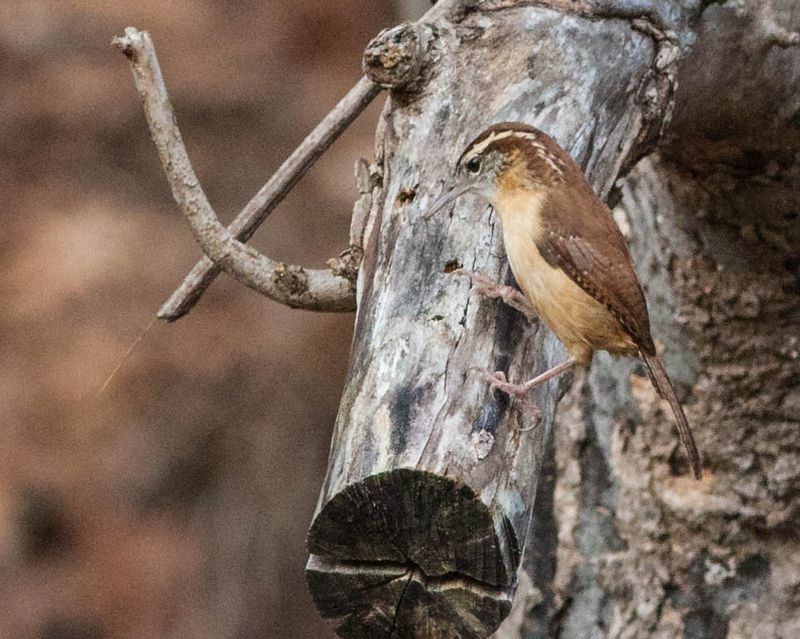
Spiders might give some people the creeps, but Carolina Wrens see them as a high-quality meal worth going after. Spiders are rich in taurine, an amino acid that research suggests plays a role in brain development in young birds.
That might be one reason wrens feed spiders to their nestlings so frequently, and why they search planters so carefully for them.
Porch planters are spider paradise. Hanging baskets, deep pots, and leafy arrangements offer sheltered corners, sturdy anchor points for webs, and a steady supply of small insects to attract prey.
Common species like orb weavers, crab spiders, and jumping spiders all take up residence in garden plants. Carolina Wrens are familiar with all of them and know where to look.
Crab spiders are particularly interesting because they sit motionless on flowers waiting for prey, which means they are not moving around to give themselves away. A wren has to visually spot them, which speaks to the bird’s sharp eyesight.
Jumping spiders, on the other hand, are quick and reactive, making them a more athletic catch that the wren has to work for.
Spider webs themselves can be a clue. A wren may notice a web and investigate the surrounding area for the spider that built it.
Once located, the wren strikes fast. Spiders rarely escape a determined Carolina Wren in a confined space like a planter.
If your baskets seem to have fewer spiders than usual, a visiting wren may very well deserve the credit for keeping the population naturally balanced.
6. Crickets And Grasshoppers Offer Larger Prey
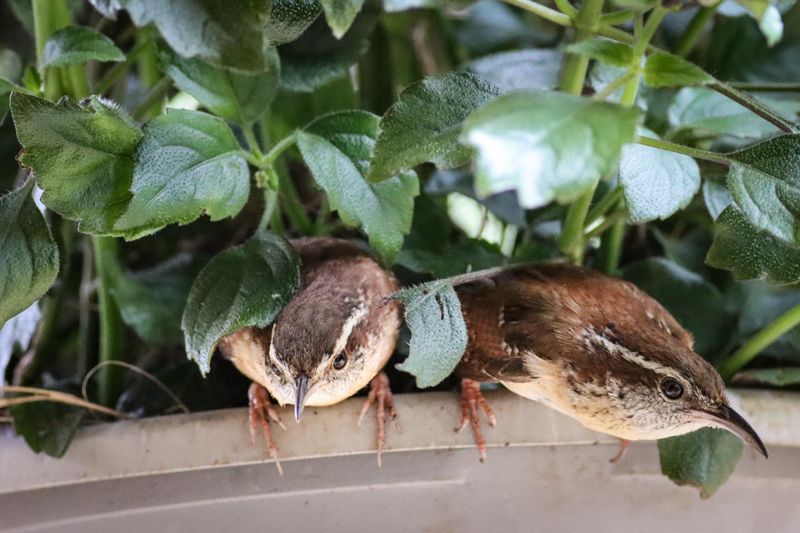
Carolina Wrens are small birds, but they are not afraid to go after bigger prey when the opportunity shows up. Crickets and grasshoppers are considerably larger than leafhoppers or beetle grubs, and catching one takes more effort.
But the payoff is worth it. A single cricket can deliver a solid energy reward that smaller insects simply cannot match.
Grasshoppers and crickets tend to hang around the base of planters, in the soil beneath pots, and among low vegetation near the porch. They like warmth and shelter, and the area around a cluster of potted plants often provides both.
A wren working the perimeter of your planter arrangement is likely checking these lower zones where larger prey tends to rest.
Crickets are especially common in North Carolina during late summer and early fall. They chirp at night but move around actively during the day, often tucking under pots or into gaps near the porch wall.
A wren that has learned your porch layout will check these exact spots with impressive consistency, almost like it has a mental map of where the good hiding places are.
When a wren catches something as large as a cricket, it sometimes beats the insect against a hard surface before swallowing it. This behavior, called bashing, helps subdue the prey and break it into a manageable size.
Seeing it happen on your porch railing or planter edge is one of those raw, fascinating wildlife moments that reminds you how capable these compact little birds really are in their daily hunt for food.
7. Sometimes The Wren Is Looking For Shelter Too
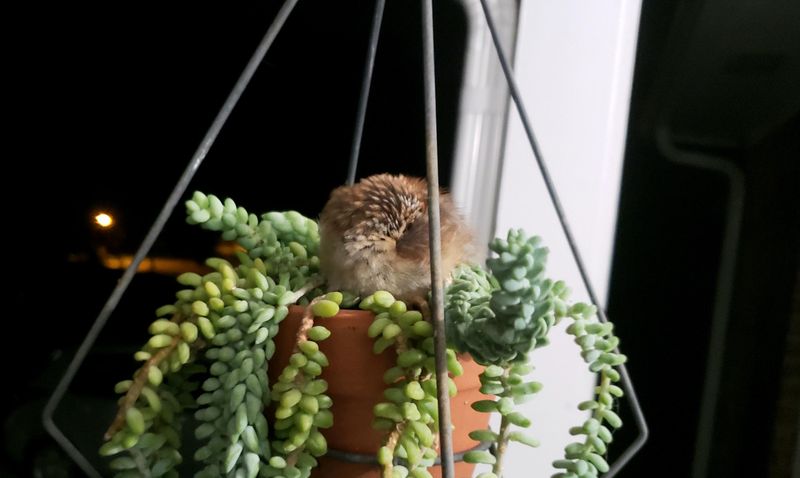
Not every visit to your porch planter is about food. Carolina Wrens are notorious for investigating small, enclosed spaces as potential nesting or roosting sites, and a deep hanging basket or a large pot with trailing foliage fits their criteria almost perfectly.
If you notice a wren spending extra time inside a basket rather than picking through leaves, shelter scouting is likely what is happening.
Carolina Wrens nest in surprisingly creative locations. Boots left on porches, old hats hanging on hooks, toolboxes left open in garages, and yes, flower pots with dense planting have all served as wren nesting sites.
The bird looks for a space that feels enclosed, protected from rain, and somewhat hidden from view. A lush hanging basket checks every one of those boxes.
Roosting is slightly different from nesting. During cold nights, a wren may tuck itself into a planter just to stay warm and out of the wind.
North Carolina winters can bring unexpected cold snaps, and wrens do not migrate. They stay year-round and need to find warm spots on freezing nights.
Your covered porch offers exactly the kind of protected microclimate they seek out.
If you find a nest tucked into one of your planters, the best move is to leave it alone and water around it carefully. Wrens raise multiple broods per season and are devoted parents.
Sharing your porch with a nesting pair gives you a front-row seat to one of nature’s most charming family stories. Once the chicks leave, the pair often returns to the same spot the following year, turning your planter into a beloved seasonal home.