Virginia Gardeners Should Avoid Touching This Bright Green Caterpillar
That bright green speck near your tomatoes is more dangerous than it looks. Virginia yards are hiding a dangerous surprise close to you. You might mistake it for a jewel instead of danger.
Beauty can conceal a surprisingly painful sting. Something small carries venomous spines beneath its glossy shell. Brushing against it sends sharp pain straight through your skin.
Hours can pass before your skin finally settles down. Children playing near you face the highest risk of contact.
Summer heat across Virginia keeps this creature close to you. Never touch it with bare hands.
Gloves will not always fully protect you from that sting. Every garden bed near you could be hiding real danger. Nothing about its bright color warns you of the risk.
Ignoring this creature could cost you hours of real pain. Prepare, because what comes next could change how you garden.
Why This Bright Green Caterpillar Shows Up In Virginia Gardens
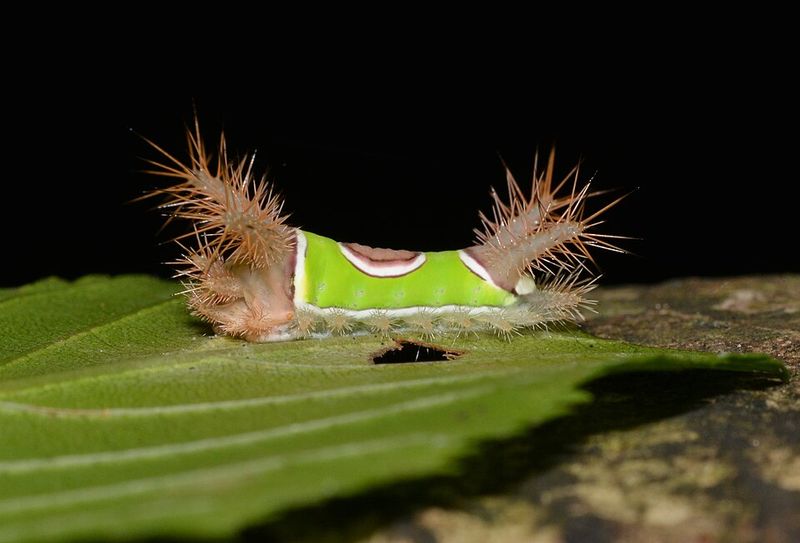
Late summer brings something unexpected to Virginia gardens. The Saddleback caterpillar appears on leaves of corn, roses, blueberries, and ornamental plants.
This creature loves the warm, humid months from July through October. It feeds on a wide range of host plants, which makes it a frequent surprise for home gardeners.
Most people spot one while harvesting vegetables or pruning shrubs. The caterpillar blends in surprisingly well despite its bold coloring.
Its bright green saddle patch actually helps it hide among fresh foliage. Many gardeners mistake it for a harmless leaf-dwelling bug at first glance.
The species, Acharia stimulea, is native to eastern North America. It thrives in the warm, tree-heavy landscape that covers much of the mid-Atlantic region.
Gardens with lots of leafy plants create perfect feeding grounds for this caterpillar. Roses, oak trees, and even backyard corn patches are all fair game.
Suburban gardens with diverse plantings, including pollinator gardens, offer this caterpillar more places to feed. More diverse plantings mean more opportunities for this stinging caterpillar to show up uninvited.
Knowing why it appears is the first step toward staying safe. Awareness is your best defense before you even get close to one of these striking creatures.
Identifying The Saddleback Caterpillar
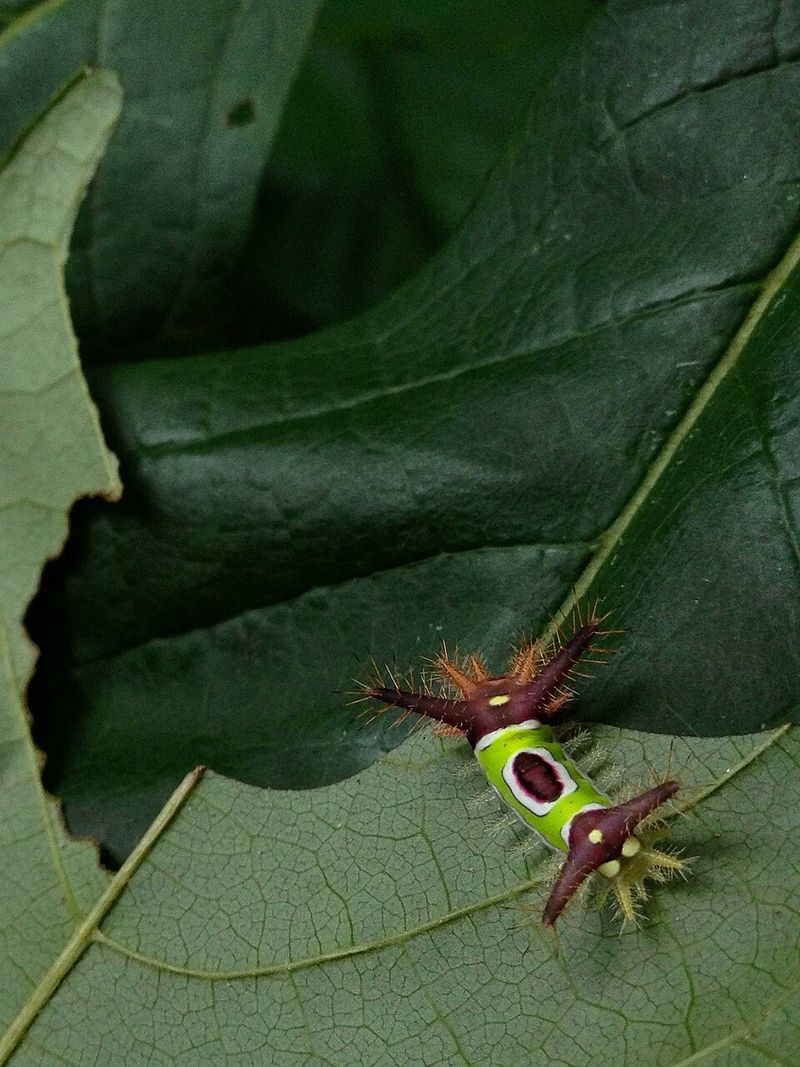
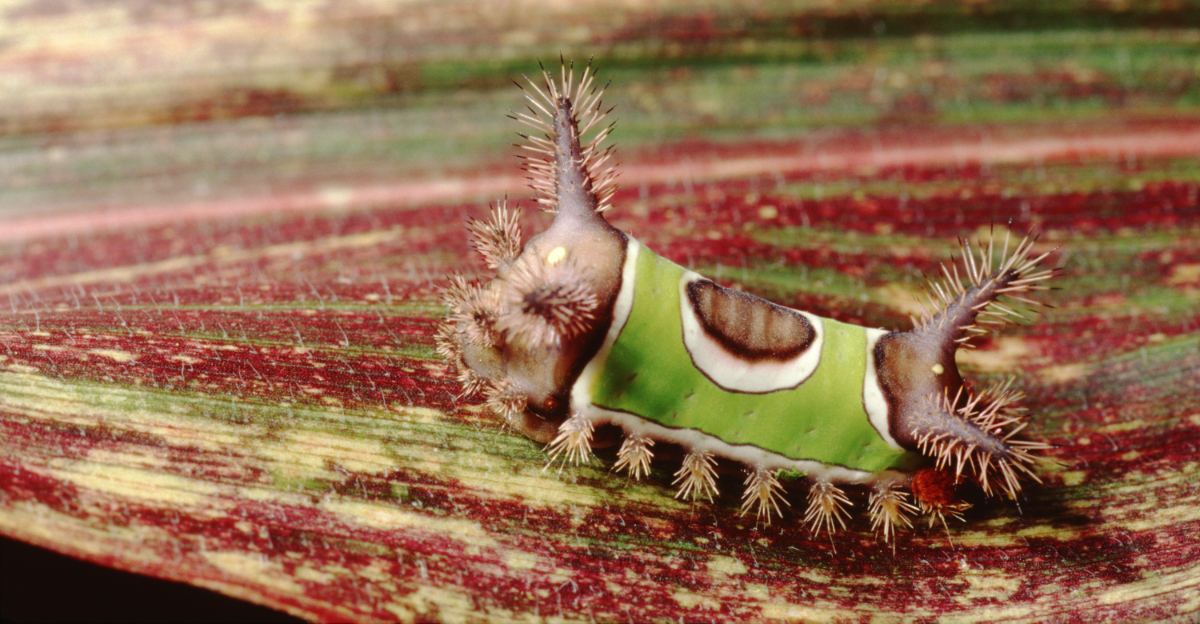
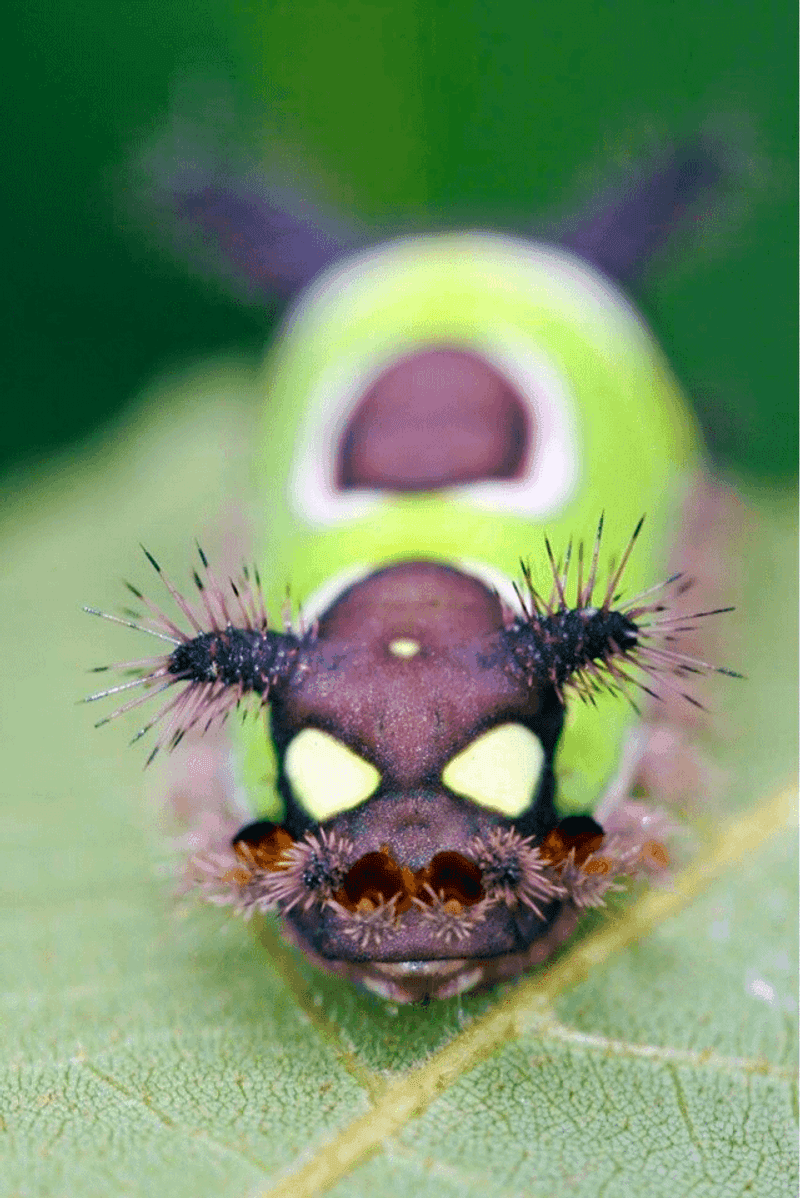
Spotting this caterpillar is not hard once you know what to look for. Its body is a vivid lime green with a bold brown oval patch right in the center of its back.
That brown patch looks like a saddle sitting on a horse, which is exactly how it got its name. A white ring outlines the brown spot, making the pattern pop against the green body.
Along each side, rows of fleshy spines stick out like tiny antennae. Those spines are not decorative; they are loaded with venom.
The caterpillar grows to about one inch long. For something so small, it carries an impressive and painful defense system.
Both ends of its body have additional clusters of spines. The front and back look almost identical, which confuses predators trying to figure out which end to approach.
Your Virginia Garden Changes Every Week. Your Plan Should Too.
Gardening in Virginia changes quickly throughout the season. Every Friday you’ll receive a simple weekly plan showing exactly what to plant, prune, fertilize, harvest, and protect so you never miss the right timing.
Younger caterpillars are harder to spot because they are smaller and their colors are less vivid. As they mature, the markings become bolder and easier to recognize.
You might also notice a slightly glossy sheen on the green parts of its body. That shine can catch sunlight and actually draw your eye toward it on a leaf.
If you ever see something that matches this description in your garden, step back immediately. No plant is worth the sting that comes from touching this caterpillar.
Explaining Why Its Sting Is So Painful
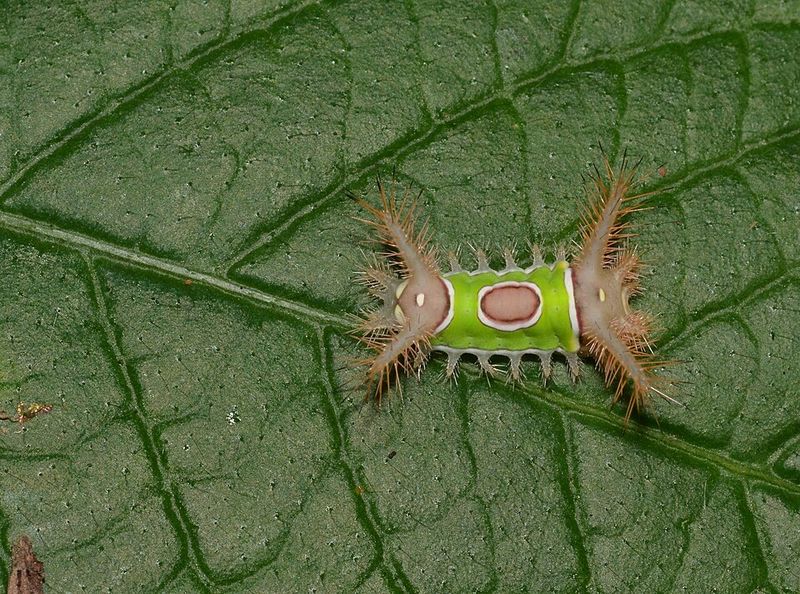
This caterpillar’s sting is more intense than most garden pests deliver. The Saddleback caterpillar’s spines are hollow and filled with a venom that triggers an immediate burning sensation.
When a spine breaks the skin, it injects the venom directly into the tissue. The reaction happens fast, usually within seconds of contact.
Most people describe the sting as feeling like a bee sting mixed with a burn. The pain can radiate outward from the contact point and last for several hours.
Swelling, redness, and a raised rash often follow the initial sting. Some people develop a grid-like pattern of welts matching exactly where the spines made contact.
The venom contains a mix of proteins that trigger inflammation in the skin. This inflammatory response is what causes the intense burning and itching that follows.
People with allergies or sensitive immune systems may have stronger reactions. In rare cases, nausea, headache, or swollen lymph nodes have been reported after contact.
Children tend to react more intensely than adults simply because of their smaller body size. A sting on a child’s arm can cause significant distress and discomfort.
The caterpillar does not chase you or seek out contact. It stings purely as a defensive reflex when touched or pressed against skin.
Understanding the mechanism behind the sting helps you take it seriously. This is not a mild irritant; it can cause significant, lasting discomfort.
Steps To Take If You Get Stung
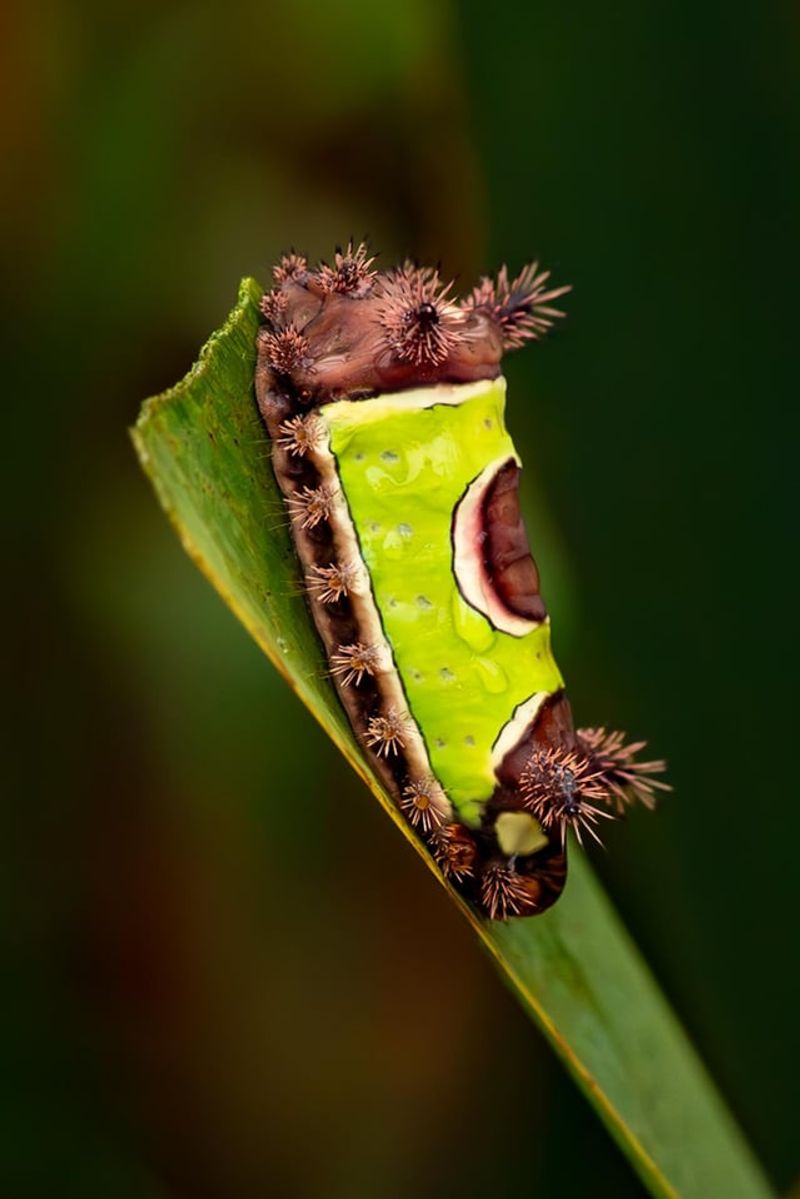
Getting stung by a Saddleback caterpillar is alarming, but staying calm helps a lot. The first thing to do is resist the urge to rub or scratch the affected area.
Rubbing pushes the broken spines deeper into the skin and spreads the venom. That makes the reaction worse and extends how long the pain lasts.
Grab a piece of tape, like packing tape or even a strip of duct tape. Press it firmly over the sting site and then peel it off slowly to lift out embedded spines.
Repeat the tape method several times to remove as many spines as possible. Tweezers can help with any visible spines that remain after taping.
Wash the area thoroughly with soap and water after spine removal. This helps flush any remaining venom from the surface of the skin.
Applying an ice pack wrapped in a cloth can reduce swelling and numb the burning sensation. Keep the ice on for 15 to 20 minutes at a time.
Over-the-counter hydrocortisone cream or oral antihistamines like Benadryl can ease itching and inflammation. These are usually enough to manage a typical sting reaction.
Watch for signs of a serious allergic reaction, including difficulty breathing, widespread hives, or dizziness. Those symptoms require a call to a doctor or a trip to urgent care right away.
Most stings begin to ease within a day, though full recovery can take longer depending on the reaction. Staying cool and avoiding scratching speeds up the healing process considerably.
Removing It Safely From Your Garden
Removing this caterpillar without getting stung takes a little preparation. The most important tool is a pair of thick leather or rubber-coated gloves.
Regular garden gloves are not enough because the spines can push through thin fabric. Thick gloves create a barrier that keeps the spines from reaching your skin.
Use long metal tongs or a stick to gently nudge the caterpillar off the plant. Avoid squeezing it, since pressure triggers its defensive response and increases sting risk.
Drop the caterpillar into a sealed plastic container or bag once it falls free. Do not handle the container with bare hands until the caterpillar is fully secured inside.
You can relocate the caterpillar to a wooded area away from your garden. Releasing it far from your plants reduces the chance of it returning to feed.
Some gardeners prefer to leave it alone entirely since the caterpillar eventually becomes a moth. The saddleback moth it transforms into is a plain, brownish moth that is completely harmless to humans.
If you have children or pets who spend time in the garden, removal makes more sense. Kids and curious dogs are far less likely to avoid a colorful bug on their own.
Wearing long sleeves while gardening during late summer adds another layer of protection. Accidental brushing against a hidden caterpillar is one of the most common ways people get stung.
A little extra caution in the garden goes a long way. Staying protected means you can keep enjoying your outdoor space without an unpleasant surprise.
Other Stinging Caterpillars To Watch For In Virginia
The Saddleback caterpillar is not the only stinging species sharing your garden space. Several other venomous caterpillars live in the mid-Atlantic region and deserve equal caution.
The Puss caterpillar is considered one of the more painful stinging caterpillars in the region. Covered in soft, fluffy-looking hair, it looks harmless but hides sharp spines beneath that fur.
Touching a Puss caterpillar can cause intense pain, swelling, and even a grid-pattern bruise on the skin. Some reactions are severe enough to require medical attention.
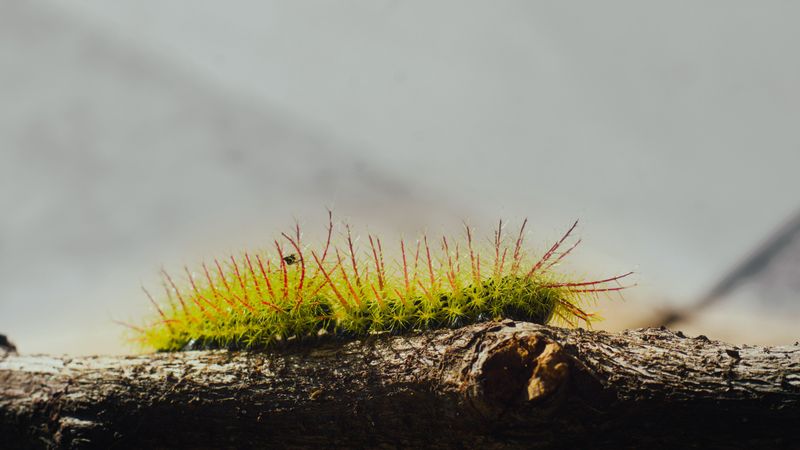
The Io moth caterpillar is another species to recognize. It is bright green with red and white stripes along its sides and clusters of branching spines.
Its sting is similar to the Saddleback caterpillar’s, causing burning and irritation on contact. Both species often appear on the same host plants in late summer.
Spiny Oak Slug caterpillars are smaller but still capable of delivering a noticeable sting. They come in a range of colors, from yellow-green to red and orange.
The Hag moth caterpillar, sometimes called the Monkey Slug, has unusual curling projections that resemble tangled hair. Those projections contain stinging cells that cause skin irritation.
All of these species are most active during the same late summer window as the Saddleback caterpillar. Checking the undersides of leaves before you grab a branch is a smart habit to build.
Staying alert in the garden keeps encounters with these stinging visitors to a minimum. Recognizing the bright green caterpillar is just the beginning of safe seasonal gardening.