Why Crape Myrtle Suckers Keep Growing Back In North Carolina No Matter How Often You Cut Them
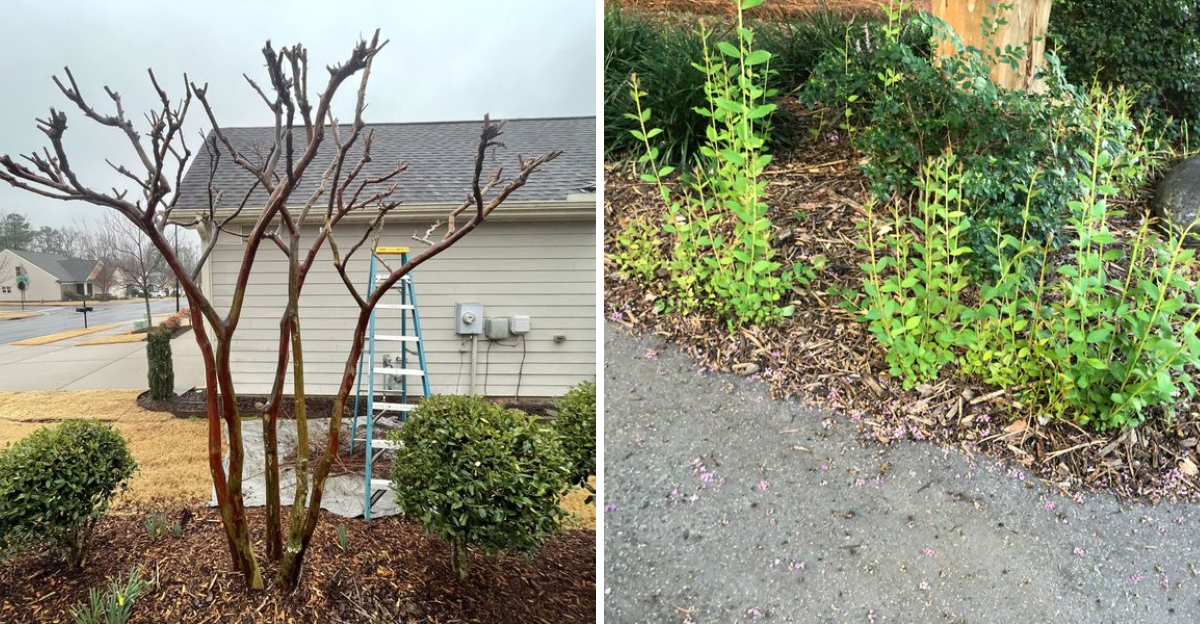
Crape myrtle suckers persist because cutting them at the surface leaves the underlying root system fully intact and ready to produce new growth again.
These vigorous shoots emerge directly from the base or roots, often growing back within just a few weeks of removal.
North Carolina’s warm growing season gives crape myrtles plenty of energy to keep pushing out this unwanted growth throughout summer.
Simply cutting suckers with pruners at ground level only addresses the visible problem while leaving the root cause completely untouched.
Pulling suckers by hand, rather than cutting, removes a small portion of the root attachment and can slow regrowth somewhat more effectively.
Consistently removing suckers as soon as they appear, rather than letting them establish, helps reduce the tree’s overall energy investment in this growth.
Applying mulch around the base can also help suppress some suckering by reducing soil disturbance and light exposure at the root zone.
Staying persistent with removal throughout the growing season eventually helps reduce, though rarely fully eliminates, this frustrating recurring habit.
1. The Suckers Start Below Ground
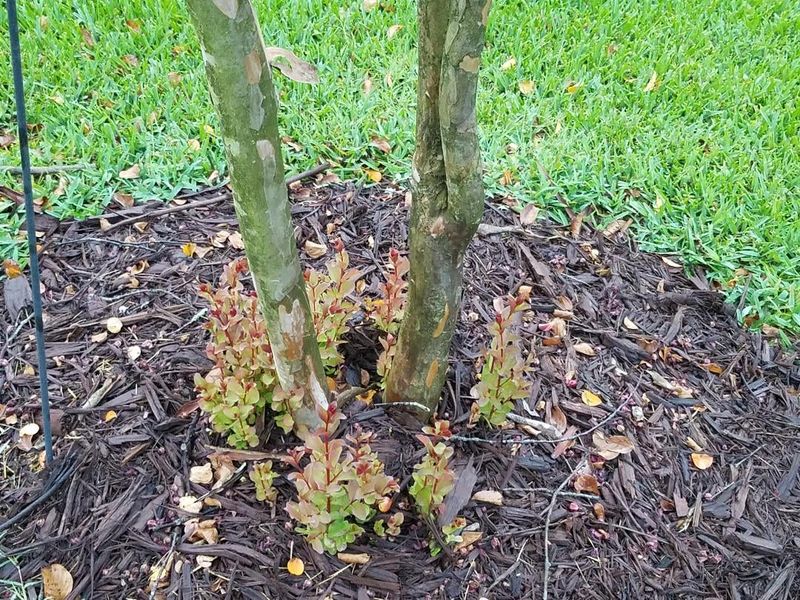
Way beneath the soil, your crape myrtle is busier than you might think. The roots stretch out in every direction, storing energy and quietly sending up new shoots whenever conditions feel right. Those shoots are the suckers you keep seeing near the base.
Because the roots are alive and full of stored sugars, they treat suckering as a natural way to grow. In North Carolina’s warm and rainy seasons, roots have plenty of moisture and warmth to fuel that process.
The tree isn’t misbehaving, it’s simply doing what its species has done for ages. Here is the tricky part. When you snip a sucker at ground level, the root that produced it stays perfectly happy underground.
That root sees the loss of a shoot as a small setback and pushes out a replacement. Sometimes it sends up two where one used to be.
Many gardeners assume the problem is coming only from the trunk, but roots several feet away can also produce shoots. This is why suckers sometimes appear in the lawn or flower bed nearby, surprising you far from the main tree.
If you want fewer surprises, try to remove suckers while they are young and soft, pulling rather than cutting when possible. Pulling can tear the shoot closer to its root origin, which slows regrowth a bit.
Keeping the soil mulched and the tree healthy also helps, since a strong, unstressed tree usually suckers less over time.
2. Cutting The Shoot Leaves The Source
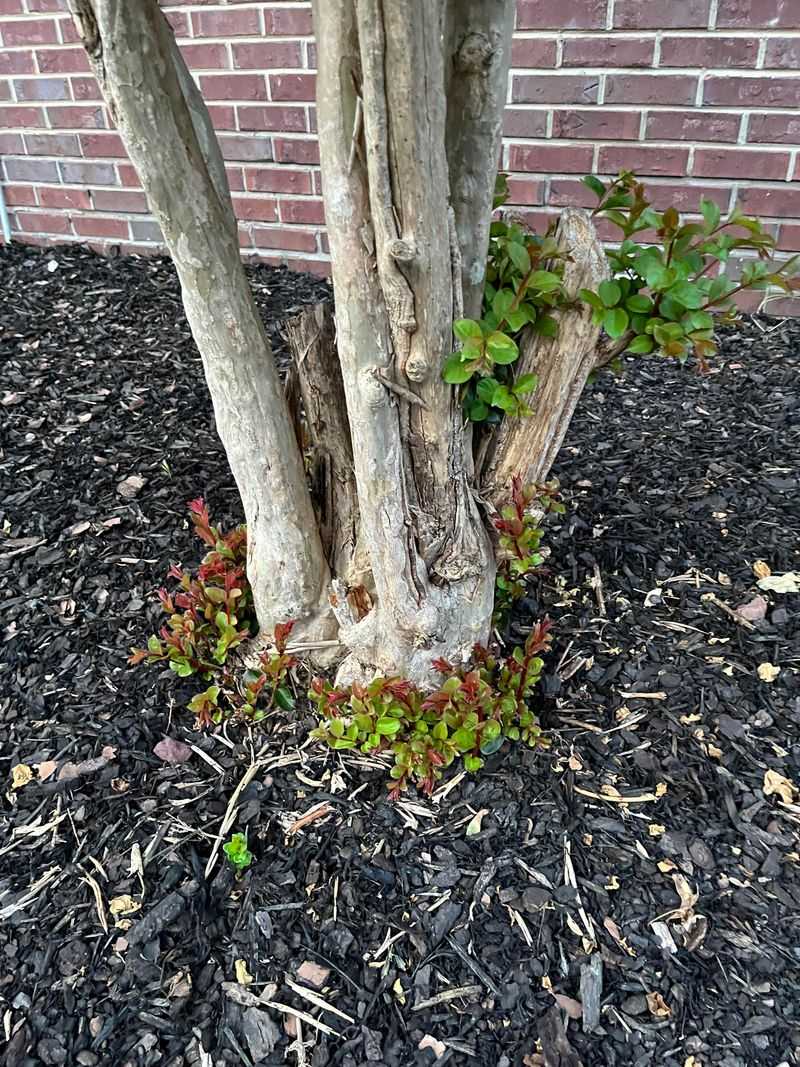
Snipping off a sucker feels satisfying, but it rarely solves anything for long. The visible green shoot is only the top part of a much bigger system.
Underneath, the living root that created it stays untouched and ready to try again.
Think of it like mowing a weed instead of pulling it. You remove what shows above the surface, yet the engine driving the growth keeps running.
Crape myrtle roots hold plenty of stored energy, so producing another shoot costs them very little. Every time you cut a sucker cleanly at soil level, you basically send a signal that says, try again.
Your North Carolina Garden Changes Every Week. Your Plan Should Too.
Gardening in North Carolina changes quickly throughout the season. Every Friday you’ll receive a simple weekly plan showing exactly what to plant, prune, fertilize, harvest, and protect so you never miss the right timing.
The root responds by pushing new buds upward, often within just a few weeks during North Carolina’s growing season. That fast comeback frustrates a lot of homeowners.
To actually slow this cycle, focus on the connection point where the sucker meets the root or trunk. Removing the sucker as close to its origin as possible gives the tree less material to regrow from.
Ripping young suckers off by hand can remove the small bud tissue that a clean cut leaves behind.
Patience matters here too. No single cut will finish the job, so treat sucker removal as an ongoing habit rather than a one-time fix. Check your tree every couple of weeks in spring and summer.
Over months of consistent removal, the root eventually spends more energy than it gains, and suckering usually slows down noticeably around established trees.
3. Pruning Can Wake Up New Buds
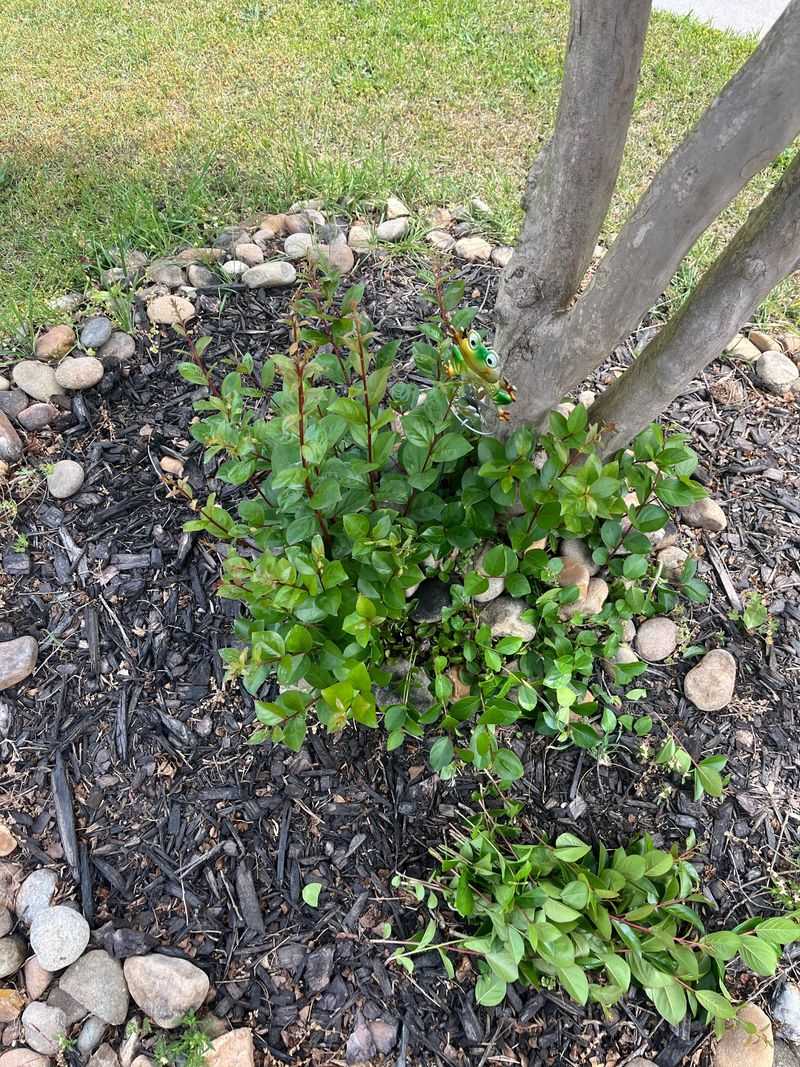
Pruning seems like the obvious answer, but sometimes it creates the very problem you’re trying to solve. When you make a cut, the tree treats that spot as a small injury and rushes to heal and regrow. That healing response often triggers brand new growth.
Trees carry hidden buds called adventitious buds, which stay quiet under the bark until something wakes them up. A pruning wound is exactly the kind of signal that stirs them into action.
Once activated, they push out fresh shoots in surprising spots. In North Carolina, where the growing season is long and warm, these awakened buds have plenty of time and energy to sprout.
A single cut near the base can lead to a cluster of new suckers gathering around the wound within weeks.
This is why careless or frequent cutting can backfire. Instead of calming the tree down, you keep poking it awake, and it keeps answering with more growth.
The tree isn’t fighting you on purpose, it’s just following its natural repair instincts.
To work with the tree instead of against it, make clean, purposeful cuts and avoid trimming more than necessary. Sharp, sanitized tools help wounds heal faster, which reduces the chance of triggering lots of new buds.
Timing helps too. Pruning during late winter dormancy gives the tree a calmer starting point than cutting during peak summer growth, when every wound seems to invite a rush of eager new shoots ready to reach for the sun.
4. Heavy Pruning Makes Suckers Worse
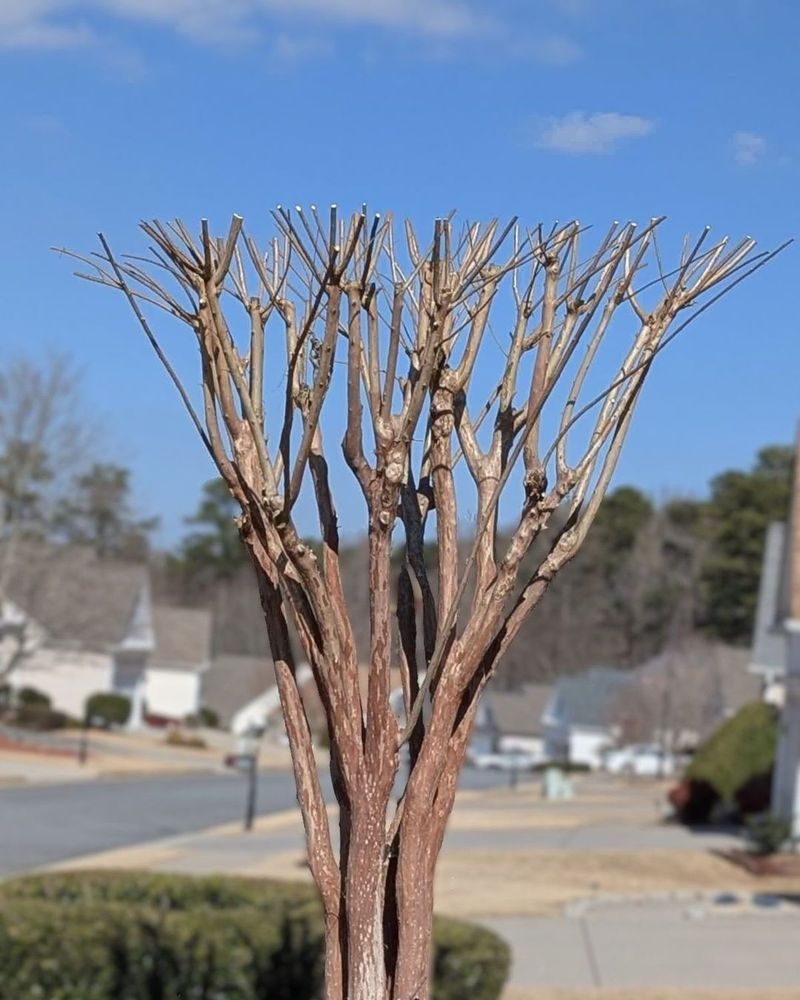
There’s a reason your tree seems angrier after a big trim. When you remove a large amount of branches and leaves at once, you take away the parts that make food for the plant.
The roots, still full of stored energy, react by pushing hard to replace what was lost. That reaction shows up as a burst of suckers and water sprouts.
The more you cut, the stronger the response, because the tree is trying to rebuild its leaf area as fast as possible. Heavy cutting basically flips a switch that says grow, grow, grow.
Many North Carolina yards show this pattern clearly. A crape myrtle that gets whacked back hard each year often ends up bushier and messier at the base than one left mostly alone.
The imbalance between big roots and a suddenly small top is the key issue. Roots keep sending up energy, but with fewer branches to receive it, that energy escapes as low suckers instead. It’s the tree’s way of restoring balance.
A gentler approach usually pays off. Remove only what you truly need to, thinning out crowded or crossing branches rather than chopping everything back.
Light, thoughtful pruning keeps the tree calm and reduces the flood of new shoots.
If your tree already suckers heavily from years of hard cutting, ease up gradually. Give it a season or two of lighter maintenance, and you’ll often notice the base settling down as the root and top slowly return to a healthier, more balanced relationship.
5. Topping Creates Vigorous New Growth
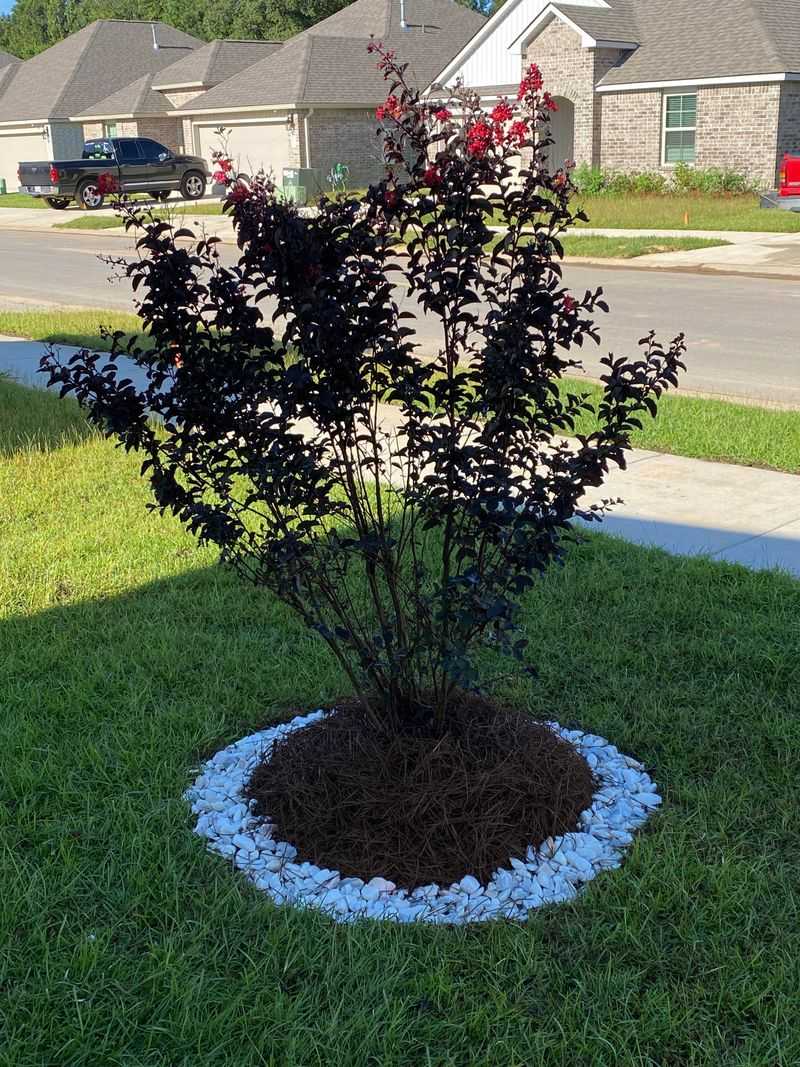
Topping looks like a quick way to control size. In reality, it does the opposite. Cutting the main branches down to stubs sends the tree into overdrive as it scrambles to recover.
Right below each big cut, a cluster of skinny, fast shoots erupts. These shoots grow quickly but weakly, and they crowd together in a way that looks bushy and unnatural. The tree is racing to rebuild leaves it suddenly lost.
Because North Carolina summers are long and generous with warmth, topped trees respond with amazing speed. Within one season, you can see several feet of new whippy growth reaching skyward from those stubbed ends.
The heartbreaking part is that topping never truly controls size. It only delays growth for a short time before the tree comes back thicker and taller than before. You end up on a yearly cycle of cutting and regrowth that never ends.
Those weak new shoots also cause other problems. They attach poorly, snap easily in storms, and can crowd the base with even more suckers as the tree tries to balance itself out.
A smarter choice is to skip topping entirely. If a tree is simply too big for its spot, selective thinning or eventual replacement with a smaller variety makes far more sense.
Left with its natural shape, a crape myrtle grows stronger, blooms beautifully, and demands far less of your time each year, saving you from that frustrating loop of endless regrowth.
6. A Large Variety Keeps Fighting The Space
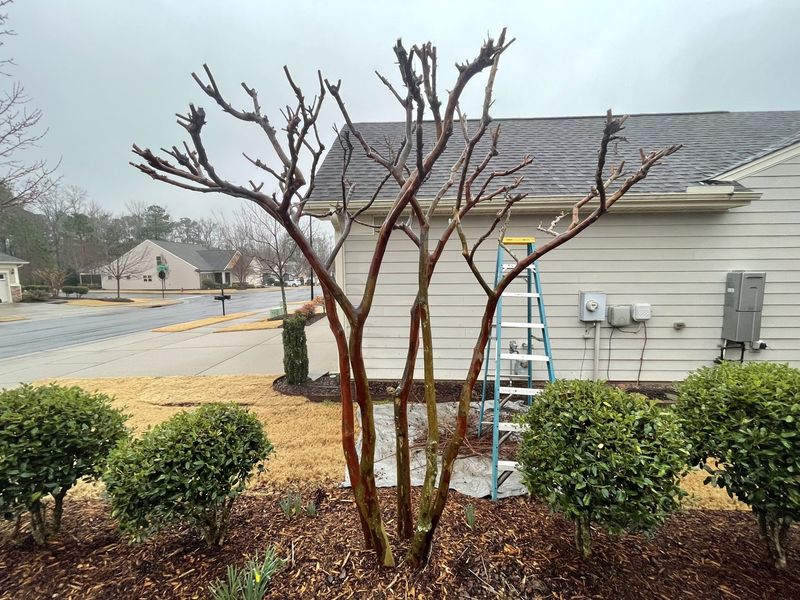
Sometimes the real trouble started on planting day. Many crape myrtle varieties are bred to grow tall and wide, and squeezing one of those giants into a tight spot sets you up for constant battles.
A vigorous variety wants to reach its full size no matter what. When it’s planted too close to a house, walkway, or fence, you end up trimming it back again and again just to keep the space usable. Each trim invites more regrowth.
In North Carolina, popular large types like Natchez can easily top twenty feet. Tucked into a small bed, that same tree fights the space every single year, and its energy keeps pouring into suckers and fresh shoots.
The mismatch between the plant’s natural size and the space you gave it creates a never-ending cycle. You cut, it regrows, you cut again, and the roots stay busy the whole time trying to reclaim room.
The good news is that crape myrtles come in many sizes. Dwarf and semi-dwarf types, such as the Pocomoke or Acoma, stay compact and need far less trimming to fit small areas comfortably.
If your current tree is simply too big for its spot, replacing it with a right-sized variety can free you from years of frustration. It feels like a big step, but the payoff is huge.
Choosing the correct size from the start means less pruning, fewer suckers, and a tree that actually looks the way it should without constant fussing on your part.
7. Some Suckers Simply Need Regular Removal
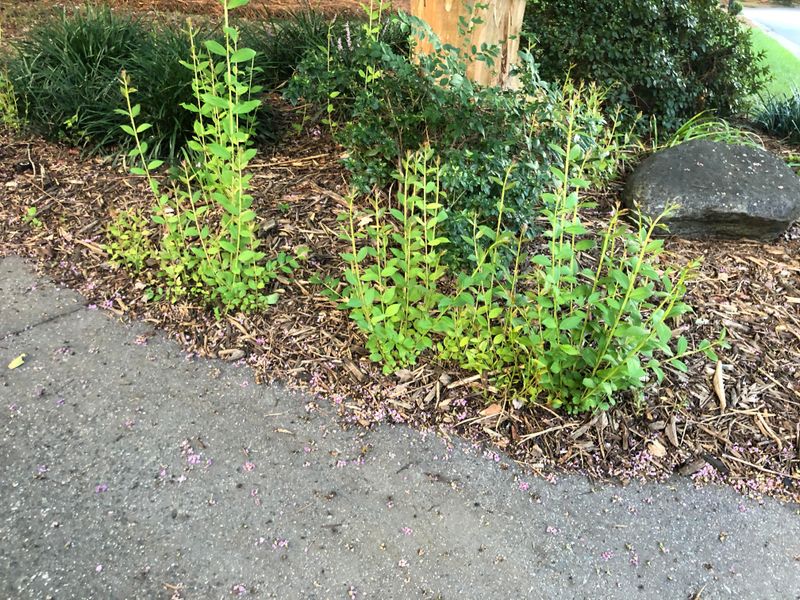
Here’s a truth that saves a lot of stress. With tree form crape myrtles, a few basal suckers are completely normal, and pulling them off now and then is just part of caring for the plant.
Tree form crapes are trained to grow on a few main trunks with a clear base. Since the plant naturally wants to be a multi-stemmed shrub, it keeps trying to send up new stems from below. That instinct never fully goes away.
Rather than seeing this as a failure, think of it as light, routine upkeep. A quick check every couple of weeks during the growing season keeps the base clean and the tree looking sharp.
Young suckers are easiest to handle. When they’re small and green, you can often rub or snap them off with your fingers, removing them before they toughen up and demand pruners.
Across North Carolina, gardeners who keep tidy tree form crapes usually do a little sucker patrol all summer. It takes just minutes and prevents the messy, crowded look that comes from ignoring them for months.
Consistency beats intensity here. Small, frequent removals stress the tree far less than one big cleanup and lead to slower regrowth over time. Accepting that some suckering is natural takes the frustration out of the whole thing.
Instead of fighting your tree, you settle into a simple rhythm of care that keeps it healthy, elegant, and blooming beautifully for many seasons to come without endless struggle.