The Georgia Native Flower Hummingbirds Can’t Resist In Late August
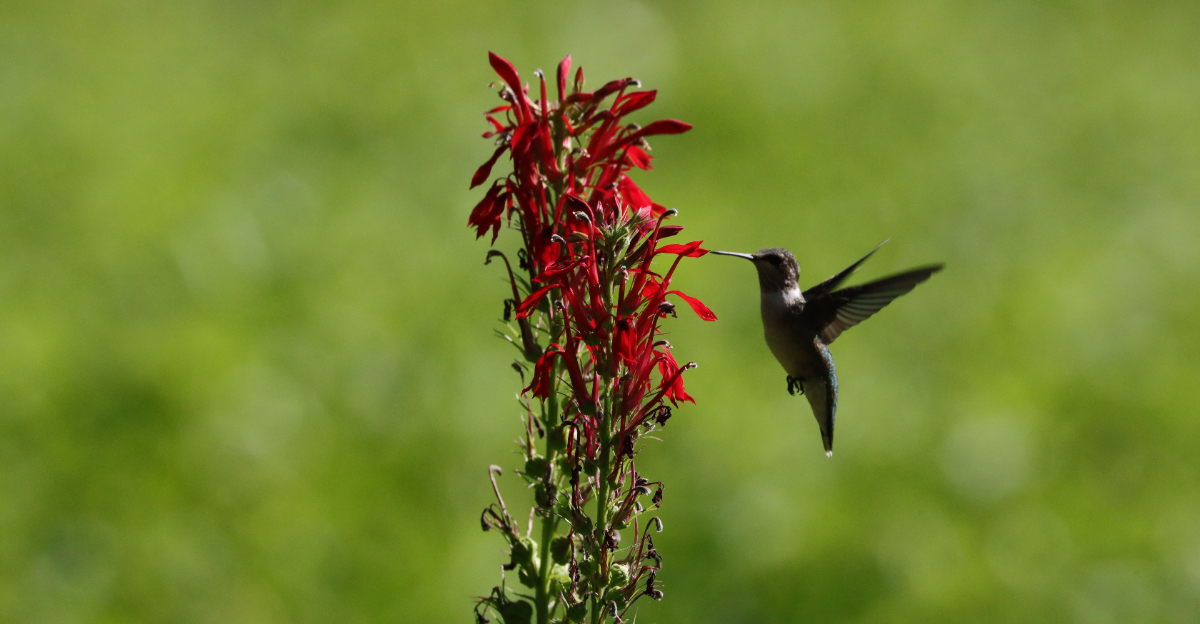
Late August can bring plenty of hummingbird activity, and one native flower can make your garden especially inviting. Its bright blooms arrive when these tiny visitors are actively searching for reliable food sources.
You might notice hummingbirds returning to the same flowering patch throughout the day. That repeated attention is exactly what makes this plant worth having around.
Give it the right growing conditions, and the flowers can become a lively feature in your garden. Georgia gardeners can also appreciate how naturally it fits into a native planting.
There is no need to fill every open space with complicated choices. Sometimes one well-placed flower can make a noticeable difference.
Watch closely when the blooms begin opening and activity picks up nearby.
Those quick flashes of wings may soon become a familiar sight around your garden.
1. Cardinal Flower Puts On Its Show Just As August Winds Down
Right when most summer flowers start looking tired, cardinal flower hits its stride.
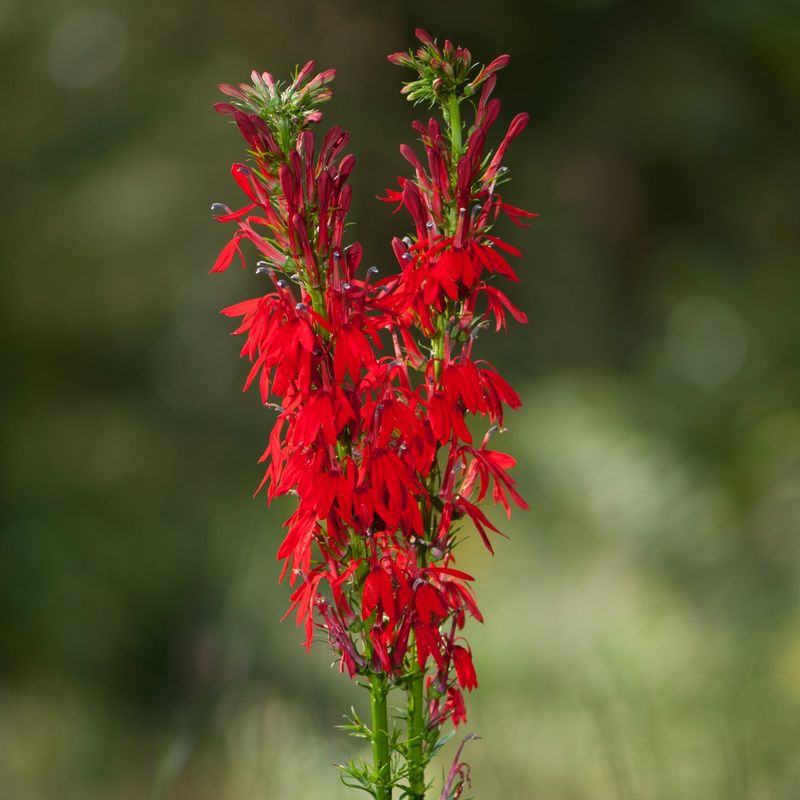
Lobelia cardinalis typically reaches peak bloom in mid to late August across much of the Southeast, making it one of the few native plants still putting on a real show at that time of year.
Gardeners who have grown it often describe a noticeable shift in yard activity once those red spikes open up. Birds that were passing through suddenly slow down and linger.
That kind of response says a lot about how well this plant fits into the late-summer landscape.
Cardinal flower can reach anywhere from two to four feet tall depending on growing conditions. Those tall spikes covered in tubular red blooms are hard to miss, and they tend to stand above surrounding plants, making them visible from a distance.
Timing matters when you are trying to attract migrating hummingbirds. Most ruby-throated hummingbirds begin moving south through Georgia starting in late July and continuing into September.
Cardinal flower blooms right in the middle of that window. Planting it means you are offering food exactly when birds need it most, without having to guess or adjust your garden schedule around migration patterns.
2. Brilliant Red Blooms Quickly Catch A Hummingbird’s Eye
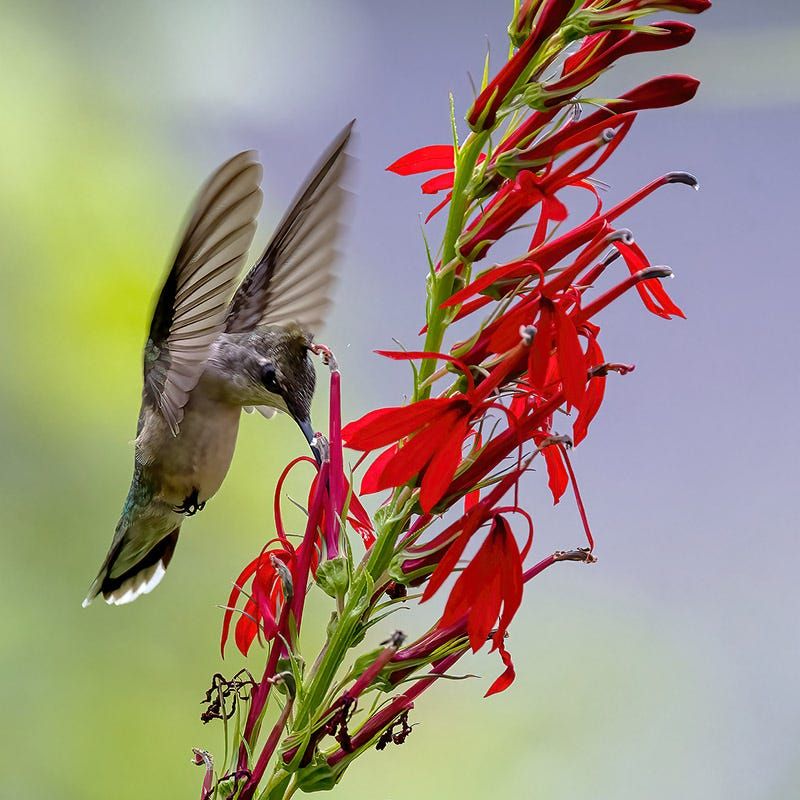
Red stops a hummingbird mid-flight. Out of all the colors in a summer garden, red is the one that consistently pulls these birds in fastest.
Cardinal flower delivers exactly that kind of visual signal, and it does it from a distance that other smaller blooms simply cannot match.
Hummingbirds rely heavily on color to spot food sources while flying. A tall spike of deep scarlet blooms rising above green foliage is essentially a neon sign for a bird on the move.
Gardeners in the Southeast have noticed that hummingbirds will visit cardinal flower before checking out other nearby plants, even ones that are actively blooming.
Color alone does not explain everything, but it plays a bigger role in initial attraction than most people realize. Once a bird has visited once and found nectar, it will return repeatedly and may even defend that plant against other hummingbirds.
Your Georgia Garden Changes Every Week. Your Plan Should Too.
Gardening in Georgia changes quickly throughout the season. Every Friday you’ll receive a simple weekly plan showing exactly what to plant, prune, fertilize, harvest, and protect so you never miss the right timing.
Planting cardinal flower near a window or a seating area gives you a front-row seat to that behavior.
Watching a hummingbird zoom in from across the yard, lock onto those red spikes, and hover right in front of them is one of the more satisfying moments a garden can offer. Bold color backed by real nectar is a combination that works reliably well.
3. Tubular Flowers Give Visiting Birds Easy Access To Nectar
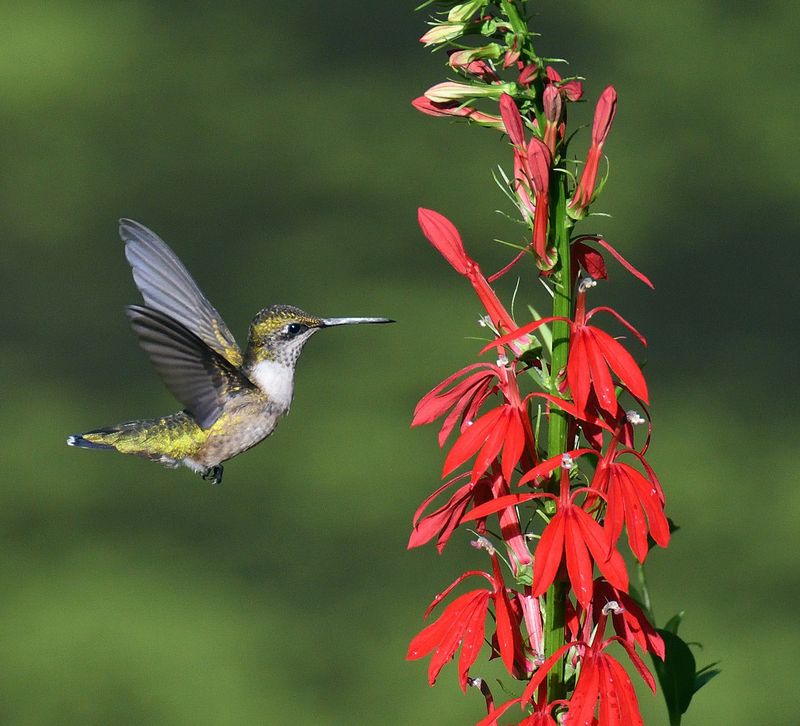
Shape matters just as much as color when it comes to hummingbird plants. Cardinal flower blooms are built in a long, narrow tube that fits a hummingbird bill almost perfectly.
Bees and butterflies have a much harder time reaching nectar that deep inside, which means less competition for the birds.
Hummingbirds have long, specialized bills and even longer tongues that can reach nectar most other pollinators cannot access. Cardinal flower essentially filters out the competition by design.
That is not a coincidence.
This plant and ruby-throated hummingbirds have evolved together over a very long time, and the relationship shows.
Each individual flower on the spike opens from the bottom up over several days. That staggered opening keeps fresh nectar available over a longer stretch of time rather than all at once.
A bird that visits on day one will find reason to come back on day five.
From a gardening standpoint, that extended bloom period means more activity stretched across more days. You are not getting one big burst and then nothing.
Cardinal flower keeps producing open blooms steadily, giving hummingbirds a reason to keep checking back. Pairing it with other late-season natives can extend that effect even further, but cardinal flower tends to be the anchor plant that brings birds in first.
4. Its Blooming Season Matches Peak Hummingbird Activity
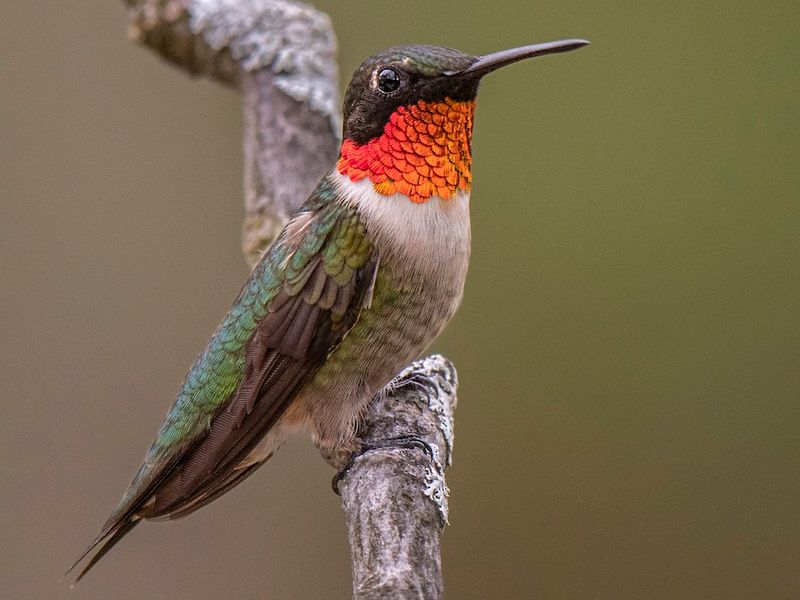
Timing a garden around hummingbird migration is trickier than it sounds, but cardinal flower takes most of the guesswork out of it.
Its natural bloom window in the Southeast lines up closely with the period when ruby-throated hummingbirds are most active and most hungry before heading south.
Late summer migration is demanding for these birds. They need to build up fat reserves quickly to fuel long flights.
A reliable, high-nectar plant in your yard during that window can make a real difference in how often birds stop and stay.
Cardinal flower does not bloom in early summer when nectar competition is high and birds are less focused on migration. It waits.
By August, many other plants have already finished, which makes cardinal flower stand out even more in the late-season landscape.
Gardeners who track their hummingbird sightings often notice a spike in visits right when cardinal flower opens. That overlap is not accidental.
Growing a plant that fits the natural schedule of local wildlife tends to produce better results than trying to force non-native species to perform at the right time.
Native plants carry an advantage here because they developed alongside the same birds and insects that still live in the region today.
Cardinal flower and ruby-throated hummingbirds are a well-matched pair for a reason.
5. Moist Soil Helps This Native Perform At Its Best
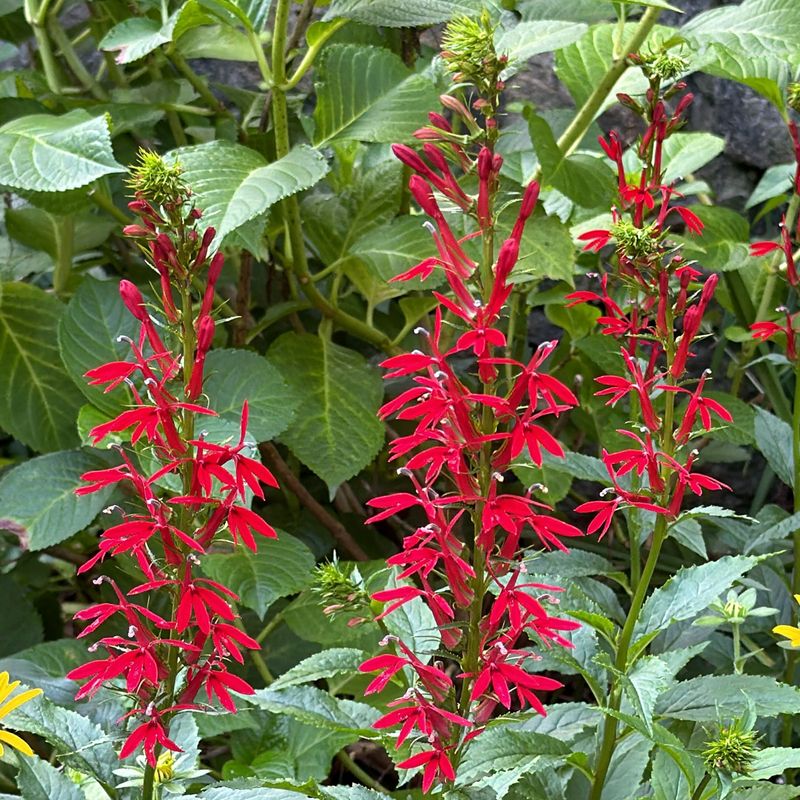
Cardinal flower is naturally found near streams, pond edges, and low-lying wet areas across the Southeast. Knowing that tells you a lot about what it wants in a garden setting.
Consistent moisture is probably the single biggest factor in how well it performs.
In typical Georgia summer heat, soil dries out fast.
Mulching heavily around the base of the plant helps hold moisture between waterings.
A two to three inch layer of organic mulch can make a noticeable difference in how the plant handles dry stretches without creating waterlogged conditions.
Planting near a rain garden, a downspout, or a low spot in the yard where water naturally collects can give cardinal flower the steady moisture it prefers.
It does not need standing water, but it does poorly in sandy, fast-draining soil without regular irrigation.
Container growing is another option if your garden beds tend to dry out quickly. A large pot kept consistently watered can support a healthy cardinal flower plant through the summer.
Just watch the roots carefully, since containers can overheat in direct afternoon sun.
Moving a potted plant to a slightly sheltered spot during the hottest part of the day can help it stay hydrated and continue blooming well into late August and beyond.
Moisture management is worth the extra effort with this plant.
6. Partial Shade Can Help In Hotter Garden Spots
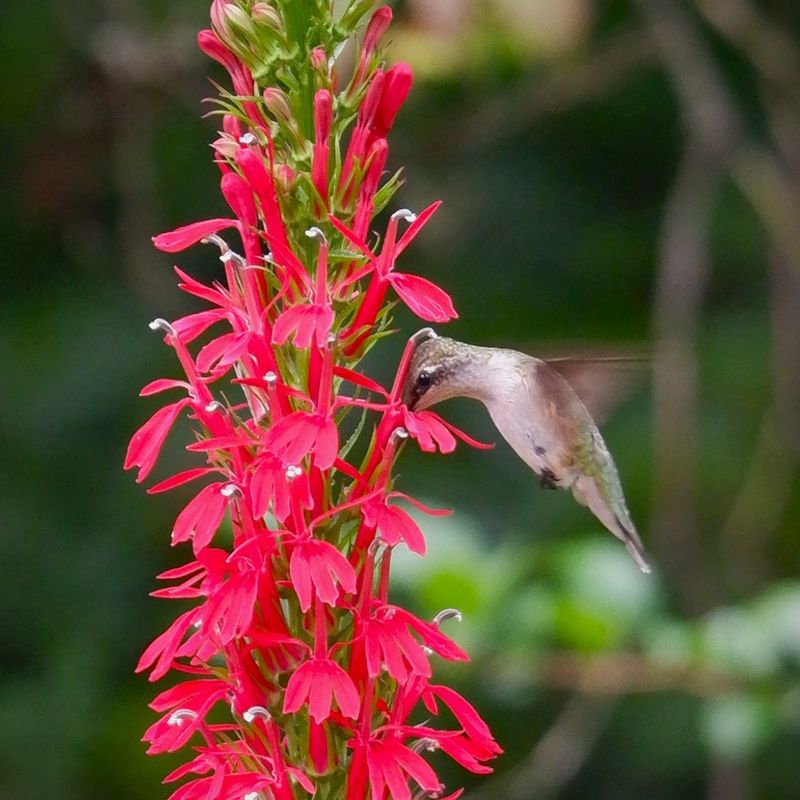
Full sun works for cardinal flower in cooler climates, but in the deep South, afternoon shade can be a real advantage.
Intense heat during the peak of summer can stress the plant and shorten its bloom period if it does not have some relief from direct sun.
A spot that gets morning sun and afternoon shade tends to suit this plant well in warmer regions. Morning light supports strong growth and bloom production.
Afternoon shade reduces heat stress and slows moisture loss from both the soil and the leaves during the hottest hours of the day.
Under the canopy of a deciduous tree is a natural fit. Cardinal flower grows in similar conditions in the wild, often thriving at the edge of wooded areas near water.
Recreating that environment in a home garden does not require a lot of effort, just some thoughtful placement.
Gardeners who have tried cardinal flower in full sun without adequate moisture sometimes find that the plant struggles or produces fewer blooms. Shifting it to a partially shaded bed with consistent watering often produces a much stronger result.
Shade alone is not a substitute for moisture, and moisture alone does not replace the benefit of shade in a particularly hot spot.
Combining both gives the plant its best chance at a long, productive bloom season through August and into early fall.
7. Those Late Blooms Can Keep The Garden Busy Into Fall
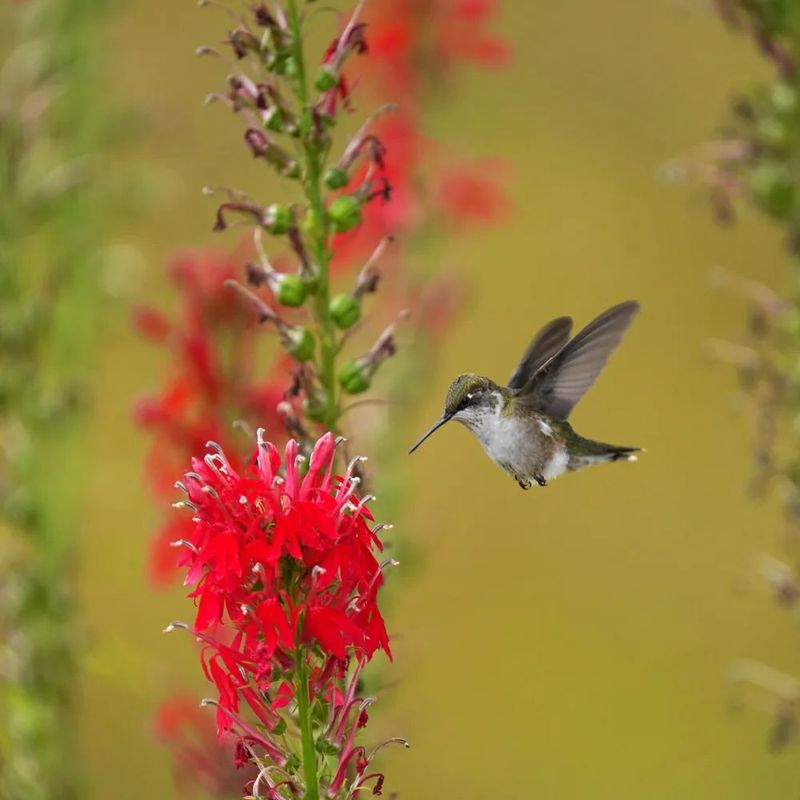
Cardinal flower does not quit when August ends.
Under decent growing conditions, blooms can continue into September, giving your garden an extended stretch of hummingbird activity that most other summer plants simply cannot offer at that point in the season.
Pairing cardinal flower with other fall-blooming natives can create a layered effect that keeps birds and pollinators moving through your yard for weeks.
Goldenrod, ironweed, and native asters all bloom around the same time and support a wider range of wildlife alongside the hummingbirds.
Seed heads that form after blooming are worth leaving in place. Cardinal flower self-seeds readily under the right conditions, and seedlings that establish in late summer or early fall can produce blooming plants the following year.
A small patch can gradually spread into a larger colony over time without much effort on your part.
Late-season blooms also matter for other pollinators that are still active in early fall. Leaving the garden a little wilder during this period tends to support more wildlife overall.
Resisting the urge to cut everything back too early gives seeds time to mature and gives any remaining wildlife a few extra weeks of food and shelter.
Cardinal flower fits naturally into that kind of low-intervention late-season approach, making it a smart long-term investment for any Georgia native garden.