Are Indiana Neighbors Allowed To Cut Tree Roots That Cross Their Yard
Roots don’t ask before crossing into your unfamiliar ground. Your walkway may already reveal the real reason Indiana law gives you clear answers about this exact problem.
Nobody wants you stuck in tension over a persistent maple. Property lines mean little once you face a determined root Courts in Indiana have ruled on disputes just like yours.
Sidewalks lift and foundations settle while you watch, powerless. Neighbors can drift apart over something small, and you feel it Understanding your legal standing changes everything about your next move.
Ignoring the problem only makes removal slower and pricier for you. Ownership and liability hinge on rules you need to know Every homeowner deserves to know exactly where you stand.
Waiting rarely helps, and roots keep growing whether you like it. Statutes spell out property obligations most homeowners like you never check. You need answers before hidden roots cause damage you cannot undo.
Indiana’s Legal Stance on Cross-Boundary Tree Roots
Roots crossing property lines are a surprisingly common legal headache. Indiana follows a general property law principle that gives homeowners real power over what happens on their land.
Indiana courts have recognized this self-help right for decades. In Luke v.Scott (Ind. Ct. App. 1933), Indiana’s appellate court addressed encroaching tree limbs at the property line.
The court confirmed that a landowner may trim encroaching growth without needing the tree owner’s permission. This is known as the “self-help” doctrine, and it has been recognized in courts across the country.
You don’t need permission from the tree’s owner to trim roots at the property line. The law treats encroaching roots the same way it treats encroaching branches.
That said, this right is not unlimited or consequence-free. Cutting roots carelessly can damage the tree, and that could create legal trouble for the cutter.
If the tree falls or becomes unstable after you cut the roots, questions about liability get complicated fast. Courts have looked at whether the person cutting acted reasonably and with proper care.
Indiana courts generally expect neighbors to act with reasonable care rather than cutting without restraint. The standard is whether your actions were proportionate to the problem.
So yes, you can cut those roots in Indiana. Just know that “allowed” and “consequence-free” are not always the same thing.
Understanding the full legal picture before you start digging is the smartest move you can make. Knowing the rules keeps you protected and your neighbor relationship intact.
Understanding The Massachusetts Rule And Self-Help Remedies

Most states, including Indiana, follow what legal experts call the Massachusetts Rule. Under this rule, a landowner can cut encroaching roots or branches without notifying the tree’s owner first.
Self-help is exactly what it sounds like: you handle the problem yourself, on your own property, without needing a court order. No lawsuit required, no lawyer fees, no waiting.
The remedy only applies to what crosses your boundary line. You cannot go onto your neighbor’s property to cut roots, even if you think it would fix the problem faster.
Your Indiana Garden Changes Every Week. Your Plan Should Too.
Gardening in Indiana changes quickly throughout the season. Every Friday you’ll receive a simple weekly plan showing exactly what to plant, prune, fertilize, harvest, and protect so you never miss the right timing.
Roots that stay on your side are fair game for removal. The key word here is “encroaching,” meaning the roots have physically moved into your yard without invitation.
Self-help remedies are popular because they are fast and affordable. A good root-cutting tool or a call to a local arborist can solve the problem in an afternoon.
You’ll also cover the full cost of cutting and cleanup yourself. Your neighbor owes you nothing for it, even though the tree is theirs.
However, self-help has a catch that many homeowners miss entirely. If your cutting causes the tree to become hazardous, you may share responsibility for any resulting damage.
Arborists recommend cutting roots carefully and never removing more than one-third of a tree’s root system at once. Doing more than that can destabilize even a healthy, mature tree.
The Massachusetts Rule gives you power, but power comes with responsibility. Acting thoughtfully protects both your yard and your legal standing in any future dispute.
When Root-Cutting Crosses The Line Into Liability
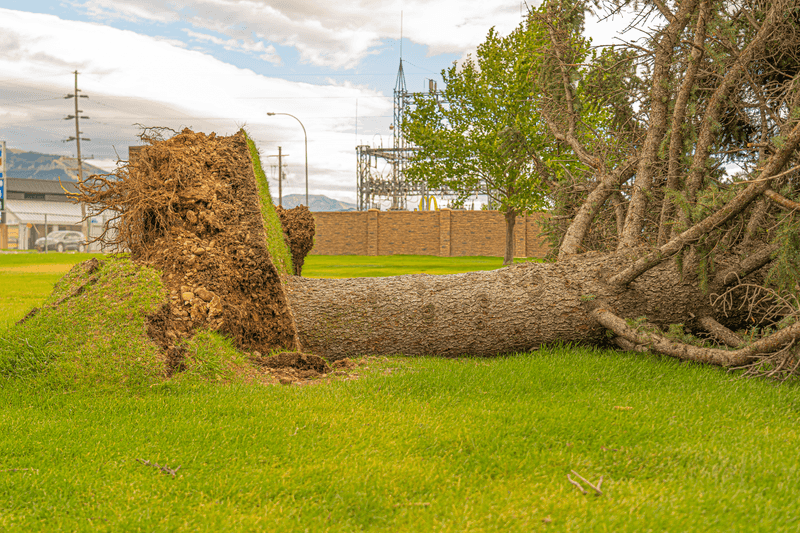
Not every root-cutting job ends without complications. Sometimes cutting roots causes a tree to weaken, tip, or fall, and that is when lawyers get involved.
If your root removal causes the tree to weaken and collapse onto your neighbor’s home, you could be held financially responsible. Courts look at whether you acted with reasonable care during the process.
Reasonable care means hiring a certified arborist, cutting only what is necessary, and avoiding cuts too close to the trunk. Reckless cutting is treated differently than careful, targeted removal.
If your cutting causes the tree’s decline and eventual loss, you may be responsible for the cost of replacing it, even though the tree originally belonged to your neighbor.
One common mistake homeowners make is cutting roots in a circle around the tree’s base. That kind of cut severs the tree’s main support system and almost guarantees future problems.
Another liability trap is cutting during dry seasons when trees are already stressed. A weakened tree combined with aggressive root removal significantly increases the risk of legal and safety consequences.
Documentation is your best protection if things go sideways. Take photos before and after any root work, and keep receipts from any professional you hire.
If a neighbor claims your cutting damaged their tree, those records show you acted in good faith. Good faith matters enormously in civil disputes between neighbors.
Root-cutting rights in Indiana are real, but exercising them carelessly can shift legal responsibility onto you. Protect yourself by treating the process seriously from the very first cut.
Boundary Trees And Why Shared Ownership Changes The Rules

A tree growing exactly on the property line is a different legal animal than one planted entirely on a neighbor’s side.
In Indiana, ownership generally follows the trunk. If a tree’s trunk sits entirely on one side of the line, that owner controls the tree, even if roots or branches cross over. A tree is only treated as jointly owned when its trunk itself straddles the boundary line.
Both neighbors legally own a boundary tree together. That means neither person can remove it, significantly damage it, or make major decisions about it without the other’s agreement.
Cutting roots of a boundary tree gets complicated quickly. If the roots are part of a shared tree, aggressive removal could be seen as damaging jointly owned property.
Courts have ruled that one co-owner cannot unilaterally destroy or harm shared property. Doing so can lead to a civil lawsuit for property damage or even conversion.
The safest approach with a boundary tree is to talk to your neighbor first. A written agreement about how to handle the roots protects both parties from future legal headaches.
If the two of you cannot agree, a mediator or a local arborist can help find a solution that keeps the tree healthy and both yards functional. Mediation is faster and cheaper than court.
Some neighbors choose to hire a joint arborist who can recommend the least invasive root management strategy. That approach keeps the tree alive and the relationship civil.
Boundary trees require mutual agreement, not unilateral action. Knowing your tree sits on the line changes everything about how you should approach the problem.
What Happens If The Tree Weakens Or Becomes Unstable

A declining tree near a property line is not just an eyesore. An unstable tree is a genuine safety hazard that can trigger serious legal consequences for the owner.
Indiana generally limits nuisance lawsuits to issues like noise or dust, not tree encroachment itself. Self-help, not a lawsuit, is your primary remedy for encroaching roots.
Separately, if an unstable tree falls and causes damage, liability usually depends on whether the owner knew, or should have known, that the tree was dangerous.
If a neighbor notifies you in writing that their tree looks unhealthy or unstable, that notification creates legal awareness. Ignoring it after that point puts the tree owner at much greater risk.
The same principle works in reverse. If you cut roots and the tree becomes unstable, you may have created the known danger yourself.
Arborists can assess a tree’s structural health and provide a written report. That report becomes critical evidence if the situation ever ends up in front of a judge.
Homeowners should also check their property insurance policy before any root or tree work begins. Some policies cover neighbor disputes involving trees, while others specifically exclude them.
Some Indiana municipalities regulate tree removal separately, so checking local ordinances before major work is worthwhile. Always check with your city before taking major action.
An unstable tree is not a problem that fixes itself with time. Acting quickly, carefully, and with proper documentation is the only way to protect your home and your finances.
Steps To Take Before Taking Legal Action Against A Neighbor

Going to court over tree roots should be a last resort, not a first move. Most neighbor disputes about roots can be resolved without ever filing a single legal document.
Start by talking to your neighbor directly and calmly. A face-to-face conversation often clears up misunderstandings faster than any letter from an attorney ever could.
If talking doesn’t work, send a written notice describing the problem clearly. Keep a copy for yourself, and send it via certified mail so there’s a delivery record.
Are Indiana neighbors allowed to cut tree roots that cross their yard without any conversation first? In most cases, yes, though acting carelessly can still create legal risk. But skipping communication often turns a simple fix into a prolonged dispute.
Hiring a certified arborist to assess the situation adds credibility to your position. A professional report carries weight in mediation and in court if things escalate.
Community mediation services are available in many Indiana counties at little or no cost. A neutral mediator helps both sides find a fair solution without the cost and formality of litigation.
If legal action becomes necessary, consult a property or real estate attorney in your area. Many offer free initial consultations that can clarify your options quickly.
Small claims court can handle many root-damage disputes, since it’s built for lower-dollar property claims without the cost of a full lawsuit. Knowing your options keeps you from feeling powerless in a frustrating situation.
Are Indiana neighbors allowed to cut tree roots that cross their yard? Absolutely. But handling it with patience and documentation makes the outcome far better for everyone involved.
This article is for general informational purposes and reflects common Indiana legal principles as of publication. It is not legal advice. For guidance on your specific situation, consult a licensed Indiana attorney.