What It Means When These Silky Nests Take Over Your Maryland Trees
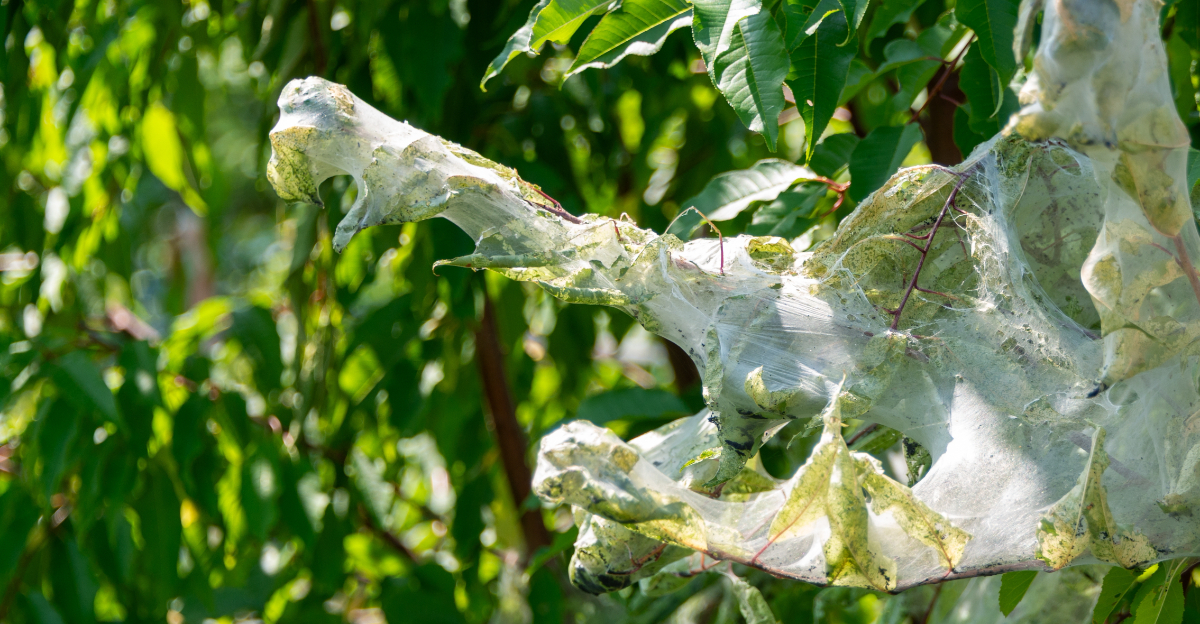
Your oak tree woke up wearing something unexpected overnight, thick silk draped across the branches you walk beneath daily. Nothing about that pale mass looks harmless up close.
Maryland trees face this exact threat yearly, and something small and hungry is hiding inside that silky mass. Branches you love may thin out first this season.
Waiting gives these insects more time inside your tree, and damage spreads fast as colonies multiply beneath your notice. Leaves vanish first, then limbs above your head look bare.
Bark beneath that webbing weakens fast, and birds along with beneficial insects avoid your branches. Few homes across Maryland escape this pattern, and your neighbors might already be fighting it too.
Summer heat only speeds how fast your tree starts suffering. Ignoring it buys unwanted guests more time in your tree. This detail determines exactly what you should do next.
The Real Story Behind Those Web-Covered Branches
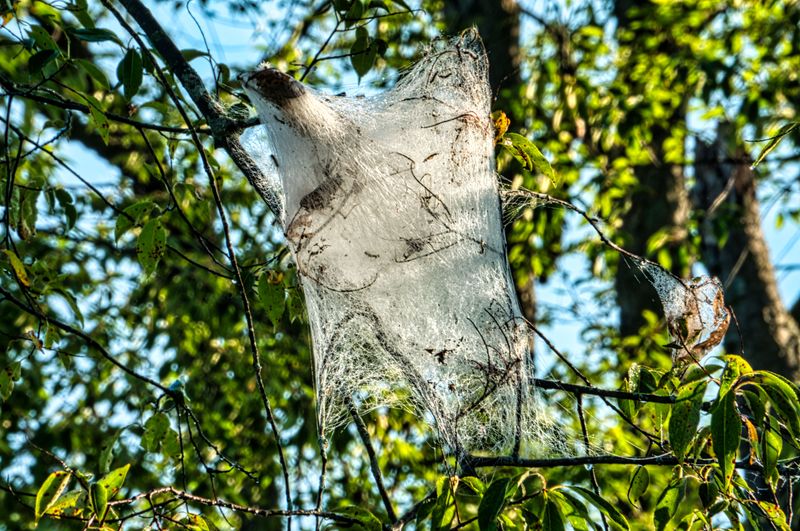
Image Credit: © Tom Fisk / Pexels
Something fuzzy and white just appeared in your tree overnight. Those silky nests clinging to your Maryland trees are built by fall webworms, a native moth species with a serious appetite.
The caterpillars spin protective silk shelters around branch tips to keep themselves safe while they eat. Inside, dozens or even hundreds of tiny caterpillars munch away on leaves together.
Eastern tent caterpillars do something similar in spring, but their nests appear in branch forks rather than at the tips. Both insects use the silk as a communal base camp, not just decoration.
Webworms target over 100 different tree species, including wild cherry, walnut, and sweetgum. They are not picky eaters, which is part of why they spread so fast across a yard.
The nests expand as the caterpillars grow and consume more foliage around them. A small nest can double in size within a week if conditions are right.
Homeowners often mistake these webs for spider activity, but spiders rarely build nests this large or this dense. The cottony texture and the visible caterpillars inside are your clearest clues.
Understanding what is actually living in that web helps you respond with the right strategy. Treating for the wrong pest wastes time and money while the real culprits keep feeding.
Fall webworms show up mid-summer through early fall, while tent caterpillars finish their damage weeks earlier. Timing alone often reveals which pest you’re facing.
Late Summer Is Prime Time For This Yard Pest
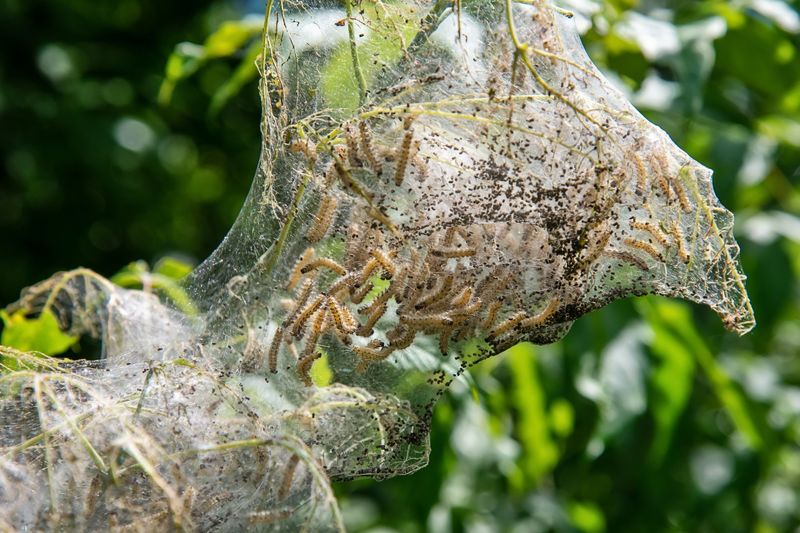
August hits and suddenly your trees look like they are wrapped in gauze. Late summer is peak season for fall webworm activity across the Mid-Atlantic region.
The timing is not random. Adult moths lay their eggs in early summer, and the caterpillars hatch just in time to take advantage of mature, leafy canopies.
Warm temperatures speed up their development, so hotter summers often mean bigger and more widespread infestations. A mild July followed by a hot August tends to trigger bigger infestations.
Silky nests on your Maryland trees tend to multiply fast during this window. One overlooked nest in July can multiply into several sprawling webs by September.
Your Maryland Garden Changes Every Week. Your Plan Should Too.
Gardening in Maryland changes quickly throughout the season. Every Friday you’ll receive a simple weekly plan showing exactly what to plant, prune, fertilize, harvest, and protect so you never miss the right timing.
Tent caterpillars, by contrast, show up in early spring and are usually gone before summer even starts. If you are seeing nests now, fall webworms are almost certainly your culprit.
The caterpillar stage lasts about four to six weeks before they drop to the ground and pupate in the soil. That means the damage window is short but intense.
Catching them early in late July or early August gives you the best shot at limiting their spread. Waiting until September often means the feeding is mostly done and the nests are already collapsing on their own.
Fall webworms overwinter as pupae in soil and bark, not as eggs. Moths emerge and lay eggs in early summer, so a mid-summer check catches them before they hatch.
Signs Your Trees Are Dealing With More Than Spiders
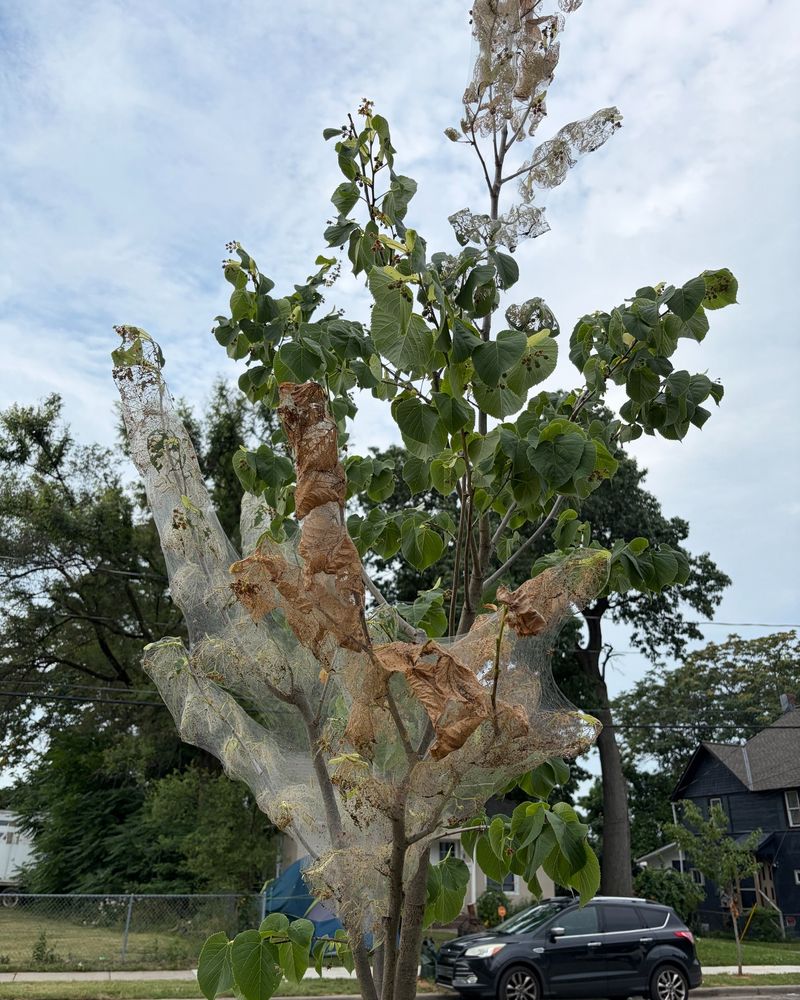
Not every web in your tree is a spider situation. Knowing the difference between harmless spider webs and a genuine caterpillar nest can save you a lot of unnecessary worry.
Spider webs are typically thin, irregular, and built to catch prey. Caterpillar nests are thick, opaque, and packed with visible movement if you look closely.
One clear sign of a webworm problem is defoliation around the nest. Stripped, brown, or skeletonized leaves clustered near the web are a strong indicator that feeding is actively happening.
You might also notice dark frass, which is basically caterpillar droppings, accumulating on leaves below the nest. It looks like tiny black specks and is easy to spot on a calm day.
The nests themselves tend to grow larger over time rather than staying static. A spider web shrinks or disappears after a few days without maintenance, but caterpillar nests keep expanding.
Multiple nests on the same tree or on neighboring trees suggest a larger population is already established in your yard. That pattern calls for more than a casual observation.
Silky nests spreading across your Maryland trees alongside visible leaf damage means action is probably needed soon. The sooner you confirm the source, the more options you have for managing the situation effectively.
Risks These Nests Pose To Tree Health Over Time
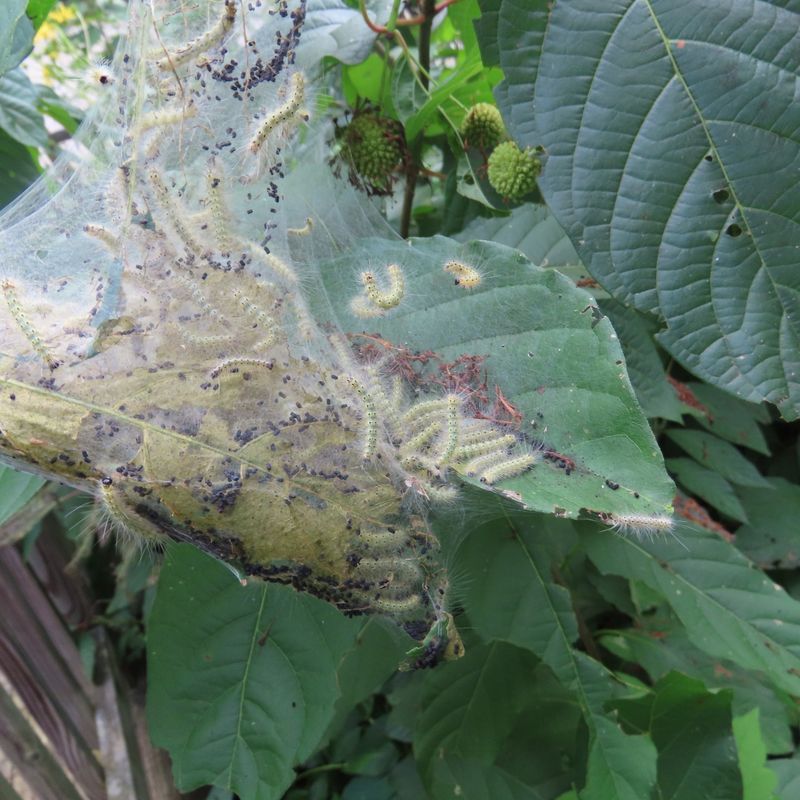
A single nest on a healthy tree is usually not a crisis. But repeated infestations over multiple seasons can genuinely wear a tree down over time.
When caterpillars strip leaves from branches, the tree loses some of its ability to photosynthesize and produce energy for the rest of the season. That energy deficit adds up, especially when combined with drought or other stressors.
Young trees and newly planted specimens are more vulnerable than established ones. A sapling that loses most of its leaves in August has very little time to recover before winter arrives.
Mature, well-established trees typically bounce back after a single season of heavy feeding. They push out a second flush of leaves or simply wait until the following spring to recover fully.
The real risk comes from consecutive years of infestation without any management. Trees that are defoliated repeatedly start showing signs of declining branch health and structural weakness.
Stressed trees also become easier targets for secondary pests like borers and bark beetles. Those secondary pests can cause far more lasting damage than the original caterpillar feeding ever did.
Silky nests covering your Maryland trees are a warning sign worth taking seriously, especially if your tree already looks stressed. Healthy soil, proper watering, and early intervention are your best tools for keeping your trees resilient long-term.
Removal Methods That Work Without Harming The Tree
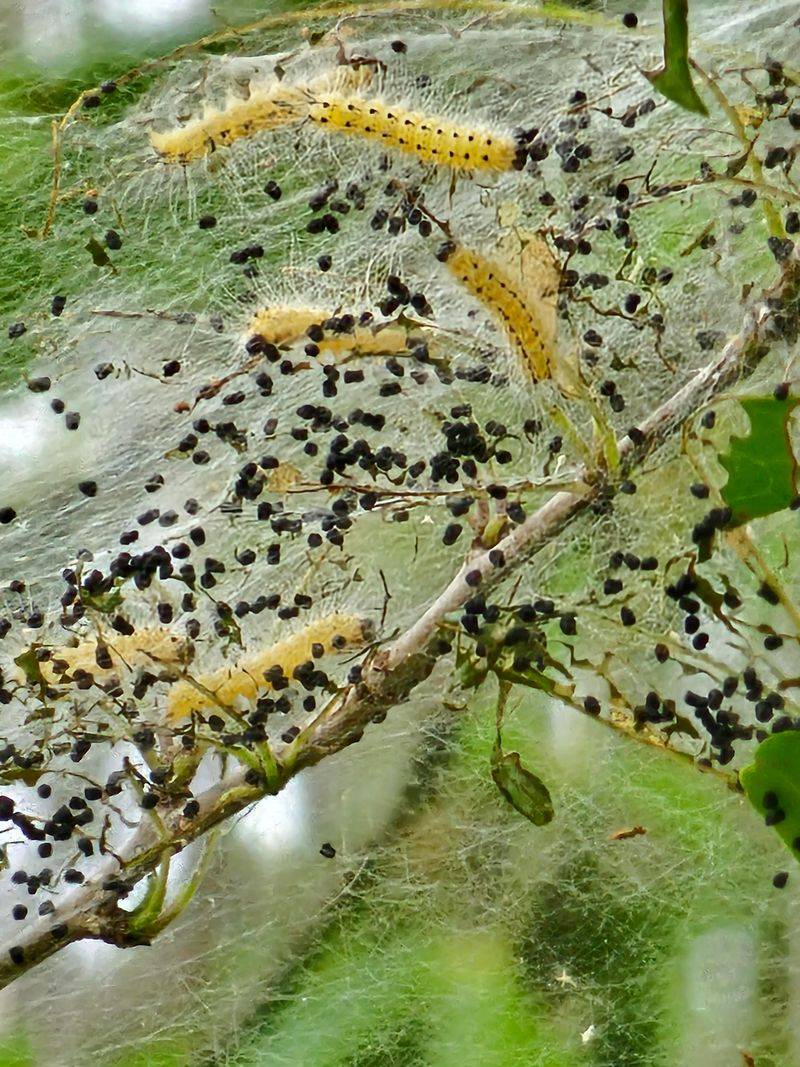
Grabbing a can of spray isn’t the answer here. The most effective removal methods are also the gentlest ones for your tree’s long-term health.
Pruning is the gold standard approach for small to medium nests. Clip the branch just below the nest, drop it into a bucket of soapy water, and dispose of it in a sealed bag.
For nests higher up in the canopy, a long pruning pole with a saw attachment gives you reach without requiring a ladder. Prune on a dry day when possible, so cut sites heal faster.
Some homeowners use a stick or gloved hand to break open the nest and expose the caterpillars to birds and natural predators. This works surprisingly well when done early in the infestation.
Bacillus thuringiensis, commonly called Bt, is a naturally occurring soil bacteria that targets caterpillars specifically. It is safe for birds, bees, and pets, making it a smart choice for backyard use.
Spinosad is another organic option available at most garden centers and works similarly to Bt. Both products need to be applied directly to active caterpillars for best results.
Avoid broad-spectrum insecticides whenever possible, since they harm beneficial insects along with the pest. Targeted, thoughtful removal keeps your tree healthy and your yard ecosystem intact.
Steps To Keep Them From Returning Next Season
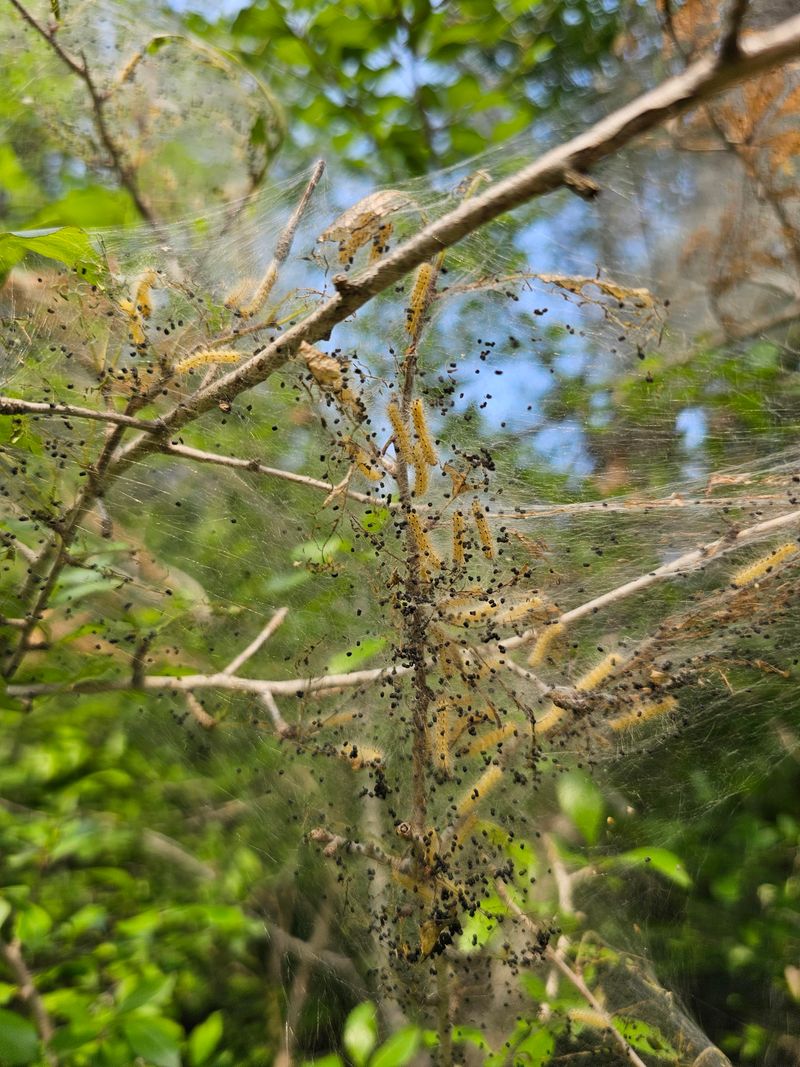
Dealing with the nests this year is only half the job. Taking a few steps now sets your trees up for a much cleaner season next year.
Check the base of your trees for pupae in late winter, when they’re easiest to spot without leaf cover. Removing them at that stage stops the next generation before it ever gets started.
Encourage natural predators by reducing pesticide use in your yard overall. Birds like yellow-billed cuckoos and parasitic wasps are natural enemies of webworms and will help control populations for free.
Keeping your trees healthy through proper mulching, watering during dry spells, and annual fertilization makes them more resistant to pest pressure. A strong tree recovers faster and is less attractive to secondary invaders.
Check neighboring properties and tree lines in early summer, since infestations often spread from untreated trees nearby. A quick visual scan in June can catch new nests before they explode in size.
Staying consistent with monitoring is the real secret to keeping silky nests off your Maryland trees season after season. A little attention in spring pays off big by the time August rolls around again.
Consistent removal over a few seasons noticeably thins out future populations. Natural predators do the rest once you stop giving the caterpillars a head start.