The 8 Florida Native Plants That Help Control Rats And Weeds At The Same Time
Rats and weeds rarely show up as separate problems in a Florida yard. The right native plants can chip away at both at once, without a full solution to either.
Dense, low native groundcovers crowd out weed seedlings before they get a foothold, cutting down the bare soil that weeds rely on to spread.
Above ground, certain native shrubs and grasses create less appealing habitat for rats than the thick, tangled exotics many yards still rely on for cover.
No single plant clears a yard of pests or weeds completely. Rats adapt, and weeds always find a way in eventually.
But a yard built around the right native mix gives you fewer entry points for both problems than a yard full of invasive plantings ever will. Eight plants stand out for doing double duty.
None of them work miracles, but together they shift the odds in your favor.
1. Frogfruit Turns Bare Ground Into A Living Mat
A bare patch after a rainstorm can look harmless enough. But give it a few warm weeks and volunteer weeds will move in fast.
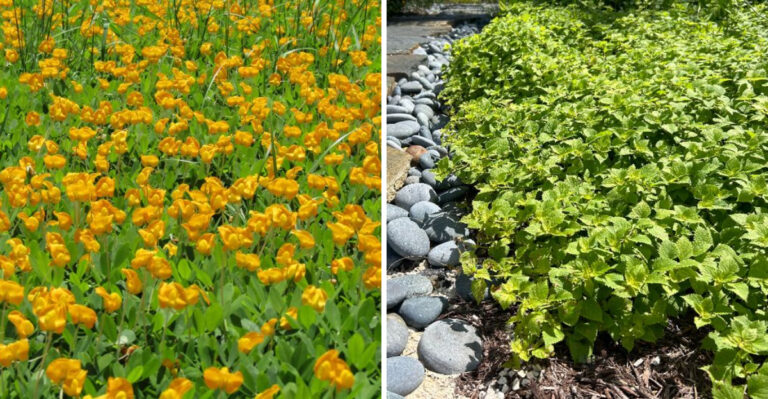
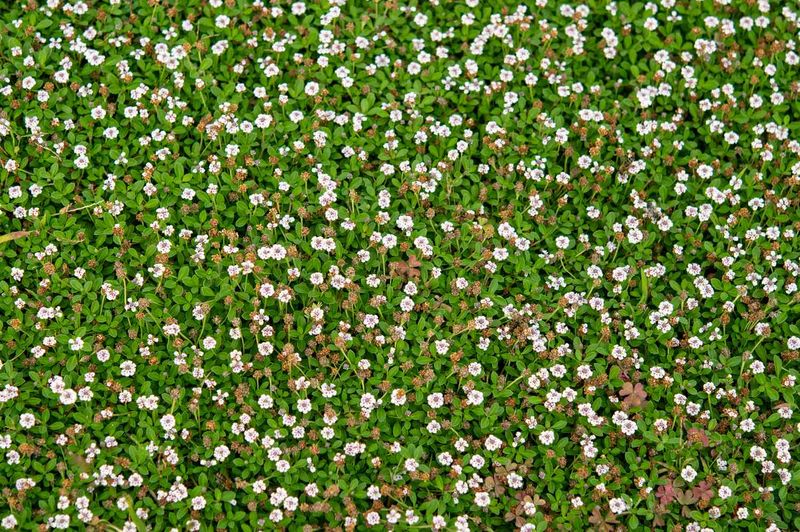
Frogfruit, known scientifically as Phyla nodiflora, is one of the most practical native groundcovers for those situations. UF/IFAS describes it as a low-spreading plant that roots at stem nodes as it travels across the ground.
Over time it can form a dense mat that leaves little open soil for unwanted plants to colonize.
Frogfruit handles full sun and partial shade reasonably well. It tolerates occasional foot traffic and can even be mowed at a high setting, which makes it useful in lawn-like areas where turf struggles.
It also shows good drought tolerance once established, though it establishes faster with regular watering during its first season.
Weeds can still appear during establishment, especially in the gaps before the mat fills in. Plan to pull or spot-treat anything that shows up early.
Once frogfruit gets going, those opportunities narrow considerably.
From a yard-management standpoint, its value in the rat conversation is straightforward. A low, maintained mat sitting just inches off the ground does not offer the shelter that tall weeds or brushy growth can provide.
Keep it away from direct foundation contact, and it becomes a practical part of a well-organized landscape rather than a hiding spot.
2. Sunshine Mimosa Spreads Before Weeds Take Over
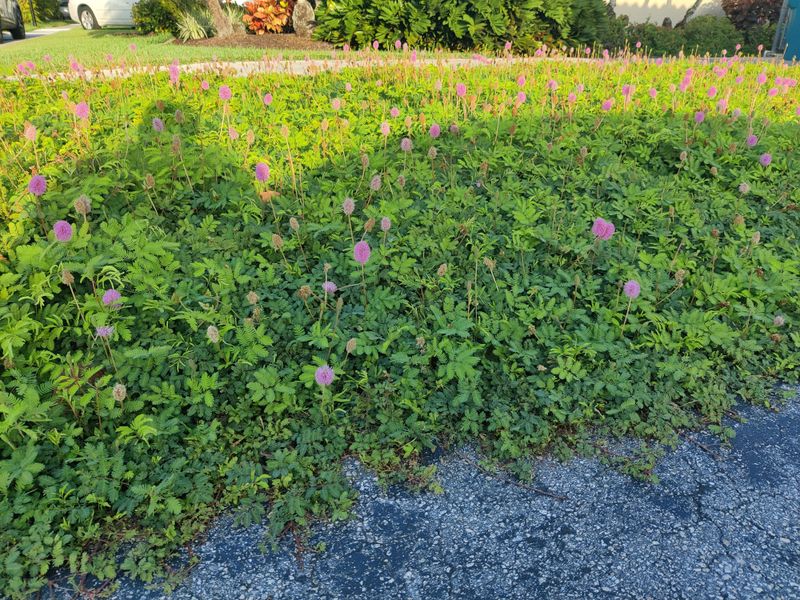
Speed matters when you are trying to occupy open ground before something unwanted does. Sunshine mimosa, Mimosa strigillosa, earns its spot on this list largely because of how quickly it can cover a sunny area once it gets established.
UF/IFAS describes it as a fast-spreading native groundcover that can blanket considerable space with feathery foliage and cheerful pink flowers.
It stays genuinely low. The trailing stems hug the ground, which makes it a reasonable lawn alternative in areas where traditional turf struggles to perform.
It tolerates moderate foot traffic and can handle periodic mowing, which helps keep it tidy and prevents it from creeping into areas where it is not wanted.
Sunshine mimosa prefers full sun and well-drained soil. It shows strong drought tolerance after establishment, which is a real advantage during dry stretches.
Your Florida Garden Changes Every Week. Your Plan Should Too.
Gardening in Florida changes quickly throughout the season. Every Friday you’ll receive a simple weekly plan showing exactly what to plant, prune, fertilize, harvest, and protect so you never miss the right timing.
Weeds can still pop up during the first growing season before coverage becomes consistent, so some early hand-pulling is normal.
The distinction between this plant and tall, neglected vegetation is worth emphasizing. Unmanaged weedy growth near a structure provides much better cover for rodents than a short, maintained mat of sunshine mimosa.
That is the connection. Replacing overgrown patches with intentional, low-growing plants is a smarter approach.
It is better than leaving soil bare or allowing unmanaged volunteer growth to take over.
3. Lyreleaf Sage Fills Those Difficult Shady Spots
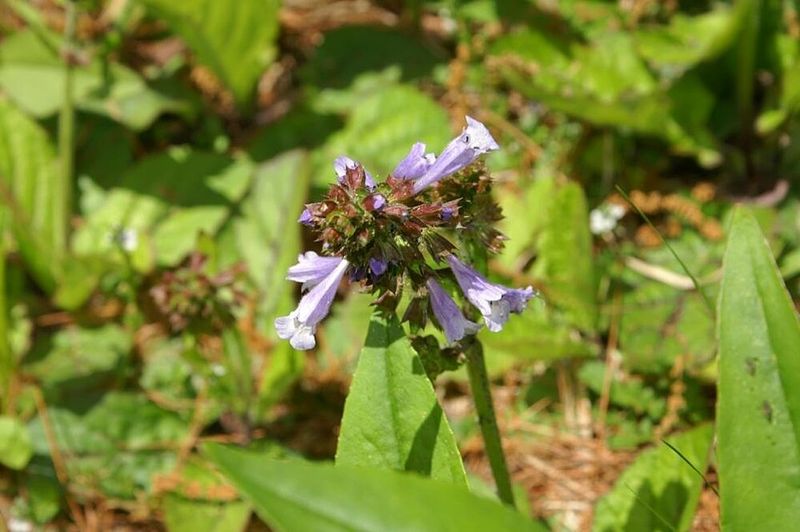
Shady strips beneath trees are some of the hardest spots in any yard to manage. Turf thins out, bare soil appears, and weeds move in quickly.
Lyreleaf sage, Salvia lyrata, is one of the few native plants that can genuinely perform in those conditions. UF/IFAS documents its tolerance across a wide light range, from full sun through moderate shade, which makes it unusually flexible for a native perennial.
Its growth habit starts as a low basal rosette of lobed, attractive leaves that stay close to the ground through most of the year. That low foliage can occupy planting space in spots where other plants simply give up.
When spring arrives, flower stalks rise well above the rosette, sometimes reaching 12 to 24 inches. Those can be trimmed back after blooming if a lower profile is preferred.
Lyreleaf sage also reseeds reliably. That means an established planting can gradually expand to fill adjacent bare spots without replanting effort.
It is not a dense carpet in the way frogfruit is. Think of it more as a plant that quietly fills gaps and contributes to a mixed low-growing planting over time.
It tolerates infrequent mowing, according to UF/IFAS, which gives it some flexibility in managed lawn settings. For shady areas where nothing else seems to work, it is one of the more dependable options available to gardeners in the region.
4. Beach Sunflower Covers Hot Sandy Ground Fast
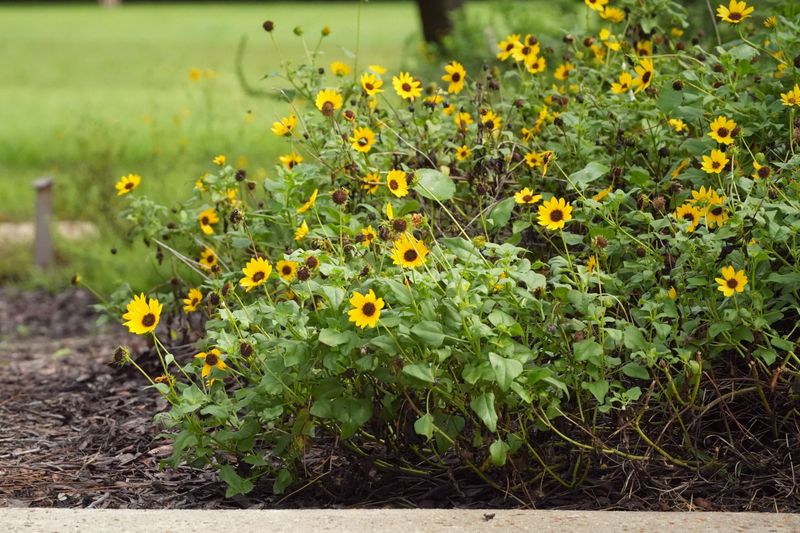
Hot, dry, sandy beds can feel impossible to plant. Nothing seems to hold, weeds blow in on the wind, and bare soil bakes in the afternoon heat.
Beach sunflower, Helianthus debilis, was practically built for those conditions. UF/IFAS identifies it as a native, fast-growing plant that spreads by trailing stems across sunny, sandy sites and covers ground quickly once it gets going.
Its bright yellow flowers are a bonus. Pollinators visit them regularly, and birds sometimes feed on the seeds.
The spreading stems root as they grow, helping the plant anchor across open ground. This gradually reduces exposed soil where weeds can establish.
A few honest caveats belong here. Beach sunflower grows noticeably taller than frogfruit or sunshine mimosa.
Mature plants can reach 2 feet or more in height, and the spread can be substantial. That makes it a better fit for open beds, slopes, or coastal areas than for tight spaces near foundations.
Its salt tolerance is a genuine advantage along the coast, but gardeners in shadier or wetter inland spots may find it underperforms.
Near buildings, any spreading plant should be kept managed and separated from the structure. Tall, unpruned growth close to a home is a different situation from a maintained planting in an open bed.
Site selection and regular attention make beach sunflower a strong performer in the right location.
5. Twinflower Keeps Low Where Taller Weeds Take Hold
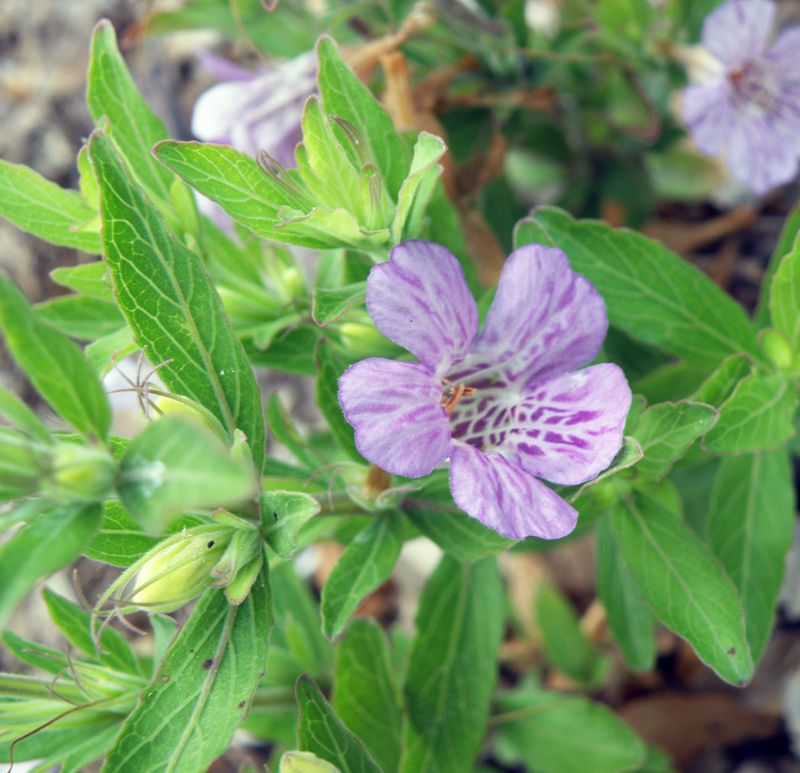
Some garden spots seem to attract the same stubborn weeds every season. You pull them, they return.
Twinflower, Dyschoriste oblongifolia, offers a different approach for those spots. Also called oblong snakeherb, this native perennial spreads by underground rhizomes and typically stays between 6 and 12 inches tall.
UF/IFAS lists it as a native groundcover suited to a range of light conditions, including partial shade.
Its small purple flowers are genuinely attractive and appear over a long season. The plant does not rush to fill space the way sunshine mimosa does.
Growth is steady rather than dramatic, so patience is part of the deal here. An established planting can eventually occupy ground that would otherwise remain bare between other plants.
Twinflower works well as part of a mixed native planting rather than as a standalone solution for large open areas. Pair it with faster-spreading species to cover ground more efficiently while the twinflower fills in at its own pace.
Weeding during the establishment period is still necessary.
Its low profile is the relevant point in terms of yard structure. A maintained planting of twinflower sitting under a foot tall looks and functions very differently from a patch of tall volunteer weeds.
Keeping problem areas planted with intentional, low-growing species is better than leaving them bare. It also reduces the chance of unmanaged growth near structures.
6. Wild Petunia Fills Gaps Without Becoming A Thicket
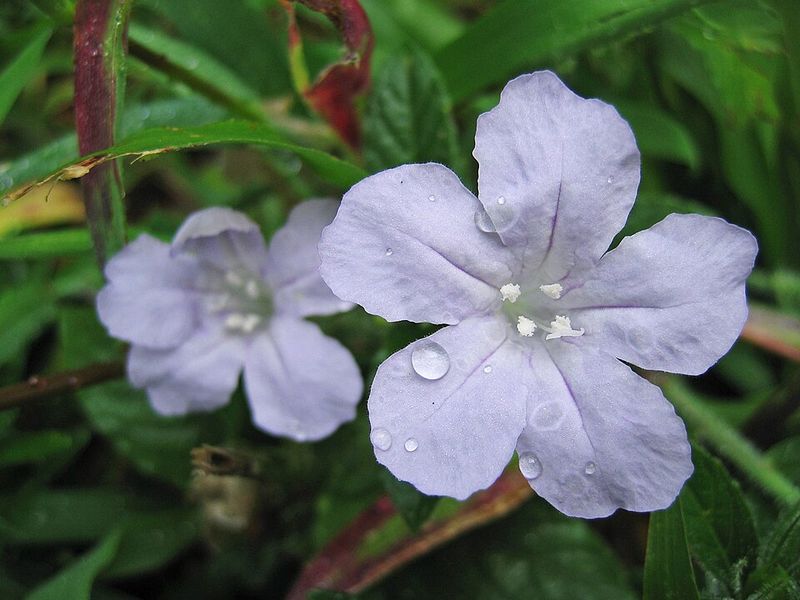
Identification matters before you plant any Ruellia. The native Carolina wild petunia, Ruellia caroliniensis, and the invasive Mexican petunia, Ruellia simplex, share a similar common name but are very different plants.
Mexican petunia is listed as invasive in Florida and should not be planted. Carolina wild petunia is the native species and the one described here.
Ruellia caroliniensis is a short-lived perennial that reseeds to maintain its presence in a planting. UF/IFAS notes that it can stay quite low when mowed periodically, which makes it adaptable to lawn-like settings.
Its lavender trumpet-shaped flowers appear over a long season and attract native bees. It tolerates both sun and partial shade, which gives it flexibility across different yard conditions.
It does not form a dense, impenetrable mat. Think of it as a gap-filler that contributes to a diverse low-growing planting rather than a plant that blankets ground on its own.
Used alongside spreading groundcovers, it adds flower color and vertical interest without creating bulky growth.
For the yard-management angle, the goal with any of these plants is to replace neglected, overgrown areas with something intentional and maintainable. Carolina wild petunia fits that role well in mixed beds and naturalized lawn edges.
Just confirm you have the native species before purchasing. A quick check of the leaf shape and stem habit can help separate it from its problematic relative.
7. Blue Eyed Grass Adds Coverage Without Bulky Growth
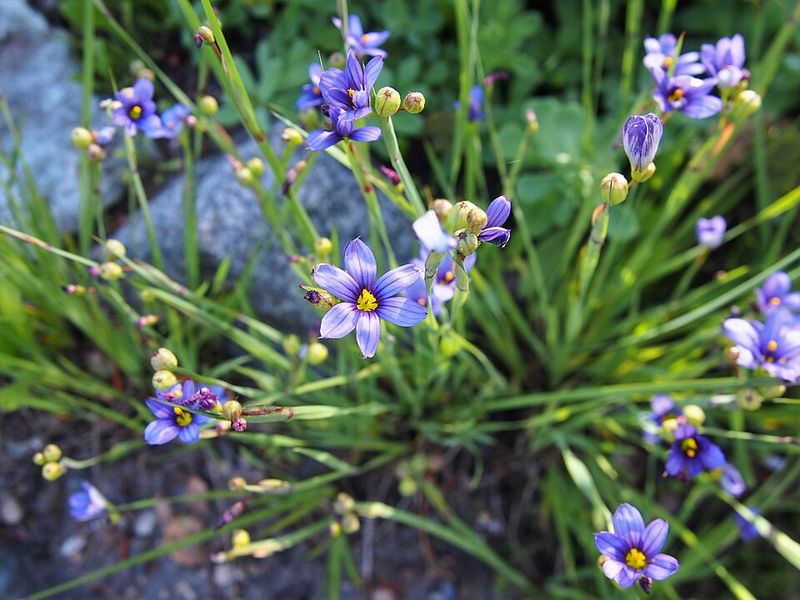
Not every planting situation calls for a fast-spreading mat. Some spots need something tidier, something that adds green coverage without taking over adjacent areas.
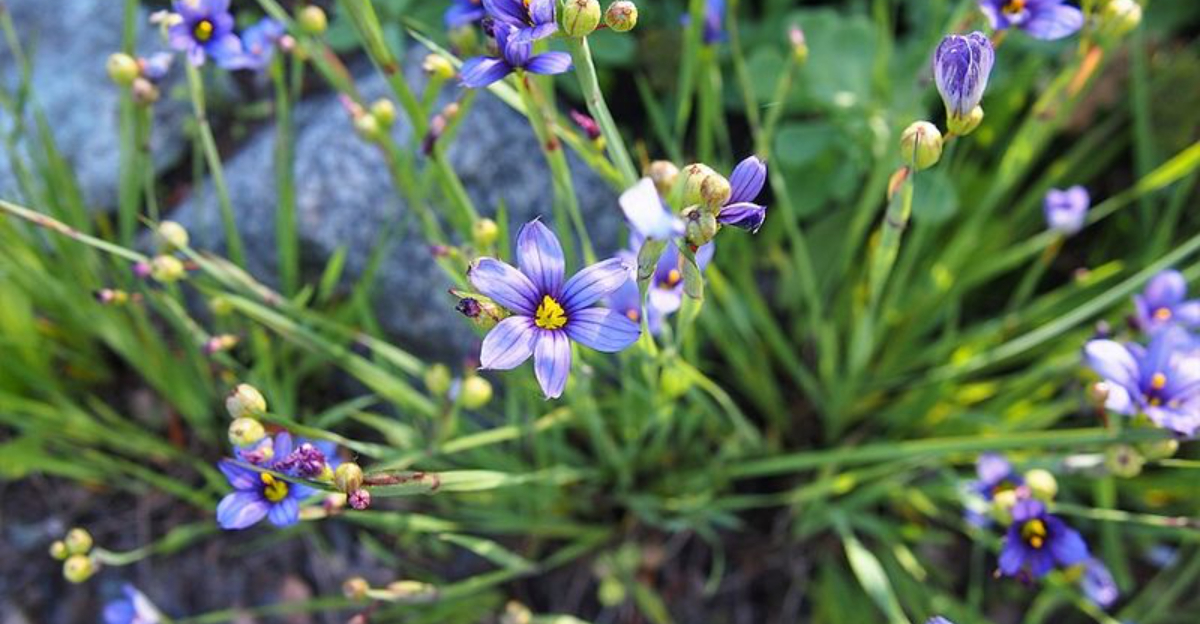
Blue-eyed grass, Sisyrinchium angustifolium, is exactly that kind of plant. Despite its name, it is not a true grass.
It belongs to the iris family and forms neat, upright clumps of narrow, grass-like foliage topped with small blue flowers in spring.
UF/IFAS describes it as a low-growing native perennial useful as a groundcover, border plant, or naturalized addition to moist areas. It does not run across the ground like frogfruit or sunshine mimosa.
Planted in clusters or drifts, though, it can provide consistent low coverage in suitable spots.
Moisture is an important factor. Blue-eyed grass performs best in areas with reliable soil moisture and does not handle prolonged drought as well as beach sunflower or sunshine mimosa.
It is best suited to moist, well-drained sites in sun to partial shade rather than dry coastal settings.
Self-seeding and division both allow it to gradually expand over time. Its value in a planned landscape is filling spaces with intentional low vegetation instead of leaving them bare for weeds to colonize.
Clumps can be divided every few years to spread coverage further. No direct effect on rodents should be expected from this plant.
Its contribution is simply keeping planned spaces planted and visible.
8. Railroad Vine Takes Over Tough Coastal Ground
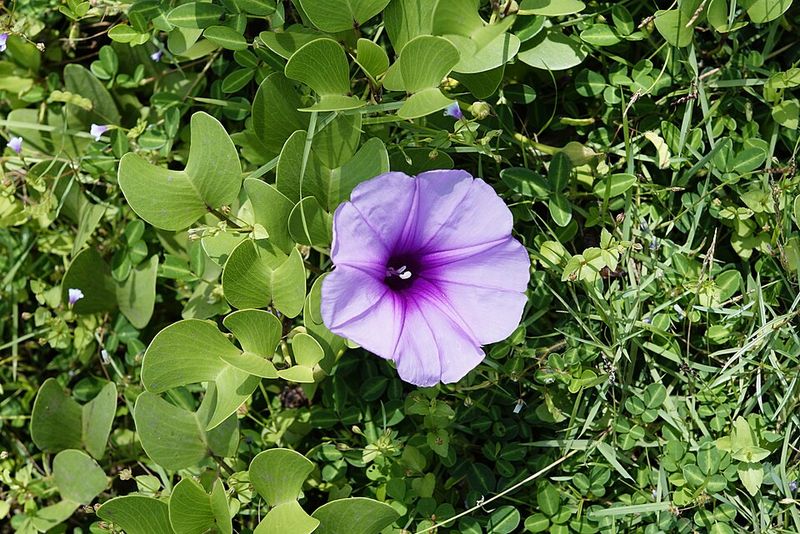
Coastal ground near the water presents a planting challenge that most species simply cannot handle. Salt spray, blowing sand, intense heat, and almost no organic matter in the soil eliminate most candidates quickly.
Railroad vine, Ipomoea pes-caprae, is one of the few native plants genuinely adapted to those extremes. UF/IFAS identifies it as a very fast-growing native groundcover built for intense sun, sandy soil, salt exposure, and drought.
Its long trailing stems can cover significant ground in a single season. The large pink flowers resemble morning glories, which makes sense because railroad vine belongs to the same plant family.
It anchors itself as stems root along the ground, which also helps stabilize sandy soil in coastal areas.
Honest limitations belong in this conversation. Railroad vine spreads rapidly and needs room.
UF/IFAS notes that it may require regular pruning to keep it from overrunning adjacent areas. It is a site-specific plant, best used in open coastal settings where its vigorous habit has space to express itself.
It is not a statewide solution and does not suit small beds or tight spaces near structures.
Any sprawling vegetation near a building should be kept managed and separated from the foundation. That principle applies to every plant on this list.
The broader point holds across all eight species. A yard with deliberate, maintained, low-growing plants is easier to inspect and manage than one left to tall weeds and tangled growth.
That is the real advantage.