Why Palo Verde Trees Are Becoming A Favorite Small Shade Tree In Arizona
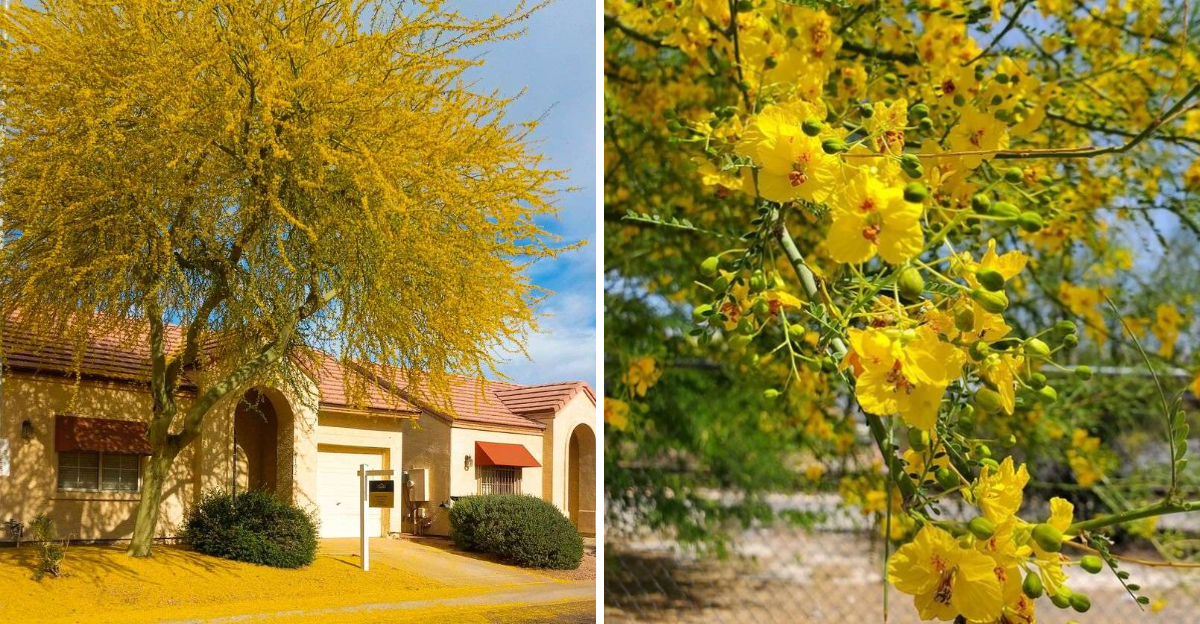
If there’s one tree that feels like it was genuinely made for Arizona, palo verde might just be it.
The bright green branches, the delicate canopy that filters light without blocking it completely, the clouds of yellow flowers that show up in spring and make the whole desert look like it’s celebrating something.
It’s a genuinely spectacular native tree, and Arizona homeowners have been catching on in a big way. You’ll spot palo verdes in residential yards, along neighborhood streets, and in water-conscious landscapes all across the state, and for good reason.
They handle desert heat with ease, need far less water than most shade trees, and bring a distinctly Sonoran Desert character to any space they’re planted in.
The one thing worth knowing before you plant one though is that not all palo verdes are exactly the same.
The differences actually matter quite a bit.
1. Palo Verde Trees As Iconic Native Shade Trees Of Arizona Landscapes
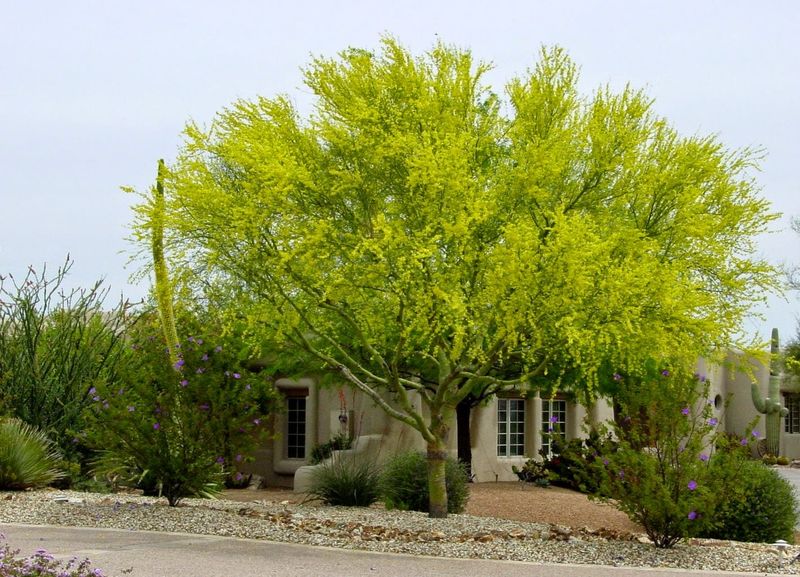
Spend enough time in the Sonoran Desert and you will start to notice that certain trees seem to belong there in a way that planted ornamentals simply do not.
Palo verde trees carry that unmistakable sense of belonging, growing naturally across desert floors, rocky hillsides, and dry washes for thousands of years before residential neighborhoods ever arrived.
Foothill palo verde, known scientifically as Parkinsonia microphylla, tends to grow in upland desert areas and typically reaches a more compact size, making it a common choice for yards with limited space.
Blue palo verde, or Parkinsonia florida, grows larger and is naturally found near desert washes where water occasionally collects.
Both species are recognized as native trees of the Sonoran Desert and carry strong ecological ties to the region’s natural plant communities.
Homeowners across Arizona have started embracing native trees like palo verde because they fit the landscape without fighting it.
Their naturally irregular branching, green bark, and seasonal yellow flowers give yards a distinctly desert character that non-native ornamentals rarely achieve.
Choosing a native tree also connects a residential yard to the broader desert ecosystem surrounding it, which appeals to many gardeners looking for plantings that feel authentic and regionally appropriate rather than transplanted from somewhere else entirely.
2. The Green Bark Adaptation Behind Palo Verde Survival
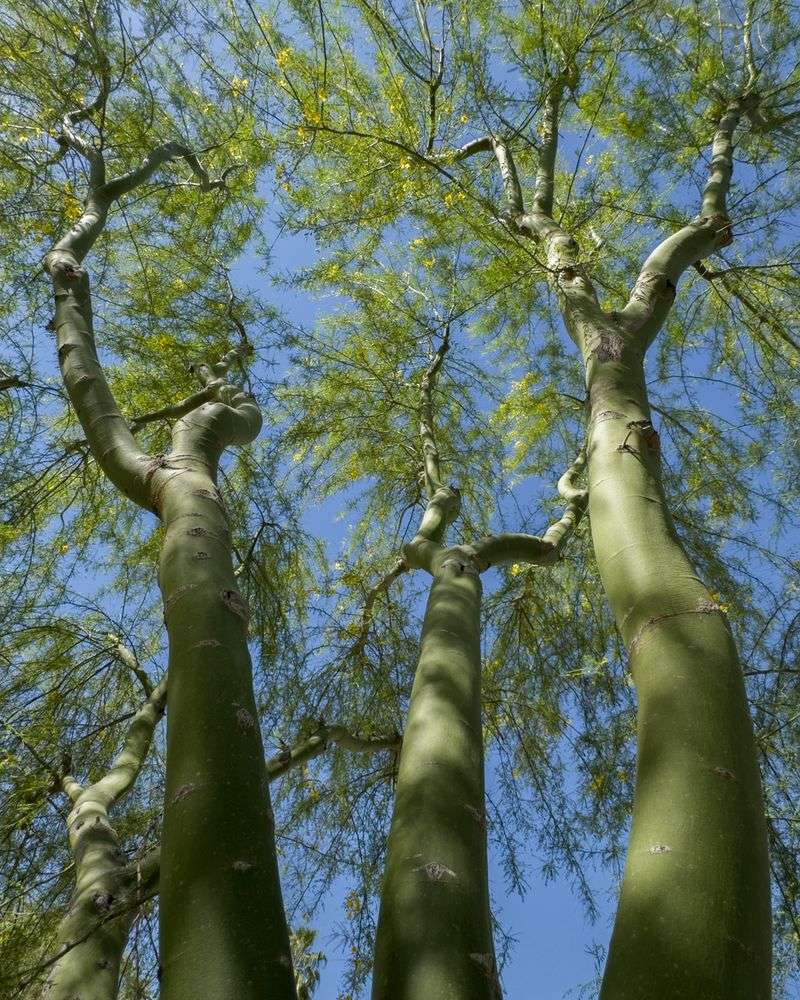
Green branches on a tree trunk might seem unusual at first glance, but for palo verde trees, that distinctive color is one of the most fascinating survival strategies found in the Sonoran Desert’s plant world.
The bark of a palo verde tree contains chlorophyll, the same pigment found in leaves, which means the trunk and branches can contribute to photosynthesis even when the tree’s tiny leaves are reduced or dropped during dry periods.
During extended dry spells, palo verde trees shed their small leaves to reduce water loss. Rather than shutting down completely, the green bark allows the tree to continue producing some energy from sunlight through its branches and trunk.
This adaptation helps the tree manage limited water resources in a way that suits the desert’s unpredictable rainfall patterns.
Your Arizona Garden Changes Every Week. Your Plan Should Too.
Gardening in Arizona changes quickly throughout the season. Every Friday you’ll receive a simple weekly plan showing exactly what to plant, prune, fertilize, harvest, and protect so you never miss the right timing.
Understanding this characteristic helps gardeners appreciate why palo verde trees look the way they do. The vivid green color that gives the tree its name is not just decorative.
It reflects a genuine biological function shaped by thousands of years of desert conditions. That said, this adaptation does not mean the tree can survive entirely without water.
Newly planted palo verdes need regular irrigation while their root systems establish, and even mature trees benefit from occasional deep watering during the driest and hottest stretches of the year in Arizona to maintain healthy growth.
3. Light Shade Benefits For Arizona Residential Yards
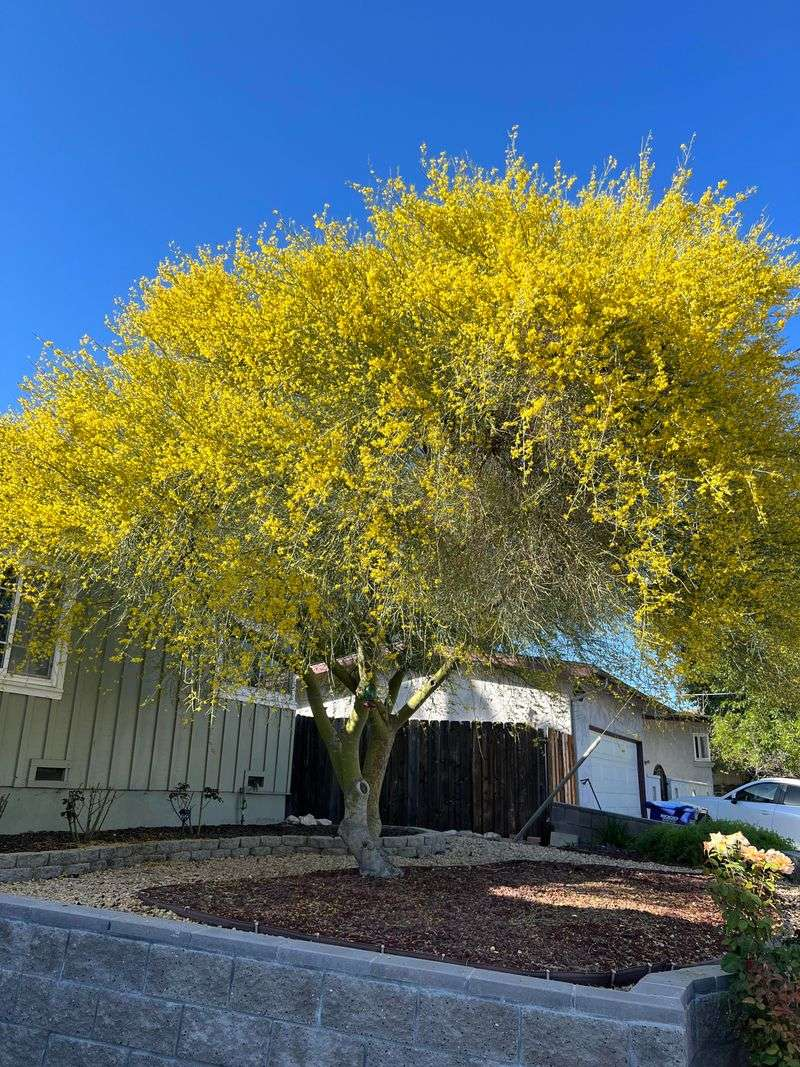
Finding useful shade in a desert yard is a genuine priority when summer temperatures regularly climb well above 100 degrees Fahrenheit.
Palo verde trees offer what landscapers often call filtered or dappled shade, meaning sunlight passes through the open branch structure in a softer, broken pattern rather than being blocked out completely the way a large dense canopy tree might do.
This type of shade suits desert yards in several practical ways. Plants growing beneath a palo verde can still receive enough sunlight to function, which is useful when underplanting with other desert-adapted species that need some light exposure.
Patios, seating areas, and walkways placed beneath a palo verde can feel noticeably cooler without becoming fully shaded, which many homeowners find comfortable during morning and late afternoon hours.
Shade levels vary depending on the species chosen, the age of the tree, and how it has been pruned over time. Blue palo verde trees, which tend to grow larger, can develop a wider canopy that provides more coverage than a compact foothill palo verde.
Pruning decisions also affect how open or layered the canopy becomes.
Gardeners in Arizona who want more shade from a palo verde can work with a certified arborist familiar with desert trees to shape the canopy over time in a way that supports both shade goals and the tree’s long-term health.
4. Low Water Needs After Palo Verde Establishment
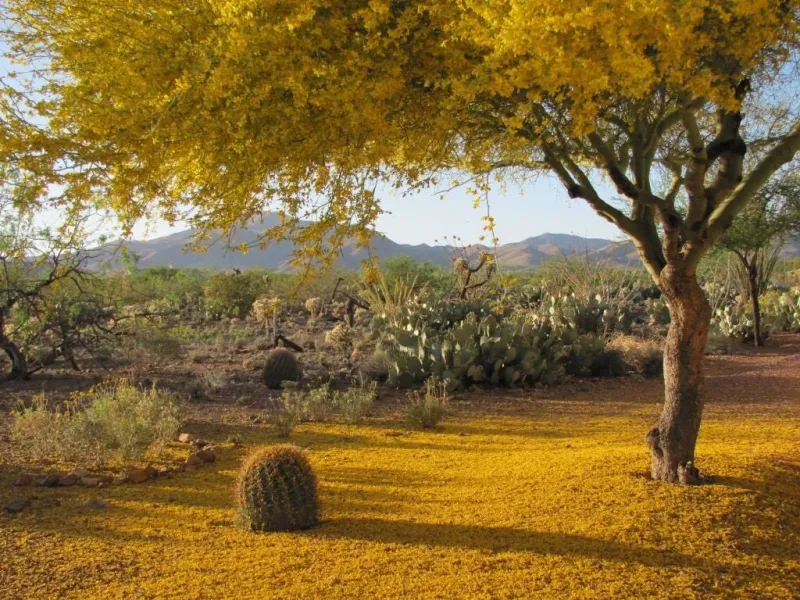
Water-conscious landscaping has become a genuine priority across desert communities, and trees that can thrive in a dry climate without constant irrigation are understandably appealing.
Established palo verde trees are well-suited to arid conditions, having evolved over thousands of years in the Sonoran Desert where rainfall is seasonal and sometimes scarce.
The establishment period is the phase that requires the most attention. Newly planted palo verde trees need consistent, appropriate irrigation to help their root systems develop and anchor into the surrounding soil.
The length of the establishment period can vary depending on tree size, soil conditions, and the time of year the tree was planted.
Gardeners should follow guidance from local horticultural resources or their local cooperative extension office for irrigation recommendations tailored to their specific planting conditions.
Once a palo verde tree has established its root system, it generally requires far less supplemental irrigation than many other landscape trees.
During the hottest and driest months, occasional deep watering can help the tree maintain healthy growth and appearance.
Saying a palo verde is drought-proof would be an overstatement, but describing it as a water-conscious choice for appropriate desert landscapes is accurate and reflects what experienced gardeners have observed over many growing seasons.
Choosing a palo verde can be one meaningful step toward reducing landscape water use in Arizona, where water conservation genuinely matters.
5. Spring Blooms That Bring Seasonal Color To The Landscape
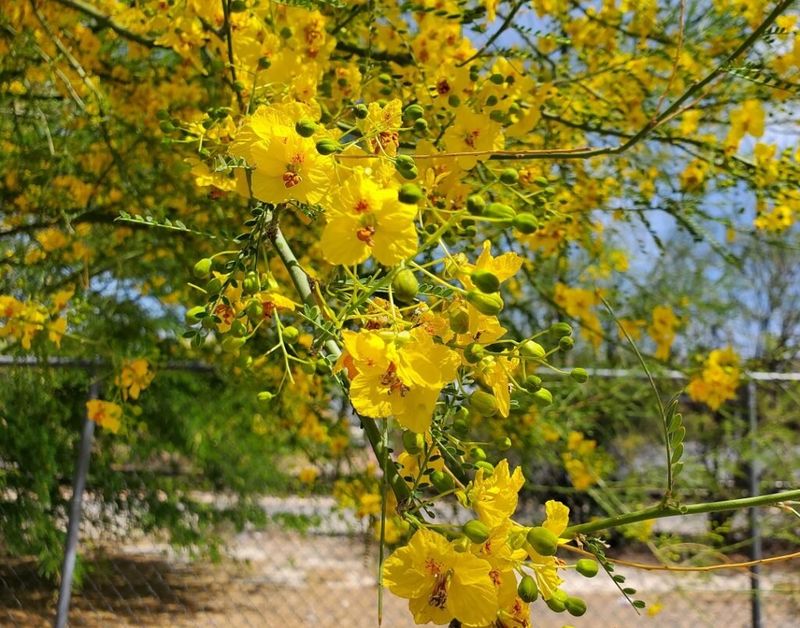
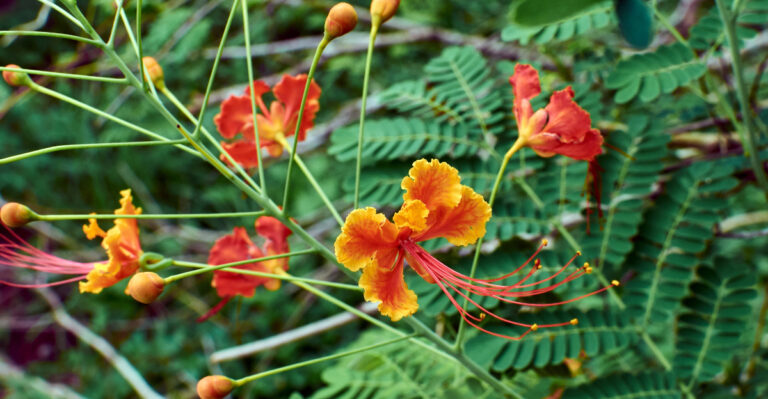
Few sights in Arizona signal the arrival of spring quite like a palo verde tree in full bloom. For a few weeks each year, typically in April and May, these trees burst into clouds of small bright yellow flowers that cover the branches in a striking seasonal display.
The transformation is dramatic enough that even people who rarely notice trees find themselves stopping to look.
Both foothill palo verde and blue palo verde produce yellow flowers, though the exact shade and timing can differ slightly between species and growing conditions.
Rainfall patterns, temperature shifts, and the overall health of the tree all play a role in how abundantly a tree blooms in any given year.
Expecting a spectacular floral show every single spring without variation would be unrealistic, but in favorable conditions the bloom season is genuinely impressive by any desert standard.
After the flowers fade, small seed pods develop and eventually drop to the ground. Some Arizona homeowners find the seed pods and fallen petals require occasional tidying, which is worth considering as part of the seasonal maintenance picture.
The blooms also attract pollinators, which adds another layer of ecological interest to the spring display.
For Arizona gardeners who want a native tree that contributes seasonal visual interest rather than looking the same year-round, the palo verde’s spring flowering period is one of its most appreciated characteristics.
6. Desert Wildlife And Pollinator Benefits Of Palo Verde Trees
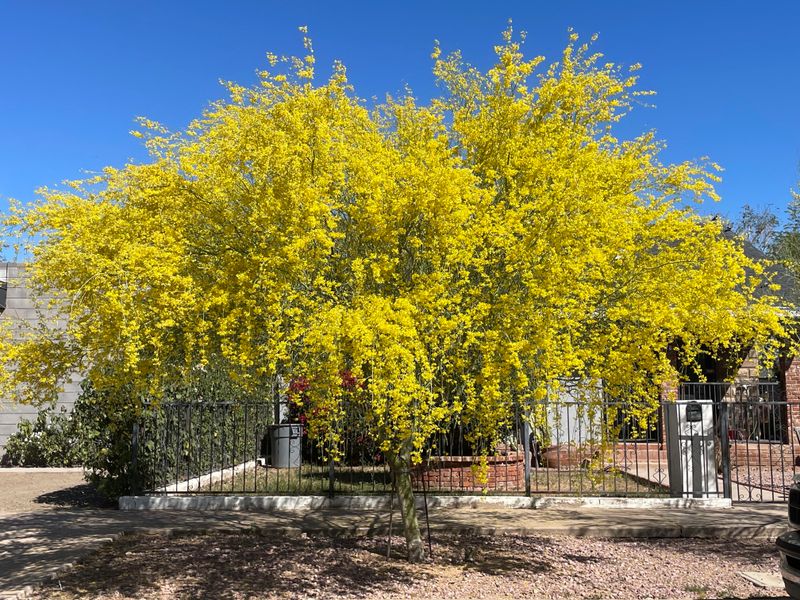
Native trees do more than shade a yard, and palo verdes are a good example of how a single planting choice can ripple outward into the surrounding desert ecosystem.
When palo verdes bloom in spring, their yellow flowers attract bees, butterflies, and other pollinators that depend on native flowering plants as a food source during that time of year.
Beyond the bloom season, palo verde trees provide structural habitat within a yard. Birds use the branches for perching and nesting, and the thorny branching of some species can offer protective cover that smaller birds find useful.
The seeds produced after flowering are known to be consumed by various desert animals, connecting the tree to the broader food web of Arizona’s Sonoran Desert ecosystem.
Planting a palo verde in an Arizona yard does not guarantee that every wildlife species associated with the Sonoran Desert will appear, but it does contribute habitat structure and native plant resources that support desert biodiversity in a residential setting.
For homeowners interested in creating a yard that feels connected to Arizona’s natural environment rather than isolated from it, incorporating native trees like palo verde is a practical and meaningful step.
Pairing a palo verde with other native desert plants can further strengthen the habitat value of a residential landscape and attract a wider range of pollinators and desert wildlife throughout the seasons.
7. Choosing The Right Yard Location For A Palo Verde Tree
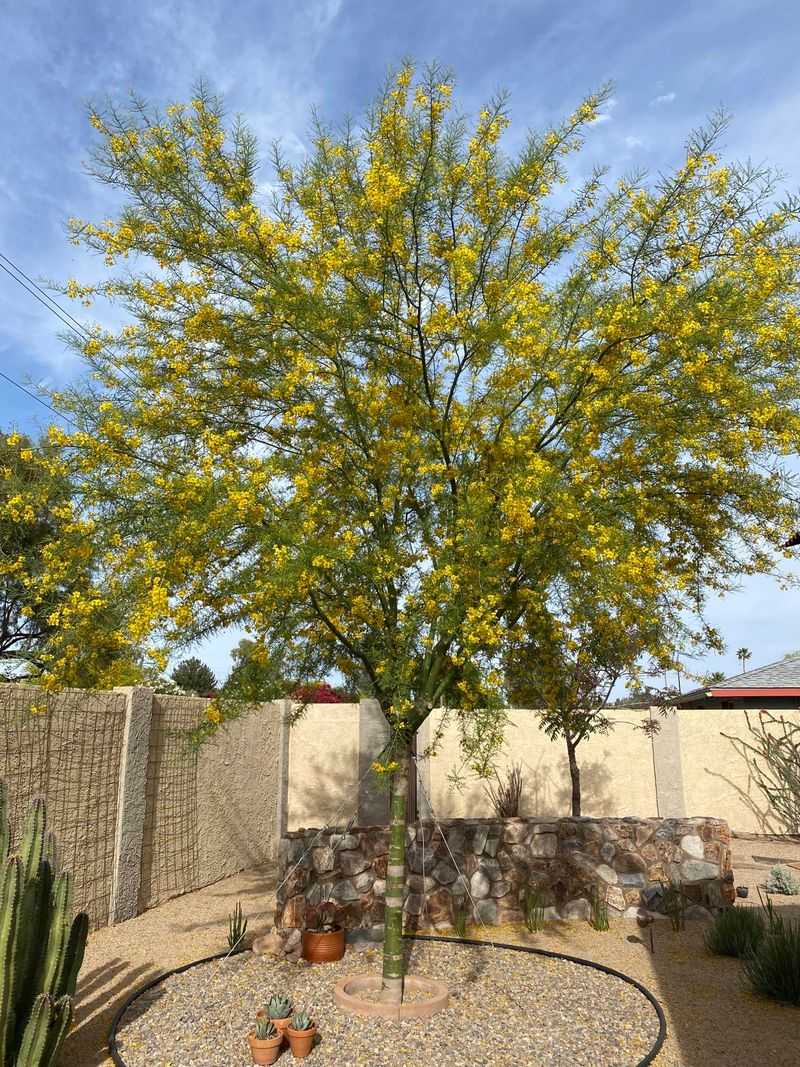
Selecting the right spot in a yard before planting a palo verde matters more than many people realize at the time of purchase.
A young tree in a one-gallon container looks manageable, but a mature palo verde can develop a canopy spread of fifteen feet or more depending on the species and growing conditions.
Placing a tree too close to a structure, a walkway, or an overhead utility line creates problems that become harder to address as the tree grows.
Foothill palo verde generally stays more compact than blue palo verde, making it a more practical fit for smaller Arizona yards or tighter planting spaces.
Blue palo verde can develop a larger crown and benefits from more open space to spread naturally without requiring heavy pruning to keep it in bounds.
Knowing which species you are planting and understanding its expected mature size helps match the tree to the available space more accurately.
Sun exposure is another consideration, since palo verdes perform best in full sun locations that reflect their natural desert habitat.
Soil drainage also matters, as these trees are adapted to well-drained desert soils and do not perform well in areas where water pools or stays saturated after rain.
Taking time to assess a yard’s specific conditions, including available space, sun exposure, and soil drainage, before choosing a planting location gives a palo verde the best opportunity to establish and grow well over time.
8. Important Considerations Before Planting A Palo Verde
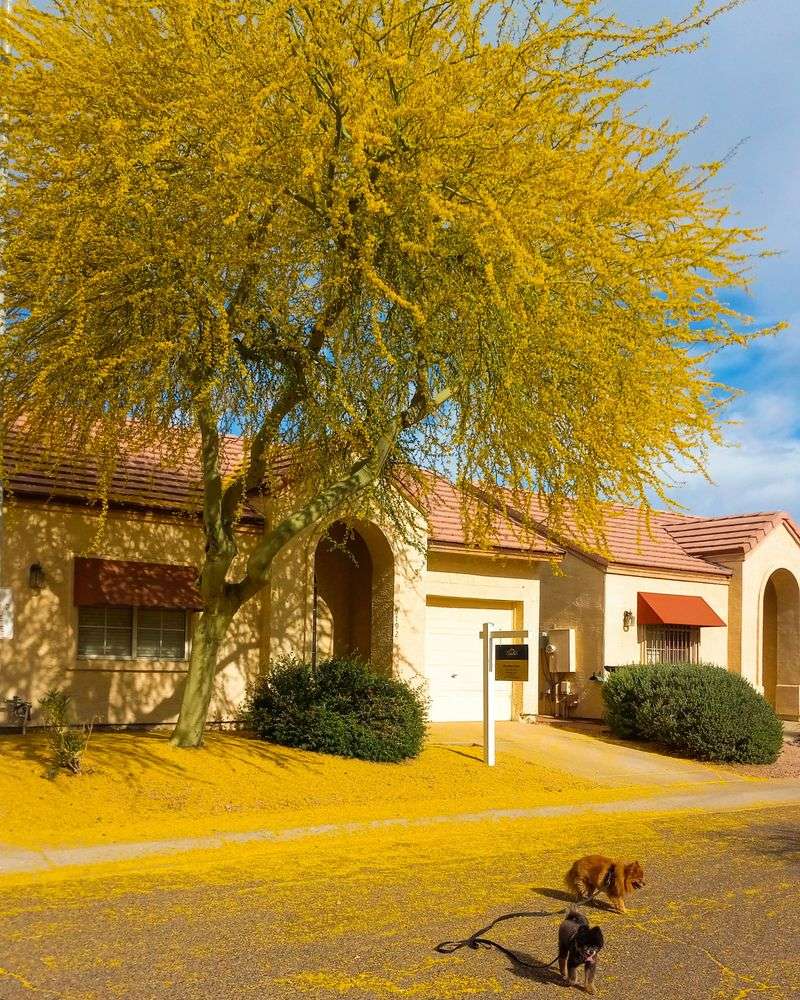
Walking into a nursery and picking out a palo verde tree based on its attractive green bark and cheerful yellow flowers is an understandable impulse, but a few practical considerations are worth thinking through before the tree goes into the ground.
Species selection is the starting point, since foothill palo verde and blue palo verde have meaningfully different mature sizes and growth habits that affect how well each one fits a particular yard.
Thorns are another factor to consider. Many palo verde species have thorns along their branches, which can be a concern in yards where children play or where foot traffic passes close to the tree.
Placement that keeps thorny branches away from high-traffic areas reduces the chance of accidental contact over time.
Hybrid palo verde varieties, such as Desert Museum palo verde, are sometimes noted for reduced thorniness, though verifying specific characteristics with a reputable Arizona nursery before purchasing is always a sensible step.
Maintenance expectations deserve honest consideration as well. Palo verde trees are not maintenance-free.
Fallen seed pods, flower petals, and occasional pruning to shape the canopy or remove crossing branches are all part of caring for the tree over its lifetime.
A palo verde planted in the right location with a realistic understanding of its mature form and seasonal habits is far more likely to become a valued part of an Arizona landscape than one planted without that preparation.