Pulling Virginia Buttonweed From Your Georgia Lawn Can Make The Problem Worse
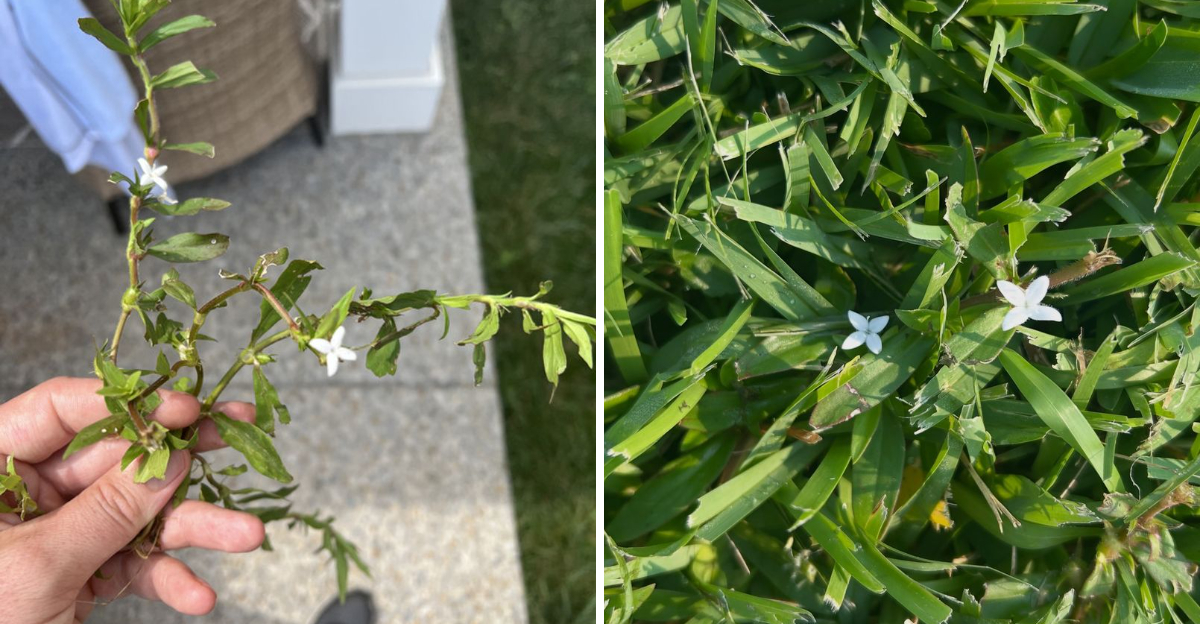
Virginia buttonweed can make a maintained lawn look frustratingly untidy. If you spot it spreading through your grass, resist the urge to start pulling.
This stubborn weed has a growth habit that makes quick hand removal tricky. In Georgia lawns, one hasty move can leave behind material capable of growing again.
That is why grabbing visible stems may not give you the clean result you expect. What happens afterward can be far more important than what disappears immediately.
Take a closer look at how this weed spreads before choosing your next move. A little patience now can save you extra work later.
The right response starts with understanding what is happening beneath those green leaves.
Before you start tugging, find out why pulling can backfire and what your lawn needs instead.
1. Pulling Can Leave Living Pieces Behind
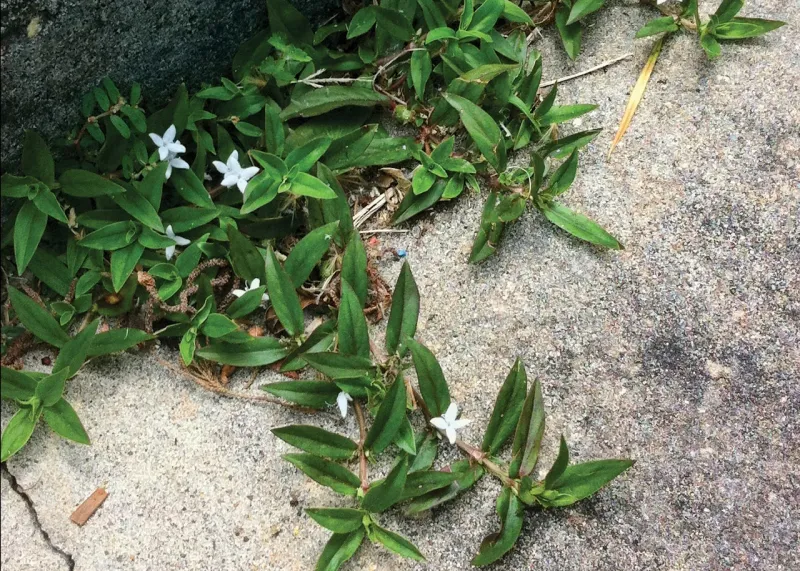
Hand-pulling feels satisfying, but with Virginia Buttonweed, it often leaves the job half done. The roots on this weed are not shallow.
They run deep and branch out in multiple directions beneath the soil surface.
When you grab the stem and pull, the top portion breaks away. The root system stays behind, largely intact.
Those leftover root fragments do not just sit there quietly.
Each piece of living root has the ability to sprout a new plant. You could pull one plant and end up with two or three new ones within a few weeks.
That is not progress. That is the opposite of what you were going for.
The roots are also brittle, which makes it nearly impossible to remove them whole by hand. Even with a weeding tool, getting every fragment out of compacted or clay-heavy Georgia soil is a real challenge.
Wet soil can help roots come out more cleanly in some cases, but it is not a reliable fix for this particular weed. The branching nature of the root system means pieces almost always stay behind.
Knowing this should change how you approach control. Hand-pulling alone is rarely an effective long-term strategy for Virginia Buttonweed.
2. This Weed Can Spread Through Seeds And Roots
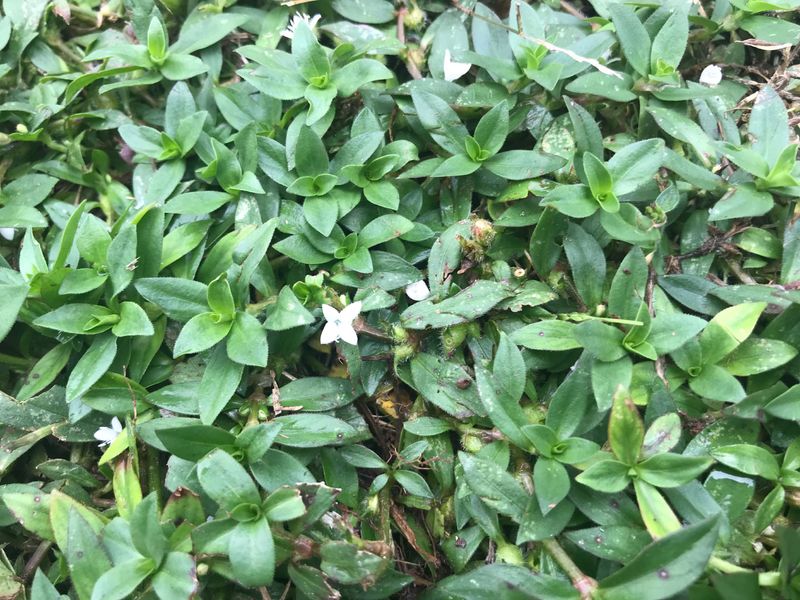
Virginia Buttonweed does not rely on just one method to spread. It uses two separate pathways, and that is a big part of what makes it so persistent in warm-season lawns.
Above ground, the plant produces small white flowers that turn into seeds. Those seeds drop into the soil and can sprout when conditions are right.
Wind, foot traffic, and mowing can scatter them across a wider area.
Below ground, the root system spreads laterally and sends up new shoots from different points. So even if no new seeds land in your lawn, the existing root network can keep expanding on its own.
What makes this double-threat especially tricky is that pulling the plant above ground does nothing to stop root spread. Mowing over it scatters seeds without addressing the roots.
Both actions can unintentionally help the weed move to new spots.
Warm, humid summers create good conditions for seed germination and root growth. Lawns with thin or stressed turf give the weed open space to establish quickly.
Your Georgia Garden Changes Every Week. Your Plan Should Too.
Gardening in Georgia changes quickly throughout the season. Every Friday you’ll receive a simple weekly plan showing exactly what to plant, prune, fertilize, harvest, and protect so you never miss the right timing.
Once it gets a foothold, the dual spread strategy makes containment harder with each passing week.
Effective control requires addressing both the seed source and the root system at the same time.
3. Wet Lawn Areas Give It Better Conditions
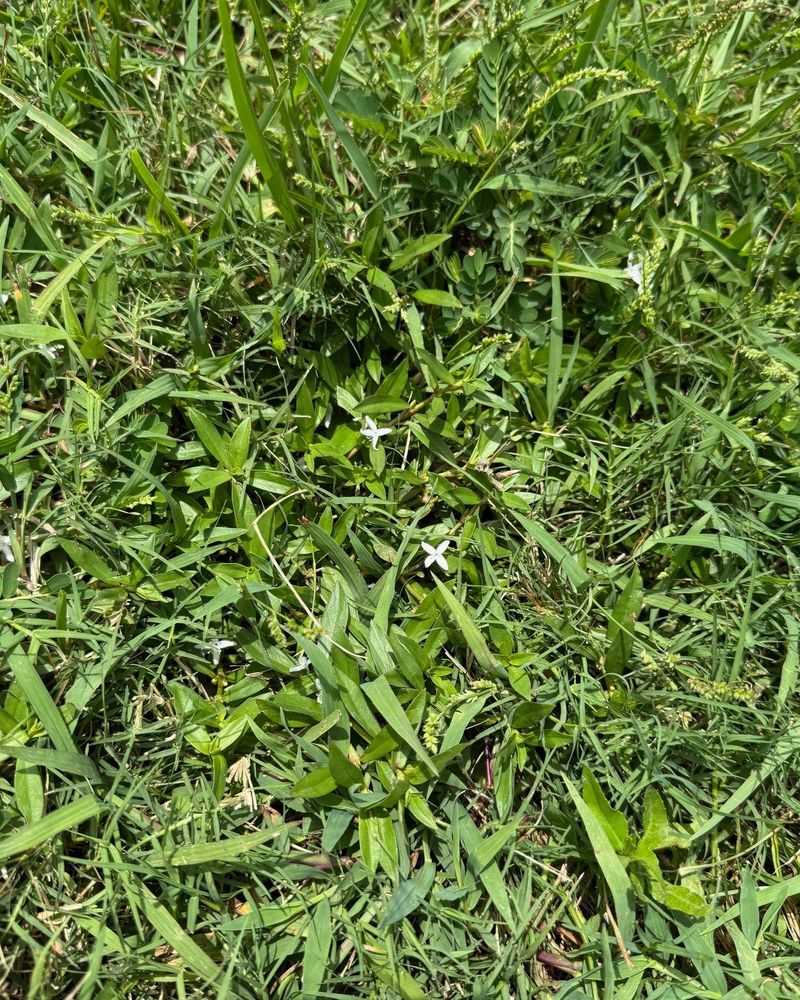
Virginia Buttonweed has a clear preference for moisture. It shows up most aggressively in low spots, areas near downspouts, and lawns with poor drainage.
Wet soil is where it tends to take hold fastest.
Overwatering your lawn can create the exact environment this weed loves. Running irrigation too frequently or for too long keeps the soil damp for extended periods.
That moisture gives Virginia Buttonweed a consistent advantage over your turf grass.
Compacted soil makes drainage worse, which also benefits the weed. Water pools instead of moving through the soil profile, and the weed capitalizes on that standing moisture.
Compaction is a common issue in high-traffic lawn areas.
Addressing drainage problems can reduce how aggressively this weed grows in certain spots. Improving soil structure through aeration helps water move more freely.
Adjusting irrigation schedules to water deeply but less often can also reduce surface moisture over time.
Shaded areas often stay wetter longer than sunny spots, giving the weed extra time in moist conditions. Pruning trees or shrubs to allow more light and airflow can help dry out problem zones.
Fixing the underlying moisture issue will not remove existing plants, but it can slow new growth and make other control methods more effective.
4. Low Mowing Will Not Stop Its Growth
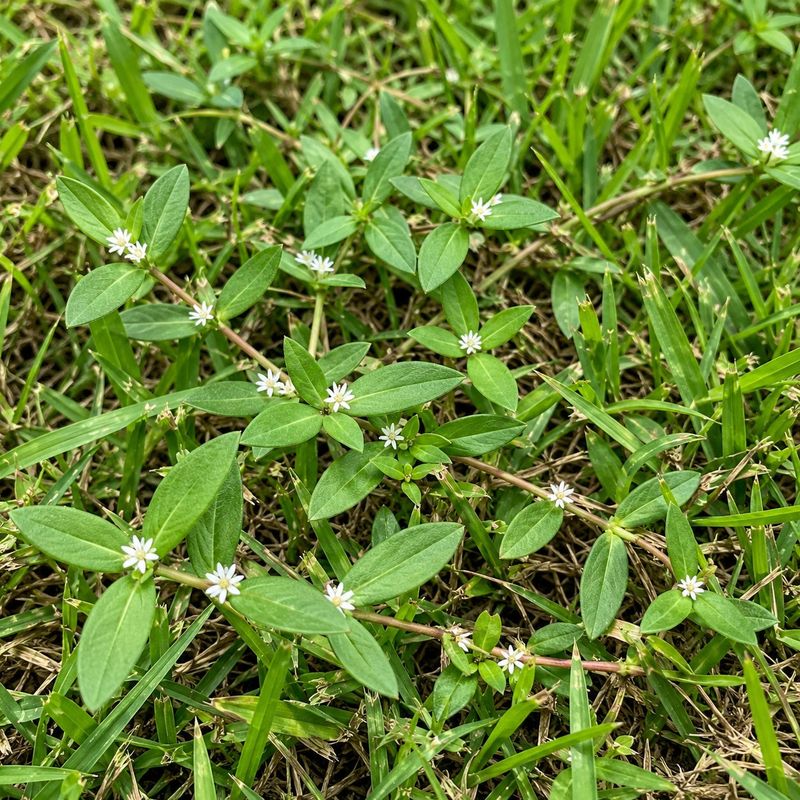
Scalping your lawn to remove Virginia Buttonweed sounds like a logical move. Cut it short enough and maybe it cannot survive.
Unfortunately, that reasoning does not hold up well with this particular weed.
Virginia Buttonweed grows in a flat, mat-like pattern. It stays close to the soil surface on purpose.
Standard mower blades often pass right over it without making meaningful contact.
Lowering the cutting height enough to reach it means cutting your turf grass dangerously short at the same time. Weak, scalped grass opens up bare soil.
Bare soil is exactly where Virginia Buttonweed and other weeds establish most easily.
Mowing at very low heights also puts stress on your lawn. Bermuda and Zoysia, both common in Georgia, can handle lower cuts, but repeated scalping weakens root systems and reduces the lawn’s ability to compete against weeds over time.
Beyond that, mowing over Virginia Buttonweed can clip seed heads and spread seeds across a wider section of your lawn. You may be helping the weed cover more ground without realizing it.
Keeping your mower at the recommended height for your specific grass type is a smarter approach. A dense, healthy canopy shades the soil and makes it harder for weed seeds to germinate.
5. Healthy Grass Can Compete With This Weed
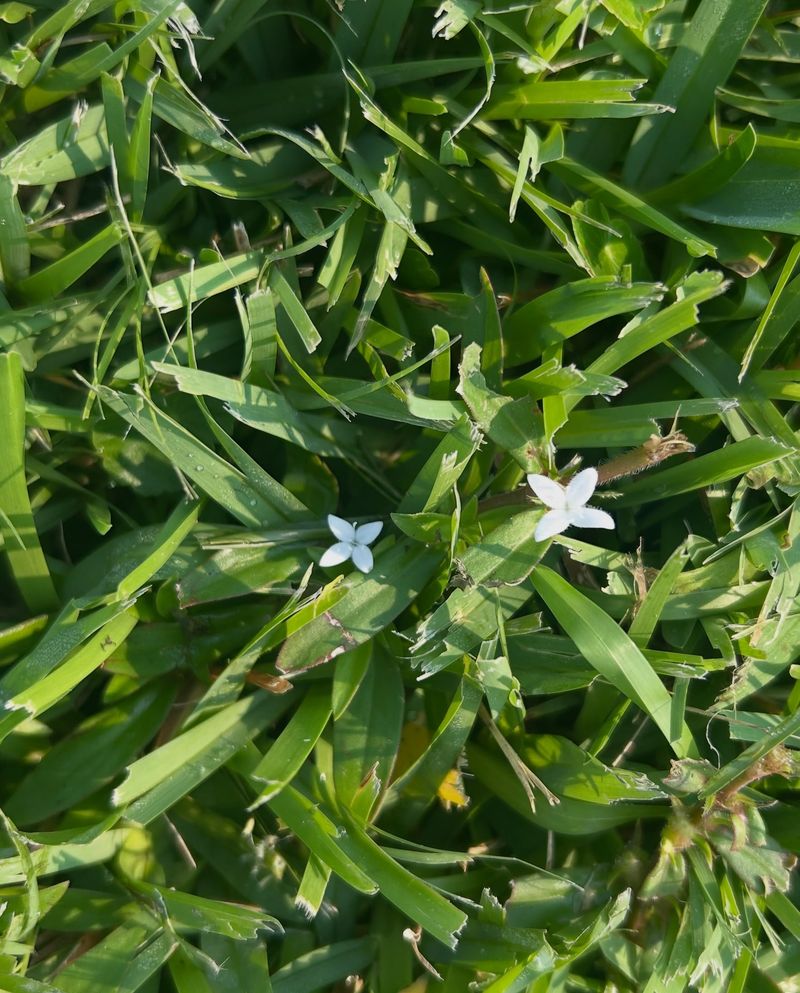
A weak lawn is an open invitation for Virginia Buttonweed. Bare patches, thin turf, and stressed grass give the weed exactly the space it needs to move in and spread.
Strengthening your lawn is one of the most practical long-term strategies available.
Fertilizing at the right times for your grass type helps build density. Dense turf shades the soil, which limits the light weed seeds need to sprout.
A thicker lawn is naturally more resistant to weed pressure over time.
Soil health matters just as much as grass density. Compacted or nutrient-poor soil produces weak turf that cannot compete well.
Core aeration helps break up compaction and allows water, air, and nutrients to reach grass roots more effectively.
Overseeding thin areas fills in gaps before Virginia Buttonweed can claim that space. Timing overseeding correctly for your specific grass variety improves germination success.
Warm-season grasses like Bermuda spread on their own through stolons, but giving them a boost in thin areas accelerates recovery.
Consistent lawn care throughout the growing season builds resilience. Skipping fertilizer applications or letting the lawn go dry during heat stress creates vulnerability.
A lawn that is actively growing and filling in has a natural edge over weeds trying to establish in the same space.
6. Removing Clippings Can Limit Further Spread
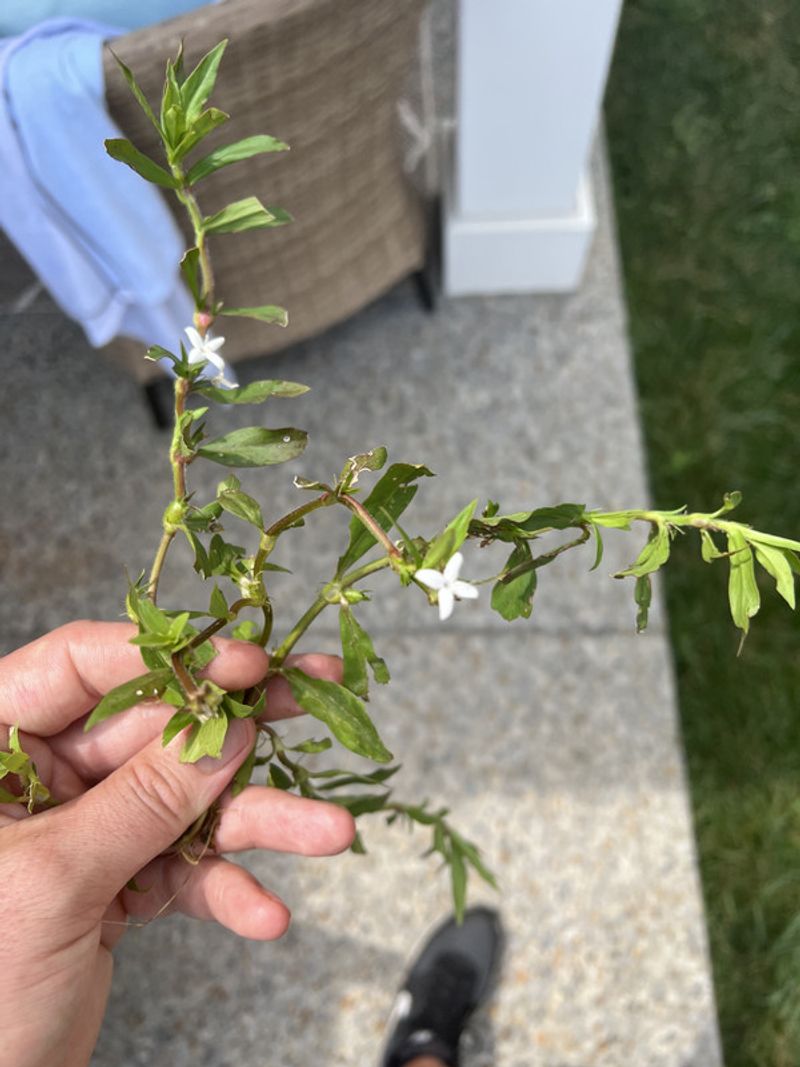
Most people mow and let the clippings fall back onto the lawn without thinking twice. With Virginia Buttonweed present, that habit can work against you.
Clippings from an infested lawn may carry seeds or stem fragments capable of rooting in new spots.
Bagging clippings during mowing keeps that material off the lawn surface. It removes potential seed sources and reduces the chance of stem fragments making contact with soil.
That one adjustment can slow how fast the weed spreads across your yard.
Clippings should be disposed of carefully. Putting them in a compost pile that does not reach high temperatures may not break down seeds or living root fragments effectively.
Bagging them for waste collection is a safer option in most cases.
Raking up any visible plant debris after mowing also helps. Virginia Buttonweed stems can stay moist for a while after being cut, and if they land on bare soil, there is a chance some fragments could establish.
Removing that material reduces the opportunity.
Clipping management is not a stand-alone solution. It works best as part of a broader control plan that includes proper mowing height, fertilization, and targeted herbicide applications when appropriate.
Small habits like bagging clippings add up over time and support the overall effort to reduce the weed’s presence in your lawn.
7. Control May Take More Than One Treatment
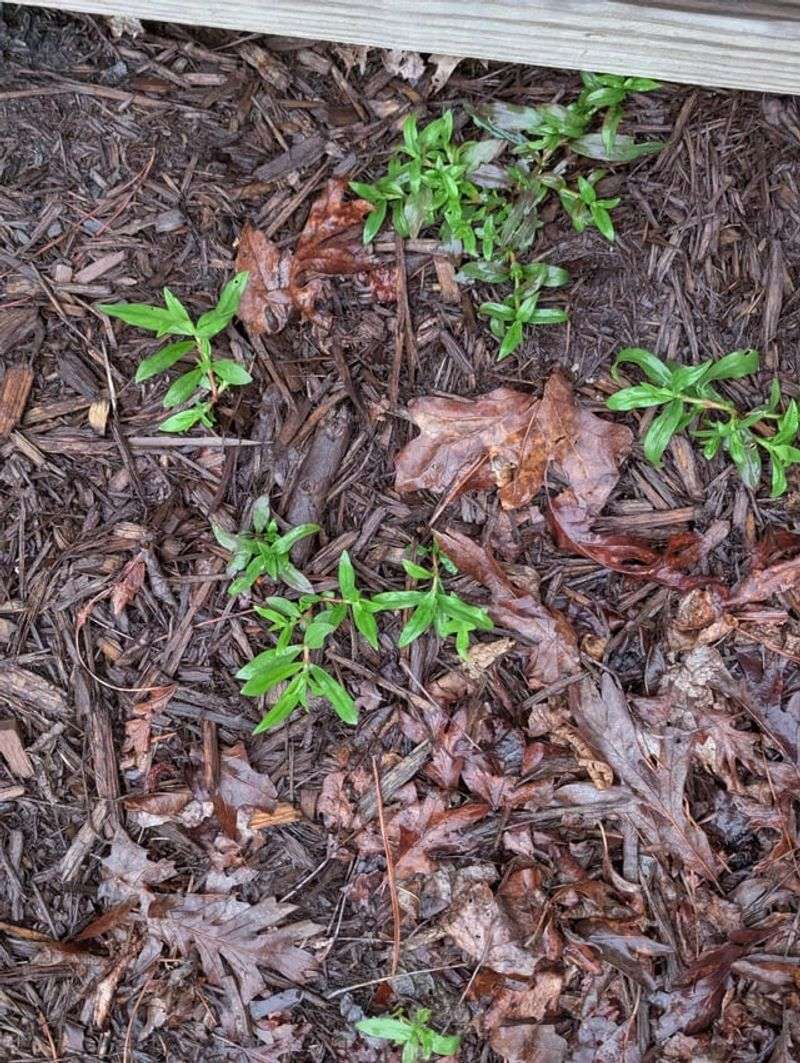
Expecting Virginia Buttonweed to disappear after one herbicide application is a setup for frustration. Getting control of this weed typically requires patience and multiple rounds of treatment spaced over weeks or months.
Selective post-emergent herbicides labeled for Virginia Buttonweed are available, but they often need repeated applications to work through the root system. The first treatment may reduce top growth without reaching deep root fragments.
Follow-up applications target regrowth and root reserves more effectively.
Timing matters with herbicide applications. Treating during active growth periods, typically late spring through summer in Georgia, gives products the best chance of being absorbed and moved through the plant.
Applying to stressed or dormant plants often produces weaker results.
Reading and following the product label is non-negotiable. Rates, timing, and re-application intervals are there for accuracy and safety.
Skipping label instructions can reduce effectiveness or cause turf damage.
Some homeowners see meaningful improvement after two or three applications across a season. Others with heavier infestations may need to continue treatment into the following year.
Tracking where the weed grows and monitoring regrowth helps you apply follow-up treatments at the right time.
Combining herbicide use with better lawn care practices improves overall results. Herbicide handles existing plants while a stronger, denser lawn reduces how many new ones can establish.