Your Landscaper Wants to Hurricane-Prune Your Florida Palms? Reasons Why You Should Say No
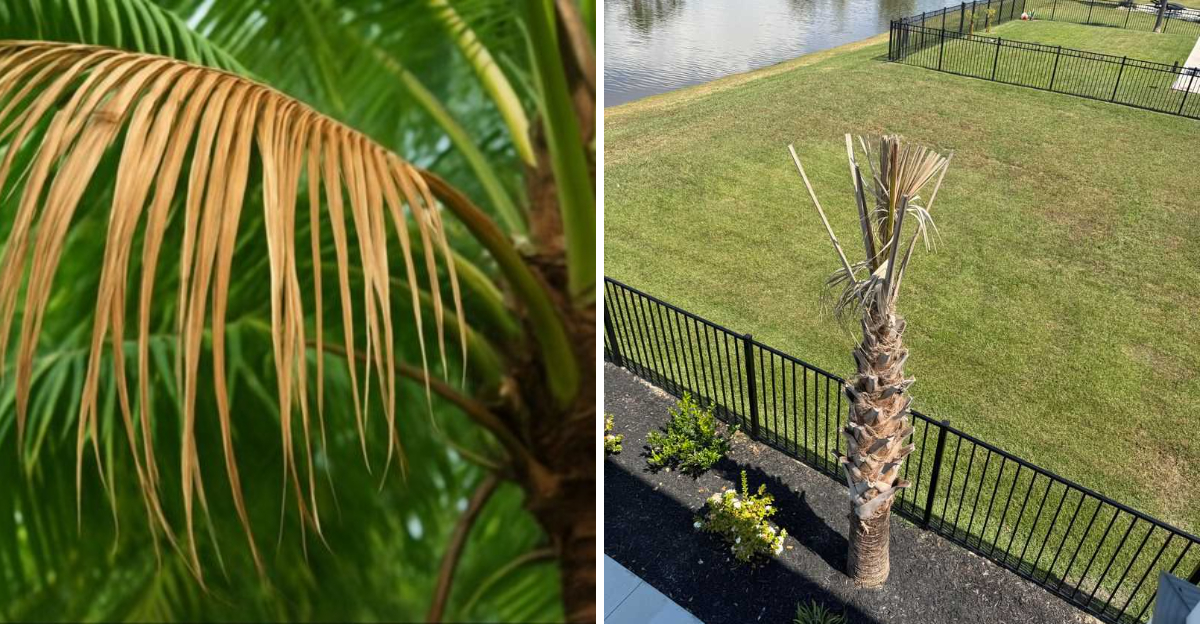
Your landscaper says a hurricane cut will make your Florida palms safer before the next storm. That sounds responsible, but the palms in your yard may pay for that advice long after the crew leaves.
A palm with a thin crown and only a few upright fronds can look neat, tough, and storm-ready from the driveway. The real story sits inside the canopy, where each frond has a job your tree needs.
Remove too much at once, and you change far more than its shape. Florida palms already face heat, wind, pests, and nutrient stress, so an aggressive trim can add pressure at exactly the wrong time.
The strange part is that hurricane-pruned palms are common across neighborhoods, hotels, and commercial properties. Before you approve that haircut, look past the tidy silhouette.
What seems like protection may leave your palm with less of what helps it handle harsh Florida weather.
1. A Hurricane Cut Can Make Your Palm More Vulnerable
Picture a palm with almost every frond stripped away. Only a narrow cluster of upright leaves remains at the top, making the crown look like a stiff green paintbrush.
That is exactly what a hurricane cut looks like. Most of the lower and middle fronds get removed until very little canopy remains.
Homeowners often accept this without question. Fewer leaves logically seems to mean less surface area for wind to push against.
The landscaper’s pitch makes sense on the surface.
UF/IFAS researchers and extension specialists have challenged that logic directly. Observations after major Florida hurricanes found that heavily pruned palms were more likely to experience crown snapping.
Palms with fuller canopies performed better by comparison. Crown snapping is when the top of the palm breaks away from the trunk during high winds.
No one can promise that every hurricane-pruned palm will snap in a storm. Plenty of variables affect how any individual tree performs.
But the core justification for the hurricane cut, that stripping fronds reduces storm damage, is not supported by the evidence UF/IFAS has gathered.
Choosing a hurricane cut based on a theory that does not hold up puts your palm at greater risk, not less. That alone is a strong reason to push back before the chainsaw starts.
2. Green Fronds Are Still Working For The Palm
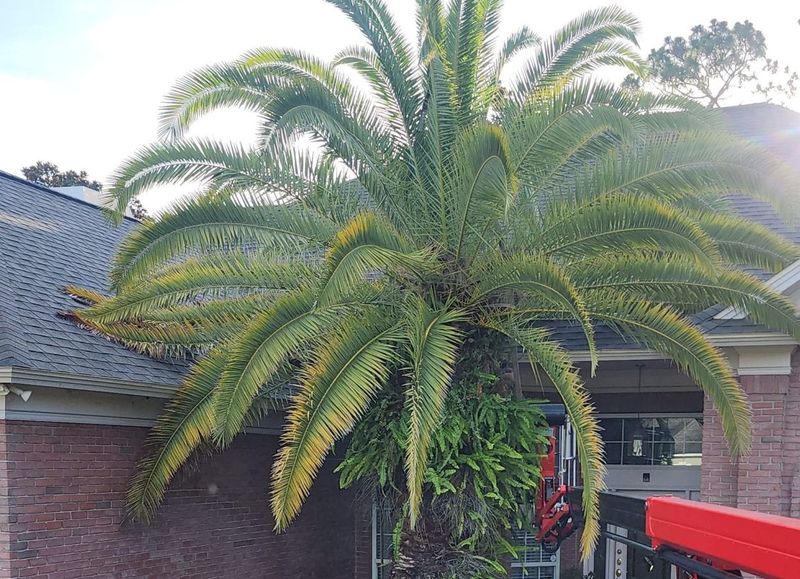
A full green crown is not just pretty to look at. Every living frond on a palm is actively doing a job, and that job matters more than most homeowners realize.
Green fronds perform photosynthesis, the process by which a plant captures sunlight and converts it into carbohydrates. Those carbohydrates fuel root growth, new leaf production, and basic maintenance throughout the entire palm.
Remove a large portion of that working foliage, and you reduce the energy supply the palm depends on every single day.
UF/IFAS extension resources consistently describe healthy foliage as functional tissue, not excess material. A frond that is fully green is still contributing to the palm’s energy budget.
Your Florida Garden Changes Every Week. Your Plan Should Too.
Gardening in Florida changes quickly throughout the season. Every Friday you’ll receive a simple weekly plan showing exactly what to plant, prune, fertilize, harvest, and protect so you never miss the right timing.
Cutting it away does not simply reduce storm debris. It removes a piece of equipment the palm is actively using.
Palms cannot grow new branches the way a shade tree can. Each new frond must emerge from a single growing point called the bud.
If the palm does not have enough carbohydrate reserves to support that growth, new frond production can slow down noticeably.
Stripping away healthy green fronds before a storm does not prepare a palm for Florida hurricane season. Mostly, it just leaves the palm with less to work with during one of the most stressful periods of the year.
3. Yellow Fronds May Still Be Feeding New Growth
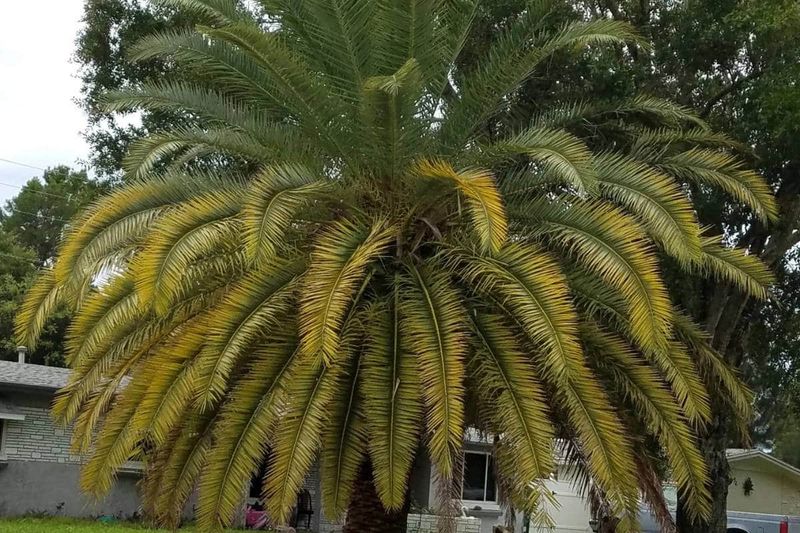
Not every yellow frond is a deceased frond. That distinction matters a lot when a landscaper starts pointing at older leaves and calling them ready for removal.
Yellowing in palms is frequently linked to nutrient deficiencies, particularly potassium. Palms growing in Florida’s sandy soils are especially prone to these shortfalls.
When potassium becomes scarce, older leaves begin to show yellow or orange spotting as the palm pulls available nutrients toward younger, actively growing tissue.
That movement of nutrients from older leaves to newer growth is called nutrient retranslocation. Palms can move mobile nutrients, including potassium and nitrogen, out of aging fronds before those fronds fully brown.
Cutting a partially yellow frond too early interrupts that process. The palm loses nutrients it was still in the process of recovering.
UF/IFAS palm nutrition research makes clear that removing yellowing fronds prematurely can worsen an existing deficiency rather than fix it. The palm ends up with fewer resources just when it needs them most.
Completely brown fronds, where no living green tissue remains, are a different story. Those can be pruned without the same concern.
But a frond that still shows green, even if it is also showing yellow, deserves a closer look before anyone reaches for a saw. Persistent yellowing often calls for a soil test or fertilizer adjustment, not another pruning session.
4. The 9 And 3 Rule Is A Limit Not A Goal
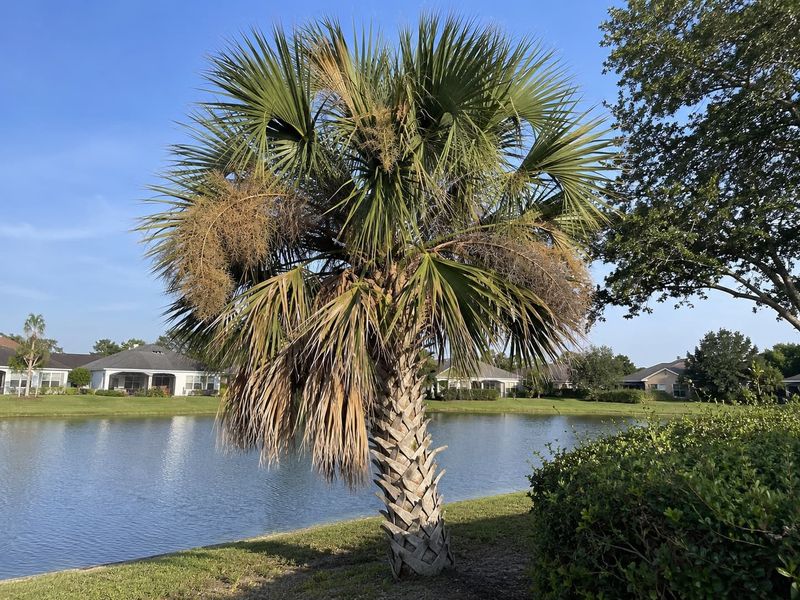
Imagine a clock face laid over the silhouette of a palm. The trunk runs straight through the center like a clock hand pointing at noon.
Now picture the horizontal line connecting the 9 on the left to the 3 on the right. That line is the foundation of one of the most cited pruning guidelines in palm care.
UF/IFAS advises against removing fronds whose tips extend above that horizontal 9-to-3 position. Fronds growing above that line are considered actively positioned for photosynthesis and should generally be left alone.
Cutting them removes functioning foliage that the palm still needs.
Here is where many homeowners and even some landscapers misread the guideline. The 9-and-3 rule is a maximum pruning limit.
It is not a checklist telling you to remove every frond that hangs below that imaginary line.
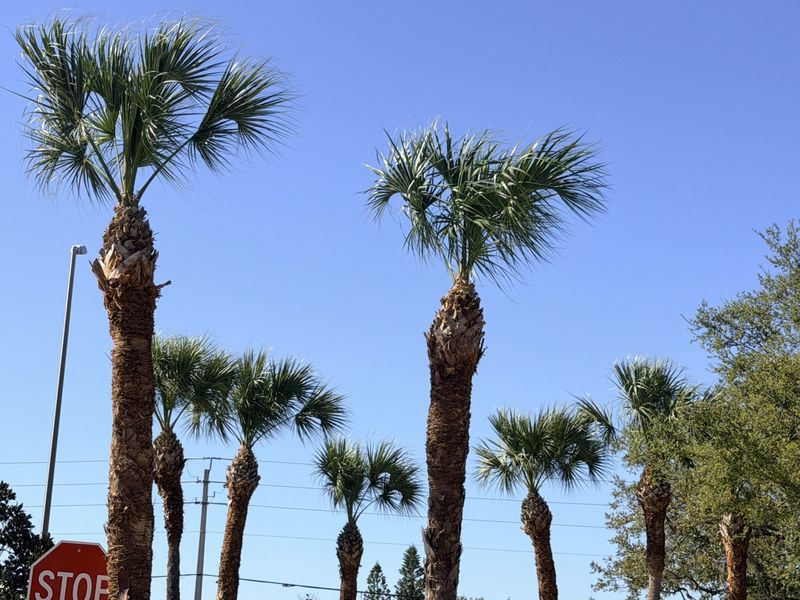
A healthy palm naturally carries green foliage below the horizontal position. Older fronds often arch downward as they age, and many of them still contain green tissue and are still contributing to the palm’s energy production.
Removing all downward-hanging fronds just because they fall below 9 and 3 goes beyond what UF/IFAS recommends.
Treating a limit as a target turns a safety guideline into an overpruning instruction. The intent of the rule is to protect the upper crown, not to justify stripping everything below it on a seasonal schedule.
5. A Full Crown Gives Young Fronds More Support
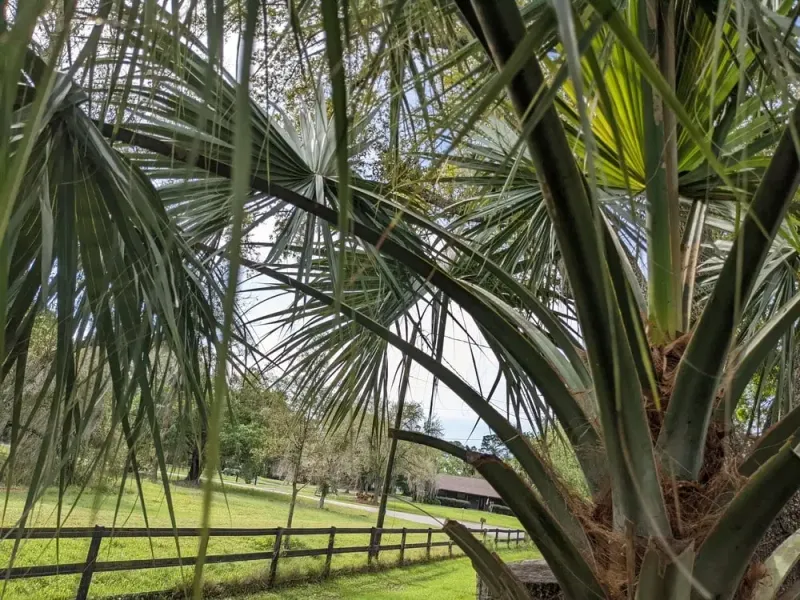
Look closely at the center of a palm crown and you will notice that the youngest fronds are the most upright. They stand tall, still soft and not fully hardened.
Older fronds surrounding them are more rigid, more mature, and positioned differently.
UF/IFAS observations suggest that mature outer fronds and fibrous leaf bases may help support the crown. That support could matter during high winds.
The older material essentially forms a kind of protective frame around the newer, more vulnerable growth at the center.
This is not a guaranteed mechanical shield. Palm behavior during a hurricane involves many factors, and no single structural element can promise protection.
But the possibility that mature foliage contributes to crown stability is worth taking seriously when deciding how much to prune before storm season.
Stripping away that older material in the name of hurricane preparation removes whatever protective role it may play. The youngest, least-hardened fronds are then left fully exposed, with nothing surrounding them to absorb or redirect wind forces during a storm.
Preparing a palm for hurricane season by removing the very foliage that may help protect its growing center works against the stated goal. Keeping a full, mature crown intact is not just about aesthetics.
It may be part of how the palm actually handles the stress of a major storm.
6. Years Of Overpruning Can Change The Palm Itself
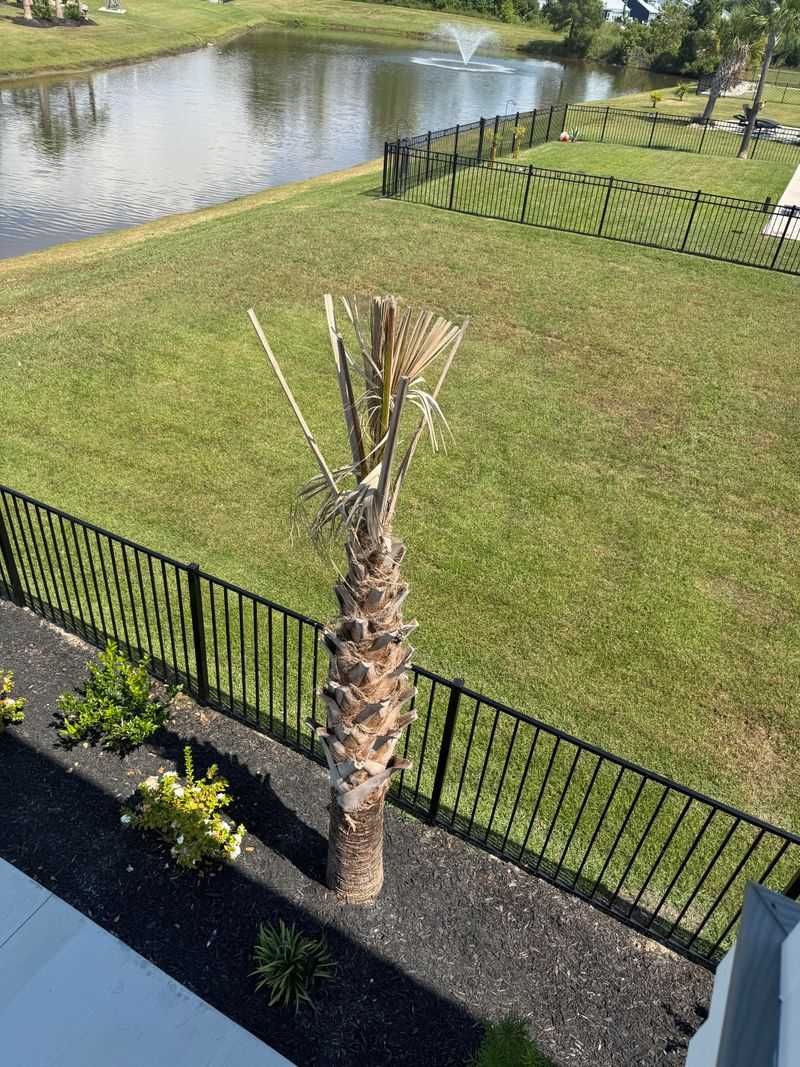
One aggressive hurricane cut is bad enough. But many palms in residential neighborhoods get the same treatment every single year, and the cumulative effects are visible in the palm’s physical structure over time.
UF/IFAS has documented changes in palms that are repeatedly overpruned season after season. Leaf size can decrease noticeably as the palm produces smaller fronds in response to chronic reductions in its photosynthetic capacity.
Trunk diameter has also been observed to taper in repeatedly stripped palms, creating a narrowed section sometimes called a pencil point trunk.
That thinner section reflects a period when the palm was not producing enough carbohydrates to maintain its normal trunk girth. Each ring of trunk growth corresponds to the energy the palm had available at that time.
Less foliage means less energy, and less energy can mean a narrower trunk over time.
Research has not definitively proven that a narrower trunk section makes a palm structurally weaker in a storm. But a palm that is visibly smaller, thinner, and carrying fewer leaves than it should is not a palm operating at its best.
Chronic overpruning also places repeated stress on the palm’s single growing point. Unlike trees with multiple branch tips, a palm has only one bud.
Stressing that bud year after year through excessive foliage removal compounds the impact of each individual cut in ways that a single pruning session alone would not.
7. Brown Fronds And Fruit Stalks Are The Safer Targets
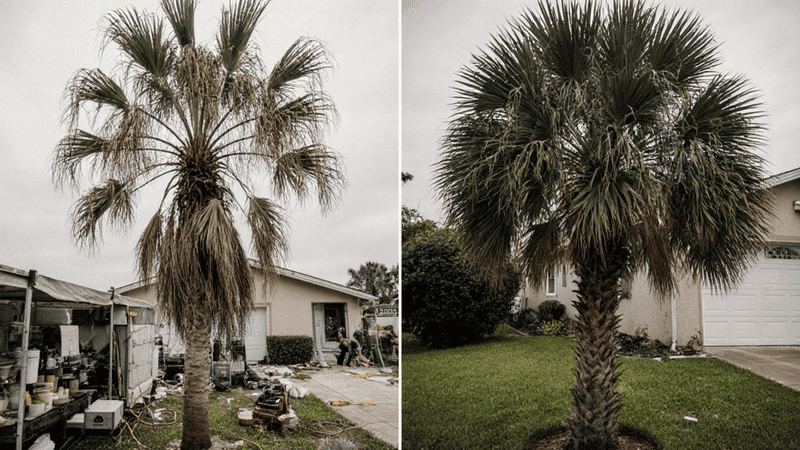
Saying no to a hurricane cut does not mean saying no to all pruning. Removing deceased material is very different from stripping away healthy foliage.
That distinction matters greatly for proper palm care.
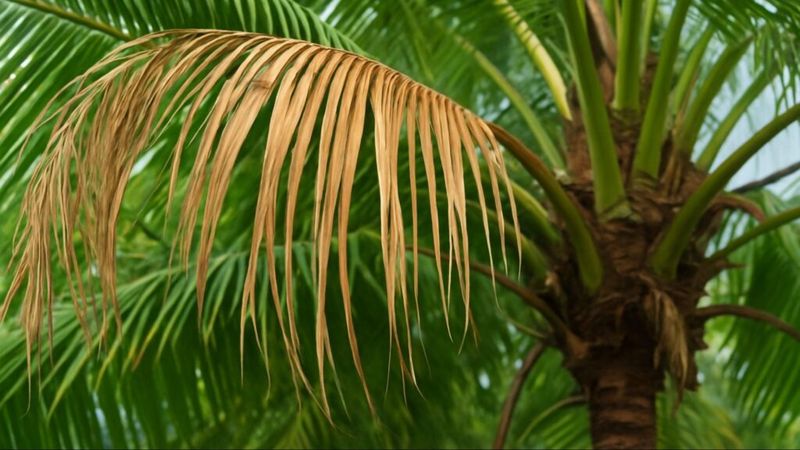
Completely brown fronds are appropriate targets for removal. Once a frond has fully browned with no remaining green tissue, it is no longer contributing to photosynthesis or nutrient recycling.
Removing it before storm season is a reasonable step. Deceased fronds can become airborne in high winds, and clearing them reduces that hazard without harming the palm.
Flower stalks and fruit clusters can also be removed in many cases, particularly when the palm is producing fruit that creates a mess or poses a falling hazard. Removing those stalks does not take functioning foliage away from the palm.
The key distinction is straightforward. Already-deceased material can go.
Partially green or fully green fronds should stay. A frond that looks a little untidy but still carries living tissue is still doing its job.
Cutting it simply because it does not look perfect is not maintenance. It is overpruning by another name.
Before storm season, a proper cleanup pass should focus on what is already gone. That approach reduces real debris hazards while leaving the palm’s working crown fully intact and ready to handle whatever the season brings.
8. Ask For A Proper Palm Prune Instead Of A Storm Cut
Armed with what you now know, you are in a much better position to have a direct conversation with whoever shows up to prune your palms before storm season. Ask specifically what they plan to remove, and listen carefully to the answer.
A proper pre-storm palm prune should target completely brown fronds and detached withered leaf bases. Flower or fruit stalks can also be removed when appropriate.
The result should be a palm that still carries a healthy, full crown of green fronds after the work is done.
Question any recommendation that would leave your palm with only a small upright tuft of green at the very top. That is the signature look of a hurricane cut, and now you know why the research does not support it as a storm-safety measure.
Persistent yellowing across the crown is worth mentioning too. If older fronds are showing significant discoloration, a soil test or a proper fertilizer evaluation may be more useful than another round of pruning.
Cutting yellow fronds without addressing the underlying nutrient issue tends to repeat itself every season without ever solving the problem.
Good hurricane preparation removes real hazards, the withered fronds, the loose material, the fruit clusters that could become projectiles. Proper storm prep keeps healthy foliage where it belongs: on the tree and doing its job.
That helps keep the crown intact through Florida’s storm season.