This Invasive Shrub Is Quietly Spreading Along Georgia Woodland Edges
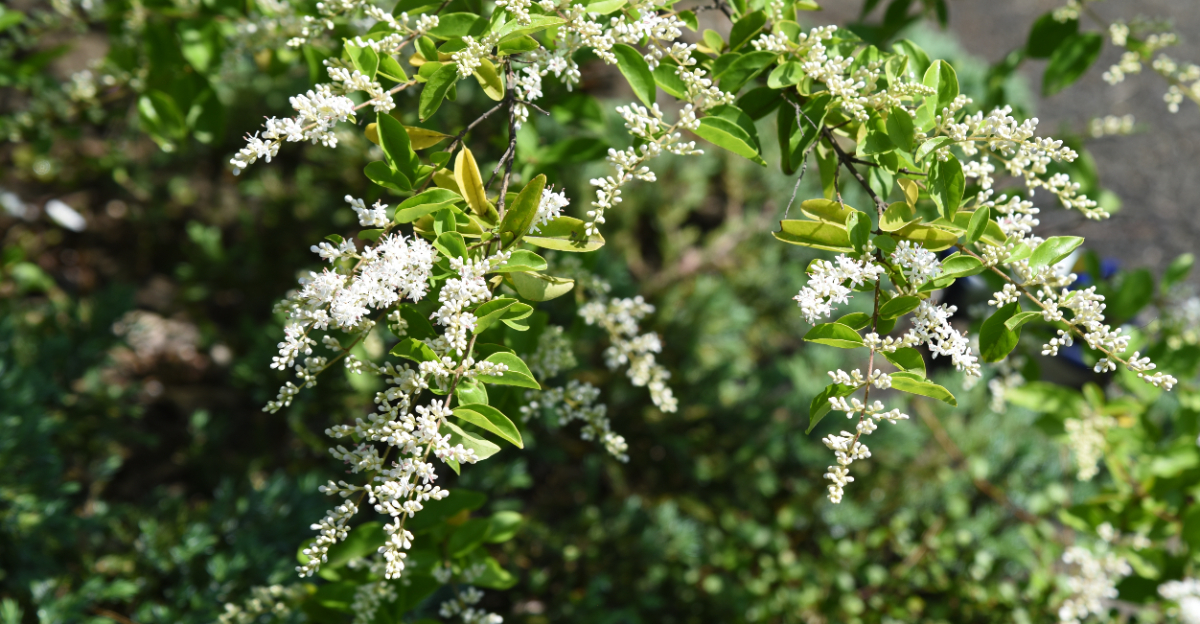
Woodland edges can look perfectly natural while one unwanted shrub slowly takes up more space each season. That quiet spread is exactly why this plant deserves closer attention.
Across Georgia, invasive shrubs can establish along roadsides, forest borders, and disturbed areas before many homeowners recognize them. Once established, some can form thick growth that crowds native plants.
Take a closer look at unfamiliar shrubs growing where your maintained yard meets nearby woods. Early recognition gives you a much better chance to respond before the patch expands.
Do not assume every green shrub along the tree line belongs there. Some introduced plants blend into the landscape surprisingly well.
Knowing the key features can make identification much easier.
Once you recognize what is spreading, you can decide how to handle it before it claims more ground.
1. Those Thick Green Patches May Be Hiding A Problem
Walk along almost any wooded trail and you have probably noticed big, bushy patches of green hugging the tree line. Most people assume those patches are just natural undergrowth doing its thing.
Turns out, that assumption can be a costly one.
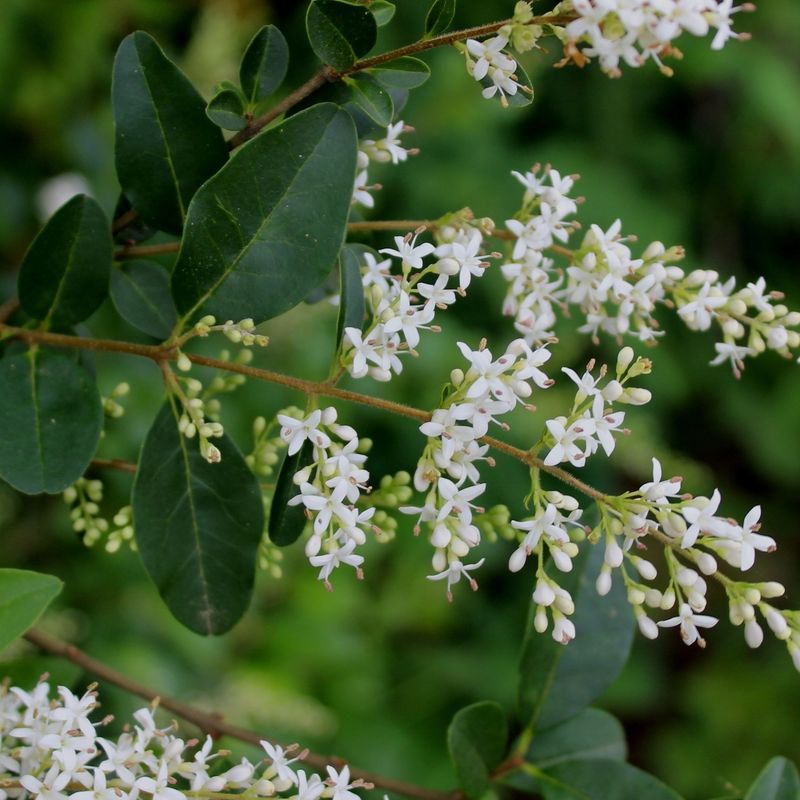
Many of those dense green walls are not native plants at all. Chinese privet forms thick, layered colonies that look almost intentional, like a hedge someone planted on purpose.
Up close, the leaves are oval, glossy, and arranged in neat pairs along flexible stems.
At first glance, it can blend in with surrounding vegetation pretty easily. Younger plants especially look similar to native shrubs like swamp privet or common elderberry.
Without knowing what to look for, it is easy to overlook entirely.
Thick patches also block sunlight from reaching the forest floor, which puts native wildflowers and tree seedlings under serious pressure. Over time, that shade advantage allows privet to expand outward at a steady pace.
It does not need much encouragement to keep growing.
Spotting the problem early is the first step. Once you know what a privet patch looks like, you start seeing them everywhere.
Check fence lines, stream banks, and the shaded edges where open fields meet wooded areas.
2. Chinese Privet Is Often The Shrub Behind Them
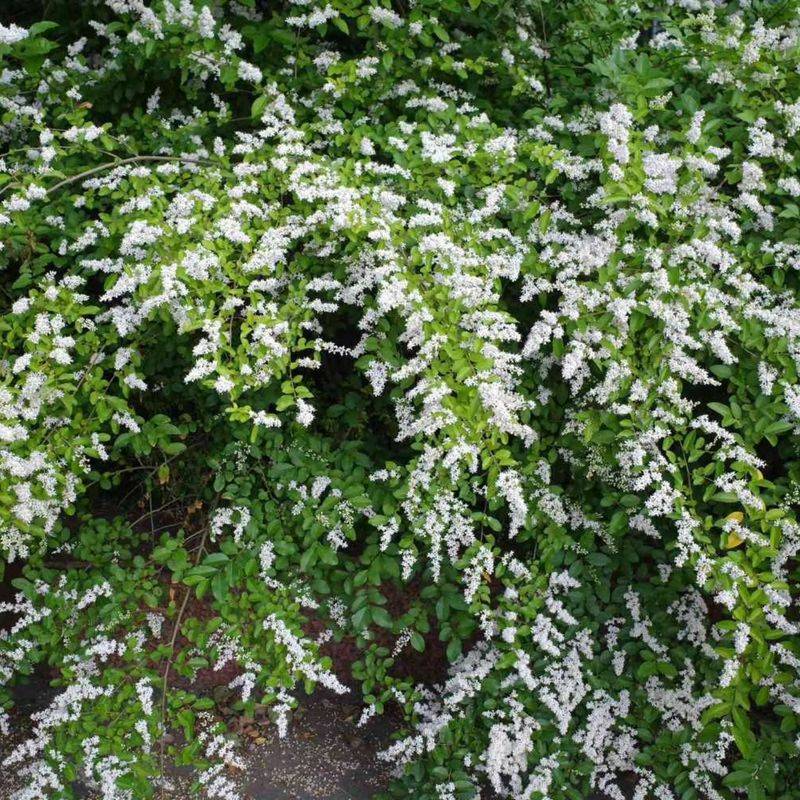
Not every invasive plant stands out right away. Chinese privet can spread steadily through woodland edges and disturbed areas, forming dense thickets before its presence becomes obvious.
Native to parts of eastern Asia, Chinese privet was introduced to the United States in the 1800s as an ornamental shrub.
Its fast growth and ability to handle many different growing conditions helped it escape cultivation and spread into natural areas.
Chinese privet, or Ligustrum sinense, belongs to the olive family. It can grow in sun or shade and tolerates a wide range of soil conditions.
This adaptability helps it establish along roadsides, stream banks, forest edges, and other disturbed sites.
In Georgia, Chinese privet is now a widespread invasive shrub. Dense stands can crowd native vegetation and make it difficult for native seedlings and understory plants to establish.
Left unmanaged, Chinese privet can grow roughly 20 feet tall or more. Mature plants also produce clusters of dark fruit that birds eat, helping spread seeds into new areas.
Your Georgia Garden Changes Every Week. Your Plan Should Too.
Gardening in Georgia changes quickly throughout the season. Every Friday you’ll receive a simple weekly plan showing exactly what to plant, prune, fertilize, harvest, and protect so you never miss the right timing.
3. Glossy Leaves Help You Spot It In The Woods
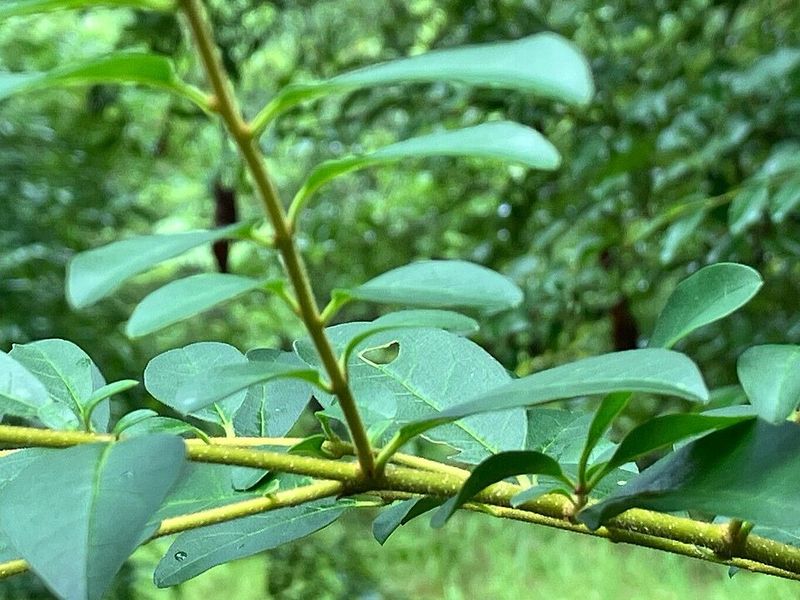
Identification is your best tool when dealing with any invasive plant. With Chinese privet, the leaves are actually the easiest place to start.
Shiny, smooth, and a deep green color, they catch light in a way that stands out even in shaded areas.
Leaves grow in opposite pairs along the stem, which means one leaf on each side at the same point. That opposite arrangement is a helpful detail to remember.
Many native shrubs have alternate leaves, so opposite placement narrows things down quickly.
Stems are light gray to tan and fairly flexible when young. Older woody stems become more rigid and develop a rougher texture.
In late spring, privet produces clusters of small white flowers with a strong, sweet smell that some people find pleasant and others find overwhelming.
By fall, those flowers turn into small, round berries that start green and darken to a deep blue-black color. Berries typically appear in clusters and persist on the plant through much of winter.
That long fruiting window gives birds plenty of time to consume and spread the seeds.
Comparing privet to native look-alikes takes a little practice. Swamp privet, which is native to the Southeast, has leaves with a slightly duller surface and grows mainly near water.
4. Birds Carry Its Seeds Into New Areas
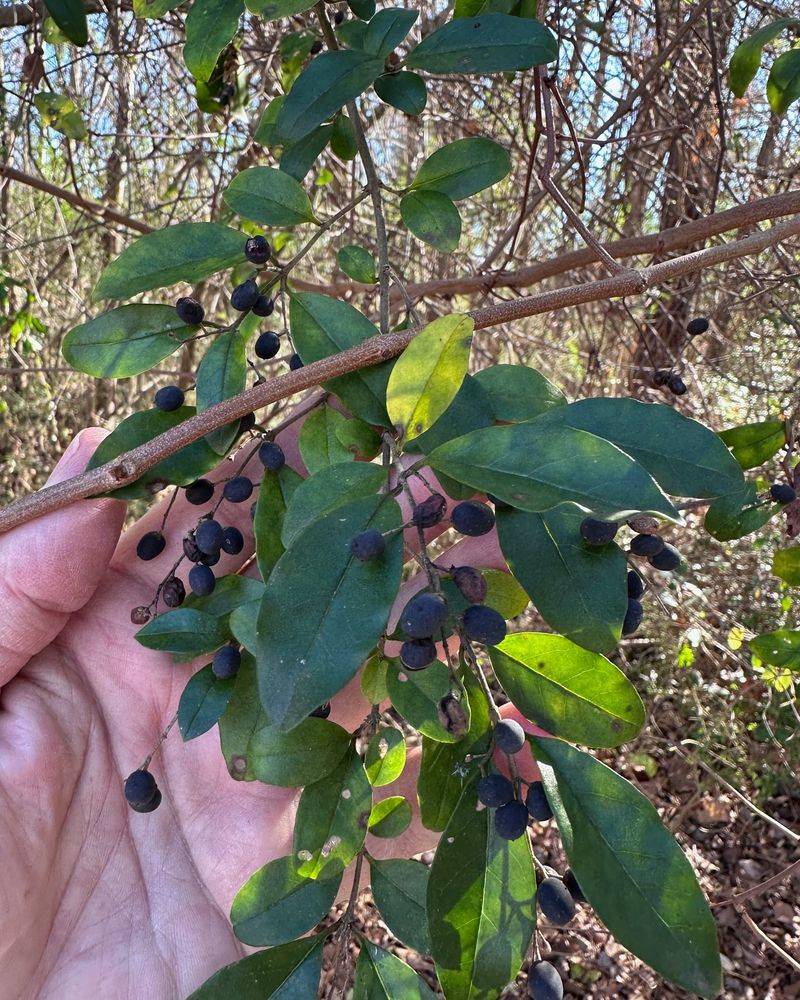
Privet spreads the way many invasive plants do, through the help of wildlife that has no idea it is causing a problem. Birds eat the dark berries in large numbers, especially during fall and winter when other food sources become less available.
Cedar waxwings, American robins, and mockingbirds are among the species commonly observed feeding on privet berries. Seeds pass through their digestive systems intact and are deposited in droppings, often far from the original plant.
A single bird can scatter seeds across a wide area in a short period of time.
That seed dispersal pattern explains why new privet plants tend to pop up in scattered locations rather than just right next to existing patches.
Fence rows, forest edges, roadsides, and stream banks are frequent landing spots because birds often perch or rest in those areas.
Seeds can also move through water. Berries that fall near streams or drainage areas may float downstream and sprout in new locations along the bank.
Flooding events can carry seeds farther than expected, which is one reason privet appears along creek corridors so frequently across the region.
Reducing seed production before birds can access the berries is one practical management approach. Cutting or treating plants before berries fully ripen can help limit how far seeds travel.
Timing matters quite a bit with this strategy, so monitoring plants through late summer is worth the effort.
5. Woodland Edges Give Privet Room To Spread
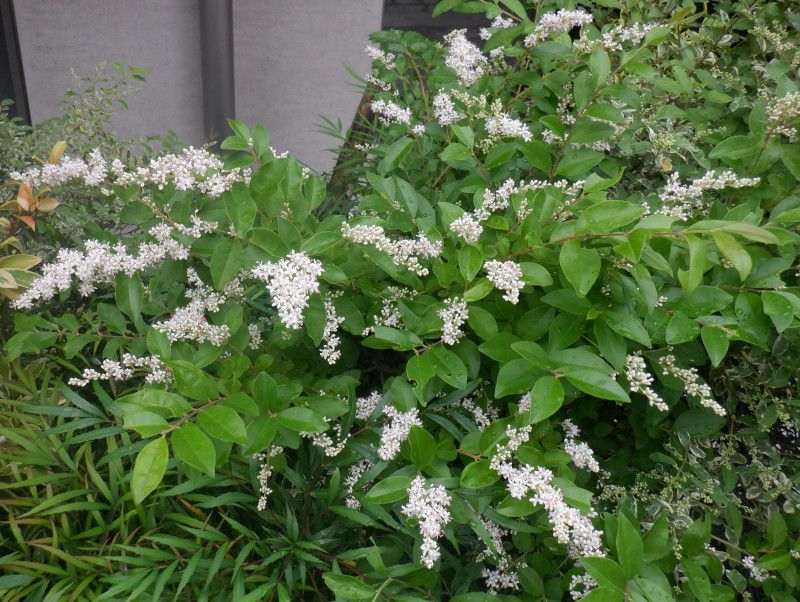
Edges are where two different habitats meet, and those transition zones happen to be perfect conditions for Chinese privet. Where a field meets a forest, or a road runs alongside a tree line, sunlight is more available than deep inside the woods.
Privet takes full advantage of that light.
Disturbed ground also plays a big role. Construction sites, cleared lots, and areas where soil has been moved around tend to see privet establish quickly.
Bare, exposed soil gives seeds a place to sprout without much competition from established plants.
Stream banks are another hotspot. Moist soil near water supports fast growth, and the linear nature of stream corridors helps privet spread in long stretches rather than just expanding outward in a circle.
Many creek-side areas in the Southeast now have significant privet presence.
Once established at an edge, privet can gradually push inward toward the forest interior. It tolerates shade well enough to survive under a closed canopy, though it grows more slowly there than in open or partially open areas.
That shade tolerance is part of what makes it harder to manage than many other invasives.
Paying attention to edge habitats on your own property or nearby natural areas is a practical habit to develop.
6. Dense Growth Can Push Out Native Plants
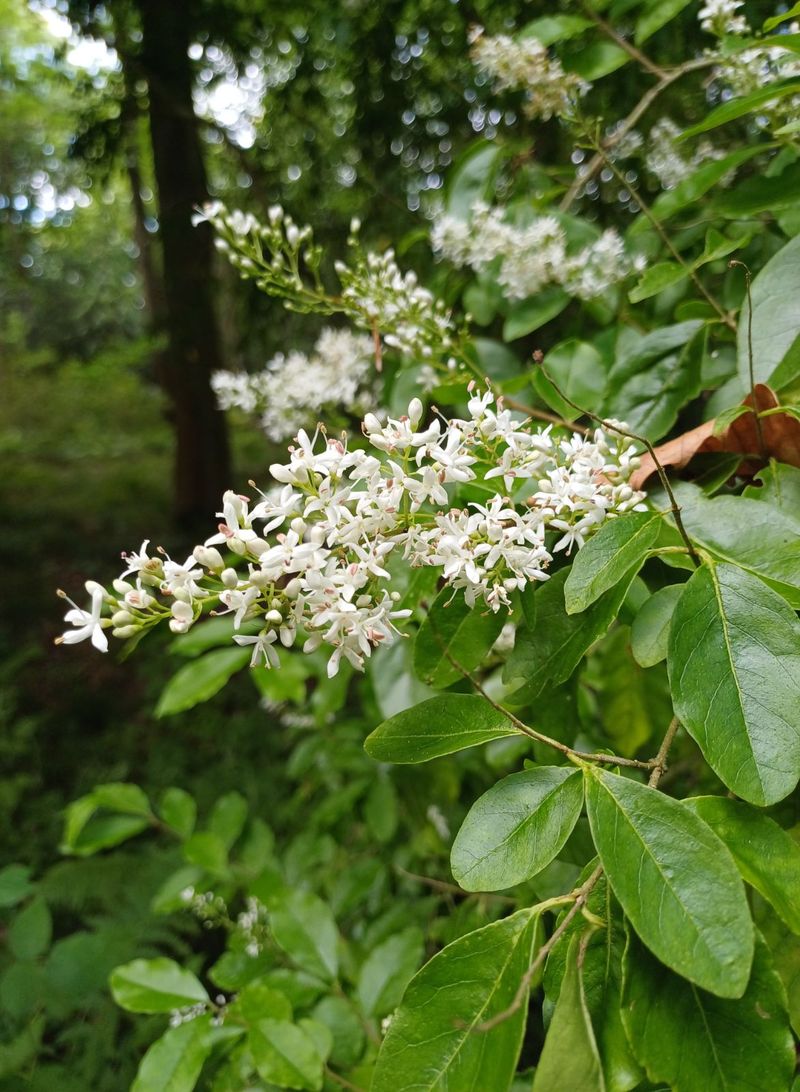
Privet does not play fair when it comes to competition. Its dense canopy blocks sunlight from reaching plants growing below, which puts native wildflowers, ferns, and tree seedlings at a serious disadvantage.
Over time, that light reduction can significantly alter what grows on the forest floor.
Native plants like wild ginger, trout lily, and various native violets depend on filtered light during spring before the tree canopy closes in. When privet leafs out early and stays green late into fall, it shortens that window considerably.
Some native species struggle to complete their growth cycles under those conditions.
Root competition adds another layer of pressure. Privet roots spread widely and pull moisture and nutrients from the surrounding soil.
Neighboring plants, especially young native seedlings, can have a harder time establishing when privet is already occupying the area.
Leaf litter from privet also breaks down differently than native leaf litter. Some observations suggest it may affect soil chemistry in ways that favor privet’s own seedlings over native species, though the full picture is still being studied.
What is clear is that heavy privet cover tends to reduce native plant diversity noticeably.
Protecting native understory plants is a strong reason to manage privet proactively. Trilliums, native azaleas, and other woodland species are genuinely worth preserving.
7. Removing Privet Early Makes Control Much Easier
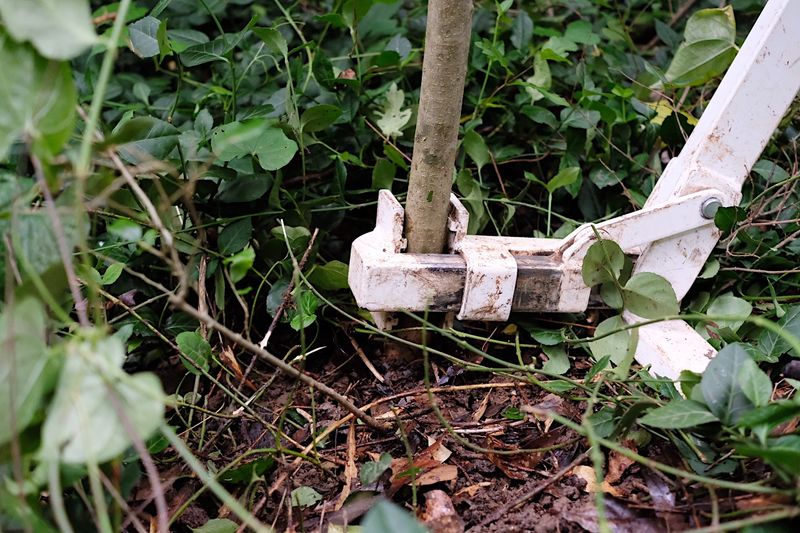
Catching privet before it matures is genuinely the smartest move. Small seedlings can be pulled by hand when soil is moist, and the roots come out fairly cleanly without leaving much behind.
Waiting even one season allows plants to develop stronger root systems that are much harder to remove manually.
For larger shrubs, cutting at the base is a common approach. However, privet resprouts aggressively from cut stumps, so follow-up is necessary.
Checking treated areas every few months and removing new growth before it gets established is a realistic part of the process.
Foliar herbicide treatments are sometimes used on mature plants, particularly when large numbers of shrubs need to be addressed. Applying herbicide to freshly cut stumps is one method land managers use to reduce resprouting.
Always follow label directions carefully and consider consulting a local extension office before using chemical treatments near water or sensitive areas.
Timing removal efforts strategically helps too. Working on privet before it sets seed in late summer limits how many new seeds enter the soil.
Fewer seeds in the ground means fewer seedlings to deal with in future seasons, though seeds already present can remain viable for some time.
Consistency matters more than any single big effort.