The Shrubs That Give Ohio Cardinals Cover After Leaves Start Falling
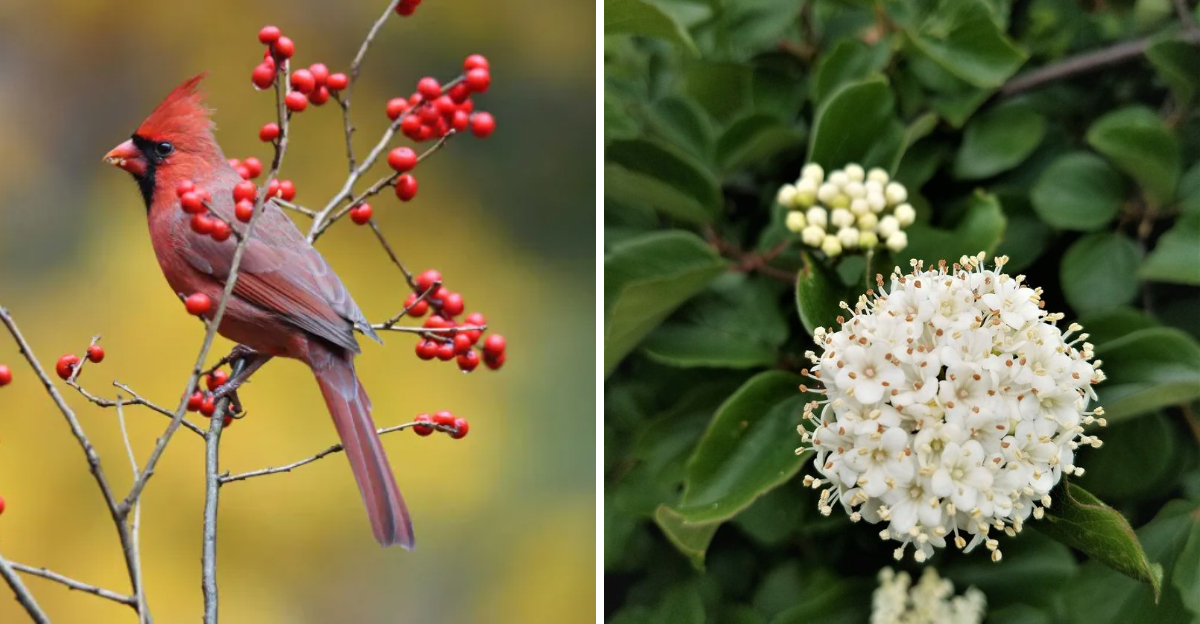
An Ohio yard can feel different once October starts stripping leaves from the canopy.
Spaces that felt private in summer suddenly open up. Fences show through. Tree trunks stand bare, and the sheltered corners birds used for months can disappear almost overnight.
That seasonal change matters more than appearance.
Small songbirds still need places to duck out of wind, hide from predators, and pause between feeding trips when temperatures begin dropping. The best shelter is not always the tallest tree or the thickest evergreen.
Some of the most useful cover sits much lower.
So which shrubs deserve a place in an Ohio yard before winter settles in?
The answer comes down to branching density, fruit, mature size, and how well each plant holds useful structure after leaf drop.
Choose the right native shrubs, and a bare fall landscape gains hiding places, feeding stops, and safer travel routes.
The leaves may be disappearing.
The shelter does not have to disappear with them when red visitors begin searching the yard for cover.
1. Common Ninebark Builds Dense Branching Cover
A leafless shrub can still provide meaningful shelter when its branching stays dense.
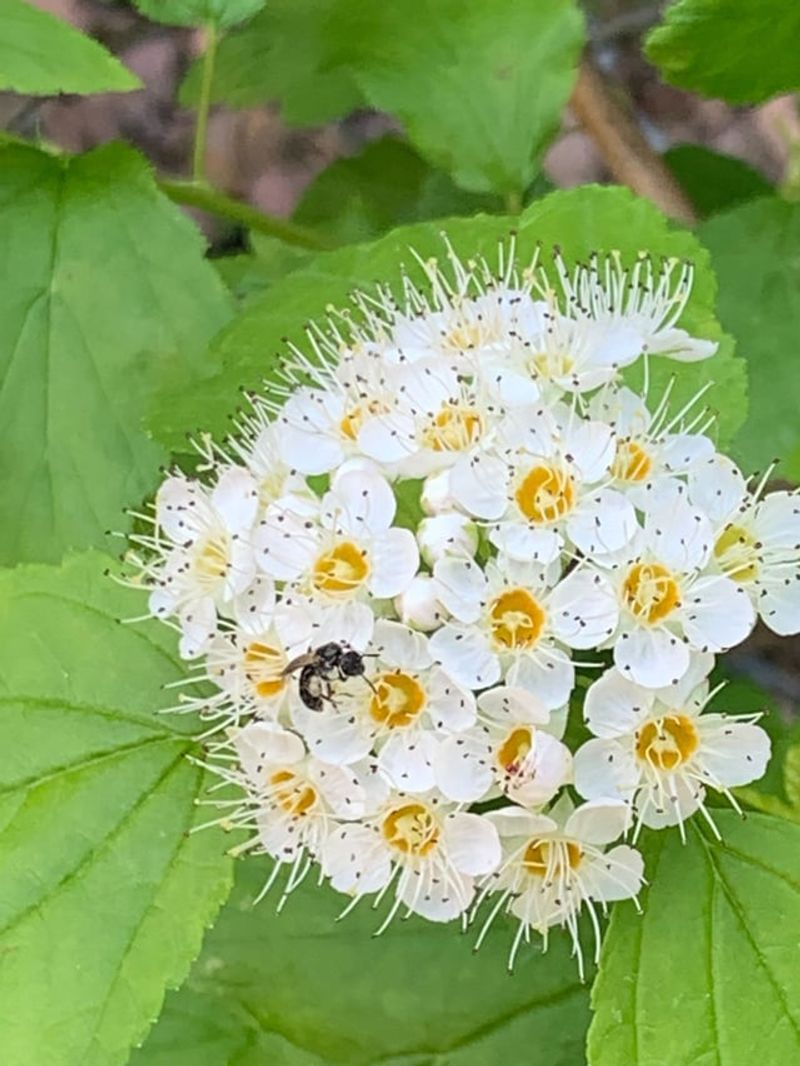
Common ninebark, Physocarpus opulifolius, is useful for exactly that reason.
Its arching stems build a layered framework that remains visible after the foliage drops, giving cardinals places to slip inside when nearby trees have opened up for winter.
That structure matters along exposed edges.
Plant ninebark beside a fence, at the back of a mixed border, or near a transition between lawn and woodland. A mature shrub can become broad, so give it enough room to develop naturally rather than forcing it into a narrow clipped shape.
The plant handles full sun to part shade and tolerates a range of soil conditions once established.
Its toughness makes it especially useful in Ohio yards where a shrub has to deal with summer heat, winter cold, and occasional dry spells without constant attention.
Avoid shearing it into a tight ball.
Cardinals benefit more from the layered interior created by multiple stems than from a perfectly smooth outside surface. Selective pruning keeps that framework open enough to stay healthy without removing the hiding places birds use.
Ninebark loses its leaves, but it does not lose its usefulness.
Once October opens the canopy overhead, those crossing stems can become exactly the kind of low, dependable cover a cardinal needs between feeding trips.
2. Arrowwood Viburnum Forms A Thick Fall Screen
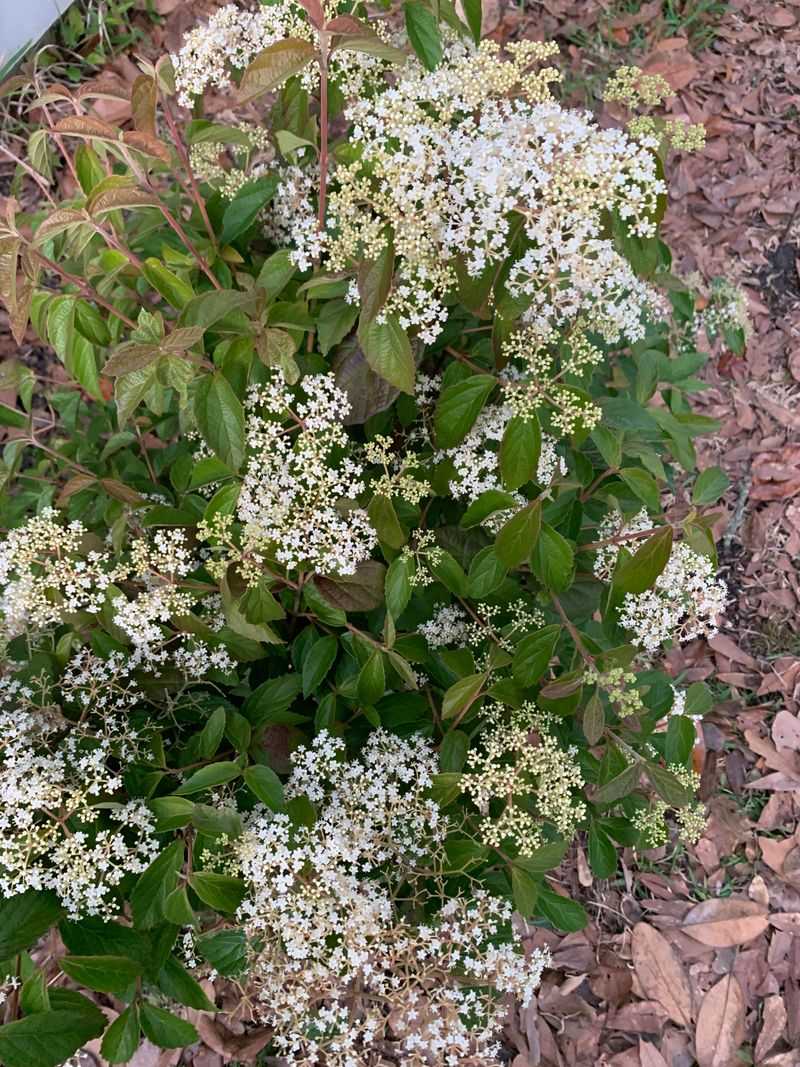
A good cardinal shrub does not need to stay evergreen to keep feeling protective.
Arrowwood viburnum, Viburnum dentatum, develops a dense, multi-stemmed form that remains useful after its leaves fall.
The branching creates a screen at the shrub layer, giving cardinals somewhere to pause, hide, and move through without sitting fully exposed.
Fruit adds another reason to plant it.
Blue-black drupes ripen after the flowers and can attract a range of birds. Fruit set is usually better when genetically different plants bloom near one another, so a small grouping can be more useful than a single isolated shrub.
Your Ohio Garden Changes Every Week. Your Plan Should Too.
Gardening in Ohio changes quickly throughout the season. Every Friday you’ll receive a simple weekly plan showing exactly what to plant, prune, fertilize, harvest, and protect so you never miss the right timing.
Give the plants enough room.
Arrowwood can mature into a broad shrub, and crowding it against a fence or walkway usually leads to unnecessary pruning later. A looser hedge or naturalized border lets the stems thicken without turning maintenance into a constant fight.
Sun to part shade works in many Ohio landscapes, provided the site is reasonably suited to the plant.
The biggest advantage comes after leaf drop.
Even bare, the multiple stems create visual obstruction and quick escape routes that an open lawn cannot offer. That makes arrowwood especially useful between feeders and taller trees, where cardinals often want a protected stopping point.
Think of the fruit as a bonus.
The real winter value is the shrub itself, still standing thickly when much of the rest of the yard has become transparent.
3. Blackhaw Viburnum Adds Fruit And Shelter
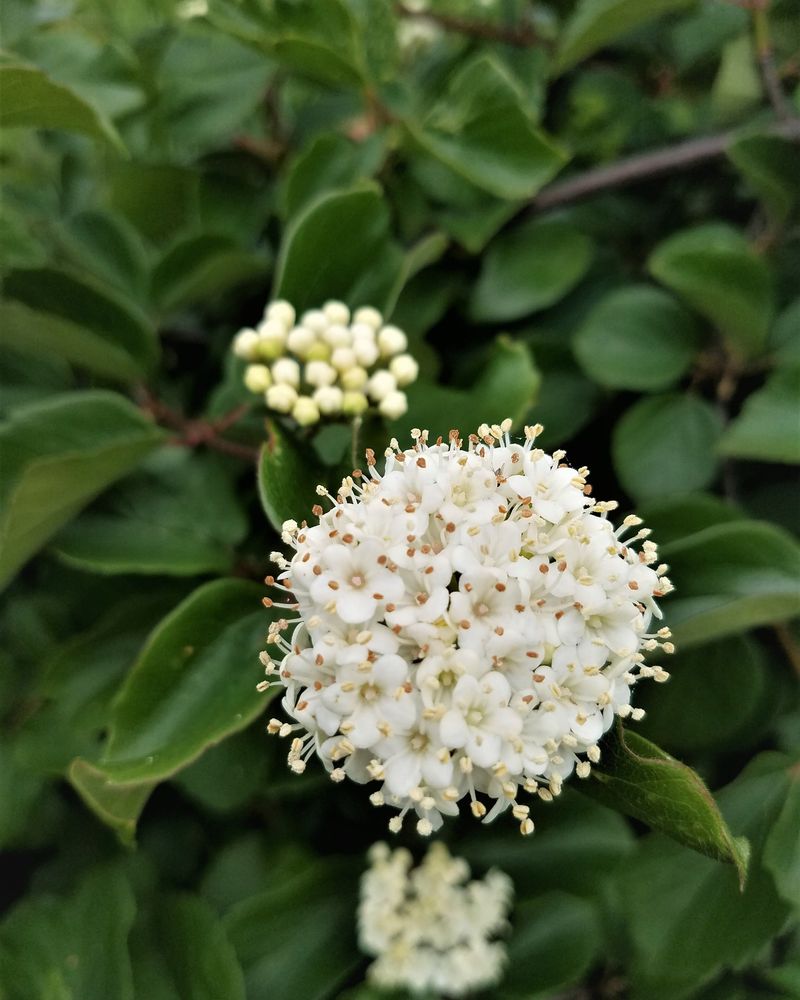
Blackhaw viburnum, Viburnum prunifolium, brings more height to the same shelter strategy.
This native can grow into a large shrub or small tree, creating a substantial middle layer between low garden plants and the taller canopy above.
That layered structure gives cardinals more options once surrounding deciduous trees lose their leaves.
Its branching is naturally irregular and dense enough to create protected interior perches.
That makes blackhaw useful along woodland edges, property lines, and the back of a broad shrub border where it has room to reach mature size without constant reduction.
Spring flowers can lead to dark fruit later in the season, providing additional wildlife value. Do not count on every fruit remaining deep into winter, because birds and other wildlife may use it earlier.
The cover lasts longer than the crop.
Even after fruit is gone and leaves have fallen, sturdy branches remain in place through the cold months. That is the feature cardinals can continue using for shelter, staging, and quick movement between feeding areas.
Give blackhaw space from the beginning.
Trying to keep a naturally large shrub squeezed into a small foundation bed usually leads to repeated pruning that removes the dense structure you planted it for.
In the right Ohio yard, blackhaw is less like a decorative accent and more like a piece of permanent habitat.
Its size becomes an advantage when winter strips smaller plants down to almost nothing.
4. Gray Dogwood Creates A Protective Thicket
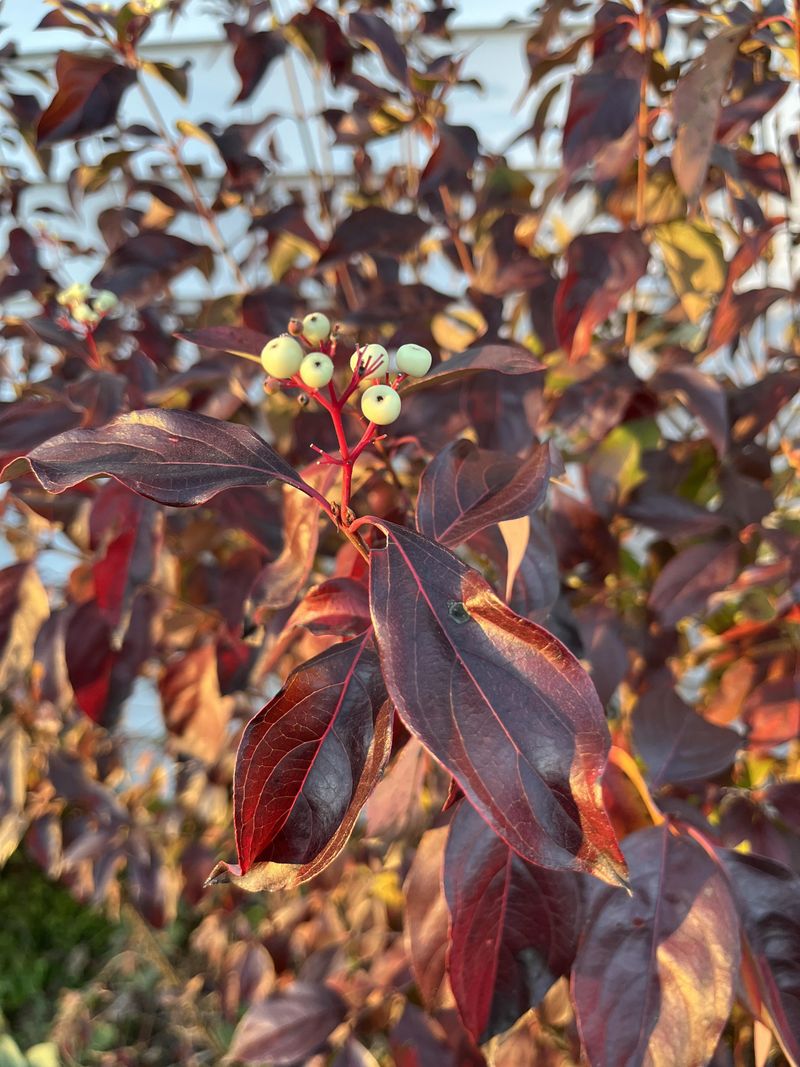
Gray dogwood, Cornus racemosa, is the shrub to choose when you actually want a thicket.
Instead of remaining as one neat specimen, it can spread by suckers and gradually build a colony of upright stems. In a naturalized Ohio yard, that habit creates exactly the kind of dense lower cover cardinals can use when they need to disappear quickly.
Place it where spreading is welcome.
A back fence, woodland edge, drainage swale, or wide property-line planting gives the colony room to expand without constantly colliding with paths or formal beds. A mowing strip can keep the outside edge under control.
The shrub also produces white fruit on reddish stalks after flowering, and those fruits can attract birds during the season.
For cardinals, though, the long-term payoff is the stem density.
A mature colony breaks wind, blocks sight lines, and gives birds several entry and exit points instead of one exposed perch. That is valuable when hawks are active or when the broader landscape becomes bare in late fall.
Avoid thinning the patch so aggressively that only a handful of widely spaced stems remain.
Remove damaged or badly placed growth, but preserve the layered interior that makes the shrub protective.
Gray dogwood will not fit every yard.
Where there is room for a native thicket, however, its willingness to spread becomes habitat rather than a maintenance problem.
5. Winterberry Holly Adds Fruit After Leaf Drop
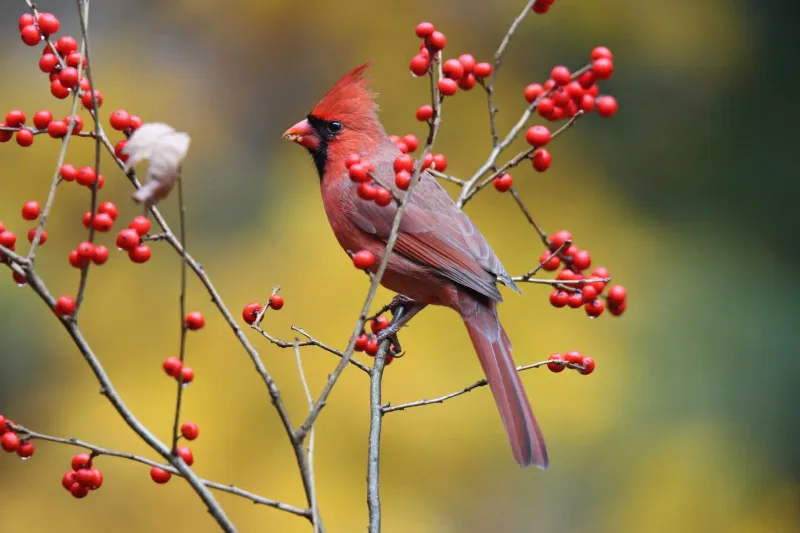
Winterberry holly, Ilex verticillata, loses its leaves just when its fruit becomes impossible to ignore.
Female plants can carry bright red berries along bare stems into the cold season, creating one of the most visible native shrub displays in an Ohio yard.
Birds may use the fruit as winter progresses, while the multi-stem structure provides places to perch and move through.
Fruit requires planning.
Winterberry has separate male and female plants, so a compatible male that flowers at the same time must grow nearby for female plants to set a strong berry crop. One male can pollinate several females when the bloom periods overlap.
Moist soil is where this shrub really shines.
Rain gardens, low spots, pond edges, and naturally damp sections of a property can suit winterberry better than dry, exposed ground.
It also tolerates the kind of seasonal moisture that makes some conventional landscape shrubs unhappy.
Do not expect an evergreen privacy screen.
The leaves fall, and the bare stems remain visible. Planting several shrubs together creates far better cover than relying on one specimen surrounded by open lawn.
Cardinals can use that branching as part of a larger shelter network, especially when evergreens or denser thickets grow nearby.
Winterberry earns its space with a combination of structure and fruit.
Once Ohio’s green canopy disappears, those red berries make the shrub look anything but empty.
6. American Hazelnut Fills The Lower Shrub Layer
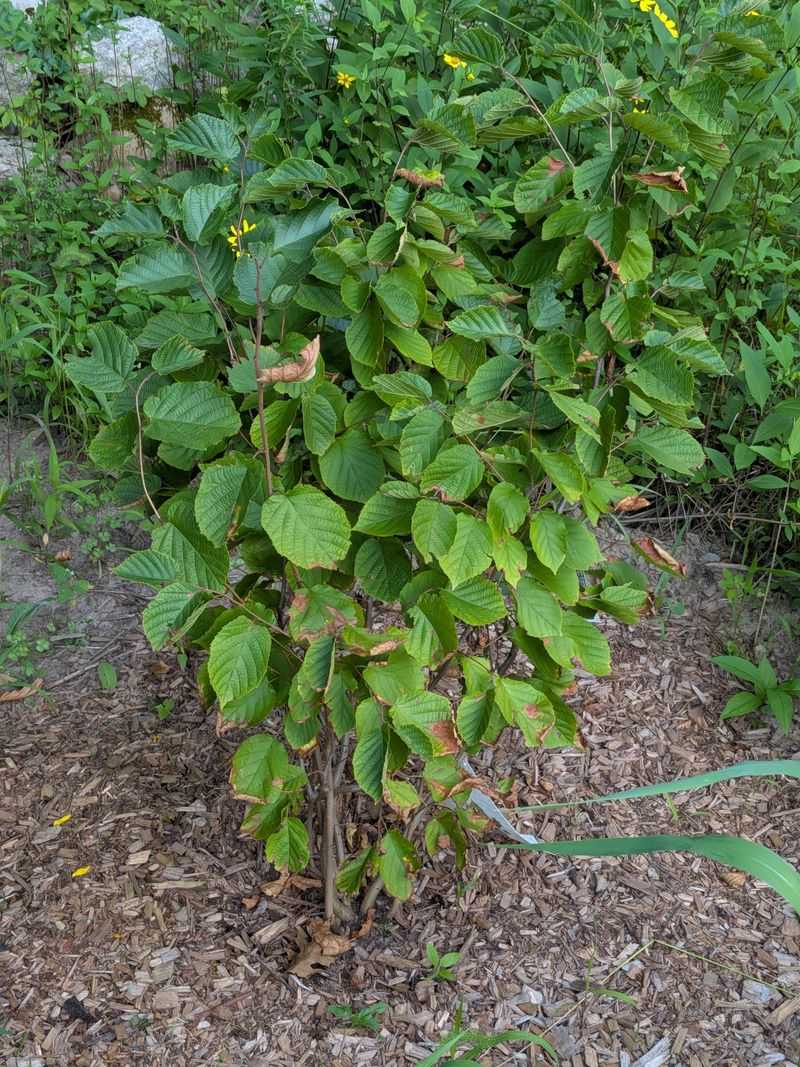
American hazelnut, Corylus americana, fills the lower and middle shrub layer with a dense tangle of stems.
That structure is more important to cardinals than the nuts themselves.
Hazelnuts are especially valuable to squirrels and other wildlife, while cardinals benefit most from the protected branching, low cover, and sheltered travel routes the shrub can create.
Let it grow naturally.
American hazelnut forms a broad, multi-stemmed shrub and can spread gradually by suckers. Along a woodland edge or wide border, several plants can knit together into the kind of continuous cover that gives birds somewhere to move without crossing open ground.
Sun to part shade suits many sites.
The shrub can fit especially well between taller trees and shorter perennials, filling the often-missing middle layer that makes a wildlife planting feel dense rather than decorative.
Avoid turning it into a clipped ball.
Heavy shearing removes interior branches and reduces the loose, protective structure that makes the plant useful. Selective pruning is a better way to remove damaged stems or control width.
Its mature spread deserves respect.
Give it enough room from paths, driveways, and small ornamental plants so the shrub does not become a constant pruning project.
For an Ohio cardinal, the advantage is straightforward.
A feeder may supply food, but a dense hazelnut nearby supplies somewhere to retreat.
That short distance between feeding and cover can make a yard feel much safer once leaves begin falling.
7. Spicebush Thickens Woodland Edge Cover
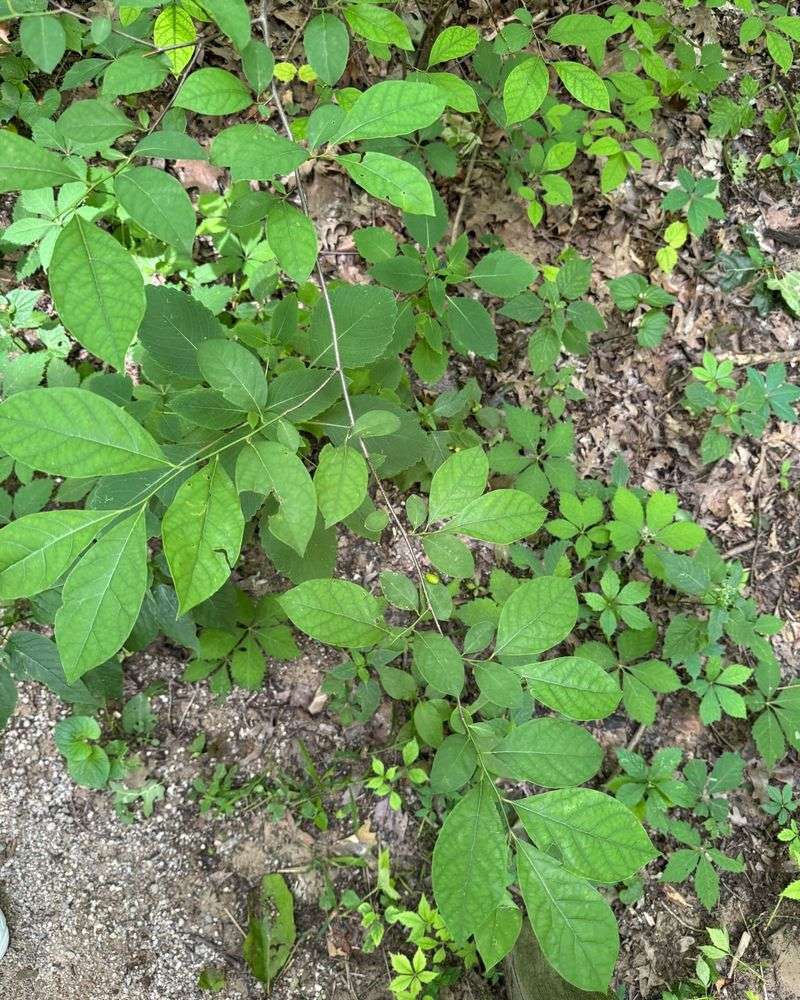
This native understory shrub naturally fits woodland edges and partially shaded areas, creating a multi-stemmed layer beneath taller trees.
Once the canopy above starts thinning in fall, that lower branching gives cardinals another place to move without crossing completely open space.
Female plants can produce bright red fruit when a male plant grows nearby.
Those fruits are highly attractive to birds and may disappear quickly, especially during migration, so their greatest value may come before winter truly settles in.
The branches remain.
That makes spicebush worth growing even after the fruit and leaves are gone. Group several shrubs along a shaded edge and the stems begin creating a transitional zone between lawn and woodland instead of an abrupt open boundary.
Moist, well-drained soil and part shade often suit the plant well.
Give mature shrubs room to broaden so the interior stays layered rather than repeatedly sheared into a narrow hedge.
Spicebush also supports insects during the growing season, adding another layer of wildlife value before fall arrives.
For cardinals, its role is simple but important.
It helps connect one protected area to another.
A yard with feeders, tall trees, and open lawn can still feel risky when the middle layer is missing.
Spicebush fills that gap with native cover exactly where Ohio’s autumn landscape often needs it most.
8. Common Elderberry Builds A Wide, Multi-Stemmed Refuge
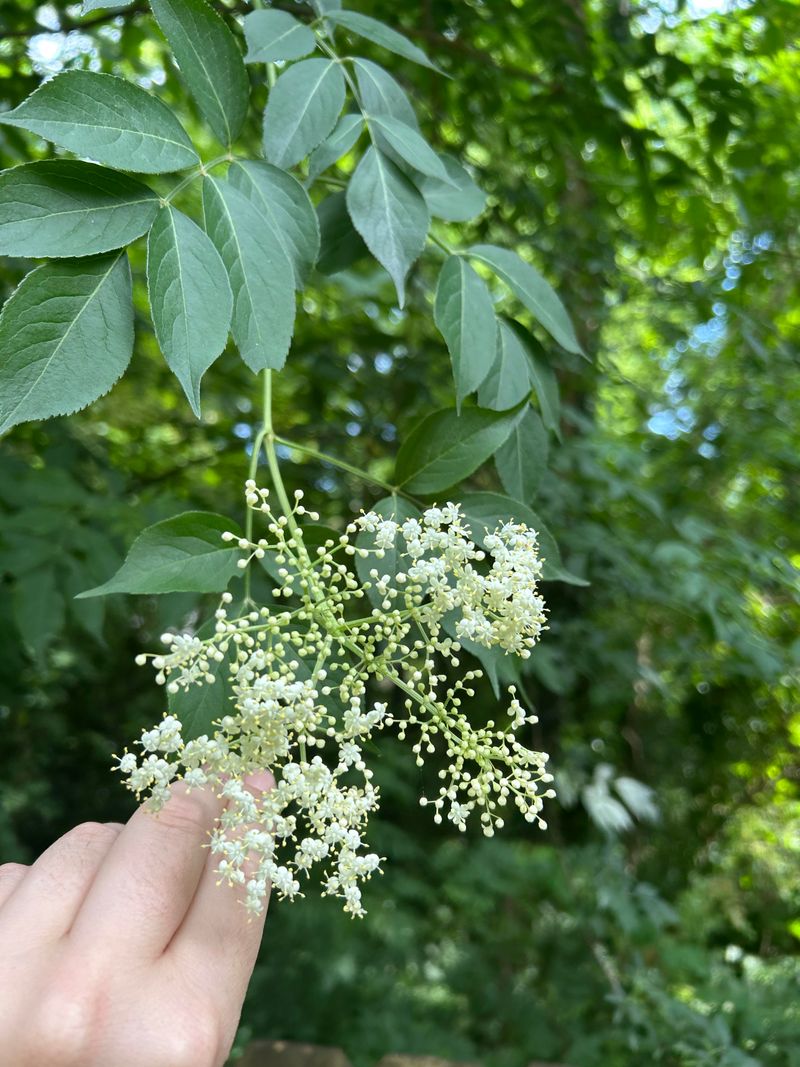
Common elderberry gives cardinals another kind of protection: a broad mass of stems that can fill the space between open lawn and taller trees.
This Ohio native naturally grows as a multi-stemmed shrub and can spread into a loose colony when conditions suit it. That habit creates the layered lower cover birds need once autumn removes leaves from the canopy overhead.
Give elderberry room to expand.
A back fence, woodland edge, streamside planting, or wide naturalized border works better than a narrow foundation bed.
The shrub can become several feet tall and broad, and repeated shearing would remove much of the dense structure that makes it useful for wildlife.
Summer flowers develop into dark berries that attract many birds, although the fruit may be eaten well before winter arrives.
For cardinals, the lasting benefit is the branching.
Even after leaves fall and berries disappear, the collection of upright and arching stems provides perches, visual screening, and quick places to retreat from an exposed feeding area.
Elderberry performs best with reasonable moisture and can handle sun to part shade. Remove damaged or aging stems selectively rather than cutting the entire shrub back every year.
Placed near a feeder or along a route between trees, it helps make the yard feel connected.
That matters when October turns open spaces into risky crossings for birds.
A dense elderberry patch gives cardinals one more place to disappear before making the next move.