The Spider Moving Across Southern Missouri Roads Until The First Frost
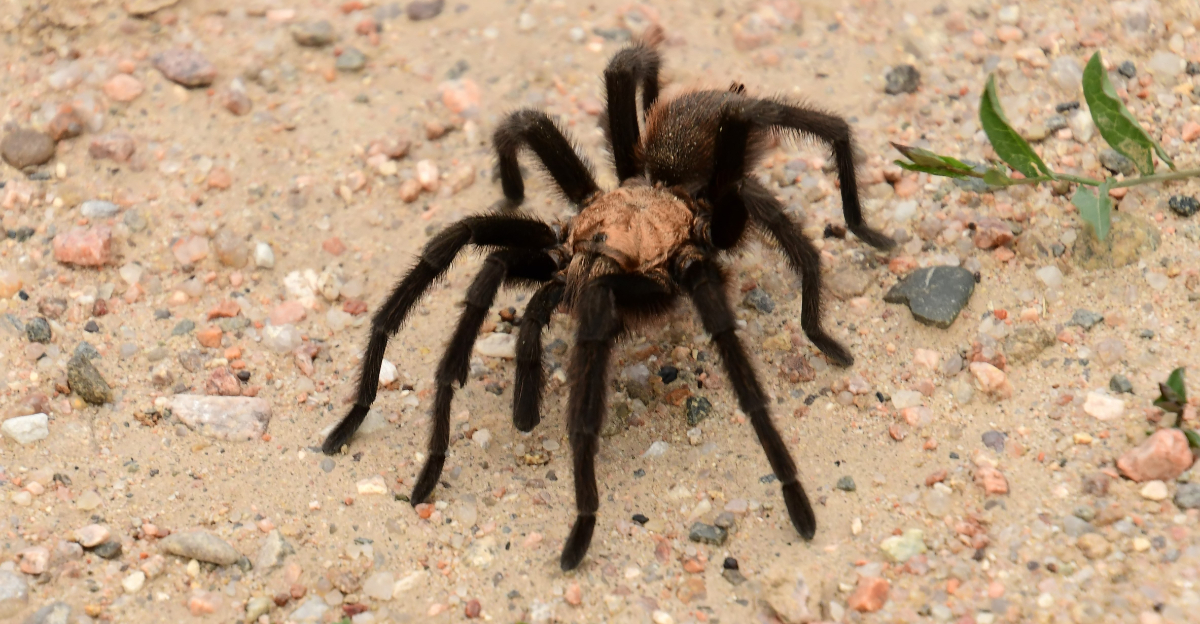
Late September in the Ozarks smells like dust, cedar, and warm gravel. Drive a back road near sunset and you might spot something the size of your palm strolling right across the centerline.
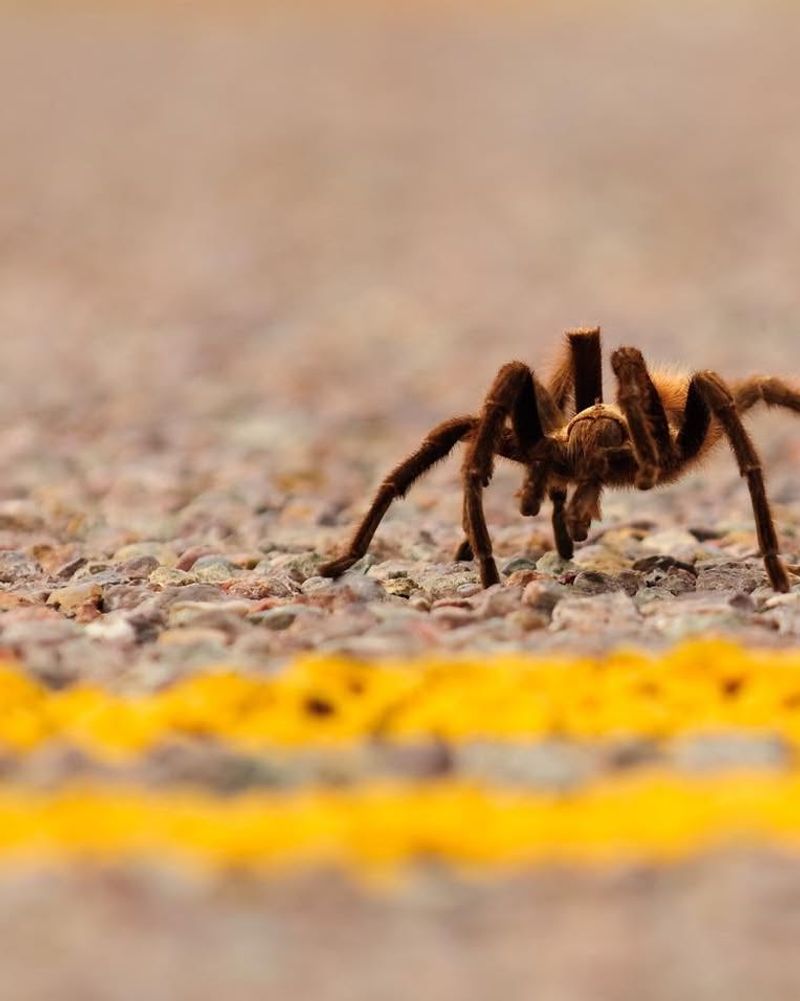
It is not a leaf blowing sideways. It moves with purpose, eight legs lifting and falling like tiny pistons.
For a few short weeks each autumn, these travelers turn quiet county roads into a walking route. Then the first hard frost arrives, and the parade quietly ends.
Locals call it the crossing season, and folks who know what to watch for slow down and stare. Here is what is happening out there, why it matters, and how you can enjoy the show without harming the wanderers.
A Native Tarantula Missouri Rarely Talks About
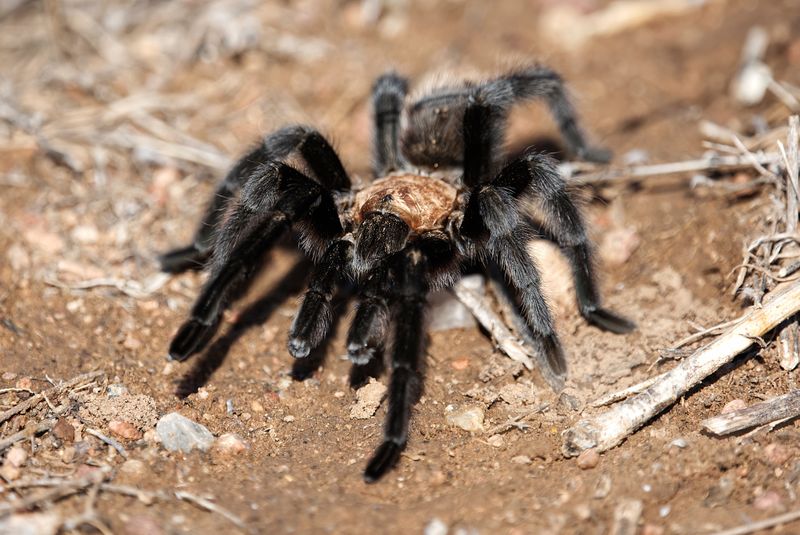
Missouri has a tarantula, and most residents have no idea. The Texas brown tarantula, known to scientists as Aphonopelma hentzi, lives in the rocky glades and dry hillsides of the state’s southern counties.
Adults reach a leg span of roughly four inches, with chocolate-brown bodies covered in fine hairs. Females can live fifteen to twenty years or more, spending nearly all that time within a few feet of a single burrow.
Males have a shorter run, maturing around seven to ten years old and then hitting the road. That road trip is exactly why people notice them in fall and not in June.
Their preferred neighborhoods include the limestone glades of the White River hills, the rocky edges of Table Rock and Bull Shoals, and the open ridges of the Ozark Plateau. Counties like Taney, Stone, Barry, Ozark, and Christian host solid populations.
Despite the intimidating size, these spiders are remarkably mellow. They rely on hiding rather than fighting, and a bite from one is roughly comparable to a bee sting for most people.
Fun bit of history: the species was named in the 1800s after Nicholas Marcellus Hentz, an early American naturalist who studied spiders while teaching in the South. Missouri sits at the northeastern corner of the animal’s range, which makes local sightings a genuine treat for naturalists.
Once you know they belong here, autumn drives take on a whole new flavor.
What Sends Males Wandering Every Autumn
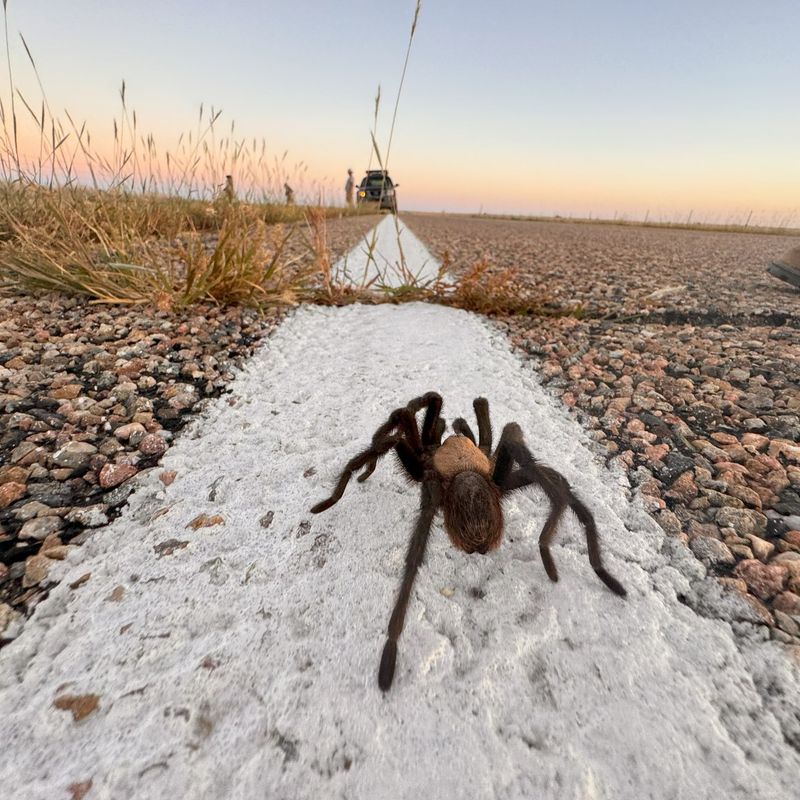
Romance is the whole story. When a male Texas brown tarantula reaches maturity, his job description changes overnight from patient ambush hunter to full-time traveler.
He abandons the burrow he has guarded for years and begins walking, sometimes covering a mile or more in a single night. His goal is simple: locate a female’s silk-lined burrow before cold weather settles in.
Mature males look different from females, and once you spot the difference you cannot unsee it. Their legs are longer and skinnier, their bodies slimmer, and they carry small boxing-glove shapes on their front feelers called pedipalps.
Roads happen to be the easiest surface around. Open pavement and gravel give a walking spider fewer obstacles than thick leaf litter or brush, so they follow the path of least resistance right into traffic.
Your Missouri Garden Changes Every Week. Your Plan Should Too.
Gardening in Missouri changes quickly throughout the season. Every Friday you’ll receive a simple weekly plan showing exactly what to plant, prune, fertilize, harvest, and protect so you never miss the right timing.
Warm asphalt also holds heat after sundown, which helps a cold-blooded animal keep moving. That comfort comes with obvious risk from tires.
Peak movement usually runs from late August through mid-October in southern Missouri, tapering off sharply once nighttime temperatures dip toward freezing. After the first solid frost, the wandering stops.
Males rarely return to a burrow of their own after mating season ends. His entire adult life is basically one long autumn road trip with a single purpose attached.
Knowing that gives the sight a bittersweet edge. That palm-sized wanderer on the centerline is on the most important errand of his life.
Prime Roads And Hours For Spotting Them
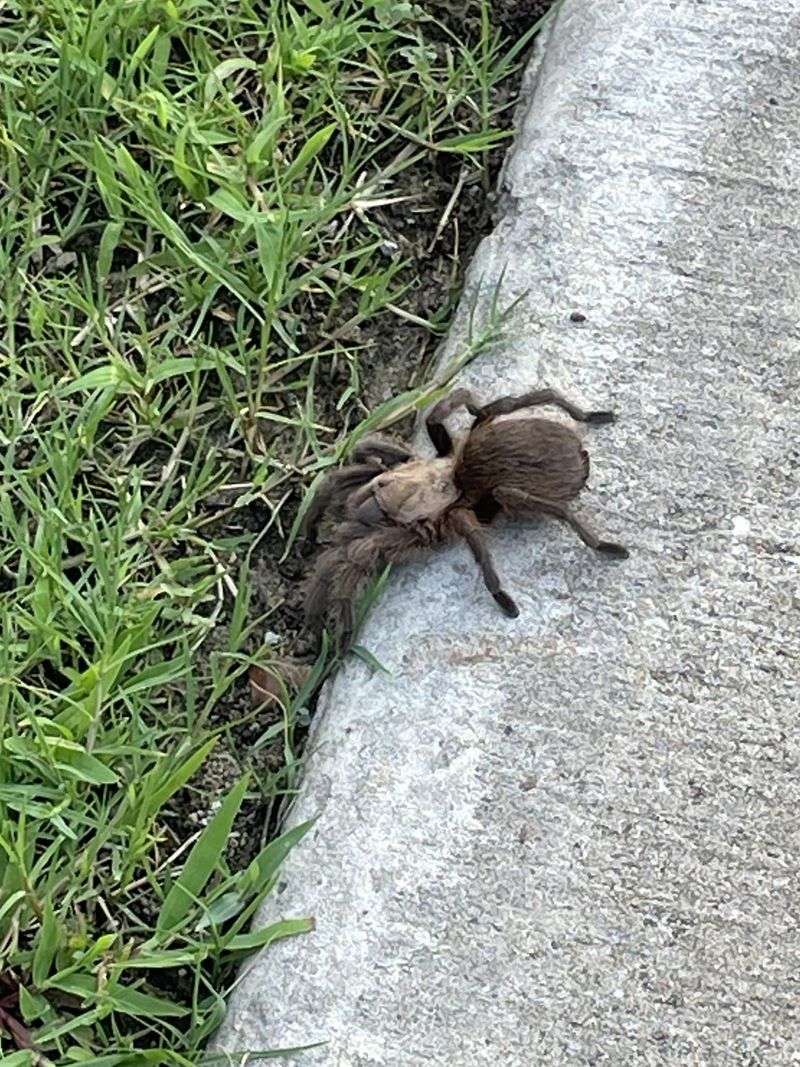
Timing beats luck every time. Sightings cluster in the two hours around sunset and continue well after dark, which is why so many people first notice tarantulas in their headlights.
Warm, humid evenings following a rain shower tend to produce the heaviest traffic. Cool, windy nights slow things down considerably.
Look for narrow county roads and gravel lanes that cut through rocky, south-facing hillsides with cedar trees and thin soil. That habitat, called a glade, is tarantula headquarters in the Ozarks.
Areas near Branson, Forsyth, Cassville, Gainesville, and Galena regularly produce reports. Highway shoulders along Bull Shoals Lake and the Buffalo River corridor just across the Arkansas line are also reliable.
Drive slowly, around twenty to twenty-five miles per hour, and scan the pavement ahead rather than the ditches. A moving tarantula looks like a small dark hand skittering sideways.
Bring a flashlight with a red filter if you plan to stop and watch. Red light disturbs them far less than bright white beams.
Pull fully off the road before getting out, and wear closed shoes since scorpions and snakes share the same rocky habitat. Turn on your hazard lights so other drivers see you.
Keep a small notebook or use your phone to log the date, temperature, and location. Missouri naturalists appreciate observation records, and platforms like iNaturalist welcome photos.
Half the fun is realizing how much wildlife moves through familiar places after the sun drops.
Moving One Off The Road Without Getting Hurt
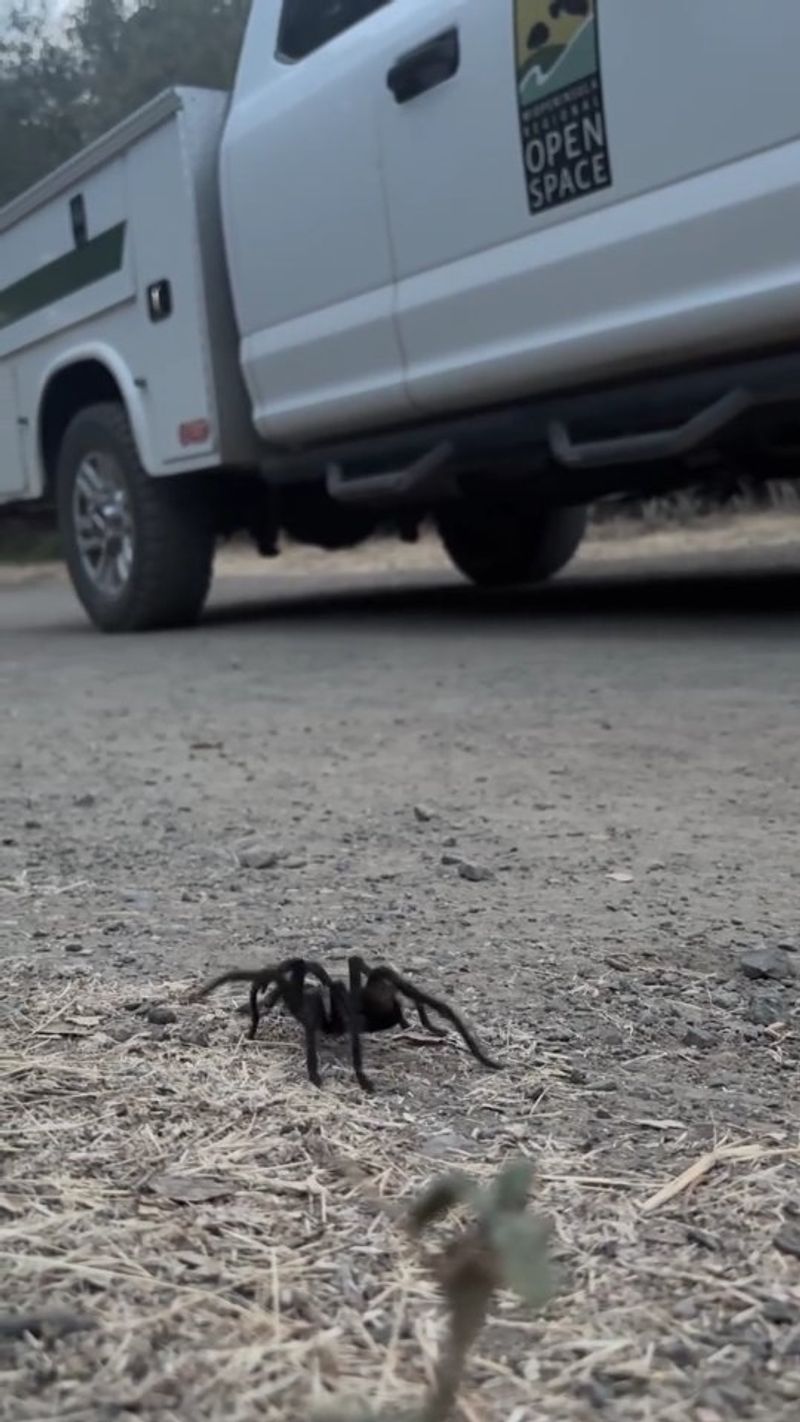
Good intentions need good technique. Rescuing a road-crossing tarantula is easy, but grabbing one with bare hands is the wrong opening move for both of you.
First, check that stopping is safe. Blind curves and hills are not worth it, no matter how much you want to help.
The container-and-card trick works beautifully. Place an open plastic tub or wide cup gently in front of the spider, then use a piece of cardboard or a stiff leaf to nudge from behind until it walks in.
Carry it in the direction it was already heading and set the container on its side about fifteen feet off the road. Let the spider walk out on its own rather than shaking it free.
Why the caution? Tarantulas can flick tiny irritating hairs from their abdomen when stressed, and those hairs itch badly if they reach your eyes or nose.
Their fangs are large enough to break skin, though bites are uncommon and the venom is mild for humans. Wash the area and use a cold pack if it ever happens.
Avoid dropping or squeezing one. A fall from waist height can rupture their abdomen, which is a serious injury for a spider.
Wash your hands afterward and avoid touching your face. Light gloves make the whole process more comfortable.
Two minutes of care sends a ten-year-old animal on its way. That is a pretty good trade for a short stop on a country road.
Burrows, Silk Doormats, And Glade Real Estate
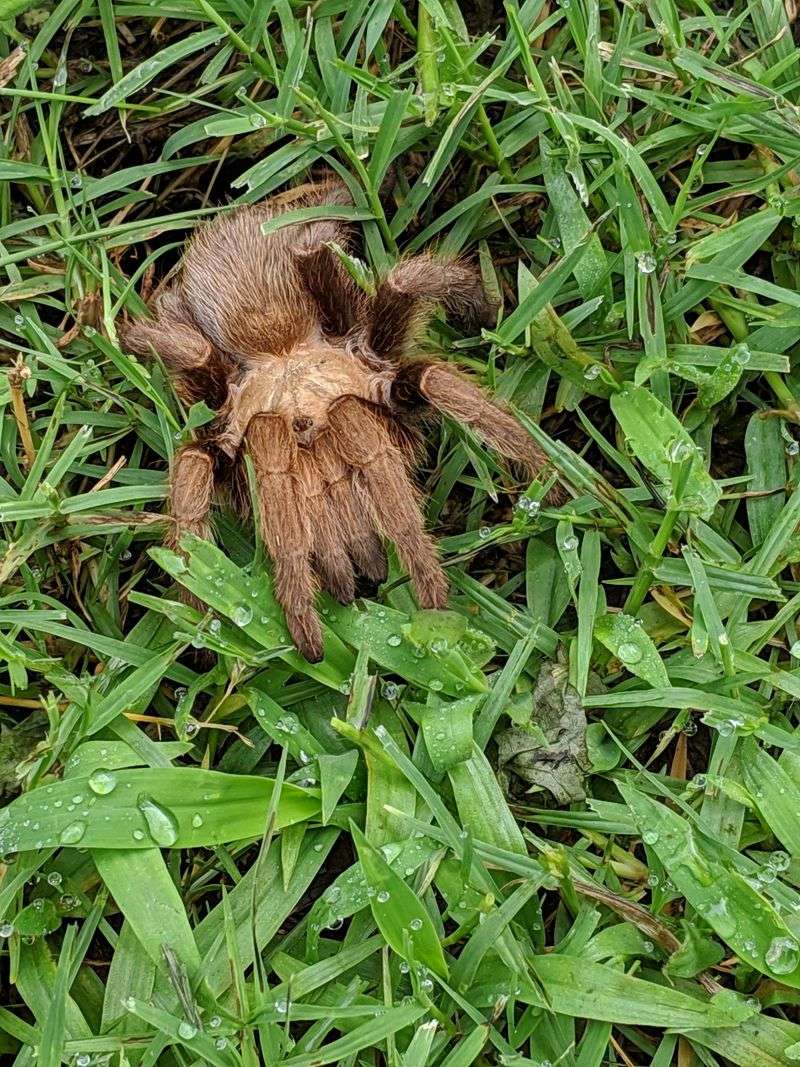
Home for a female tarantula is a hole she may occupy for a decade or longer. She digs it with her fangs and legs, often expanding an existing crevice under a flat rock.
The tunnel runs several inches to over a foot deep and angles downward. Silk lines the walls, keeping loose soil from collapsing inward.
Right at the entrance she lays down a thin silk mat that works like a tripwire. Vibrations from a passing cricket or beetle travel through the threads and tell her dinner has arrived.
Finding burrows is a fun daytime hobby once you learn the signs. Look for a coin-sized round opening on a rocky slope, usually with a faint web collar and a scattering of insect leftovers nearby.
Please resist the urge to dig one out or pour water in. Flooding a burrow forces the occupant into the open and destroys years of construction.
Southern Missouri glades are dry, sun-baked, and full of chert rock, which suits burrowing spiders perfectly. Those same glades support collared lizards, prickly pear cactus, and prairie plants found nowhere else in the state.
Conservation groups work hard to keep cedar trees from swallowing these open patches. Healthy glades mean healthy tarantula populations.
Females seal their burrow entrances loosely with silk and soil during cold months. She waits underground, slowing down until spring warmth returns.
Respecting burrows costs nothing and protects a neighbor most people never see.
Sorting Fact From Campfire Fiction
Ask around and you will hear some wild claims. One popular tale says an Ozark tarantula bite can put a grown adult in the hospital, which does not hold up.
Medical sources rank Aphonopelma hentzi venom as mild for humans, comparable to a wasp sting in most cases. Reactions are usually local pain and swelling that fade within hours.
Another myth insists they leap at people. In reality these spiders are slow, ground-bound walkers that prefer retreating into a crevice over any confrontation.
You may also hear that Missouri tarantulas were released by pet owners. Fossil and specimen records show them living in the Ozarks long before the pet trade existed.
Then there is the belief that they hunt in packs during migration. Males travel alone, and two males meeting on a road are more likely to clash than cooperate.
A quirky truth beats the fiction anyway. Tarantulas have no ears, sensing the world almost entirely through hairs that detect air movement and vibration.
They also molt, shedding their whole exoskeleton and leaving behind a hollow copy that looks unsettlingly like the spider itself. Young ones molt yearly, and mature females may still shed every year or two.
Sharing accurate information matters because fear drives most harm toward these animals. A neighbor who knows the facts is far less likely to reach for a shovel.
Curiosity beats panic, and the reality is more interesting than the rumors.