Why Catbirds Are Leaving And Juncos Are Arriving In Connecticut Backyards
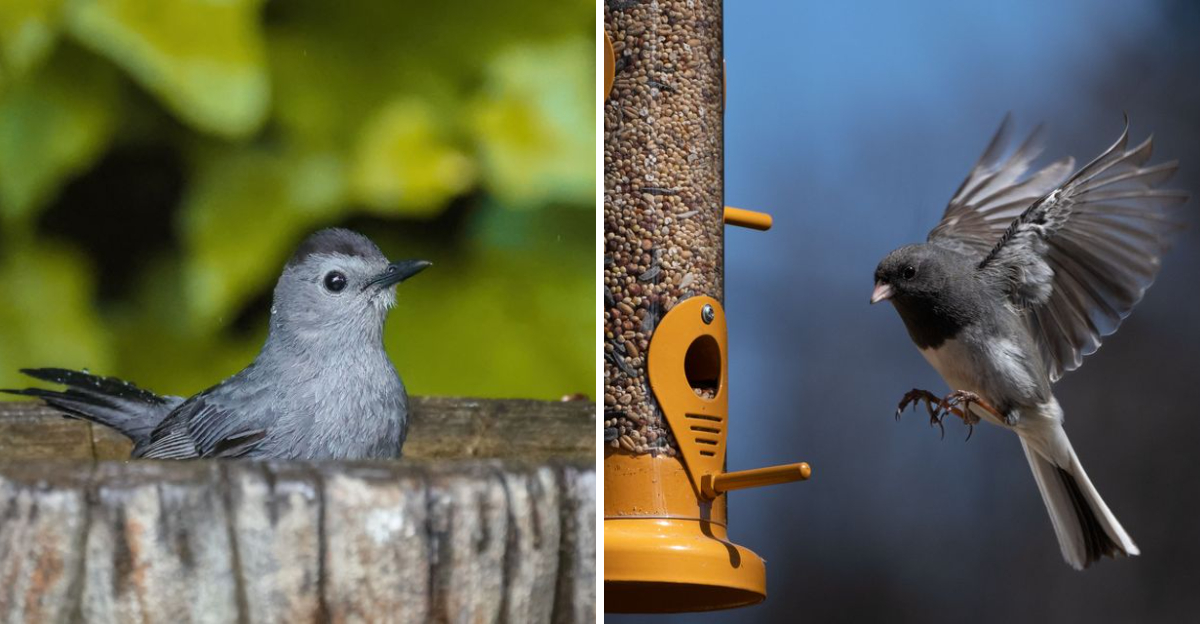
Watch closely, because your backyard is about to swap cast members overnight. A bird departs while another quietly settles in. Gray catbirds have serenaded Connecticut backyards all summer long, then they drift quietly away.
Dark-eyed juncos arrive almost the very same week, flying south from colder northern ground. This shift happens quietly before you even notice it. Temperatures drop fast, daylight shortens quickly, and instincts awaken inside these small birds.
Food sources shift too, guiding catbirds toward much warmer regions. Meanwhile juncos find Connecticut’s cooler air oddly comfortable. Nothing about this precise timing is accidental or random at all.
Ancient signals guide every choice these small birds make. Your yard becomes a hidden stage for this quiet handoff. Understanding this exchange completely changes how you see your own quiet space.
Every October, this same swap happens again, precise and utterly reliable. You will never see this backyard the same way again.
1. Migration Instinct Pulls Catbirds South Early
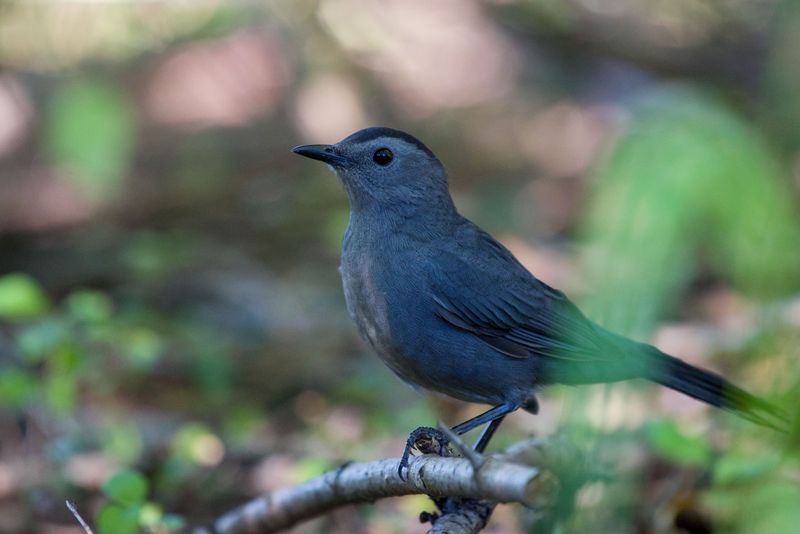
Long before the first frost, catbirds already know it is time to leave. A biological trigger signals that it’s time to leave.
Gray catbirds are neotropical migrants, meaning they travel between North America and the tropics each year. This instinct, called zugunruhe, is a restless urge that builds inside migratory birds every fall.
Catbirds do not wait for snow or cold winds to make their move. Internal cues drive their departure timing.
Most Connecticut catbirds head toward Florida, the Caribbean, or Central America. They follow ancient flyways that their ancestors used long before humans built highways below.
What triggers this instinct so precisely? Scientists believe it is a combination of hormonal shifts and environmental signals working together inside the bird.
Some migratory songbirds show seasonal changes in brain regions linked to navigation and spatial memory. Researchers are still studying how widespread this effect is across species. This process demands significant neurological activity.
Backyard observers in Connecticut often notice catbirds becoming quieter and more secretive in late August. They stop singing loudly and start moving through shrubs with a focused, purposeful energy.
By mid-September, most catbirds are already gone from Connecticut yards. Their departure is one of the clearest signs that the season is turning.
If you spot a catbird in late October, it is likely a straggler or a bird passing through from farther north. Either way, it will not stay long.
2. Shorter Days Trigger Seasonal Movement Patterns
Your backyard gets less sunlight every day after June 21st. Birds notice this change far more acutely than humans ever could.
Photoperiodism is the scientific term for how living things respond to changing day length. For birds like catbirds, shrinking daylight is the most reliable signal that autumn is approaching fast.
When days grow shorter, a bird’s pineal gland detects the shift in light. This tiny gland then triggers hormonal changes that prepare the bird’s body for a long journey south.
Catbirds begin experiencing these internal changes weeks before temperatures drop noticeably. The calendar in their body is more accurate than any weather forecast.
Your Connecticut Garden Changes Every Week. Your Plan Should Too.
Gardening in Connecticut changes quickly throughout the season. Every Friday you’ll receive a simple weekly plan showing exactly what to plant, prune, fertilize, harvest, and protect so you never miss the right timing.
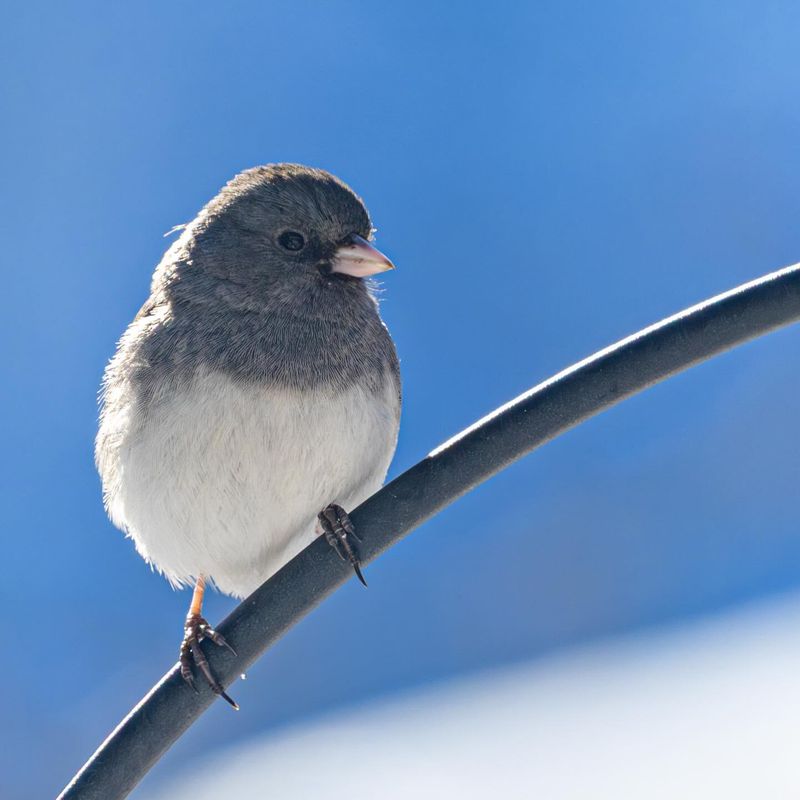
Juncos respond to photoperiodism too, but in reverse. Shorter days signal them to leave their northern breeding grounds and head toward milder southern regions.
Connecticut sits in a sweet spot on the Atlantic Flyway. Birds moving south from Canada and New England pass right through, making fall an active time for backyard birdwatching.
Many homeowners are surprised to learn that temperature has less influence than light on bird migration timing. A warm October does not stop catbirds from leaving or juncos from arriving.
The relationship between light and bird behavior has been studied for over a century. Researchers found that even artificial light can confuse migratory birds and throw off their natural schedules.
Keeping outdoor lights low during fall migration actually helps birds navigate safely. Small actions around your home can make a real difference for traveling birds.
3. Cooler Temperatures Signal Winter’s Approach

There is a crisp bite in the October air that feels different from September’s chill. Birds feel that shift in their feathers before you feel it on your skin.
Temperature plays a supporting role in bird migration, reinforcing what shorter days have already started. As nights grow consistently colder, catbirds feel a stronger push to move on.
Juncos, on the other hand, are built for cold. Their fluffy plumage traps heat efficiently, letting them thrive in temperatures that would stress a catbird significantly.
Dark-eyed juncos breed in boreal forests across Canada and Alaska, where temperatures can plunge dramatically. Connecticut winters feel relatively mild compared to where these birds come from originally.
Catbirds have thin feathers better suited for warmer, humid environments. Staying through a Connecticut winter would put enormous stress on their bodies and food-finding abilities.
As temperatures drop, the metabolic demands on small birds increase sharply. Catbirds would need to consume far more calories in cold weather than their preferred foods can provide.
Juncos arrive in Connecticut usually between late October and early November. Their appearance at feeders is a reliable, time-tested sign that winter weather is close.
Many Connecticut residents treat the first junco sighting as a personal milestone, the way others treat the first snowflake. These little birds carry the whole mood of the season with them.
Watching juncos scratch through leaf litter on a cold morning is one of fall’s simple pleasures. Their arrival means your backyard bird community is about to get a fresh cast of characters.
4. Juncos Breed Farther North During Summer
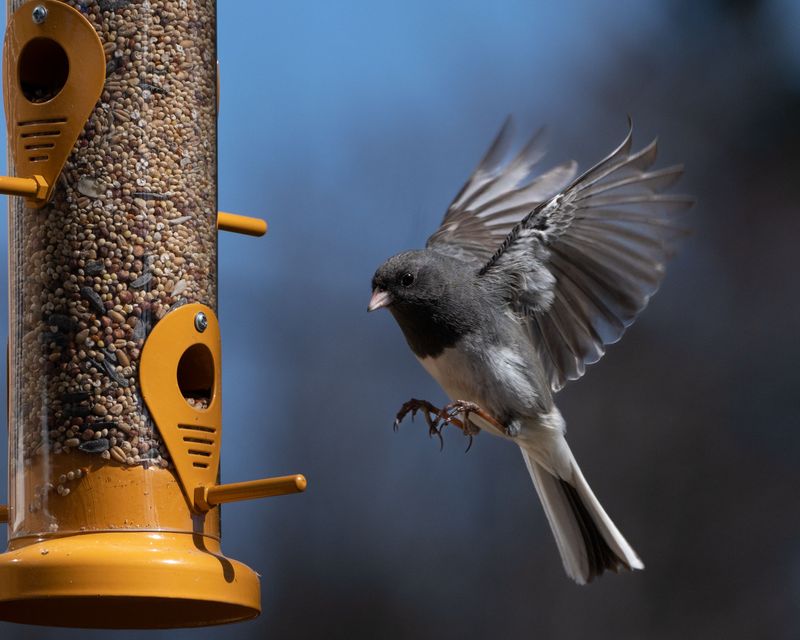
Most Connecticut residents never see a junco in July. That is because these birds are busy raising families hundreds of miles away in boreal forests.
Dark-eyed juncos breed primarily across Canada, Alaska, and the higher elevations of the Appalachian Mountains. They prefer dense conifer forests with cool temperatures and abundant ground cover for nesting.
Female juncos build cup-shaped nests hidden in roots, mossy banks, or low shrubs. They lay three to five eggs per clutch and may raise two broods in a single summer.
The boreal forest provides everything juncos need during breeding season. Insects are plentiful, daylight lasts almost endlessly, and predator pressure is lower than in suburban areas.
By late summer, junco chicks have fledged and the family groups begin breaking apart. Young birds and adults start drifting southward as food becomes harder to find in northern regions.
Connecticut sits at the southern edge of the junco’s winter range. These birds do not need to travel as far south as catbirds do, making the state a comfortable seasonal destination.
Interestingly, some juncos that breed in the mountains of western North Carolina barely move at all. They simply shift elevation rather than traveling hundreds of miles like their northern cousins.
The juncos arriving in your yard likely hatched in Quebec or Ontario just months before. They are young travelers seeing Connecticut for the very first time this season.
Knowing where juncos come from makes spotting them feel like welcoming a long-distance guest. Your feeder might be their very first stop on a brand-new journey.
5. Food Sources Shift As Seasons Change
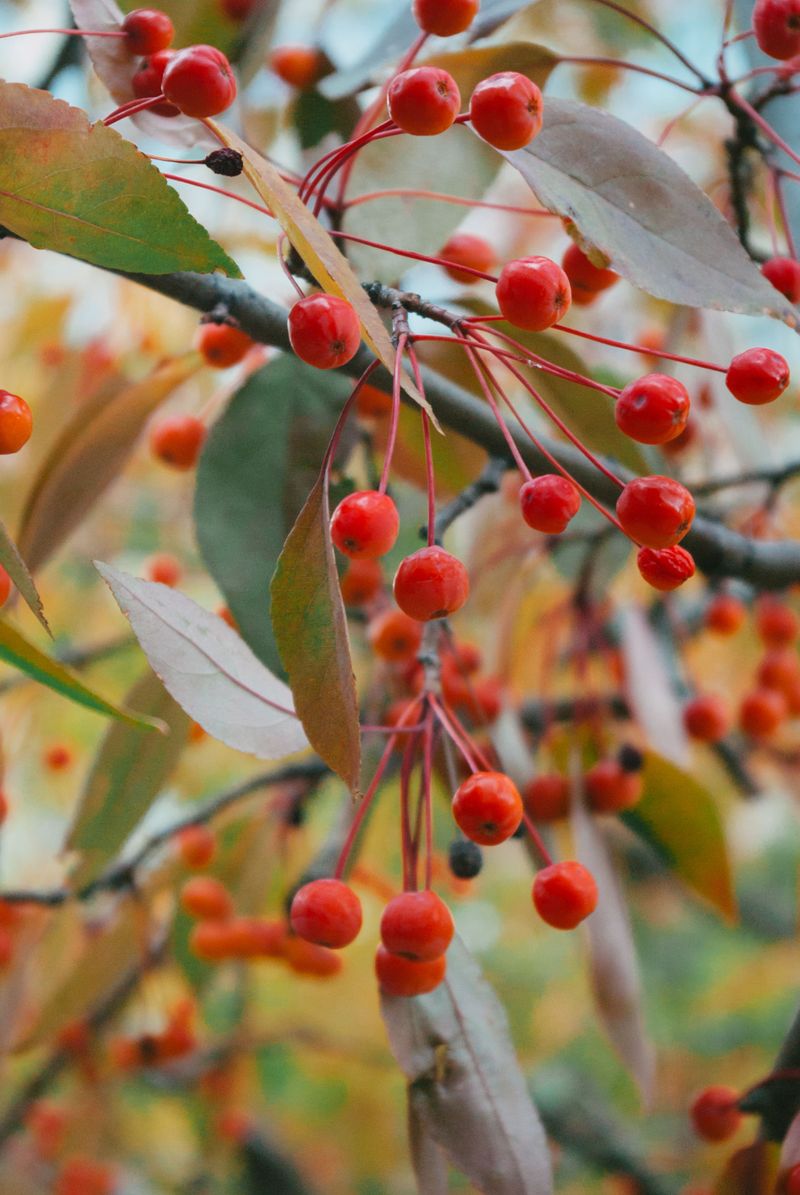
Birds eat what the season offers, and the menu changes dramatically between summer and fall. The shift in available food is one of the biggest reasons catbirds leave and juncos arrive.
Catbirds are omnivores that lean heavily on berries and soft fruits during late summer. They love pokeweed berries, wild grapes, and dogwood fruits, all of which ripen in late August and September.
Once those berry crops are stripped or freeze, catbirds lose their primary fuel source for staying through winter. Without reliable fruit, heading south becomes the only smart option.
Juncos have a completely different food strategy. They are seed specialists that forage on the ground, picking up millet, grass seeds, and weed seeds beneath snow and leaf litter.
Connecticut’s fall and winter landscape is actually rich with junco-friendly food. Seed heads from goldenrod, ragweed, and wild grasses persist through the cold months, keeping juncos well fed.
Planting native seed-bearing plants in your yard creates a natural buffet for wintering juncos. Species like purple coneflower and black-eyed Susan hold seeds through the coldest months of the year.
Backyard feeders stocked with white millet or sunflower chips attract juncos reliably. These birds prefer feeding on or near the ground, so a low tray feeder works especially well.
The seasonal food shift is not just about what birds prefer. It is about what their bodies are physically adapted to process efficiently throughout the year.
Matching your feeder offerings to the season keeps your yard buzzing with bird activity all year long. Catbirds and juncos are both telling you exactly what they need.
6. Snow Cover Pushes Juncos Toward Feeders
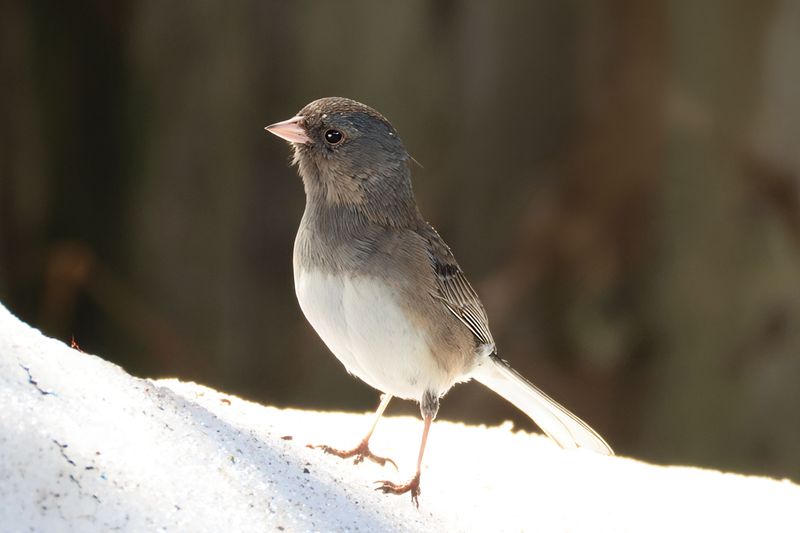
Snow changes everything for a small bird trying to find breakfast. When the ground goes white, juncos head straight for the nearest reliable food source available.
Juncos naturally forage by scratching through leaf litter and loose soil. A fresh blanket of snow blocks access to their preferred foraging ground almost instantly.
This is the moment backyard feeders become important for junco survival. A well-stocked feeder can be the difference between a full belly and a very hungry bird on a cold morning.
Juncos are ground feeders by habit, so they tend to gather beneath hanging feeders rather than clinging to them directly. Seed that spills onto the snow becomes their immediate target.
Placing a platform feeder low to the ground gives juncos an ideal feeding spot. Even a simple board laid flat with millet scattered on top will draw a crowd of these little birds quickly.
Interestingly, juncos form loose flocks during winter that follow consistent daily routes through neighborhoods. Once they find your feeder, they will return every single morning with impressive punctuality.
Connecticut snowstorms can arrive suddenly in November or December, catching birds off guard. Having feeders already stocked before the first storm gives juncos a safety net when they need it most.
Juncos are also surprisingly bold around humans once they feel safe. They will feed just a few feet away from a patient observer standing quietly near the feeder.
Watching juncos work a snowy yard is one of winter birdwatching’s great rewards. Their cheerful scratching and soft chip calls turn a gray morning into something worth stepping outside for.
7. Insect Availability Drops For Catbirds’ Diet
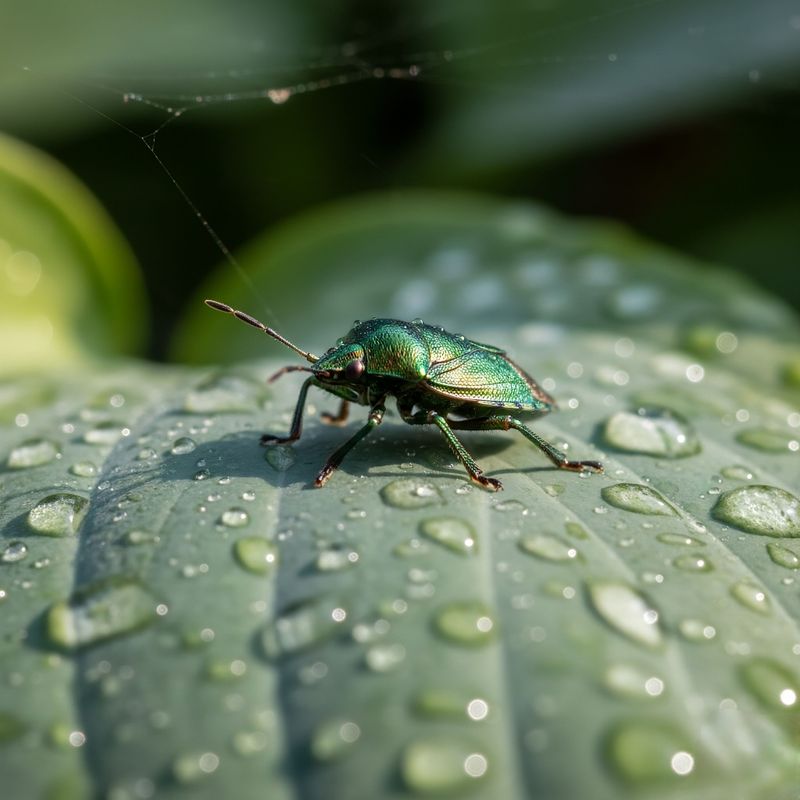
Summer in Connecticut is an insect paradise, and catbirds take full advantage of that abundance. Beetles, caterpillars, ants, and grasshoppers make up a huge portion of a catbird’s warm-season diet.
As temperatures fall, most insects become dormant or disappear entirely. The catbird’s protein-rich buffet essentially closes for the season without warning.
Catbirds cannot switch to seeds the way juncos can. Their beaks and digestive systems are built for softer foods like insects and berries, not hard seeds or frozen ground foraging.
By late September, even berry crops begin to thin out as other wildlife competes for the remaining fruit. Catbirds face a shrinking food supply from multiple directions simultaneously.
The timing of insect decline aligns almost perfectly with peak catbird departure from Connecticut. This is not a coincidence; it is a finely tuned biological response to environmental change.
Warmer falls can delay catbird departure slightly because insects stay active a bit longer. Climate shifts are already nudging migration windows in subtle but measurable ways across the Northeast.
Juncos do not depend on insects at all during winter months. Their seed-based diet makes them much more flexible in cold, insect-free environments like a Connecticut January.
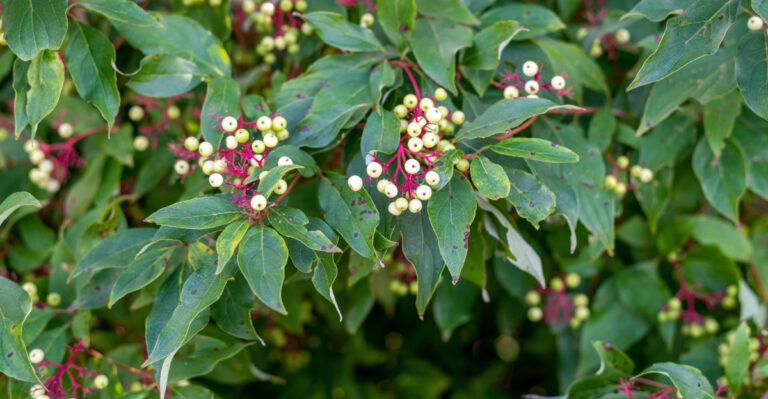
Planting native shrubs that hold berries late into fall can help catbirds fuel up before their journey. Winterberry holly and American beautyberry are excellent choices for Connecticut gardens.
Supporting insect habitat through native plantings benefits catbirds during summer too. A yard rich in insects keeps catbirds singing and thriving all season before they head south.
8. Breeding Season Ends, Prompting Relocation South
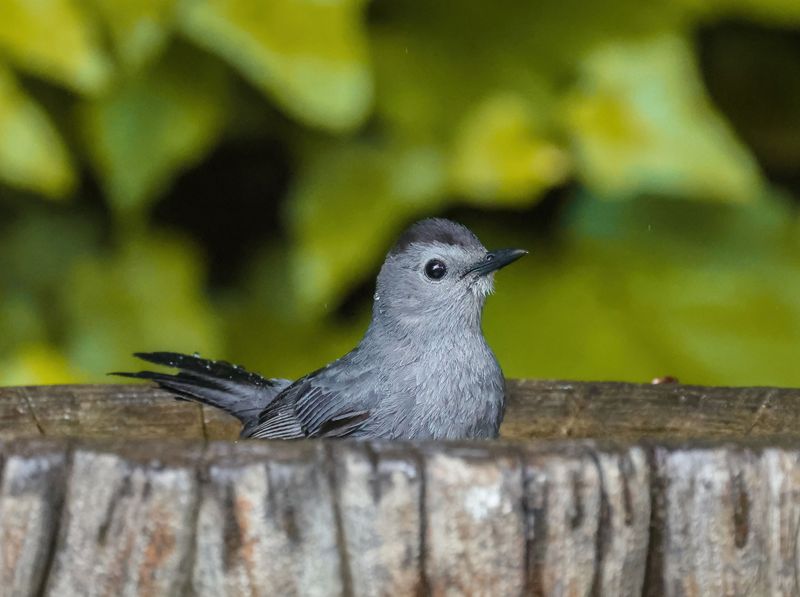
Once the last catbird chick leaves the nest, the adults have no biological reason to stay in Connecticut. Breeding season is over, and the clock for departure starts ticking immediately.
Catbirds typically raise one or two broods per summer in Connecticut. The second brood usually fledges by late August, freeing the parents to focus entirely on preparing for migration south.
After breeding ends, catbirds enter a period called hyperphagia, where they eat aggressively to build fat reserves. Those fat stores become the fuel that powers their long flight toward warmer regions.
A catbird can significantly increase its body weight during hyperphagia. That extra fat burns off quickly during the energy-intense journey south through the Atlantic Flyway corridor.
Juncos follow a parallel pattern in reverse. Their breeding season wraps up in the boreal forest, and they begin moving south just as Connecticut catbirds are finishing their own nesting duties.
The overlap between catbird departure and junco arrival in Connecticut is remarkably precise. Birdwatchers often note how closely the two species’ timing aligns in succession.
Young catbirds born that same summer make their very first migration without their parents. Instinct alone guides them thousands of miles to wintering grounds they have never seen before.
This is notable when considering the scale of the journey. A bird just weeks old navigates a continent using nothing but biology and magnetic fields.
Why catbirds are leaving and juncos are arriving in Connecticut backyards comes down to this: every bird follows its season. Your backyard is just one stop on a much bigger journey.