The Crepe Myrtle Leaf Problem Florida Homeowners Often Notice Right As September Begins
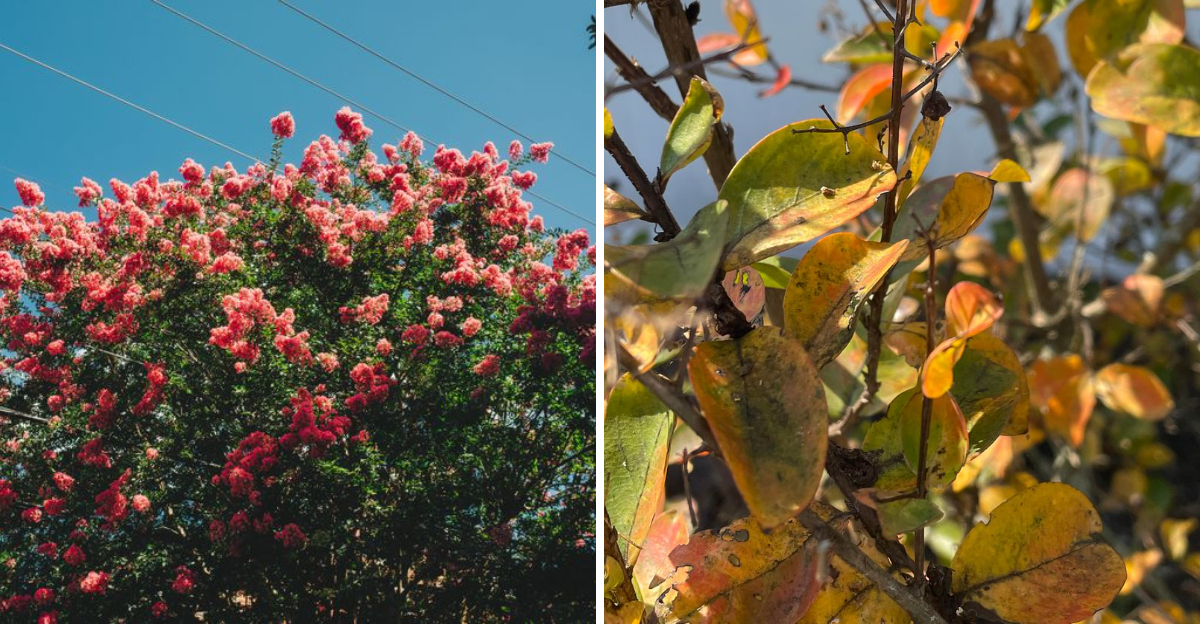
There is a specific moment in late August or early September when a crepe myrtle that looked perfectly fine all summer suddenly starts looking a little concerning.
Spotted leaves, unexpected yellowing, foliage dropping earlier than it should, and a general air of something being off that is hard to ignore once you notice it.
Florida’s long, steamy summers create exactly the kind of warm, wet conditions that fungal leaf diseases like Cercospora leaf spot genuinely thrive in, and by the time summer starts winding down, months of accumulated humidity and rainfall have had plenty of time to do their thing.
The important thing to know upfront is that spotted or dropping leaves on a crepe myrtle are not automatically a Cercospora situation.
Other conditions can produce similar symptoms, which makes getting the identification right a genuinely important first step before doing anything else.
1. Brown Spots Can Signal Late-Summer Leaf Spot
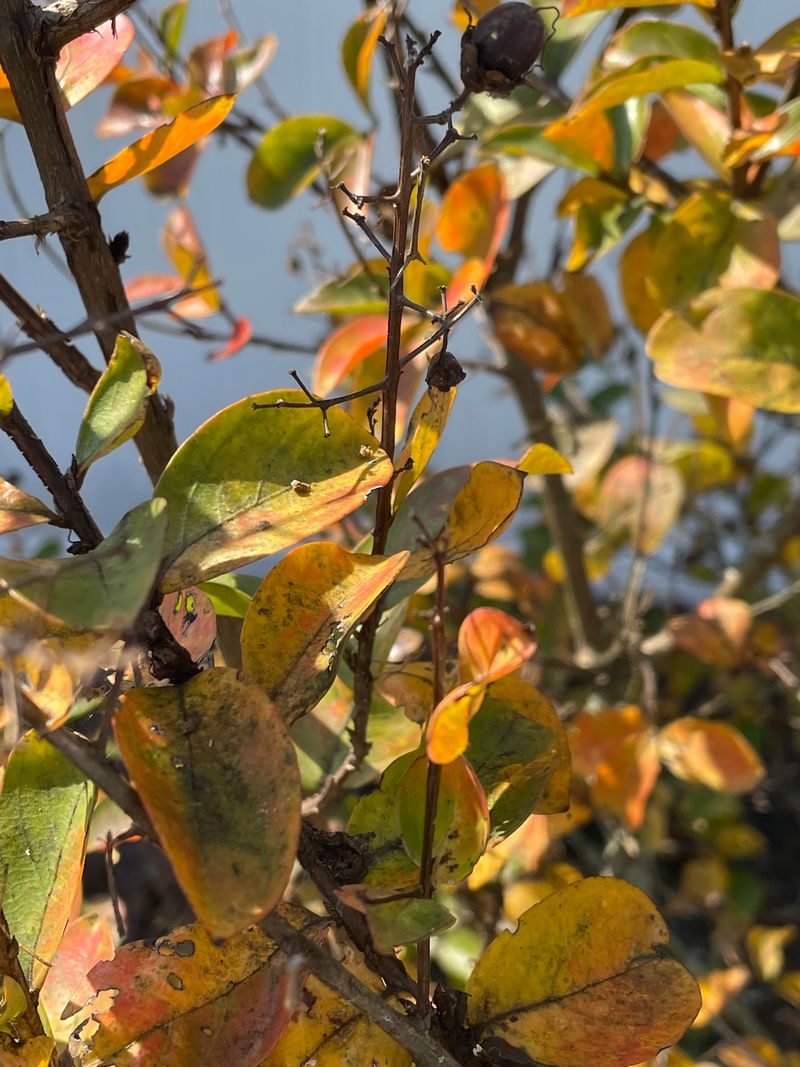
Spotting small, dark patches scattered across crepe myrtle leaves is one of the more common sights Florida homeowners notice as late summer rolls in.
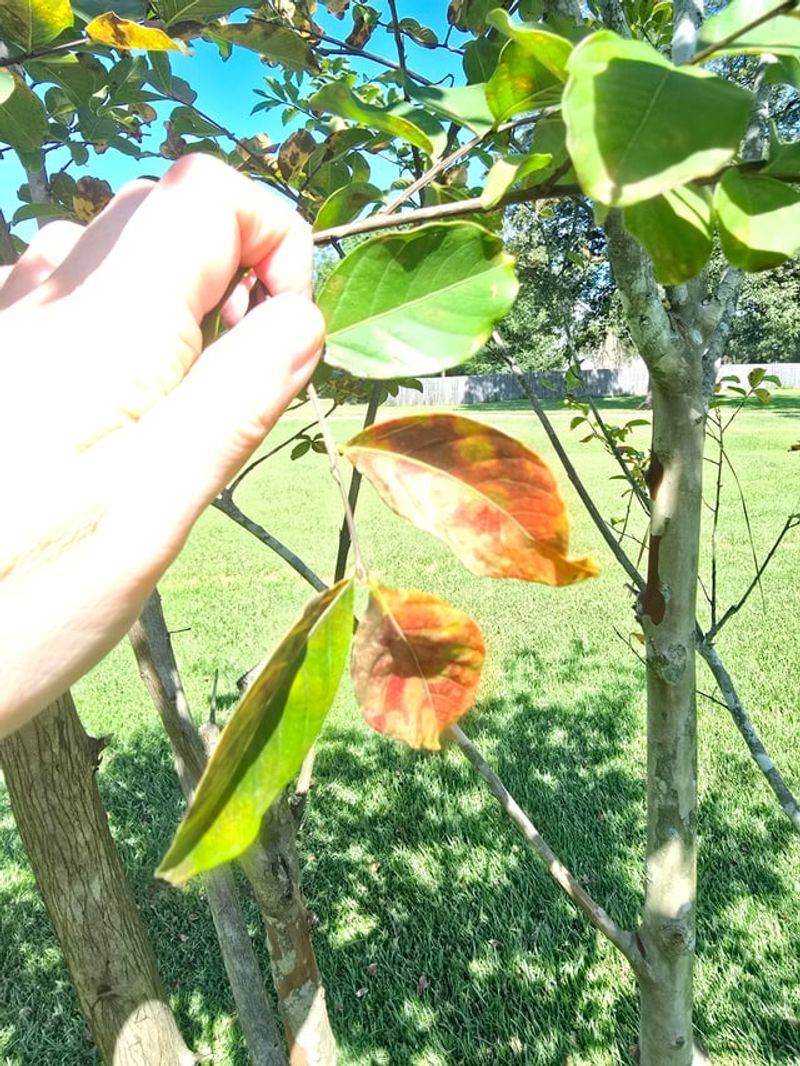
Those brown spots may be a sign of Cercospora leaf spot, a fungal disease that can affect crepe myrtles during periods of warm, humid weather.
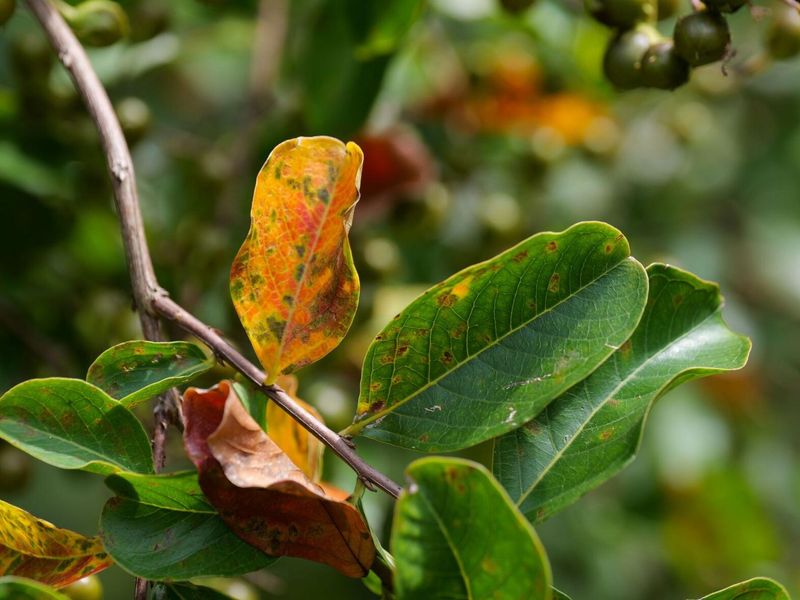
The spots often start small, with dark brown or reddish-brown coloring that may be surrounded by a slightly different shade.
As the season progresses and disease pressure builds, individual spots can enlarge and begin to merge together. Affected leaves may turn yellow around the spots before eventually dropping from the plant earlier than normal.
When a large number of leaves are involved, the overall appearance of the tree can look a bit rough heading into fall.
Spotting patterns can give homeowners a useful clue about what might be happening, but brown spots alone do not confirm a Cercospora diagnosis. Other issues, including certain insects, environmental stress, or different fungal problems, can also cause spots on leaves.
Getting a closer look at the pattern, location, and progression of symptoms can help narrow things down before deciding how to respond.
Cercospora leaf spot is often more noticeable after long periods of warm, wet weather because extended leaf moisture can create conditions that favor fungal activity.
In Florida landscapes, paying attention to recent rainfall patterns and overall plant health can help homeowners better understand why symptoms appear when they do.
2. Why Humid Weather Makes Leaf Problems Worse
Sticky, heavy Florida summers create a kind of outdoor environment that many fungal leaf diseases find very comfortable.
Warm temperatures combined with prolonged leaf wetness can encourage fungal activity on plant tissue, and crepe myrtles spending months in those conditions may start showing the effects by late summer.
Humidity alone does not cause Cercospora leaf spot, but it plays a real role in creating an environment where the disease can develop more easily.
Fungal diseases like Cercospora tend to thrive when three things come together: a susceptible plant, the presence of the pathogen, and environmental conditions that favor its growth.
Florida’s climate checks a lot of those boxes during the summer months, with warm nights, frequent afternoon showers, and air that rarely feels dry.
Your Florida Garden Changes Every Week. Your Plan Should Too.
Gardening in Florida changes quickly throughout the season. Every Friday you’ll receive a simple weekly plan showing exactly what to plant, prune, fertilize, harvest, and protect so you never miss the right timing.
Leaves that stay wet for extended periods give fungal spores more time to germinate and penetrate plant tissue.
Homeowners across Florida often notice that some years seem worse than others for leaf spot problems on crepe myrtles.
That variation often reflects differences in how long leaves stayed wet, how frequently rain fell, and how warm nighttime temperatures remained throughout the growing season.
Weather patterns matter more than many people realize.
Landscape conditions can also influence how quickly symptoms become noticeable, especially when plants are crowded together or receive limited airflow.
Choosing planting locations with good air movement and avoiding practices that keep foliage wet for long periods can help create less favorable conditions for leaf spot development.
3. Premature Leaf Drop Can Happen Before Fall
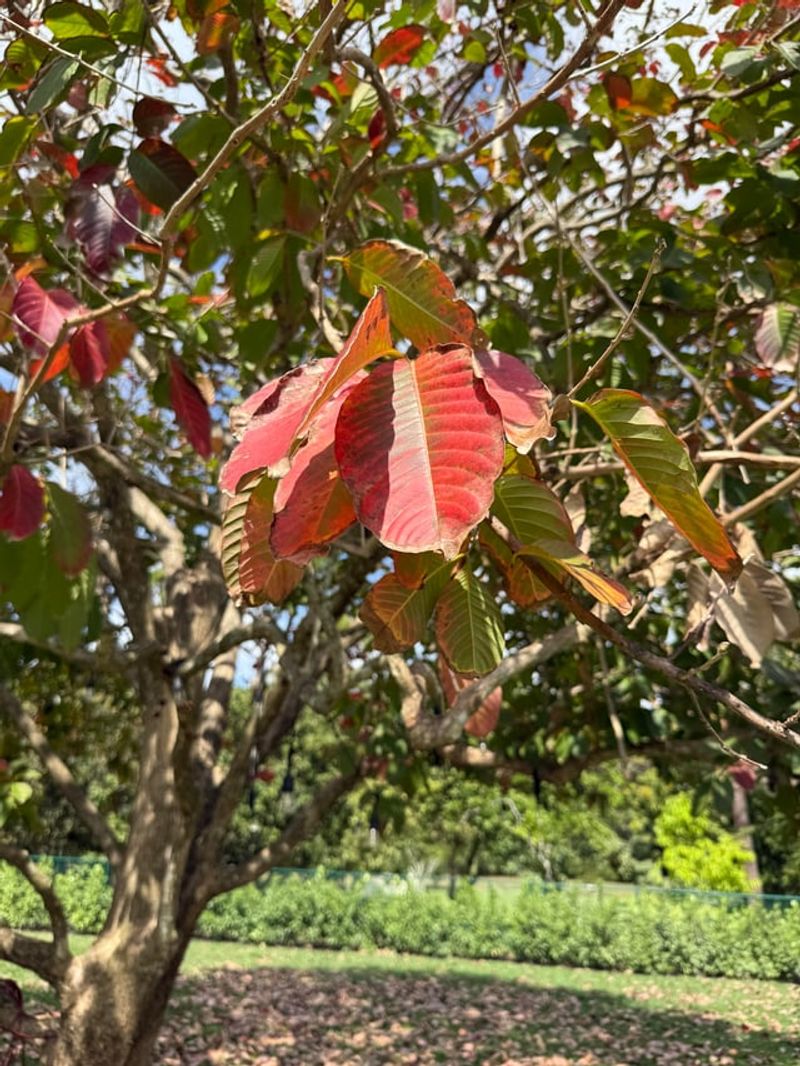
Seeing a crepe myrtle drop leaves in August or early September can feel alarming, especially when the calendar says fall is still weeks away.
Heavily affected plants may begin losing leaves earlier than expected when Cercospora leaf spot has been developing throughout the summer.
The infected leaves often yellow, develop visible spots, and then fall before the tree would naturally begin its seasonal leaf change.
Early leaf drop does not mean the plant is in serious trouble or that it will not bounce back. Crepe myrtles are generally resilient plants, and many Florida specimens can push through a season of leaf spot without long-term damage to their overall health.
The tree may simply look a little sparse or tired heading into fall, but that does not signal the end of its growing life.
What Florida homeowners sometimes mistake for a struggling plant is often just a stressed one responding to months of disease pressure. Keeping an eye on how the plant looks the following spring can offer useful information about how well it recovered.
New leaf growth emerging normally after winter is usually a reassuring sign that the plant came through the season in reasonable shape, even if late summer looked rough.
The amount of leaf loss can vary widely from one tree to another, depending on the cultivar, weather conditions, and the level of disease pressure during the season.
Maintaining good growing conditions throughout the year can help crepe myrtles continue producing healthy new growth after periods of stress.
4. Rainy Summers Create Favorable Conditions
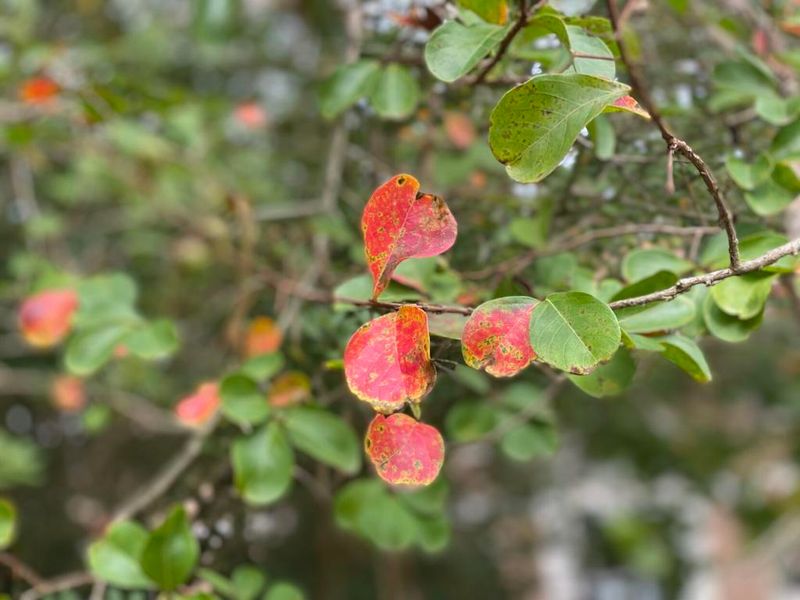
Months of frequent rainfall across Florida can set the stage for leaf spot problems that become obvious right around the time summer starts winding down.
Water sitting on foliage for extended periods after rain events creates conditions that may favor fungal activity, and when that pattern repeats week after week throughout the summer, the cumulative effect can show up on leaves by late August or September.
Florida weather is not the same everywhere in the state, and rainfall totals can vary significantly from one region to another, or even from one neighborhood to the next.
A particularly wet stretch in one area might lead to more noticeable leaf spot problems than a drier stretch would in another area.
That variation helps explain why some homeowners see serious leaf spotting every summer while others rarely notice the problem at all.
A rainy summer does not mean every crepe myrtle in the yard will develop a serious case of leaf spot. Plant health, variety, spacing, and local growing conditions all influence how a particular tree responds to the season.
Wet weather simply shifts the odds in favor of conditions where fungal diseases can develop more readily, which is worth keeping in mind when evaluating leaf symptoms in late summer.
5. Lower Leaves Often Show Symptoms First
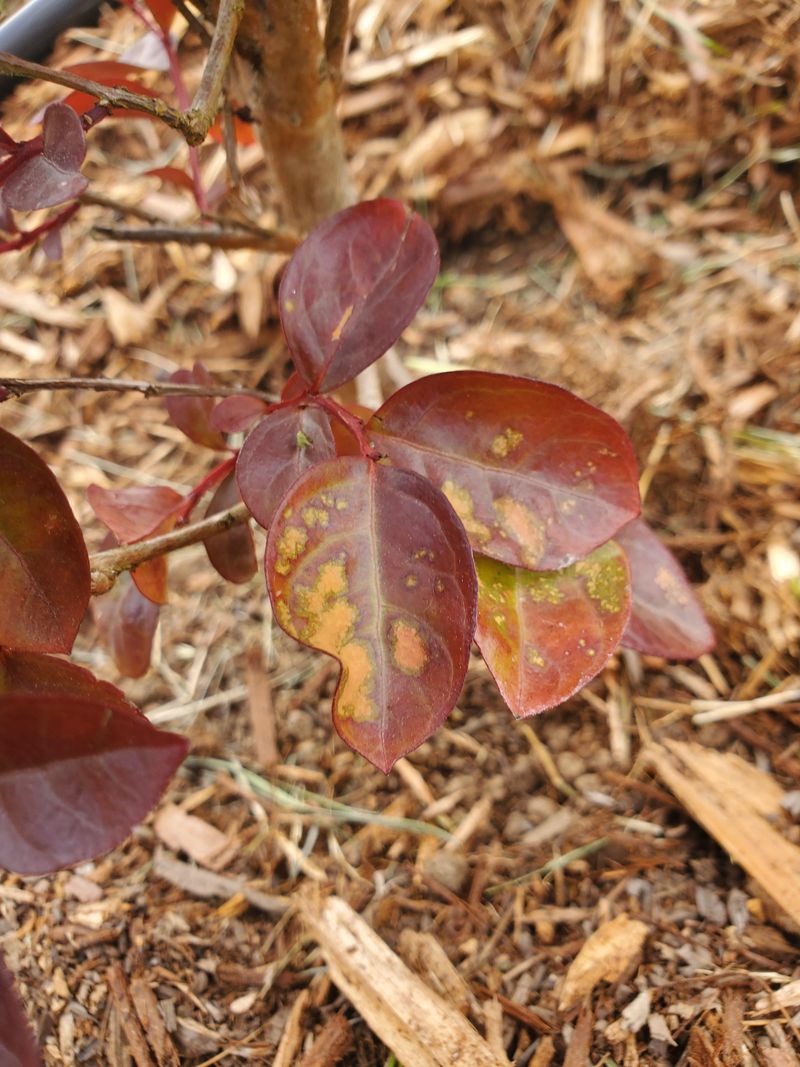
One of the more telling patterns Florida homeowners may notice with Cercospora leaf spot is where the symptoms appear first on the plant.
Lower leaves and those tucked deeper inside the canopy often develop spots and discoloration before the rest of the tree looks affected.
Checking the inner and lower portions of a crepe myrtle carefully can reveal early signs that might not be obvious from a quick glance at the outer canopy.
Lower leaves tend to stay wetter longer after rain because they receive less direct sun and airflow than leaves higher up in the tree. That extra moisture retention can create a more favorable microenvironment for fungal activity near the base of the plant.
As the season progresses and disease pressure builds, symptoms may work their way upward through the canopy over time.
Recognizing this pattern early can help homeowners investigate what they are dealing with before the entire plant looks affected.
It is worth noting that this symptom progression is not the only way the disease appears, and other conditions can cause lower-leaf problems that have nothing to do with Cercospora.
In Florida’s humid late-summer conditions, observing the full picture, including spot color, shape, and overall leaf condition, gives a more complete sense of what may be happening.
6. Poor Airflow Can Increase Leaf Disease Risk
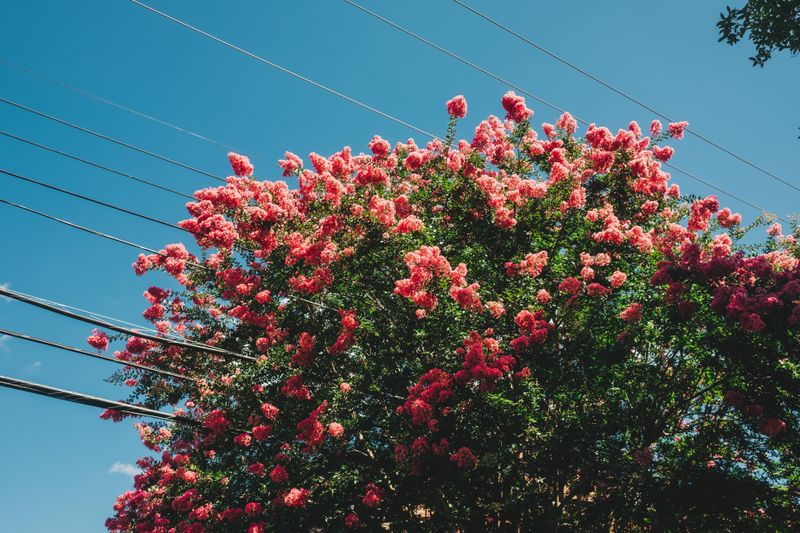
Crowded plantings are a common sight in Florida neighborhoods, and crepe myrtles are often grouped closely together for visual effect or to create a privacy screen. When plants are spaced too tightly, air movement through the canopy slows down considerably.
Leaves in those conditions tend to stay wet longer after rain or irrigation, which may create a more favorable environment for fungal leaf diseases to take hold.
Good air circulation helps foliage dry out more quickly after it gets wet, reducing the window of time that fungal spores have to germinate on leaf surfaces.
Spacing plants with adequate room between them when they are first installed can make a real difference in how the landscape performs over time.
Repositioning established plants is not always practical, but being mindful of spacing during new plantings is a worthwhile habit in Florida gardens.
Pruning can open up the interior of a crepe myrtle and improve light penetration and airflow to some degree, though it should be done thoughtfully and at the right time of year.
Poor airflow is one contributing factor among several, and improving it does not mean a plant will never experience leaf disease.
Still, giving crepe myrtles room to breathe is a reasonable practice that supports overall plant health in Florida’s humid climate.
7. Fallen Leaves Can Carry Future Problems
Leaves that fall from a crepe myrtle affected by Cercospora leaf spot do not simply disappear once they hit the ground.
Infected plant material on the soil surface can harbor fungal structures that survive and potentially contribute to future disease cycles when conditions become favorable again.
This is one reason why sanitation practices are sometimes recommended as part of managing leaf spot in the landscape.
Raking up and removing heavily spotted fallen leaves from around the base of the plant may help reduce the amount of infectious material available in the landscape.
This practice does not eliminate the disease entirely, since fungal spores can travel through the air and arrive from other sources, but it is a practical step that fits within general good garden hygiene.
Composting infected leaves is generally not advised unless the compost pile reaches temperatures high enough to break down fungal material.
Keeping fallen leaf cleanup as a routine part of late-summer and early-fall yard care can support a healthier landscape environment going forward.
The goal is not to create extra work but to reduce conditions that may favor disease development in the next growing season.
Small, consistent habits like this tend to add up over time in Florida gardens where warm, wet conditions return year after year.
8. Healthy Care Helps Crepe Myrtles Recover
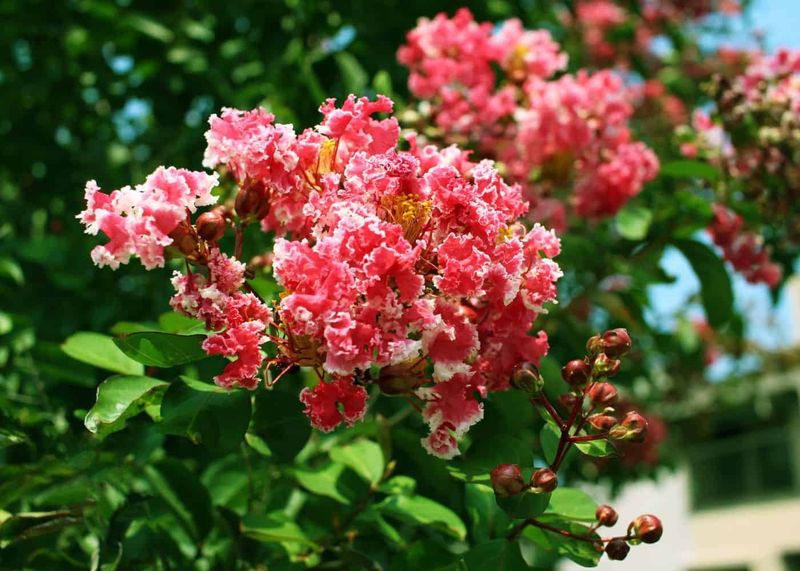
A crepe myrtle that goes into the growing season in good overall condition tends to handle seasonal disease pressure better than one that is already stressed.
Proper watering, appropriate fertilization, and a well-chosen planting location all contribute to the kind of plant health that supports recovery after a rough summer.
Keeping the soil consistently moist without overwatering is a reasonable starting point for good crepe myrtle care in Florida.
Excess nitrogen fertilizer can push rapid, soft new growth that may be more susceptible to certain diseases. Avoiding heavy nitrogen applications during times of active disease pressure is a practical choice.
Fertilizing at appropriate times and rates, following guidance suited to Florida’s climate and soil conditions, helps maintain steady, balanced growth without creating unnecessary vulnerability.
Selecting a planting location with good sun exposure also supports plant health, since crepe myrtles generally perform well in full sun and tend to dry out more quickly in bright, open spots.
Healthy care does not guarantee a plant will never experience leaf spot, since disease development depends on multiple factors beyond any homeowner’s full control.
What it does is give the plant a stronger foundation to work from, which can make a meaningful difference in how well it bounces back after a challenging Florida summer.
Regularly checking the plant’s overall condition can also help homeowners notice changes early, before minor issues become more difficult to manage.
A healthy landscape approach focuses on supporting the plant over time rather than trying to eliminate every seasonal challenge that may appear.