What To Leave In Your Arizona Yard Now To Support Fireflies Where They Already Occur
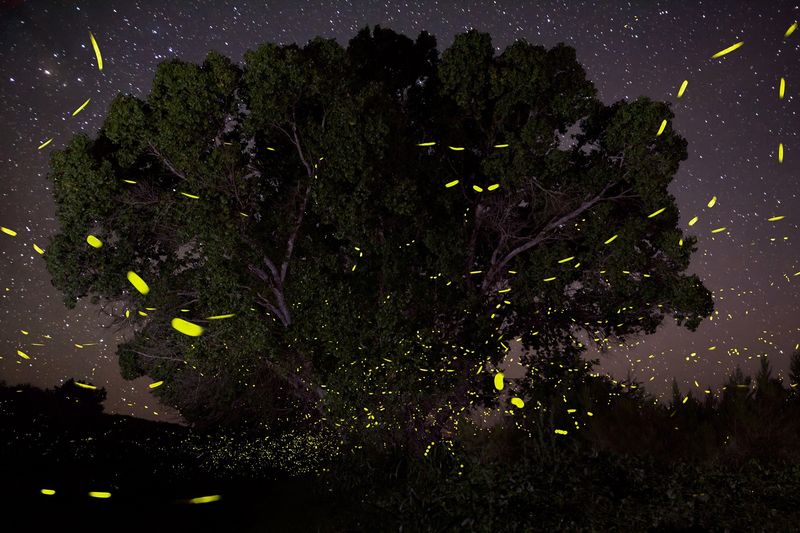
Fireflies in Arizona are real, but they are not evenly spread across the state, and they will not simply show up because a yard looks inviting. The beetles that produce those familiar warm-weather flashes spend most of their lives underground or in leaf debris, and they depend on a specific set of conditions that most dry Phoenix or Tucson yards do not naturally offer.
The good news is that if your property sits near suitable habitat, a few deliberate choices about what you leave alone can make a genuine difference for fireflies that are already in the area.
Arizona Fireflies Need More Than a Messy Yard
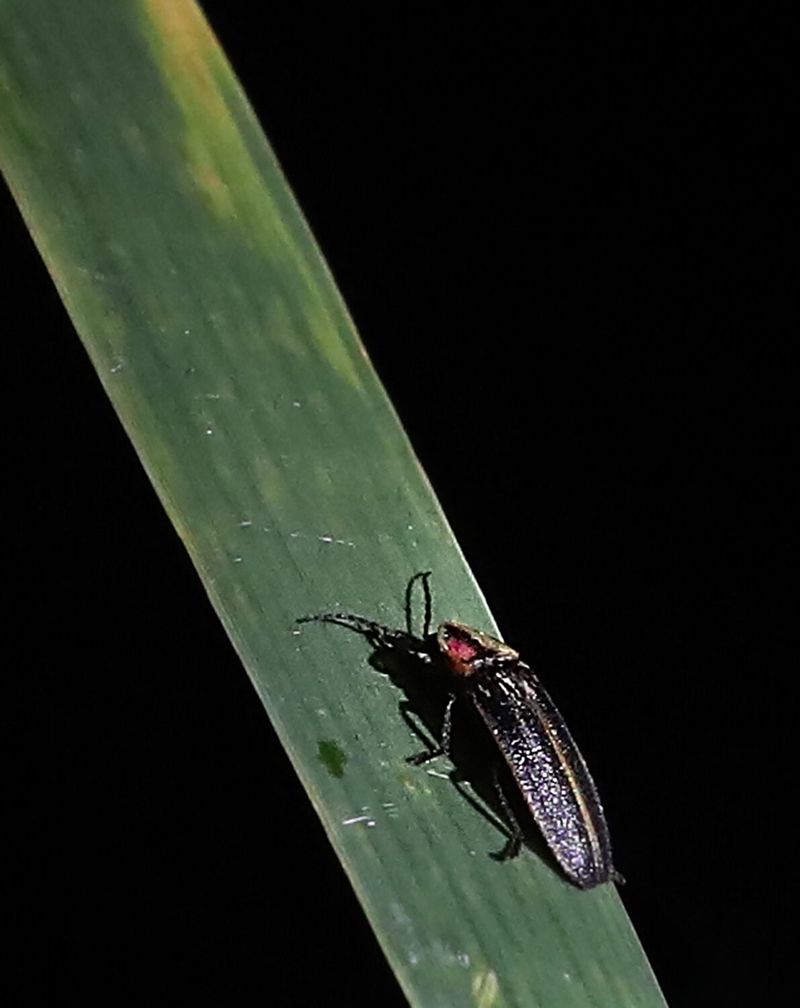
Fireflies are beetles, and beetles have a life cycle that spends far more time underground than in the air. Larvae live in soil and leaf debris for months or even years depending on species, hunting soft-bodied prey like snails and worms before eventually pupating and emerging as the adults that flash in the dark.
U.S. Fish and Wildlife Service guidance on firefly conservation consistently points to soil health, leaf litter, and minimal ground disturbance as the foundation of any habitat effort, because the larval stage is where most firefly time is spent.
In Arizona, that foundation only matters if suitable firefly species are already present nearby. University of Arizona researchers report that Arizona fireflies tend to cluster near the Santa Cruz River and other perennial water sources around Tucson, not in ordinary suburban landscaping across the Phoenix or Tucson metro.
What is clear is that a dry, heavily paved yard in central Phoenix offers very little that fireflies need, regardless of how much leaf litter a homeowner leaves behind.
The practical premise here is narrower than most firefly articles suggest. Leaving selected materials undisturbed in a carefully chosen Arizona habitat area may help fireflies that already live nearby persist or become easier to spot.
It cannot manufacture a population in a yard that lacks the moisture, prey, suitable soil, and regional proximity that fireflies require.
Leave Some Arizona Leaf Litter Where It Can Work
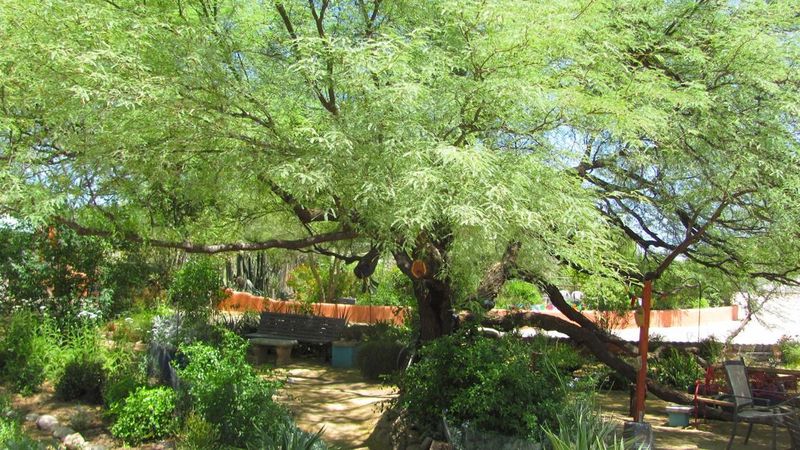
Blowing every fallen leaf into a bag and hauling it to the curb is one of the most common yard habits in Arizona, and it is also one of the most straightforward things to reconsider if fireflies occur anywhere near your property. Leaf debris beneath trees, shrubs, or native grasses can shelter firefly larvae and the small invertebrates they eat.
USFWS firefly conservation guidance specifically recommends leaving leaf litter in place as a first step, and the Firefly Atlas echoes that preserving natural ground cover is one of the most accessible actions a property owner can take.
The scale matters enormously in Arizona. The goal is a contained habitat bed or an outer-yard patch, not a property-wide layer of accumulated debris.
Choose one area, ideally away from the house and positioned beneath existing trees or shrubs where leaves fall naturally. Allow that patch to accumulate a moderate layer rather than raking it bare each season.
Your Arizona Garden Changes Every Week. Your Plan Should Too.
Gardening in Arizona changes quickly throughout the season. Every Friday you’ll receive a simple weekly plan showing exactly what to plant, prune, fertilize, harvest, and protect so you never miss the right timing.
Knowing where not to leave leaves is just as important as knowing where to leave them. Arizona wildfire and home-hardening guidance is direct on this point: combustible debris must be cleared from roofs, gutters, vents, decks, wall gaps, and any area immediately beside a structure.
A contained leaf patch in a suitable outer area of an Arizona yard is a genuinely low-effort action. Leaving those leaves alone, rather than adding anything new, is the entire intervention.
Arizona Downed Wood and Taller Plants Add Ground-Level Cover
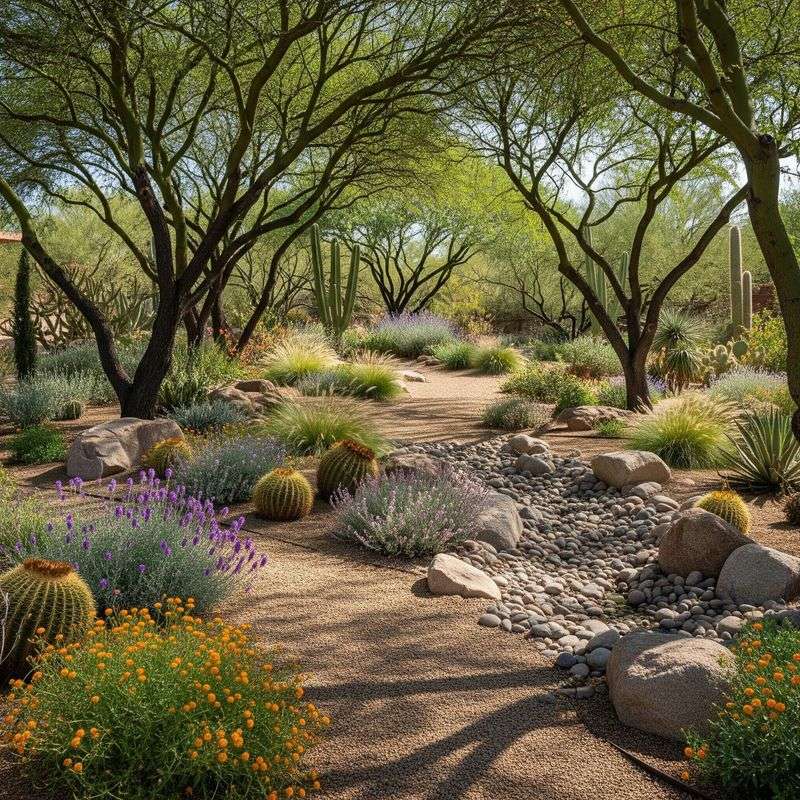
Ground-level structure goes beyond leaf litter. A few naturally fallen branches or small decaying logs can add the kind of layered habitat that supports ground-dwelling insects through multiple life stages.
Firefly Atlas resources and Firefly Conservation and Research habitat guidance both identify downed wood and ground debris as features worth preserving in a habitat area, because these structures retain some moisture and provide cover for the invertebrate community that firefly larvae depend on.
In Arizona, the fire-safety qualification is non-negotiable. Downed wood should stay in a designated outer habitat zone and only if it does not create a fire, pest, or trip hazard.
Dry, loosely stacked wood right against a fence or structure is a fuel problem, not a habitat feature. The distinction between a managed habitat patch with a few small logs and an unmanaged fuel pile is one of placement, size, and separation from combustible structures.
Taller vegetation in a designated zone adds another layer of cover that fireflies and their prey use. USFWS guidance recommends mowing less frequently and raising mowing height generally, while Arizona Cooperative Extension fire-resistant landscaping advice is clear that grass near structures should stay low because dry cured grass carries wildfire quickly.
No specific Arizona plant, including palo verde, mesquite, desert willow, or agave, has been shown by available research to specifically attract fireflies. Those plants may contribute to general habitat structure, shade, and moisture retention in an outer zone, and that is a reasonable reason to include them.
Claiming a direct firefly-attraction effect for any named low-desert species goes beyond what the evidence currently supports.
Protect Arizona Moisture Without Creating Mosquito Water

Moisture is the factor that separates most low-desert Arizona yards from genuinely suitable firefly habitat. The Nature Conservancy’s Arizona research and Xerces Society documentation of the Southwest spring firefly both point to functioning riparian forests, flowing streams, marshes, seeps, and humid monsoon conditions as the environments where Arizona fireflies are most reliably found.
A yard that dries out completely between irrigation cycles is a fundamentally different environment from those sites.
The actionable version of this for Arizona homeowners is to preserve naturally moist or seasonally wet soil where it already exists on the property. If a corner of the yard stays damp after rain, if a seasonal wash runs along the edge of the lot, or if a tree creates enough shade to slow evaporation noticeably, that area deserves protection from compaction, chemical treatment, and unnecessary disturbance.
University of Arizona firefly researchers identify perennial water as one of the most reliable indicators of where to look for fireflies in the region.
Watering established plants deeply and infrequently according to their species and soil type is sound Arizona practice, but flooding a lawn or installing an unmanaged pond is not a firefly strategy. Lingering puddles and stagnant containers create mosquito breeding habitat, and Maricopa County’s backyard checklist and CDC mosquito control guidance both recommend eliminating standing water for that reason.
Water used for firefly habitat in Arizona should serve plants and soil, not pool on the surface. Correct leaks and irrigation overspray promptly.
Arizona Cooperative Extension plant guidance supports matching irrigation to species needs rather than maintaining a uniformly wet yard, which wastes scarce water and invites pests without meaningfully improving firefly conditions in most low-desert settings.
Arizona Darkness Gives Firefly Signals Room to Work
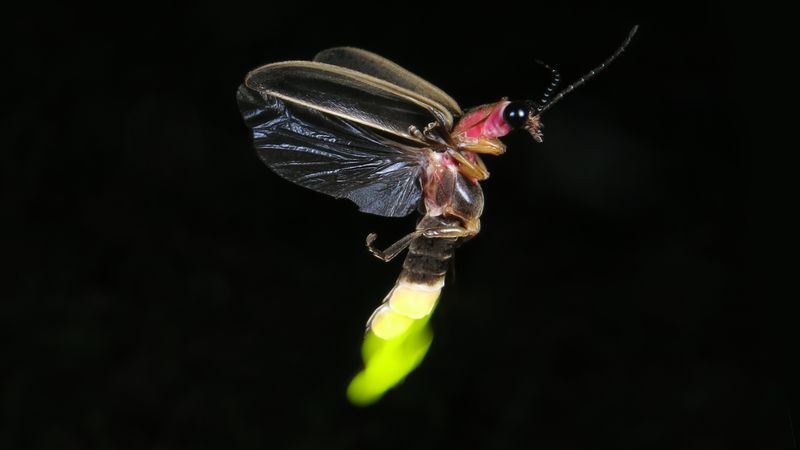
Adult fireflies flash to find mates, and that communication system depends on darkness. Research published in Frontiers in Ecology and Evolution documents that artificial light at night can interfere with firefly flash signaling and mate location across multiple species groups, and a broader review of light pollution effects on nocturnal insects confirms that even low levels of artificial illumination alter insect behavior in ways that can reduce reproductive success.
For Arizona homeowners, this translates into a practical step: turn off unnecessary outdoor lighting after dark, particularly around any habitat patch or vegetated area where fireflies might be active. Motion-sensor lights that stay off when nothing is moving, warm-spectrum bulbs aimed downward rather than broadcasting broadly, and simply switching off decorative string lights or floodlights during peak firefly activity periods are all reasonable adjustments.
USFWS firefly conservation guidance includes reducing artificial light as one of the core habitat actions, alongside leaf litter and pesticide reduction. Darkness is one supporting condition among several, though.
A dark porch or unlit back corner cannot compensate for unsuitable soil, absent moisture, missing prey invertebrates, or the absence of a local firefly population within range. Reducing light removes one pressure on fireflies that are already present; it does not draw them in from areas where they do not occur.
Arizona’s urban heat island and widespread security lighting mean that true darkness is harder to achieve in Phoenix and Tucson than in rural or riparian areas. That is one more reason to focus habitat efforts on properties that already have some natural advantage, such as proximity to a wash, preserve, or undisturbed vegetated corridor, rather than treating light reduction as a standalone solution for a typical suburban lot.
Reduce Unnecessary Pesticide Pressure in Arizona Habitat
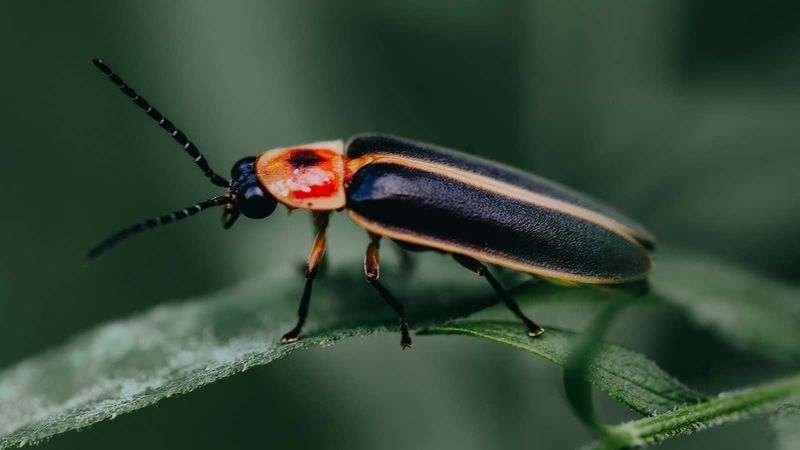
Routine broad-spectrum insecticide applications, pre-emptive lawn insect treatments, and blanket mosquito fogging can work directly against any firefly habitat effort. The Xerces Society’s pesticide and firefly factsheet identifies pesticide exposure as a recognized threat to fireflies, covering both direct harm to the beetles themselves and the loss of the small prey invertebrates, such as snails, earthworms, and soft-bodied soil insects, that firefly larvae eat.
A study on neonicotinoid toxicity published in PeerJ found measurable harm to common firefly species at exposure levels relevant to treated turf and garden settings, and a broader review in the journal Insects lists pesticide exposure among the primary threats to firefly populations globally. Effects vary by chemical class, life stage, species, and exposure level, so the concern is not identical for every product, but the pattern across the evidence points toward caution near habitat areas.
The practical recommendation is to avoid unnecessary applications rather than to abandon all pest management. Targeted, least-toxic control remains appropriate when a genuine public-health problem, structural threat, or invasive species requires intervention.
Scorpion treatment inside the home, for example, is a legitimate safety concern that should not be abandoned because of habitat goals. What the evidence does not support is routine quarterly perimeter spraying, broadcast lawn insecticide treatments, or neighborhood mosquito fogging applied near a habitat patch when no specific high-risk situation exists.
Fireflies should not be promoted as a pest-control solution in return for reduced pesticide use. Some firefly larvae eat soft-bodied invertebrates, but the reviewed sources do not establish that encouraging fireflies in an Arizona yard provides meaningful control of mosquitoes, scorpions, or any other household pest.
The case for reducing pesticide pressure near habitat rests on protecting fireflies, not on a trade that promises pest reduction.
Arizona Wildfire Safety Sets the Habitat Boundary
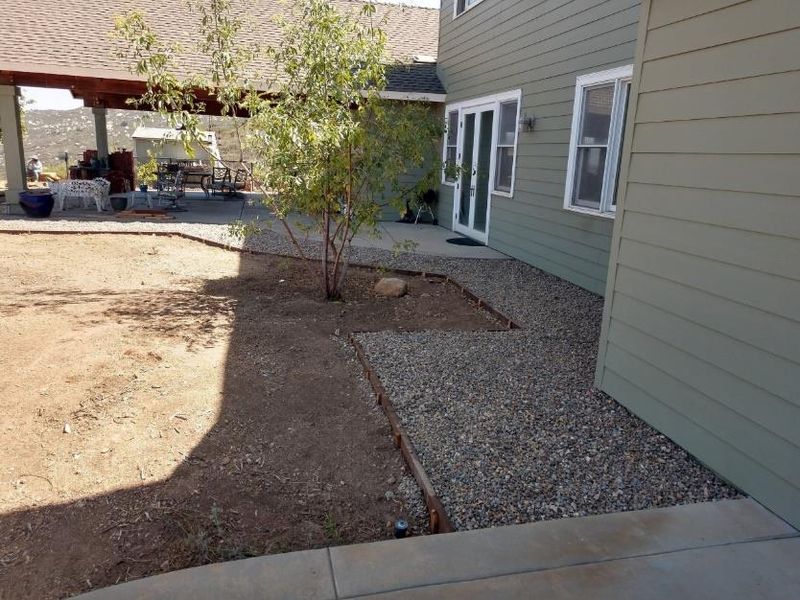
Firefly habitat and wildfire defensible space can pull in opposite directions, and in Arizona the fire-safety side of that tension is not negotiable. Leaf litter, decaying wood, tall grasses, and dense shrubs are exactly the materials that increase fuel load near a structure, and Arizona homeowners in fire-prone areas face real consequences from allowing those materials to accumulate close to the home.
The placement rule that resolves this conflict is straightforward: put the less-manicured habitat patch away from the house and separate it from structures with gravel, decomposed granite, a paved path, or another break in continuous vegetation.
University of Arizona Cooperative Extension fire-resistant landscaping guidance recommends low, widely spaced, maintained vegetation in the inner defensible-space zone immediately surrounding a home, and calls for removing dry plant material as it cures through the season. Palo verde seed pods, dry grasses, and accumulated dead fronds left against a fence or wall become fire fuel as Arizona summers progress.
Removing that material as it accumulates is part of responsible low-desert property management, even while leaving selected leaves and wood farther out in a habitat area.
Arizona Cooperative Extension home wildfire protection resources are specific about structures: debris must be cleared from roofs, gutters, vents, eaves, decks, and any gap in a wall or fence where embers can lodge and ignite. Those clearance requirements apply regardless of any habitat goal.
A small log left in a habitat patch thirty feet from the house in a gravel-separated zone is a different situation from a pile of dry branches stacked against a wooden fence.
Think of the habitat patch as something that earns its place by being genuinely separated, genuinely contained, and genuinely maintained. A habitat zone that doubles as an unmanaged fuel accumulation zone serves neither fireflies nor fire safety well.
Periodic review of what is accumulating and where it sits relative to structures keeps both goals compatible through Arizona’s long dry and fire-weather seasons.
Arizona Timing and Local Habitat Determine What You See
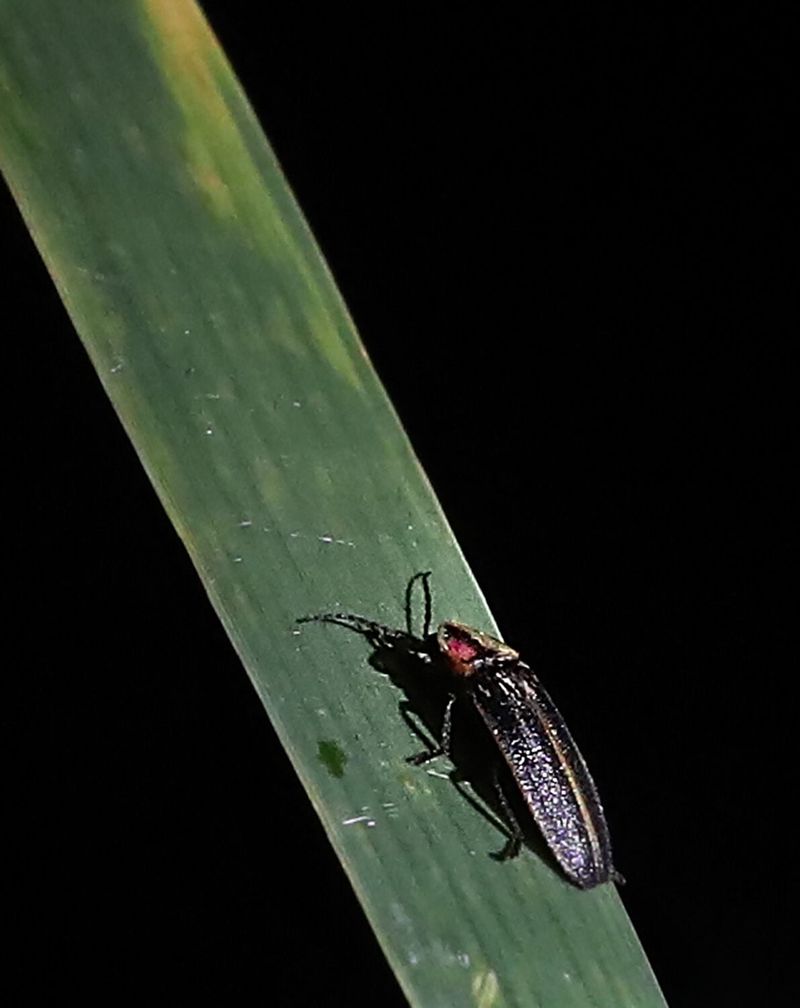
Expecting a single statewide firefly season in Arizona will lead to missed sightings and misplaced effort. University of Arizona firefly research distinguishes at least two different activity windows near Tucson: the Southwest spring firefly is reported mainly in June and early July, before the monsoons arrive, while the Southwest synchronous firefly appears after monsoon conditions bring humidity and rain to suitable habitat areas.
Those are meaningfully different beetles with different habitat associations and different peak activity periods.
The diversity of Arizona firefly species adds another layer of complexity. Some Arizona fireflies do not produce the familiar nighttime airborne flash at all.
Xerces Society documentation notes that certain species have flightless females, glow-worm-like characteristics, or daytime activity patterns that make them easy to overlook even when they are present. A yard that seems firefly-free after dark in July may host a species that is active at a different hour, a different season, or in a way that does not produce a visible flash.
The practical takeaway for Arizona homeowners is to calibrate expectations to local conditions rather than to a generalized summer light show. If you are near Tucson and close to a riparian corridor, June and early July are the most productive times to look for spring firefly activity.
Post-monsoon evenings in August and September are better windows for synchronous firefly sightings in appropriate habitat. Properties in the Phoenix metro that are distant from perennial water, washes, or higher-elevation terrain may not have a reliable sighting window at all, regardless of season or habitat management.
A firefly sighting in your Arizona yard or on a nearby preserve is meaningful evidence that local conditions are suitable. Treat it as a signal worth protecting rather than a guarantee that a population will remain if conditions change or disturbance increases.
A Small, Safe Arizona Habitat Patch Is the Practical Bet
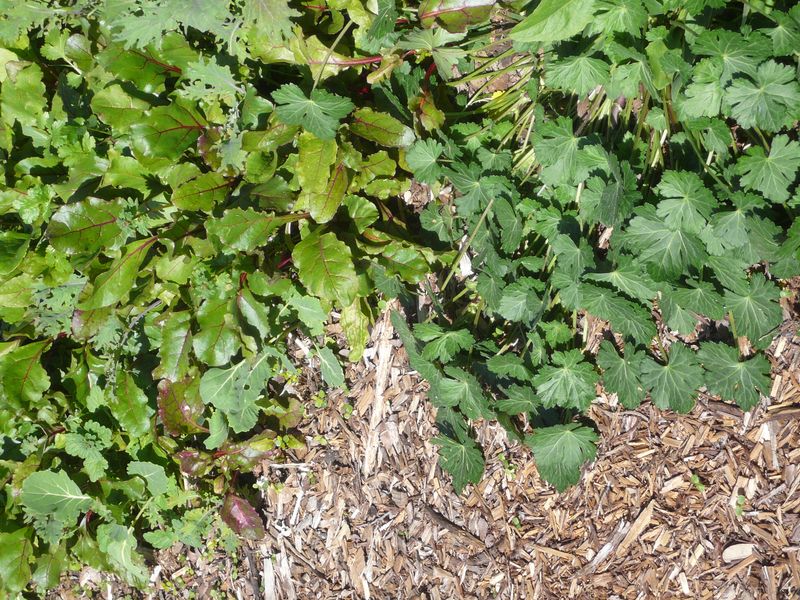
Choosing one area of the yard that already has some natural advantage, whether that is proximity to a wash, a shaded corner that retains moisture after rain, or a spot beneath established native trees, and then leaving it mostly alone is the most realistic firefly habitat action available to Arizona homeowners. Retain some leaf litter there, allow a few fallen branches to stay if they are away from structures, let compatible vegetation stand a little taller than the rest of the yard, and avoid treating that patch with broad-spectrum pesticides.
USFWS conservation guidance frames all of these as cumulative, low-cost steps rather than transformative interventions.
Keep the patch separated from the home by gravel, a path, or another break in continuous fuel, following Arizona Cooperative Extension fire-resistant landscaping standards. Turn off outdoor lights that shine into the area after dark.
Water plants in the zone according to their needs rather than trying to keep the soil uniformly wet. These are subtractions and restraints more than additions, which is the point.
None of these actions can create a firefly population in a dry Phoenix yard that lacks local fireflies, suitable soil, moisture, or prey. What they can do, as Arizona firefly research suggests, is reduce the pressures on fireflies that are already present nearby and make the yard a more hospitable edge of whatever suitable habitat already exists in the area.
In a state where firefly distribution is still being mapped and populations are tied to specific, often fragile moisture conditions, preserving the opportunity is the most honest goal a homeowner can set.