The Meaning Behind Finding A Praying Mantis Egg Case In Your Ohio Garden This Fall
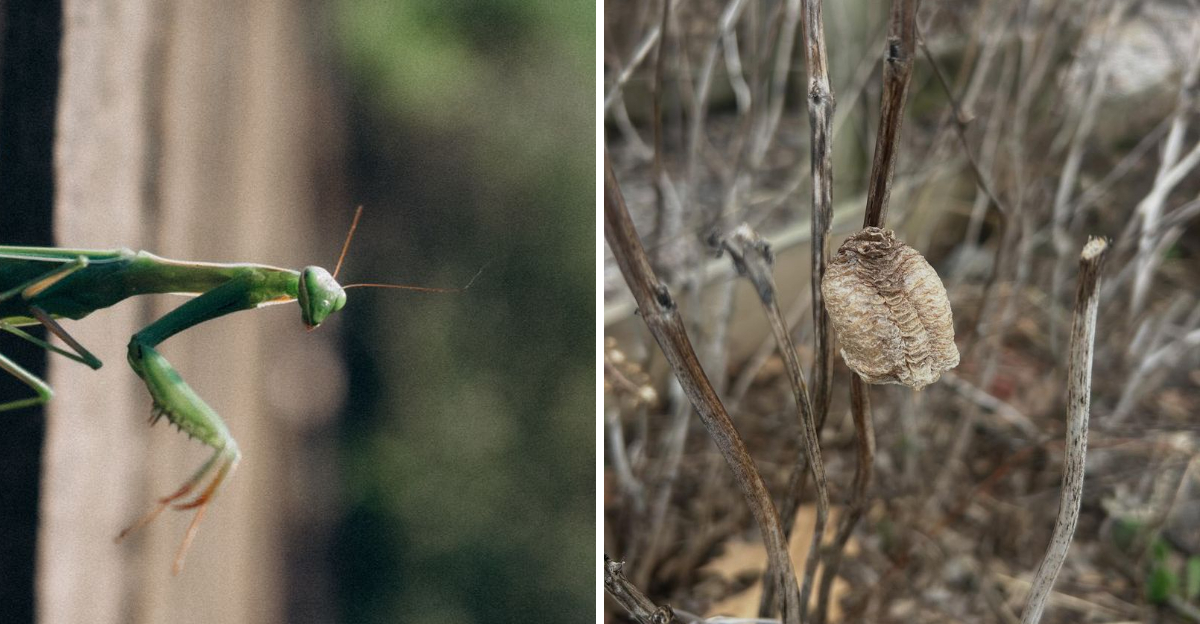
You almost step right past it while trimming tired tomato vines. Ohio hides predators inside shapes you hardly notice. Something tan, hardened, and strange has fixed itself firmly to that stem.
Clearing it off feels tidy, though it costs you later. Bagging it up feels responsible, though it robs your yard. Neither quick reaction gives you the real story here. That nursery rests in your palm, alive with purpose.
Mantises like this one specialize in hunting garden pests for you. Farmers across Ohio have guarded this exact structure each fall for generations. Removing it blindly erases your future pest control.
Understanding what you hold changes how you garden. Curiosity now pays you back later, quite literally. Knowing the difference lets you truly protect next year’s entire tomato harvest.
Patience rewards you with quiet, effective pest control. A glance at this tiny structure decides whether your whole garden thrives all season long.
That Foamy Tan Lump On Your Stems, Explained
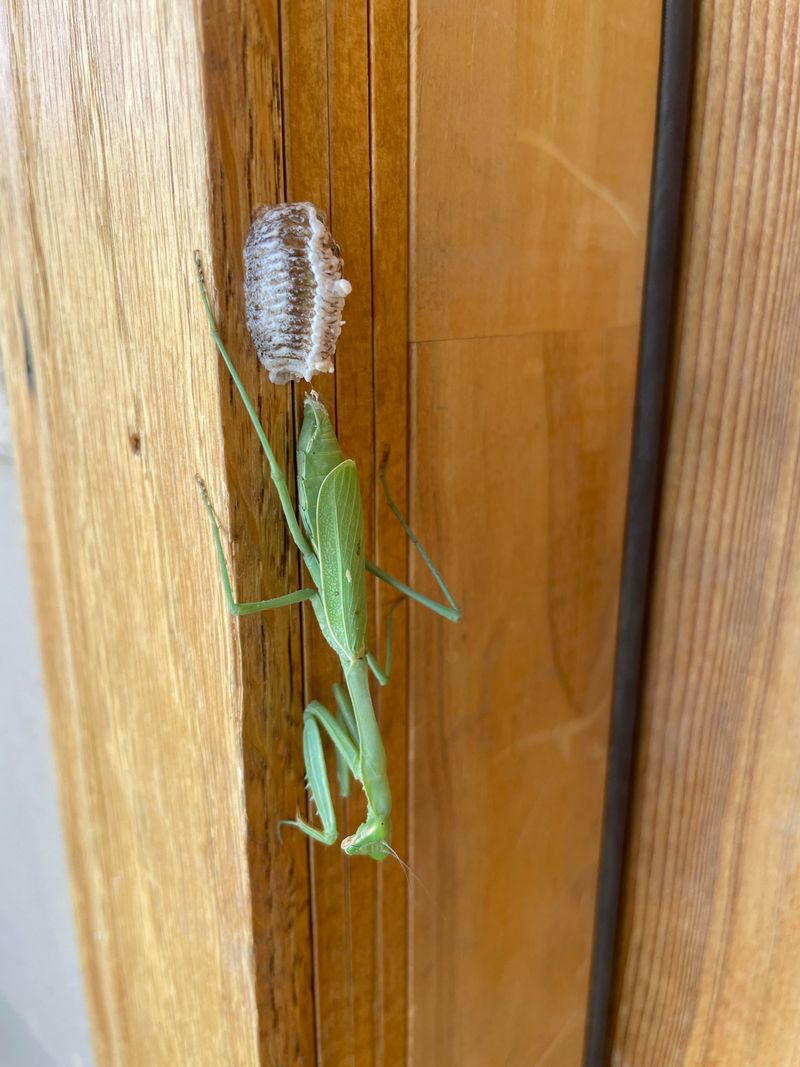
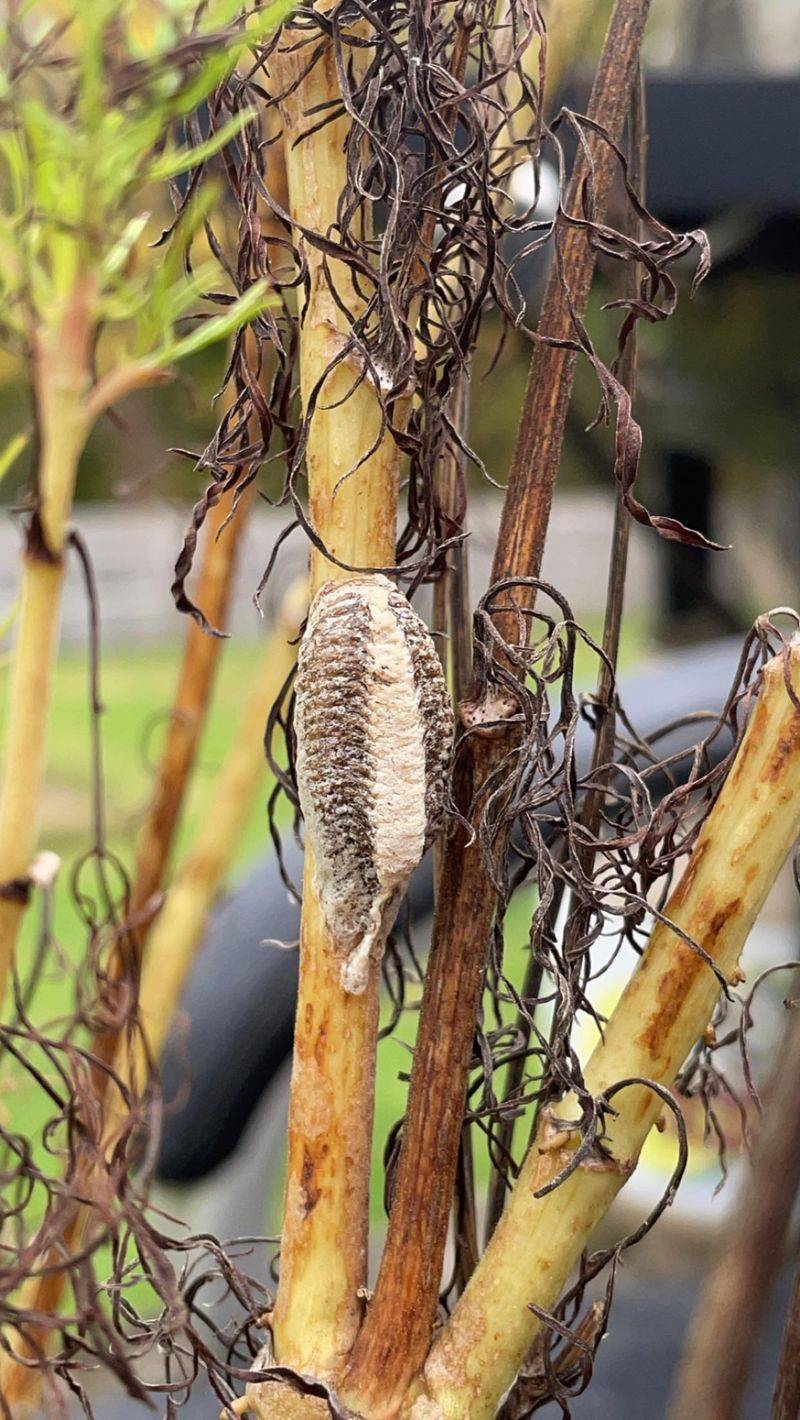
Run a finger near it and you may guess someone splattered insulation foam on a coneflower stem. The lump sits tan or caramel colored, about the size of half a walnut, and firm as a stale marshmallow.
What you have found is an ootheca, the proper name for a mantis egg case. The female whips up a frothy protein liquid, presses it around a twig, and it hardens into a weatherproof apartment building.
Inside, depending on the species, egg counts vary widely, from as few as twenty in a Carolina mantis case to several hundred in a Chinese mantis case.
That foam insulates them through Ohio’s freeze-thaw swings, sheds rain, and hides the contents from curious birds.
Gardeners around Columbus and Cleveland often find them on raspberry canes, ornamental grasses, hydrangea stems, fence rails, and the underside of deck railings. Anywhere with a sturdy anchor between knee and shoulder height is fair game.
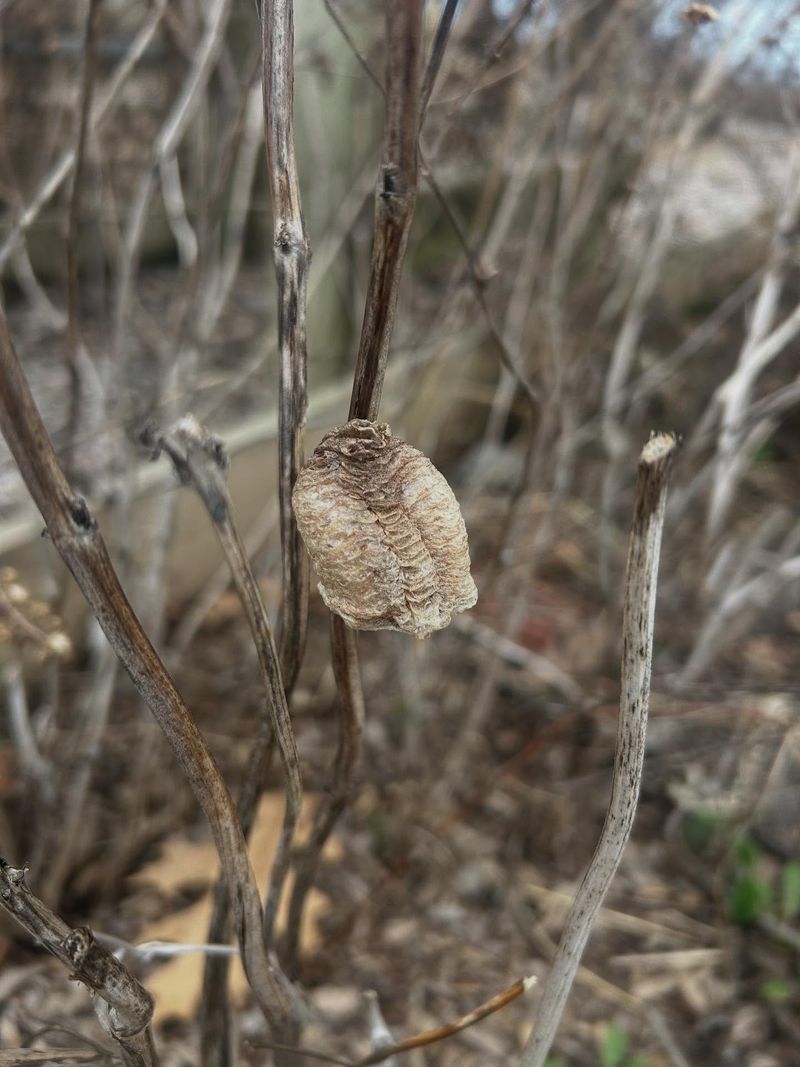
Texture is the giveaway. A mantis case shows a ridged seam running down the middle, like tiny quilting, while spider egg sacs feel papery and galls feel woody and fused to living tissue.
Once you learn the shape, you tend to notice them all over the neighborhood. Snap a photo with your phone and tie a ribbon nearby so you do not accidentally prune it away in March.
Finding one in September means the mantis that patrolled your tomato patch all summer left something behind before the season wrapped up.
A Quiet Report Card On Your Garden’s Health
Here is a compliment you might have missed: a female mantis picked your yard as a maternity ward.
She spends her adult life inside a fairly small patch, often just a few hundred feet across. Laying there suggests she found steady hunting, decent cover, and stems strong enough to hold a case through winter storms.
Steady hunting means your garden had a working food web. Aphids, moths, crickets, flies, and leafhoppers were around in real numbers, which usually points to fewer broad-spectrum sprays and more flowering plants.
Your Ohio Garden Changes Every Week. Your Plan Should Too.
Gardening in Ohio changes quickly throughout the season. Every Friday you’ll receive a simple weekly plan showing exactly what to plant, prune, fertilize, harvest, and protect so you never miss the right timing.
Extension experts have long warned that broad-spectrum insecticides remove helpful predators along with the pests they target. Mantises are among the first to vanish from a heavily sprayed yard.
Layered plantings matter too. Tall grasses, shrubs, sunflowers, and unmowed edges give a mantis places to perch, ambush, and duck away from birds.
Honesty check, though. A mantis is not a targeted pest fighter, and she grabs whatever wanders past, including bees, butterflies, and other beneficial insects.
So read the case as evidence of balance rather than proof of pest control. A yard rich enough to feed a top insect predator is a yard doing plenty of other things right.
If you have been nudging your garden toward fewer chemicals and more native plants, that foamy lump is your progress report, stuck right there on a stem.
Which Of Ohio’s Three Mantises Left It Behind
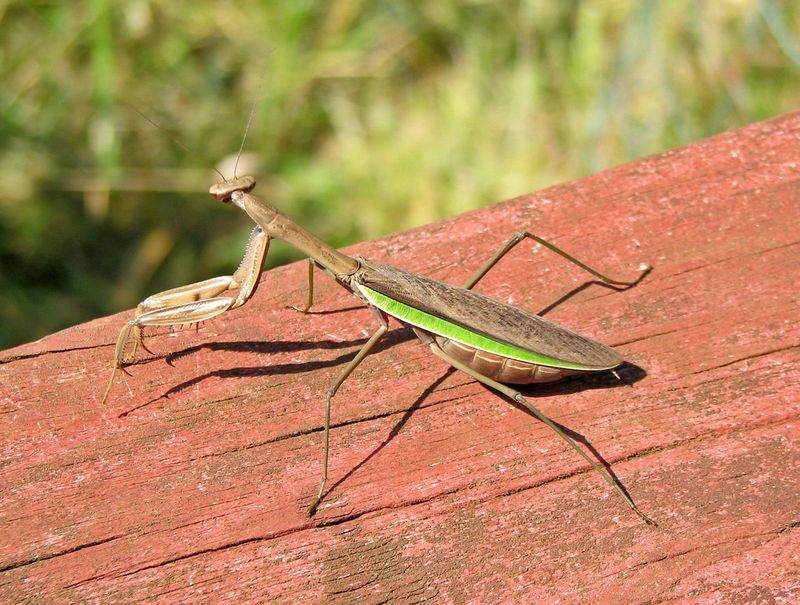
Three mantis species roam Ohio, and the shape of the case hints at who left it. The Chinese mantis, Tenodera sinensis, is the largest of the three species at up to four inches long.
Its egg case looks rounded and puffy, roughly walnut sized, tan, with a paler ridge down the center.
The European mantis, Mantis religiosa, leaves a smaller case, more elongated and straw colored, often tucked onto a low twig or a stone. Adults wear a distinctive black and white bullseye mark beneath the front legs.
Carolina mantis, Stagmomantis carolina, is the native of the trio and the smallest, around two inches. Its case is flat and narrow, grayish brown, with a pale stripe running lengthwise.
A bit of history: the Chinese mantis reached North America around 1896 near Philadelphia, hitching a ride with nursery stock. It spread widely and now outnumbers the homegrown Carolina mantis across much of the state.
That detail matters if you shop for egg cases online. Those packets sold as garden helpers are usually the introduced Chinese species, which can crowd out the native one. Skip the purchase and welcome whatever shows up on its own.
A ruler helps you sort them. Under an inch and flat points to Carolina, plump and round points to Chinese, and slim with a tapered tip points to European.
Either way, you have a hunter’s nursery on your hands and a small identification puzzle for a cool September afternoon.
Old Garden Lore, Luck, And Folk Symbolism
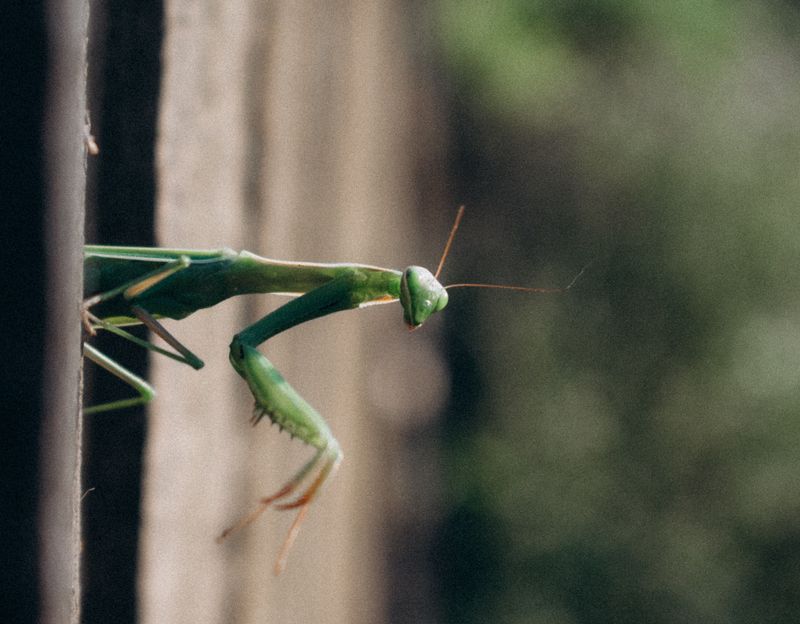
The name says it plainly: hands folded, elbows out, like a small figure at prayer. Those folded arms are actually a spring-loaded trap, cocked and ready to snap shut. Early naturalists saw devotion instead, so the pose stuck in both language and legend.
The word mantis comes from Greek and means prophet or seer, a nod to the ancient belief that the insect could foresee the future. The European species name, religiosa, comes separately from Latin, referencing the insect’s prayer-like pose.
French folklore held that a lost child could follow a mantis’s outstretched arm and find the way home. Elsewhere, farmers treated its arrival as a nudge toward patience and careful timing.
Now the myth worth clearing up. Plenty of Ohioans grew up hearing that harming a mantis brings a fine from the state.
No such law is known to exist in Ohio or elsewhere in the country. The rumor may trace back to mid-century schoolteachers hoping kids would leave the insects be, and honestly, it worked.
Symbolically, a case left behind in autumn fits the season well. Fall is when the year’s work gets tucked away and handed over to time.
Gardeners often read it as patience rewarded: months of watering, weeding, and waiting produced a yard worth raising a family in.
Take the meaning however you like. Luck, folklore, or plain biology, that little brown packet gives your September walk something to chew on. Kids tend to love the stories, so share a few while you rake.
Why Your Fall Cleanup Should Slow Down

Here is where good intentions do the damage: the big fall tidy-up. Cases sit on the exact things gardeners cut in autumn, like perennial stalks, raspberry canes, grass clumps, and shrub twigs.
A shredder or a curbside bag removes the eggs before they can hatch in spring. The simplest fix is to slow down. Leave perennial stems standing through winter, cut them in April instead, and scan the twig before the pruners close.
Standing stems also shelter native bees, and the seed heads feed goldfinches and juncos through Ohio’s gray months.
If a stem carrying a case has to come out, cut several inches above and below it. Then tie that piece to a shrub branch outdoors, roughly two to four feet off the ground.
Keep it outside. A warm house tricks the eggs into hatching in February, and hundreds of tiny nymphs on your windowsill will find no food waiting.
Angle it so rain runs off rather than pooling, and tuck it where wind and squirrels have a harder time reaching. Twine, a twist tie, or a clothespin all work fine.
Skip the plastic bag, the garage shelf, and the jar on the kitchen counter. Cold, dry, and outdoors is what these eggs are built for.
Also worth flagging: hold off on burning brush piles and mowing field edges until late spring, since cases hide in both. A few minutes of looking before you cut buys you a garden crew you did not have to order.
What Spring Brings When Those Eggs Wake Up
Come late spring, that quiet lump turns into one of the more unusual sights in the garden. Ohio hatches usually run from late April into early June, once daytime temperatures settle into the 70s. Warmth sets the clock, not the calendar.
Nymphs squeeze out through a seam in the case and dangle on thin threads, looking like pale commas swinging in the breeze. Within an hour or two, a hundred or more may be crawling across nearby leaves.
They arrive fully formed, just miniature, about a quarter inch long and ready to hunt aphids and fruit flies right away.
Then they scatter fast, and for good reason. Early siblings sometimes prey on each other, so spreading out improves the odds.
Only a handful from each case reach adulthood. Birds, spiders, ants, and rough weather thin the crowd, which is why females pack so many eggs into one batch.
If you want a front-row seat, check the case on warm mornings in May and watch for a darkened seam or a few early stragglers.
Resist the urge to move it once hatching starts, since jostling can strand nymphs halfway out. Kids find the whole scene unforgettable, so keep a magnifying glass in your pocket.
By July, a survivor or two will be perched on a sunflower head, swiveling that triangular face at passing flies, and your garden will have its patrol back on duty. Same stems, same corner, a new generation.