What It Means When A Desert Tortoise Wanders Into Your Arizona Garden
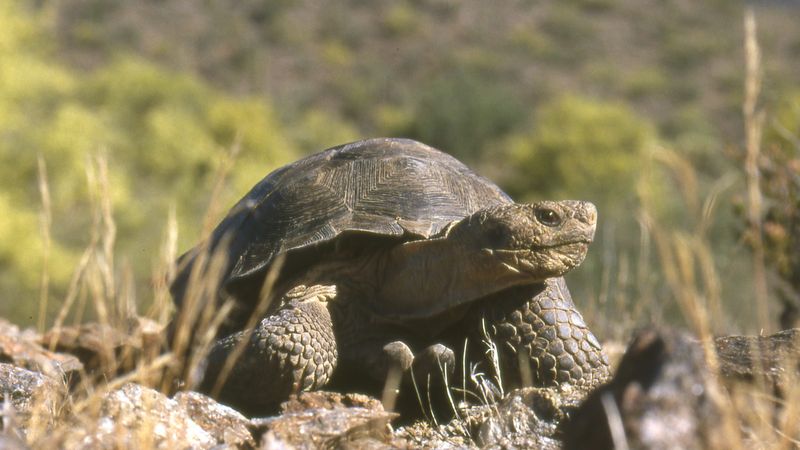
Spotting a desert tortoise slowly making its way through your Arizona garden is one of those moments that stops you in your tracks. These ancient-looking reptiles have roamed the Sonoran and Mojave deserts for millions of years, and seeing one up close feels genuinely special.
Before you rush outside to help, feed, or photograph it, knowing what that visit actually means, and what to do next, can make a real difference for the animal.
What an Arizona Garden Visitor Really Means
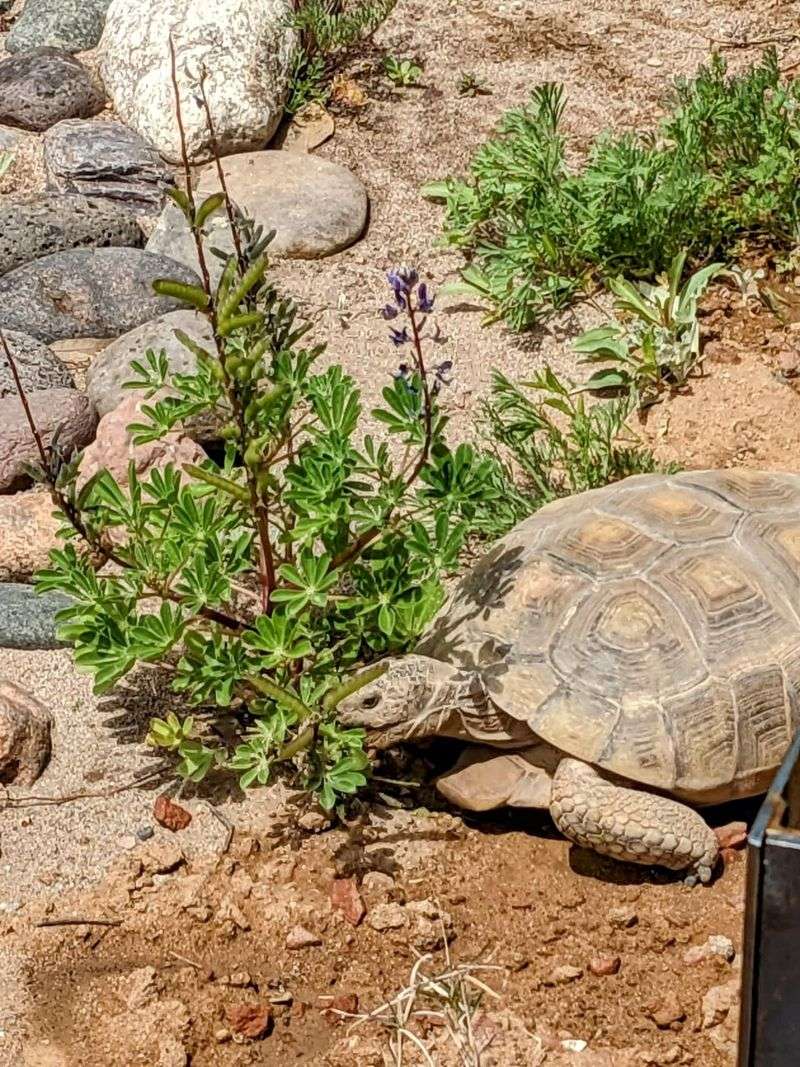
A desert tortoise crossing through an Arizona garden can feel like a sign that your yard is doing something right. The reality is a little more complicated, and understanding the difference matters for the tortoise’s safety.
Sonoran desert tortoises use a broad home range that includes rocky slopes, bajadas, dry creek beds, and areas with seasonal plant growth. Your garden may simply overlap with a route the tortoise has used for years.
One visit cannot prove that the property attracted the animal or provides high-quality habitat. The tortoise may have found shade, a patch of vegetation, or a familiar path that happens to pass through your yard.
That is worth appreciating without overstating it.
In Arizona, a garden sighting may be consistent with the property being near or intersecting wildlife movement, but a single encounter cannot establish a functioning wildlife corridor or certify the yard as ecologically ideal. The animal is a wild neighbor passing through, and treating it as such is the best starting point.
Why Arizona Rain and Familiar Routes Matter
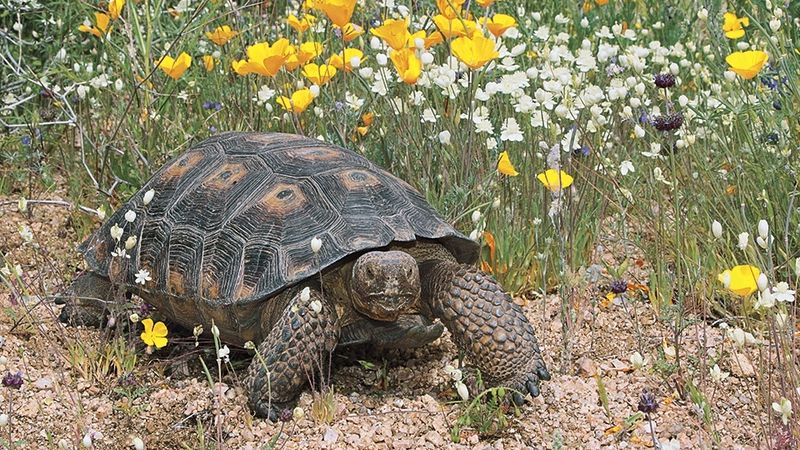
Timing is one of the most useful clues when a tortoise appears in an Arizona yard. If the visit comes shortly after monsoon rain, seasonal movement is a very likely explanation rather than anything your garden specifically offers.
Arizona Game and Fish reports that wildlife movement increases after monsoon rains, and tortoises in particular respond to the moisture and the burst of plant growth that follows. A post-rain sighting in an Arizona garden reflects that seasonal rhythm rather than a permanent preference for residential landscapes.
Beyond rain, tortoises follow established routes through their home areas. National Park Service guidance explains that a tortoise crossing a road or entering a developed area is often navigating territory it knows well and is not necessarily lost or confused.
These routes can pass through neighborhoods, washes, and yards in Arizona communities that sit near remaining desert habitat.
Mating season also drives movement in Arizona, typically in spring and again after summer rains. A tortoise that appears during those windows may simply be covering more ground than usual.
The visit may be brief, and the absence of the animal afterward does not mean anything went wrong.
Know Which Arizona Desert Tortoise You May Be Seeing
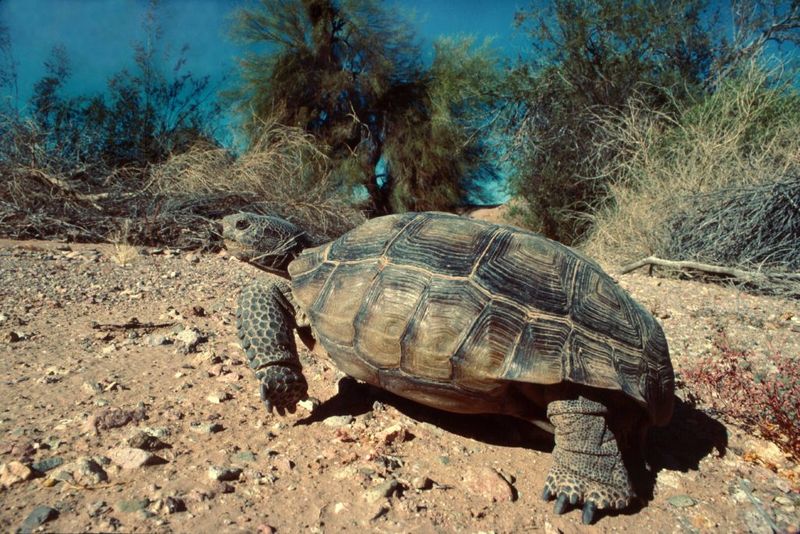
Most Arizona homeowners in the Phoenix or Tucson metro area will encounter a Sonoran desert tortoise rather than a Mojave desert tortoise, but knowing the distinction matters for understanding the animal’s legal protections.
Arizona is home to two native desert tortoise species. The Sonoran desert tortoise is found mainly south and east of the Colorado River, which covers most of the Phoenix and Tucson regions.
Your Arizona Garden Changes Every Week. Your Plan Should Too.
Gardening in Arizona changes quickly throughout the season. Every Friday you’ll receive a simple weekly plan showing exactly what to plant, prune, fertilize, harvest, and protect so you never miss the right timing.
The Mojave desert tortoise lives primarily north and west of the Colorado River, in areas closer to the Nevada border. The Arizona Game and Fish Department notes that both species receive state protection, meaning it is illegal to harass, harm, collect, or kill either one.
The conservation status of the two species differs at the federal level. The Mojave desert tortoise is federally listed as threatened under the Endangered Species Act.
The Sonoran desert tortoise, by contrast, was reviewed by the U.S. Fish and Wildlife Service, and a 2022 finding determined that it did not warrant federal listing as endangered or threatened at that time, though the species continues to face pressure from development, drought, invasive vegetation, and habitat fragmentation.
For most Arizona garden encounters, a precise species identification is not necessary. The practical response is the same regardless of which tortoise you are seeing: observe from a distance, avoid interference, and contact Arizona Game and Fish if the animal appears injured or is in danger.
State protections cover both species equally.
Protect the Arizona Visitor Without Interfering
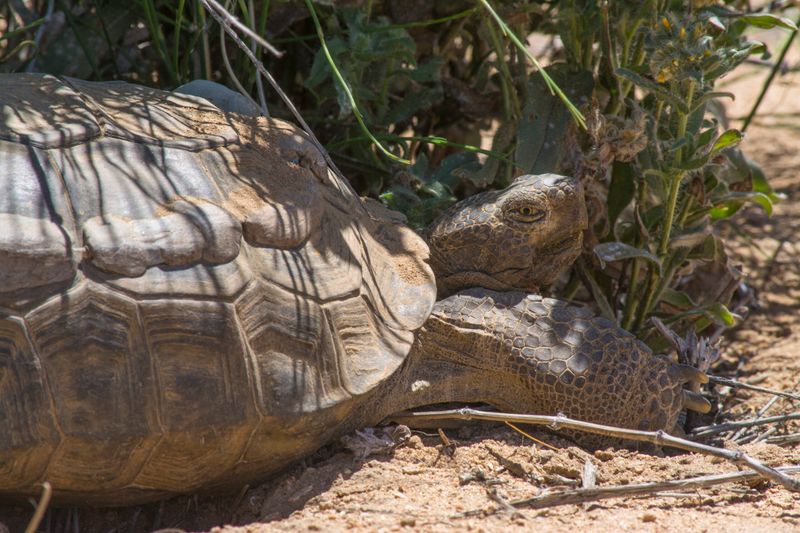
When a healthy desert tortoise appears in an Arizona yard, the best response is the simplest one: stay back and watch. Resist the urge to pick it up, reposition it for a photo, offer it food or water, or move it to what seems like a safer or more natural spot.
Handling a wild tortoise can cause real harm. A frightened tortoise may release stored urine, which is a critical water reserve the animal depends on during Arizona’s dry months.
Losing that reserve can put the tortoise at serious risk, especially during periods of drought or heat. National Park Service guidance is clear that unnecessary handling should be avoided for exactly this reason.
Feeding and watering carry their own problems. Offering lettuce, fruit, or a bowl of water is not recommended for a wild Arizona tortoise.
Conditioning a wild animal to associate a specific yard with food or water can disrupt its natural behavior and is not in the animal’s long-term interest.
Dogs are one of the most immediate hazards. Arizona Game and Fish emphasizes that even a calm, well-behaved dog can seriously injure a desert tortoise.
Keep dogs indoors or on a leash while the tortoise is present, and make sure children understand that the animal is a wild neighbor, not a pet to be touched or carried.
A healthy wild tortoise generally has a better chance of surviving in the familiar Arizona landscape where it was found. The kindest thing you can do is give it space and let it move on at its own pace.
When an Arizona Tortoise Needs Assistance
Most Arizona tortoise encounters in a garden do not require intervention. The animal is moving through its range and will typically continue on its own.
A few specific situations, however, do call for action.
Call the Arizona Game and Fish Department’s Tortoise Adoption Program at 1-844-896-5730 if the tortoise appears injured, such as a cracked or damaged shell, visible wounds, or obvious inability to move normally. An animal that is trapped in fencing, a pool area, or a structure it cannot exit on its own also warrants a call.
Tortoises found in densely populated Arizona neighborhoods far from any natural desert habitat, or those wearing an identification tag, may be escaped captive animals that need assessment rather than simple observation.
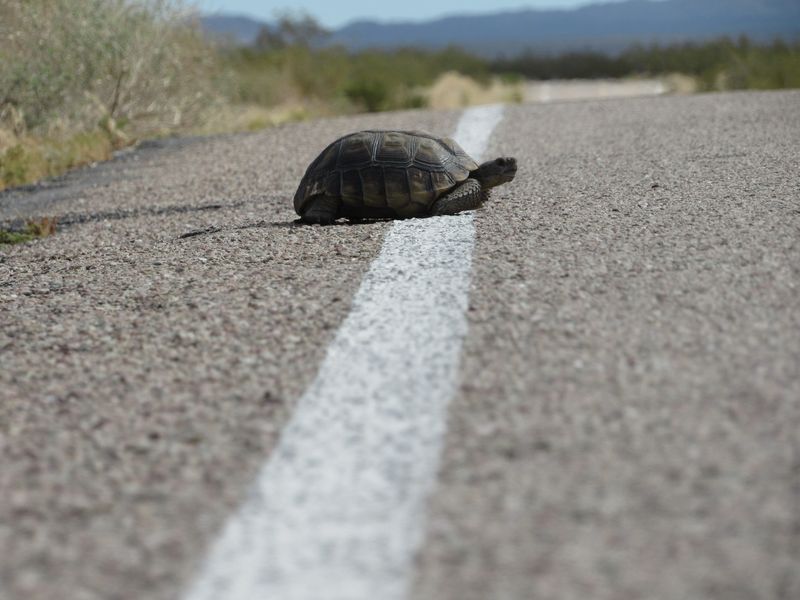
The roadway situation is the one narrow exception to the no-handling rule in Arizona. If a tortoise faces immediate danger from traffic on a busy road, it is appropriate to carefully move the animal a short distance off the road and in the direction it was already traveling.
National Park Service guidance supports this specific action. Moving it further, redirecting it, or carrying it to a different location is not appropriate and can separate the animal from its known home area.
Relocating a healthy Arizona tortoise to a park, a desert preserve, or another neighborhood is not a rescue. Arizona Game and Fish warns that a moved tortoise may not know where to find food or shelter in unfamiliar territory and may not survive the transition.
When in doubt, call the agency rather than improvising.
Make an Arizona Yard Safer Without Attracting Wildlife
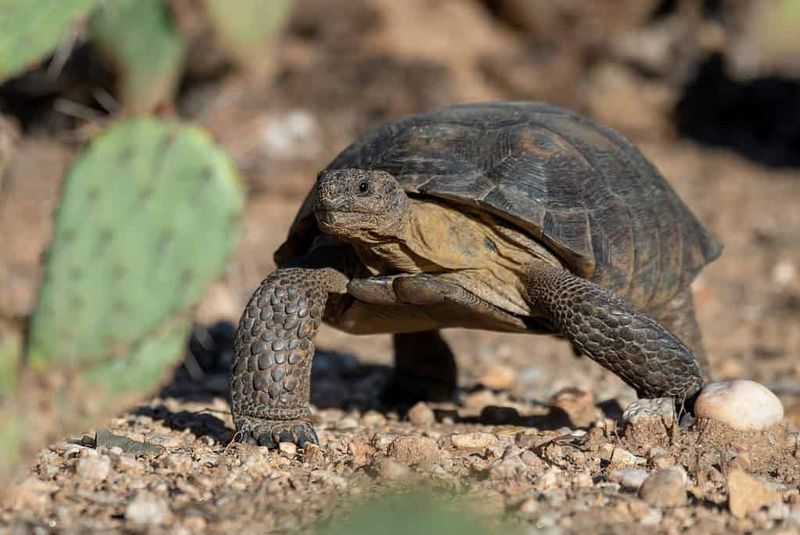
A tortoise passing through an Arizona yard is a good prompt to look at the space with fresh eyes. Several common yard features that seem harmless can pose serious risks to a tortoise that wanders in.
The Arizona-Sonora Desert Museum publishes a checklist for managed captive-tortoise habitats, and while that guidance applies to enclosed enclosures rather than open yards, the hazard list is directly relevant. Tortoises can fall into pools and drown, ingest treated soil or plants, and be poisoned by ornamental species that are common in Arizona residential landscaping.
Shade and shelter matter in Arizona’s extreme heat. Arizona Game and Fish conservation data identifies shelter availability as one of the strongest predictors of tortoise presence in a given area, with a measurable relationship between shelter density and tortoise population health.
Dense shrubs, rock piles, and undisturbed ground cover provide the kind of refuge these animals need, though providing those features does not guarantee a tortoise will return.
Reducing pesticide and herbicide use in Arizona yards benefits a wide range of native wildlife and lowers the risk of harm to any tortoise that passes through. Secure fencing that prevents dog access to the yard’s perimeter offers another layer of protection.
These steps make the yard genuinely safer without turning it into a feeding station or conditioning wild animals to depend on a single residential property.
The Careful Arizona Garden Takeaway
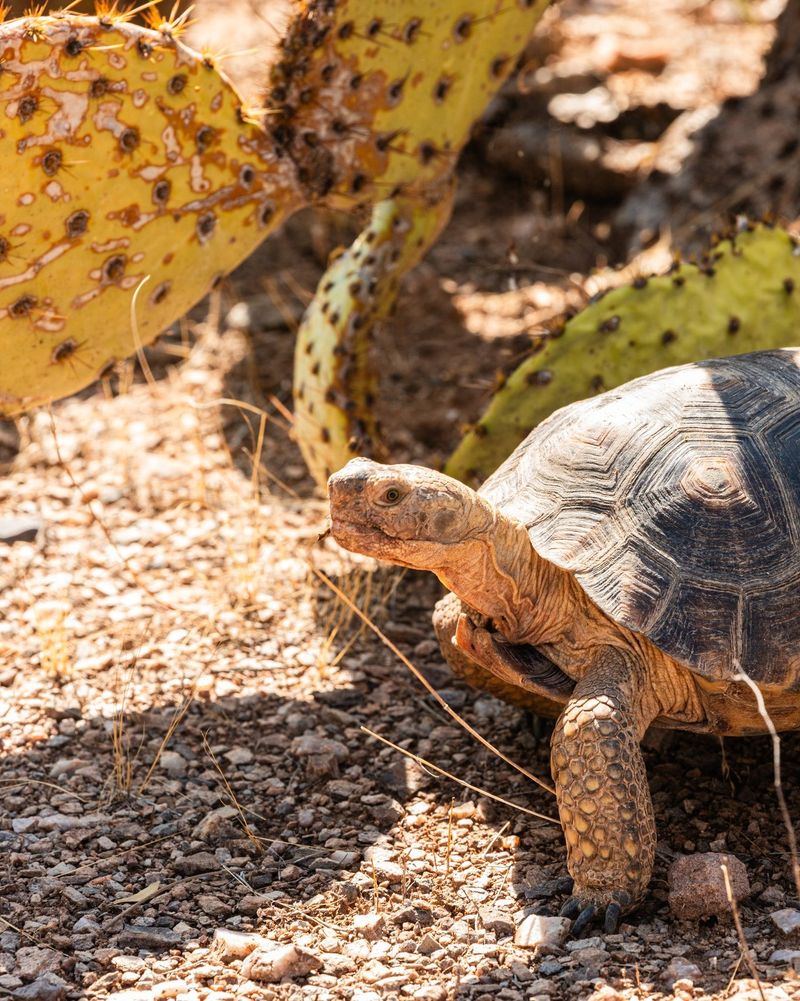
A desert tortoise in an Arizona garden is a genuine moment worth pausing for. What it means, precisely, is that your property may be near or intersecting the animal’s broader movement through the Arizona landscape.
That is meaningful without needing to be more than it is.
The visit does not confirm that the yard attracted the tortoise, that the garden is ecologically certified, or that the animal will return. Rain, mating, established routes, and seasonal plant growth all help explain why an Arizona tortoise moves when and where it does.
The practical response is consistent regardless of the reason for the visit: observe from a distance, keep dogs and children away, skip the food and water, and avoid any handling. If the tortoise is injured, trapped, or in immediate traffic danger, contact Arizona Game and Fish rather than attempting a relocation.
A tortoise that passes through your Arizona yard and continues on its way has done exactly what wild animals do best.