September Is The Time To Give Your Virginia Fescue Lawn A Fresh Start For Overseeding

Your fescue lawn has been through enough summer heat. September is your chance to turn those thin, tired patches into a thicker lawn before winter arrives.
Months of heat, humidity, foot traffic, and dry spells can leave tall fescue looking rough by late summer. And because fescue grows in clumps instead of spreading sideways, bare spots usually need a little help to fill back in.
That is where overseeding comes in. September brings the combination fescue needs most: warm soil for germination, cooler air for new growth, and better conditions for young roots to get established.
Whether your yard is near Richmond, Charlottesville, or Virginia Beach, getting the timing and preparation right can make a noticeable difference.
Give Your Fescue Lawn A September Reset
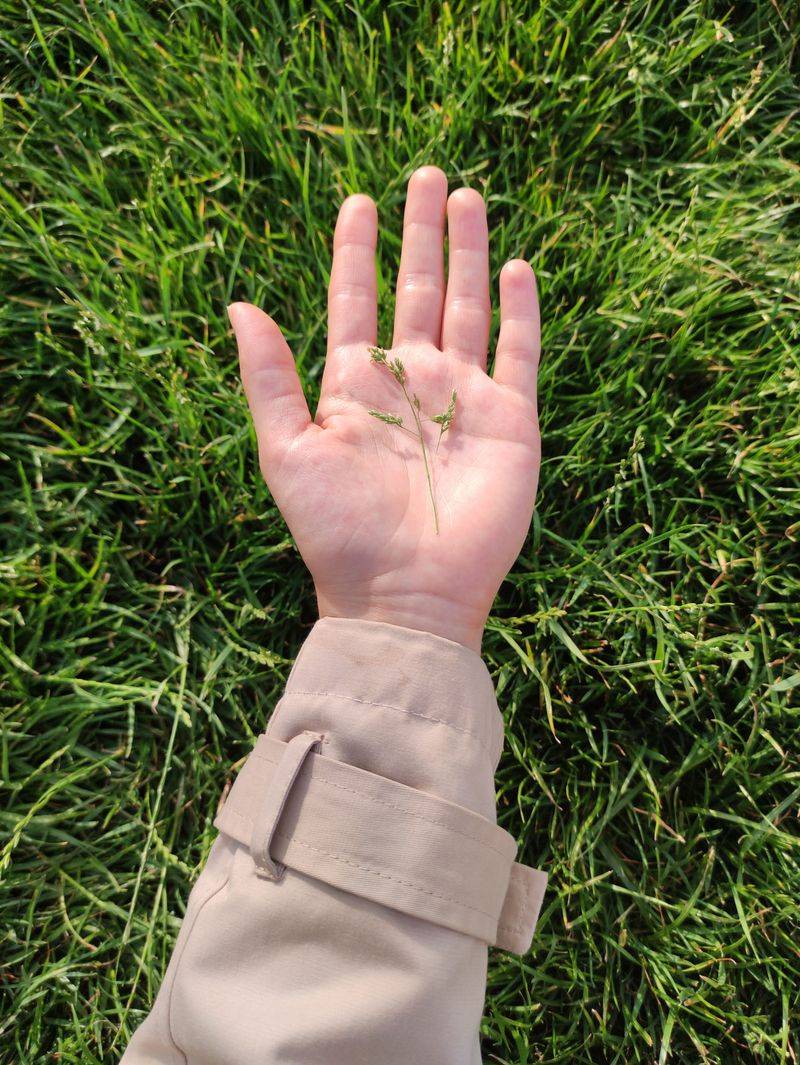
Grab a cup of coffee and walk your yard slowly before you buy a single bag of seed. That simple stroll tells you more about your lawn than any product label ever will.
Look for thin areas, bare dirt, and patches where the color looks off. Summer stress shows up in strange ways.
Brown patch disease leaves circular scars, while heat and drought thin out grass in wide, uneven stretches. Noting which is which helps you decide how much seed to buy and where to concentrate it.
Push your fingers down into the turf and feel for thatch, that spongy layer of dried-out stems sitting between green blades and soil. Anything thicker than half an inch blocks seed from reaching dirt.
Then press a screwdriver into the ground in a few spots. If it barely goes in, you have compaction, which is extremely common across Virginia’s clay-heavy soils.
High-traffic zones near driveways, gates, and play areas usually feel the hardest. Jot down what you find on your phone.
That short list becomes your game plan, telling you whether you need aeration, extra seed, or dethatching before September seeding day arrives.
Mow Smart Before You Spread Seed

Here is where you break your own rules for one week.
All season long, fescue does best when mowed tall, somewhere between 3.5 and 4 inches, because that height shades soil and crowds out weeds.
Right before overseeding, though, a slightly shorter cut can help more light reach the soil surface.
Mow the existing fescue to roughly 2.5 to 3 inches, while making sure you never remove more than one-third of the blade at a time.
Shorter blades let sunlight reach the soil surface and stop mature grass from hogging water and nutrients that baby seedlings desperately need. Think of it as clearing the dinner table for a new guest.
Bag every clipping instead of mulching them back in. Loose clippings pile up into a mat that keeps seed suspended above the dirt, and seed that never touches soil almost never sprouts.
A quick pass with a leaf blower afterward clears out the leftover bits.
Sharp mower blades matter too. Dull blades shred grass tips and leave ragged wounds that invite disease during the state’s humid early fall.
Your Virginia Garden Changes Every Week. Your Plan Should Too.
Gardening in Virginia changes quickly throughout the season. Every Friday you’ll receive a simple weekly plan showing exactly what to plant, prune, fertilize, harvest, and protect so you never miss the right timing.
Once the lawn is short and clean, you will actually be able to see the bare spots you marked earlier, which makes spreading seed far more accurate.
Open Up Compacted Soil With Core Aeration
Clay soil is the quiet villain in a lot of Virginia yards. Around Richmond and Charlottesville especially, years of foot traffic and rain pack that clay into a dense layer that roots struggle to push through.
Core aeration breaks the pattern.
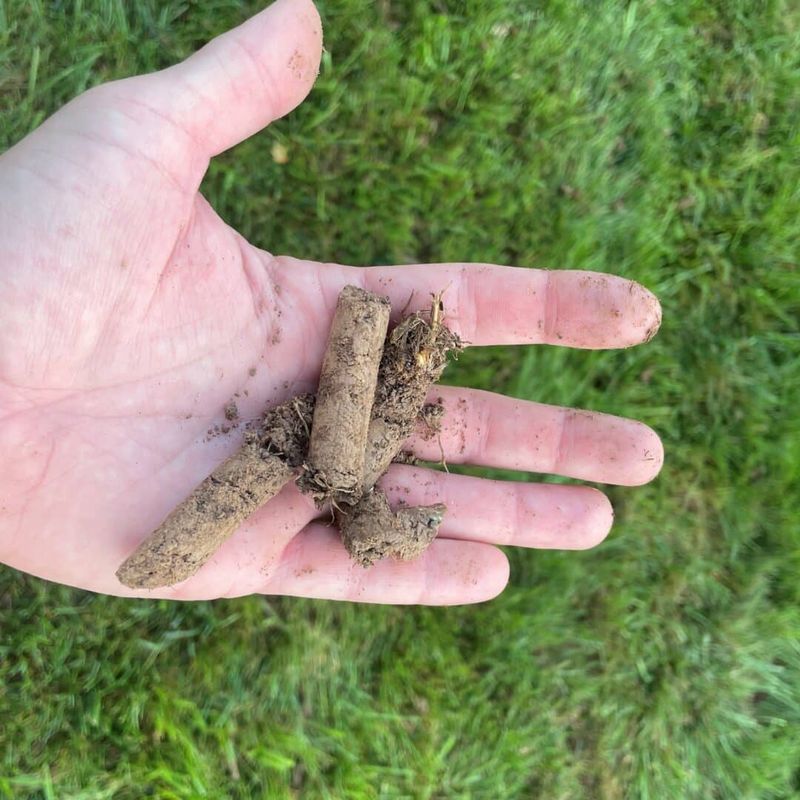
A core aerator pulls out plugs of soil about half an inch wide and three to six inches deep, leaving open channels behind. Air, water, and fertilizer suddenly reach the root zone instead of running off the surface.
Beneficial soil microbes wake up, and thatch begins breaking down naturally.
Aim for 20 to 30 holes per square foot, which usually means running the machine over the lawn in two directions. Water the yard a day or two beforehand so the aerator can grab full cores rather than skipping across dry, hard ground.
Timing is the secret ingredient. Aerate and spread your seed on the same day so seed drops straight into those fresh holes, giving you excellent seed-to-soil contact.
Leave the plugs right where they land. They look messy for about a week, then rainfall crumbles them back into the lawn, adding organic matter and topdressing your new seedbed for free.
Let A Soil Test Guide Your Fall Lawn Care

Fertilizer without a soil test is basically guessing with your wallet open. A test costs very little and tells you exactly what your lawn is missing, including nitrogen, phosphorus, potassium, and your soil pH.
The Virginia Cooperative Extension makes the process easy and recommends testing every three to four years.
Why bother before overseeding? Because pH controls whether nutrients are even available to grass roots.
Tall fescue prefers slightly acidic to neutral soil, and much of the state’s native ground runs acidic thanks to decades of rainfall leaching away minerals. When a test comes back low, lime brings the pH back into a friendly range.
Skipping that step means fertilizer can sit in the soil unused while your new seedlings stay pale and slow.
Collecting a sample takes about ten minutes. Pull small scoops from six to eight spots around the yard, mix them in a clean bucket, and send in the combined sample.
Results usually come back within a couple of weeks.
Informed decisions beat guesswork every single time, and your fescue will show the difference.
Pick The Right Fescue Seed For Your Yard
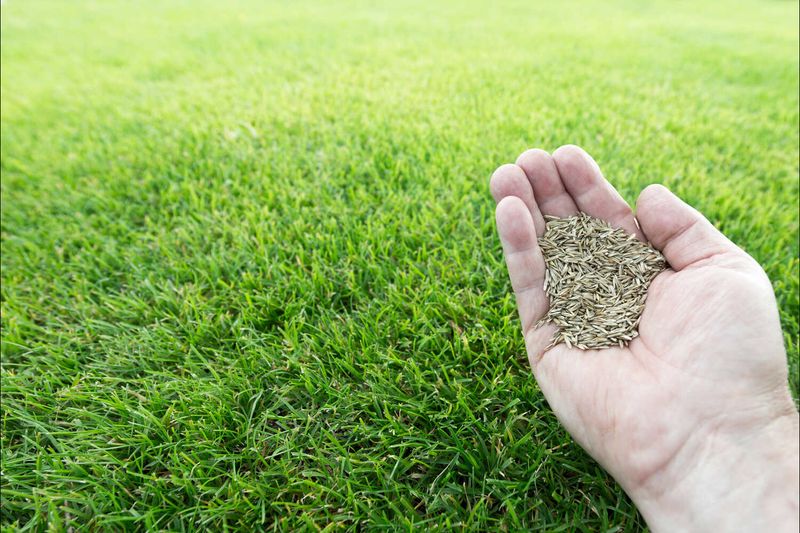
Virginia sits smack in the middle of the transition zone, that tricky stretch where cool-season grasses sweat through summer and warm-season grasses shiver through winter. Turf-type tall fescue handles that balancing act better than almost anything else.
Deep roots help it ride out dry July stretches, and it tolerates everything from full sun to moderate shade. When shopping, look specifically for turf-type tall fescue blends rather than pasture grass.
Some pros like a mix of about 90 percent tall fescue and 10 percent Kentucky bluegrass, since bluegrass spreads a little and helps heal small gaps.
Shady corners under oaks and maples may do better with fine fescues such as creeping red, chewings, or hard fescue, though they do not love heavy foot traffic.
Always look for Blue Tag certified seed when possible. The Blue Tag identifies certified seed that has met established certification standards for varietal identity and seed quality.
Certified seed is also less likely to contain weed and other crop seed contaminants or unnecessary filler.
Skip old-school Kentucky 31 and perennial ryegrass for overseeding, since their coarse texture clashes with modern turf.
Varieties like Falcon IV or a Trinity Confidence blend bring proven heat and brown patch resistance.
Get The Seeding Rate Right

More seed is not automatically better. Dump too much on and seedlings fight each other for water and light, leaving you with weak, spindly grass instead of thick turf.
Matching the rate to your lawn’s condition is the smarter move.
For a fescue lawn that looks decent but slightly thin, around 3 to 4 pounds of turf-type tall fescue per 1,000 square feet can be appropriate.
Lawns with more substantial thinning can benefit from a higher rate, while completely bare areas may need around 6 to 7 pounds per 1,000 square feet. The exact rate depends on how much existing turf remains and the seed mixture you choose.
Keep in mind that overseeding uses about half the seed of starting a brand new lawn from bare dirt.
Measure your yard before you shop. A rough length times width calculation prevents both wasted money and a half-finished job.
Read the bag label too, because coated seed weighs more per actual seed, which changes the recommended amount.
Spread in two passes at right angles using a broadcast spreader for even coverage across your property.
Keep New Fescue Moist While It Takes Root
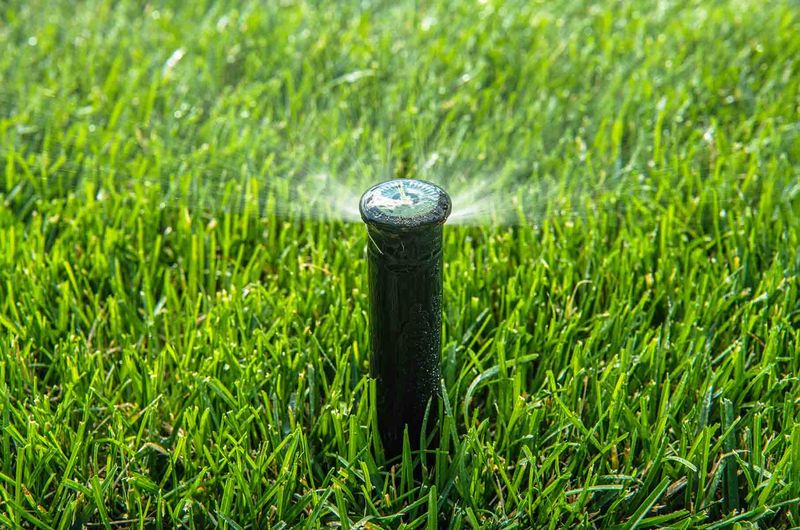
Watering is where most overseeding projects succeed or fall apart. New fescue seed needs constant moisture, and letting it dry out even once can end the whole effort.
Gentle and frequent beats long and heavy during the first couple of weeks. Right after seeding, water two or three times a day, just enough to keep the top half-inch to inch of soil damp.
Puddles are a warning sign, since standing water floats seed away and piles it in low spots. Slopes, bare patches, and strips along sidewalks and driveways dry out fastest, so give those areas an extra minute.
Once you notice a green haze appearing, usually 10 to 21 days in, cut back slightly to once or twice daily.
After four to six weeks, when seedlings reach 2 to 3 inches, shift to deeper soaking two or three times weekly, totaling 1 to 1.5 inches per week. Deeper watering pulls roots downward.
Morning is the best window, since blades dry before evening and fungal problems stay away. Continue adjusting your watering as the seedlings establish, reducing frequency as their roots grow deeper, and temperatures continue to cool.
Feed Your Lawn When Fall Growth Takes Off
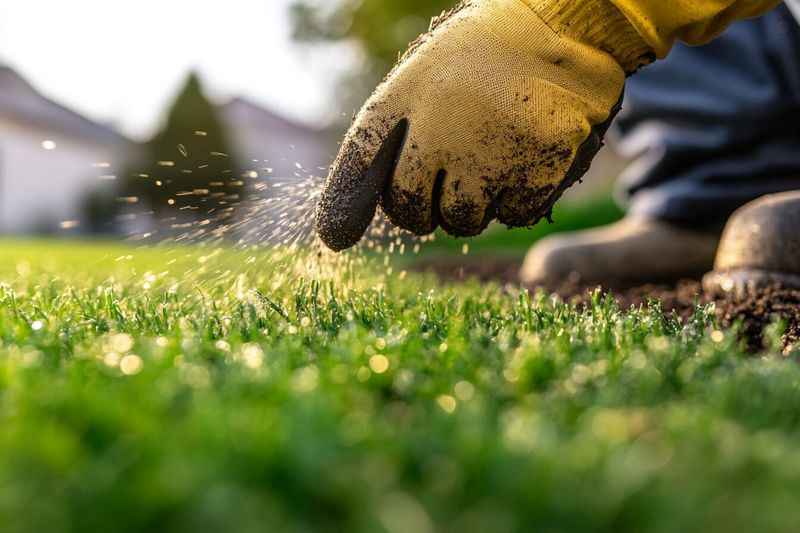
Think of starter fertilizer as a lunchbox packed for your seedlings’ first weeks of life.
Starter fertilizer can support new seedlings, but phosphorus should be applied according to your soil test rather than automatically adding extra to the lawn.
Apply fertilizer according to your soil test and the product label, with around 0.5 to 0.7 pounds of actual nitrogen per 1,000 square feet being a more typical starting range for fall fescue care.
For example, 2.5 pounds of a 28-0-4 fertilizer provides about 0.7 pounds of actual nitrogen per 1,000 square feet. Balanced ratios near 4-1-2, such as a 16-4-8 blend, suit most fescue lawns well.
If you fertilize before seeding rather than during, wait about two weeks before spreading seed.
A second feeding in mid-October or November acts as a winterizer. That late application helps fescue store energy in its roots, which pays off with earlier green-up the following spring.
One habit worth breaking is summer feeding. Pushing nitrogen during hot, sticky July only stresses fescue and invites brown patch.
Save the nutrition for fall, when cool nights and warm soil let grass actually use it.
Time Weed Control Around Overseeding
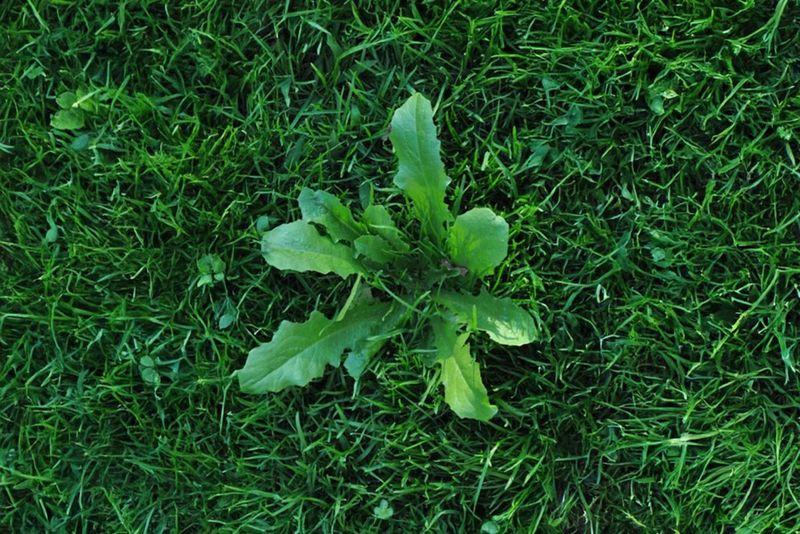
Herbicides cannot tell the difference between a weed seed and your expensive fescue seed.
Pre-emergent products create a barrier that stops germination, and unfortunately that barrier blocks the grass you actually want. So the fall pre-emergent and overseeding rarely mix.
If thickening the lawn is your priority this September, skip traditional pre-emergents in the weeks surrounding your seeding date. Waiting several weeks after any herbicide application gives the chemical time to break down in the soil.
A few specialized products, including Tenacity and Sublime, can go down at seeding time in fescue lawns and still control certain annual weeds without harming new grass. Always read the label twice before mixing anything.
Weeds already growing in the yard are a different story. Hold off on most post-emergent sprays until seedlings have been mowed two or three times, which usually takes four to six weeks.
Late fall or the following spring works fine for cleaning up dandelions, clover, and chickweed.
Products containing triclopyr handle broadleaf weeds in tall fescue nicely once the turf has matured. A thick lawn eventually crowds most weeds out anyway.
Protect Young Fescue Through Its First Weeks
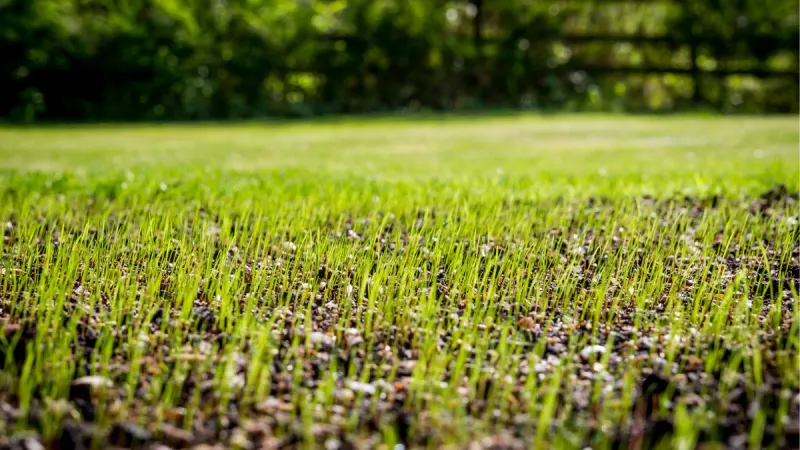
Young fescue seedlings are fragile, and the biggest threats during October are feet, paws, and falling leaves. So, keep traffic off newly seeded ground as much as you reasonably can.
Even casual walking dislodges seed and crushes tender shoots, leaving thin lines and bare spots that show up later. Rope off shortcuts if the kids keep cutting across the same corner.
Leaves are the sneaky problem. Wet maple and oak leaves flatten into a mat that blocks sunlight and traps moisture against young grass, which invites disease.
Clear them within about three days. Reach for a leaf blower instead of a rake during these first weeks, since rake tines pull seedlings right out of soft, freshly aerated soil.
Patience matters just as much. Fescue can take 21 days or longer to sprout, and uneven germination is completely normal, so resist the urge to dump on more seed.
Above everything else, never let the watering schedule slip. Consistency during those first six weeks is what turns scattered seed into a thick, resilient lawn.