Why Wild Turkeys Suddenly Start Showing Up In New York Yards This Fall
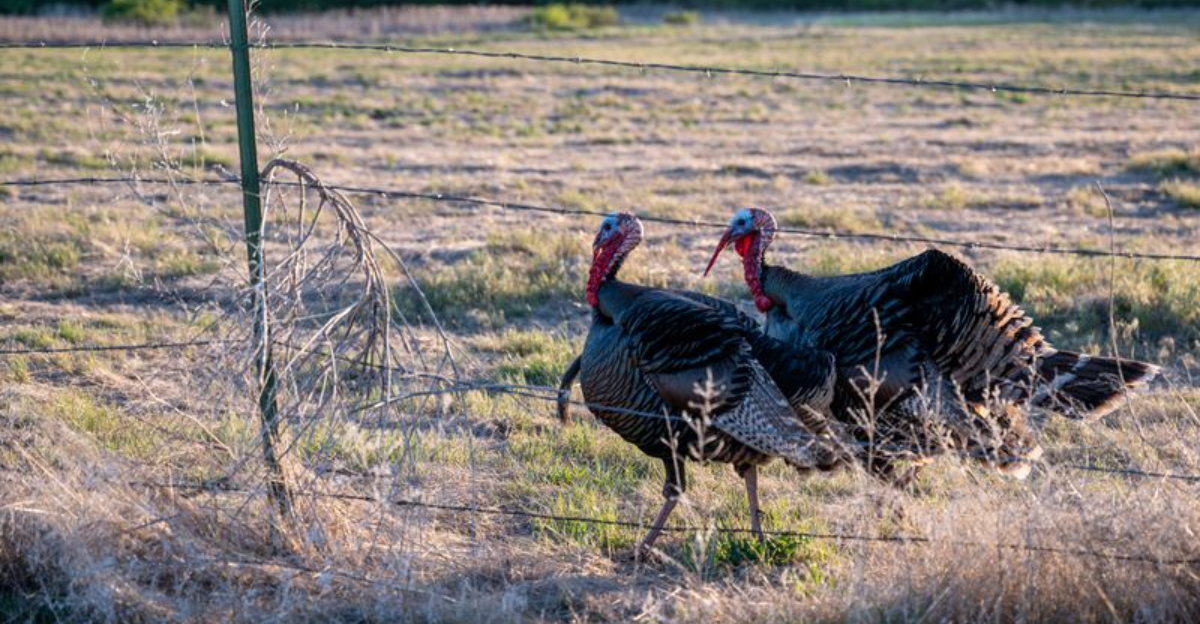
Your backyard just got a surprise visitor, and it brought the whole family. A flock suddenly appears on the lawn, heads bobbing, feet marching through the grass, and every bird seemingly determined to inspect the same patch of ground.
It is one of those fall sights that makes you stop what you are doing and wonder why they chose your yard. Wild turkeys have made an impressive comeback across New York, and fall can change where and how they move.
Food becomes a priority, flocks regroup, and lawns, woods, and mature trees near homes can offer exactly what they need. That means the turkey parade outside your window probably is not random.
Your grass, fallen nuts, nearby woodland, and even the trees overhead can all help explain the visit. Once you know what these birds are looking for, their sudden appearance starts to make a lot more sense.
Fall Food Sends Turkeys Roaming
Picture a turkey in July munching bugs and green shoots, then fast-forward to October when the whole menu changes.
As summer fades, these clever birds switch up what they eat based on what nature hands them. Warm months bring plenty of insects and fresh plants, but fall flips the script completely.
During autumn, turkeys load up on high-energy foods like acorns, corn, oats, and other seasonal nuts and seeds. The goal is simple: pack on fat reserves to survive the lean, cold winter that’s coming.
That hunger for calorie-rich meals pushes them to wander far beyond their usual summer stomping grounds. Some flocks travel several miles just to find the best feeding spots.
When their favorite foods dry up in one area, they simply keep moving until they hit the jackpot somewhere else. That search can lead them straight into New York neighborhoods where food happens to be easy to reach.
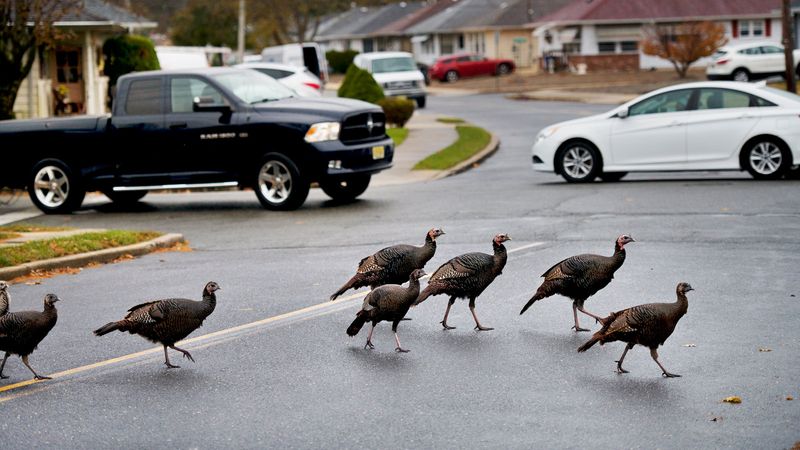
Farm country, forest edges, and even suburban streets all become fair game during this seasonal hunt. A flock that spent all summer deep in the woods might show up on your street because the pickings got better there.
Weather also plays a role, since early frosts and shorter days signal turkeys to get serious about eating. What looks like a surprise visit is really just turkeys following their stomachs.
Their ancient instincts tell them to stock up now, and they don’t waste time being picky about location. So if a flock struts through your yard this fall, chances are they’re on a mission to fuel up.
Understanding this roaming behavior makes their sudden appearances feel a lot less mysterious and a lot more fascinating.
Your Yard Suddenly Looks Like A Turkey Buffet
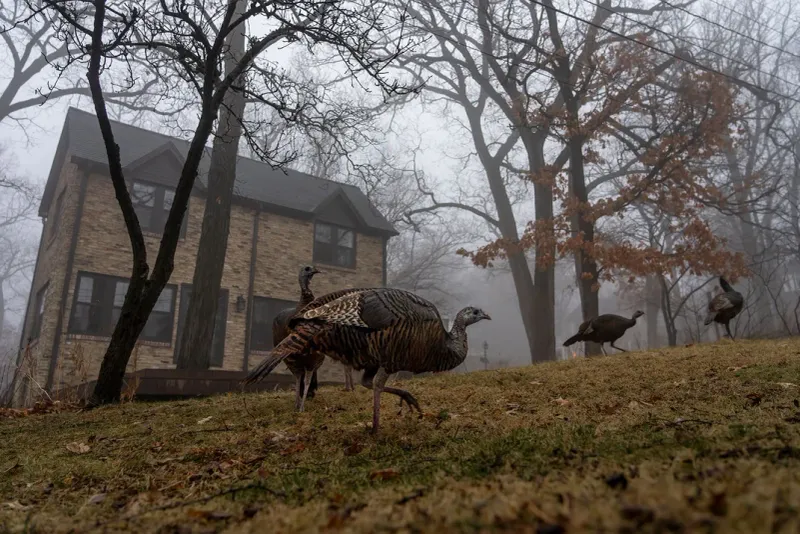
Seeing a whole flock strut confidently across your grass can catch anyone off guard. Yet there’s a good reason your property suddenly turns into a popular hangout for hungry turkeys.
Homes near woods or farm fields often serve up an all-you-can-eat spread without even trying. Turkeys are opportunists at heart, always scanning for food that’s quick and easy to grab.
Your New York Garden Changes Every Week. Your Plan Should Too.
Gardening in New York changes quickly throughout the season. Every Friday you’ll receive a simple weekly plan showing exactly what to plant, prune, fertilize, harvest, and protect so you never miss the right timing.
Your tidy lawn offers seeds, clover, and tasty insects hiding just below the surface. Gardens can tempt them with leftover veggies or fruit that dropped and got forgotten.
Even decorative trees and shrubs pitch in by dropping berries and small nuts these birds love. Open patches of ground let them scratch through leaves and dirt, digging up hidden snacks with ease.
That scratching habit is second nature to them, especially when they’re hunting for fallen nuts.
Then there’s the bird feeder situation, which trips up plenty of homeowners. Feeders meant for cardinals and chickadees often spill seed onto the ground below.
To a passing turkey, that scattered seed looks like a free feast just waiting to be gobbled up.
Add all these little offerings together, and your yard basically rolls out a welcome mat.
A single tempting spot can pull an entire flock off their path and into your backyard. Once they realize the eating is good, they may swing by again and again.
The trick is recognizing what’s drawing them in so you can decide how to handle it. Cleaning up fallen produce and managing feeders can make your yard less of a hotspot.
Knowing your lawn looks like a diner to these birds is the first step toward peaceful coexistence in your corner of New York.
Acorns And Beech Nuts Can Bring Flocks Closer
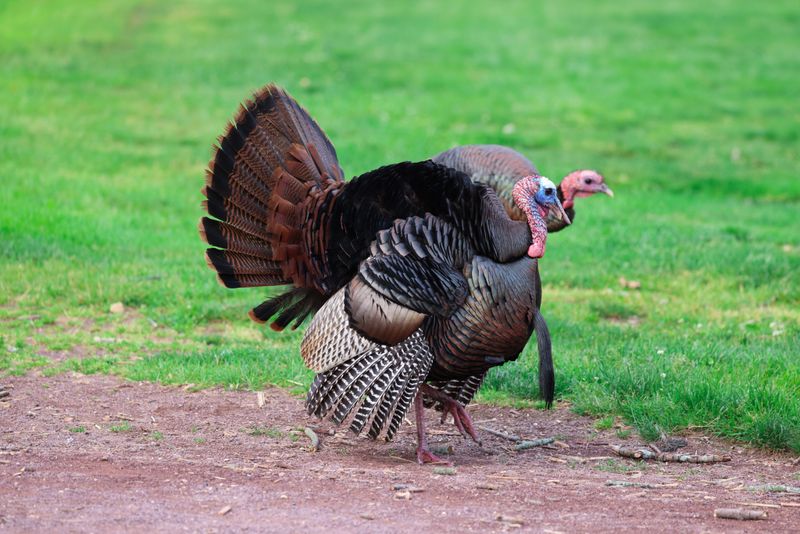
If there’s one thing that really gets turkeys moving in fall, it’s mast crops.
Acorns and beech nuts top the list of must-have foods in New York’s forests this time of year. These hard, crunchy nuts are packed with calories, giving turkeys the fuel they need before winter arrives.
Flocks will spend hours each day working the forest floor, scratching through fallen leaves to uncover buried nuts. It’s steady, focused work, and the payoff is the rich energy that helps them build up fat.
Beech nuts and acorns are like nature’s power bars for hungry birds. Here’s something interesting: nut production swings wildly from one year to the next.
Some autumns bring a huge harvest that folks call a “mast year,” when the ground is practically carpeted with acorns. Other years, the same trees barely produce a thing.
During a bumper crop, flocks tend to gather wherever the nuts are thickest. If those loaded oak and beech groves sit close to homes, turkeys naturally drift toward those neighborhoods.
Your property might just happen to border the season’s best nut buffet.
When the wild nut supply runs low, turkeys go searching farther and wider. That’s often when they wander into yards looking for whatever food they can find.
When natural food becomes harder to find, turkeys may expand their search and spend more time exploring nearby areas for other sources of food. This tight link between forest nuts and turkey travels explains a lot of surprise sightings.
The birds simply follow the food, and acorns and beech nuts are big-time favorites. So a flock parading near your home may be telling you there’s a rich stash of nuts somewhere close by, drawing them in for an autumn feast.
Mixed Woods And Open Fields Make Ideal Turkey Country
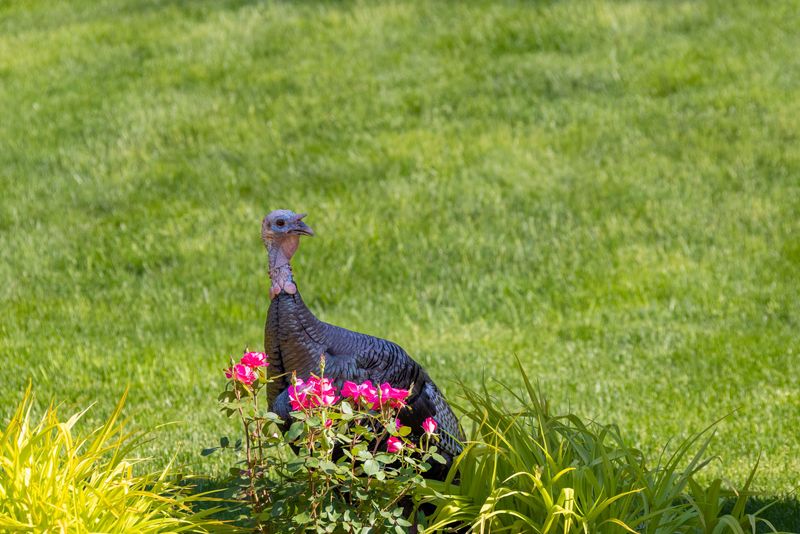
Turkeys do especially well where woods and open spaces mix together in a patchwork. The state’s varied countryside gives them plenty of this combination.
Wildlife experts describe perfect turkey habitat as roughly half woods, a quarter old abandoned fields, and a quarter working farmland. That mix isn’t just a nice bonus; it covers every single thing a turkey needs.
Each piece of the puzzle plays its own important role. The wooded sections offer cover from predators and safe spots for nesting.
Tall trees in those woods also double as nighttime roosts where flocks feel secure.
Shade and shelter make the forest a dependable home base. Open areas like hayfields, pastures, and croplands turn into prime dining rooms.
Early in the season, these fields buzz with insects that young turkeys, called poults, depend on. Later on, leftover corn and soybeans become important meals for the grown birds.
Regions such as the Finger Lakes, Southern Tier, and Catskills feature this kind of landscape everywhere you look.
Rolling farmland tucked beside stretches of forest creates turkey paradise across much of the state. No wonder flocks show up in such big numbers in these zones.
Suburban neighborhoods that border both woods and open lots can mimic this ideal setup.
If your home sits where trees meet a field or a big grassy yard, you’ve got turkey-friendly terrain. The birds recognize that combination and treat it like familiar ground.
Understanding this habitat preference helps explain why some yards get regular visits while others rarely do. Turkeys settle where the land gives them food, cover, and roosting all in one place.
Your patch of New York might just check every box on their list.
Fall Flocks Start Coming Together
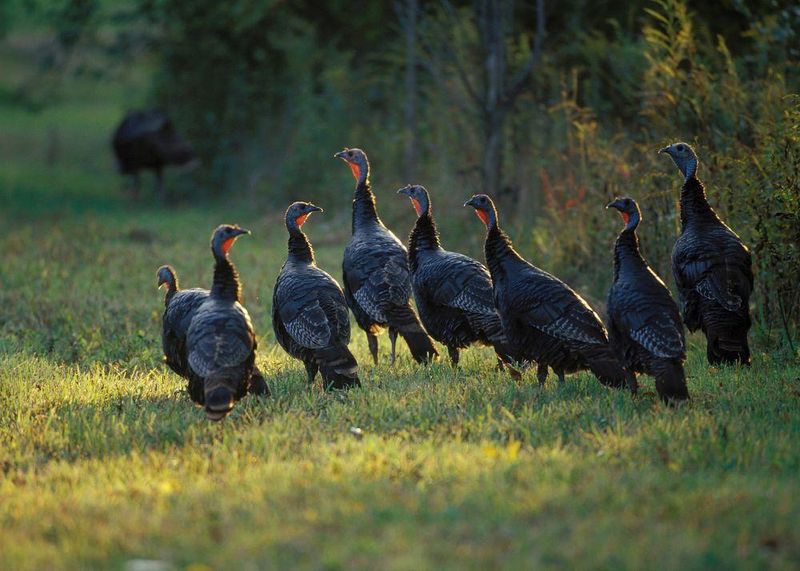
Food and habitat aren’t the only forces shaping turkey behavior in fall. Their social groups also begin changing after the breeding season.
Turkeys form flocks based on age and gender, with hens often staying with their young while males gather in separate groups. These flocks can remain together through fall and winter as they search for food and suitable habitat.
A common autumn sight is a group of hens leading their poults, the youngsters hatched that year. Sometimes young males called jakes tag along from the previous season too.
The grown-up gobblers usually keep their own company in what folks call bachelor groups. These male flocks might hold just a few birds or swell to a dozen or more.
Members tend to be around the same age, hanging out like an old crew.
Inside every flock, there’s a clear pecking order that keeps things organized. Dominance displays and little squabbles help settle who ranks where.
Once the hierarchy is set, the group moves and feeds together more smoothly.
Turkeys stay connected with soft calls and clucks as they wander their range. That constant chatter keeps everyone from getting separated during travels.
Safety comes in numbers, with more eyes watching for danger.
Because flocks travel as one big unit, they become far more noticeable to people. A lone turkey might slip by unseen, but twenty birds crossing a yard are impossible to miss.
This urge to band together drives their group movements all season long. So when a whole parade of turkeys marches through your property, you’re witnessing natural teamwork.
They’re not just hunting food; they’re living out their fall social rhythms. The flock is their family and their protection rolled into one moving crowd.
Big Backyard Trees Offer More Than Shade
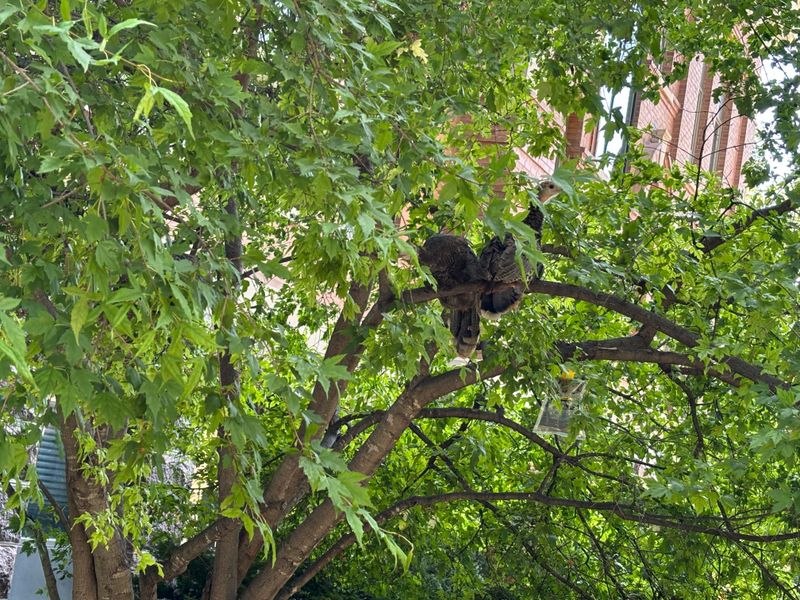
Watch a flock at dusk, and you’ll spot another big reason turkeys hang around homes.
As daylight fades, these birds need a safe place to spend the night. Their answer is surprisingly bold for such large creatures: they fly up into the trees.
On the ground, turkeys are easy targets for prowling predators once darkness falls. To stay out of harm’s way, they instinctively climb high onto tree branches to sleep.
Roosting up in the air keeps them safely above the reach of ground animals.
Not just any tree will do, though. Turkeys look for tall, sturdy trees with strong, horizontal limbs that give them stable perches.
They also want a clear flight path so they can take off fast if something startles them. Favorite roosting trees often stand near water or along ridge lines.
Across the state, plenty of backyards and property edges feature exactly these kinds of mature trees.
A grand old oak or maple in your yard might be a five-star turkey hotel. That means a visit could be more than a casual food stop.
It might be a nightly routine, with the same flock returning to a trusted sleeping spot.
If your trees fit the bill, turkeys may treat your property as their bedroom. You might even hear them flapping up to their perches as the sun goes down.
Come morning, they’ll glide back to the ground and start foraging all over again. This daily rhythm ties them to certain yards throughout the fall.
Knowing your big trees serve as turkey shelter adds a whole new layer to the story. Those branches offer the safety these birds count on every single night.
In many neighborhoods, mature trees quietly make the perfect turkey roost.
What To Do When A Turkey Flock Moves In
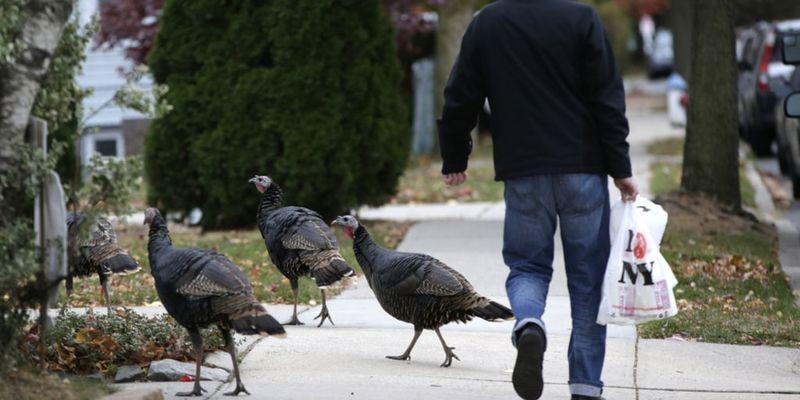
Finding a flock treating your yard like home base raises the big question of what to do next.
The golden rule is simple: avoid intentionally feeding wild turkeys or giving them a reason to depend on your yard.
Spilled birdseed and dropped garden produce can provide an easy meal, so cleaning up these food sources can help keep turkeys from becoming regular visitors.
Turkeys that grow too comfortable can turn pushy or even act aggressive. Keeping them a little wary is actually the kindest thing for everyone involved.
You want them to remember that humans aren’t a food source. Gentle, harmless scare tactics work well for sending them on their way.
Try clapping loudly, waving your arms, or giving them a light spray from the garden hose. These actions signal that your yard isn’t the cozy hangout they hoped for.
Always watch turkeys from a respectful distance and resist the urge to get too close.
If you have pets, keep them leashed outside, since loose animals can rile turkeys up. A calm, controlled approach keeps both your pets and the birds out of trouble.
To make your yard less inviting, consider pulling in bird feeders for a while. Fencing or netting around gardens can protect your veggies too.
Just remember that turkeys are strong flyers, so barriers need to be sturdy.
Sometimes a flock becomes stubborn, bold, or starts causing real property damage. When that happens, reach out to a licensed Nuisance Wildlife Control Operator through the New York State Department of Environmental Conservation.
Because wild turkeys are regulated wildlife in New York, a licensed professional can help make sure a nuisance situation is handled legally and appropriately.
With a little patience and smart habits, you can appreciate these grand birds while keeping healthy boundaries.
Enjoy the show, snap a few photos, and let them stay wild. Respectful coexistence is the best outcome for you and the turkeys.