This Invasive Grass Can Quietly Take Over Georgia Woodland Edges
Woodland edges can change slowly enough that an unfamiliar grass seems harmless at first. Then the patch grows wider, and nearby native plants begin losing space.
That quiet spread is exactly what makes this invasive grass easy to underestimate.
Japanese stiltgrass thrives in shaded areas and can form dense patches along disturbed ground. Across Georgia, woodland edges and yards can provide the conditions it uses to spread.
Recognizing it early gives you more options than ignoring a small patch.
Look closely before assuming every delicate grass belongs there, especially where growth appears quickly. Correct identification helps you choose a response without disturbing desirable plants around it.
Catch the problem while the patch is manageable, and protecting that woodland edge becomes much easier than reclaiming it after years of unchecked growth.
1. This Thin Grass Is Easy To Miss When It First Appears
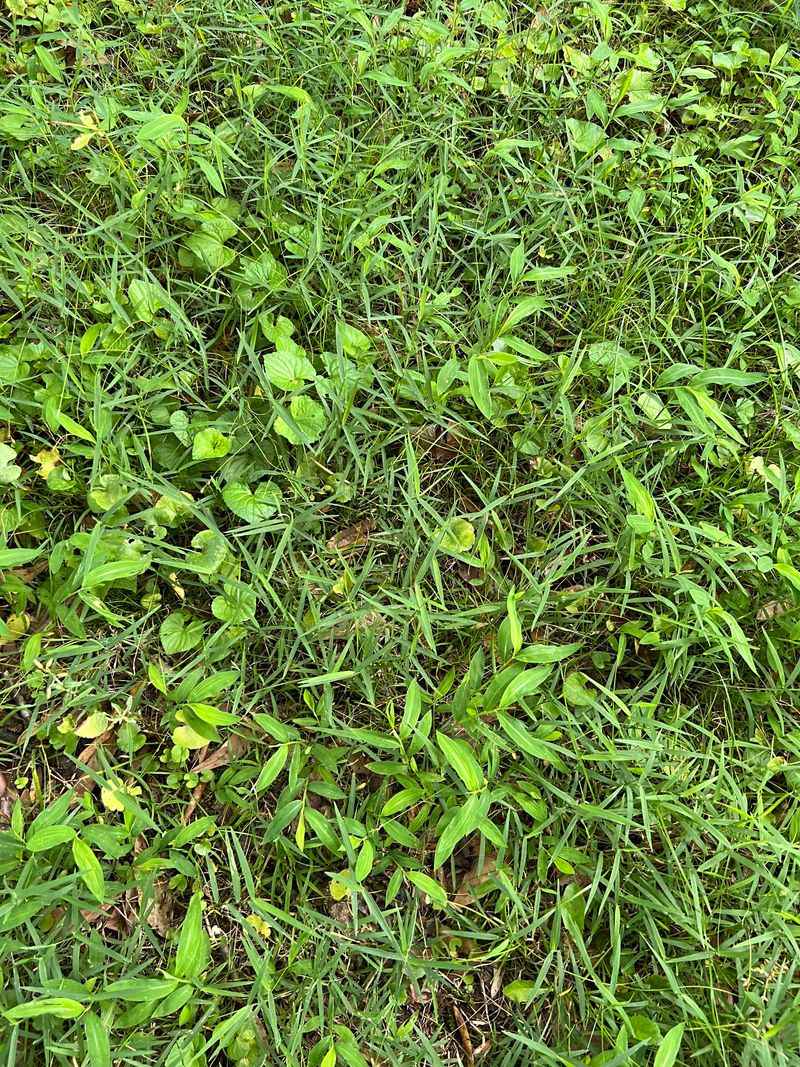
Most people meet stiltgrass without realizing it. A few soft blades appear at the edge of a shady path, and they look like nothing worth a second thought.
Early growth is genuinely faint. Seedlings come up thin and light green, often scattered through leaf litter rather than forming any obvious clump.
That is the trap. Because the first year looks so mild, most homeowners in Georgia let it slide and only notice the problem once a patch has filled in.
Blades stay small at first, usually an inch or two long, and they sit low enough that mowing skips right over them.
Texture gives an early clue. Stiltgrass feels softer and more delicate than fescue or crabgrass, almost papery when you rub a blade between your fingers.
Spring is when seedlings tend to show up in the Southeast, though timing shifts with rainfall and temperature from one year to the next.
Check the places you walk most often. Driveway shoulders, trail edges, and the ground under shade trees are where new growth usually turns up first.
Marking a suspicious patch with a stake helps. You can come back in a few weeks and see whether it spread or stayed put.
Early attention costs you almost nothing, while waiting a season or two usually means dealing with a much larger area later on.
2. Japanese Stiltgrass Thrives Along Shady Disturbed Areas
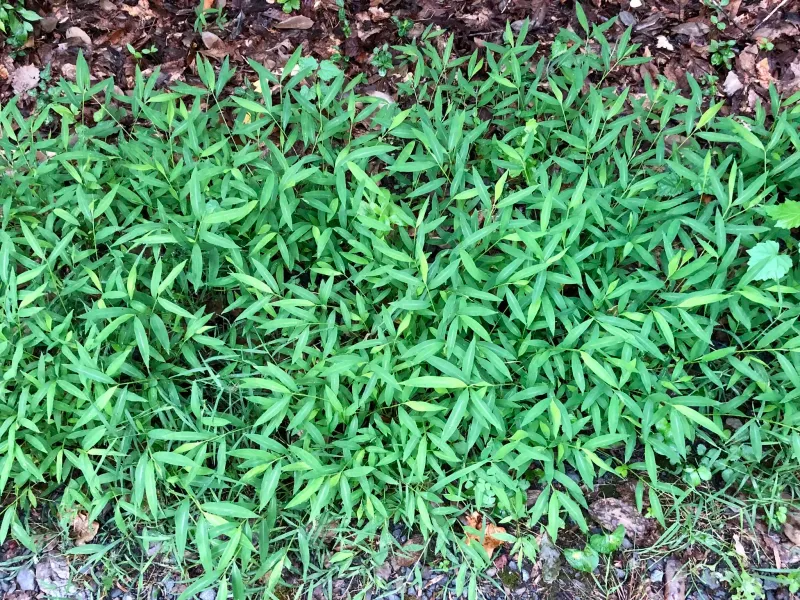
Disturbed shade is where stiltgrass does its best work. Think logging roads, deer trails, ditch banks, and the strip where a mowed yard meets standing timber.
Soil that has been scraped, rutted, or flooded gives seeds an open landing spot with less competition.
Moisture helps too. Creek bottoms and low, damp woods across Georgia often hold the thickest stands, since the grass handles wet ground better than most turf species.
Full shade is not a barrier. Stiltgrass grows under a closed canopy where many other grasses thin out, which is part of why it slips into forest interiors.
It also tolerates sun, so patches can run from a shaded fence line straight out into a mowed edge.
Foot traffic and equipment move it around. Tires, boots, and mower decks pick up seed and drop it somewhere new, often along the same routes people use every week.
Your Georgia Garden Changes Every Week. Your Plan Should Too.
Gardening in Georgia changes quickly throughout the season. Every Friday you’ll receive a simple weekly plan showing exactly what to plant, prune, fertilize, harvest, and protect so you never miss the right timing.
Flooding spreads it as well, carrying seed downstream and depositing it on fresh silt after heavy rain.
Knowing those pathways helps you predict trouble. Scan any spot where soil was recently turned, especially near water or a shaded property line.
Cleaning soil off boots and mower tires before moving between areas is a small habit that genuinely reduces how far seed travels.
3. A Silvery Stripe Helps Separate It From Similar Grasses
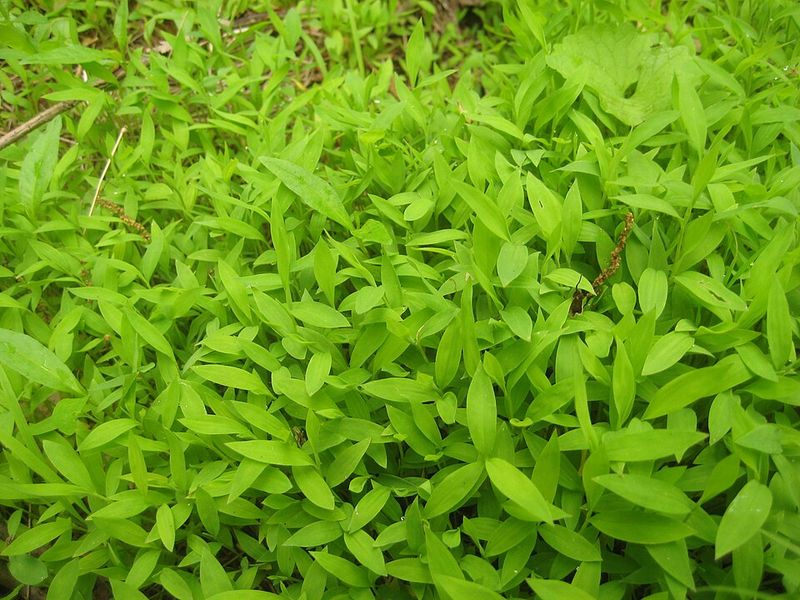
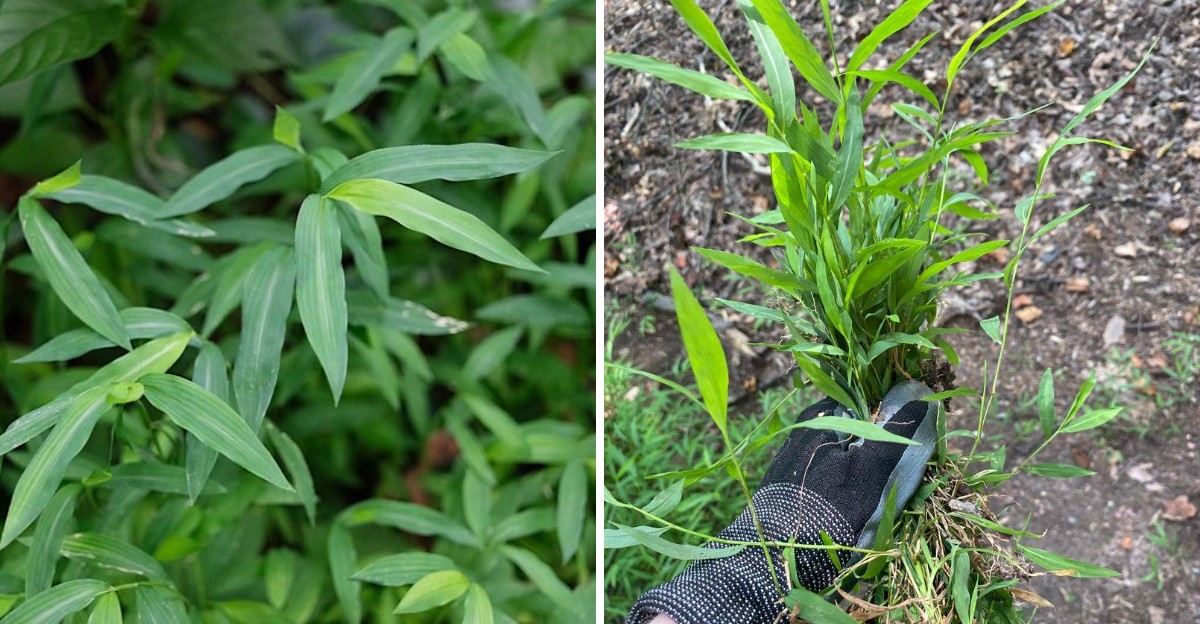
One detail settles the question fast. Flip a stiltgrass blade toward the light and look for a pale, silvery line running down the middle.
That stripe is a shiny midrib, and it usually sits slightly off center rather than directly in the middle of the blade.
Native look-alikes such as whitegrass grow in similar shady spots, so check the stripe carefully before pulling the plant.
Blade shape helps confirm it. Leaves are short and lance shaped, often an inch to three inches long, tapering to a soft point.
Color runs light yellow green through summer. Come late fall in Georgia, patches often turn a washed out tan or purplish brown that stands out against darker forest floor.
Stems are weak and sprawling, not stiff and upright like many turf grasses.
Hold a blade between your fingers and it bends easily, with no rough or scratchy feel along the edges.
Photos taken close up help if you are unsure. Local extension offices can confirm an ID from a clear picture of the leaf and midrib.
Take a moment on identification before treating anything, since pulling the wrong plant wastes effort and can remove a native you would rather keep.
Once you spot that silver line a few times, recognizing stiltgrass becomes almost automatic on every walk.
4. Creeping Stems Help New Roots Form Along The Ground
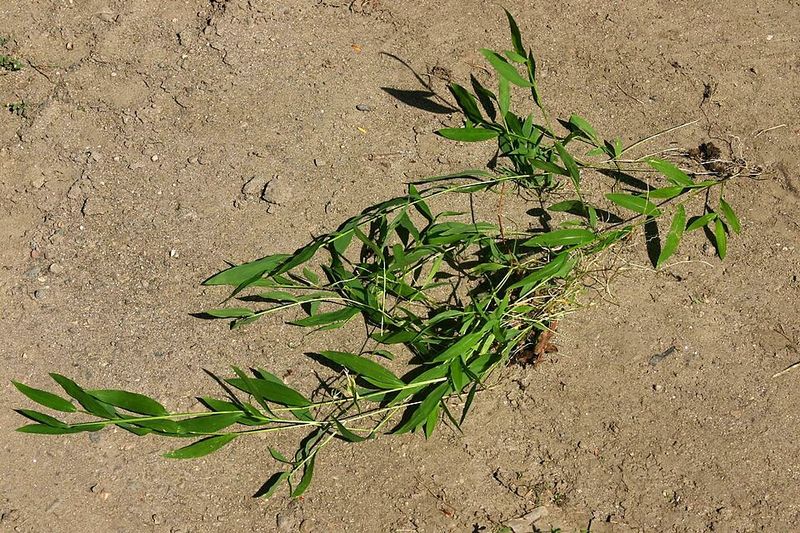
Stiltgrass does not stand tall so much as it sprawls. Stems lean over, run sideways across the soil, and creep outward through the growing season.
Where a stem node touches damp ground, small roots can form and anchor that section in place.
Those anchor points are how a thin scatter becomes a mat. One plant ends up covering far more ground than its size suggests.
Stems reach roughly one to three feet long, though shade and moisture change that quite a bit.
Rooting at nodes also means broken pieces can survive. Tossing pulled stems onto bare moist soil sometimes gives them a second chance.
Bag your pullings or pile them somewhere dry on a tarp instead of leaving them flat on the ground.
Mowing has mixed results. Cutting high can leave the sprawling stems intact, and plants often push out new growth from low nodes.
Georgia gardeners sometimes find stiltgrass creeping from a wooded edge into flower beds, using mulch as an easy rooting surface.
Checking bed edges every few weeks during summer catches those runners while they are still short and simple to lift.
Hand pulling works well here because the root system stays shallow, and moist soil releases the whole plant with a steady tug.
5. Dense Patches Leave Native Plants With Less Growing Space
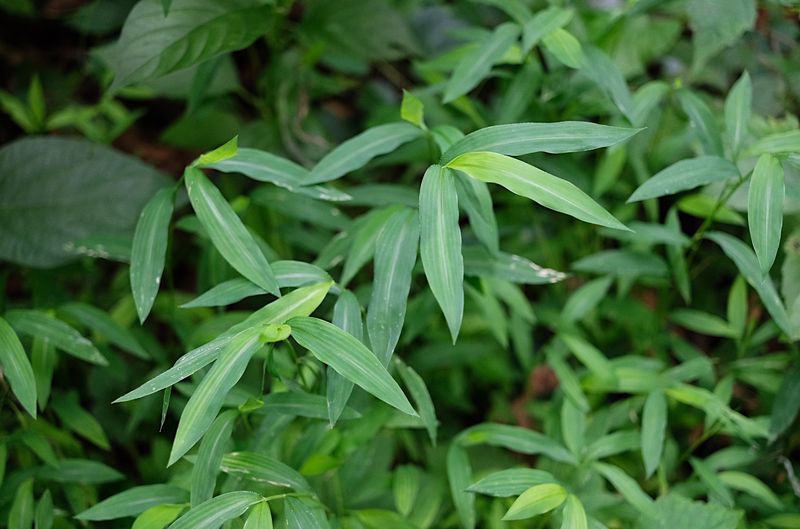
Thick stiltgrass turns a varied forest floor into a single flat carpet. Where you once had violets, sedges, and tree seedlings, you get one pale green layer.
Competition is the main issue. Dense growth shades small native plants and takes up the moisture and root space they need.
Tree regeneration suffers too, since oak and hickory seedlings have a harder time pushing through a solid mat.
Wildlife feels the change indirectly. Fewer native wildflowers and seed producing plants means less food and cover for insects and ground nesting birds.
Deer generally avoid stiltgrass and browse the natives around it, which quietly tilts the balance further in the invader’s favor.
Erosion can worsen along slopes as well. Shallow rooted stiltgrass holds soil less firmly than the deeper rooted plants it replaces.
Woodland owners in Georgia often notice the shift over several seasons rather than all at once, which makes it easy to overlook.
Taking yearly photos from the same spot is a simple way to track whether a patch is expanding.
Restoration goes better when you replant. After clearing an area, adding native sedges, ferns, or shade tolerant groundcovers helps fill the gap.
Bare soil rarely stays bare, so giving desirable plants a head start reduces the odds that stiltgrass simply returns.
6. Seeds Can Keep New Plants Appearing For Several Years
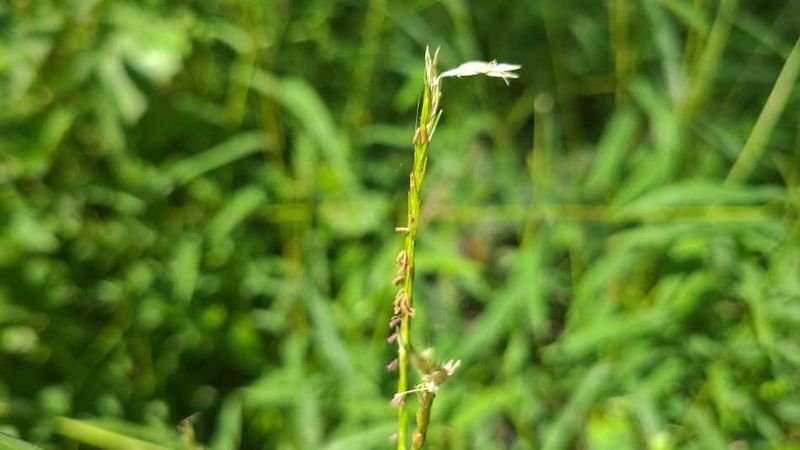
Pulling a patch once rarely ends the story. Seed already in the soil can sprout the following spring and the spring after that.
Stiltgrass is an annual, so each generation depends entirely on seed production to continue.
Slender seed heads form at stem tips in late summer through fall, and a single plant can produce a large number of seeds.
Seed stored in the soil may stay viable for several years, which is why follow up matters more than one big cleanup day.
Rain, boots, tires, and moving water all carry seed away from the original patch.
Plan on returning to the same area for at least three growing seasons. Each visit should get easier as fewer seedlings appear.
Mark treated spots so you actually find them again next spring, since bare ground looks different once other plants fill in.
Georgia’s mild winters and long growing season give stiltgrass plenty of room to complete its cycle, though exact timing shifts with weather.
Watching for the first seedlings in spring gives you the widest window to act before seed sets.
Patience pays here in a practical way. Repeat visits over a few years usually shrink a patch far more than a single aggressive effort ever will.
7. Removing Plants Before They Set Seed Helps Slow The Spread
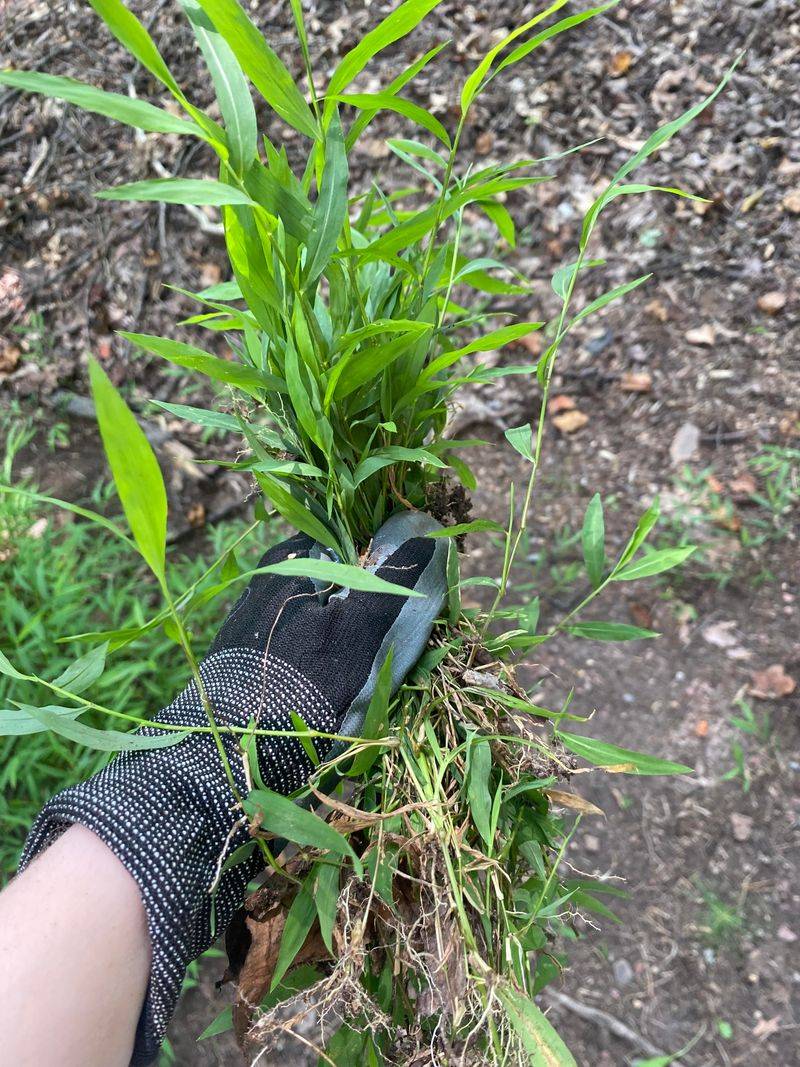
Timing beats effort with this grass. Clearing plants while they are still green and flowerless keeps new seed out of the soil.
Late summer, just before seed heads mature, is often the most useful window in the Southeast.
Hand pulling is straightforward because roots sit shallow. Damp soil after rain makes the job noticeably faster.
Grab low on the stems and pull steadily so the whole plant lifts instead of snapping off.
String trimming or close mowing right before flowering can reduce seed production, though plants sometimes regrow and flower lower to the ground.
Check any cut area two or three weeks later and trim again if new seed heads appear.
Bag the material if seed heads have already formed, and dispose of it according to local guidance rather than composting it in place.
Herbicides are an option for larger stands in Georgia, but products, rates, and timing vary, so read labels closely or ask your county extension office first.
Small patches almost never need chemicals at all.
Work from the outside edge of a patch inward. Stopping the spread at the margins protects clean ground while you deal with the thicker center.
Results depend on rainfall, shade, and how much seed is already banked, so expect gradual progress rather than an instant fix.