Hydrangea Pruning Mistakes Virginia Homeowners Need To Avoid
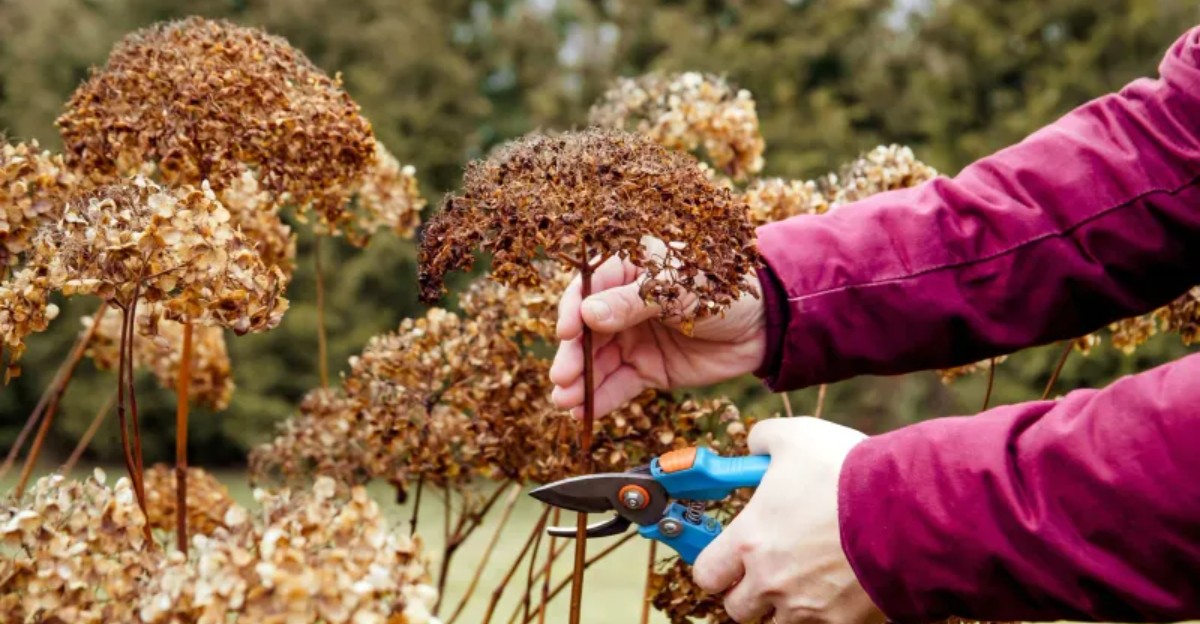
One wrong cut can steal a season of hydrangea blooms before you even realize what happened.
Those colorful blooms may look like they need a quick trim when the season ends. But hydrangea pruning takes more than grabbing shears and cutting away.
The timing depends heavily on the type of hydrangea growing in your yard. For Virginia gardeners, knowing that difference can make all the difference.
Some hydrangeas form next year’s buds on older stems, so late pruning can remove future blooms. Others flower on new growth and allow more flexibility.
Knowing which type you have makes pruning decisions much easier and helps you avoid cutting at the wrong time.
A few thoughtful cuts can protect next year’s display, while the wrong ones can leave a healthy-looking shrub surprisingly short on flowers.
1. Pruning Too Late And Losing Blooms
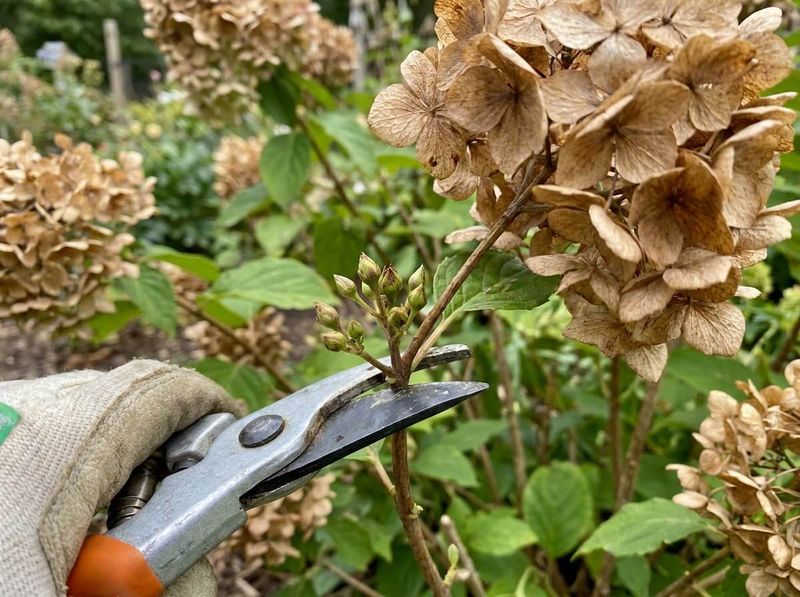
Timing is everything when it comes to hydrangeas, and getting it wrong can leave gardeners with healthy-looking shrubs that produce few flowers. The plants may look perfectly healthy, but the blooms simply never show up.
The trouble happens most with hydrangeas that form their flower buds on old wood, meaning the stems that grew the year before. Those buds are already tucked onto the branches during fall and winter, quietly waiting for spring.
If you cut those stems too late in the season, usually after late summer or early fall, you are snipping away the exact buds that would have opened into big, showy blooms.
Picture it like this: the plant is holding tomorrow’s flowers on today’s branches. A gardener who tidies things up in October, or does a heavy trim in early spring, has no idea those tiny buds are already there.
The cuts feel harmless, but come summer the shrub looks bare.
Across Virginia, this mistake shows up again and again because so many homeowners treat all hydrangeas the same. They assume any time is fine for a good haircut.
For old-wood types, pruning should be done soon after flowering, before the plant forms the flower buds for the following year.
The good news is that avoiding this problem costs nothing but attention. Before you reach for the shears, pause and figure out when your hydrangea forms its buds.
If it blooms on old wood, plan to prune right after the flowers fade in summer, not months later.
Keeping a little garden note or a reminder on your phone can save you a whole season of disappointment. The weather already tests these plants through winter, so there is no reason to make things harder by trimming at the wrong moment.
Respect the timing, and your hydrangeas will reward you with a full flush of color.
2. Treating Every Hydrangea The Same
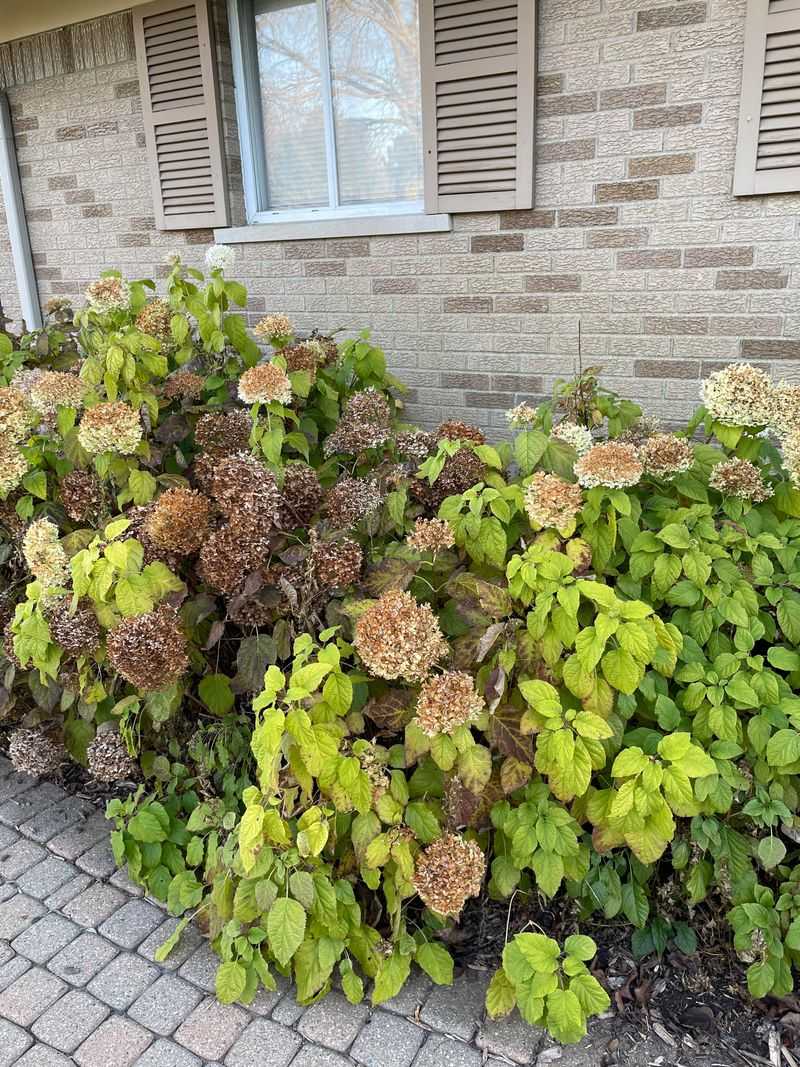
Identifying your hydrangea is the smartest move you can make before ever touching a pair of pruners. Old-wood bloomers are the fussiest of the bunch, and knowing you have one changes your entire approach.
These shrubs form their flower buds on stems that grew during the previous summer. Once those buds appear in late summer to early fall, they sit on the plant all through the cold months, ready to burst open the following spring or summer.
Your Virginia Garden Changes Every Week. Your Plan Should Too.
Gardening in Virginia changes quickly throughout the season. Every Friday you’ll receive a simple weekly plan showing exactly what to plant, prune, fertilize, harvest, and protect so you never miss the right timing.
That means the flowers you enjoy in June were actually decided months earlier.
Several popular varieties fall into this group. Bigleaf hydrangeas, known by their botanical name Hydrangea macrophylla, include the round mophead types and the flatter lacecap forms.
Oakleaf hydrangeas, Hydrangea quercifolia, mountain hydrangeas, Hydrangea serrata, and climbing hydrangeas, Hydrangea petiolaris, also bloom on old wood.
The Virginia Cooperative Extension specifically points to bigleaf hydrangea as a plant that flowers on old wood, which makes this knowledge especially useful for gardeners across the state.
Since bigleaf hydrangeas are so common in the state’s landscapes, chances are good you have one growing near your home.
Because these buds are already formed and simply waiting, pruning at the wrong moment is costly. Cutting these varieties late in the growing season, or during winter and early spring before they bloom, strips away those finished buds.
The result is a shrub with plenty of leaves but few or no flowers.
A simple trick to identify old-wood bloomers is to watch when they flower and check for buds on last year’s woody stems. Flowering time alone isn’t a reliable way to identify the pruning group.
Check the cultivar or species when possible, since hydrangeas with different pruning needs can flower during similar parts of the growing season.
Take a moment each year to note what you have and where it grows. Once you recognize your old-wood bloomers, you can protect their buds and keep the color coming season after season without accidental setbacks.
3. Misunderstanding New-Wood Bloomers
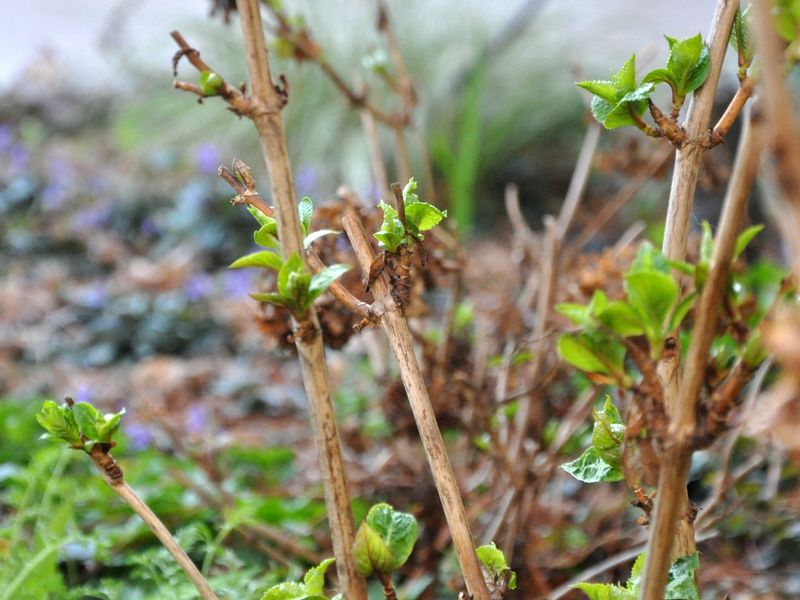
If you like a little breathing room in your gardening schedule, new-wood hydrangeas are your best friends. These forgiving plants take much of the stress out of pruning and reward relaxed gardeners with steady blooms.
Unlike old-wood types, new-wood bloomers form their flower buds on growth that appears in the current season. That fresh growth usually pushes out in mid to late spring, and the flowers follow soon after in early summer.
Because the buds develop on brand new stems, there is no way to accidentally remove next year’s flowers while the plant is resting in winter.
Some well-known examples make this group easy to spot. Smooth hydrangeas, Hydrangea arborescens, include the beloved ‘Annabelle’ and ‘Incrediball’ varieties.
Panicle hydrangeas, Hydrangea paniculata, bring us favorites like ‘Limelight’ and ‘Pinky Winky’. Virginia’s own native smooth hydrangea, Hydrangea arborescens, is a shining example of a new-wood bloomer that thrives in local gardens.
Since these plants build their buds fresh every spring, you can prune them boldly in late fall or early winter once they go dormant, or in early spring before new growth begins.
That timing gives you more flexibility to shape the shrub or cut it back without removing the flower buds that will form on the current season’s growth.
For gardeners who are still learning the ropes, this flexibility is a huge relief. You do not have to memorize a narrow window or worry about ruining the show.
A late-winter trim on a panicle or smooth hydrangea simply encourages strong, healthy new stems that carry big flowers.
This easygoing nature makes new-wood bloomers a great choice for busy folks or beginners. Plant one near your patio, and you can prune whenever it fits your schedule during the dormant season.
Just remember the key difference: new wood means new buds each year. Keep that in mind, and pruning these shrubs becomes one of the simplest jobs in your garden.
4. Giving Your Shrub An Unnecessary Haircut
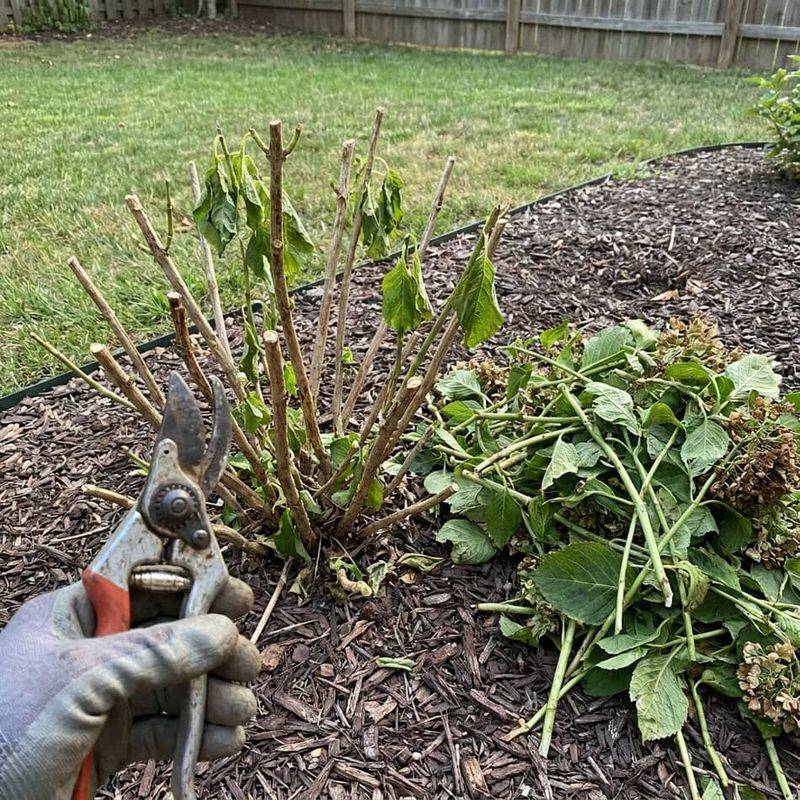
Less is often more with hydrangeas, especially the old-wood types. Reaching for the shears and giving the whole shrub a big buzz cut usually causes more harm than good.
Most hydrangeas actually thrive with very little pruning. When you chop back an established old-wood variety all at once, you strip away many of the flower buds that already formed for next season.
The plant survives just fine, but the blooms take a serious hit.
Good pruning always has a purpose. You might trim to keep the shrub a certain size, tidy up its shape, or clear out branches that are broken or unhealthy.
Cutting simply because it feels like time for a trim is rarely the right move.
For old-wood bloomers, focus your efforts on removing branches that are clearly damaged or diseased, ideally in spring once the plant begins to leaf out and you can see what is alive.
You can also selectively remove older stems at the base when thinning is needed, rather than cutting the entire shrub back at once.
This opens up the shrub, boosts airflow, and encourages fresh, vigorous growth.
Keep in mind that trying to shrink an old-wood hydrangea by chopping it way down often backfires. These plants tend to bounce back to their original height, or even taller, thanks to all that stimulated new growth.
So a heavy cut rarely gives you the smaller plant you wanted.
New-wood bloomers are more forgiving here. You can prune them harder for size and shape in late winter or early spring, since their flowers form on the new stems that follow.
Across the state, the wisest gardeners treat pruning like careful editing rather than a full rewrite. A few thoughtful snips protect blooms, improve health, and keep the shrub looking natural.
Save the dramatic cuts for the plants that can handle them, and your hydrangeas will thank you with fuller displays.
5. Cutting Off Spent Flowers Too Soon
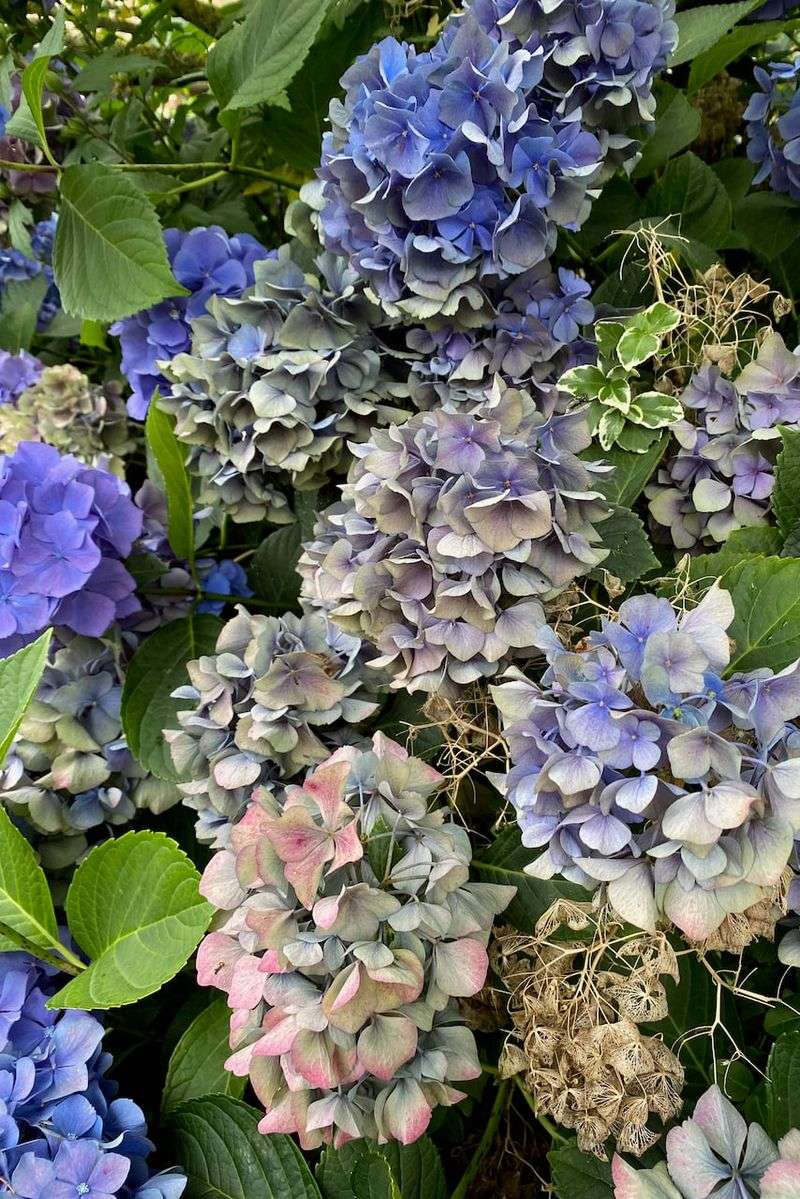
Faded blooms can trick you into thinking a big pruning session is overdue, but that is not always the case. Knowing the difference between spent-bloom removal and structural pruning saves gardeners from a lot of accidental damage.
Spent-bloom removal simply means removing the old, spent flower heads to freshen up the plant’s look. For some reblooming varieties, it can even nudge the shrub to push out another round of flowers.
It is a light, surface-level task, not a major cut.
When you remove the spent flowers an old-wood bloomer, snip only the faded flower back to the first set of healthy leaves, where new buds may already be forming. Cutting too far down the stem is where people go wrong, because that removes the buds meant for next year’s show.
Structural pruning is a completely different job. That involves cutting branches back to control size, reshape the plant, or clear out older, less productive wood.
These two tasks should never be confused, especially on old-wood types where deeper cuts carry real risk.
Think of spent-bloom removal as tidying and structural pruning as remodeling. One is quick and gentle, the other is deliberate and planned.
Mixing them up leads to unnecessary snipping and fewer blooms.
There is also a nice bonus to leaving some faded flowers alone. On varieties with attractive dried heads, keeping the spent blooms through winter adds interesting texture and quiet beauty to a dormant garden.
Frost-dusted flower heads can look downright lovely on a cold morning.
So before you start clipping every brown bloom in sight, ask yourself whether you are just cleaning up or actually reshaping the plant. If it is only about looks, a gentle spent-bloom removal near the top is plenty.
Treat these as separate chores, and you will protect your buds while keeping your shrubs looking neat. That small bit of restraint pays off with a fuller, more colorful display when the next season rolls around.
6. Relying On One Pruning Date
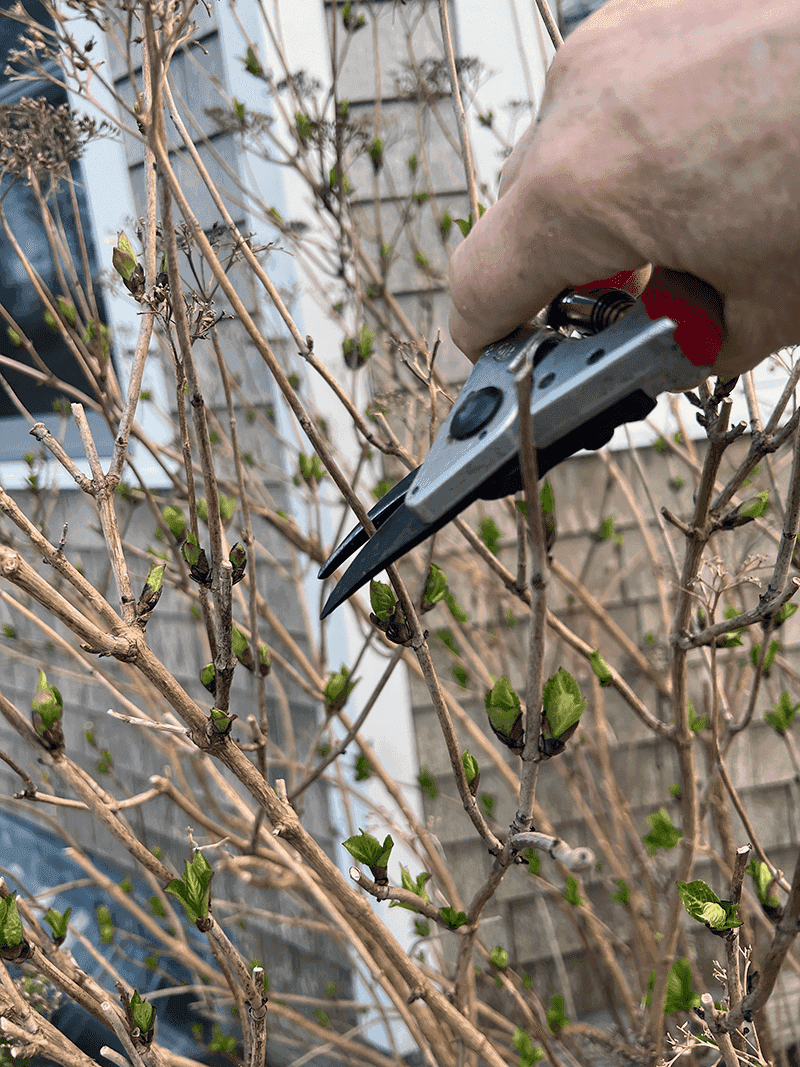
Here is the biggest lesson of all: there is no single magic date to prune every hydrangea. The right timing depends entirely on the type you are growing and how it forms its blooms.
Some Virginia favorites, like bigleaf and oakleaf hydrangeas, flower on old wood. These need pruning right after they finish blooming in summer so their new buds stay safe for next year.
Wait too long, and you lose the flowers.
Others tell a different story. Smooth and panicle hydrangeas, including the state’s native smooth hydrangea, bloom on new wood.
That gives you the freedom to prune in late winter or early spring while they rest, with no risk to future flowers.
Then there are reblooming varieties that flower on both old and new wood. These offer a bit of built-in backup, so a mistimed cut is less painful, but they still bloom best with a little thoughtful trimming after their first flush fades.
The climate adds another layer to think about. The state stretches from cool mountain areas to milder coastal zones, and that range affects how well old-wood buds make it through winter.
A harsh cold snap in the mountains can harm buds that would have been fine near the coast, so where you live matters too.
All of this points to one simple habit worth building: identify your hydrangea before you prune. Figure out the cultivar or at least the general type, and let that guide every cut you make.
If you are unsure, help is close by. The Virginia Cooperative Extension offers reliable local resources, and trusted gardening guides can help you match your plant to the right schedule.
Once you connect your pruning to the plant’s natural rhythm, the guesswork disappears. Your hydrangeas stay healthy, your timing stays right, and your garden fills with the big, beautiful blooms you have been hoping for.