Should You Prune A Desert Rose In September Or Wait Until Spring In Florida
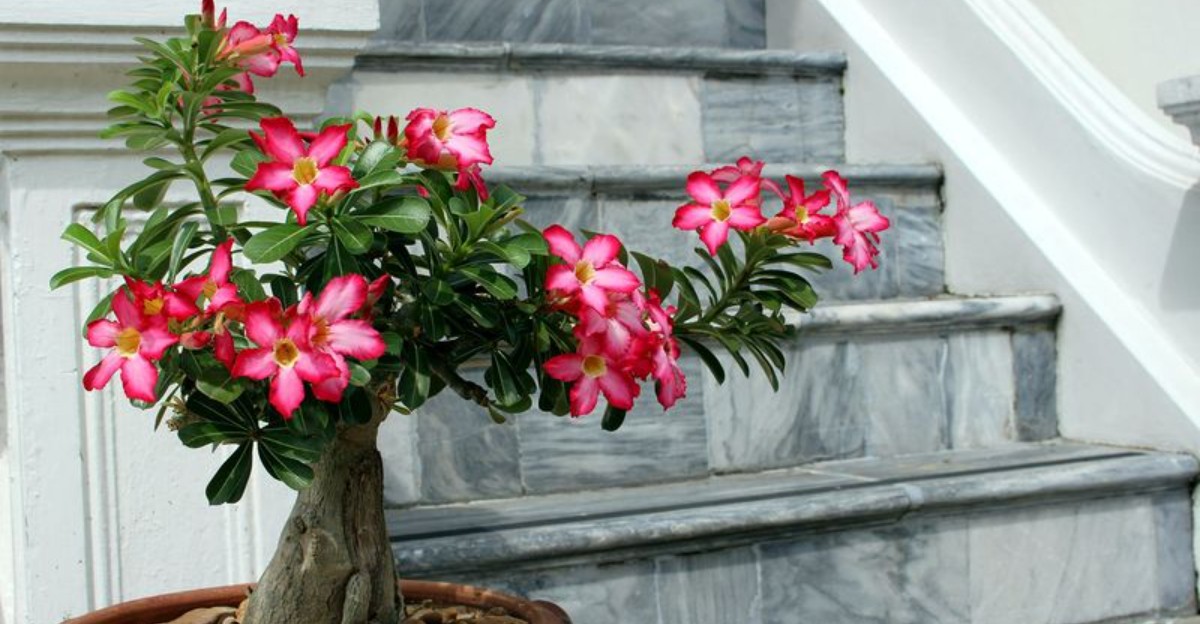
Some plants wear their whole history on the outside, thickening at the base like a small gray elephant leg. Run a thumb across that swollen trunk and you can feel years of stored sunshine packed into one fat column.
Gardeners get a little twitchy as the light shifts in early autumn. Mornings cool off, the patio looks shaggy, and gardeners everywhere, Florida included, want the sharpest tool in the shed just to feel useful.
Timing is a strange sort of magic in the garden. Do one thing in a certain month and you get flowers, do the same thing eight weeks later and you get a sulking pot of sticks.
Meanwhile the calendar on the wall offers no real help at all. The only clock worth trusting in this case belongs to the plant itself.
The Case For A Light September Trim
Ask ten growers about September cuts and you might get ten different shrugs. In warm regions, early fall still carries enough heat for a fat caudex to respond well.
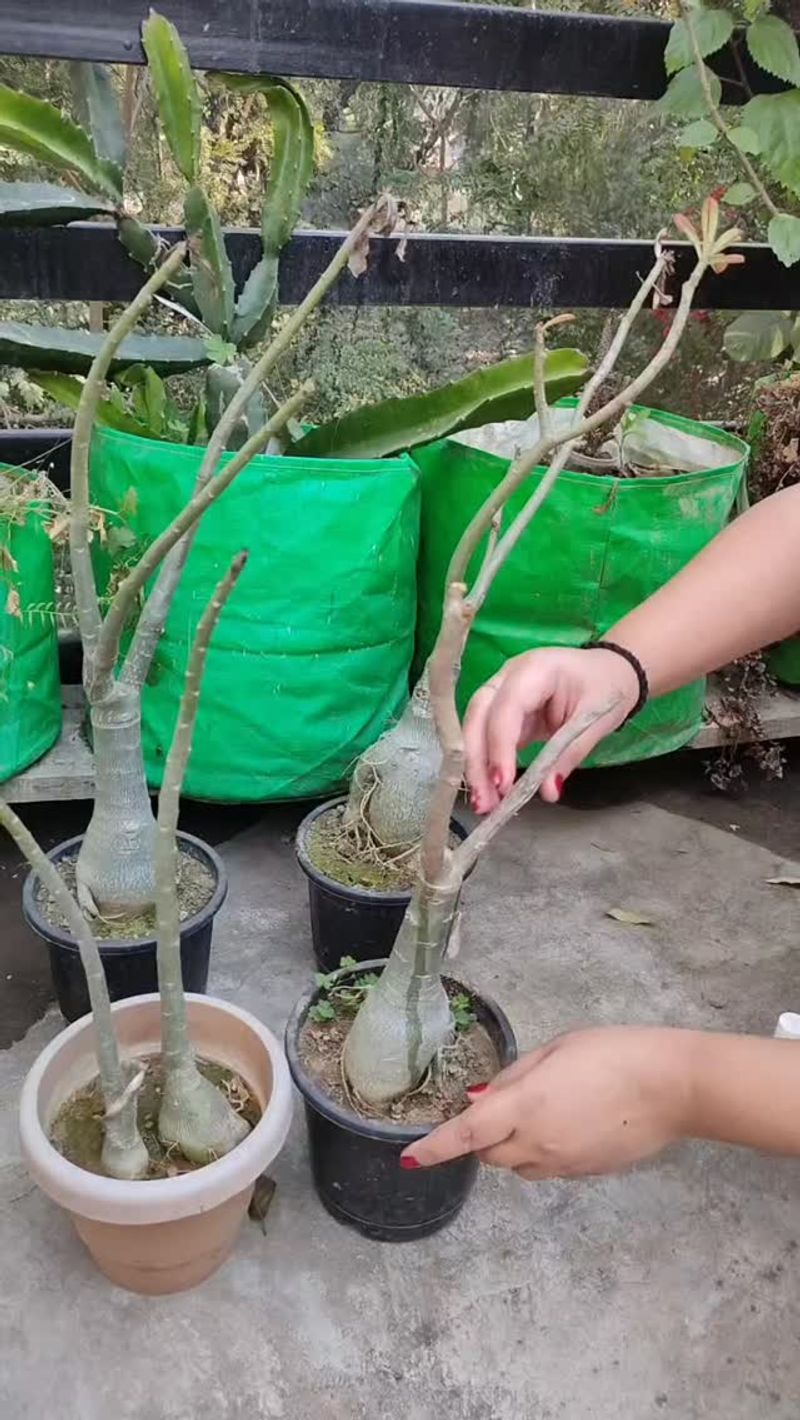
In Florida, Adenium plants push new growth while nights stay above roughly 70 degrees. A snip made in the first week of September can callus over and branch before cool air settles in.
Light shaping now also fixes lopsided pots before they move indoors for winter. Floppy stems that hang over the rim get shorter, thicker, and easier to display.
Airflow gets a boost too. Thinning crowded inner twigs lets breezes pass through, which trims the odds of fungal spotting during humid spells.
Restraint beats ambition in September. Remove around a quarter of the canopy, then step back and admire your work.
Check the forecast before the shears come out. Daytime highs in the eighties, common across Florida through late summer, give wounds a real chance to seal quickly.
Florida growers, along with those in Arizona and south Texas, often manage this with ease. Their long, mild autumns hand the plant six extra weeks of gentle recovery time.
Blooms can even follow a September trim in those spots. New tips form flower buds, and you may see extra blooms before winter sets in.
One caution deserves a mention. Plants headed for a chilly windowsill in October gain little from fresh cuts.
Fresh wounds plus cool, damp air make an awkward pairing. Hold your enthusiasm if your nights already dip into the fifties.
Solid Reasons To Wait Until Spring
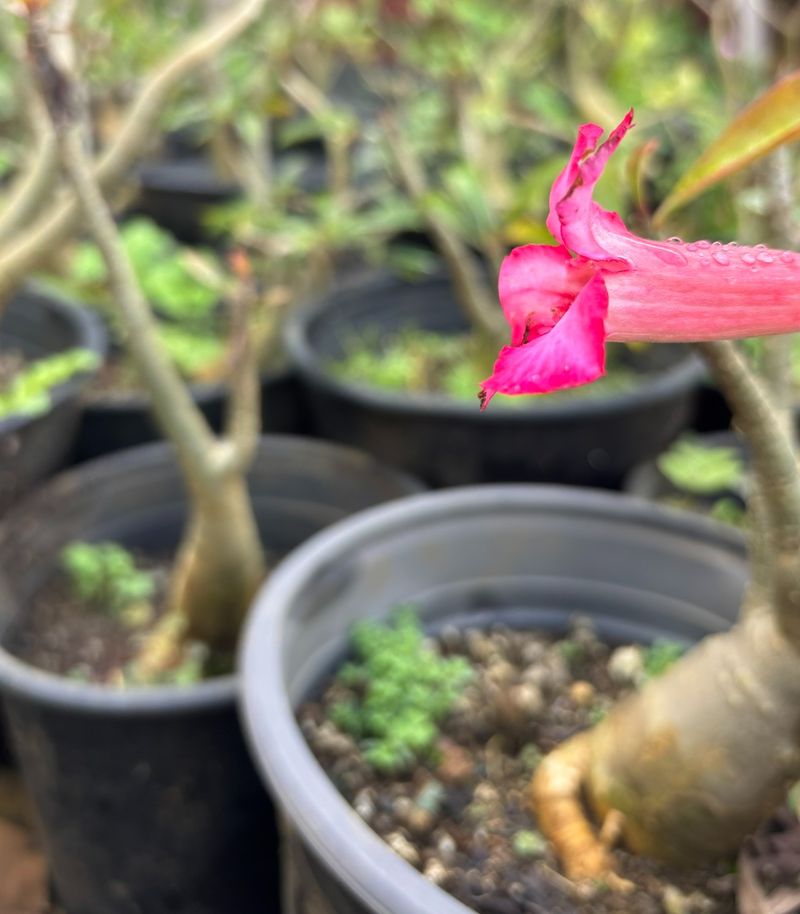
Patience has a quiet payoff with these swollen-trunk succulents. Cuts made in March or April heal fast, because the plant is racing toward its growing season.
Sap flows freely then, and calluses form within days. Buds break behind each cut within two or three weeks.
September carries a hidden cost in cooler areas. Every branch you remove is a branch that stored food for the resting months.
Leaves and stems act like a pantry. Trimming that pantry right before rest leaves the plant with fewer reserves.
Spring cuts also let you see the damage winter caused. Soft tips, shriveled twigs, and blemished bark become obvious once temperatures climb.
Your Florida Garden Changes Every Week. Your Plan Should Too.
Gardening in Florida changes quickly throughout the season. Every Friday you’ll receive a simple weekly plan showing exactly what to plant, prune, fertilize, harvest, and protect so you never miss the right timing.
Waiting means you remove trouble spots and reshape in one session. Fewer wounds, less guessing, and a much better looking plant by June.
Flower timing works in your favor as well. Adenium blooms appear on fresh growth, so a spring haircut sets up a summer full of color.
Nurseries lean this way for good reason. Commercial growers schedule big cutbacks between late February and May, when greenhouse warmth is climbing.
If you feel torn, the calendar can decide for you. Mark the week after your last frost date and circle it.
That single note removes the guesswork next year. Your plant will thank you with thicker branches and a rounder shape.
Your Climate Zone Shapes The Decision
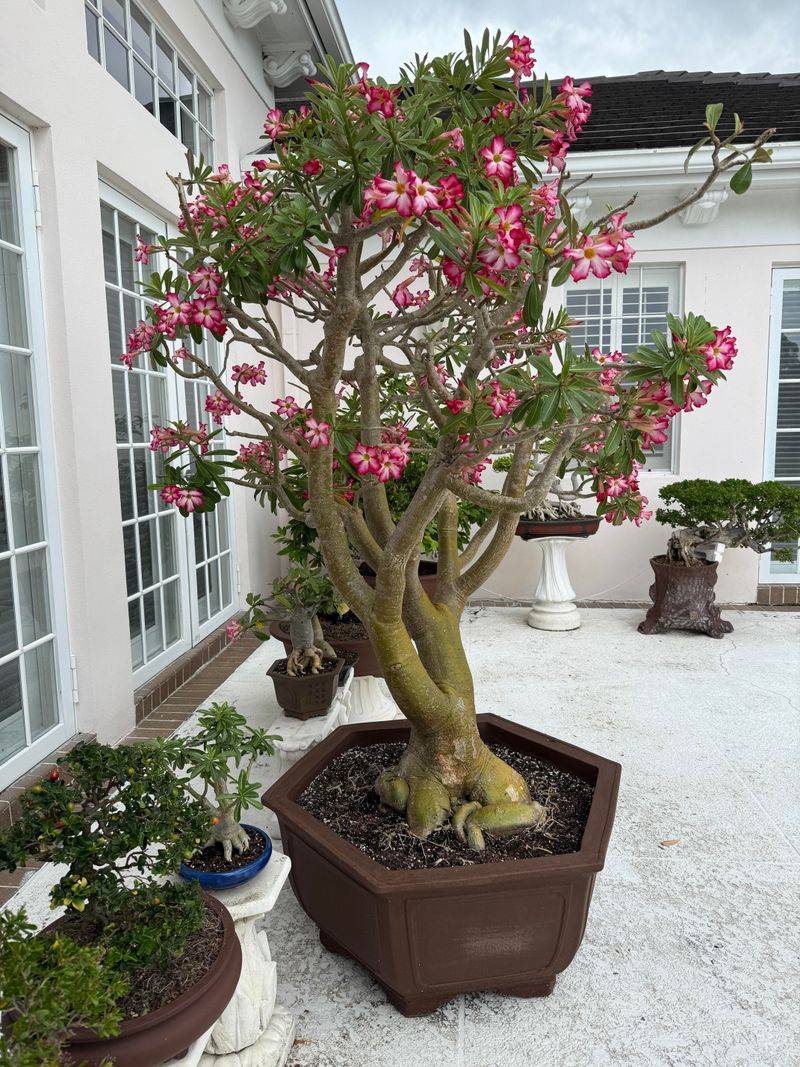
A grower in Florida and a grower in Ohio are playing two different games. Same plant, wildly different calendars.
Zones 10 and 11, which cover much of south and coastal Florida, stay warm deep into autumn. September there behaves like midsummer further north, so trimming fits comfortably.
Zone 9 sits in the middle. Early September works, though the last two weeks start feeling risky as nights cool.
Anything colder means container life and an indoor winter. Those plants slow way down once daylight shrinks, no matter what your thermostat reads.
Indoor conditions rarely match a bright patio. Lower light plus fewer hours means slower healing at the cut.
A soil thermometer tells more truth than a hardiness map. Roots stay active while soil sits above about 65 degrees.
Track your local first-frost date too. Give the plant at least six warm weeks between the trim and that date.
Humidity plays a quiet role. Muggy air slows the drying of fresh cuts, which invites soft spots on the stub.
Coastal gardeners might dust cuts with cinnamon or sulfur powder. Both help the surface dry and firm up.
Greenhouse owners get extra freedom here. Heated glass stretches the season, so September and October cuts still perform nicely.
Match your habits to your actual weather, not to a video from another state. Local reality beats internet confidence most of the time.
Everyone else can simply pencil in spring. The wait costs nothing but a few months of looking at a shaggy plant.
Signs The Plant Is Ready For The Shears

Plants send signals, and this one is chattier than most. Read the leaves, stems, and trunk before you make any decision.
Firm, glossy foliage points to an active plant. Active plants handle cuts with ease.
Yellowing leaves that drop on their own tell a different story. Rest is starting, so put the tool down.
Look at branch tips next. Plump, green growth means sap is moving and healing will be quick.
Woody, hollow, or wrinkled tips suggest the plant is coasting. Cutting into coasting wood leaves stubs that sit there for months.
The caudex offers its own report. A firm, tight base means stored water and energy are in good supply.
Squishy patches near the soil line change the plan entirely. Sort out watering and drainage before touching the canopy.
Flower buds are worth a look as well. Trimming a stem loaded with buds trades color for shape.
Waiting a few weeks lets the show finish first. Then you can reshape the plant without regret.
One more tell involves growth speed. In Florida’s long growing season, if new leaves appeared within the last two weeks, the plant is still running warm.
That momentum is your green light. Stalled growth is your plant politely asking you to wait.
Keep a small notebook by the pot. Two lines a month build a record that beats memory.
Patterns show up fast in those notes. Next September, you will know exactly what your plant does.
Light Shaping Versus A Hard Cutback
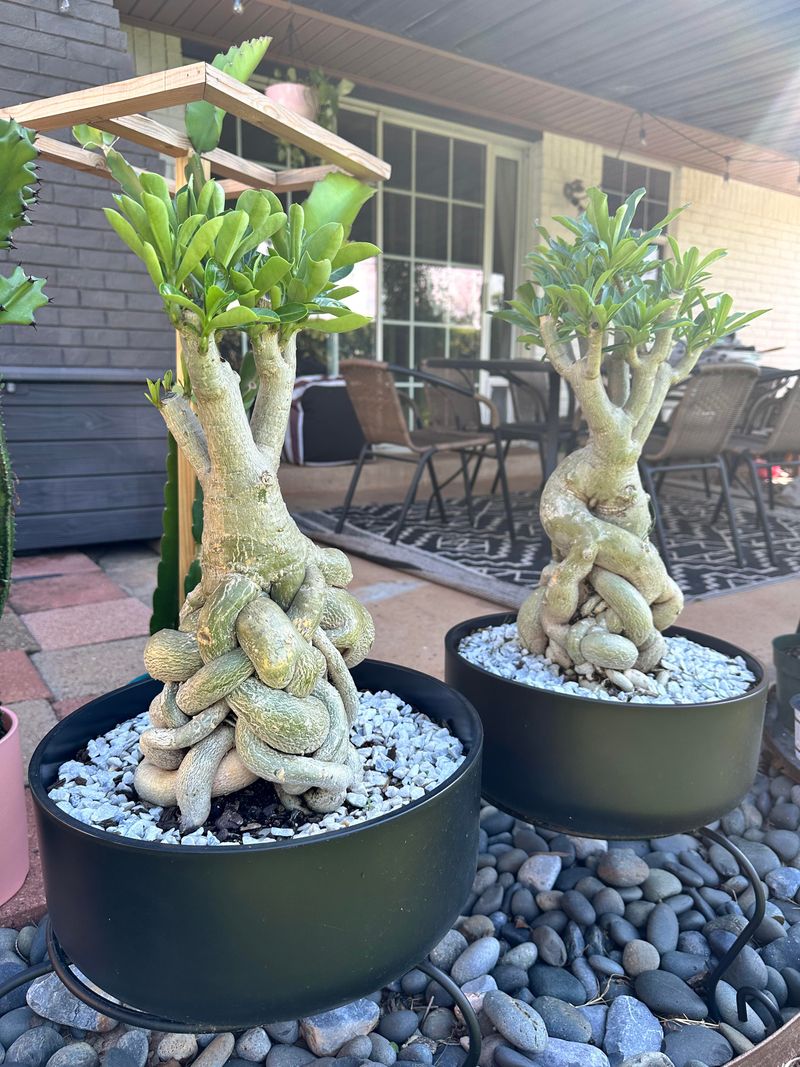
Not all trims belong in the same category. Snipping two wayward stems is nothing like reducing a plant by half.
Light shaping means removing tips, crossing twigs, and the odd awkward branch. Such work is low risk in early September.
A hard cutback reshapes the whole structure. Branches come off near the caudex, leaving short stubs and a bare silhouette.
Big jobs like that belong to spring. The plant needs long warm days to push replacement branches.
Think of it as the difference between a haircut and a buzz cut. One grows out in weeks, the other takes a season.
Cut placement matters in both cases. Snip just above a node or a small bump where a bud waits.
Each cut usually returns two or three new shoots. That math is how growers build those chunky, umbrella-shaped canopies.
Angle the blade slightly so water runs off the stub. Flat cuts hold droplets, and droplets invite soft rot.
Resist the urge to even out every branch. Slight asymmetry looks natural and keeps the plant interesting.
Photograph the plant before you start. A picture on your phone stops you from over-trimming in the moment.
Set the trimmings aside if you want more plants. Adenium cuttings can root in dry, gritty mix with patience and warmth.
Fall is a fine time for the small stuff, especially in Florida where the season runs long. Bigger ambitions can simmer until the days grow long again.
Clean Tools And Careful Sap Handling
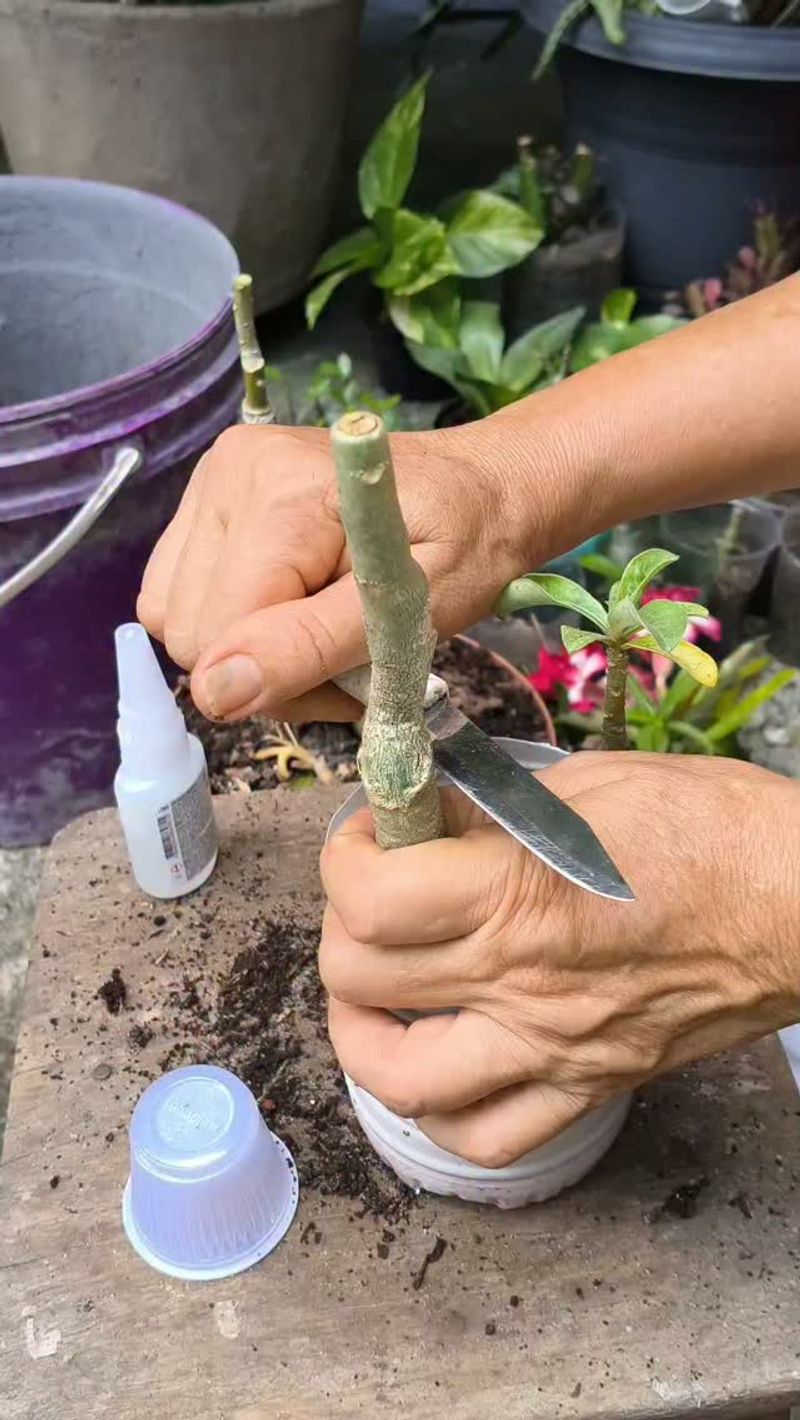
Here is the part most tutorials rush past. The milky sap inside these stems is genuinely irritating, and it deserves respect.
Gloves are step one. Nitrile or garden gloves keep the sticky stuff off your skin.
Eye protection sounds fussy until sap flicks upward. A quick splash near the eye ruins an otherwise pleasant afternoon.
Keep pets and small children out of the work zone. Chewed trimmings can upset a stomach quickly.
Sharp blades do half the job for you. Bypass pruners, a craft knife, or small shears all work if the edge is keen.
Wipe blades with an isopropyl solution between plants. That habit stops problems from hitching a ride.
Sap tends to run for a minute or two after each cut. Blot it with a paper towel, then let the stub air dry.
Some growers dab cuts with cinnamon powder. Others prefer garden sulfur, and both help the surface firm up.
Skip the water for a few days afterward. Dry soil and dry wounds go together nicely.
Wash your hands and forearms when the job wraps up. Then rinse tools and dry them before storage.
Toss the trimmings in the compost or a bag. Leaving them on the patio invites curious paws.
None of these steps take long. Ten minutes of prep saves a week of grumbling.