Colorado’s Official State Insect Is Quietly Laying Eggs On Oak Twigs Right Now
Purple flickers across your yard, then disappears before you can blink. This creature prefers deep shade, avoiding open sunlight all summer. Scrub oak thickets hide its secret, pressed tight against rough bark.
Colorado names this insect an official state symbol, though few notice. Wings the shade of dusk make it nearly impossible to spot. September changes everything, pushing this quiet resident toward its final task.
Cold weather forces a race against time before winter settles in. Twigs matter now, replacing the flowers that defined its whole summer. Eggs smaller than a pinhead get pressed directly into bark crevices.
Careless pruning could disturb a nursery you didn’t know existed. Your own property might already shelter this rare Colorado native.
Specific knowledge changes how you view your favorite backyard trees. Curiosity alone will not protect what you cannot recognize or name. You cannot look away now that you know what hides there.
A Purple Flash In The Foothills
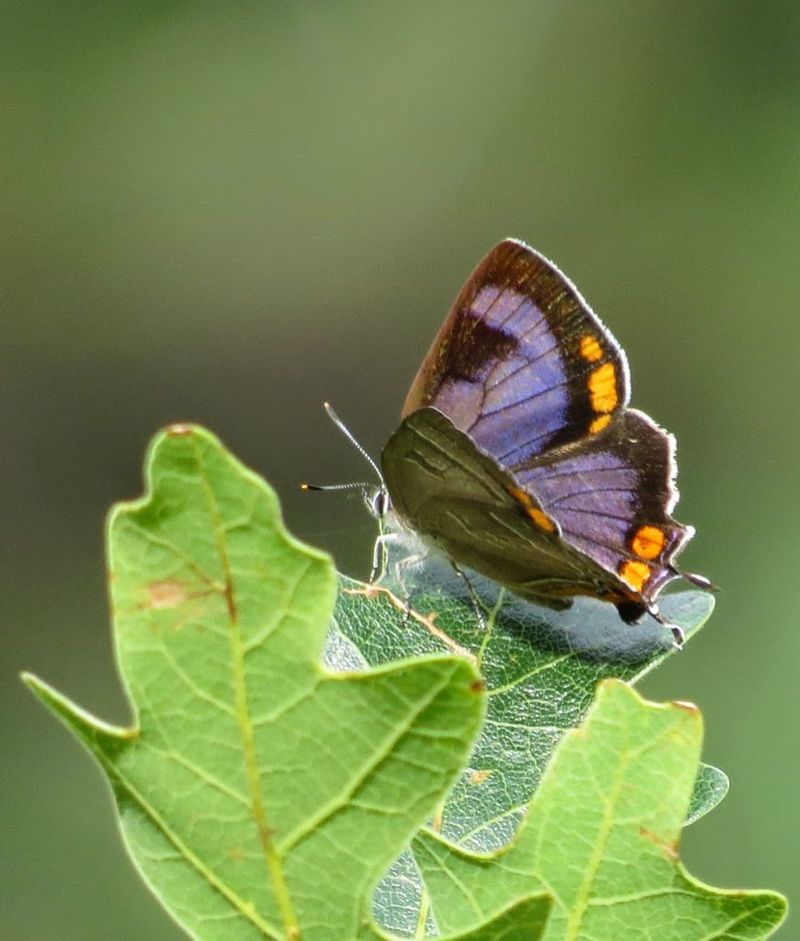
Back in 1996, a group of fourth graders from Wheat Ridge pushed the Colorado legislature to name an official state insect. Their pick was the Colorado hairstreak, and it won.
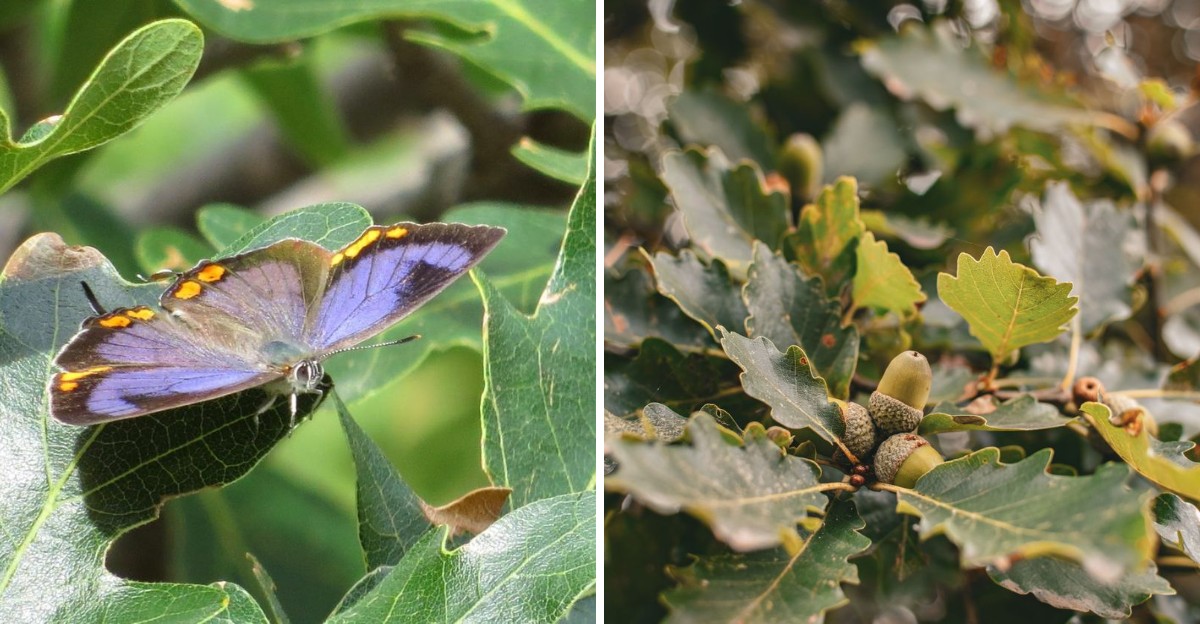
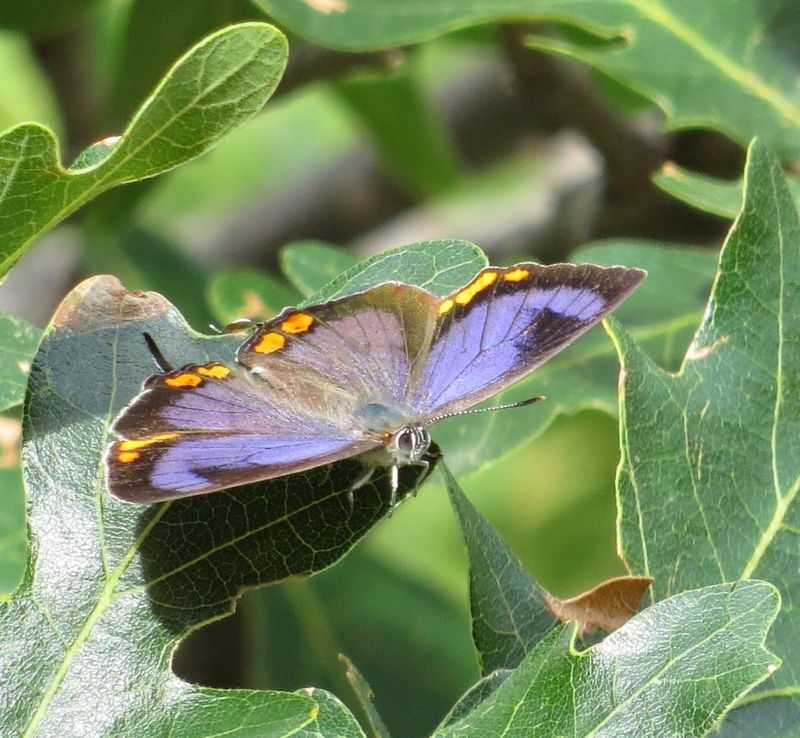
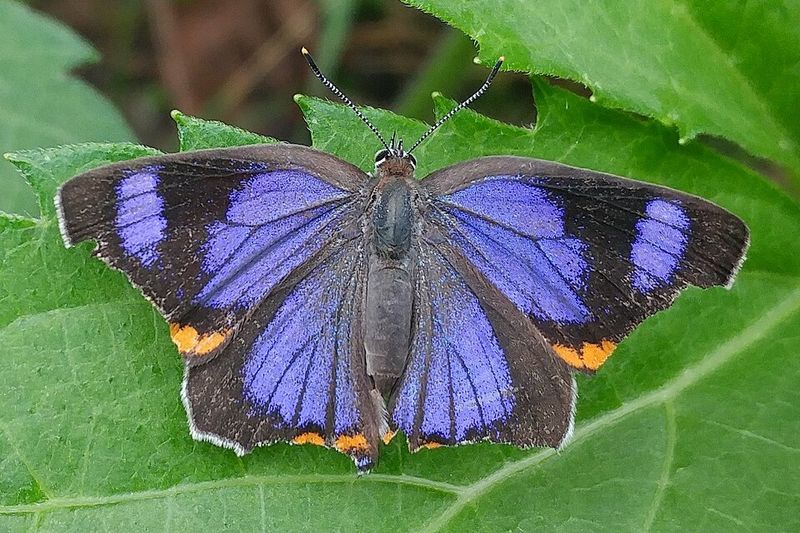
Wings on this butterfly stretch about an inch and a quarter across, small enough to miss entirely. The upper surfaces glow deep violet, rimmed with black borders and dabs of orange near the tail.
Underneath, the story changes. The wings turn silvery gray with thin dark lines, which makes a resting butterfly look like a scrap of lichen or a weathered leaf.
Two hair-thin tails trail off the hindwings, and that detail gives the whole hairstreak family its name. Paired with a dark eyespot, the tails create a fake head that fools hungry birds into pecking the wrong end.
Behavior sets this species apart from the sun-loving swallowtails people expect. Colorado hairstreaks prefer shade and often perch on the underside of leaves during the hottest hours.
Adults sip very little nectar. Instead they take moisture from damp soil, sap flows, and occasionally the honeydew that aphids leave behind on oak leaves.
Range covers the western and southern parts of the state, roughly 6,000 to 8,500 feet, wherever scrub oak grows thick. Utah, New Mexico, and Arizona share the butterfly too, though Colorado claimed it first.
Flight season runs from June into early September, which means the ones still fluttering around now are the last of the year.
The Only Address That Works
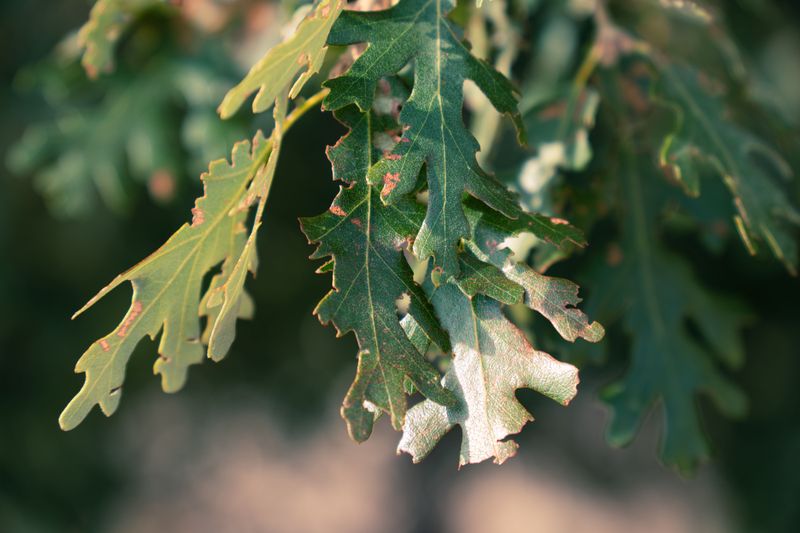
Picky eaters exist in the insect world too, and this butterfly is one of the pickiest. Its caterpillars feed on Gambel oak, sometimes called scrub oak, and very little else.
Gambel oak covers huge stretches of Colorado’s foothills, forming those low tangled thickets hikers push through on the way up a trail. Landowners often treat it as a nuisance shrub.
That same nuisance shrub is a critical resource for the state insect. Removing the oak takes away local sites for laying eggs, feeding, and growth.
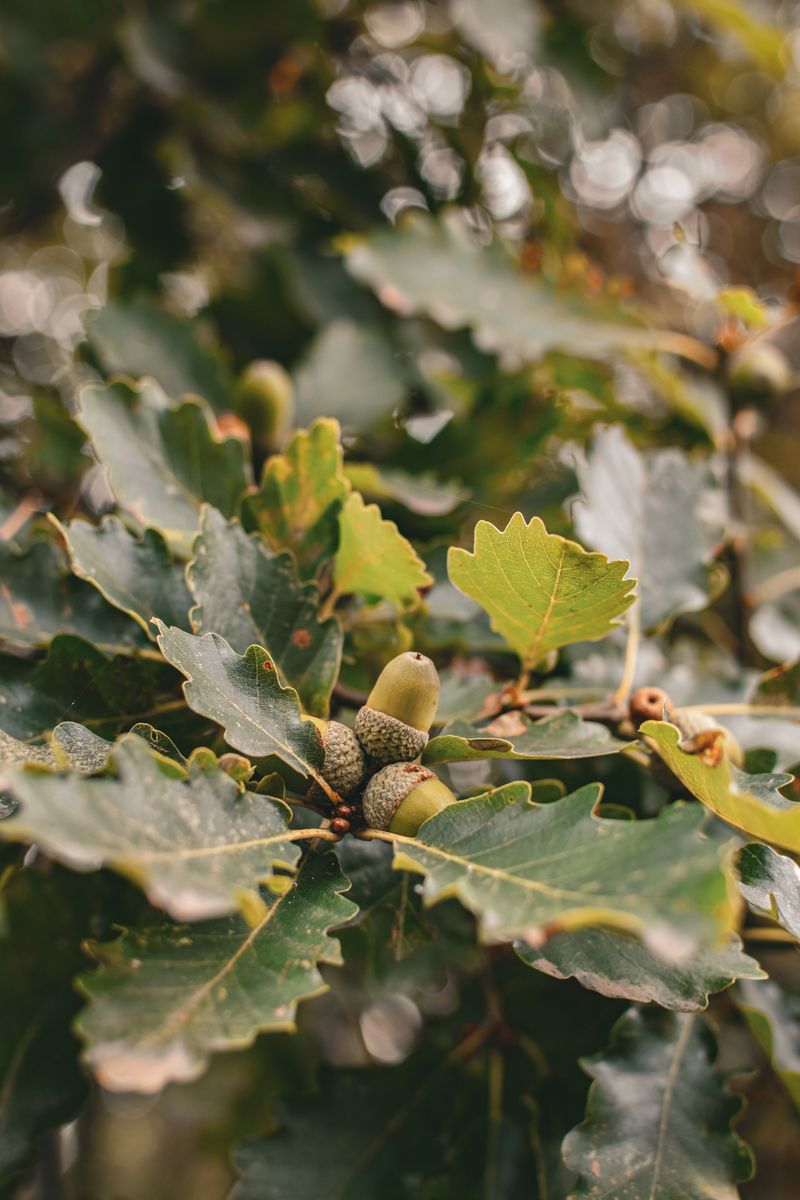
Leaves on Gambel oak have rounded lobes and a leathery feel, turning bronze and russet in October. The plants spread by underground roots, so a whole hillside patch may actually be a handful of enormous clones sharing one root network.
Your Colorado Garden Changes Every Week. Your Plan Should Too.
Gardening in Colorado changes quickly throughout the season. Every Friday you’ll receive a simple weekly plan showing exactly what to plant, prune, fertilize, harvest, and protect so you never miss the right timing.
Age matters more than height here. Some Gambel oak clones in Colorado may be centuries old, spreading slowly by root long before the forests around them took hold.
For gardeners, the practical takeaway is simple. If scrub oak already grows on your property, leaving a section untrimmed gives the butterfly a place to continue.
Native plant nurseries along the Front Range carry Gambel oak in containers, and fall planting works well while soil stays warm. Give it a dry, sunny slope and skip the heavy watering once roots settle.
Deer browse it, birds nest in it, and squirrels stash the acorns. Adding one shrub feeds far more than a single butterfly.
Right Now, Eggs Are Going Onto Bare Twigs
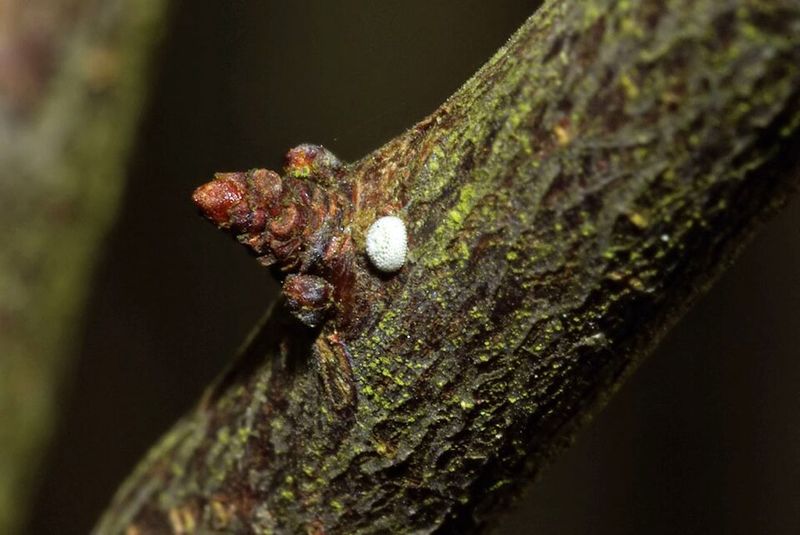
Here is the part happening as you read. Female hairstreaks finishing their flight season are placing eggs directly on Gambel oak twigs, not on the leaves.
Each egg is tiny, pale green to whitish, and shaped like a squat button with a finely textured surface. Under a hand lens it looks like a miniature sea urchin. Under a hand lens it looks like a miniature sea urchin.
Placement is deliberate. Females tuck eggs into bark cracks, around dormant buds, and at twig junctions where wind and weather have less reach.
Those eggs will not hatch this year. They sit through October frosts, December snow loads, and February wind, waiting for spring bud break.
That long wait is why the eggs are laid on wood rather than foliage. Leaves drop in autumn, and any egg riding one would end up buried in the duff, far from the tender new growth caterpillars need.
Timing lines up neatly. When Gambel oak buds swell in May, tiny caterpillars emerge within inches of the freshest, softest leaves available.
Finding an egg takes patience and good light. Scan the outer twigs of a mature scrub oak at eye level, focusing on the rough spots near buds.
Bring a magnifier if you have one, and resist the urge to snap the twig off for a closer look. Photograph it instead, note the date, and check back the following spring. Watching the same twig across seasons turns a shrub into a story.
A Full Year Squeezed Into One Oak Shrub
One generation per year is the rule for this species, which makes each stage count. There is no second brood to make up for a rough season.
Eggs overwinter on the twigs from late summer until spring. Snow cover actually helps by insulating them from the harshest temperature swings.
Caterpillars hatch in May and are strange little things, flattened and sluglike rather than the fuzzy shapes children draw. Their green bodies match young oak leaves so closely that they practically disappear.
Feeding lasts several weeks. The larvae chew on fresh foliage, sometimes tucking into rolled leaves or catkins for cover during the day.
Ants occasionally show interest in hairstreak caterpillars, drawn by sugary secretions from special glands. In some hairstreak species this becomes a real partnership, with ants providing protection in exchange for the snack.
Pupation happens in June, usually in leaf litter or a crevice at the base of the shrub. The chrysalis is mottled brown and easily mistaken for a bit of bark.
Adults emerge in late June and July. Some individuals live several weeks, a fairly long stretch for a butterfly this size.
Cool shaded thickets help them last. Adults spend hot afternoons resting motionless under leaves, conserving energy rather than burning it.
By September the cycle closes with the next batch of eggs. That single yearly rhythm ties the butterfly tightly to the health of its oak patch.
Why Your Pruning Shears Matter More Than You Think
Routine yard cleanup can pose a problem. Autumn is when many homeowners clean up shrubs, and scrub oak often ends up at the top of the trim list.
Cutting oak twigs between September and April removes the eggs along with the branches. The butterfly does not get a do-over until the following year.
A better approach is to hold off on major oak pruning until late June, after caterpillars have finished feeding and moved on. Light shaping for safety or access is fine anytime.
Fire mitigation adds a real complication, especially in the wildland urban interface. Defensible space rules generally take priority over habitat concerns.
Middle ground exists though. Thin oak near the house as guidelines suggest, then leave the outer sections of the property in thicker, undisturbed stands.
Leaf litter deserves a mention too. Pupae rest in the duff beneath the shrubs, so raking everything down to bare soil removes shelter along with the leaves.
Broad-spectrum insecticide sprays on oak affect caterpillars right along with whatever the spray was aimed at. Spot treatments and targeted timing reduce that overlap considerably.
Neighbors matter as well. A single yard helps, but connected oak patches across several properties give the population room to move and recover after a bad winter.
Talk to your HOA if scrub oak removal keeps coming up. Mentioning that the shrubs host the official state insect may help build support for leaving them in place.
Spotting One Before The Season Wraps Up
Late season sightings are possible, though the window is closing fast. A few worn adults linger into the first half of September, especially at lower elevations.
Shade is your best clue. Skip the open meadows and walk the edges of oak thickets where the light filters through unevenly.
Morning and late afternoon tend to produce more movement than midday. During peak heat, adults sit tight beneath leaves and barely budge.
Watch for a small dark shape that flickers purple only when it banks. Perched with wings closed, it reads as plain gray and blends right into the branches.
Front Range foothill parks with dense scrub oak at the right elevation are worth a look, along with Western Slope areas near Grand Junction and the San Juans.
Elevation in the mid to upper foothills, wherever scrub oak grows dense, is the sweet spot. Bring close-focusing binoculars if you have them. The butterfly is small enough that eight feet away can feel like eighty.
Logging sightings on iNaturalist gives researchers real data about range and timing, and it takes about thirty seconds. Photos with a date and location are genuinely useful.
If September slips by without a sighting, mark next July on the calendar. Meanwhile, the eggs on those twigs are already beginning the next generation.