The Large Black And Yellow Spider Building Webs Across Texas Garden Paths In September Won’t Hurt You
There is a particular kind of September morning in Texas when the air finally feels a couple of degrees kinder and the mockingbirds get chatty. Coffee in one hand and pruners in the other, you head down the garden path with big plans for the okra.
Then something invisible brushes across your forehead, and coffee ends up airborne before seven in the morning.
Your pulse settles back down, and you notice sunlight catching a wheel of silver threads strung between the fence post and the tomato cage. Dew beads along every spoke like rows of tiny glass buttons.
Texas gardens hand out small surprises like this every fall, right alongside the last stubborn peppers and a fine crop of fire ant mounds. The broom can stay in the shed a while longer.
Argiope Aurantia Is Weaving That Web In Your Garden
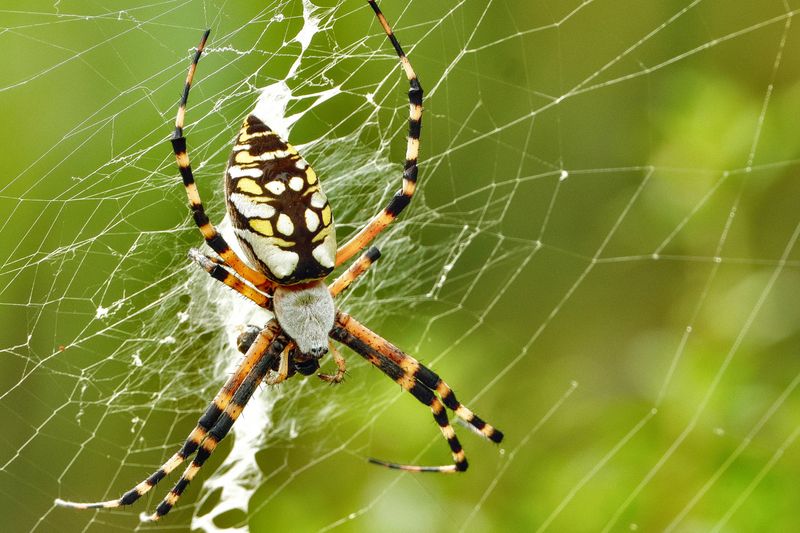
Walk out to the tomato bed at sunrise, stop short, and there she hangs at eye level. That palm-sized spider is almost certainly the yellow garden spider, known to scientists as Argiope aurantia.
Texans also call her the writing spider, the corn spider, or simply the black and yellow garden spider. All those nicknames point to the same orb weaver that turns up in yards from Amarillo down to Brownsville.
Her body can stretch past an inch, and her long legs make her look far bigger than that. Size is exactly what startles people, since nothing else in the flower bed looks quite so dramatic.
Despite the bold coloring, she has little interest in people and would rather drop out of sight than confront a gardener. Her fangs are built for small insects, not for defending territory against humans.
She builds a wheel-shaped web, sits head-down in the middle, and waits for grasshoppers and flies to blunder in. That web can span two feet across, which is why it seems to block the entire path.
Most encounters end with a startled human backing up and the spider staying right where she was. She is one of the most useful residents your garden will host all season.
Gardeners who learn her name tend to relax about the web across the gate. Recognition turns a jump scare into a small piece of backyard wildlife watching.
Give her a wide berth for a few weeks and the show wraps up on its own. Cool weather arrives, and the giant web quietly disappears from the walkway.
Field Marks That Make Identification Easy
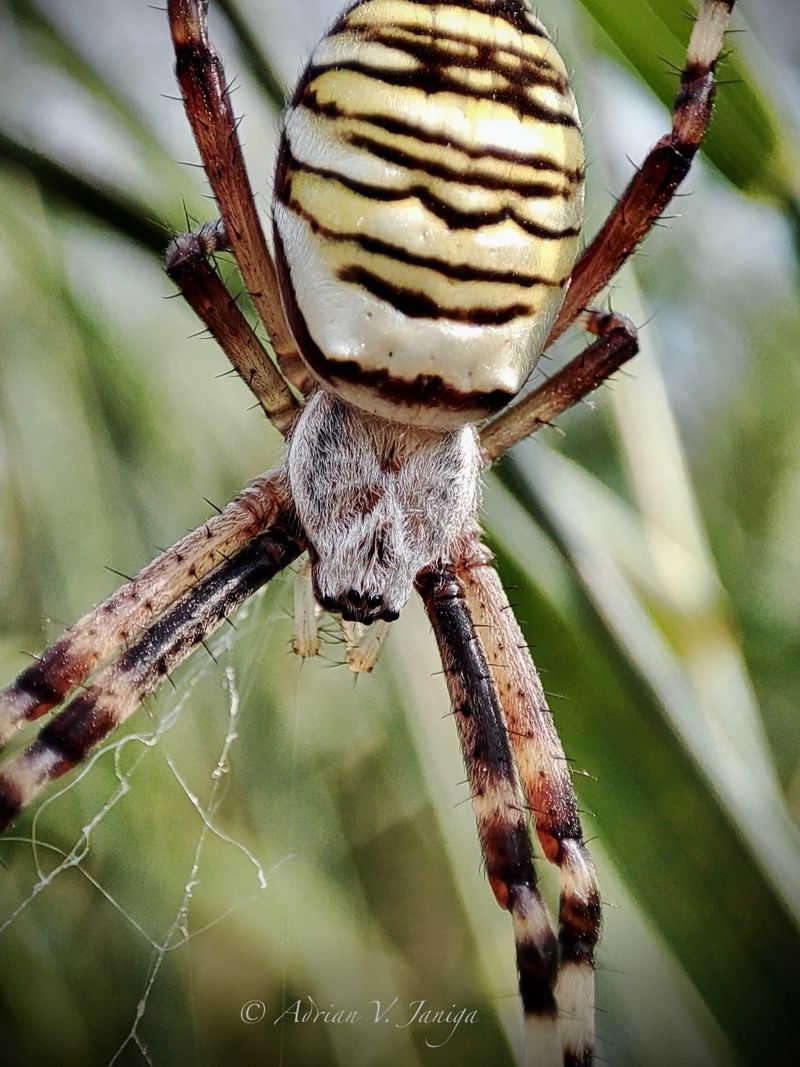
The abdomen tells you most of what you need to know. It is shaped like a rounded egg, glossy black, and splashed with bright yellow patches that look hand-painted.
Legs come next, banded in black and reddish orange closer to the body. She holds them in pairs, which makes her look like she has four long legs instead of eight.
The head region, called the cephalothorax, wears a coat of fine silvery hairs. That silver patch is a reliable clue when the yellow markings vary from one spider to the next.
Your Texas Garden Changes Every Week. Your Plan Should Too.
Gardening in Texas changes quickly throughout the season. Every Friday you’ll receive a simple weekly plan showing exactly what to plant, prune, fertilize, harvest, and protect so you never miss the right timing.
Females are the ones you notice, measuring roughly one to one and a half inches in body length. Males are tiny by comparison, closer to a quarter inch, and they linger at the edge of her web.
Posture helps too, since she rests head-down at the center with her legs spread wide. Very few Texas spiders sit in that exact pose at that exact size.
Look at the web shape as well, a classic wheel with spokes and a spiral of sticky silk. Sheet webs and funnel webs belong to entirely different spider families.
Color can fade a bit on older individuals or brighten after a fresh molt. The banded legs and silver head stay consistent enough to confirm your guess.
Snap a photo from a comfortable distance if you want a second opinion. County extension offices across Texas answer identification questions like this all the time.
Late Summer Growth And The September Size Surprise
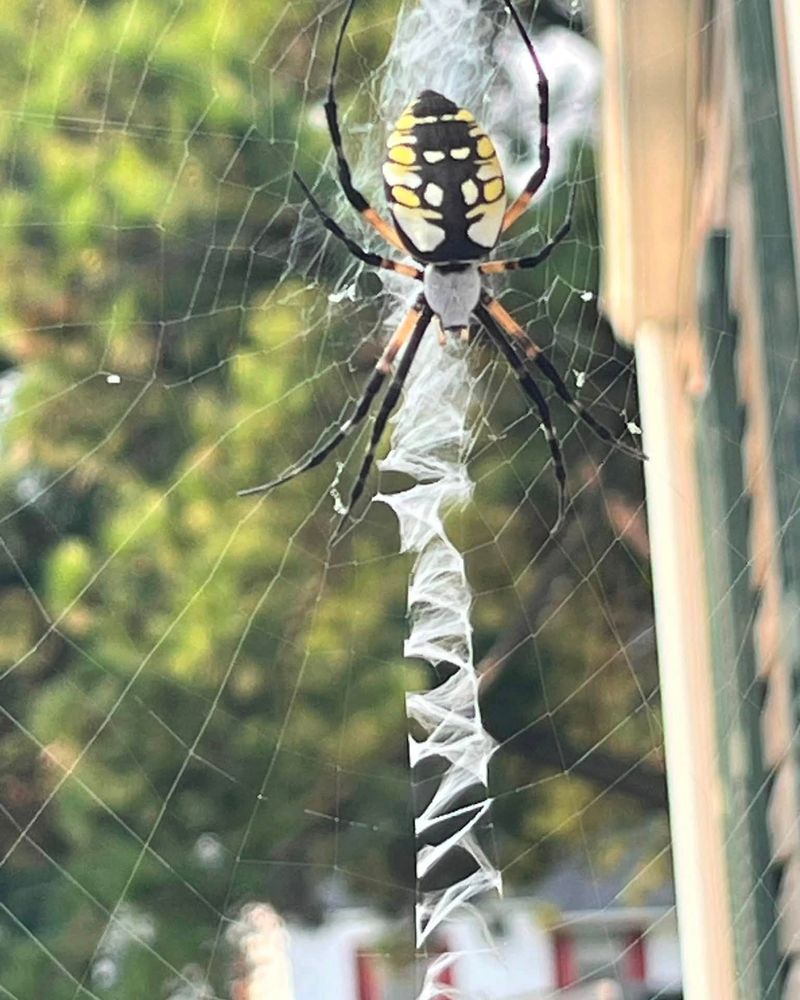
Spiderlings hatch inside the egg sac in late summer, spend the winter dormant, and emerge in spring no bigger than a grain of rice. By September those survivors have eaten their way to full size.
Growth happens through molting, where she sheds her old outer skin and emerges slightly larger. Each molt adds noticeable bulk during the warm, insect-rich months of a Texas summer.
August and September also bring peak grasshopper and cricket numbers across the state. Plenty of food means the biggest webs and the boldest-looking spiders appear right at the end of the season.
Mating takes place in late summer, which is another reason activity seems to spike. Males wander in search of females, and females settle into prime spots for egg laying.
Prime spots usually mean sunny gaps between shrubs, fence corners, or the opening between two okra plants. Unfortunately, a garden path is exactly the kind of open flyway she prefers.
Timing explains the sudden appearance far better than any invasion story. She was there in June, just small and tucked out of the way.
Gardeners in South Texas often see her stretch a few weeks longer than folks up in the Panhandle. Milder autumns keep insects flying, and she keeps working.
First strong cold fronts change the picture across most of the state. Adult females fade from the garden once their egg sacs are finished.
So the giant web on your walkway is a seasonal event with a clear end date. Marking that on your mental calendar makes the surprise much less alarming.
The Zigzag Silk Ribbon In The Web Center
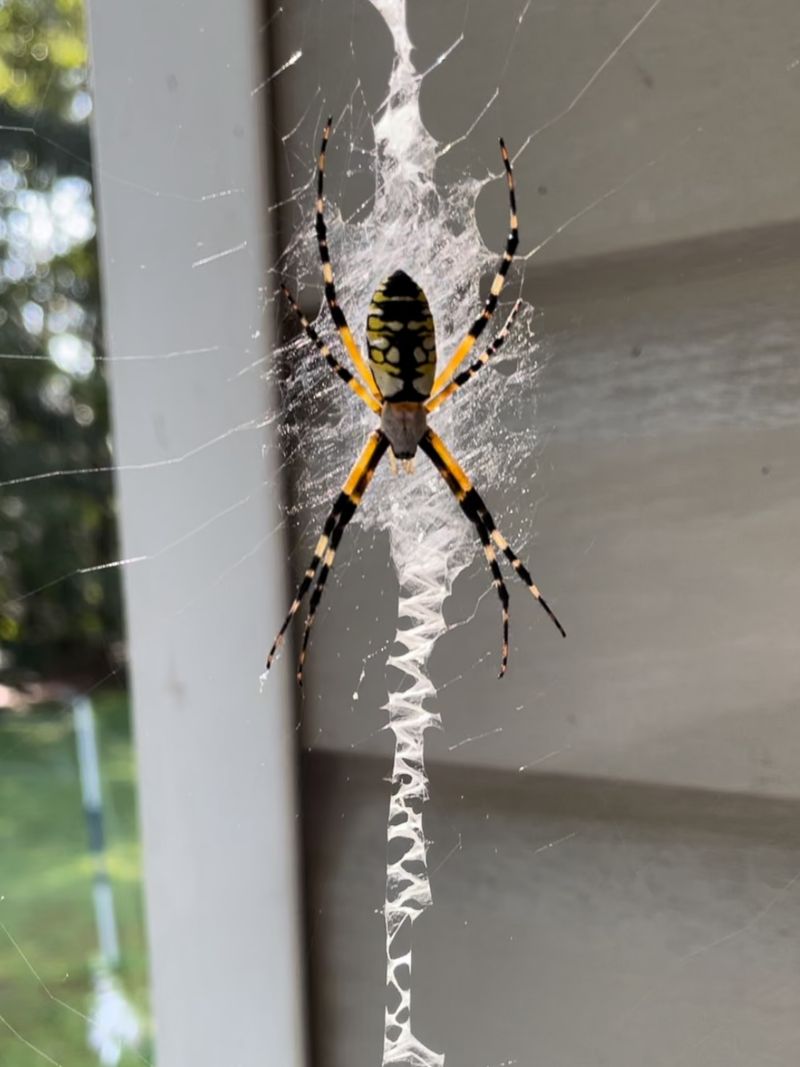
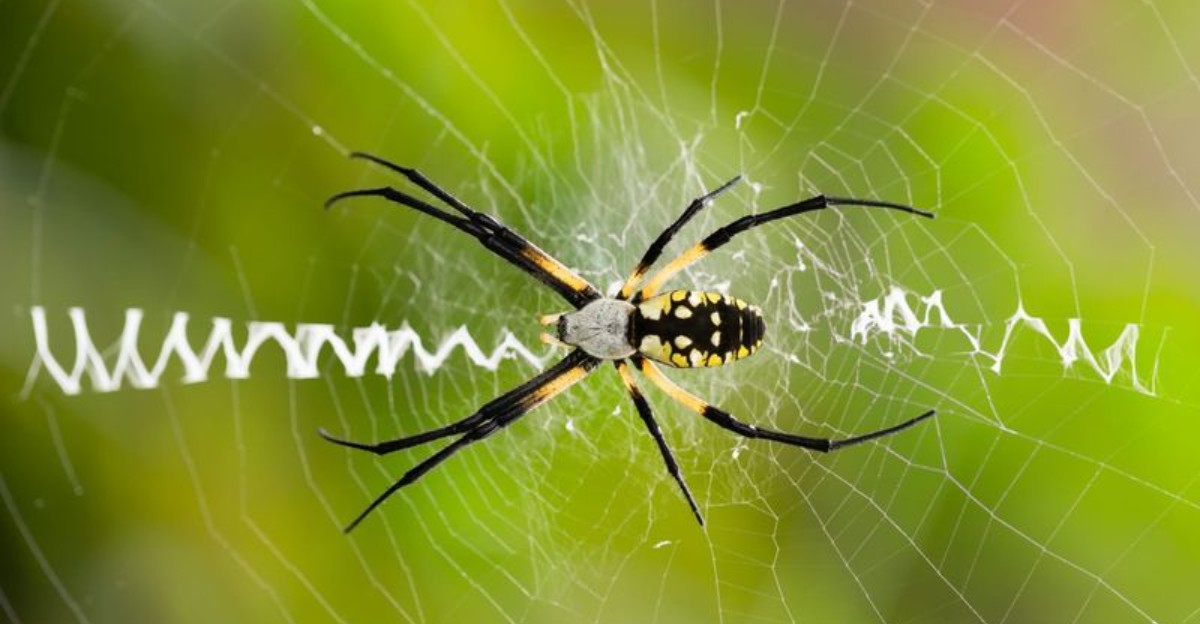
That thick white zigzag running down the middle of the web has a proper name, the stabilimentum. It looks like careless stitching, and it is one of her signatures.
Scientists have argued about its purpose for well over a century. Leading ideas include warning birds away from the silk, attracting insects with ultraviolet reflection, and blurring the spider’s outline.
Birds crashing through a web would cost her hours of rebuilding work. A bright visible band may act a bit like a decal on a sliding glass door.
The ultraviolet theory is fun because many flying insects steer toward UV-bright patches. A shining ribbon could pull a fly straight into the trap.
Young spiders often spin a full circular disc rather than a narrow zigzag. As they mature, the pattern usually shrinks into the familiar X or vertical band.
Old-timers in Texas called her the writing spider, claiming she could spell out a name in her silk. The folklore warned that seeing your own name written there meant trouble ahead.
The truth is simpler and still pretty cool, since no two zigzags look quite the same. She rebuilds the pattern fresh whenever she rebuilds the web.
Kids tend to love this detail more than any other part of the story. Handing them a magnifying glass turns a scary spider into a science lesson.
Photographers get their best shots in the first hour after sunrise. Dew clings to the silk and the ribbon almost glows against the shade.
Venom, Bites, And What Actually Happens
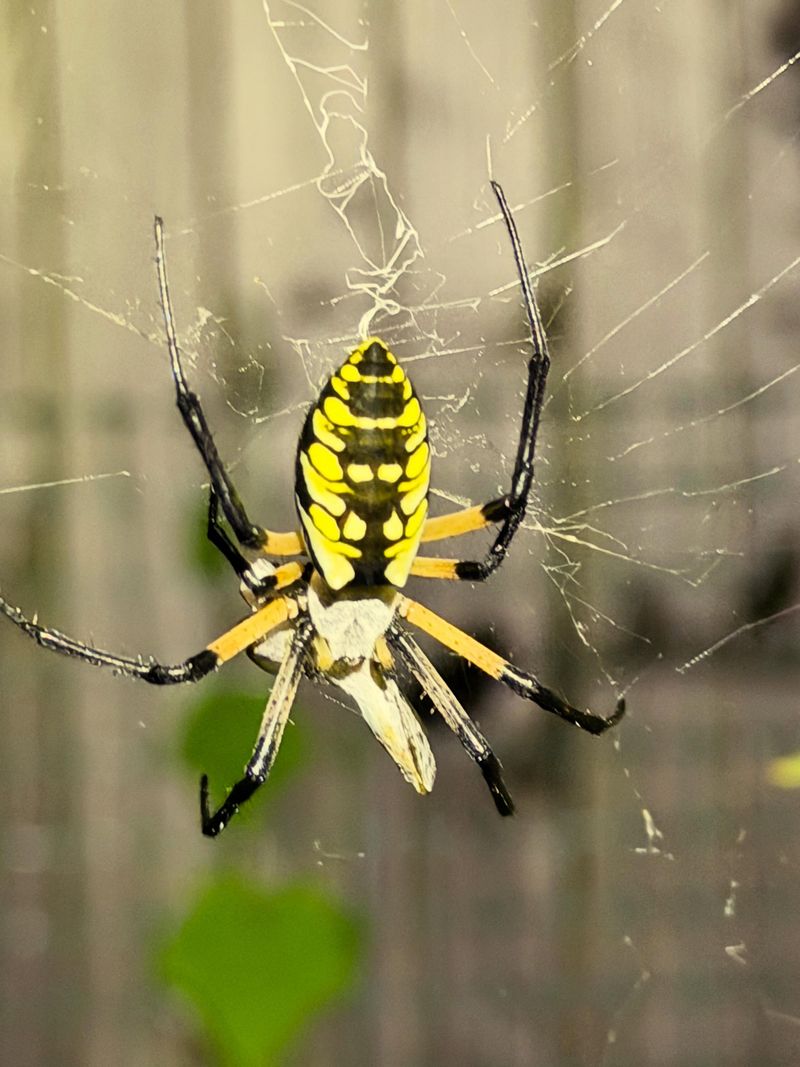
Here is the part most people want answered before anything else. A yellow garden spider does carry venom, like most spiders, but it is tuned for insects and poses very little trouble for people.
Bites are rare because she would much rather flee than fight. Bump the web and she often drops on a silk line straight into the mulch below.
When a bite does happen, it is usually because someone grabbed her or pressed her against skin. Reports describe a sting similar to a bee, with mild redness and swelling that fades within a day.
Her fangs are small and struggle to break human skin in the first place. Treatment rarely goes beyond soap, water, and a cold pack.
She is unrelated to the two Texas spiders that genuinely concern doctors, the black widow and the brown recluse. Those two are smaller, secretive, and prefer dark clutter like woodpiles and storage boxes.
A big spider sitting out in the open on a bright web is generally a good sign. Trouble tends to hide in the shed instead.
People with known insect sting allergies should stay cautious around any biting arthropod. A quick conversation with a doctor settles the question ahead of time.
Pets are also low risk, since dogs and cats rarely bother a web hanging at nose height. Curiosity fades fast once the spider drops out of reach.
For everyone else, the practical advice is short. Look, admire, take a photo, and keep your hands out of the silk.
Nightly Rebuilding Of The Orb Web
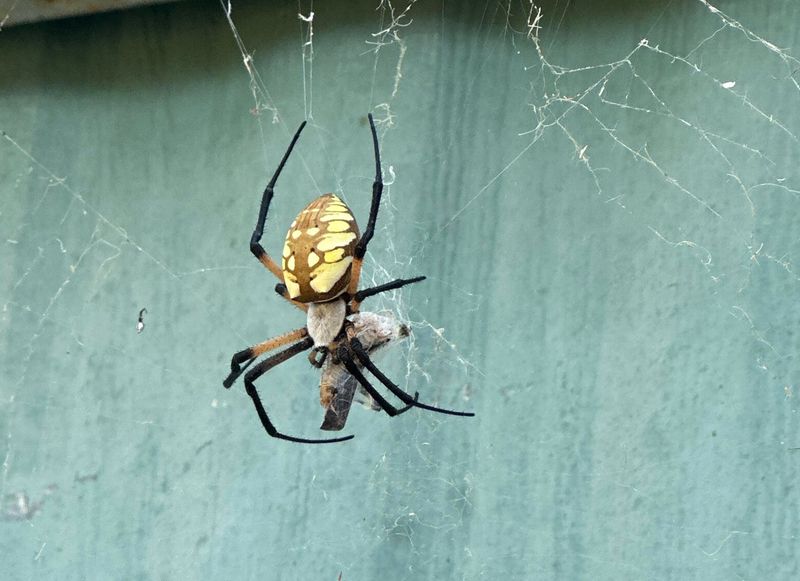
Something odd happens in the garden after dark. Around dusk or early evening, she eats most of her old web and spins a fresh one from scratch.
Recycling the silk saves protein, which matters when you produce yards of thread every single day. Fresh silk is also stickier, and stickiness is her entire hunting strategy.
The frame lines often stay in place while the sticky spiral gets replaced. That is why the web looks brand new each morning yet hangs in the same doorway.
The whole rebuild can take under an hour once she gets moving. Watching it with a flashlight is oddly relaxing after a long day.
Rain, wind, and clumsy humans all damage the structure during daylight hours. Nightly maintenance keeps the trap working through Texas storms.
Clear the web in the morning and expect a replacement by breakfast tomorrow. Persistence is not stubbornness, it is simply her routine.
That detail matters for anyone deciding to fight the web or just work around it. Removing silk over and over costs you time and gains almost nothing.
Web position does shift occasionally when hunting gets slow in one spot. She may relocate several feet on her own within a night or two.
Give it a few days before assuming she has settled in for good. Patience often solves the problem with no effort from you.
Early risers get the best view of a finished web loaded with dew. Sunrise light turns each spoke into thin silver wire.