The Giant Wasps Digging Holes In Texas Yards Are Not What Homeowners Think
Discovering large holes appearing in your Texas yard over summer is alarming enough on its own. Discovering that giant wasps are responsible for those holes takes the alarm to a completely different level.
Most homeowners who witness this reach for the pest control number before they’ve even finished processing what they’re seeing.
But before you make that call, there’s something important to know. These giant wasps are almost certainly not what you think they are, and the holes they’re digging tell a completely different story than most people assume.
What looks like a threatening infestation is actually one of the more fascinating wildlife behaviors you’re likely to witness in a Texas yard, and the insects doing the digging are not a danger to you, your family, or your pets.
In fact, the presence of these wasps is a sign of something genuinely interesting happening just below the surface of your lawn.
Here’s what these giant digging wasps actually are, what they’re doing, and why most Texas homeowners end up glad they didn’t call the exterminator.
1. The Giant Wasps Digging Holes In Texas Yards
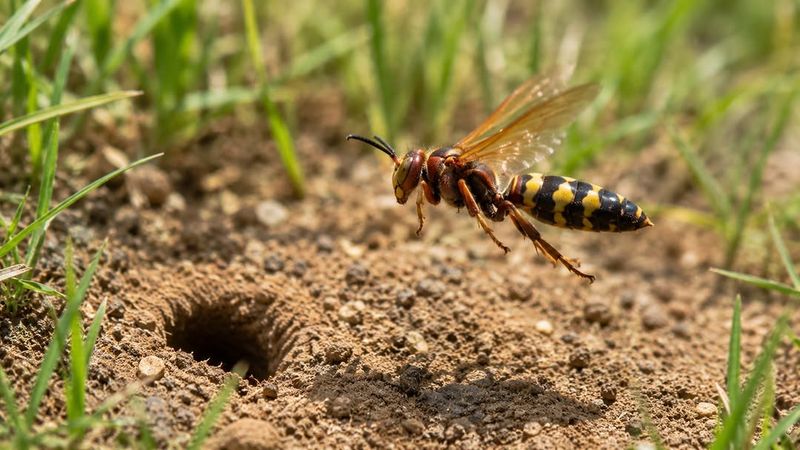
Picture this: you walk out to water your garden and suddenly a wasp the size of your thumb buzzes right past your face. Your heart jumps.
Your first instinct is to run. But before you grab a can of bug spray, take a breath, because what you are looking at is almost certainly a cicada wasp, and it is far less dangerous than it appears.
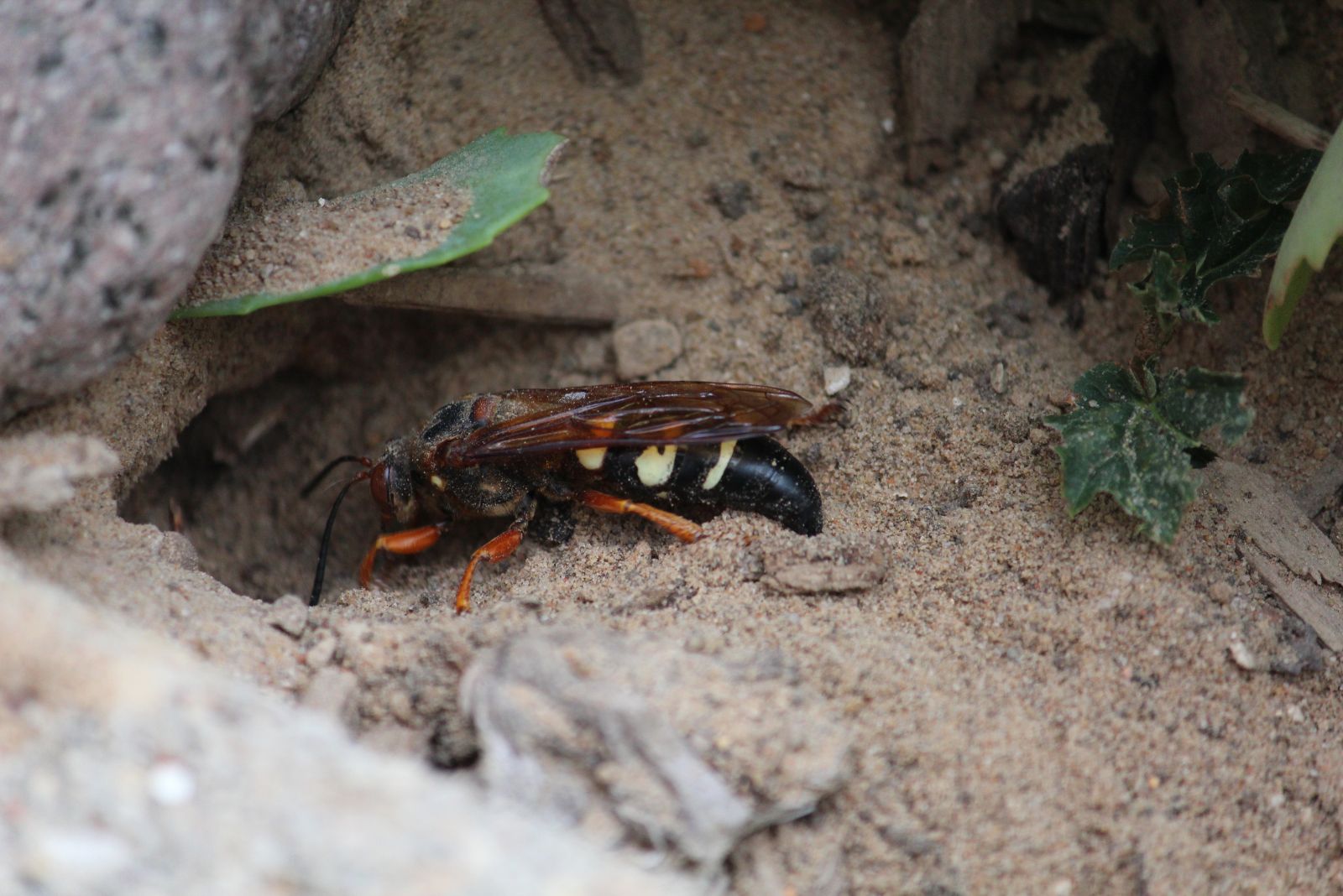
Cicada wasps are among the largest wasps found in North America. Adult females can grow up to two inches long.
They have bold black and yellow markings on their abdomen, which makes them look a lot like yellowjackets or hornets at first glance. Their buzzing is loud and low, which adds to the intimidation factor.
Many Texas homeowners mistake them for something much more threatening. Here is the key difference: cicada wasps are solitary wasps. They do not live in large colonies with thousands of aggressive defenders.
There is no queen to protect, no hive to guard, and no swarm waiting to attack. Each female digs her own individual burrow and works completely alone.
Males have no stinger at all. Females do have a stinger, but they almost never use it on people unless they are grabbed or squeezed.
Yellowjackets and hornets are colonial wasps that will actively defend their nests and sting repeatedly. Cicada wasps are built differently in every sense.
They are focused on one job: finding cicadas, paralyzing them, and storing them underground for their young. People are simply not on their radar.
Knowing this one fact changes everything about how you respond when you spot them in your yard.
2. Why They Are Digging Holes In The Lawn
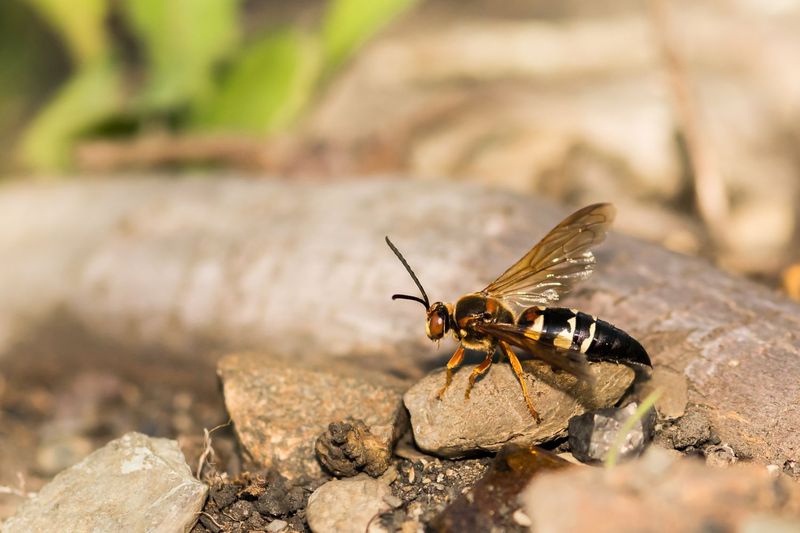
Spotting a fresh hole in your lawn with a giant wasp hovering around it can feel alarming. But there is a perfectly logical reason it is there, and it has nothing to do with damaging your property on purpose.
Your Texas Garden Changes Every Week. Your Plan Should Too.
Gardening in Texas changes quickly throughout the season. Every Friday you’ll receive a simple weekly plan showing exactly what to plant, prune, fertilize, harvest, and protect so you never miss the right timing.
Female cicada wasps dig burrows because that is how they raise their young. Underground tunnels provide a safe, temperature-controlled space where their offspring can develop over the winter months.
The female selects her digging spot very carefully. She prefers soil that is sunny, dry, and well-drained.
Loose or sandy soil is much easier for her to excavate than dense, compacted ground. That is why you often see burrow holes near driveways, sidewalk edges, garden beds, and patches of thin or bare grass.
She is not randomly tearing up your lawn. She is following her instincts to find the right conditions.
Once she picks her spot, she uses her strong legs to dig a tunnel that can reach six to ten inches deep. At the end of the tunnel, she creates a small chamber.
Then she goes hunting. She finds a cicada, stings it to paralyze it, and hauls it back to the burrow.
She lays a single egg on the cicada, seals the chamber, and the young wasp feeds on the cicada as it grows. The whole process is remarkably efficient and self-contained.
Each female may dig several burrows during the season, which can make an area look heavily disturbed. But once nesting season wraps up in late summer, the activity completely stops on its own.
The holes close over time, and the lawn recovers naturally without any intervention needed.
3. Why They Look Scarier Than They Really Are
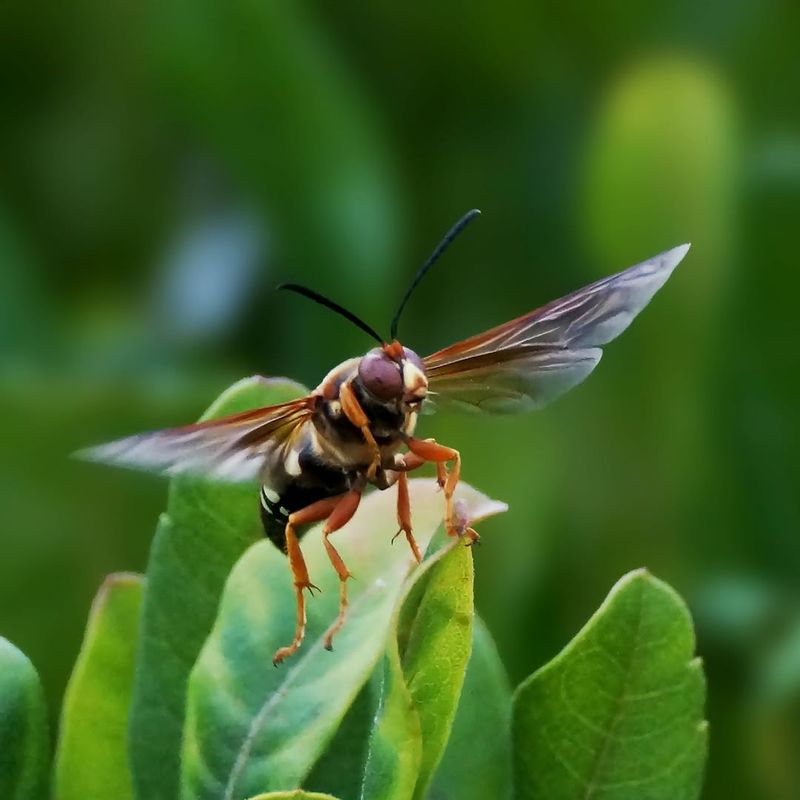
Honestly, cicada wasps are built for drama. Everything about their appearance and behavior seems designed to make people nervous.
Their size alone is enough to stop most people in their tracks. Add in the deep, rumbling buzz they produce when flying, and it is easy to understand why so many homeowners assume they are dealing with something genuinely dangerous.
Male cicada wasps are especially theatrical. They patrol territories aggressively, hovering in place, darting at anything that moves, and occasionally buzzing right up to a person’s face or head.
It feels threatening. It looks threatening. But here is the twist: male cicada wasps have no stinger. Not a weak one.
No stinger at all. Every dramatic dive and hovering maneuver is pure bluff. They cannot sting you no matter what they do.
Female cicada wasps are the ones with stingers, and they are actually quite reserved. A female is usually too focused on digging, hunting, and provisioning her burrow to pay attention to nearby humans.
She may fly around you if you are standing near her burrow, but she is not planning an attack. She is just trying to get to work.
Stings from female cicada wasps are extremely rare and typically happen only when someone grabs one with bare hands or steps on one without shoes.
Compare that behavior to yellowjackets, which will pursue and sting multiple times if they feel their colony is threatened. The contrast is enormous.
Cicada wasps are like the big, loud dog that turns out to be all bark. Once you understand the difference between a bluff and a real threat, these wasps become a lot less scary and a lot more fascinating to watch.
4. What Their Holes Look Like In Texas Yards
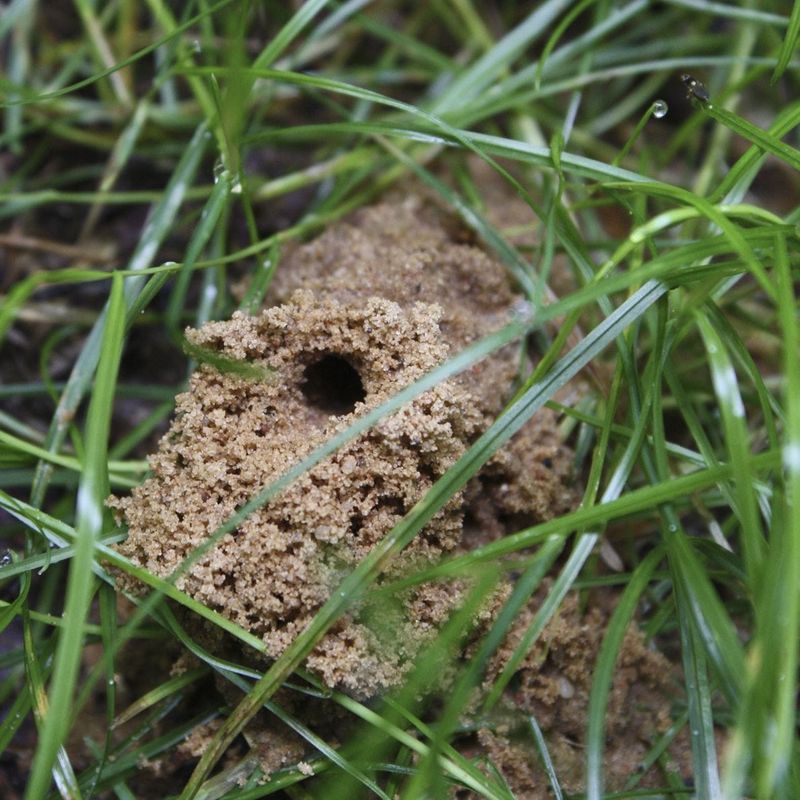
Once you know what to look for, cicada wasps burrows are easy to identify. The entrance hole is usually round and about the diameter of a large finger, roughly half an inch to three-quarters of an inch wide.
Around the opening, you will notice a small mound or fan-shaped pile of loose, freshly dug soil. That excavated dirt is pushed out as the female digs deeper into the ground.
Location matters a lot when identifying these burrows. Cicada wasps strongly prefer spots where sunlight hits the ground directly for most of the day.
Shaded areas are rarely chosen. You are most likely to find burrow holes near the edges of sidewalks and driveways, along garden borders, in dry patches between tufts of grass, and in areas where the lawn is thin or has bare soil showing through.
Sparse turf makes digging significantly easier for them. Sometimes a single yard can have multiple burrows scattered across a small area. This happens because several females may independently choose the same favorable patch of ground.
It is not a colony. Each hole belongs to a separate, independent female. The cluster of holes can look alarming, but there is no shared underground network connecting them.
A quick visual check can help confirm what you are dealing with. If you see a round entrance hole with loose soil pushed outward and a large wasp hovering nearby during the hottest part of a summer afternoon, there is a very strong chance it is a cicada wasp burrow.
You might even spot a female dragging a paralyzed cicada across the lawn toward the hole, which is one of the more remarkable sights a Texas backyard can offer during summer.
5. Why They Can Actually Be Helpful
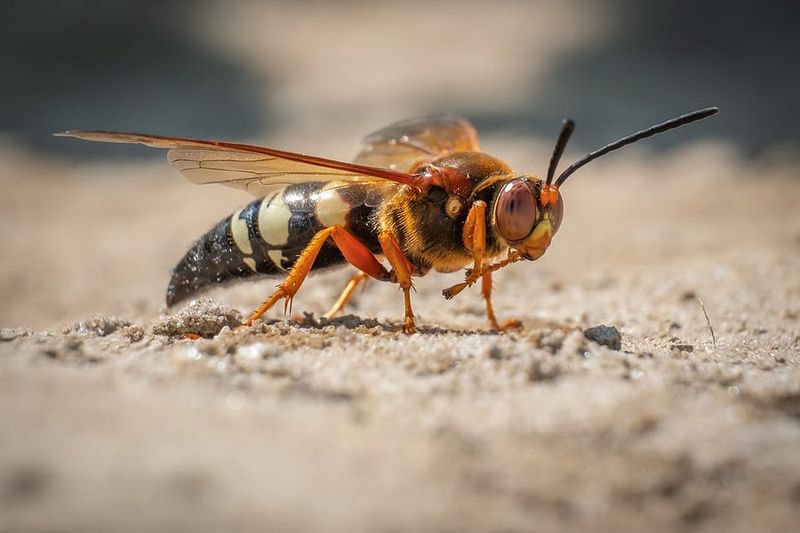
Most people see a giant wasp digging up their lawn and immediately think pest. But cicada wasps are genuinely useful insects, and getting rid of them without a second thought means losing a surprisingly helpful neighbor.
Their entire life cycle is built around hunting cicadas, and cicadas are not exactly quiet or harmless themselves. Cicadas can damage trees and shrubs during their egg-laying process, so having a natural predator around is actually a benefit.
Cicada wasps are part of the summer food web in ways that go beyond just hunting. Their burrows aerate the soil as they dig, which can improve drainage and root growth in compacted ground.
The paralyzed cicadas they store underground eventually decompose, returning nutrients to the soil. It is a small contribution, but it is a real one.
Nature rarely wastes anything. Pollinators also benefit indirectly from cicada wasp activity. Adult cicada wasps feed on nectar and plant sap, which means they visit flowers and can contribute to pollination.
They are not as efficient as bees, but every pollinator visit counts, especially in a hot Texas summer when many plants need all the help they can get.
Perhaps most importantly, cicada wasps are not trying to take over your yard. They are not building a massive underground colony.
They are not recruiting more wasps to join them. Each female is working alone, doing what she is programmed to do, and then the season ends.
By late August or early September in most of Texas, cicada wasps activity slows down dramatically and eventually stops altogether. Letting them do their job costs you very little and gives nature a small but meaningful win.
6. What Homeowners Should Do Before Panicking
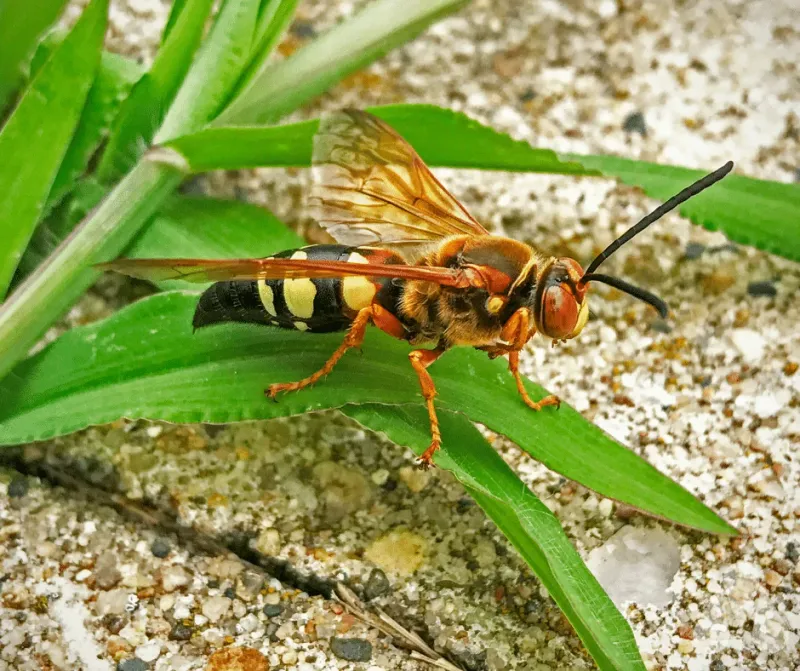
Finding giant wasps and mysterious holes in your yard can feel urgent, like something needs to be done right now. But the best first step is actually the simplest one: wait and watch.
Cicada wasp activity is seasonal and self-limiting. In most parts of Texas, the nesting season runs from roughly late June through August. After that, the wasps are gone for the year, and the holes gradually fill in on their own.
Swatting at them, flooding the burrows with a garden hose, or drenching the area with pesticide can cause more problems than it solves. Flooding can erode soil and spread the loose dirt further across your lawn.
Pesticide overuse near garden beds or pollinator-friendly plants can harm beneficial insects that you actually want around. And swatting at a female near her burrow is the one scenario most likely to result in a sting.
If the nesting area is truly in a spot that creates a safety problem, like directly under a children’s play area or along a heavily used walkway, there are reasonable steps you can take.
Encouraging thicker turf through regular watering and overseeding bare patches makes the soil less attractive for digging.
Cicada wasps strongly prefer loose, exposed soil, so a dense, healthy lawn is one of the best natural deterrents available.
For yards with persistent nesting year after year, a lawn care professional can help assess whether soil amendments or turf improvements would reduce the appeal of the area. Tolerance and lawn health go a long way.
Most homeowners who learn what cicada wasps actually are choose to leave them alone, and that turns out to be exactly the right call most of the time.