The Low-Maintenance Evergreen Shrub Ohio Homeowners Are Using Instead Of Arborvitae
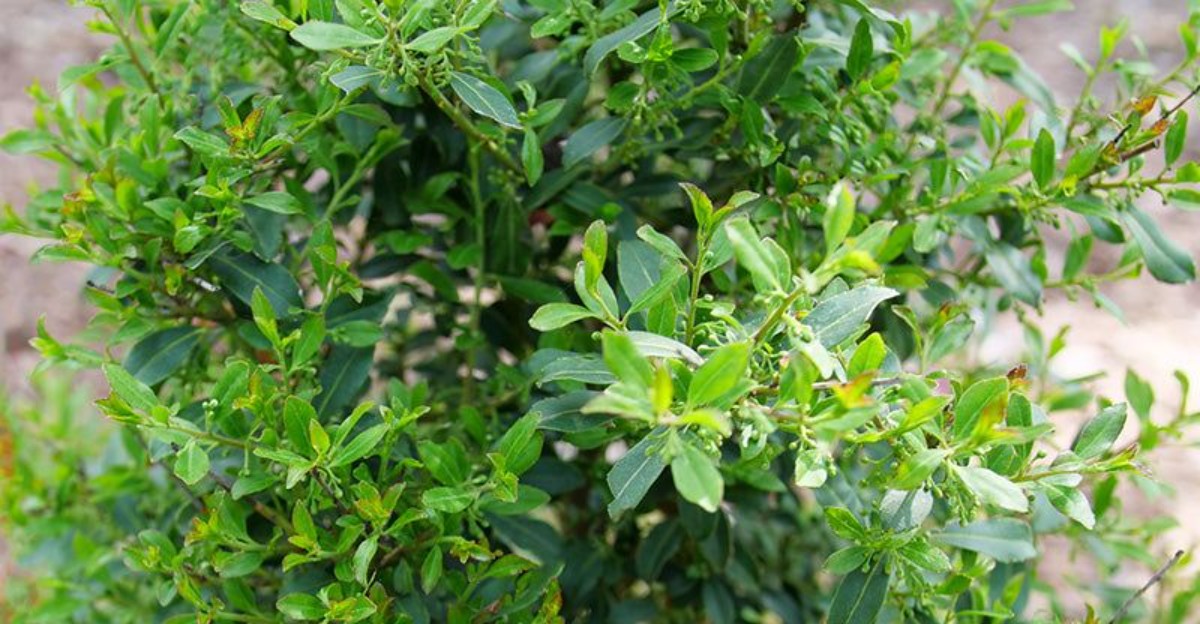
That row of arborvitae along the fence line has probably needed replacing at some point. Winter damage, disease, or just outgrowing the space faster than expected.
Most people replant the same thing right back, assuming nothing else does the job. There’s an evergreen shrub built for exactly that role.
Dense, evergreen, good for screening, without the same weak spots that keep taking arborvitae down. It stays compact without constant shearing.
It holds its shape through Ohio winters that batter the old standby. Pest problems that plague arborvitae barely touch it.
Making the switch means moving away from the usual hedge choice and choosing an evergreen shrub that quietly solves many of the same problems.
1. Replace Arborvitae With Inkberry Holly
Ask any Ohio homeowner about their arborvitae and you will likely hear a sigh. Bagworms, spider mites, and scale insects treat those tall green columns like an all-you-can-eat buffet.
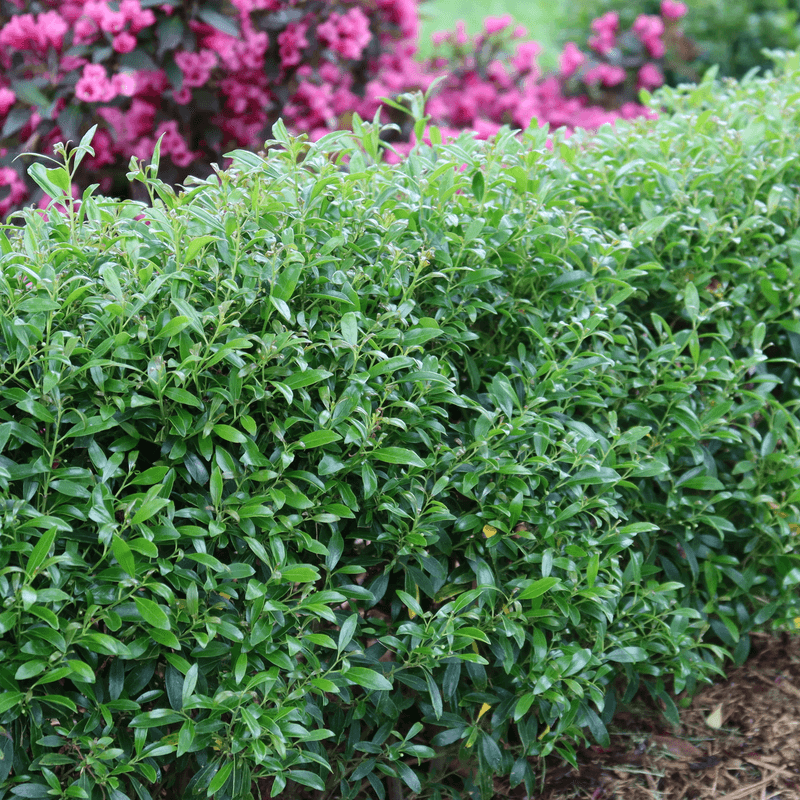
Compact Inkberry Holly (Ilex glabra ‘Compacta’) sidesteps most of that drama. It shows strong resistance to the common pests and diseases that leave arborvitae looking patchy and tired by late summer.
Deer are another part of the story. Arborvitae ranks near the top of the deer menu, which is why so many suburban hedges have that odd chewed-off line about four feet up.
Inkberry holds far less appeal for browsing deer, so the lower branches stay full.
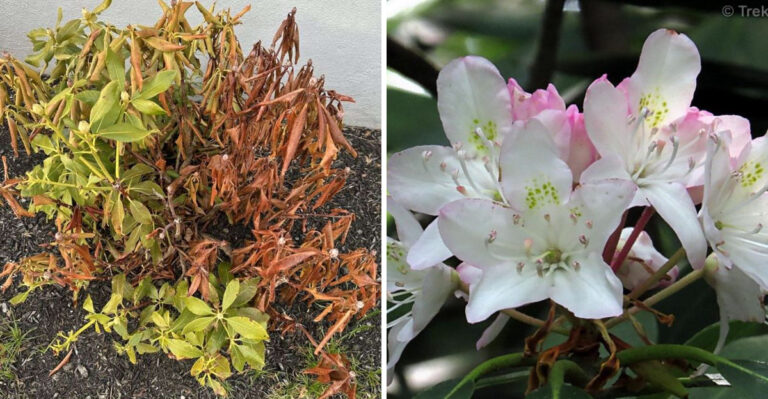
Winter is where the swap really pays off. Arborvitae often suffers winter burn, that bronzy scorched look that shows up in March and refuses to green back up.
Inkberry keeps its glossy dark leaves through the cold months.
Root trouble is worth mentioning too. Arborvitae sulks when watering swings between soggy and bone dry, while inkberry handles wet spots and occasional dry spells with far more grace.
If you have replanted the same hedge twice already, consider this your sign. Swapping in an evergreen shrub means fewer sprays, fewer replacements, and far fewer frustrated weekends.
This is not a replacement for a tall arborvitae privacy wall. It is better for low screens, foundation plantings, and smaller spaces
2. Grow Evergreen Cover In Smaller Spaces
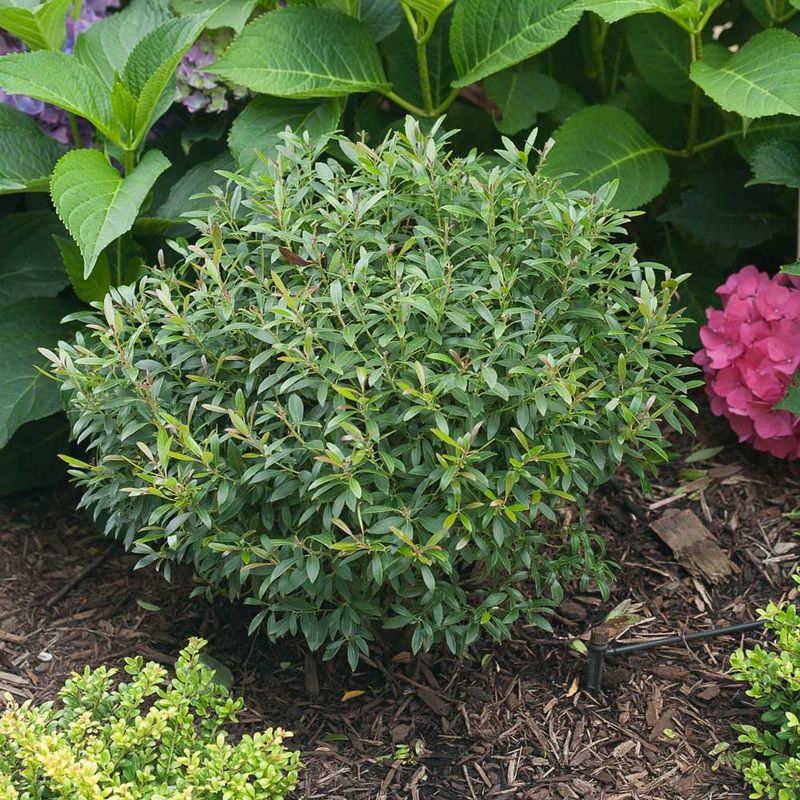
Small yards deserve evergreens too, and that is exactly where this shrub shines. Compact Inkberry Holly is a multi-stemmed evergreen that typically settles in around three to five feet tall with a similar spread.
Compare that to a hedge plant that stretches fifteen feet skyward and suddenly blocks your kitchen window. The ‘Compacta’ selection was chosen specifically for its manageable size and full, rounded shape.
Narrow side yards, tight corners between the driveway and the porch, and skinny foundation beds all work well here. You get real evergreen presence without a plant that outgrows its spot in five years.
Spacing matters when you plant. Set shrubs roughly three feet apart if you want them to knit together into a low mass, or four feet apart if you prefer each one to keep its own rounded outline.
Condo gardeners and townhouse owners find this especially useful. A pair flanking the front steps reads as intentional and polished rather than crowded.
Root systems stay modest as well, which is helpful near walkways, patios, and utility lines. You are far less likely to end up with heaved pavers or a shrub crowding the meter.
Good things really do come in smaller packages, and this one proves it season after season.
3. Choose An Evergreen Shrub With Year Round Interest
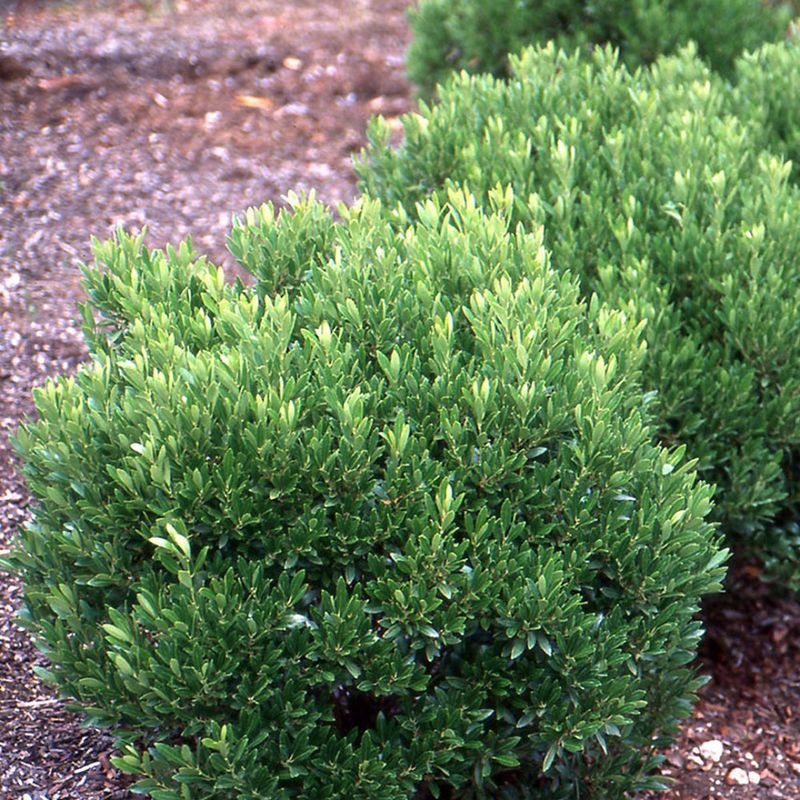
Well-adapted plants have a way of looking right in the landscape, and Ilex glabra proves the point. It grows wild across the eastern and south-central United States, including parts of Ohio, so it already understands our soil and weather patterns.
Leaves are the main attraction. Glossy, dark green, and smooth-edged, they hold that rich color straight through January without turning dull or bronze.
Spring brings small white flowers that are easy to miss unless you lean in close. Bees notice them, though, and the buzz around a blooming inkberry is a nice surprise.
By mid-fall, female ‘Compacta’ plants start showing off their small black fruits. The berries hang on into late winter, giving the shrub a quiet sparkle when most of the garden has gone quiet.
One catch worth planning for: you need a male pollinator nearby for those berries to form. Nurseries often sell a compatible male variety alongside the females, so ask before you check out.
Pairing inkberry with native perennials creates a planting that changes gently through the seasons. Think coneflowers in summer, switchgrass in fall, and that steady green backbone holding everything together.
Choosing the right evergreen here is not just about appearance. It is a practical way to build a garden that mostly takes care of itself.
4. Give Birds A Better Backyard Shelter
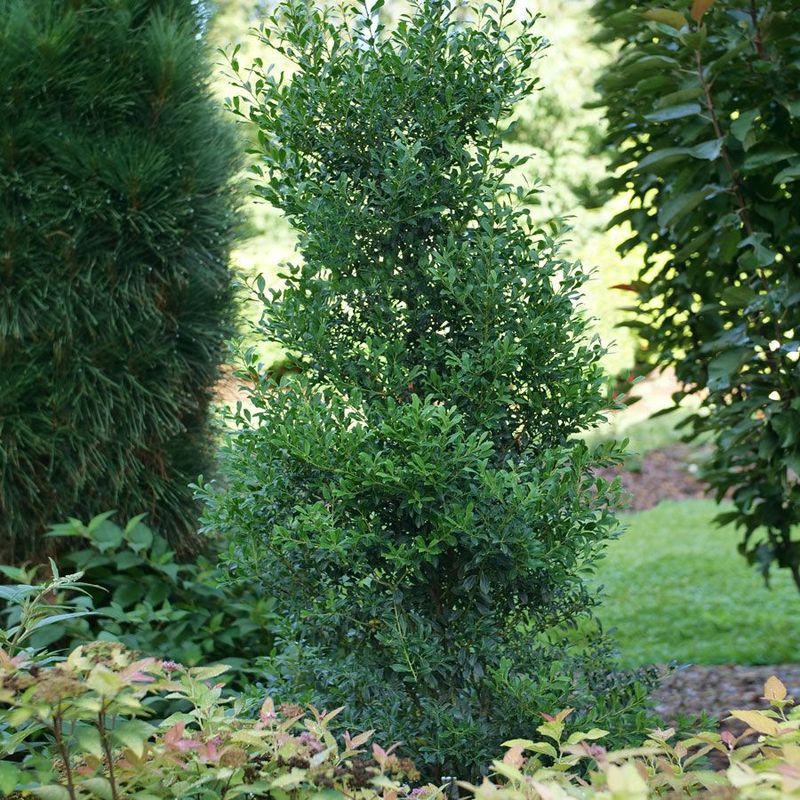
Cardinals, sparrows, and juncos are picky about where they hide, and dense evergreen branches rank high on their list. Compact Inkberry Holly delivers exactly that kind of cover, twelve months a year.
The branching is thick enough to block wind and hide small birds from hawks circling overhead. On a raw February morning, that shelter matters more than we sometimes realize.
Food is the second gift. Female plants carry small black fruits from fall through late winter, right when berry supplies elsewhere have run thin.
Birds tend to leave inkberry fruit alone until the cold really sets in, which makes it a reliable late-season pantry. Watching a flock work through a shrub in January is oddly satisfying.
Placement helps. Put a cluster of three or five near a feeder, and birds gain a safe staging spot to dart into between visits.
Skip heavy pruning if wildlife is your goal. That tangle of interior twigs is precisely what nesting and roosting birds are looking for.
Adding a shallow water source nearby turns the planting into a small bird hub. Between cover, berries, and water, you have covered the basics.
Neighbors may start asking why your yard sounds busier than theirs in the middle of winter.
5. Plant This Low Maintenance Evergreen Alternative
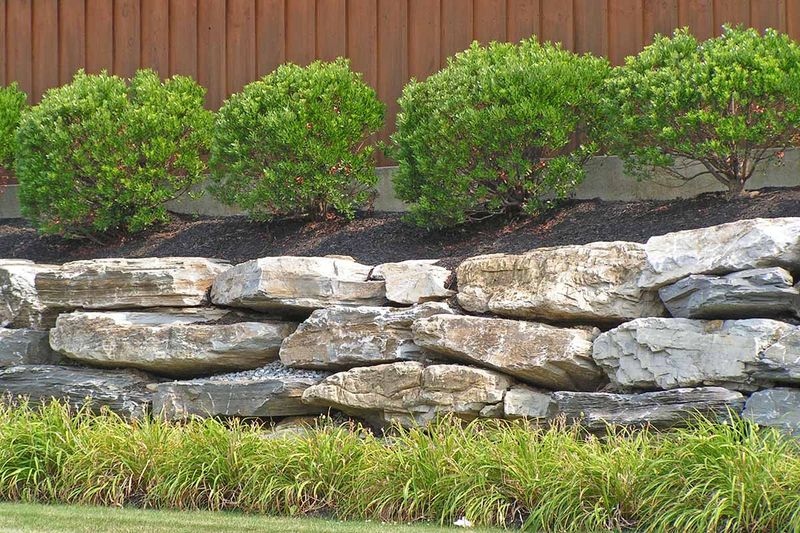
Low maintenance gets tossed around loosely in plant catalogs, but inkberry earns the label honestly. It adapts to a wide range of conditions instead of demanding one perfect setup.
Full sun to partial shade both work. Sunnier spots produce denser growth, while shadier ones give a looser, more open look that still reads as full.
Soil preferences lean toward moist and acidic, which suits much of Ohio just fine. Sandy ground and heavier clay are both tolerated, and the shrub handles wet areas as well as stretches of dry weather.
That flexibility makes it useful along downspouts, rain garden edges, and low spots where other evergreens sulk. Few shrubs take a soggy week in stride quite like this one.
Pruning stays simple. A light trim in late winter or early spring keeps the shape tidy and encourages fuller growth near the base.
Older plants sometimes get a bit leggy at the bottom, showing bare stems. Cutting a few of the tallest stems back hard, one or two per year, brings fresh growth up from below.
Fertilizer is rarely needed. A ring of shredded bark mulch, refreshed each spring, handles moisture and root temperature at the same time.
Plant it, water it the first season, and mostly enjoy it after that.
6. Use Compact Growth For Tidy Borders
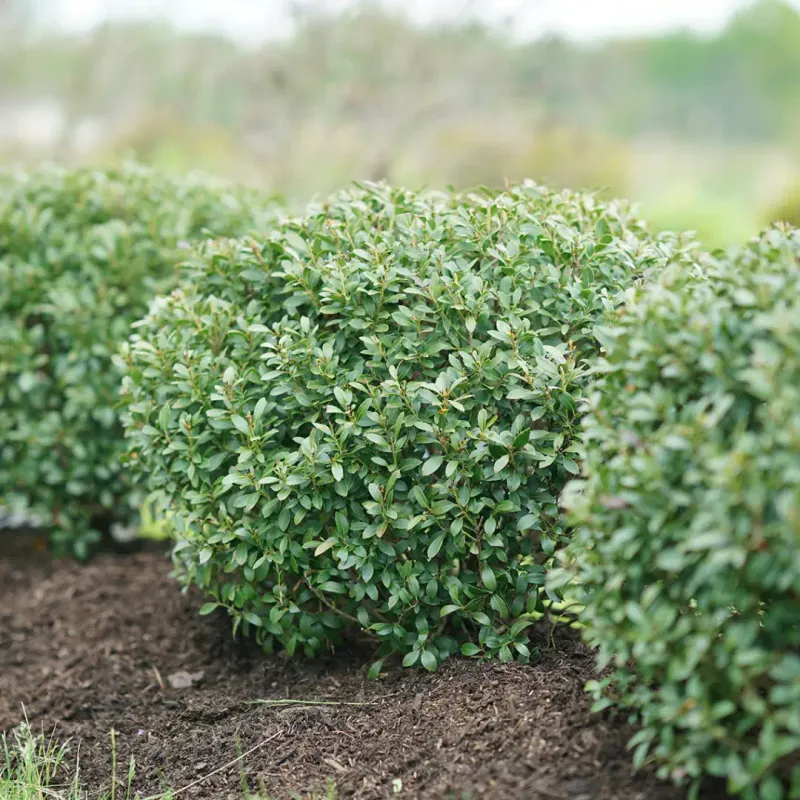
Some Ohio shrubs need constant shearing to look presentable. The ‘Compacta’ cultivar was selected for the opposite reason, since its dense, rounded habit holds a neat outline on its own.
Borders along walkways look crisp without weekly attention. Line them up along a path and you get a soft green edge that guides the eye toward the front door.
Corrective pruning stays minimal because the plant naturally grows into a pleasing mound. A snip here and there is usually all it takes.
Designers like using it as a low divider between a lawn and a flower bed. The steady green outline keeps mixed plantings from looking chaotic in midsummer.
Try alternating inkberry with ornamental grasses for a rhythm that shifts through the seasons. The evergreen anchors stay put while the grasses move and change color.
Even spacing is the trick to a polished result. Measure it out rather than eyeballing, and the border will look deliberate from the street.
Shearing into a hard box shape is possible but not necessary. Letting each shrub keep its natural roundness usually looks more welcoming.
Fun detail: the name inkberry comes from those dark fruits, which early settlers reportedly used to make a crude ink.
7. Add Winter Structure Without Giant Hedges
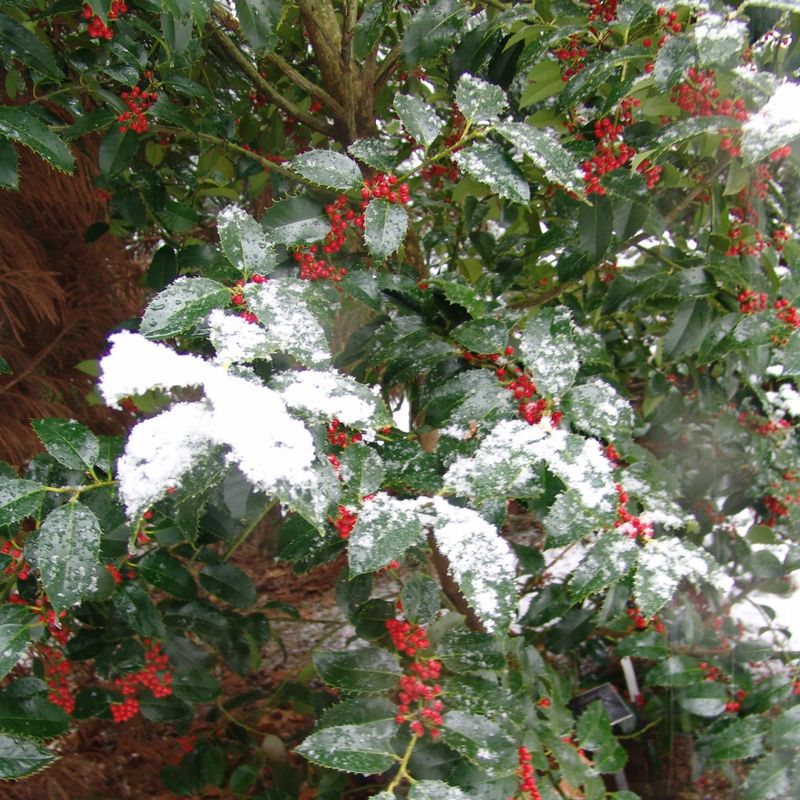
January gardens can look pretty flat once the perennials have been cut back. That is precisely when a well-placed evergreen earns its keep.
Compact Inkberry Holly holds dark green foliage right through the cold months, giving the eye something solid to land on. Add the small black berries and there is a subtle contrast against snow.
Height is the key advantage over big hedge plants. At three to five feet, the shrub frames a view instead of swallowing it.
Under windows, beside a porch, or at the corner of the house, it provides mass without towering. Smaller lots especially benefit from that restraint.
Think of it as punctuation in the winter landscape. A few rounded green forms scattered through a bed keep the space from looking bare.
Pairing works nicely with plants that hold interest in winter for other reasons. Red twig dogwood stems or seed heads left standing play well against the deep green.
Snow load rarely causes problems because the plant is low and rounded rather than tall and narrow. Tall columnar evergreens often splay open after a heavy storm.
Shovel snow away from the base rather than piling it on top, and the shape holds beautifully until spring.
8. Skip High Maintenance Privacy Plantings
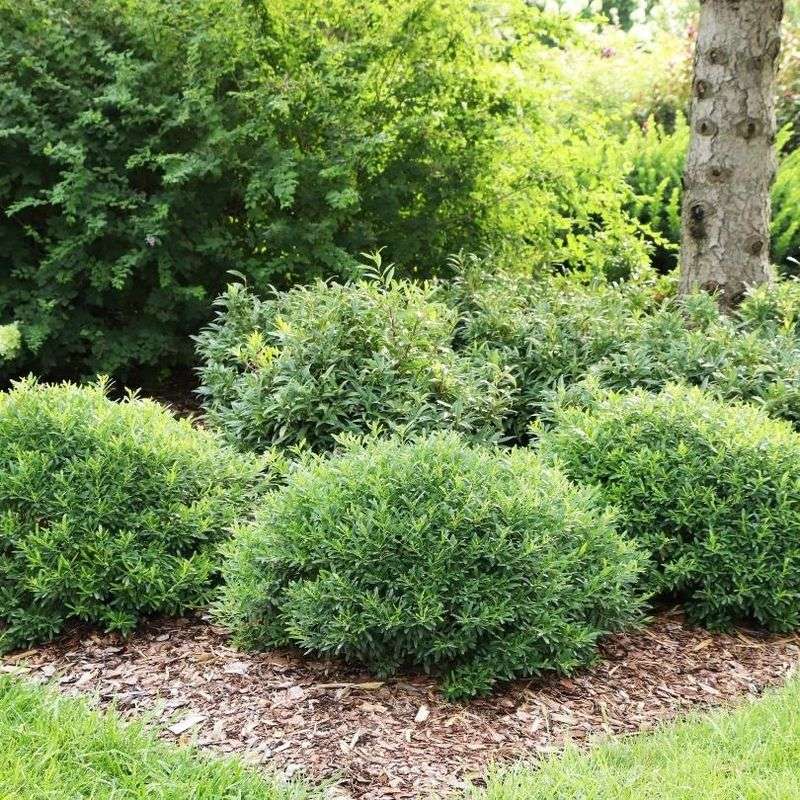
Privacy hedges have a reputation for eating up weekends. Spraying for bagworms, replacing gaps, and wrapping plants for winter adds up fast.
Inkberry Holly takes a calmer approach. Its branching fills in densely enough to form a screen, and it does that without the pest parade that plagues other popular choices.
Inkberry is often less preferred by deer than arborvitae, though hungry deer may browse it. A hedge that stays full at the bottom actually blocks sightlines, which is the whole point of planting one.
Because these shrubs top out around five feet, a single row screens a patio or seating area rather than an entire second story. Set expectations accordingly and you will be happy.
Planting in a staggered double row creates more depth and fills gaps faster. Offset the rows about two and a half feet apart for a solid look.
Maintenance drops to a light spring trim and occasional watering during long dry stretches. Compare that to spraying a bagworm-infested hedge every summer.
Mixing in a few taller natives behind the inkberry adds layers if you need more height. Serviceberry or spicebush work well in that role.
Fewer chemicals, fewer replacements, and a screen that holds up. That is a reasonable trade.
9. Create A Wildlife Friendly Evergreen Screen
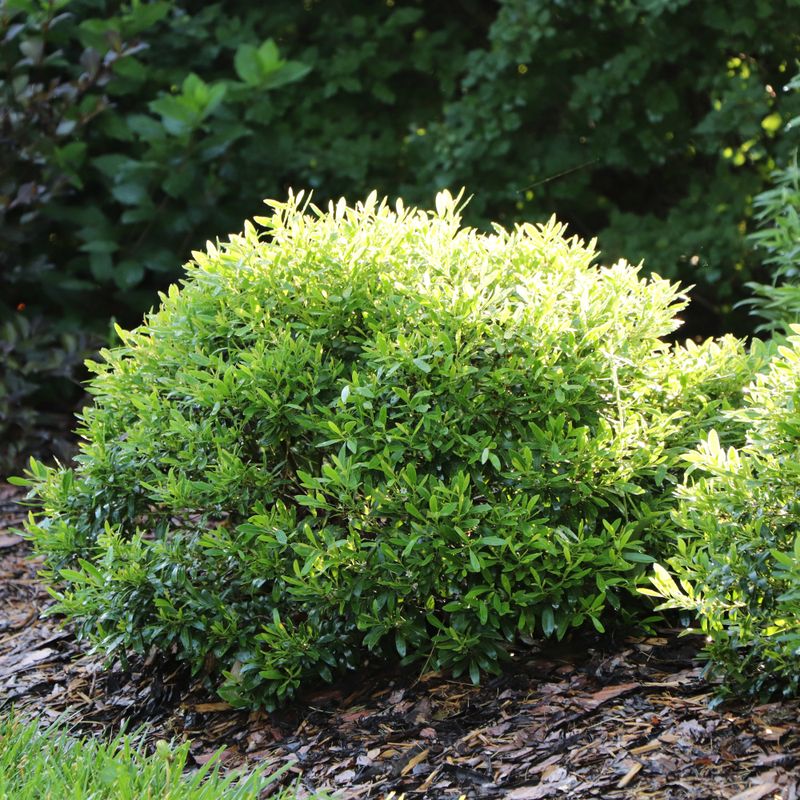
A screen that does double duty is hard to beat. Beyond blocking the neighbor’s driveway, inkberry feeds and shelters a surprising amount of life.
Spring flowers start the season quietly. They are small and white and easy to overlook, yet bees find them quickly and work the shrub steadily on warm days.
Butterflies join in too. Henry’s Elfin and the Holly Azure are two species known to visit, and spotting either one feels like a small reward for planting native.
Summer brings the dense foliage that nesting birds appreciate. Interior branches offer protection from wind and weather when it matters most.
Come fall, the berries ripen on female plants and hang on well into winter. That timing fills a real gap when other food sources have already been picked clean in Ohio.
Building a mixed screen boosts the benefits further. Combine inkberry with viburnum, winterberry, or bayberry for a hedgerow that supports more species.
Skip the broad-spectrum insecticides in that area. The whole point is inviting insects that birds then rely on for feeding their young.
Watching a screen turn into a small ecosystem is genuinely fun. Your yard gets quieter for people and livelier for everything else.