The Late-Season Bloomers That Keep Arizona Flower Beds Full Of Color After The Summer Heat Breaks
When the brutal Arizona summer finally loosens its grip, your flower beds do not have to stay brown and tired. Plenty of tough desert plants wake up and burst into color right when the weather cools down, filling your yard with blooms from fall into winter.
Even better, these plants sip water instead of gulping it, and many pull in hummingbirds, butterflies, and bees while asking for almost nothing in return. Here are eight late-season bloomers that thrive in low-desert heat and keep your garden alive with color after the worst of summer breaks.
1. Autumn Sage (Salvia greggii)
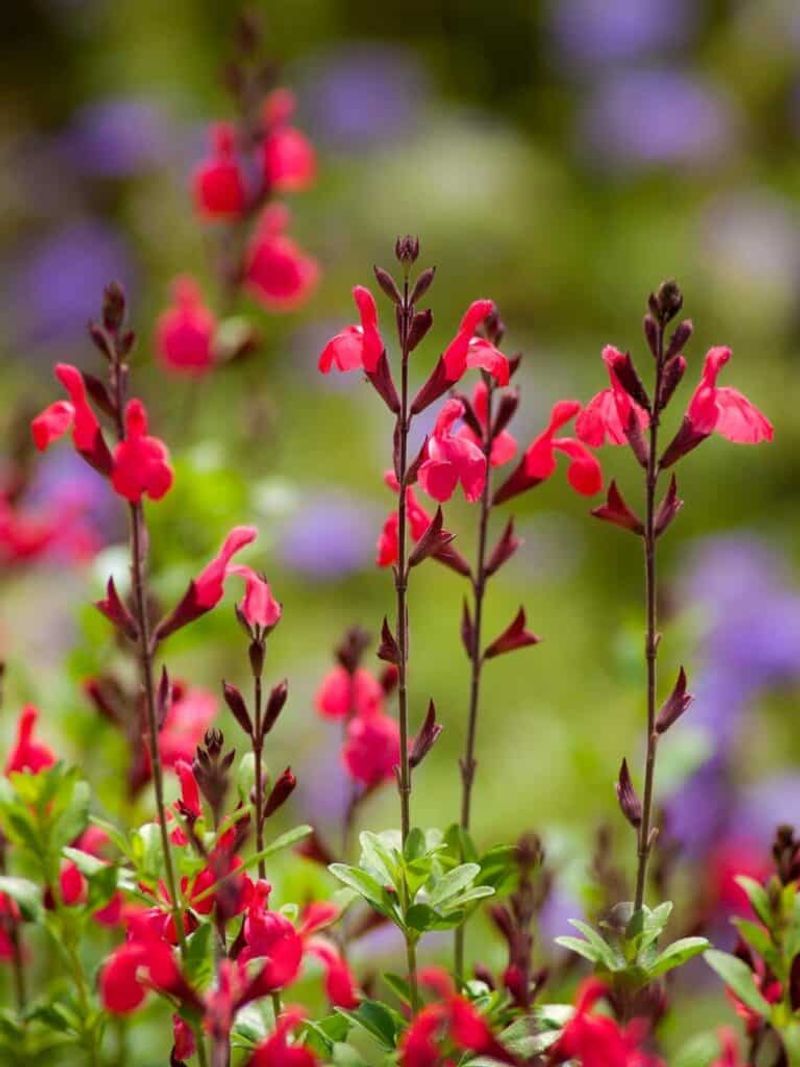
True to its name, Autumn Sage saves some of its best flowering for the cooler months, throwing out waves of red, pink, or coral tubular blooms just as the heat backs off. Hummingbirds treat it like a personal filling station, and you will often catch them zipping between the flowers during fall migration.
What makes this compact shrub so easy to love is how little it demands. Once it settles into your low-desert soil, it shrugs off drought, handles full sun, and keeps a tidy mounded shape without much pruning.
A quick shearing after a bloom flush encourages even more flowers.
Plant it in fall for the strongest roots, and give it well-draining ground since soggy feet are its only real enemy. Tuck a few near a patio or window where you can watch the hummingbird show up close.
Because it flowers on and off for much of the year, Autumn Sage bridges the gap between seasons better than almost anything else. For a yard that works as pollinator habitat instead of just decoration, this salvia earns its spot.
2. Desert Marigold (Baileya multiradiata)
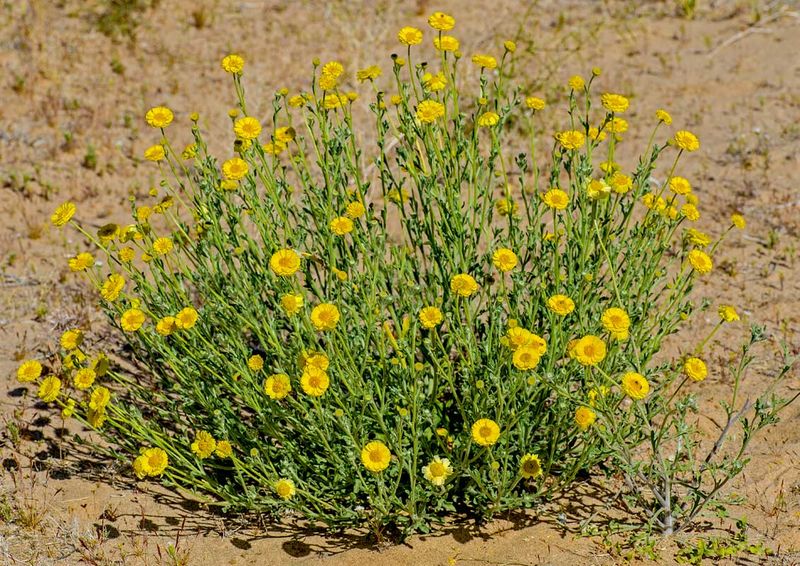
Few plants match Desert Marigold for cheerful, sunny yellow flowers that seem to glow against silvery gray foliage. It blooms across much of the year, but the show ramps back up once the punishing summer temperatures ease into fall.
Native to the low desert, this short-lived perennial is a champion self-seeder. Let a few flowers go to seed and you will find fresh plants popping up on their own, giving you a rolling, ever-refreshing display without any effort or expense on your part.
Bees and butterflies flock to those daisy-like blooms, so a patch of Desert Marigold quickly becomes a busy pollinator hangout. It asks for full sun, sharp drainage, and shockingly little water once established.
Because it thrives in the gravelly, alkaline soils that frustrate so many other flowers, it fits naturally into a xeriscape or a rock garden edge. Snip off spent blooms if you want a neater look, or leave them for the seed cycle.
For nonstop color that practically plants itself, Desert Marigold is a low-desert workhorse worth planting this fall.
3. Chuparosa (Justicia californica)
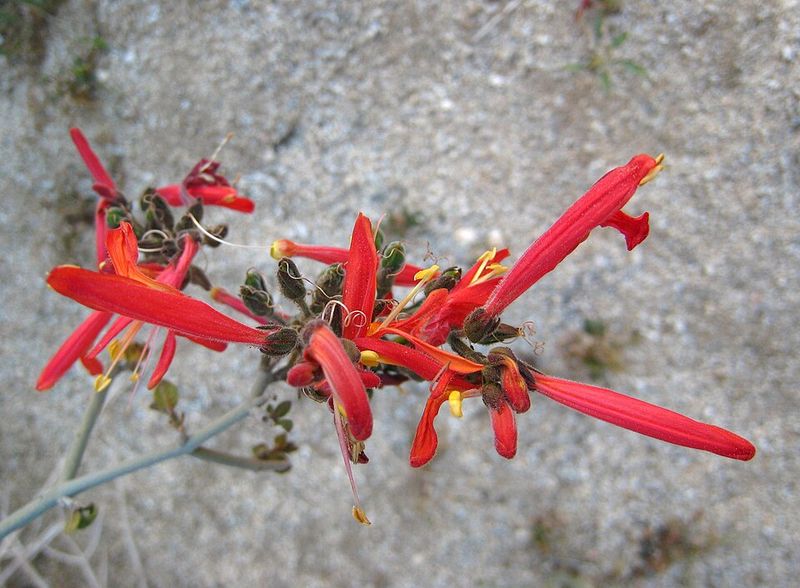
Hummingbirds gave this plant its name, since “chuparosa” roughly means “rose sucker” in Spanish, a nod to how relentlessly they visit its scarlet, tube-shaped blooms. If you want a living magnet for these tiny birds, few natives beat it.
Your Arizona Garden Changes Every Week. Your Plan Should Too.
Gardening in Arizona changes quickly throughout the season. Every Friday you’ll receive a simple weekly plan showing exactly what to plant, prune, fertilize, harvest, and protect so you never miss the right timing.
A southern Arizona local, Chuparosa flowers most heavily after rainfall, which means monsoon moisture and cooler fall weather can trigger a fresh burst of color right when much of the garden is winding down. Its sprawling, almost leafless green stems give it an airy, sculptural look.
Toughness is built in. It handles reflected heat, poor soil, and stretches of drought without complaint, making it a smart pick for hot spots along walls or driveways.
Plant it in fall so the roots can establish before summer returns, and site it in full to partial sun. A light trim keeps it from looking scraggly, though many gardeners enjoy its wild, natural sprawl.
Beyond the hummingbird draw, its nectar supports other pollinators too, turning a bare corner into functional habitat that hums with life through the cooler season.
4. Globe Mallow (Sphaeralcea ambigua)
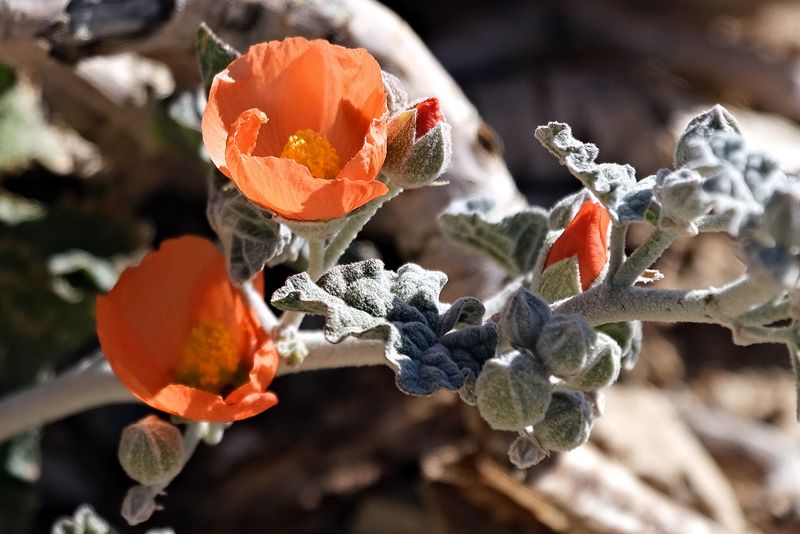
Sometimes called desert hollyhock, Globe Mallow lights up beds with cup-shaped flowers in warm orange, apricot, pink, or fuchsia. While its heaviest show comes in spring, this rugged perennial often keeps sending up blooms into early fall, especially with a little seasonal rain.
Its soft, gray-green leaves have a fuzzy texture that helps the plant conserve moisture, part of why it laughs off drought and blazing sun. Pollinators adore it, and you will spot native bees and butterflies working the flowers throughout its bloom window.
Globe Mallow thrives in exactly the tough conditions that stump imported garden flowers: alkaline soil, low water, and intense low-desert heat. Give it room to reach its natural mounded size and it rewards you with color for years.
A hard cutback after flowering keeps it bushy rather than leggy and can coax a second flush. It also self-seeds gently, filling in gaps over time.
For gardeners chasing warm sunset tones and reliable pollinator traffic without a big water bill, this native mallow delivers both beauty and function with almost no fuss.
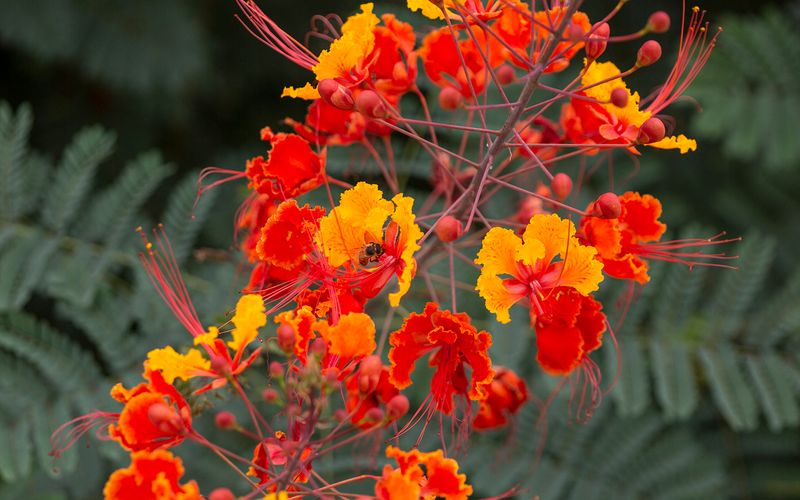
5. Red Bird of Paradise (Caesalpinia pulcherrima)
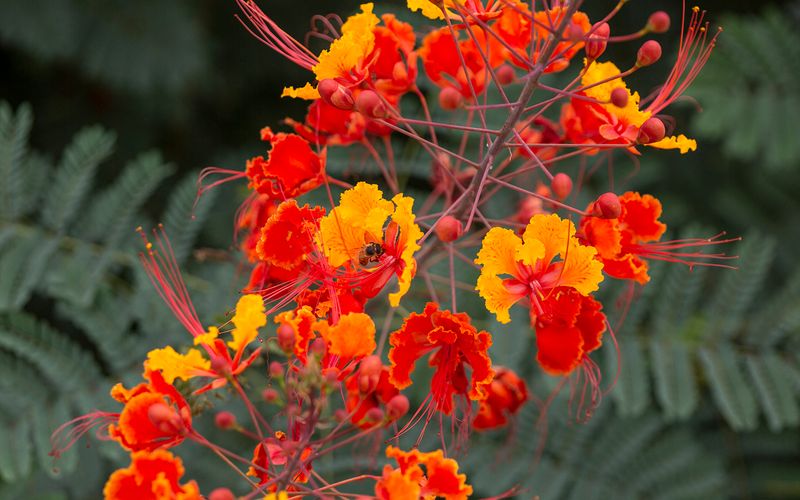
If drama is what your yard needs, Red Bird of Paradise brings fireworks. Its ruffled clusters of red, orange, and yellow blooms flare from late spring straight through early fall, holding strong in the very heat that flattens other plants.
This heat-loving shrub practically celebrates triple-digit temperatures, which is part of why it shows up in so many Phoenix and Tucson landscapes. When the intense summer finally eases, it keeps flowering, extending the color party well into the cooler weeks.
Hummingbirds and butterflies swarm the blossoms, making it a lively habitat plant as well as a showpiece. It can freeze back in winter, but it bounces right up from the roots once warmth returns, so a cold snap is no cause for panic.
Plant it in full sun with good drainage, then step back. Once established, it needs little water and even less babysitting, and a hard late-winter pruning keeps it lush and full.
For a bold, tropical-looking splash that thrives on neglect and survives Arizona’s fiercest heat, few flowering shrubs put on a longer or louder show.
6. Desert Milkweed (Asclepias subulata)
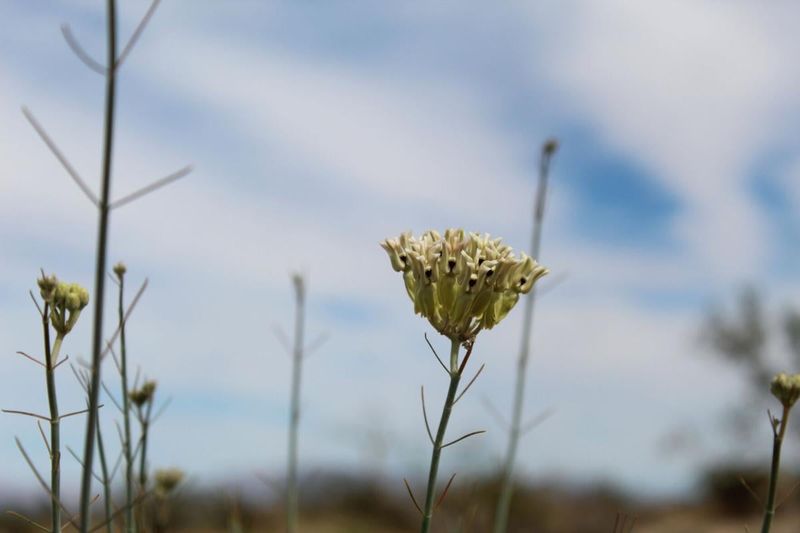
Skinny, upright green stems give Desert Milkweed an almost modern, architectural look, but its real claim to fame is what it does for monarch butterflies. As a host plant, it feeds hungry monarch caterpillars, playing a direct role in keeping the species going.
Small yellow and green flowers appear in flushes from spring into fall, so it keeps contributing color and nectar long after summer peaks. Butterflies, bees, and other pollinators all stop by, turning a single planting into a tiny wildlife station.
Toughness is the point here. This native handles searing sun, rocky alkaline soil, and long dry stretches, thriving where fussier plants would give up entirely.
Its leafless, sculptural form works beautifully in a xeriscape, near boulders, or as a vertical accent among rounder shrubs. Plant it in fall in a sunny, well-drained spot and let it establish.
Beyond looks, choosing Desert Milkweed is a small act of conservation, giving monarchs the specific plant they cannot reproduce without. For homeowners who want a yard that actively supports wildlife rather than just sitting there pretty, this one carries real purpose.
7. Lantana (Lantana camara)
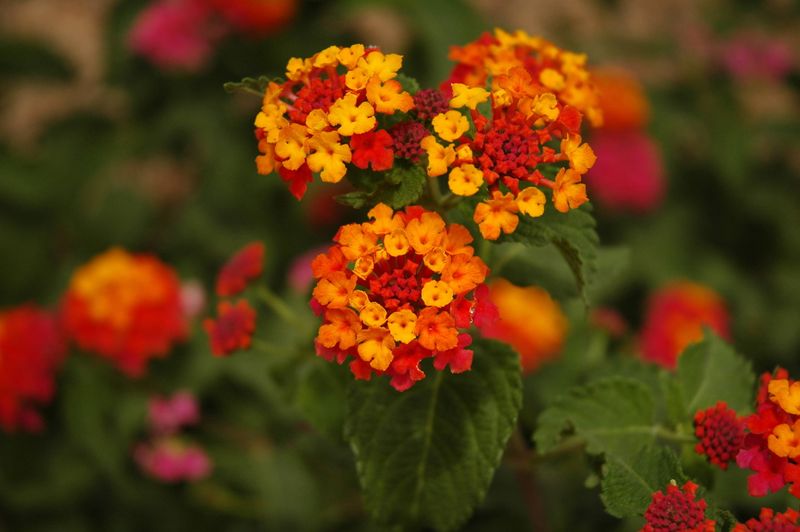
Butterflies cannot seem to resist Lantana, and neither can gardeners who want maximum color for minimum effort. Its tight clusters of tiny blooms come in eye-catching blends of yellow, orange, pink, and red, often shifting shades as they age within a single cluster.
Blooming through summer and rolling right into fall, Lantana keeps beds looking full during the transition season when many plants stall. It shrugs off poor soil and heat, spreading into a dense, colorful mat or mounding shrub depending on the variety.
Drought resistance is one of its strongest selling points. Once established in the low desert, it gets by on little water while still cranking out flowers, which makes it a favorite for water-wise landscapes.
Full sun brings out the heaviest bloom, and an occasional trim keeps it tidy and encourages fresh flushes. Butterflies and bees will thank you with steady visits.
Just note it can freeze back in a cold snap, though it typically returns with warmer weather. For a reliable pollinator buffet that thrives on neglect and heat, Lantana is hard to beat in an Arizona bed.
8. Parry’s Penstemon (Penstemon parryi)
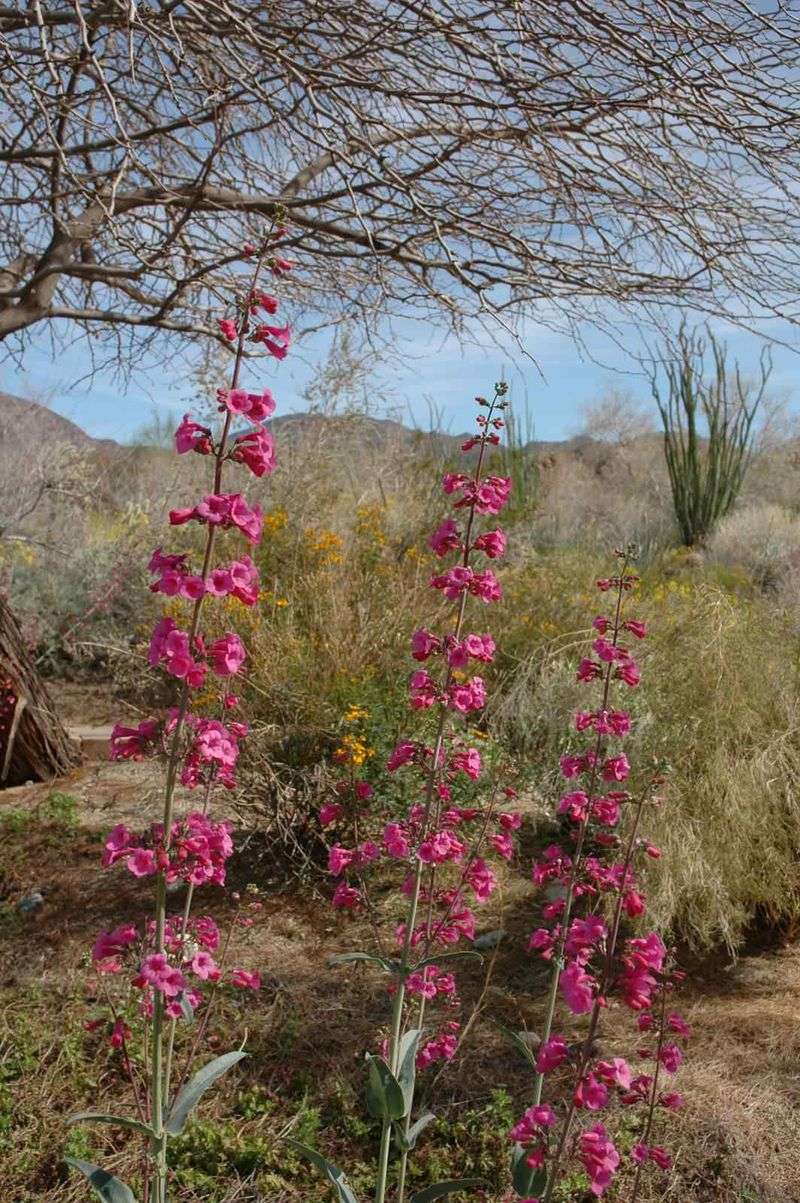
Tall spikes studded with rosy-pink tubular flowers make Parry’s Penstemon look almost too refined for the harsh desert, yet it is right at home here. While its main bloom peaks from winter into spring, planting it in fall sets the stage for that stunning cool-season color show.
Bees and hummingbirds line up for the nectar, and the vertical flower spikes add welcome height and structure to beds full of rounded shrubs and low mounds. A drift of them creates a soft pink haze that draws every eye in the yard.
Native to southern Arizona, it thrives in lean, well-drained soil and full sun, needing little water once established. It also self-seeds, so a small starter planting can slowly expand into a naturalized sweep of color over a few seasons.
Fall is the ideal time to get it in the ground, giving roots a cool head start before the flower spikes emerge. After blooming, leaving some seed heads feeds the next generation.
For gardeners who want that fresh burst of color right as winter fades, Parry’s Penstemon is a low-desert classic that pays off big.