Catnip in Your Arizona Garden: What the Mosquito Research Actually Shows
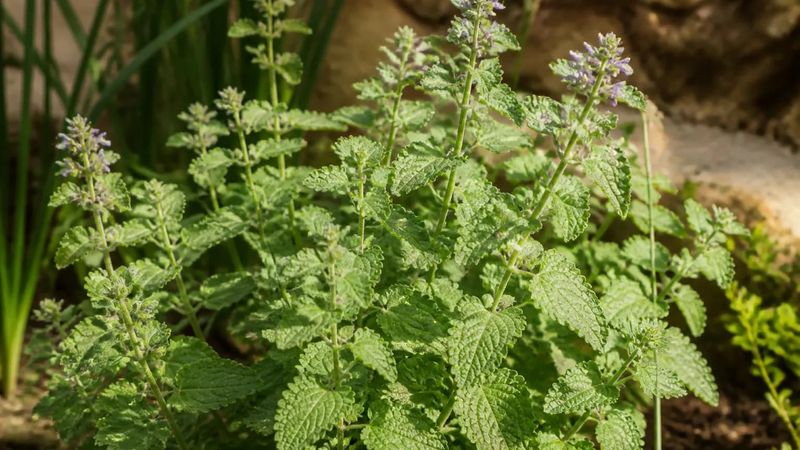
Catnip has been getting a lot of attention as a natural mosquito repellent, and the science behind it is genuinely interesting. Laboratory studies show that compounds in catnip oil can send mosquitoes in the opposite direction.
But there is a real gap between what happens in a lab and what one potted plant can do on a Phoenix or Tucson patio, and that gap matters before you rearrange your backyard around a single herb.
The evidence starts with catnip oil, not a patio plant
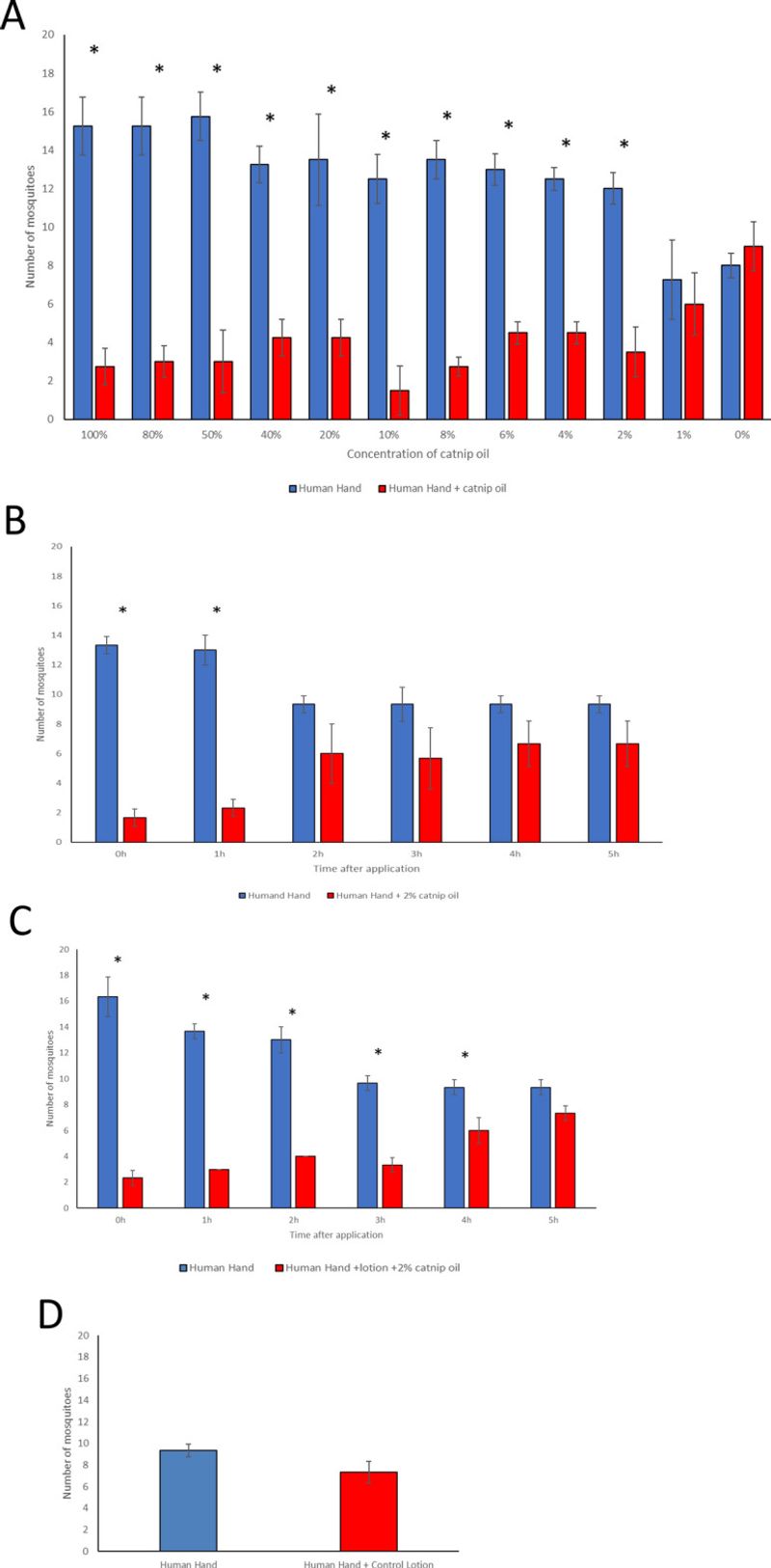
Most of the mosquito research that gets cited when catnip comes up was not conducted with a plant sitting on a porch. Scientists worked with catnip essential oil, purified nepetalactone compounds, or formulated mixtures, and they tested these concentrated materials against Aedes aegypti under controlled laboratory conditions.
That starting point matters a great deal when evaluating any claim about backyard protection.
A study assessing Nepeta cataria essential oils and isolated nepetalactones reported initially high repellency against Aedes aegypti, with that level declining between two and four hours. A separate laboratory study found that 2% catnip oil repelled more than 70% of the same mosquito species for one to four hours under its own specific test conditions.
Both studies used concentrated oil or formulated mixtures, not a living plant placed outdoors.
Before drawing conclusions about patio protection, readers should know that laboratory conditions control for wind, temperature, humidity, and exposure distance in ways that an open Arizona backyard never can. Resetting expectations around what was actually tested is the first step toward making good gardening decisions.
Nepetalactone triggers avoidance through an irritant receptor
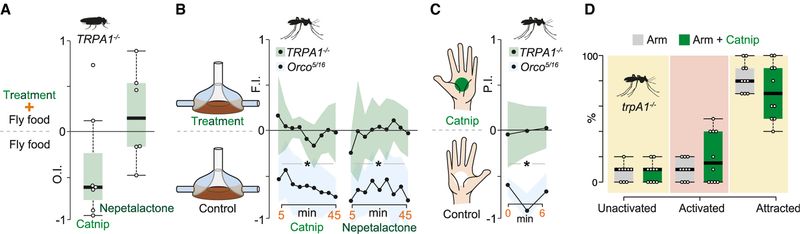
Catnip’s repellent effect is sometimes described as the plant overwhelming a mosquito’s sense of smell, but the biology is more specific than that. Research published in Current Biology identified that nepetalactone activates TRPA1, an irritant receptor found in insects, which then contributes to avoidance behavior.
TRPA1 is not an olfactory receptor in the traditional sense; it responds to chemical irritants and plays a role in pain and discomfort signaling across many species.
That distinction changes how we think about the effect. Mosquitoes are not simply confused by a strong smell; they are responding to a compound that activates an irritant pathway, which motivates them to move away.
The behavior is real, but it depends on the mosquito actually encountering enough nepetalactone to trigger that receptor response.
Knowing the mechanism does not automatically tell us how much compound a living plant releases into open air, whether that amount is sufficient to activate TRPA1 in a mosquito flying across an Arizona patio, or how quickly outdoor airflow would dilute it. A credible biological explanation and a proven patio barrier are two different things.
Why oil results do not establish patio protection from one living plant
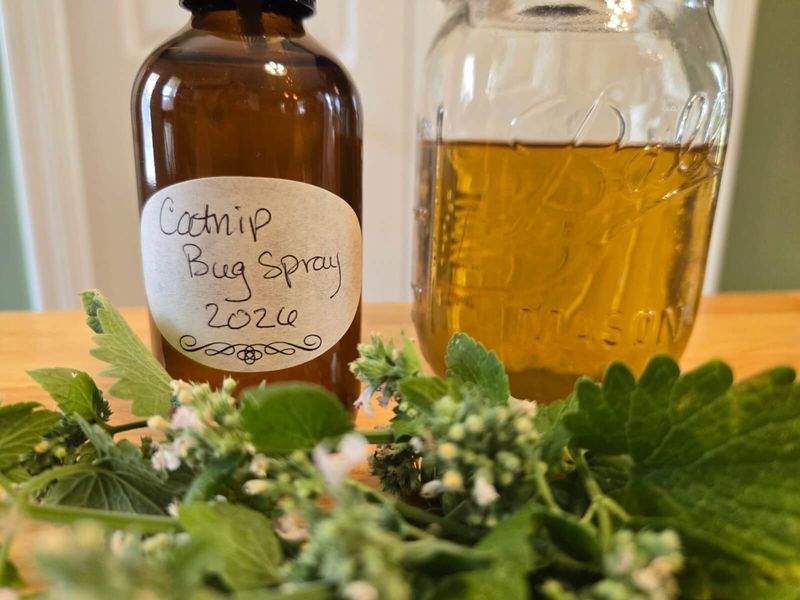
A living catnip plant and a bottle of catnip oil are not interchangeable. Extracted oil concentrates the volatile compounds that give catnip its repellent properties, while an intact plant releases those compounds slowly and in much smaller amounts through its leaf surfaces.
Your Arizona Garden Changes Every Week. Your Plan Should Too.
Gardening in Arizona changes quickly throughout the season. Every Friday you’ll receive a simple weekly plan showing exactly what to plant, prune, fertilize, harvest, and protect so you never miss the right timing.
Iowa State University Extension notes that repellent plants sitting nearby do not provide meaningful mosquito control, because the compounds become more accessible only when leaves are crushed or oils are extracted.
Outdoor conditions add further complexity. Arizona’s afternoon winds, high temperatures, and open patio layouts disperse airborne compounds quickly.
Plant size, the amount of leaf damage, and the distance between the plant and a person all affect how much nepetalactone actually reaches a mosquito before the breeze carries it away. A small potted catnip plant on a 200-square-foot patio is working against considerable odds.
Crushing leaves to release more oil might seem like a logical workaround, but applying homemade plant material or improvised oils to skin is not the same as using a tested, formulated product. Concentrated essential oils can irritate skin, and improvised preparations have not been evaluated for safety or effectiveness.
EPA-registered repellent products go through testing that homemade preparations skip entirely, which is why label guidance from registered products matters when real bite protection is the goal.
The 2.5-hour figure does not establish a catnip advantage over citronella
The claim that catnip lasts two and a half hours and outperforms citronella by a factor of three sounds precise, but the underlying research does not support those specific numbers as outdoor guarantees. Laboratory findings report ranges and declining effectiveness over time, not a fixed duration that applies equally to all mosquito species, formulations, and environments.
One study reported that catnip oil’s ability to produce high repellency declined between two and four hours under its specific test conditions. A separate laboratory study found more than 70% repellency from 2% catnip oil for one to four hours, again under controlled conditions using oil, not a living plant.
An Australian field study of catnip extract applied to human skin found protection ranging from zero minutes for one mosquito species to roughly four hours for another, which illustrates how much results shift depending on what is being measured and against which species.
Comparing catnip to citronella adds another layer of uncertainty. Citronella performance depends on whether the test involves citronella oil, a lotion, a candle, a diffuser, or a living citronella-scented plant, and each format behaves differently.
No Arizona-specific patio trial comparing one catnip plant to one citronella candle over a measured duration was located in the research reviewed here. Without a standardized, head-to-head comparison using matched formats and conditions, the three-times-longer claim has no firm evidence behind it.
Catnip can still earn a place in a low-desert Arizona garden
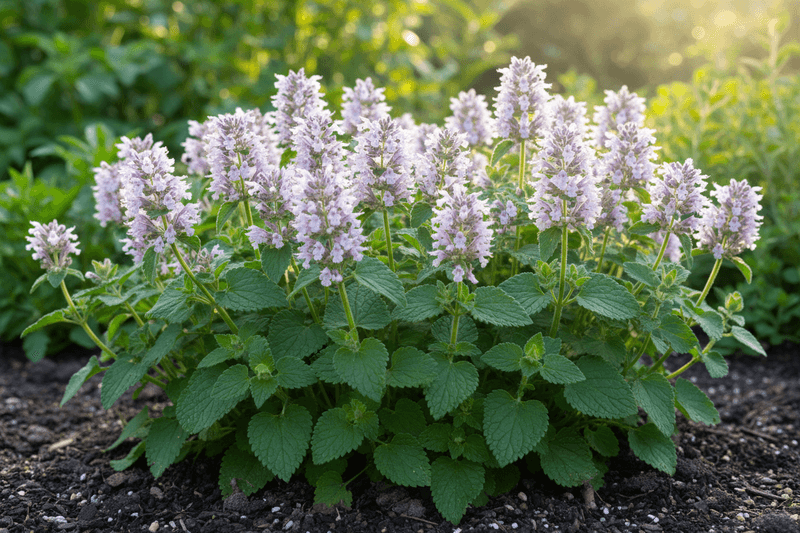
Setting aside the mosquito claims, catnip is a legitimate aromatic herb that Arizona gardeners can grow successfully with the right approach. University of Arizona Cooperative Extension guidance on growing herbs in Tucson lists catnip as a perennial herb suited to planting during October through November or February through April, which aligns with the low desert’s two workable planting windows.
Avoid putting new plants in the ground during the peak summer months when soil temperatures and air temperatures can both exceed what young transplants handle well.
Soil preparation is worth attention in Arizona. Caliche layers and poorly draining soils are common in both the Phoenix and Tucson metros, and catnip needs good drainage to avoid root problems.
A container with quality potting mix and drainage holes, or a raised bed amended with compost, gives the plant a better start than hard-packed native soil. For in-ground plants, deep and infrequent irrigation encourages roots to follow moisture downward, which builds a more resilient plant than frequent shallow watering.
Heat stress shows up as wilting or scorched leaf edges during the hottest afternoons. Afternoon shade from a wall, a trellis, or a taller plant nearby can help catnip push through summer.
Do any planting or transplanting work in the cooler morning or evening hours. Arizona Extension distinguishes catnip from catmint, which is a separate species with different nepetalactone levels and a different growth habit, so check labels carefully when buying starts or seeds.
Arizona mosquito control begins by removing breeding water
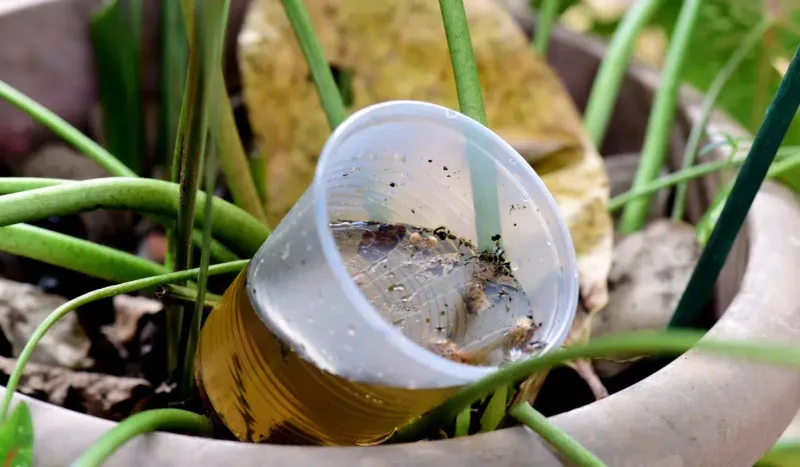
Mosquitoes need standing water to reproduce, and Arizona’s monsoon season, drip irrigation, and potted-plant saucers create that water regularly. After a monsoon storm, low spots in the yard, clogged gutters, and any container left outside can hold enough water to support a new generation of mosquitoes within a week.
Checking the yard after rain and after irrigation cycles is a practical habit that addresses the problem at its source.
University of Arizona Cooperative Extension’s mosquito management guidance recommends eliminating breeding sites, emptying or removing saucers beneath potted plants, and addressing neglected pools or water features. Those saucers under the pots on your catnip-lined patio can, if left full, actually produce mosquitoes faster than a nearby aromatic plant could deter them.
Gutters are another overlooked site, especially when leaf debris holds moisture after storms.
For personal bite protection, CDC guidance on preventing mosquito bites recommends EPA-registered repellents, protective clothing during peak mosquito hours around dusk and dawn, and weekly scrubbing or emptying of water-holding items. CDC specifically notes that the effectiveness of non-EPA-registered natural repellents is not established, which is a relevant caution when evaluating any plant-based product that has not gone through the registration process.
Layering source reduction with registered repellents gives Arizona homeowners a more reliable foundation than any single plant can provide.
Use catnip as a garden complement, not a mosquito shield
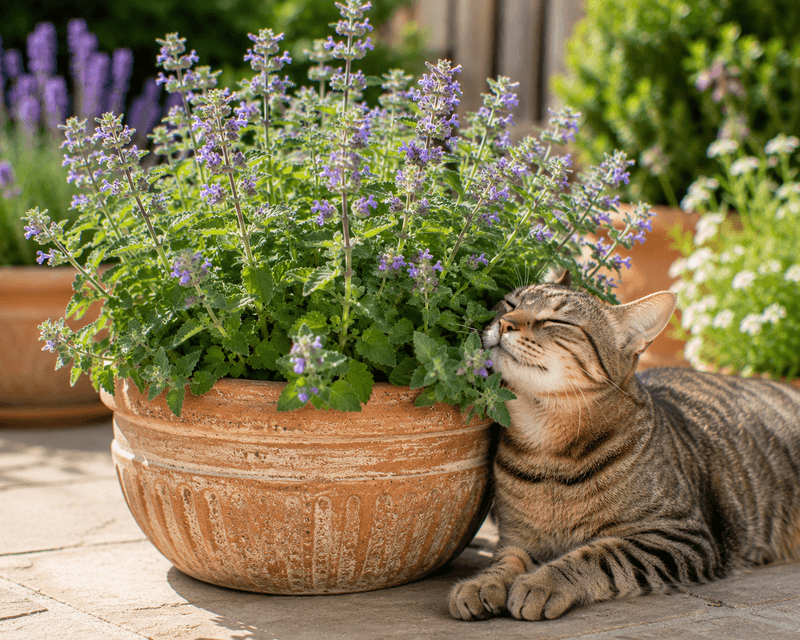
Catnip is a worthwhile addition to a low-desert herb garden. Grow it for the fragrance, the pollinator interest, and the fact that its oil has genuine repellent properties documented in laboratory settings.
Just do not count on one potted plant to clear a patio or to outperform any other product in a real outdoor setting.
The practical decision rule is straightforward. Remove standing water first, because that directly cuts local mosquito production.
When you need dependable bite protection outdoors, choose an EPA-registered skin-applied repellent and follow the label. Let catnip play a supporting role as a heat-tolerant herb you actually enjoy, rather than asking it to carry the full weight of pest control.
A yard that combines good water management with proven repellents when needed is a stronger system than any single plant promise. Catnip fits that yard well, just not as its centerpiece defense.