8 Native Plants Virginia Beach Homeowners Should Add To Their Yards This Fall
Virginia Beach gardens have to put up with salt spray, sandy soil, strong winds, and plenty of moisture. That can make choosing plants tricky, especially when some favorites struggle after just one season.
Native plants are a smarter fit because they are adapted to the region’s coastal conditions and can handle the local environment with less fuss. And fall is a great time to add them to your yard.
Cooler air and still-warm soil give roots time to establish before winter, setting plants up for stronger growth later. If you want a yard that looks good and works with the coast instead of fighting it, these native plants are worth considering.
1. Yaupon Holly Handles Salt Spray And Coastal Winds With Ease
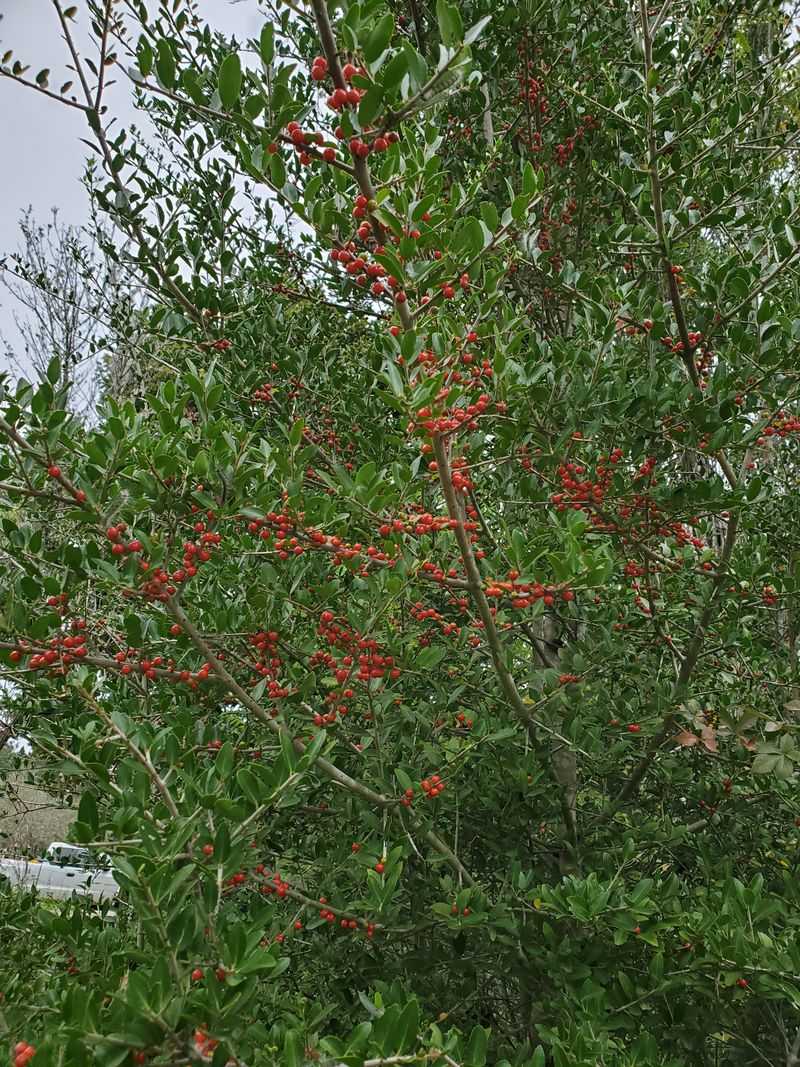
Ocean breezes carry salt that scorches many shrubs, yet yaupon holly (Ilex vomitoria) barely notices. It grows wild in maritime forests from Virginia south to Florida, so coastal conditions feel like home.
Size depends on the cultivar you pick, with plants ranging from about 5 feet up to 20 feet tall and 3 to 12 feet wide. Dwarf types work as tidy foundation plants, while taller forms make handsome small trees near a driveway.
Salt spray, sandy ground, stiff winds, wet soil, and dry spells are all conditions yaupon holly handles well. That toughness makes it one of the smartest picks for exposed lots near the water.
The leaves stay small, glossy, and dark green through winter, giving your yard structure when everything else looks bare. Female plants add bright red berries that cling through the cold months and feed hungry birds.
Plant it in full sun or part shade, in clay, sand, or loam. Acidic soil suits it best, though it handles slightly alkaline ground without complaint.
Deer tend to walk past it, which is a relief in neighborhoods where browsing is a nightly event. Heavy pruning is also fine, so hedges and screens stay crisp with a couple of trims each year.
Fun fact: yaupon leaves contain caffeine, and people once brewed them into a tea. It remains the only caffeinated plant native to North America.
2. Wax Myrtle Adds Year Round Greenery To Yards
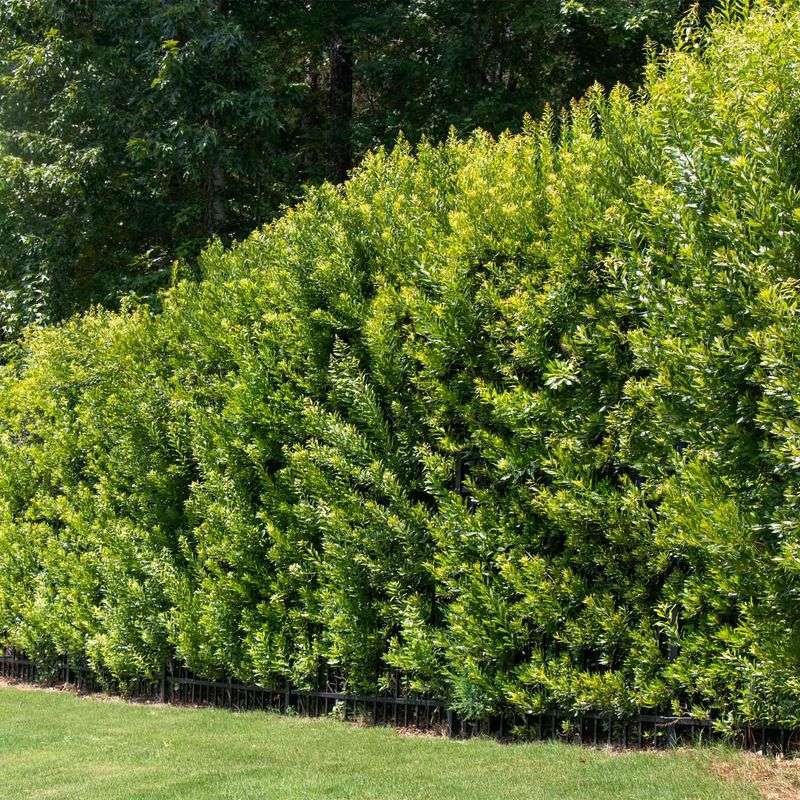
Crush a wax myrtle leaf between your fingers and you get a warm, spicy scent that sticks around for a while. Morella cerifera grows all over the Coastal Plain, including the trails at First Landing State Park.
Expect a large shrub or small tree around 15 feet tall and wide, with size varying by cultivar and pruning. Regular shearing keeps it hedge-shaped, while leaving it alone creates a graceful multi-trunk form.
Wax myrtle tolerates salt, sandy soil, wet conditions, and dry spells, making it a strong choice for exposed coastal yards.
Olive-green leaves stay on the branches through winter, so a wax myrtle screen keeps working when deciduous shrubs go bare. Privacy in January is worth a lot in a tight neighborhood.
Female plants set clusters of small bluish-gray berries coated in wax. Yellow-rumped warblers and dozens of other birds rely on them through fall and winter.
Your Virginia Garden Changes Every Week. Your Plan Should Too.
Gardening in Virginia changes quickly throughout the season. Every Friday you’ll receive a simple weekly plan showing exactly what to plant, prune, fertilize, harvest, and protect so you never miss the right timing.
Here is the clever part: bacteria living on wax myrtle roots pull nitrogen from the air. That built-in fertilizer factory lets the shrub flourish in thin, poor soil where other plants sit and sulk.
Deer generally leave it alone. Plant it in full sun or part shade, water it the first summer, then mostly forget about it.
Colonists once boiled those waxy berries to make fragrant bayberry candles.
3. Eastern Red Cedar Stands Strong In Sandy Coastal Soils
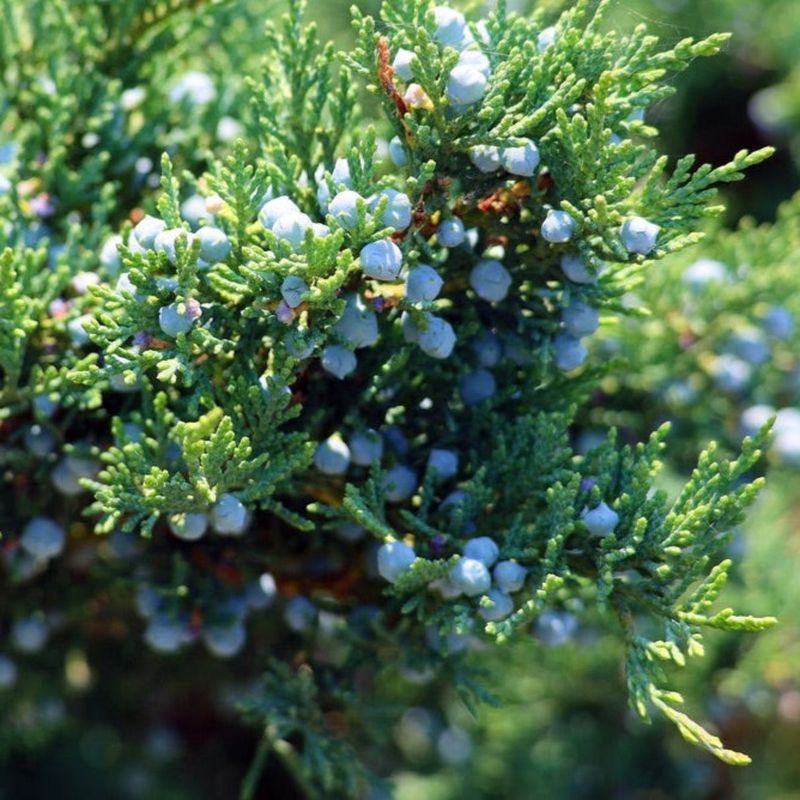
Drive almost any back road near the coast and you will spot Eastern Red Cedar (Juniperus virginiana) holding down the edges of fields and dunes. It has been doing that job for centuries.
Mature trees typically reach about 40 feet tall and 15 feet wide, so give one plenty of elbow room. Planted in a row, they form a windbreak that cuts the sting out of winter gusts.
Sandy soil, salt spray, and steady wind suit this conifer just fine. It also shrugs off heat, cold, and long dry spells once the roots settle.
Foliage stays dense and ranges from gray-green to a soft blue-green. That thickness gives birds a safe place to roost during nasty coastal weather.
Female trees produce small round blue cones that look like berries. Cedar waxwings show up in flocks to strip them, and small mammals clean up whatever drops.
Best growth comes in acidic, well-drained, moist soil with full sun to part shade. The tree handles rocky, dry, and poor soils well, making it a strong choice for well-drained coastal sites.
One caution: red cedar can host cedar-apple rust, so keep it away from apple and crabapple trees.
The aromatic heartwood resists rot naturally. Fence posts, closet linings, and old cedar chests all trace back to this native.
4. Seaside Goldenrod Brings Late Season Color To Coastal Gardens
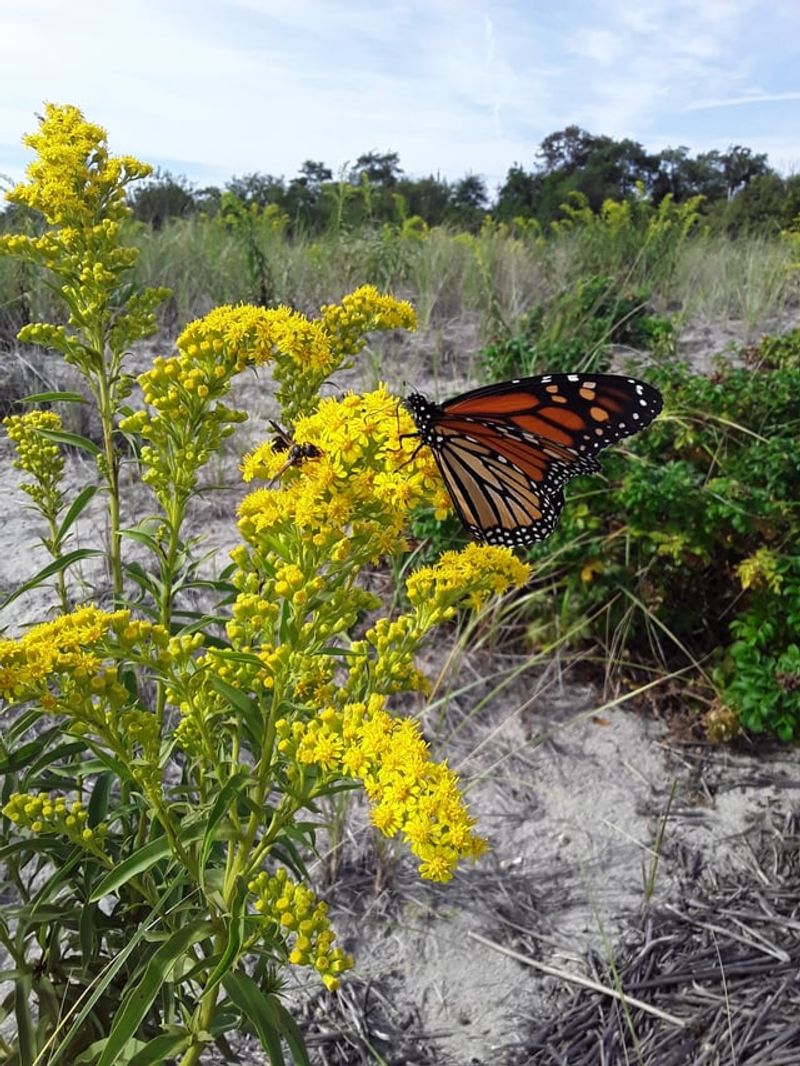
October gardens can look tired, and that is exactly when seaside goldenrod (Solidago sempervirens) turns on the lights. Big golden plumes open in late summer and keep glowing deep into autumn.
The leaves feel slightly thick and succulent, a clue that this perennial evolved beside salt water. Plants often form neat mounds, though happy specimens can stretch 6 to 8 feet tall.
Natural range runs from Newfoundland down to Florida and over to Texas, covering brackish shorelines, dunes, and salt marshes. Yards near the bay or ocean fit that description nicely.
Full sun brings the heaviest flowering. Soil moisture can swing from moist to occasionally wet without bothering the plant one bit.
Monarch butterflies matter here. As they push south in fall, seaside goldenrod offers one of the last big nectar buffets along the coast, and watching them pile onto a single clump is a genuine treat.
Bees, wasps, and beetles crowd in too, which means more pollination for everything else in your garden.
Unlike some goldenrods, it does not spread by aggressive underground runners. It does self-seed, so snip spent blooms before seeds ripen if you want tighter control.
And let us settle an old rumor: goldenrod pollen is heavy and sticky, carried by insects rather than wind. Ragweed, blooming at the same time, causes those autumn sneezes.
5. Switchgrass Adds Texture While Tolerating Heat And Drought
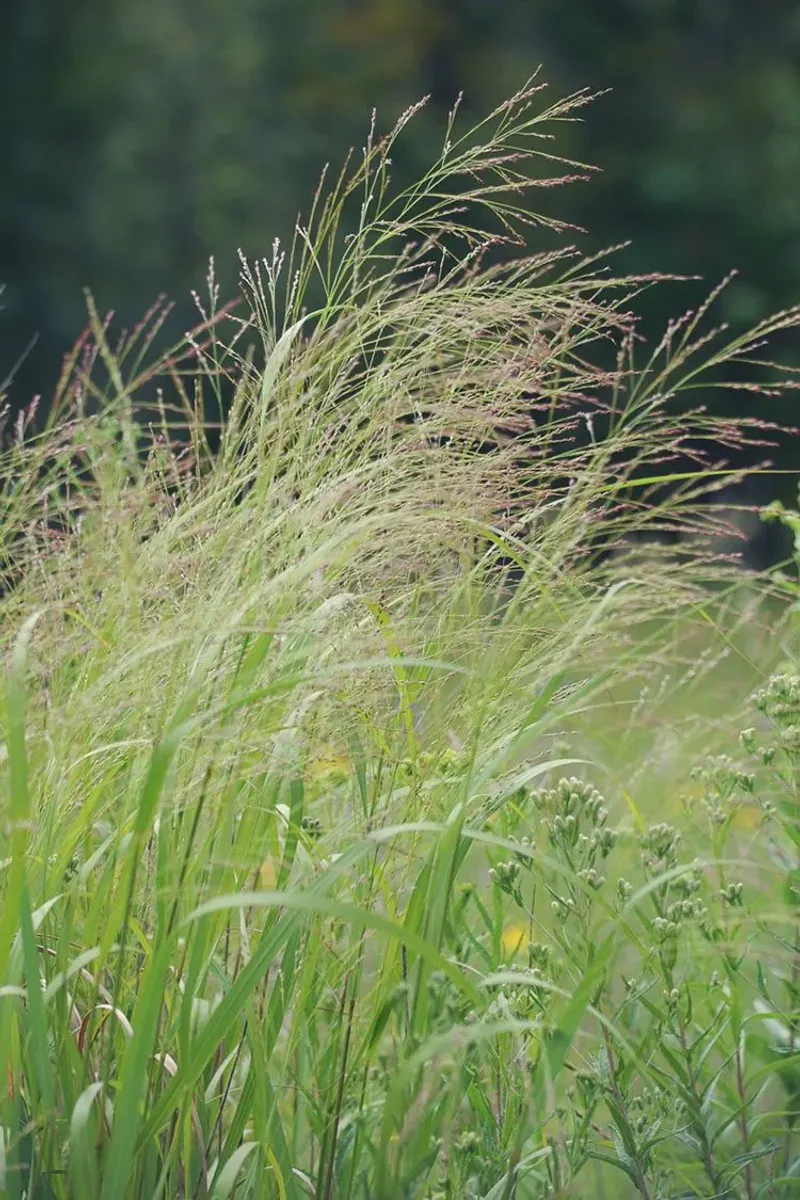
Wind moving through switchgrass makes a soft rustling sound that turns a plain yard into something alive. Panicum virgatum is a warm-season clumping grass, growing 3 to 6 feet high and 2 to 3 feet across.
Summer foliage is a clean green. Autumn shifts it to yellow, sometimes brushed with orange, before it settles into a warm tan-beige that holds all winter.
Midsummer brings the real show. Fine, pink-tinged flower panicles float above the leaves like a cloud, then fade to beige as seeds ripen and stay put through the cold months.
Toughness is the selling point for coastal gardeners. Established clumps handle heat, drought, and stretches of soggy soil after downpours.
Sun to part shade works, and the grass accepts sandy, loamy, or clay ground. Sandy yards near the shore are no problem at all.
Ground-feeding songbirds and game birds eat the seeds through winter. The dense base also gives rabbits and nesting birds a place to hide.
Switchgrass develops a deep, extensive root system that helps hold soil on slopes and drainage swales. That same root depth is why the plant barely flinches during a dry August.
Cut clumps back to a few inches in late winter. Leave them standing until then for texture, movement, and free bird food.
6. Beautyberry Adds Fall Color And Wildlife Appeal
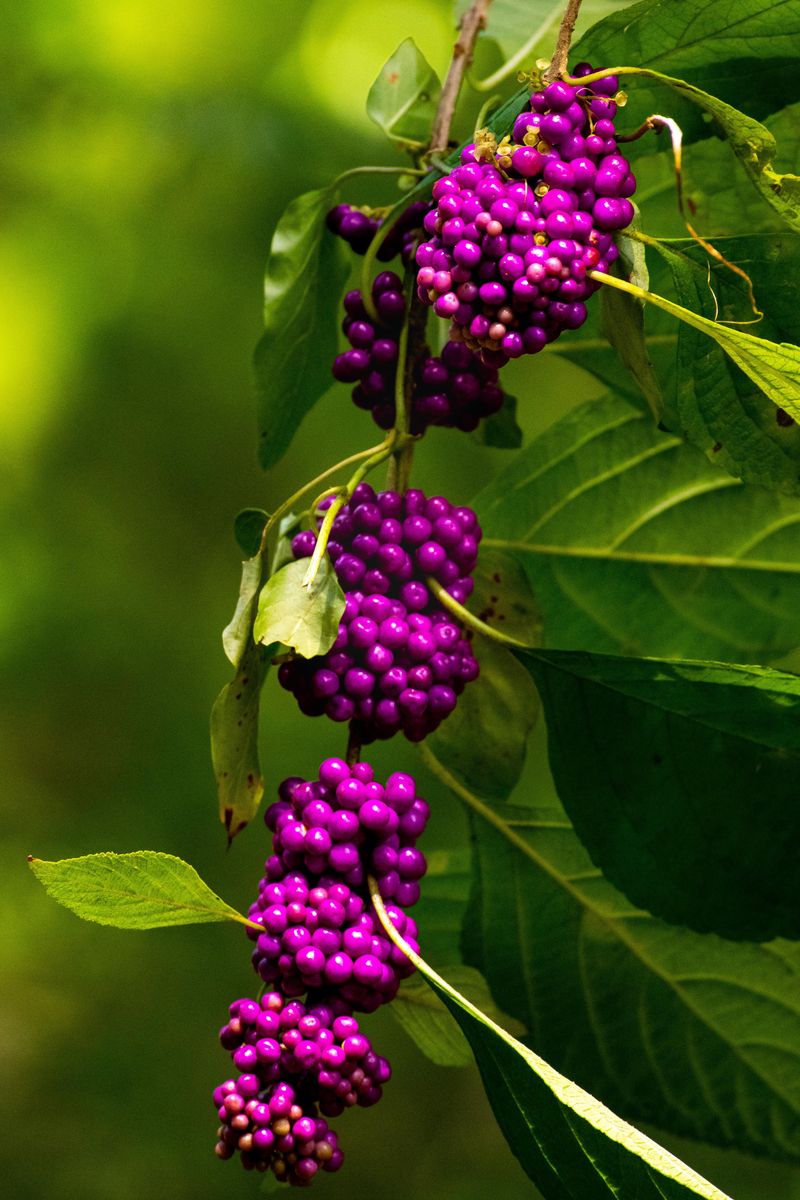
The first time people see American beautyberry in October, they usually ask if someone spray-painted it. Those violet-magenta berry clusters really are that loud.
Callicarpa americana grows fast, reaching 3 to 8 feet tall and about as wide. Arching branches give it a relaxed, fountain-like shape that softens stiff corners of a yard.
Berries form tight rings around the leaf nodes in late September and early October. They hang on after the leaves drop, so bare branches stay decorated well into the cold season.
More than forty species of songbirds eat them, including mockingbirds, cedar waxwings, robins, and cardinals. Those fruits provide an important food source for birds as they move into fall and winter.
Spring and early summer bring small pink to white flowers that most people miss. Native bees and butterflies find them without any trouble.
Established plants tolerate dry periods, although they produce the heaviest fruit with adequate moisture. Sunny spots with somewhat moist soil produce the heaviest fruit, though light shade and drier ground still work.
Prune in late winter before growth starts. Flowers and fruit form on new wood, so a hard cutback actually boosts the berry display.
Tuck it into a mixed shrub border or beneath taller trees in your landscape. Old folk tradition says crushed leaves tucked under a hat helped keep mosquitoes away.
7. Inkberry Holly Creates Dense Green Cover In Coastal Landscapes
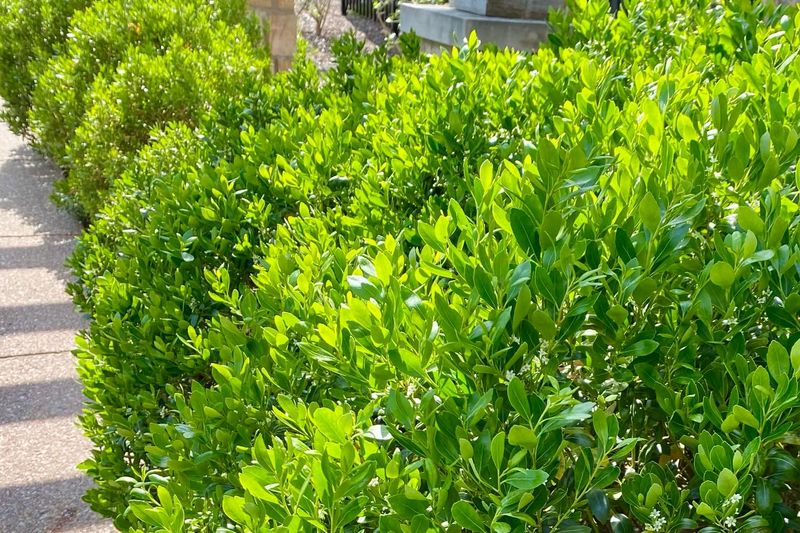
Hollies have a reputation for poking anyone who brushes past them. Inkberry (Ilex glabra) skips the spines entirely, which makes it a friendly choice along walkways and play areas.
Also called gallberry, this evergreen shrub grows roughly 5 to 10 feet high and wide. It is native to coastal Virginia and the southeastern counties, so Virginia Beach yards are squarely in its comfort zone.
Small, dark green, glossy leaves stay on year-round and give beds a calm, polished look. The overall effect is softer than a boxwood but just as neat.
Adaptability is impressive. Full sun to moderate shade works, and the shrub handles wet or dry ground in sandy, loamy, or peaty soil.
Salt tolerance is solid, a real advantage within a few blocks of the water. Acidic soil keeps the foliage rich green, while alkaline conditions can turn leaves yellowish.
Female plants carry shiny black fruits, called drupes, that hang on into winter and feed birds and small mammals. Late spring flowers look plain but pull in specialist bees and butterflies.
Because inkberry spreads slowly by underground stems, it works beautifully for mass plantings and for holding soil on a slope.
Older plants sometimes go leggy at the bottom. A shearing in early spring thickens things right back up.
8. Virginia Sweetspire Brings Fragrant Blooms To Damp Garden Areas
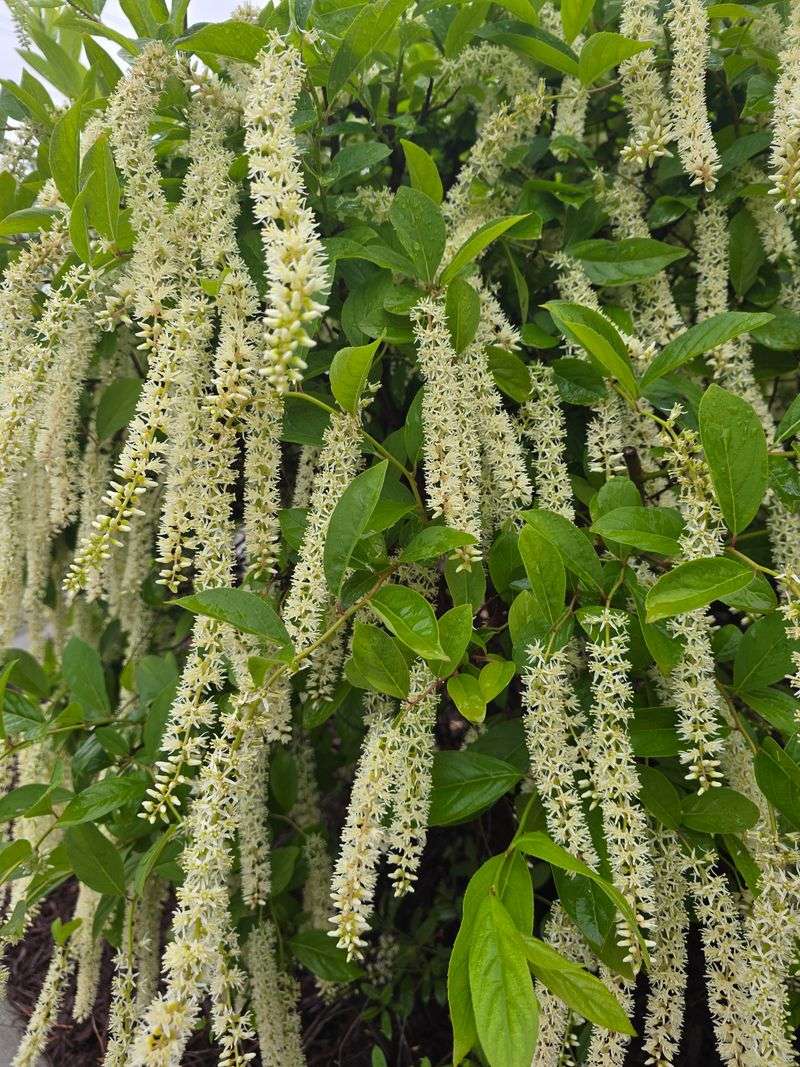
Got a soggy corner where nothing seems happy? Virginia sweetspire (Itea virginica) treats that spot like prime real estate.
The shrub grows 3 to 6 feet tall and 4 to 6 feet wide, staying deciduous in colder winters and semi-evergreen in mild ones. Its home ground includes wet woodlands, swampy meadows, and stream banks from New Jersey to Florida.
Late spring into early summer brings arching white flower spikes with a sweet fragrance. Butterflies, bees, and hummingbirds work them over daily.
Autumn is the second act. Leaves shift into orange, red, and deep maroon, and the color holds for several weeks rather than dropping in a rush.
Moist to wet soil suits it well, although alkaline conditions can cause yellowing from iron chlorosis. Consistently moist to wet ground suits it, though established plants handle dry spells better than you would expect.
Since it suckers gently, sweetspire binds soil along pond edges and drainage ditches. Rain gardens benefit from that root network during heavy storms.
Full sun produces the strongest flowering and the boldest fall color. Heavy shade works too, just with a quieter show.
Songbirds nibble the tiny seeds, and the thick growth gives wildlife a place to duck out of sight. Deer usually pass it by, which makes it an easy win for busy homeowners.