The Compacted Ohio Lawn Problem September Is Perfect For Fixing
Walk across your Ohio lawn and some spots feel almost hard underfoot, like the ground gave up being soil somewhere along the way. That’s not your imagination.
Compacted soil packs down tight enough that water, air, and roots all struggle to get through, and most lawns are dealing with it in at least a few spots without anyone noticing.
September happens to be the ideal window for fixing it. Grass is still actively growing, but the worst summer heat has backed off, giving roots time to recover and spread before winter shuts everything down.
Fix compaction in spring or summer instead, and the lawn spends its best growing weeks just trying to heal rather than actually thickening up.
Miss this window and the same problem is still there next year, just harder to catch since the symptoms above ground rarely match how bad things already are underneath.
1. Spot The Signs Of Compacted Soil
Grab a screwdriver and push it into your lawn. If it stops after an inch and you have to lean on it, your soil is packed tighter than a stadium parking lot.
Central and Northeast Ohio sit on heavy clay, which squeezes together easily. When particles press close, the tiny air pockets vanish, and roots lose their pathways for oxygen, water, and food.
Watch for a few telltale clues. The turf feels rock hard underfoot, water pools on the surface instead of soaking in, and growth stays short and stubborn even after you feed it.
Thin patches that show up in the same places each summer are another hint. So is grass that wilts during heat waves while your neighbor’s stays perky.
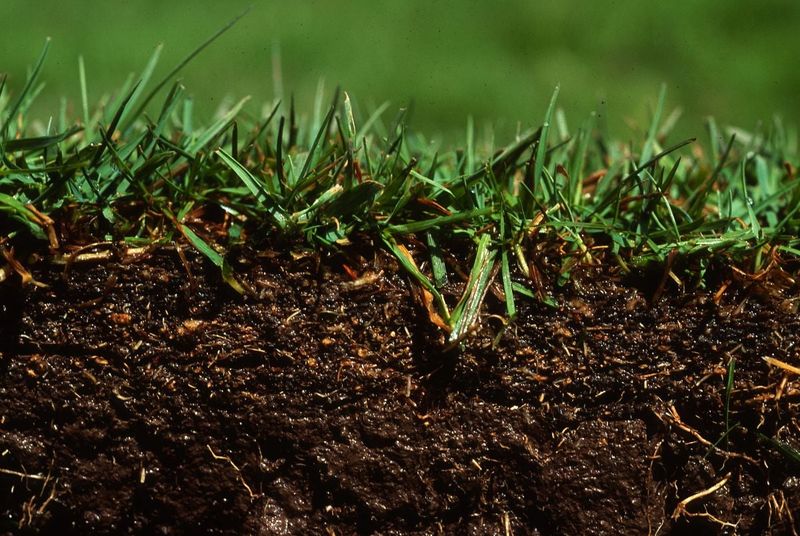
Check your thatch layer too. Slice out a small wedge of turf with a spade and look at the spongy brown mat between green blades and soil.
A thatch layer thicker than about half an inch can interfere with water and air movement, so it is another issue worth checking alongside compaction.
Areas near driveways, gates, play sets, and mower turning spots usually show it first. Those are the high-traffic zones where weight lands over and over.
Once you can name the problem, September gives you a great chance to treat it.
2. Use Core Aeration To Open The Lawn
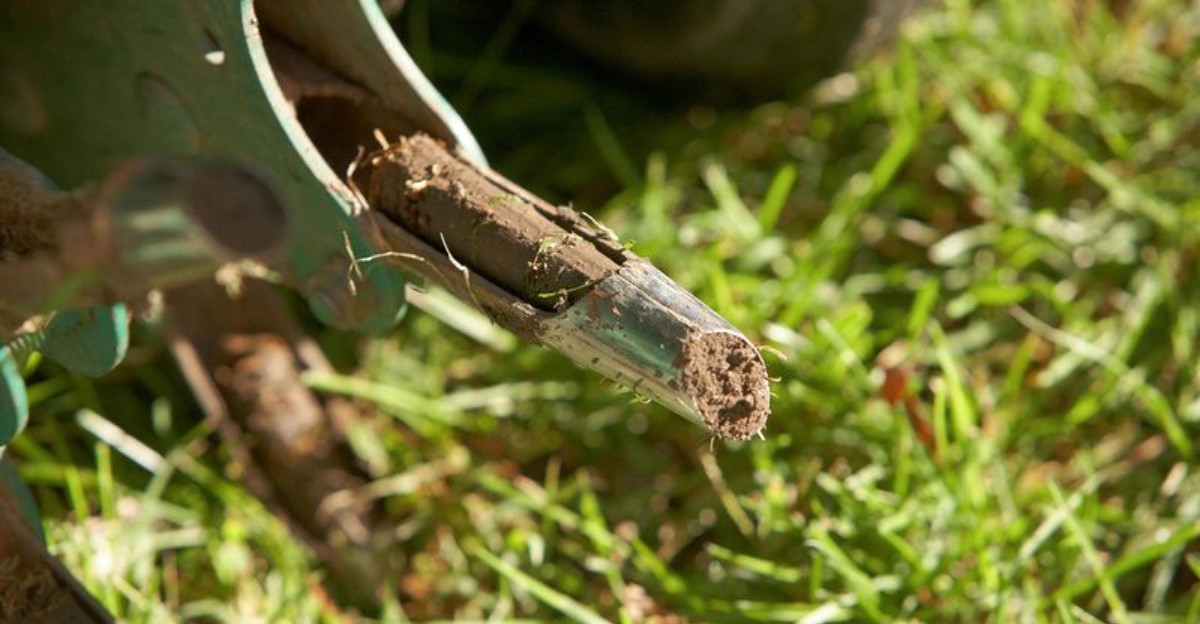
Think of core aeration as punching thousands of tiny skylights into your yard. A machine with hollow tines pulls out small plugs of soil, thatch, and turf, usually two to four inches deep and about half an inch wide.
Those open channels do a surprising amount of work. Air moves down, rainwater slips in instead of running off, and fertilizer actually reaches the roots rather than washing toward the storm drain.
Roots respond by stretching deeper, which makes next July far less stressful for your grass. Deeper roots find moisture that shallow ones cannot touch.
Aeration also helps thin out that thatch mat. Soil microbes brought to the surface start chewing through the spongy layer, so it stops acting like a raincoat over your lawn.
Your Ohio Garden Changes Every Week. Your Plan Should Too.
Gardening in Ohio changes quickly throughout the season. Every Friday you’ll receive a simple weekly plan showing exactly what to plant, prune, fertilize, harvest, and protect so you never miss the right timing.
For clay-heavy Ohio yards, core aeration can be especially useful when repeated foot traffic or heavy equipment has compacted the soil. Once per season is plenty for most properties, though busy family lawns may want it more often.
You can rent a walk-behind unit from a local equipment shop for a morning, or hire a crew if the machine feels heavy to wrangle. Either way, mark sprinkler heads and shallow cables first with little flags.
September timing matters because cool-season grass is actively growing and heals quickly.
3. Choose Hollow Tines Over Lawn Spikes
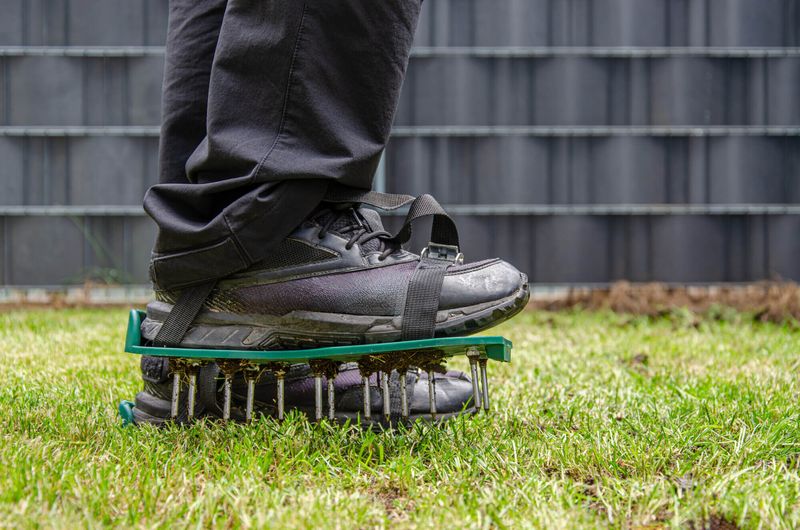
Spike aerators look tempting. They are cheap, sometimes strap onto your shoes, and poking holes seems like poking holes, right?
Not quite. Solid spikes shove soil sideways as they enter, which presses clay particles even tighter around each hole.
In dense Ohio ground, that can leave you slightly worse off than when you started.
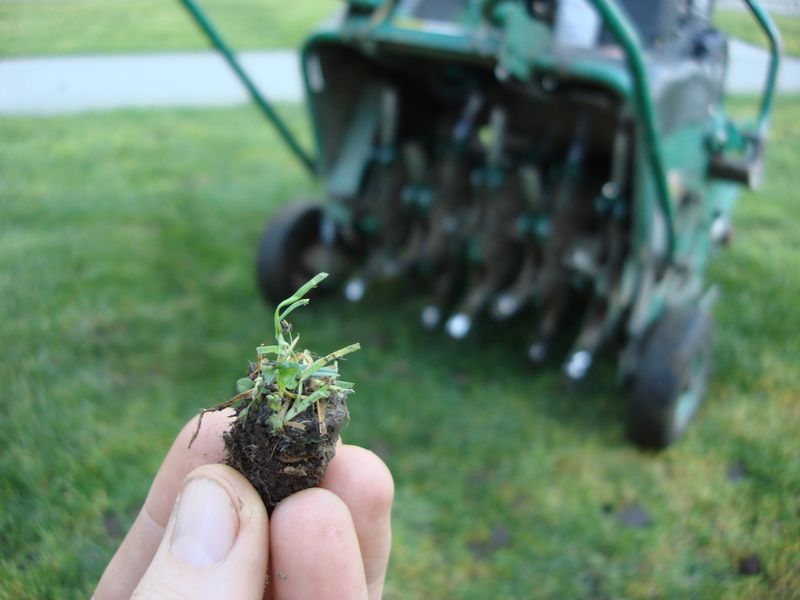
Hollow tines work differently. Each one bites down, captures a core of soil, and lifts it out entirely, leaving a genuine open space behind.
That removed volume is the whole point. Soil now has room to shift and loosen, roots can spread into the gap, and water has somewhere to go besides sitting on top.
Relief from hollow tines lasts weeks and months rather than a single afternoon. Professionals pick this method because it changes soil structure instead of just pricking the surface.
When you rent a machine, peek at the tines before loading it. You want short metal tubes with open ends, and they should look reasonably sharp rather than blunted and bent.
Dull tines skid and tear. Ask the rental shop when they were last replaced, since worn equipment does sloppy work on tough clay.
Skip the spiked sandals for compaction repair. Save them for light thatch fluffing if you enjoy the workout.
4. Wait For Moist Soil Before Aerating
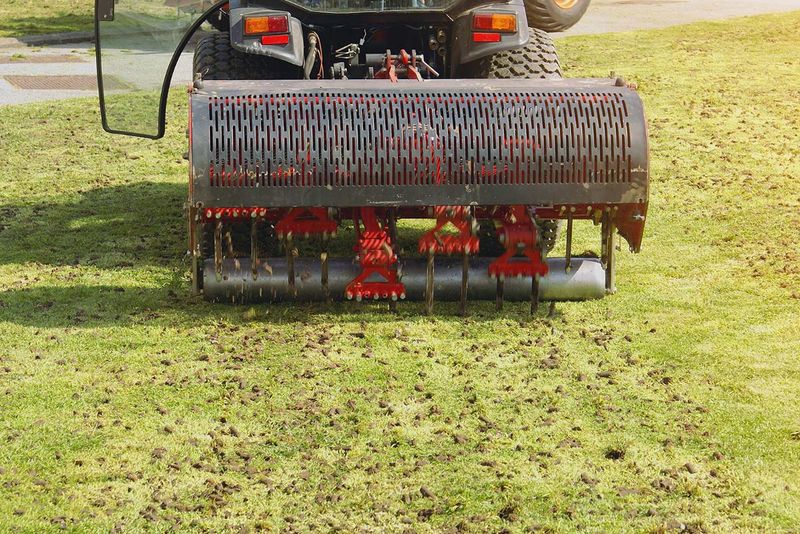
Timing beats muscle here. Soil moisture decides whether your aerator glides along pulling clean cores or bounces across the yard like a shopping cart with a bad wheel.
The sweet spot is damp, not soupy. Aim to run the machine one to two days after a decent rain, or water the lawn with about an inch and wait twenty four to forty eight hours.
Bone-dry clay turns into concrete. Tines scratch the surface, pull stubby little cores, and you burn a whole afternoon for barely any benefit.
Soggy ground causes the opposite headache. Mud packs inside the hollow tines, plugs stop ejecting, and wet clumps smear across the grass instead of sitting up as tidy cores.
A simple test helps. Push a screwdriver into the soil; it should penetrate several inches with steady pressure without requiring excessive force.
September in Ohio usually cooperates nicely. Cooler nights hold moisture longer, and fall rain showers arrive often enough that you rarely wait long for good conditions.
Keep an eye on the forecast the week before. A light rain followed by two dry, breezy days sets up an ideal window.
If you irrigate, run sprinklers the evening before your rental pickup. Morning soil will be soft and cooperative when the machine rolls off the trailer.
5. Make Several Passes Over Tough Areas
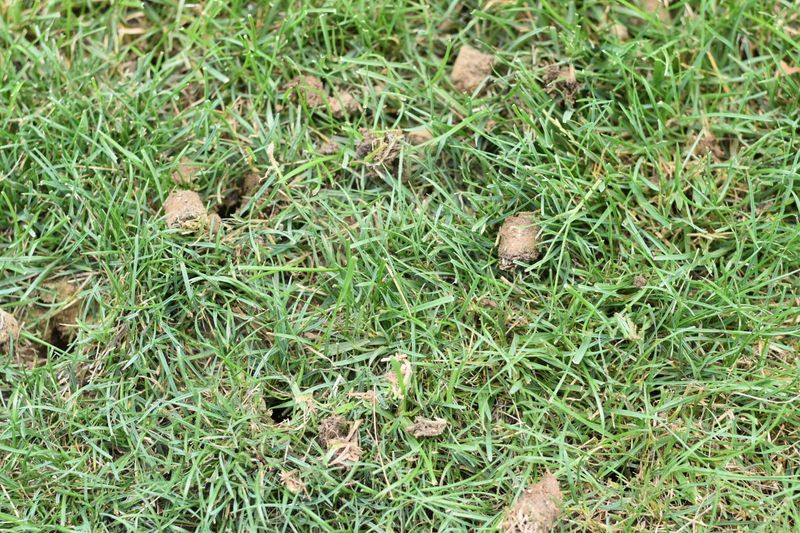
One lap around the yard rarely gets the job done. A single pass may not create enough openings in heavily compacted areas, so making a second pass in a different direction can improve coverage.
So plan on two trips across the whole lawn. Run the first pass north to south, then turn and run the second east to west for a crisscross grid.
That pattern spreads holes evenly instead of leaving skinny untouched strips between rows. Overlap each line slightly, like mowing, so nothing gets skipped.
Give extra attention to the hardest zones. Pathways worn between the back door and the garage, the strip beside the driveway, the spot where the dog patrols the fence, and wherever the kids set up a goal.
Those areas may earn a third pass. Watch the cores coming out, and when they look longer and cleaner, the soil is loosening up.
Let the machine’s weight do the pushing down. Steering is your job, and walking at a steady, unhurried pace produces better cores than racing.
Fun detail worth knowing: a well-aerated lawn can soak up rain several times faster than a packed one, which means fewer puddles on your walkway.
Take a water break between passes. The machine is heavy, and your arms will thank you later.
6. Leave Soil Plugs To Break Down Naturally
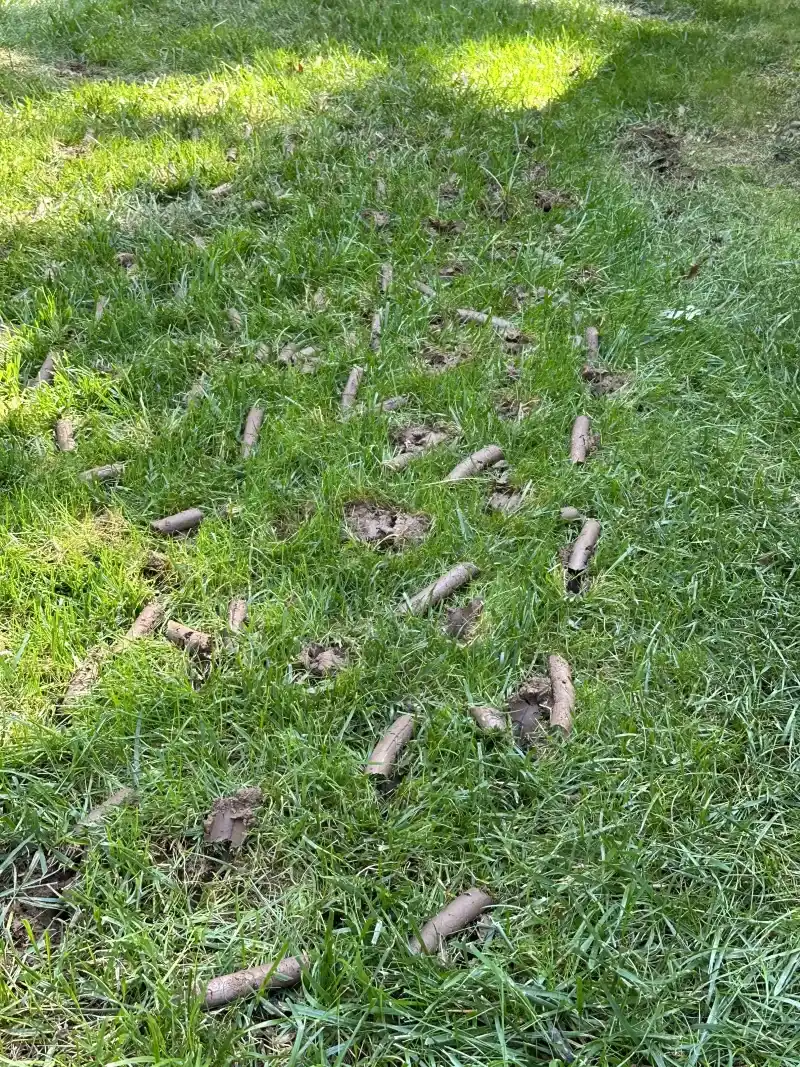
Those little brown cores littering the yard look messy. Resist the urge to rake them up.
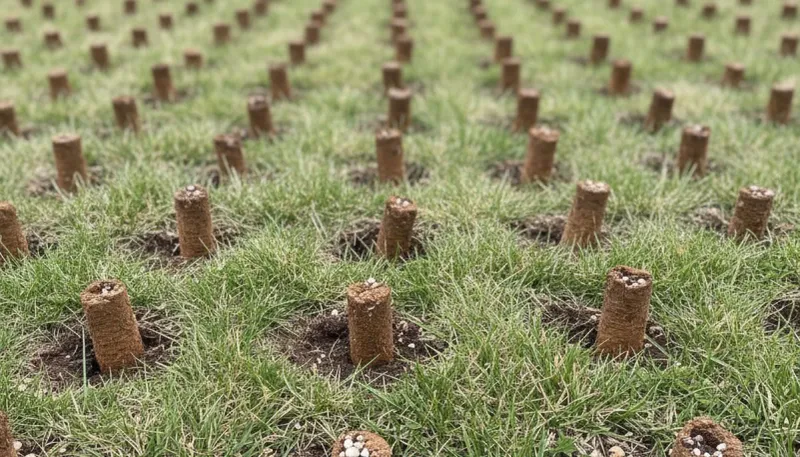
Each plug is packed with soil, organic matter, and helpful microbes. Sitting on the surface, they act as free topdressing that feeds the lawn as it crumbles.
Nature handles the cleanup. Rain, dew, mowing, and microbe activity break plugs apart in about one to two weeks, though two to four weeks is common if the weather stays dry.
Hauling them away throws out material your lawn can reuse. It also means walking all over tender, recovering turf with a rake and a wheelbarrow.
If cores dry into hard little cigars and refuse to soften, you have easy options. Flip a rake over and drag the back across them, or simply mow and let the blade scatter the pieces.
Watering lightly speeds things along too. A quick sprinkle softens the clay so cores melt into the surface faster.
Within a couple of weeks, the lawn looks tidy again and the soil quietly gained a thin layer of enrichment. Repeat this each fall and you build genuinely better ground over a few seasons.
Neighbors may raise an eyebrow at the scattered plugs. A short explanation usually turns into them asking who did your aeration.
7. Pair Aeration With Fall Overseeding
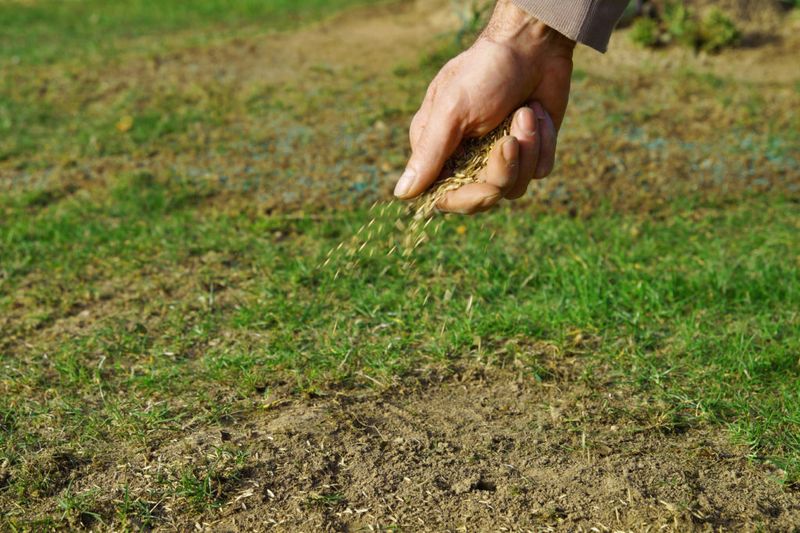
Aeration and overseeding belong together like peanut butter and jelly. The holes you just created are perfect nurseries for new grass seed.
Seed needs firm contact with soil to sprout well. Dropped onto a packed lawn, much of it sits on thatch and goes to waste, but scattered over fresh aeration holes, seeds tumble into those pockets and find moisture and shelter.
Spread seed the same day, while the openings are still wide. Use a broadcast spreader for even coverage, then water lightly and often for the first two weeks.
Ohio yards mostly grow cool-season types like Kentucky bluegrass, tall fescue, and perennial ryegrass. Early fall suits all three because warm soil sparks germination while cool air keeps seedlings comfortable.
Thin patches fill in, bare spots close up, and turf grows thick enough to crowd out weeds next spring. Density is your best defense against crabgrass.
Pick a seed blend suited to your light. Shady side yards want more fescue, while sunny front lawns handle bluegrass well.
Hold off on weed control products for a while, since many of them stop new seed from sprouting. Read labels carefully before applying anything.
September gives seedlings roughly six to eight good growing weeks before winter settles in.
8. Reduce Traffic On Compacted Lawn Areas
Ever notice how the shortcut across the grass turns into a dirt trail by August? Feet win every argument with soil.
Compaction builds quietly from ordinary stuff. Kids running the same route, a dog patrolling the fence line, mower wheels tracing identical circles, and the occasional contractor truck parked on the turf all press particles together.
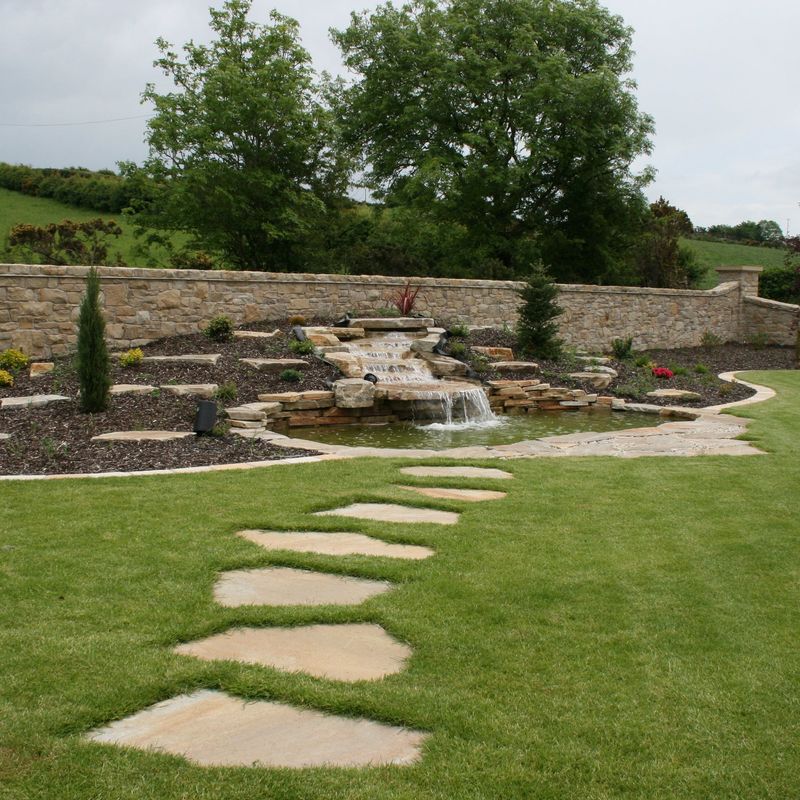
Breaking those habits helps the aeration last. Lay stepping stones or a mulch path along the route everyone takes, and suddenly the grass gets a break.
Move play equipment now and then. Shifting a soccer goal or a trampoline ten feet each season spreads the wear instead of concentrating it.
Change your mowing direction weekly too. Different angles mean wheels never groove the same lines twice in a row.
Fresh grass seed deserves extra protection. Keep foot traffic off newly seeded zones for a few weeks while roots take hold.
Steer heavy deliveries toward the driveway rather than across the yard, especially when the ground is wet. Damp clay squishes far more easily than dry clay.
Some wear is unavoidable in a lawn that gets used and loved, and that is fine. Busy family yards simply benefit from aeration on a yearly schedule rather than occasionally.
Plan around how your household actually moves.
9. Give Cool-Season Grass Time To Recover
Aeration is a bit of a shock treatment. You are pulling plugs from the root zone on purpose, so the lawn needs a stretch of quiet time afterward.
Most yards bounce back within two to three weeks, sometimes four if fall turns chilly early. Holes gradually close, roots branch into the loosened soil, and blades thicken up.
Water is the biggest helper during that stretch. Keep the top inch of soil consistently damp, especially if you overseeded, and let rain handle whatever it can.
Hold off on heavy activity. Football practice and wheelbarrow traffic can wait until the turf feels springy again.
Delay mowing until the new grass is established enough to withstand the mower without being pulled from the soil, then mow lightly with a sharp blade.
When you do mow, use a sharp blade and take off only a small amount. Dull blades yank tender seedlings right out of the ground.
A light fall feeding supports the whole process. Nutrients slip straight down through those open channels to where roots can grab them.
By late October, the difference is easy to feel. Soil gives slightly underfoot, puddles disappear faster, and the lawn heads into winter with real strength stored below the surface.