A Giant Yellow And Black Grasshopper Is Eating Through Mississippi Gardens Before First Frost
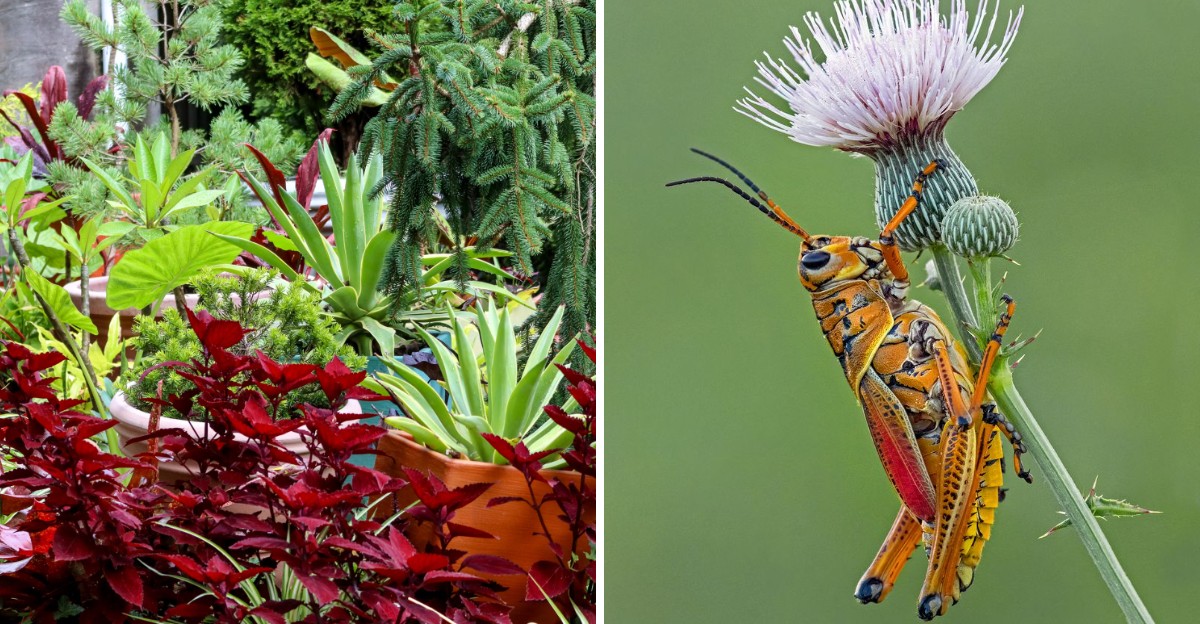
Something clicks near your amaryllis bed this morning, and it is not a bird. Leaves hang in ribbons, and stems lie stripped bare overnight. This is no ordinary bug crawling through your garden.
Mississippi gardeners across the state are seeing this exact damage right now. Bright colors flash between your tomato stakes, yellow and black. It lumbers instead of leaping, bold and unbothered.
Hissing rises the moment you lean in close. Size alone tells you this is no ordinary grasshopper. Heat and dry soil pull these giants into the open early. Late summer marks their busiest, hungriest stretch.
Cooler nights ahead push them to feed harder now. Your figs, your tomatoes, your flowers all sit exposed. Across Mississippi, yards from the coast to the hills hear the same clicking sound.
Ignoring it only invites more damage tomorrow. You need to know what this creature is and how to stop it.
The Oversized Visitor Behind The Chewed Leaves
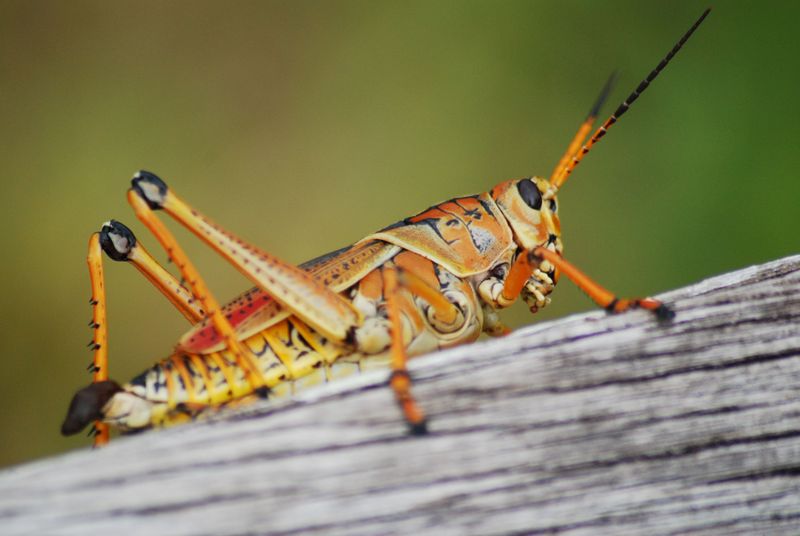
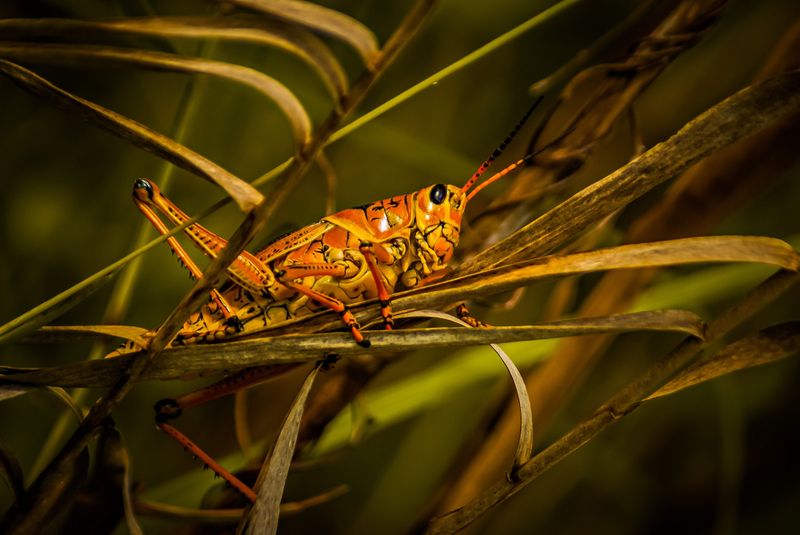
Picture a grasshopper the size of your thumb, then double it. That is the Eastern lubber, Romalea microptera, and adults can stretch past three inches from head to tail.
The name lubber comes from an old English word meaning clumsy, which fits perfectly. These insects barely fly at all because their wings are short and stubby compared to their heavy bodies.
Instead of zipping away like a typical field grasshopper, a lubber crawls, waddles, and makes short hops when pressed. Gardeners often describe watching one lumber across a walkway like it has nowhere important to be.
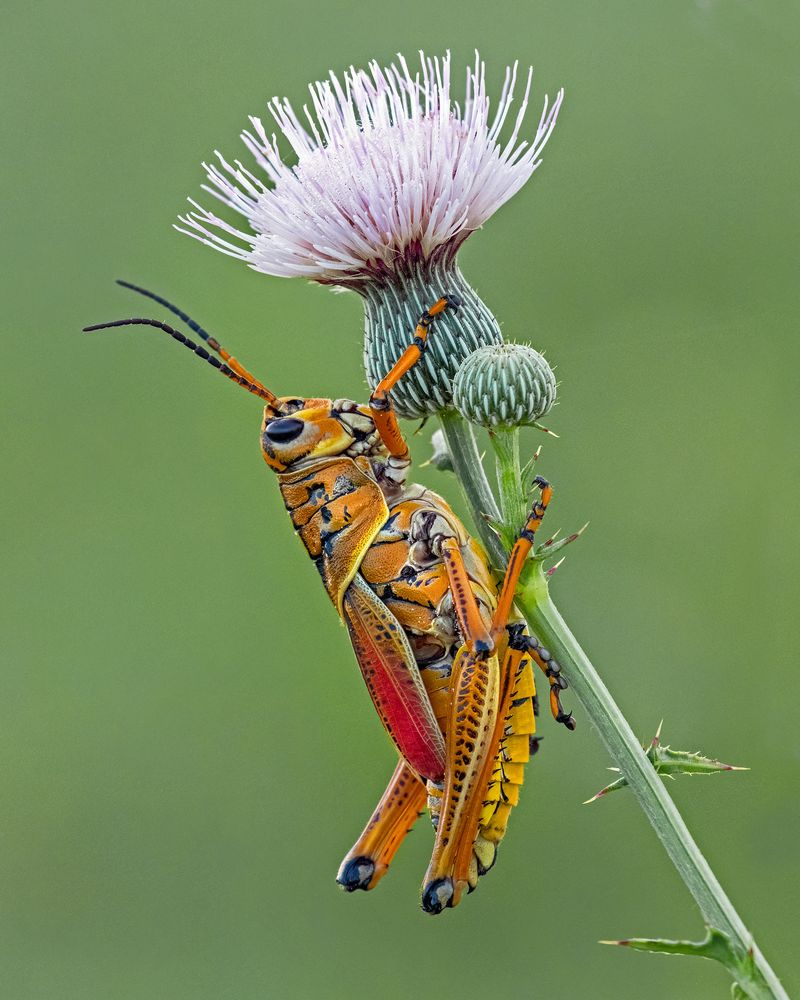
Coloring shifts as they grow. Young ones look almost coal black with thin yellow or red racing stripes down their backs, while mature adults turn buttery yellow, tan, or olive with bold black splotches.
Underneath those short wings sits a flash of rosy pink or red, which they show off when startled. Combine that with a hissing sound and a foamy spray, and you have an insect that works hard to look intimidating.
Mississippi sits comfortably inside their range, which stretches across the Gulf states from Florida through Louisiana and into parts of Texas and the wider Southeast. Coastal counties and the southern half of the state usually see the heaviest numbers.
By September, the ones in your beds are full-grown adults that have been feeding since spring. They are slow, obvious, and easy to spot, which gives gardeners a practical advantage.
Why Late Summer Brings Them Into Your Beds
Timing explains a lot here. Lubber eggs sit underground through winter in sandy, moist soil, then hatch in spring when things warm up.
Tiny black nymphs emerge in clusters and march together through the landscape, molting five or six times as they grow. Each molt makes them bigger, hungrier, and harder to overlook.
By mid to late summer, they have reached adult size and their appetites peak. September finds them at their largest, feeding heavily while they mate and prepare to lay eggs in the soil.
Females dig small chambers and deposit egg pods holding dozens of eggs each. One female may produce several pods before cooler weather slows everything down.
Your Mississippi Garden Changes Every Week. Your Plan Should Too.
Gardening in Mississippi changes quickly throughout the season. Every Friday you’ll receive a simple weekly plan showing exactly what to plant, prune, fertilize, harvest, and protect so you never miss the right timing.
Wet spring weather tends to produce bigger populations the following season, since egg survival improves in damp ground. Gulf Coast humidity gives them a comfortable head start.
Drought can push them out of ditches, pastures, and weedy lots toward irrigated yards. Your watered flower beds look like an oasis when surrounding vegetation turns crispy.
They also travel in loose groups rather than spreading out evenly. Finding six or eight on a single amaryllis clump is normal, which makes damage feel sudden and concentrated.
Once the first frost arrives, adults fade from the landscape for the season. The eggs, though, are already tucked into the soil waiting for spring, which is exactly why September actions matter for next year.
Favorite Plants On Their September Menu
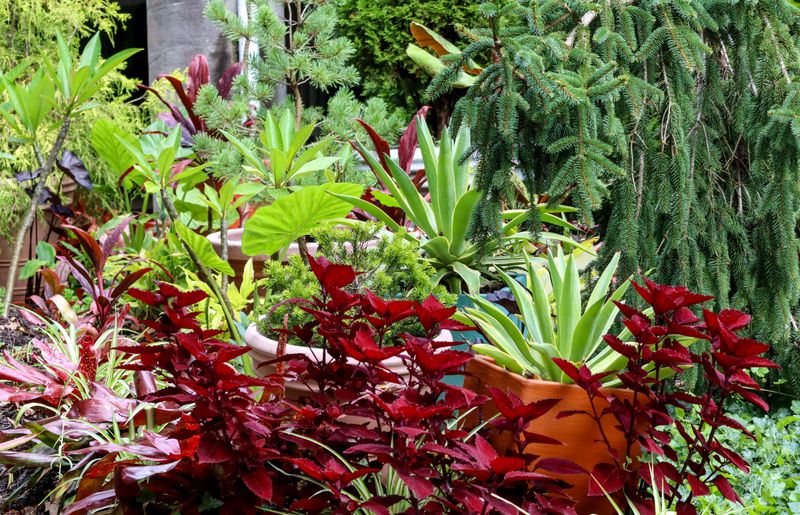
Ask any Gulf Coast gardener what lubbers love and amaryllis comes up first. Crinum lilies, spider lilies, and rain lilies rank just as high on the list.
Something about the broad, tender foliage of the amaryllis family makes it irresistible. A healthy clump can go from lush to skeletal in a matter of days.
Vegetable beds take hits too. Beans, peas, okra, sweet potato vines, lettuce, cabbage, and leafy greens all show up in feeding reports across the South.
Citrus trees, figs, and young fruit trees lose leaves around the edges, and tender new growth disappears first. Mature trees usually shrug it off, while small nursery plants struggle.
Ornamentals are not safe either. Butterfly weed, canna, banana, elephant ear, hibiscus, and even oleander get sampled by hungry adults.
Damage looks distinctive once you learn it. Ragged, irregular chunks are chewed from leaf margins, often leaving thick midribs and stems standing like bare skeletons.
Because lubbers eat during daylight hours, you can usually catch them in the act. Morning and late afternoon are prime viewing times when temperatures feel comfortable.
Here is a useful quirk. Gardeners often report less feeding on rosemary, lantana, and some thick-leaved succulents, though this varies and isn’t strictly documented.
Knowing their favorites lets you focus your attention. Check the lily bed and the greens first each morning, and you will find the culprits fast.
That Hiss, Foam, And Warning Color Explained
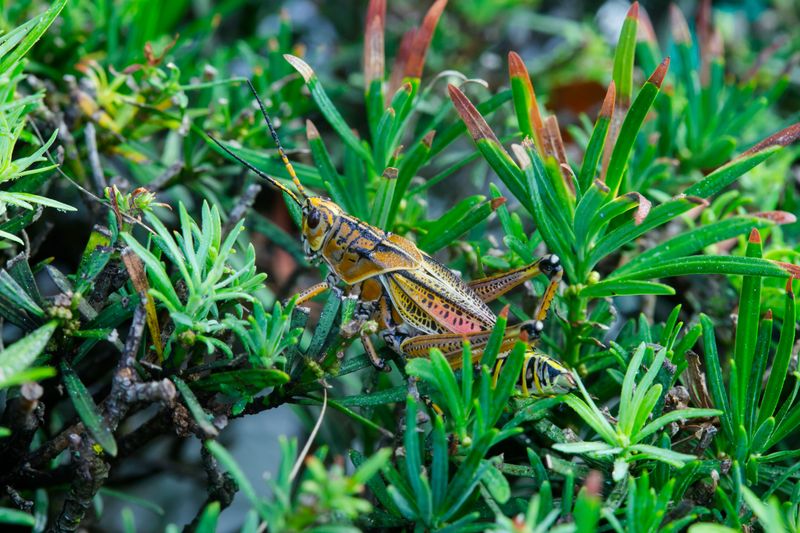
Bright yellow and black is nature shouting a warning. Scientists call it aposematic coloring, and it tells predators that a meal will taste terrible.
Lubbers back up the advertisement. They absorb and store compounds from the plants they eat, making themselves unpleasant or toxic to birds, lizards, and small mammals.
Poke one and the show begins. It may spread those stubby wings to flash red, hiss loudly through its breathing openings, and release a frothy, smelly foam from its thorax.
The foam carries a sharp odor and can irritate skin or eyes. Rinse your hands after handling, and keep curious kids and pets from mouthing them.
Dogs that chomp one often drool heavily and may vomit. Reactions can range from mild to more serious, so call your vet if a dog eats more than one.
Loggerhead shrikes have figured out a workaround. The birds impale lubbers on thorns or barbed wire and leave them for a day or two until the toxins break down, then return for a snack.
Very few other predators bother. That defense is a big reason populations build up so noticeably in yards and ditches.
The upside for gardeners is confidence. Lubbers do not bite people, they cannot sting, and they move too slowly to escape a determined hand in a glove.
Understanding the theatrics takes the scare out of them. Loud and colorful, yes, but harmless to you personally.
Hand Removal Still Beats Everything Else
Old-fashioned and slightly gross, hand collecting remains the single most reliable approach. Lubbers are large, slow, and active in daylight, which makes them easy targets.
Grab thick garden gloves and a bucket with a few inches of soapy water. Walk the beds in early morning while the insects are cool and sluggish.
Pluck each one and drop it straight into the bucket. Some gardeners prefer a long-handled grabber tool if touching insects makes them squeamish.
Consistency matters more than intensity. Ten minutes a day for a week or two will noticeably thin a population, while one big sweep leaves stragglers behind.
Check the undersides of leaves and the base of lily clumps. They tuck themselves low during the hottest part of the afternoon.
Spring is the golden window if you plan ahead. Newly hatched nymphs gather in tight black clusters on low vegetation, and one scoop can capture dozens at once.
Mark those hatching spots on a garden map. Egg-laying sites get reused, so the same sunny, sandy patch often produces clusters year after year.
Chemical sprays work poorly on adults. Their thick bodies and mature exoskeletons shrug off most garden insecticides, and repeated spraying harms pollinators you want around.
If you choose a product, target small nymphs in spring with a labeled bait or spray and follow directions carefully. For September adults, though, the bucket wins hands down.
Preparing Your Garden Before The First Frost
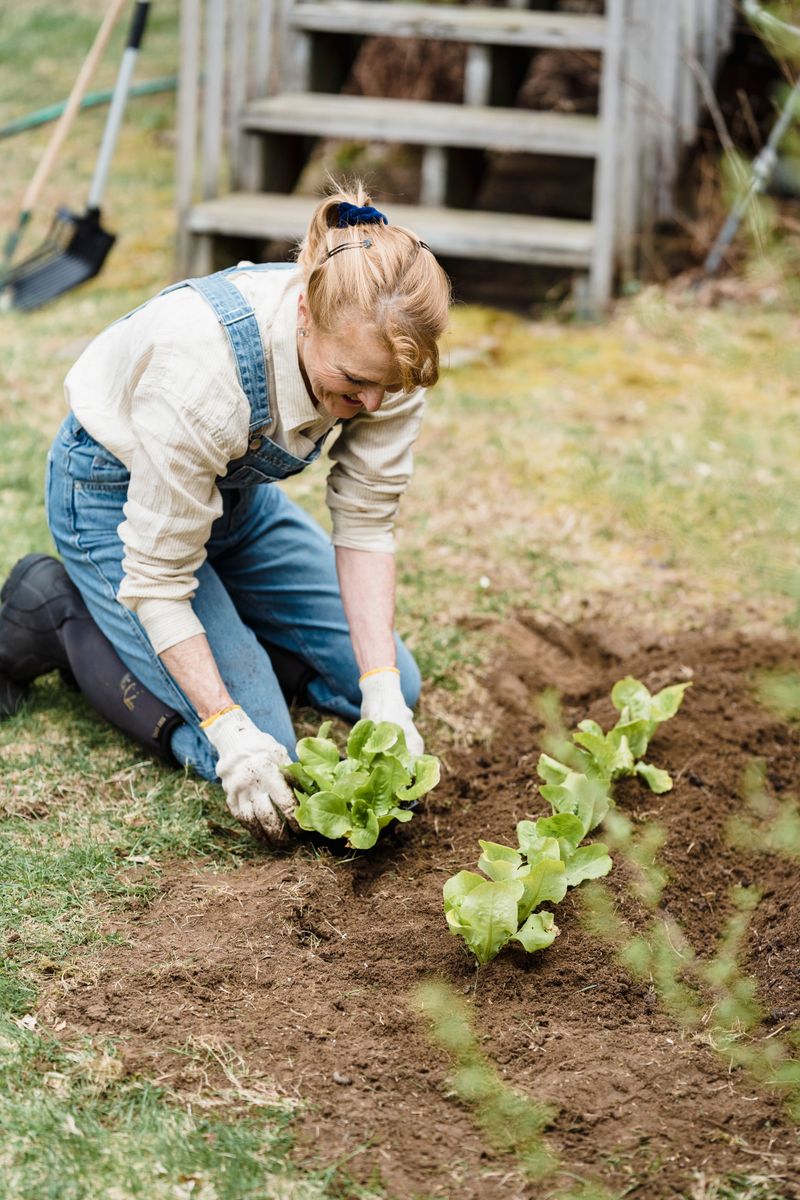
Frost timing varies widely across Mississippi, often arriving earlier in the north and later along the coast, so check your local extension office for exact dates. Adults fade as temperatures drop, but their eggs are already underground.
Think of September and October as your setup months for a calmer spring. What you do now shapes next year’s numbers.
Start by clearing weedy, overgrown edges near your beds. Tall grass along fence lines and ditches gives nymphs a place to hatch and gather before they move in.
Lightly cultivating bare soil in sunny, sandy spots can expose egg pods to drying air and hungry ground beetles. Focus on the areas where you saw the heaviest activity.
Protect valuable plants with fine mesh or floating row cover. A physical barrier stops chewing without touching bees or butterflies.
Give damaged lilies and vegetables a boost with water and a light feeding. Many plants push fresh growth in cool autumn weather and recover nicely before winter.
Keep a simple garden journal. Note dates, locations, and how many you collected, because patterns become obvious by the second season.
Talk with neighbors too. Lubbers wander across property lines, so a shared effort along a block gives better results than one yard working alone.
Come spring, walk your marked spots in March and April looking for black nymph clusters. Catching them small is far easier than chasing giants in September.