The Reason North Carolina Gardeners Are Sowing Crimson Clover In Empty Vegetable Beds This Week
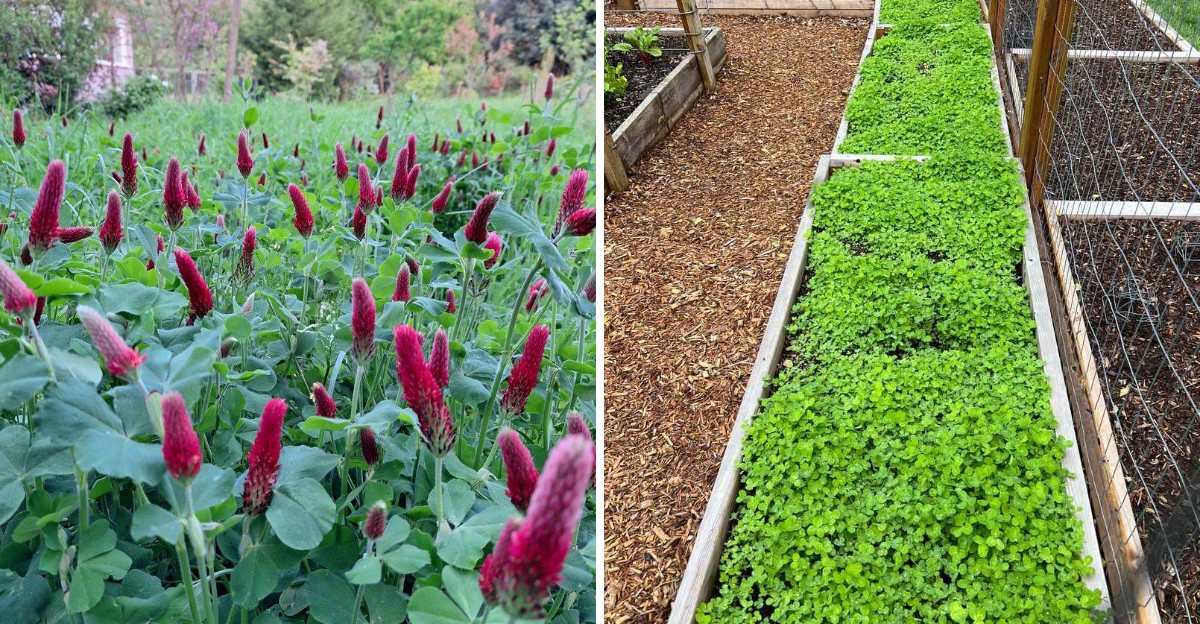
The tomato cages are stacked against the fence, the last okra pods have been picked, and a four-by-eight raised bed sits bare and brown, waiting for nothing in particular.
Instead of walking away until March, a gardener in Alamance County is scattering handfuls of tiny reddish seed across that soil and raking it in carefully.
The seed is crimson clover, and across North Carolina this is prime sowing season for it right now.
Most gardeners just let empty beds sit through winter, assuming there is nothing useful to do until spring planting rolls around again.
What looks like a small chore right now quietly sets up richer, looser, better-fed soil for next year’s vegetables.
Empty Beds Lose Nutrients To Erosion
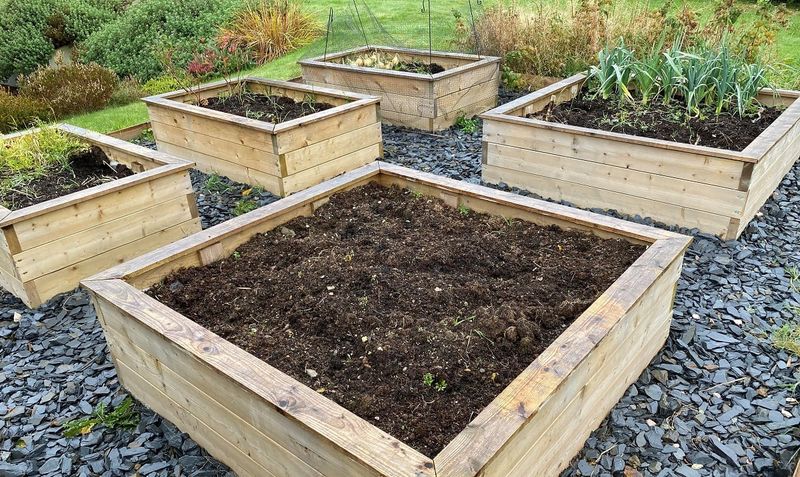
Bare soil is not resting soil at all. It is soil sitting out in the open through three or four months of North Carolina’s wettest, most unpredictable weather.
Winter rain hits exposed ground hard during this stretch. Each drop knocks soil particles loose, and water running off the surface carries away the finest bits.
What does not wash sideways often sinks straight down instead. Nitrate, the form of nitrogen plants use most, dissolves easily and moves with water through the root zone.
NC State Extension points to this leaching as a real concern on the sandy soils common in the Coastal Plain, where water drains quickly and takes nutrients with it.
Piedmont gardeners face a different version of the same problem entirely. Clay soils shed water rather than soak it in, so a sloped bed can lose a visible layer of topsoil.
A stand of crimson clover changes that picture completely. Leaves break the force of falling rain, stems slow water crossing the surface, and roots hold particles in place.
Those roots also act like a net for dissolved nutrients, catching nitrogen that would otherwise drift below reach.
Come spring, the nutrients are still in the bed rather than in the nearest ditch somewhere downhill.
Crimson Clover Fixes Nitrogen For Free
Here is the part that sounds like garden magic but is actually microbiology at work. Crimson clover partners with bacteria to pull nitrogen out of thin air.
Clover belongs to the legume family, alongside beans and peas grown in the same beds. Legumes form a working relationship with soil bacteria called rhizobia.
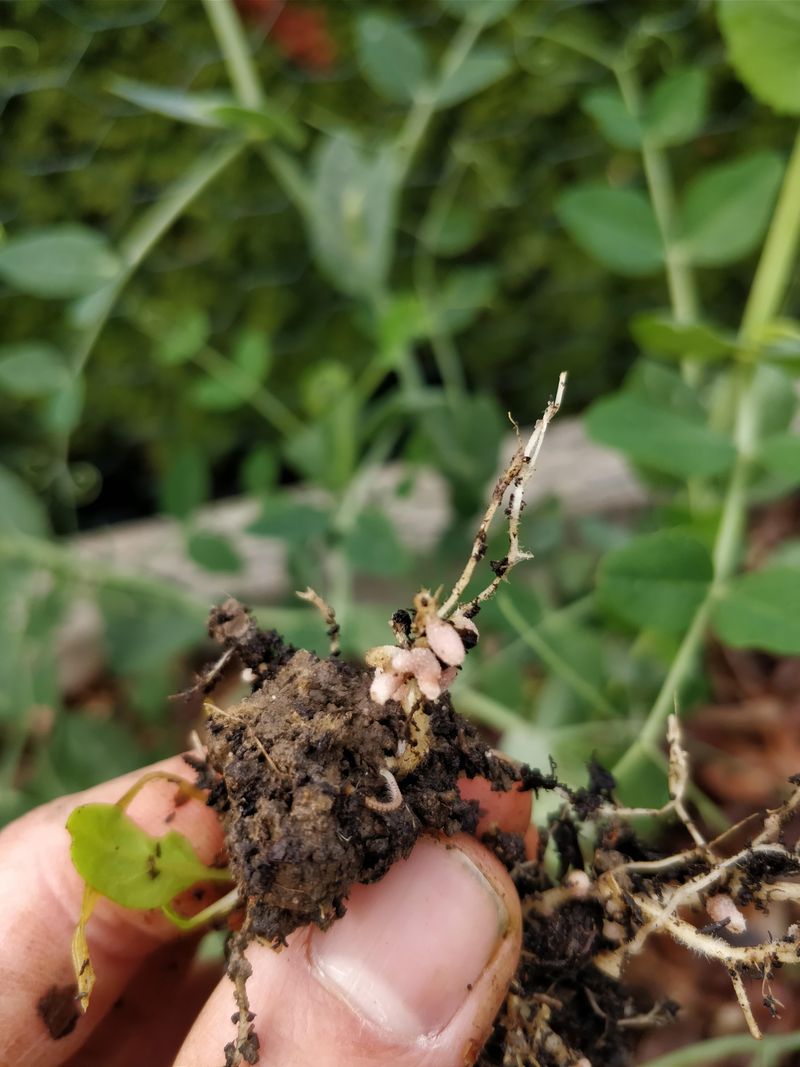
Inside those nodules, the bacteria take nitrogen gas from air in the soil’s pore spaces and convert it into a form the plant can actually use.
Want to check whether it is working properly? Dig up a plant in late winter and slice a nodule open carefully. Pink or reddish tissue inside means active nitrogen fixing is happening.
NC State Extension lists crimson clover among the legume cover crops used for this purpose, with published figures generally landing in the range of roughly 70 to 130 pounds of nitrogen per acre.
One important catch worth remembering here. The nitrogen sits locked inside plant tissue while the clover is alive. Sowing seed does not fertilize your bed this week at all.
Your North Carolina Garden Changes Every Week. Your Plan Should Too.
Gardening in North Carolina changes quickly throughout the season. Every Friday you’ll receive a simple weekly plan showing exactly what to plant, prune, fertilize, harvest, and protect so you never miss the right timing.
If your soil has never grown clover before, buying pre-inoculated seed or a small packet of rhizobia inoculant is cheap insurance.
Roots Improve Soil Structure All Winter
While the garden looks asleep to the casual observer, something is happening underground that no tiller can copy or replicate.
Crimson clover grows a taproot with a dense fringe of side roots branching off it. Through fall and the milder stretches of winter, that system keeps pushing downward and outward.
Every root that grows has to make room for itself, and in doing so it opens narrow channels through compacted layers of soil.
Roots also feed the soil while they are alive and growing. They leak sugars and other compounds that attract fungi and bacteria to the root zone.
Crumbly soil is the goal here. It soaks up rain instead of puddling, holds moisture through a dry July, and crumbles between your fingers rather than breaking into hard clods.
Piedmont gardeners fighting heavy red clay tend to notice the difference most clearly. Clay that once needed a digging fork starts giving way to a hand trowel after a season or two.
The catch is patience with this whole process. Structure builds slowly and rewards gardeners who repeat the practice, not those testing it once and giving up.
Fall Sowing Beats Bare Ground Every Time
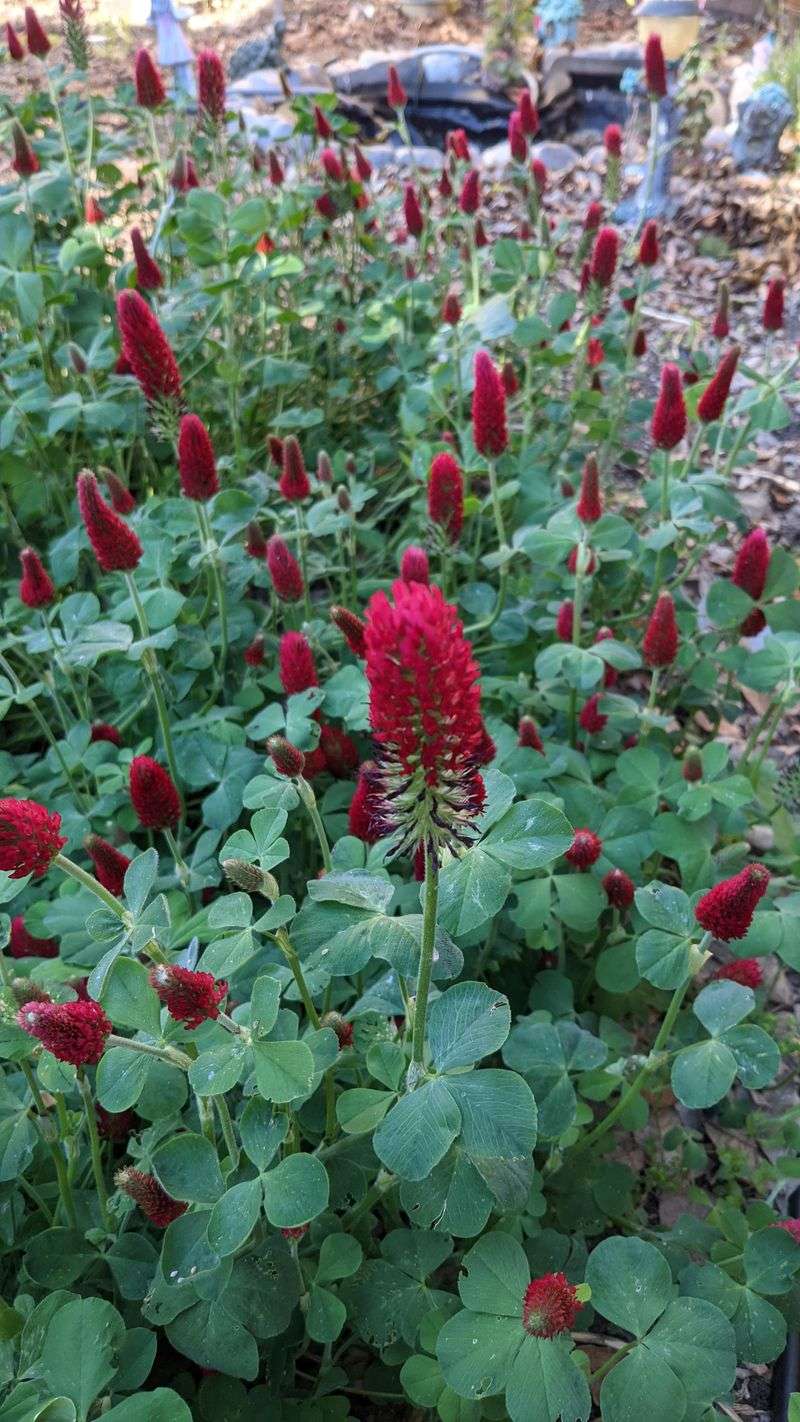
Ask a gardener why they leave beds bare over winter, and the honest answer is usually habit more than anything else. Nothing is growing, so nothing needs doing right now.
Nature disagrees with that logic though. Left alone, bare soil does not stay bare for long. Chickweed, henbit, and cool-season grasses move in by February.
A thick clover stand claims that space first instead. It shades the surface, competes for water and light, and keeps most winter weeds from getting established at all.
Timing matters quite a bit in North Carolina specifically. NC State Extension guidance generally places crimson clover seeding from roughly mid-September into late October.
Sowing is refreshingly simple to do yourself. Rake the bed smooth, broadcast seed at roughly a quarter pound per hundred square feet, rake lightly, then water if rain is not in the forecast soon.
Skip the fertilizer entirely here. Adding nitrogen actually discourages the clover from making its own through the natural process.
Compare the two beds next April side by side. One holds green growth and loose soil, while the other holds weeds and a crust you have to break up.
Spring Turnover Feeds Next Year’s Crops
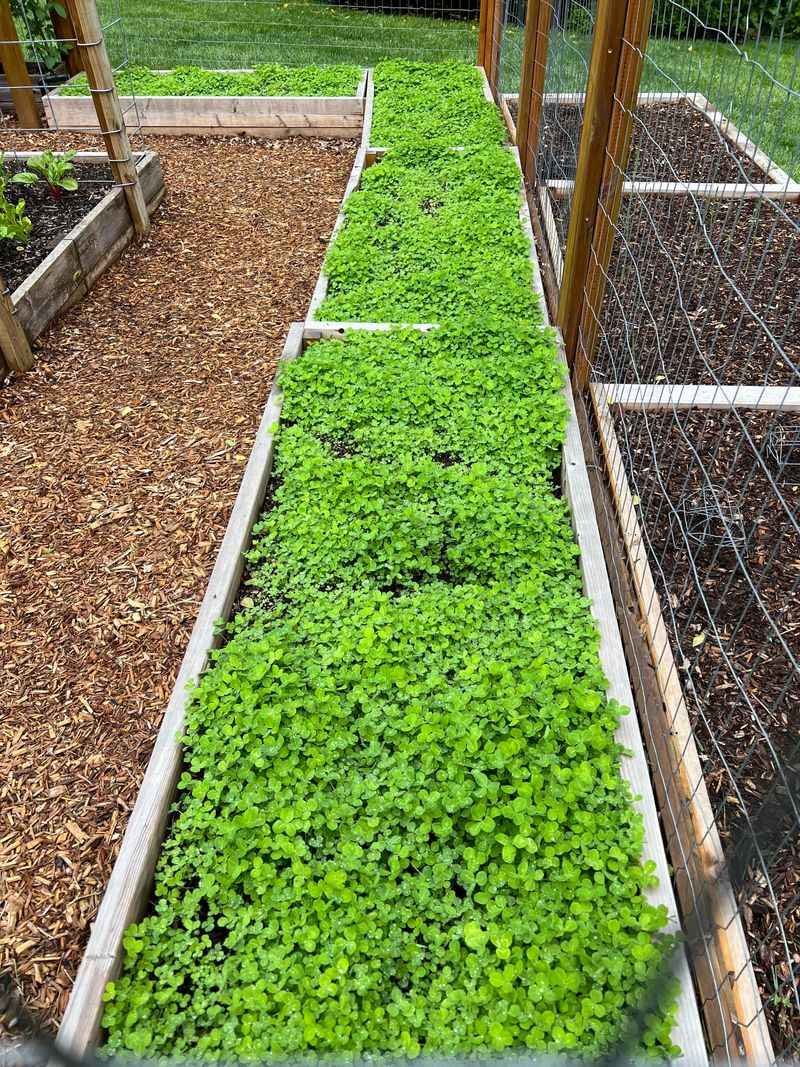
A common misunderstanding deserves clearing up right away here. Scattering clover seed does not fertilize anything this week, no matter how it might look.
All that nitrogen the rhizobia captured stays bound up inside stems, leaves, and roots for as long as the plant remains alive and growing.
That breakdown starts when you cut the clover and mix it into the bed come spring. NC State Extension guidance points to termination at early bloom to full bloom as the sweet spot.
Why then specifically? Nitrogen content in the plant peaks around flowering time. Wait much longer, and the stems turn woody and tough, slowing decomposition.
For a home bed, a string trimmer, hedge shears, or a sharp hoe handles the job easily enough. Chop the growth into shorter pieces, turn it under a few inches deep.
Give it two to three weeks before planting anything new in that spot. Warm April soil breaks the material down quickly on its own.
Then plant your heavy feeders in that bed once ready. Sweet corn, tomatoes, squash, and peppers all appreciate the slow nitrogen release that follows.
Pollinators Benefit From Its Early Blooms
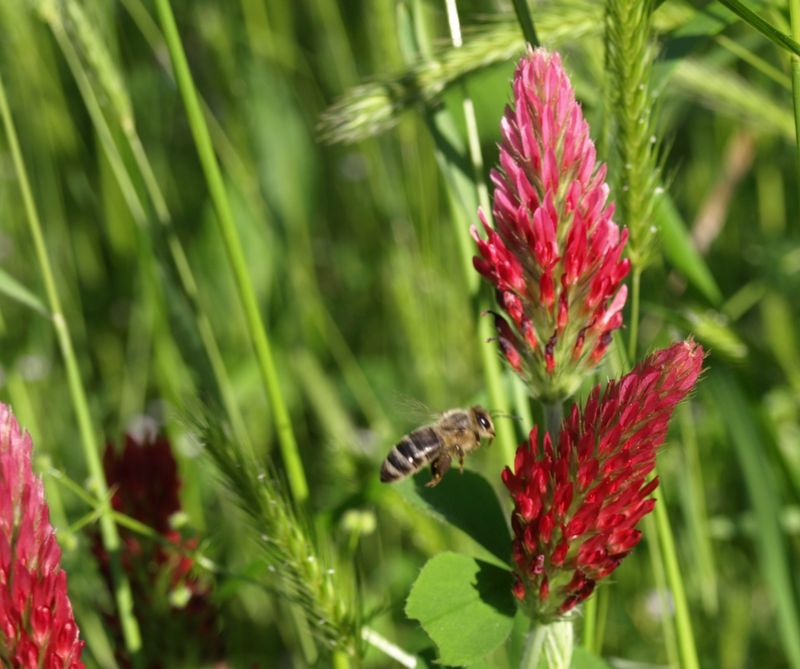
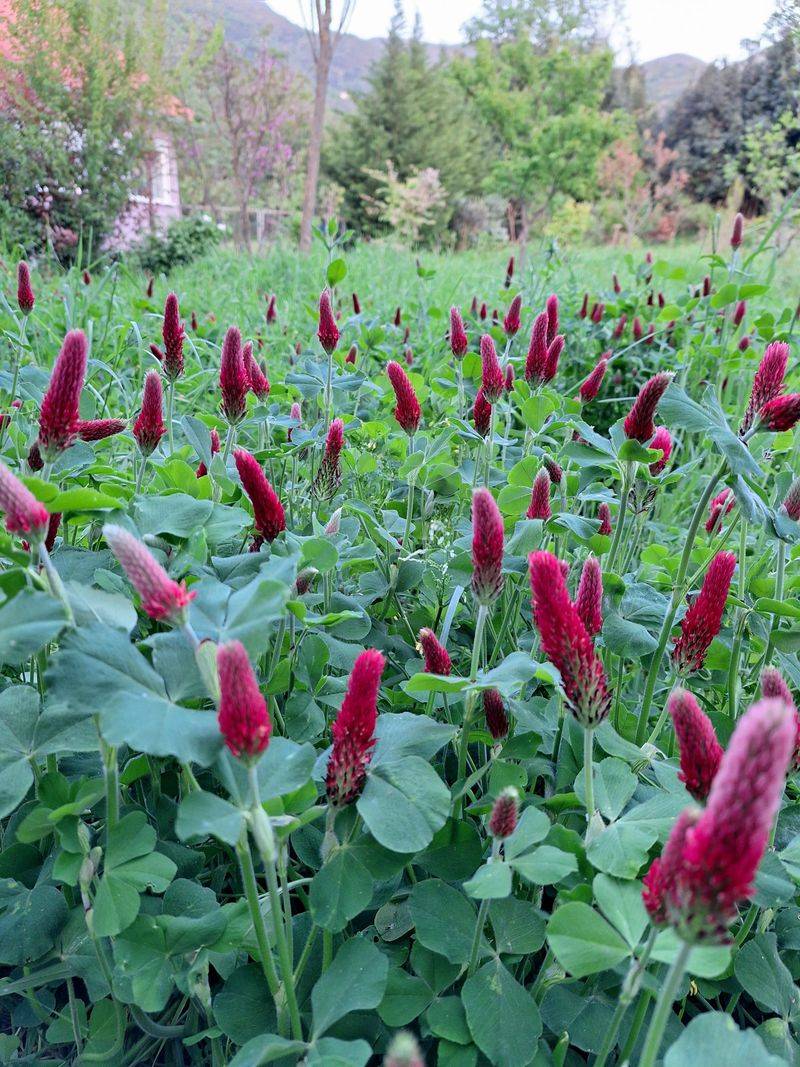
Those deep red, cone-shaped flower spikes are the reason crimson clover shows up along North Carolina highways every spring without fail. They are also a genuine gift to insects.
Early spring is a lean stretch for pollinators generally. Honey bees and native bees come out of winter hungry, and many garden flowers have not opened yet.
Crimson clover blooms right in that gap perfectly. Its flowers offer both nectar and pollen at a moment when colonies are rebuilding and native bees are searching for food.
Stand near a blooming patch on a warm April morning, and you will hear it before you see much of anything. Honey bees, bumble bees, and small native bees all work the spikes steadily.
Timing does involve a small trade-off worth considering. Letting the clover flower gives pollinators a window, but waiting too far past full bloom means tougher stems.
Early to full bloom threads the needle nicely between these two competing needs. Insects get roughly a week or two of feeding time.
One caution worth remembering here. Crimson clover reseeds readily on its own. Let it go fully to seed, and volunteers will pop up in that bed for seasons to come.
A Few Dollars Of Seed Pays Off Big
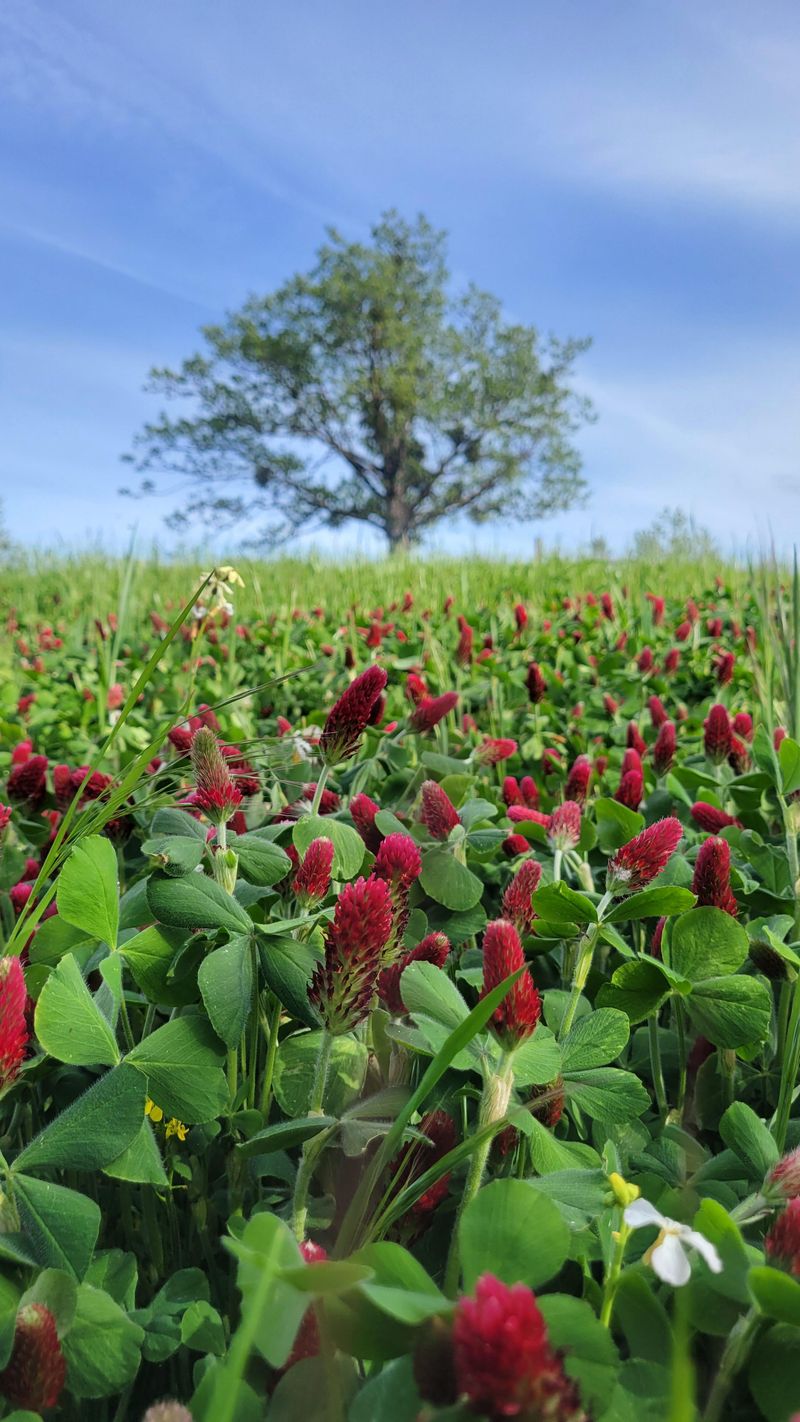
Run the numbers, and this practice looks almost unreasonably cheap for what it delivers. A one pound bag of crimson clover seed typically runs a few dollars at a farm supply store.
That pound covers several hundred square feet of raised beds, which is more ground than many backyard gardens contain in total.
Compare that to what you would otherwise buy instead. Bagged compost, blended fertilizer, and straw mulch add up fast, and none of them loosen compacted soil the way living roots do.
Labor is modest too throughout the whole process. Raking and broadcasting takes maybe twenty minutes in October, and turning the stand under takes another half hour in April.
The returns stack up in several directions at once here. Nitrogen for spring crops, fewer winter weeds, topsoil that stays put, better structure, and free food for pollinators.
For gardeners wanting to stretch the value further, mixing crimson clover with cereal rye is a combination NC State Extension discusses regularly.
Beds sitting empty right now are the only invitation needed to get started. The seed goes in this week, and the reward shows up next spring.