The Houseplants That Bounce Back After A Michigan Cold Snap
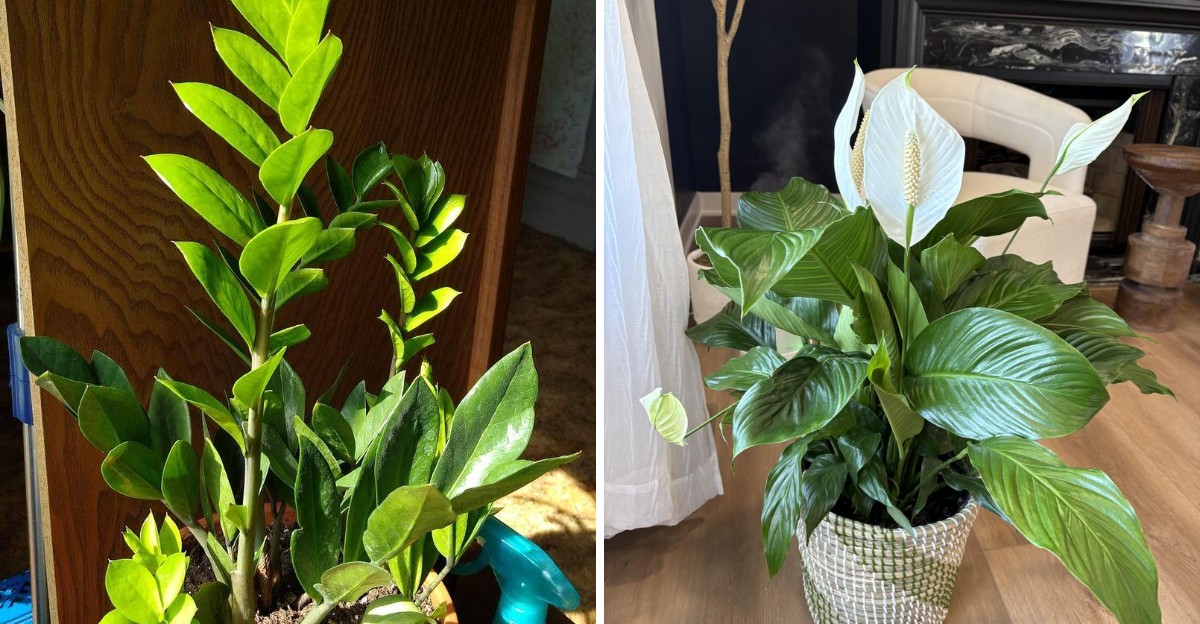
The pothos and snake plant spent a sunny October afternoon on the back porch in Grand Rapids, and then the forecast flipped without much warning.
Temperatures slid into the upper 30s overnight, and by morning the leaves looked limp, darkened, and faintly translucent at the edges of every damaged spot.
Anyone who has done this knows the sinking feeling that comes with carrying those pots back inside, wondering if the damage is permanent.
Most people assume the worst the moment leaves look wrong, tossing plants that would have recovered fine with a little patience and warmth.
The good news is that a few tough houseplants often pull through a brief, mild chill, and knowing which ones recover can save a plant you assumed was gone.
1. Pothos
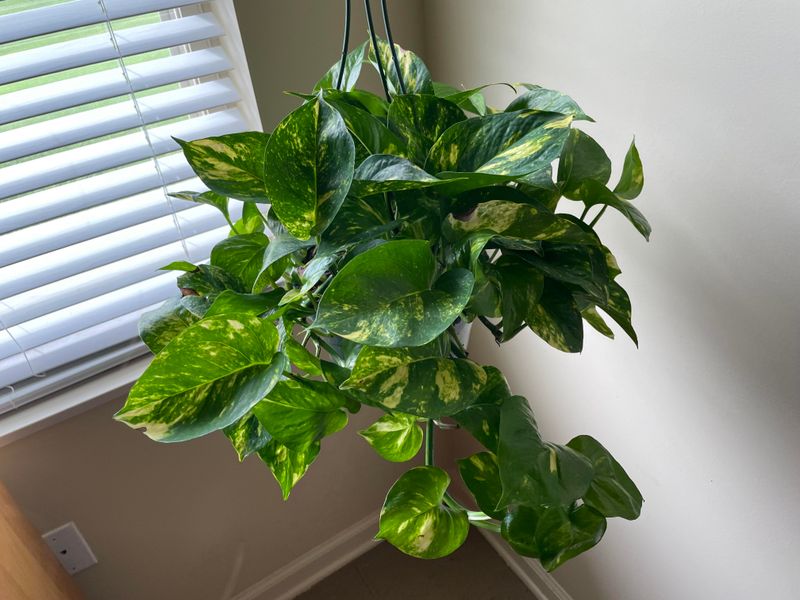
Few plants forgive a careless gardener as readily as pothos. Michigan State University Extension lists pothos among the most durable, low-fuss houseplants around, and that toughness shows up after a short chill outdoors.
Warmth is the main medicine here. Bring the pot into a room that stays around 65 to 75 degrees, keep it out of drafts, and give it bright indirect light rather than harsh sun.
Expect the drooping to ease within a day or two if the exposure was brief and above freezing. Some leaves may still turn dark, mushy, or papery, and those will not recover.
Resist the urge to fertilize right away. A stressed plant cannot use extra nutrients, and salts in the soil can add more stress to roots already struggling.
Honesty matters with pothos though. Being tropical, it suffers real harm below roughly 50 degrees if the exposure drags on, and a hard freeze can take stems out outright.
Here is a trick worth trying if the main plant looks rough. Snip a healthy vine section with a few nodes, set it in a jar of water on a warm windowsill.
Fun bit of trivia worth knowing. Pothos earned the nickname devil’s ivy because it stays green even in gloomy corners where other plants quit.
2. Snake Plant Shrugs Off Brief Chills
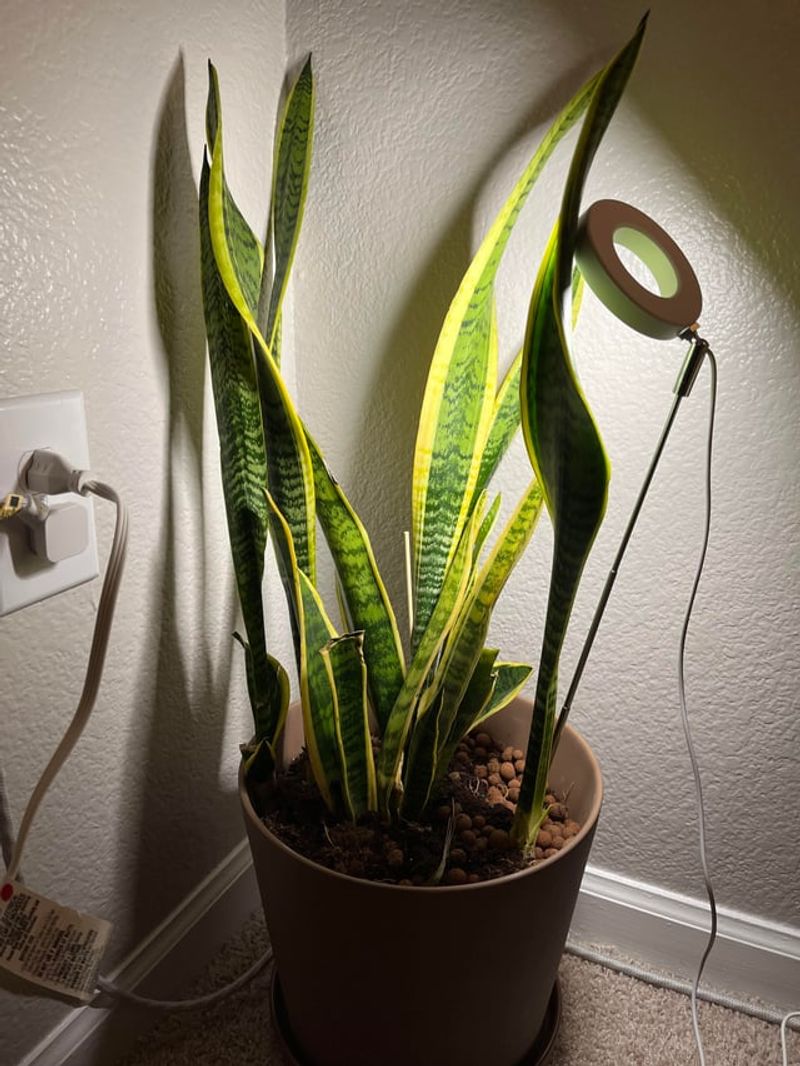
Stiff, upright, and almost architectural, the snake plant has a reputation for surviving neglect that would flatten other houseplants entirely.
MSU Extension groups it with the easiest indoor plants to keep alive, and that steady constitution helps after an unexpected chilly night outdoors.
Thick leaves store water and energy, which gives the plant a buffer while it rides out stress. A short dip into the 40s usually shows up as softened leaf tips.
Once it comes indoors, set it somewhere stable and warm, away from heat vents and doorways that gust cold air across the room.
Skip the watering can for a while, since chilled roots sitting in wet soil invite rot faster than dryness does at this stage.
Damage sometimes appears slowly too. A leaf may look fine for a week, then turn mushy near the base, so check the pot every few days.
Do not mistake toughness for immunity though. Freezing temperatures rupture the cells inside those fleshy leaves, and once a leaf goes limp and water-soaked, it will not firm up again.
Your Michigan Garden Changes Every Week. Your Plan Should Too.
Gardening in Michigan changes quickly throughout the season. Every Friday you’ll receive a simple weekly plan showing exactly what to plant, prune, fertilize, harvest, and protect so you never miss the right timing.
Worth knowing here. Snake plant is also called mother-in-law’s tongue, and its fibrous leaves were once used to make bowstrings and rope in parts of Africa.
3. ZZ Plant
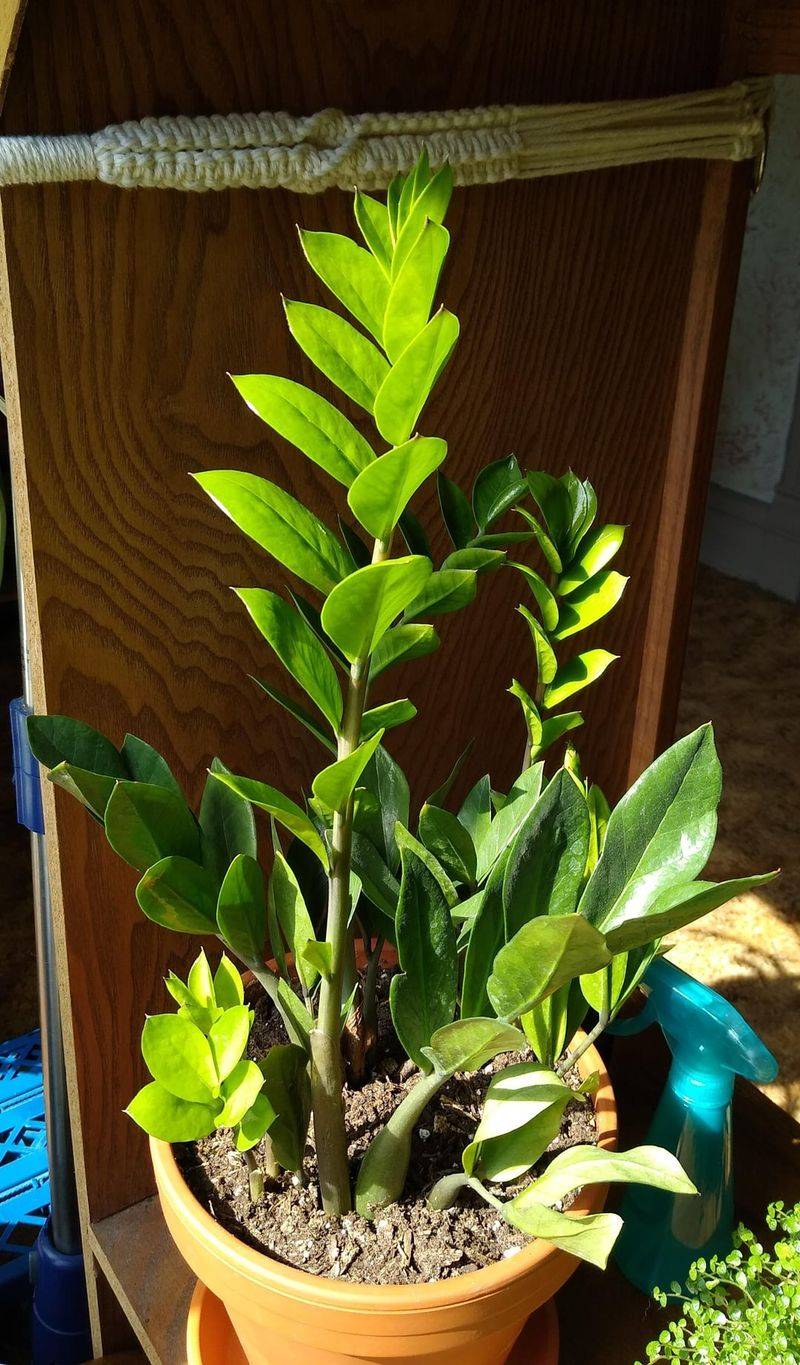
Those glossy, waxy leaflets are not just for looks on this plant. The ZZ plant stores water in fat underground rhizomes, which is part of why MSU Extension counts it among the most forgiving houseplants.
After a brief night in the cold, a ZZ often looks surprisingly unbothered at first glance. Damage tends to show up later as yellowing leaflets or stems that flop away from the pot.
Treatment is refreshingly simple here. Warm room, moderate light, and hands off the watering schedule for a couple of weeks while it recovers.
Check the rhizomes if things look grim overall. Tip the plant gently from its pot and feel for firm, potato-like structures underneath the soil line.
Temperature limits are real though. Native to eastern Africa, the ZZ plant begins to suffer when the air drops much below 50 degrees for long stretches.
One quirky detail worth mentioning. The botanical name is Zamioculcas zamiifolia, a mouthful that explains why almost everyone just calls it ZZ instead.
Recovery can be slow because this plant grows slowly to begin with under normal conditions. New shoots may take a month or more to appear after damage.
4. Chinese Evergreen
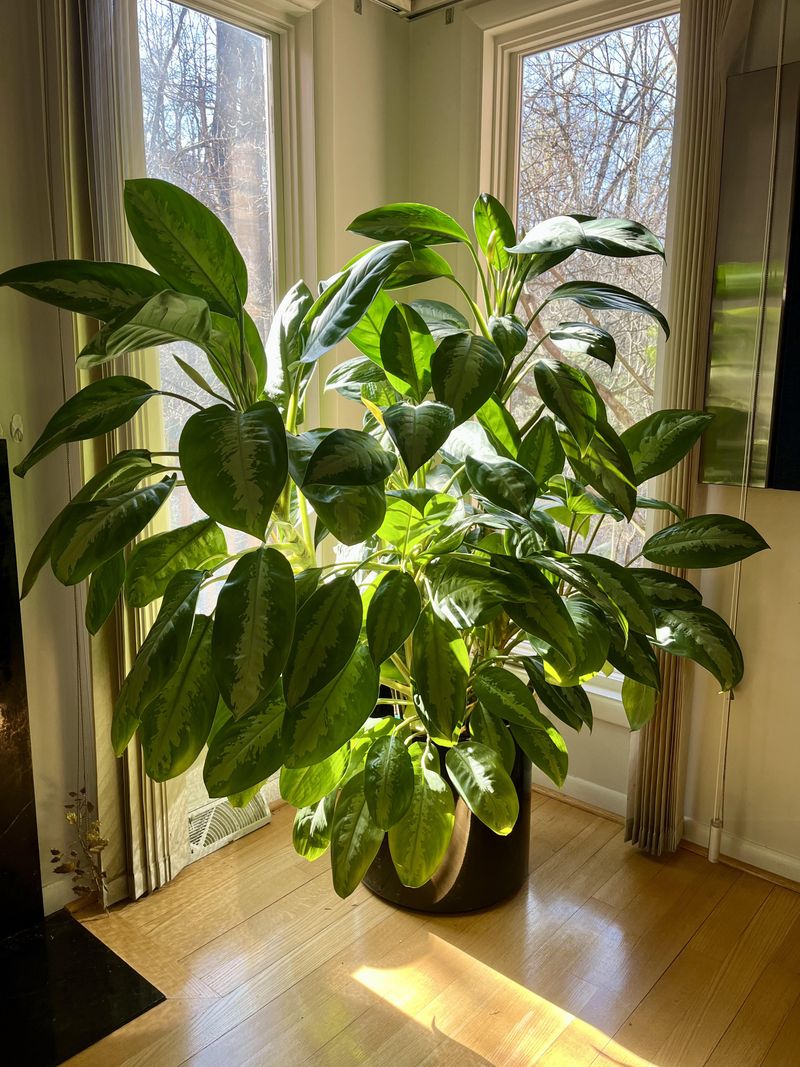
Aglaonema, commonly known as Chinese evergreen, carries a reputation among Michigan plant owners for shrugging off conditions that would finish off more delicate houseplants entirely.
Its thick, patterned leaves hold moisture reserves similar to snake plant and ZZ plant, giving it a buffer against sudden cold exposure that catches many owners off guard each fall.
A brief chill typically shows up as drooping or slightly curled leaf edges rather than the dramatic collapse seen in more tender tropical plants left outside too long.
Bringing the plant into a warm, draft-free spot with indirect light usually reverses mild symptoms within several days, especially if the exposure stayed above freezing throughout the night.
Rot becomes the real threat during recovery, since Chinese evergreen roots sitting in cold, wet soil struggle far more than leaves exposed to a single chilly evening ever do.
Reducing water for a couple of weeks while the plant stabilizes protects the root system, and testing soil moisture with a finger beats watering on a fixed schedule during this recovery window.
Variegated varieties sometimes show cold stress more visibly than solid green types, since the lighter patches on the leaves seem to bruise or discolor slightly faster than deeper green tissue.
Given time in a stable, warm spot, most Chinese evergreens that survived a brief cold snap push out fresh growth within a month, often looking completely normal by the following season.
5. Spider Plant
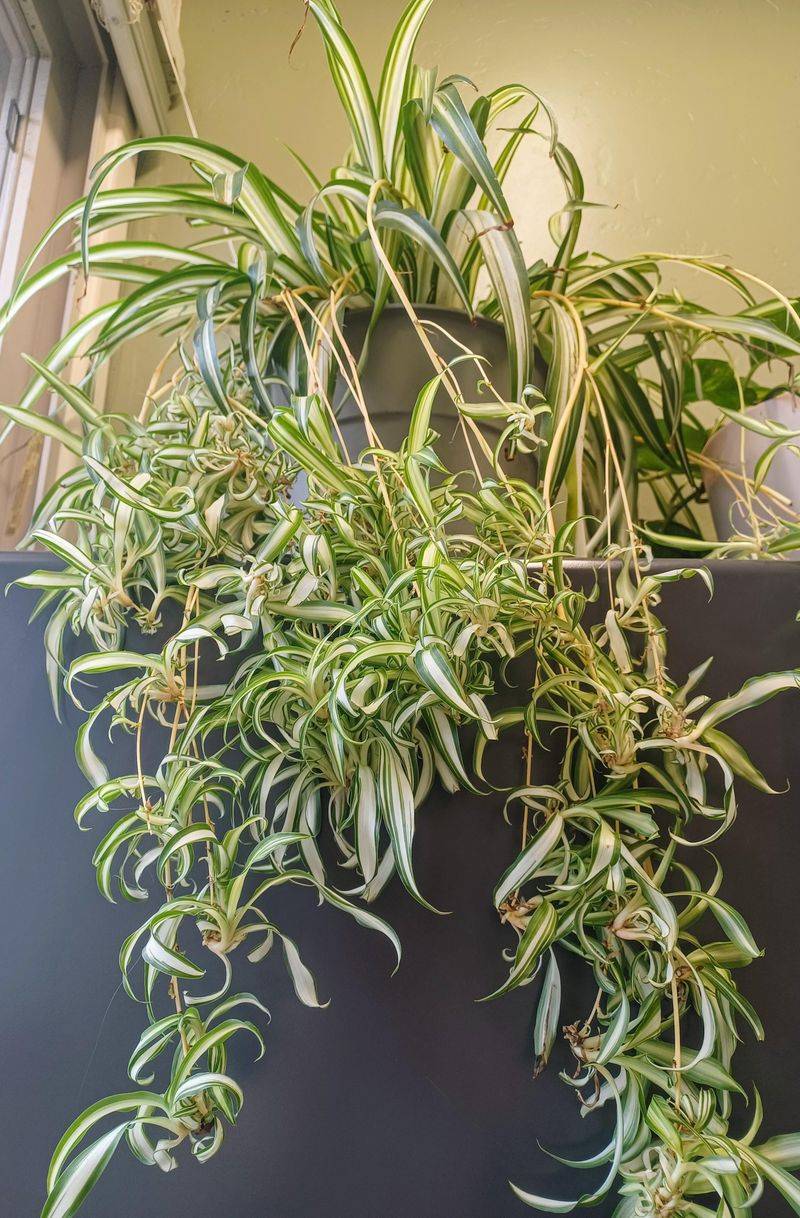
Spider plant earns its reputation as a nearly indestructible houseplant, and that resilience extends to short bouts of cold exposure that would seriously damage more sensitive tropical species.
Its grass-like leaves and fleshy root tubers give it some built-in resistance to brief stress, though a hard freeze can still turn leaf tips brown and crispy within a day of exposure.
After a cold night outdoors, expect some leaf tip browning or a general limp appearance that often improves once the plant settles into a warm room again.
Trimming the damaged brown tips with clean scissors improves appearance without harming the plant, though waiting until new growth appears confirms the plant has fully stabilized first.
The dangling plantlets, those small baby spider plants hanging from long stems, sometimes suffer more visible damage than the main plant, and removing badly wilted ones is usually fine at any point.
Root tubers stored underground act as an energy reserve during recovery, which is why a spider plant that looks completely wrecked above soil can often send up fresh shoots within weeks.
Watering should stay minimal during the recovery period, since these root tubers hold moisture well and additional water mostly increases the risk of rot rather than helping the plant recover faster.
Spider plants tolerate a wide range of light conditions during recovery, making them forgiving about exactly where they land inside the house after an unexpected chilly night.
6. Peace Lily
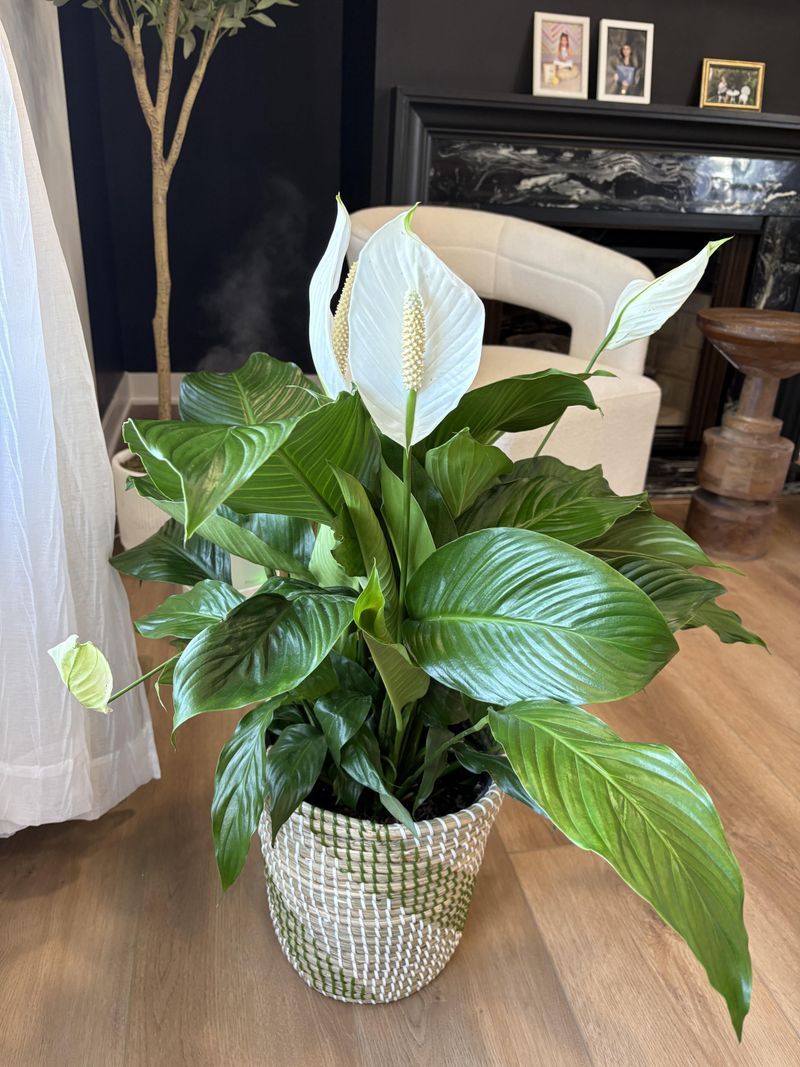
Peace lily reacts more dramatically to cold than the truly tough plants on this list, wilting completely and looking finished within hours of even a mild chill, which alarms most owners immediately.
That dramatic collapse does not necessarily mean the plant is finished though, since peace lilies are famous for wilting under all sorts of stress and then bouncing back once conditions improve.
A brief exposure to temperatures in the upper 30s or low 40s typically causes total leaf droop, but the crown and root system often remain undamaged beneath the collapsed foliage.
Moving the plant into a warm room and watering it thoroughly, rather than withholding water the way snake plants and ZZ plants prefer, usually brings visible improvement within a day or two.
Peace lilies actually want consistent moisture unlike the succulent-style plants on this list, so checking soil moisture and watering normally once the plant is back indoors supports recovery rather than risking rot.
Leaves that stay permanently limp and turn yellow or brown after several days of proper warm-room care likely suffered real cell damage and should be trimmed away to redirect energy toward healthy growth.
New leaf spikes emerging from the center of the plant within a few weeks confirm the crown survived, even if most or all of the original foliage needs to be removed.
Because peace lilies signal stress so visibly and recover so readily from mild chills, they are often one of the more forgiving plants to gauge, since the plant essentially tells you immediately when something is wrong.
7. Jade Plant
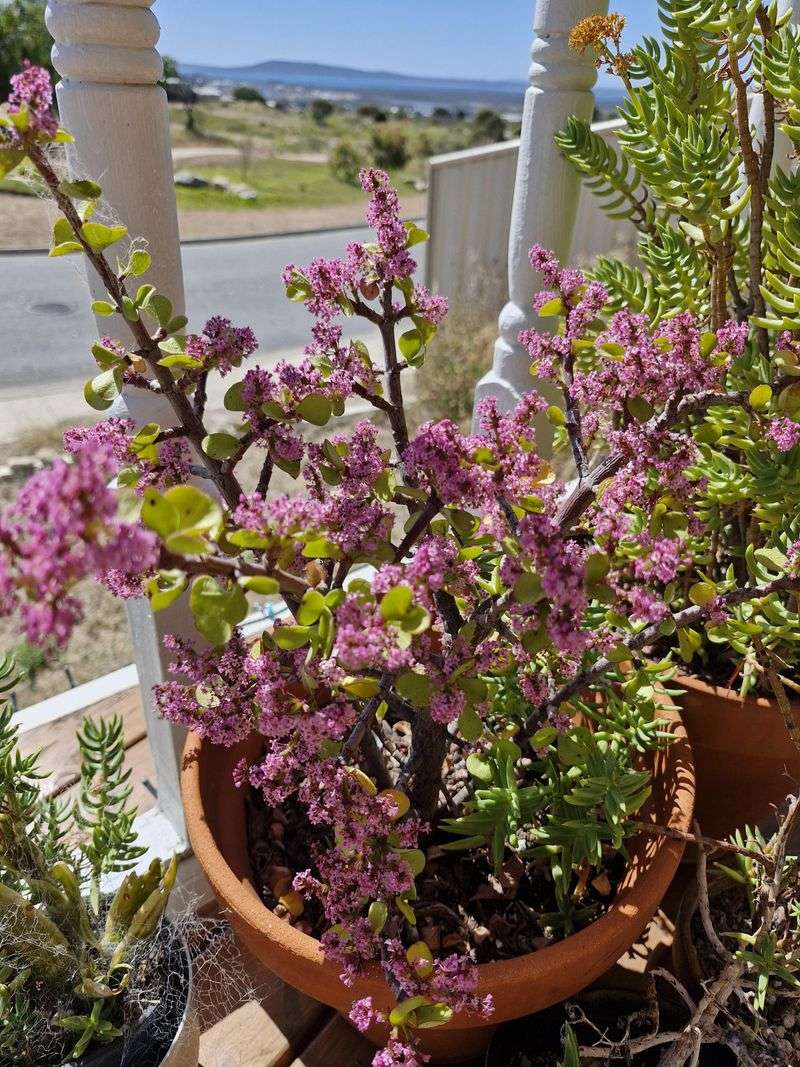
Jade plant stores substantial water in its thick, fleshy leaves, giving it real drought tolerance, though that same succulent nature makes it notably more vulnerable to cold damage than people often assume.
Even a brief dip to freezing can rupture cells throughout the thick leaves, turning them translucent, mushy, and eventually black within a day or two of the cold exposure occurring.
Unlike pothos or snake plant, jade plant has little tolerance for temperatures below the upper 40s, so any exposure near freezing deserves close attention rather than a wait-and-see approach.
Bringing an affected jade plant indoors immediately and setting it in a warm, bright spot gives the best chance of saving unaffected portions of the plant that were not directly hit by the cold.
Removing any leaves or stem sections that have turned translucent or black should happen fairly promptly with this plant, since that damaged succulent tissue tends to rot and spread faster than in other houseplants.
Healthy sections of stem, even ones attached to a mostly damaged plant, often root readily as fresh cuttings, offering a practical way to save the plant’s genetics even if the original cannot fully recover.
Watering should stop almost entirely during recovery, since jade plant’s water-storing tissue means it can go weeks without watering, and added moisture around damaged, rotting tissue only accelerates the spread of decay.
Given jade plant’s slower growth habit, full recovery and new leaf growth can take considerably longer than with pothos or spider plant, sometimes stretching into a couple of months before the plant looks presentable again.
8. Rubber Plant
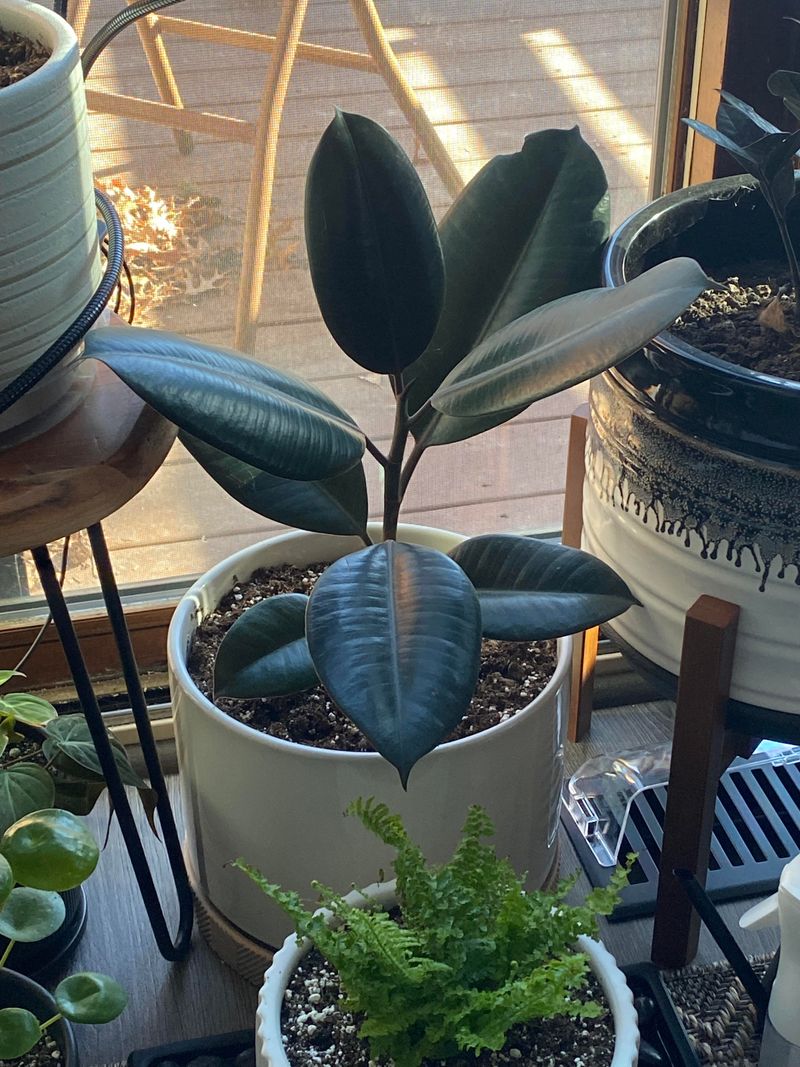
Rubber plant, or Ficus elastica, tends to survive a mild chill reasonably well thanks to its thick, leathery leaves, though it shows visible stress more readily than the truly bulletproof plants on this list.
Cold-damaged leaves typically develop dark, water-soaked patches or drop entirely within a few days of exposure, while the woody stem and healthy upper growth often remain unaffected by a brief cold snap.
Moving the plant to a warm, bright location right away gives remaining healthy leaves the best chance to keep functioning while the plant works on generating replacement growth from undamaged nodes along the stem.
Leaf drop after a cold exposure looks alarming but is not necessarily fatal, since rubber plants readily produce new leaves from nodes further down the stem once conditions stabilize and warmth returns.
Watering should ease off during the recovery period, following the same logic as the other plants here, since a stem working to recover from cold stress cannot process excess soil moisture efficiently.
Wiping down remaining healthy leaves with a damp cloth after the cold exposure removes any dust or residue and helps the plant maximize whatever photosynthesis capacity it has left during recovery.
Checking the main stem for firmness is the clearest way to judge a rubber plant’s prognosis, since a soft, mushy stem section usually indicates damage has spread beyond what pruning alone can fix.
Given a firm stem and reasonable warmth, most rubber plants that suffered leaf drop from a brief cold exposure recover fully within one to two months, often growing back fuller than before the incident.