Are your zinnias ready to cut? 5 simple tricks that keep the blooms fresh on your kitchen table for days
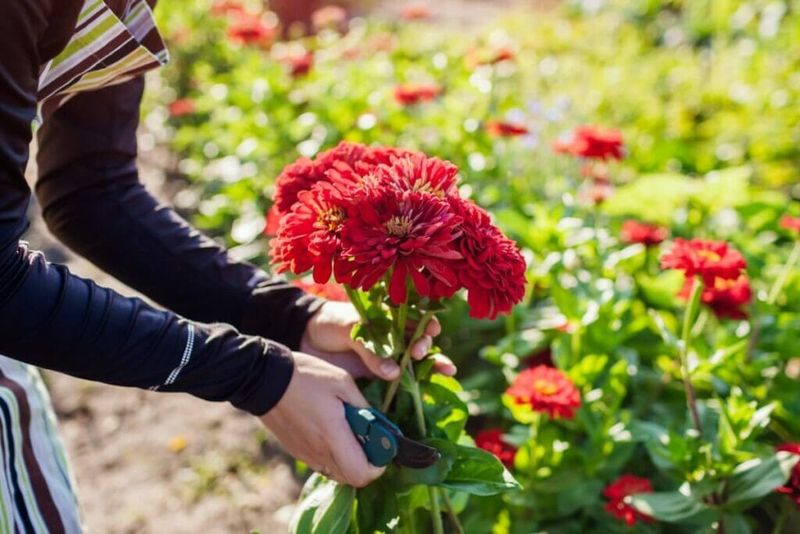
Zinnias are the workhorses of a Willamette Valley summer, blooming happily from June until the first frost sneaks in. There’s a special kind of joy in snipping a few and setting them on your kitchen table, but nothing stings quite like watching them flop over by the next morning.
The good news is that a handful of easy habits can keep those cheerful blooms perky for a week or more. Here are five simple tricks to help your Oregon-grown zinnias earn their spot in the vase.
1. Cut in the cool of early morning
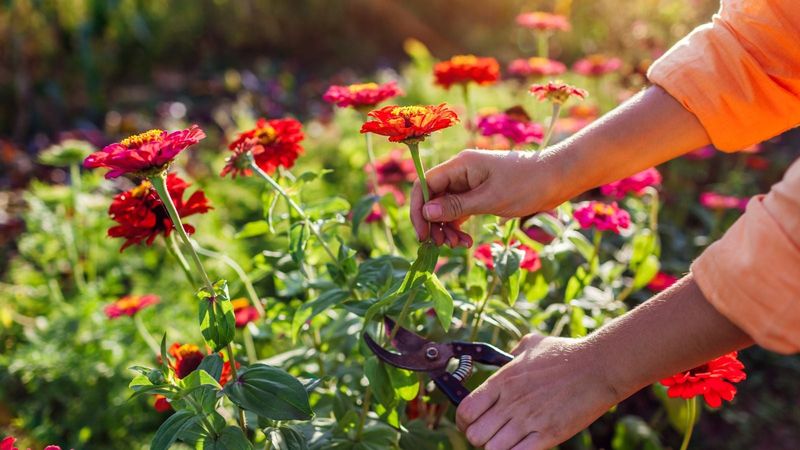
Ask anyone who grows zinnias in the Willamette Valley and they’ll tell you the vase life starts long before the flower hits the water. Early morning, right after the plants have sipped and rehydrated overnight, is the sweet spot for cutting.
Stems are plump with moisture at that hour, which means the blooms are far less likely to wilt once they’re inside. If you wait until a hot July afternoon, the plant is already losing water faster than its roots can replace it, and a freshly cut flower will droop before you can find a vase.
Try to beat the heat of the day entirely. A cool, overcast Oregon morning is practically made for this task, so grab your coffee, wander out while the dew is still clinging, and clip away.
Your future self, staring at a happy bouquet three days later, will thank you.
2. Make a clean, deep cut at an angle
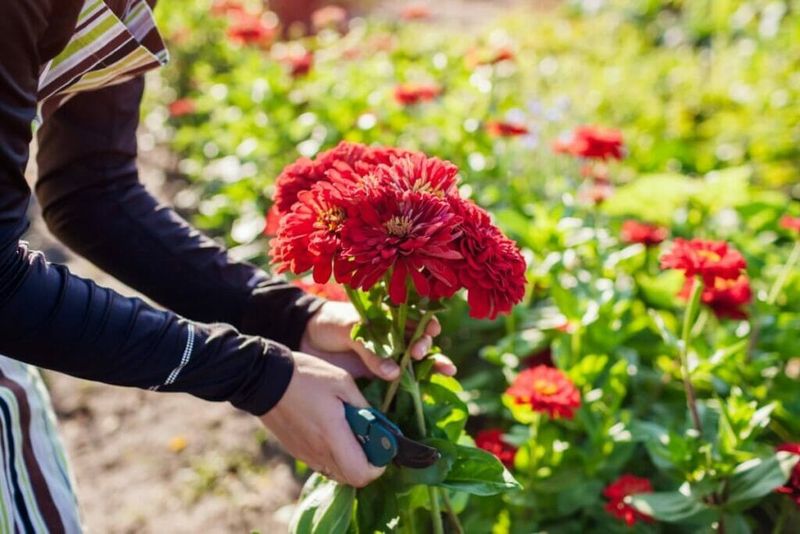
Dull, dirty scissors are the quiet villain of the flower world. A clean slice from sharp, sanitized shears lets water flow up the stem without any crushed or ragged edges to slow it down.
Angle that cut to about 45 degrees. The slanted edge gives the stem more surface area to drink through and keeps it from sitting flat against the bottom of the vase, where it could seal itself off.
It also helps you dodge stem rot, which shortens the show fast.
Here’s the bonus that makes zinnias so rewarding: cut deep, right above a node or set of leaves, and you’re actually doing the plant a favor. Zinnias are cut-and-come-again flowers, so a generous snip tells the plant to branch out and pump up even more blooms.
The more you harvest, the bushier and more productive your patch becomes right through September.
3. Hydrate right away and strip the lower leaves
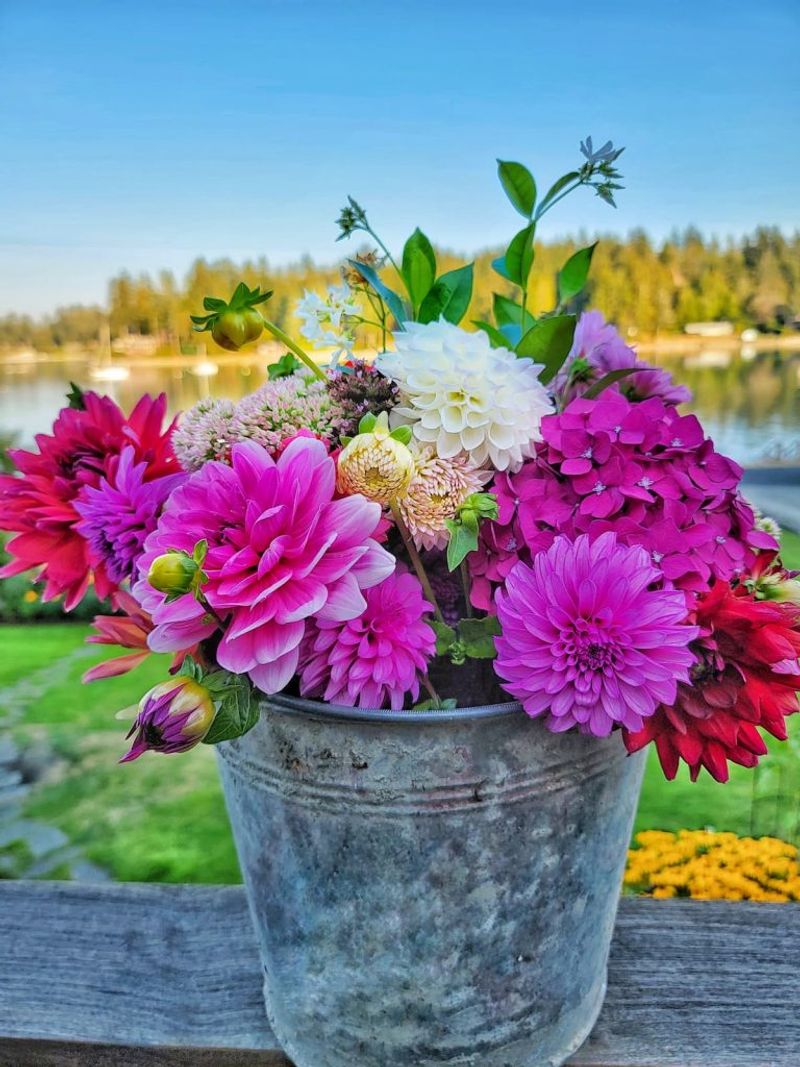
Picture this: you carry a bucket of clean water right out to the garden and drop each stem in the second it’s cut. That tiny habit is one of the biggest secrets to a bouquet that lasts.
Zinnias hate being out of water even for a few minutes, so giving them an immediate drink keeps air from sneaking into the stem and blocking the flow. A simple household bucket does the job perfectly.
Once you’re back inside, pull off any leaves that would sit below the waterline in your vase. Submerged foliage rots quickly, and that decay feeds bacteria that clog the stems and turn your water cloudy.
Your Oregon Garden Changes Every Week. Your Plan Should Too.
Gardening in Oregon changes quickly throughout the season. Every Friday you’ll receive a simple weekly plan showing exactly what to plant, prune, fertilize, harvest, and protect so you never miss the right timing.
Cleaner water means the flowers can keep drinking freely, and your kitchen table stays looking fresh instead of murky.
4. Refresh the water and recut every couple of days
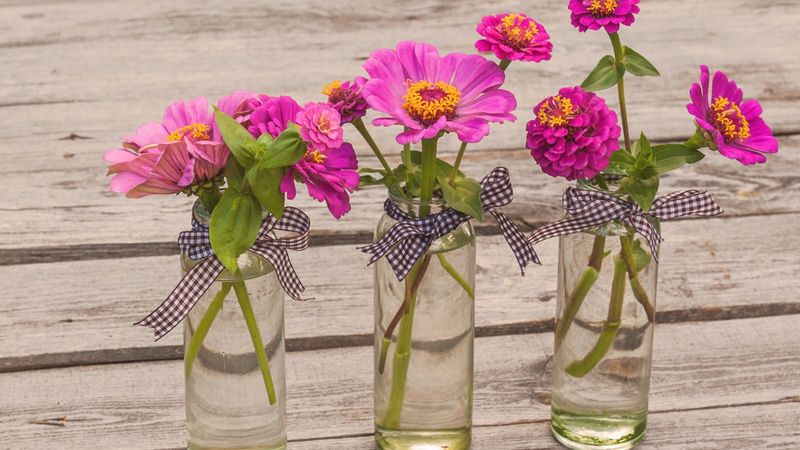
If there’s one thing zinnias are notorious for, it’s turning vase water swampy in record time. Left alone, that gunky water becomes a bacteria party that shuts the stems down.
Swap in fresh water every one to three days, and while you’ve got the flowers out, give each stem a quick fresh trim at an angle. Recutting reopens the drinking channel, which can get plugged after a day or two sitting in the vase.
Lukewarm or room-temperature water helps at the start, since it moves up the stem more easily than icy cold water. Skip the packet of commercial flower food with zinnias, too.
Some growers find it actually shortens their vase life, so plain clean water is your friend here, with maybe a slow-release chlorine tablet if you want to keep bacteria in check.
5. Keep the bouquet cool and out of direct sun
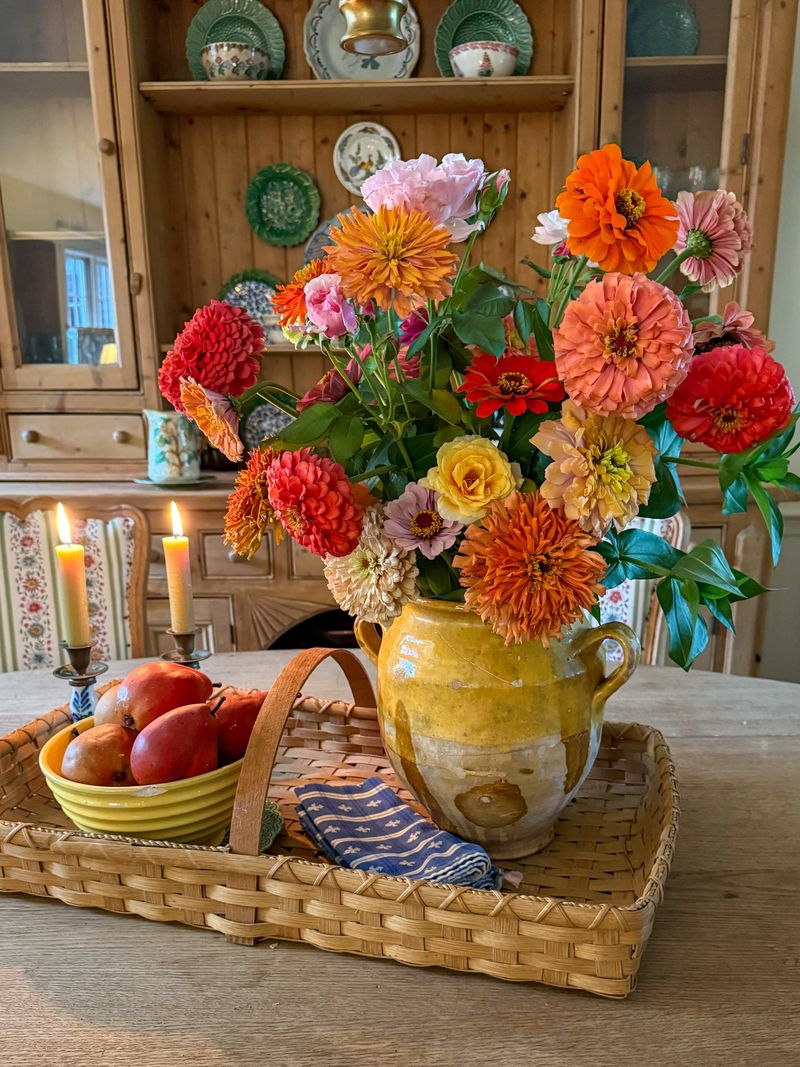
You wouldn’t leave a scoop of ice cream on a sunny windowsill, and your zinnias feel much the same way about heat. A cool spot, tucked away from direct sunlight, windows, and warm appliances, keeps them from aging before their time.
Direct sun and toasty air pull moisture out of the petals fast and encourage bacteria to multiply in the water. Move the vase to a shadier corner of the counter and you’ll stretch those blooms an extra day or two.
Just don’t overcorrect into the fridge. Unlike many cut flowers, zinnias sulk in a cold floral cooler and prefer a comfortable room temperature.
Fun fact for the pollinator-minded gardener: male bumblebees sometimes curl up and spend the night nestled inside zinnia petals out in the garden, one more reason to love these generous, wildlife-friendly flowers both indoors and out.