The Native Shade Tree With Some Of Pennsylvania’s Best Fall Color
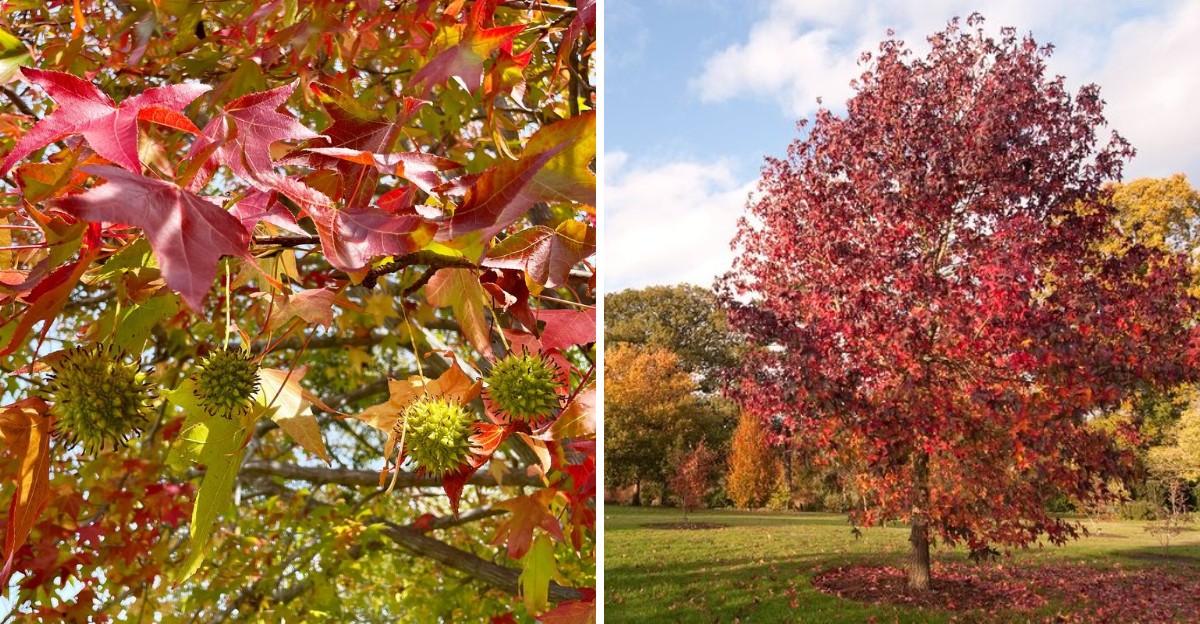
Pennsylvania earns its fall color reputation, and most of the credit goes to the usual suspects.
Maples blazing orange and red, oaks going bronze and rust, the familiar seasonal palette that defines the state’s autumn landscape.
But there is one native Pennsylvania shade tree that produces fall color so vivid and so varied that it puts many of its more celebrated neighbors to shame.
Most Pennsylvania homeowners have never planted it intentionally.
It shifts through multiple colors simultaneously on the same tree, from gold to red to deep burgundy, creating a display that looks almost impossibly rich on a clear October afternoon.
It also grows to provide genuine shade, handles a wide range of Pennsylvania soil conditions, and supports local wildlife generously through the colder months.
Here’s the native shade tree worth knowing about.
This Native Shade Tree Delivers Brilliant Pennsylvania Fall Color
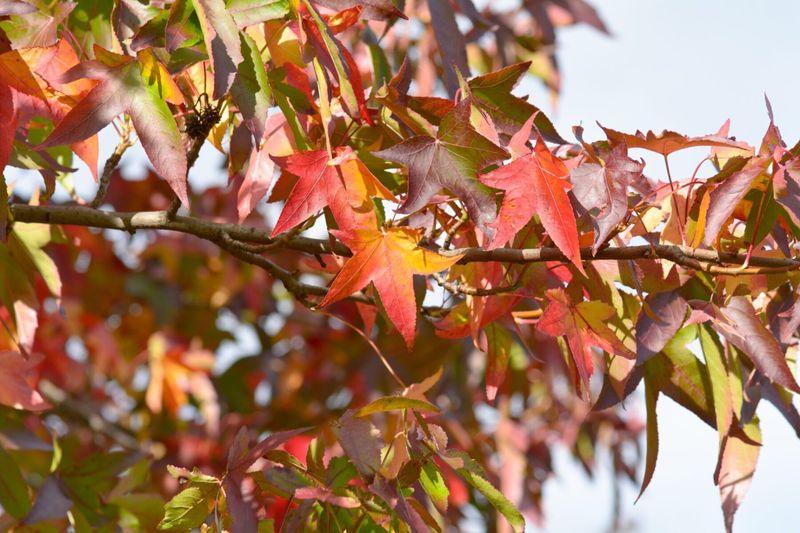
Picture a single tree glowing with four different colors at the same time. That is the magic of the American sweetgum, known to scientists as Liquidambar styraciflua.
In Pennsylvania, this native tree turns fall into a personal fireworks display right in your own yard.
Sweetgum leaves start the season in a deep, healthy green. As the days grow shorter and cooler, they begin to change.
You might spot bright red on one branch, warm orange on another, and glowing yellow mixed with rich purple all across the canopy.
What makes this tree special is how long the color lasts. Many trees drop their leaves fast after they turn. Sweetgum tends to hold onto its show for weeks, letting you enjoy the display well into the season.
Because it is native to the eastern United States, sweetgum feels right at home in Pennsylvania soil and weather.
It handles the region’s cold winters and warm summers without much fuss. That toughness makes it a smart pick for local landscapes.
Homeowners love it for more than looks. A mature sweetgum throws down cool, welcome shade during hot summer months. That means a shady spot for backyard picnics and lower cooling costs for your house.
If you want a tree that earns its keep all year, this one delivers. Green shade in summer, a rainbow in fall, and an interesting shape in winter.
Few native trees give you that much personality in a single trunk. For Pennsylvania yards craving color, sweetgum stands near the top of the list.
Why Sweetgum Creates Such A Striking Fall Display
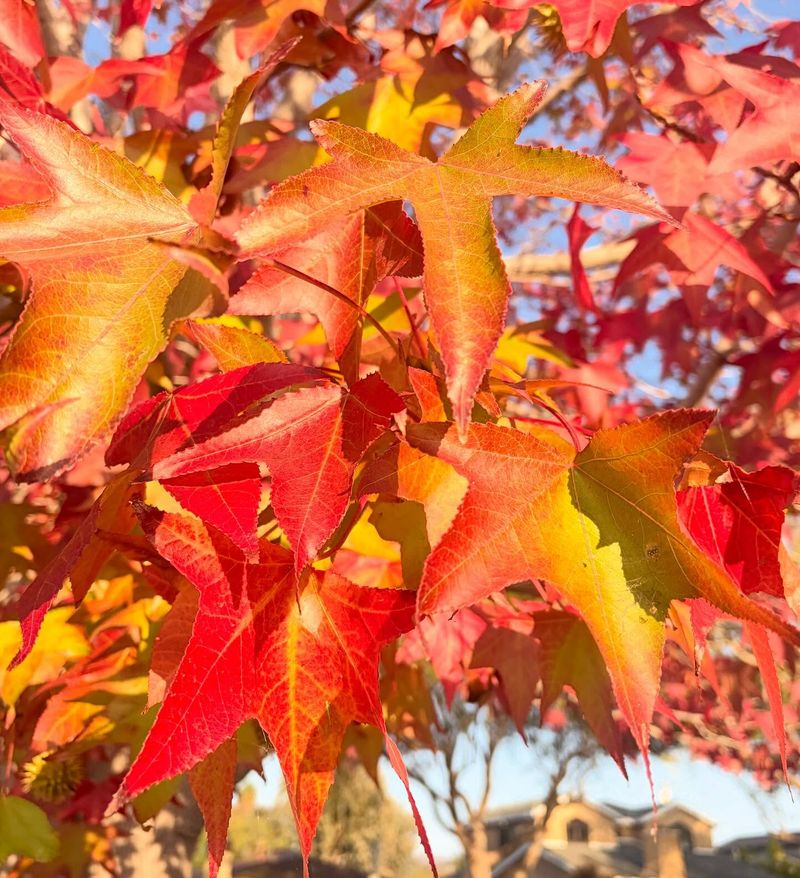
Ever wonder why some trees seem to glow brighter than others in fall? For sweetgum, part of the answer is the shape of its leaves.
Each leaf has five to seven pointed lobes, making it look like a green star pinned to the branch.
Those star shapes catch light in a fun way. When the colors change, the pointed edges make the reds and oranges pop even more against the sky. It is a small detail that adds a lot of drama.
The color change itself comes from chemistry inside the leaf. During summer, green pigment called chlorophyll hides the other colors.
Your Pennsylvania Garden Changes Every Week. Your Plan Should Too.
Gardening in Pennsylvania changes quickly throughout the season. Every Friday you’ll receive a simple weekly plan showing exactly what to plant, prune, fertilize, harvest, and protect so you never miss the right timing.
As fall arrives and the green fades, hidden yellows, oranges, reds, and purples finally show through.
Sweetgum is unusual because it produces so many of these pigments at once. That is why a single tree can wear several colors together. One leaf might be scarlet while its neighbor glows gold.
Cool nights and sunny days help make the colors even richer. Pennsylvania autumns often bring exactly that kind of weather. The result is a sweetgum that looks like it was painted by hand.
Sunlight matters too. Trees planted in open, sunny spots tend to turn brighter than those stuck in heavy shade. More sun means more of those vivid tones you want to see.
All these little factors work together to create one of the boldest fall shows around. The star-shaped leaves, the mix of pigments, and Pennsylvania’s crisp weather combine into something worth stepping outside to admire. That is the science behind the beauty.
Give Sweetgum The Space A Shade Tree Needs
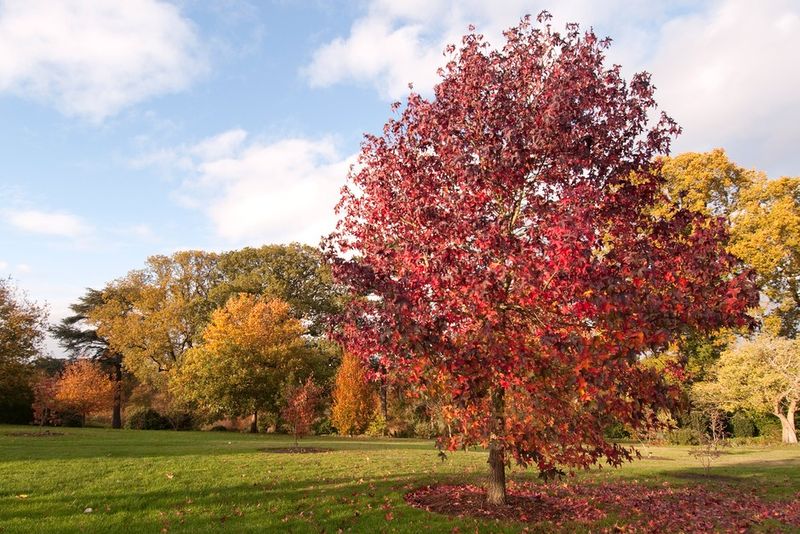
Before you grab a shovel, take a good look around your yard. Sweetgum is not a small tree, and giving it room from the start saves headaches later. Planning ahead is the secret to a happy, healthy tree.
A mature sweetgum can reach 60 to 75 feet tall. Its canopy spreads wide too, often stretching 40 to 50 feet across. That is a big footprint, so pick an open area with plenty of breathing room.
Keep it away from your house, driveway, and power lines. The roots and branches both need space to grow without bumping into things. A little distance now prevents trimming battles down the road.
Sunlight is another big factor. Sweetgum loves full sun, meaning at least six hours of direct light each day. More sun leads to stronger growth and those brilliant fall colors everyone loves.
The tree is not too picky about soil, but it does best in moist, slightly acidic ground. It can handle clay and even tolerate occasional wet spots. Just avoid areas that stay soggy all the time.
When you plant, dig a hole about twice as wide as the root ball. Set the tree so the top of the roots sits level with the ground. Then water it well and add a ring of mulch around the base.
Give a young sweetgum steady water during its first couple of years. Once its roots settle in, it becomes fairly self-reliant. With the right spot and a solid start, this tree will shade your yard for decades to come.
How Sweetgum Supports Backyard Wildlife
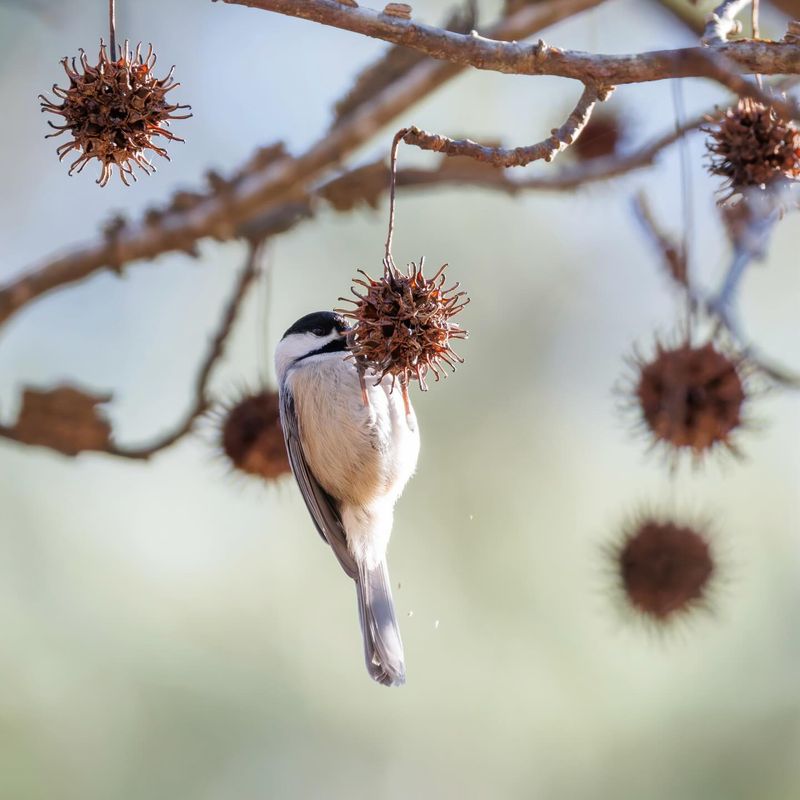
Your sweetgum is more than a pretty face. It doubles as a busy neighborhood diner and hotel for local wildlife. Plant one, and you invite all sorts of creatures to visit your yard.
Birds are big fans of sweetgum, and the reason is those round seed balls. Each ball is packed with small seeds that finches, chickadees, and other songbirds love to eat. In winter, when food is scarce, this snack really matters.
Goldfinches especially flock to sweetgum trees. Watching a flash of yellow feathers dart through the branches is a treat for any bird lover. Grab your binoculars and enjoy the show.
The tree’s tall, leafy canopy offers shelter too. Birds build nests among the sturdy limbs, safe from predators below. Squirrels and other small animals also scurry through the branches looking for a cozy spot.
Sweetgum leaves feed hungry caterpillars, including those that grow into moths. Those caterpillars then become food for baby birds in spring. It is a chain that keeps the whole backyard ecosystem humming.
Because sweetgum is native, local wildlife already knows how to use it. Native trees and native animals grew up together over thousands of years. That partnership makes sweetgum far more useful than many imported trees.
Planting one helps support pollinators and songbirds that need our help these days. Every native tree adds a small piece to a healthier landscape. You get a colorful shade tree, and nature gets a helping hand.
If you enjoy watching wildlife from your window, sweetgum earns its place. It turns an ordinary yard into a lively, buzzing habitat all year round.
Manage Sweetgum’s Seed Pods In The Landscape
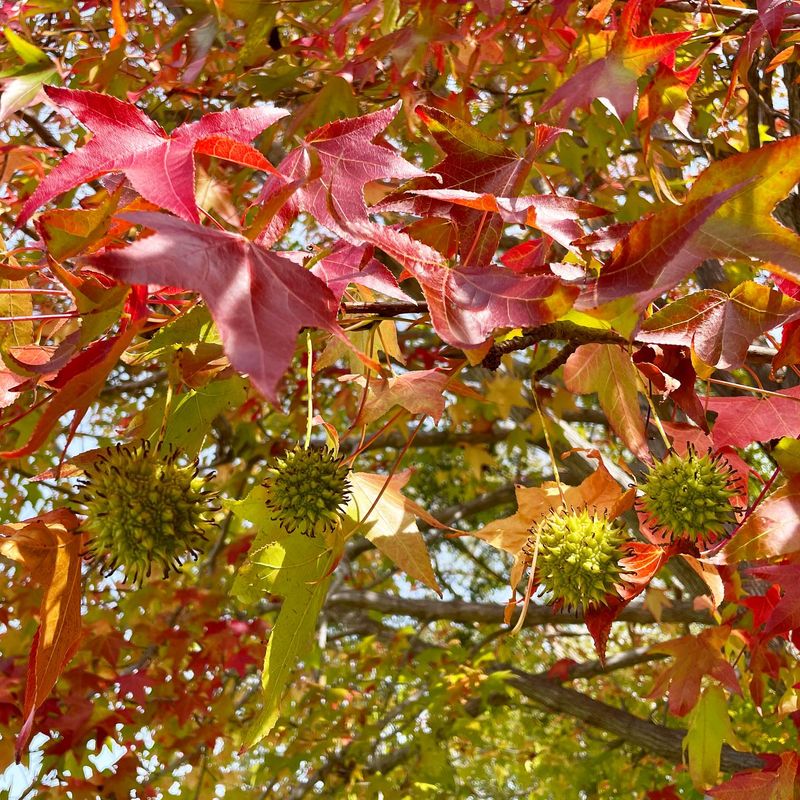
Let’s talk about the one thing people grumble about with sweetgum. Those spiky, round seed balls drop by the dozens each year.
Step on one barefoot, and you will remember it. Still, a little planning keeps this from being a real problem.
The seed balls are about the size of a golf ball and covered in pointy spikes. They fall in late fall and winter, scattering across the ground below the tree. On a lawn or walkway, they can be a nuisance to clean up.
The easiest fix is smart placement. Plant your sweetgum away from patios, sidewalks, and play areas where the pods would be underfoot. A back corner of the yard or a natural, wooded edge works great.
If you plant it over mulch or a garden bed instead of grass, the pods blend right in. You can leave them there to break down or rake them up now and then. Either way, they stay out of your path.
A leaf blower or lawn sweeper makes cleanup quick when you do want a tidy yard. Some folks collect the balls for crafts or holiday decorations, giving them a fun second life.
Remember that the seed balls are the same treats birds love. Leaving a few around actually helps feed your feathered visitors. So the mess has an upside worth appreciating.
There are also some varieties that produce very few pods if you want to skip the cleanup entirely. Ask your local nursery about low-fruiting types.
With the right spot or the right variety, sweetgum’s one downside becomes easy to handle.
Why Sweetgum Deserves A Place In Pennsylvania Yards
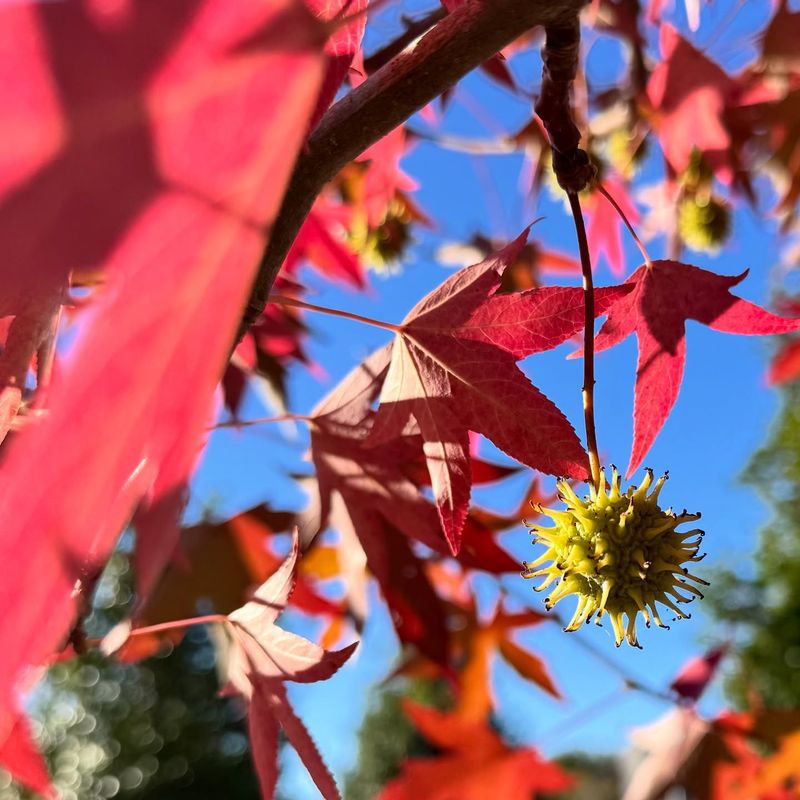
Add up everything sweetgum offers, and the case for planting one gets pretty strong. Few native trees pack this much value into a single trunk. It gives back to your yard season after season, year after year.
Start with the fall color, since that is the headliner. No other common shade tree in Pennsylvania mixes red, orange, yellow, and purple quite like this one. That autumn glow alone makes it worth the space.
Then there is the shade. A grown sweetgum spreads a wide, cooling canopy over your yard each summer. That means comfortable outdoor time and a break for your air conditioner on hot days.
Being native gives it staying power too. Sweetgum handles Pennsylvania’s climate, soil, and seasons like an old friend. You will not fuss over it once it settles in and finds its footing.
Wildlife lovers get a bonus. The tree feeds songbirds, shelters nesting birds, and supports the tiny creatures that keep a backyard lively. Planting one is a gift to your local ecosystem.
Yes, the seed balls take a little managing. But smart placement or a low-fruiting variety solves that quickly. It is a small trade for so much beauty and benefit.
A tree like this rewards patience. Plant a young one today, and in a few years you will have a towering, colorful centerpiece. Your kids and even grandkids could climb it and rake its leaves someday.
For a shade tree that combines native roots, wildlife support, and unbeatable fall color, sweetgum checks every box. Give it a good spot, and it will thank you for a lifetime.