Georgia Homeowners Mistake This White Fuzzy Coating On Trees For A Fungus
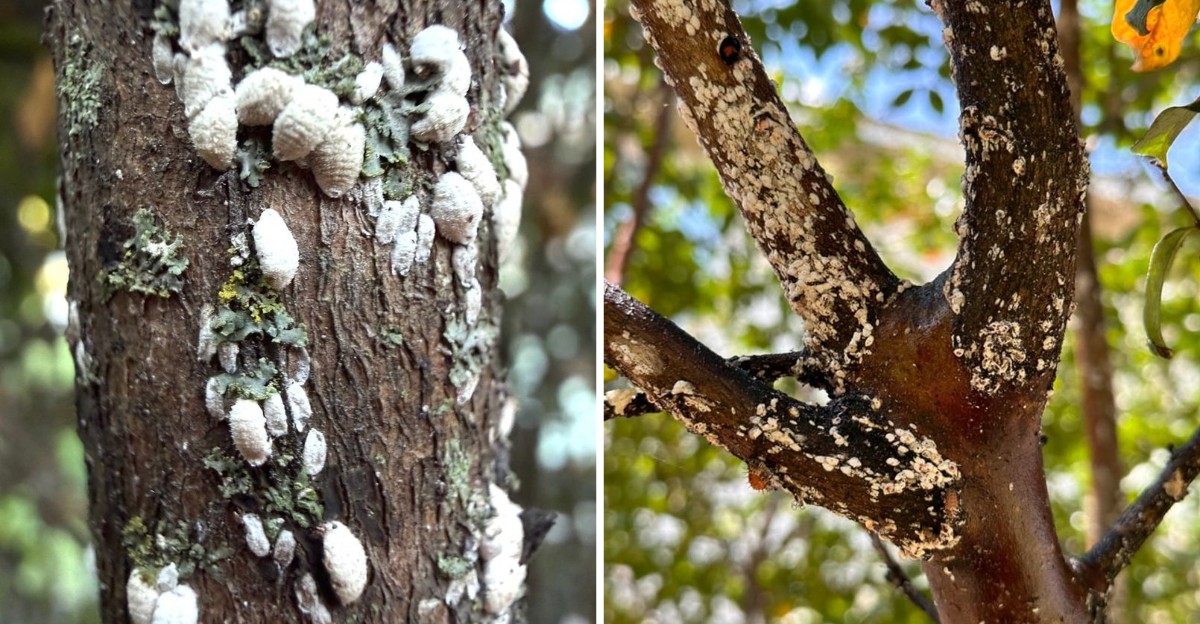
You step outside for the mail and spot something pale and fuzzy clinging to a tree trunk. It looks like someone spilled powdered sugar down the bark and forgot to sweep up the mess.
Your first guess is probably mold, mildew, or some mystery fungus creeping across the neighborhood after rain. Plenty of Georgia yards get that same wrong answer every September, honest mistake and all.
Press a fingernail into the fuzz and it smears, leaving behind an odd pinkish smudge on bark. That tiny clue rewrites the whole story, though most homeowners scrub right past it with a brush.
Meanwhile the trunk turns sticky, the leaves gleam strangely, and ants stream up like they own the place. Apparently nobody warned them this backyard party had a strict bark-only dress code.
Felt-Like White Bumps On Crapemyrtle Bark
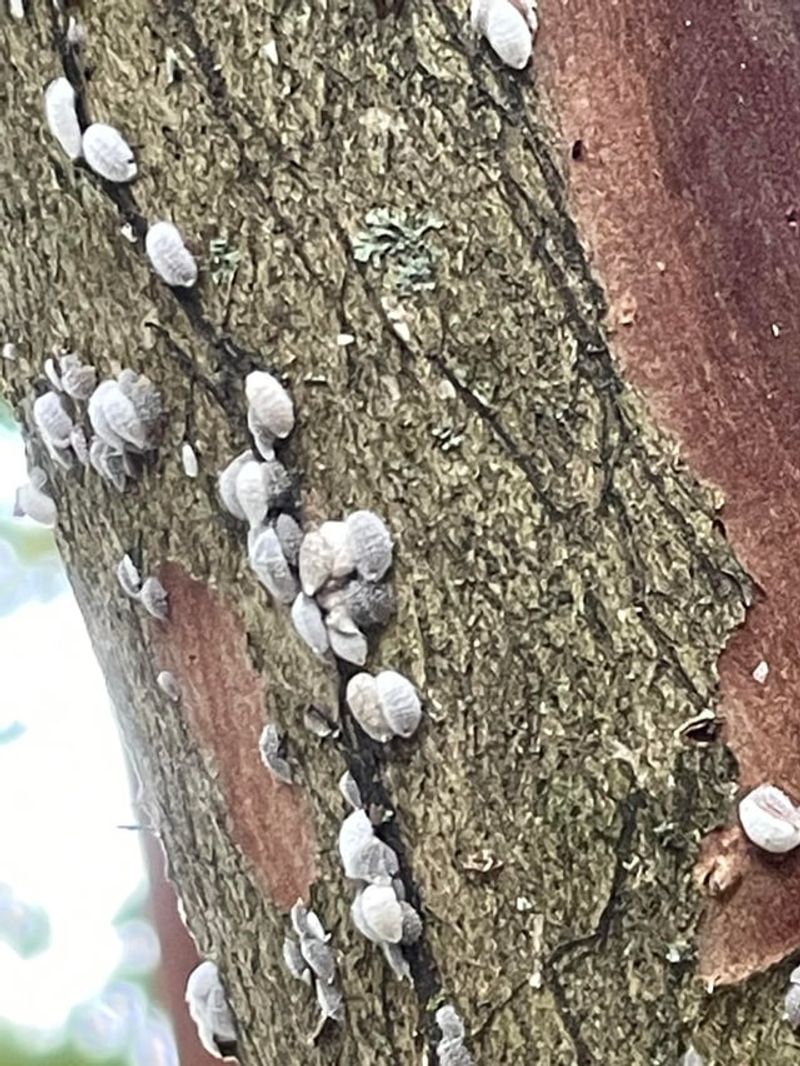
Run your hand along a crapemyrtle trunk in late summer and you may feel rough, waxy bumps. Those bumps are insects, not mold, and they go by crapemyrtle bark scale.
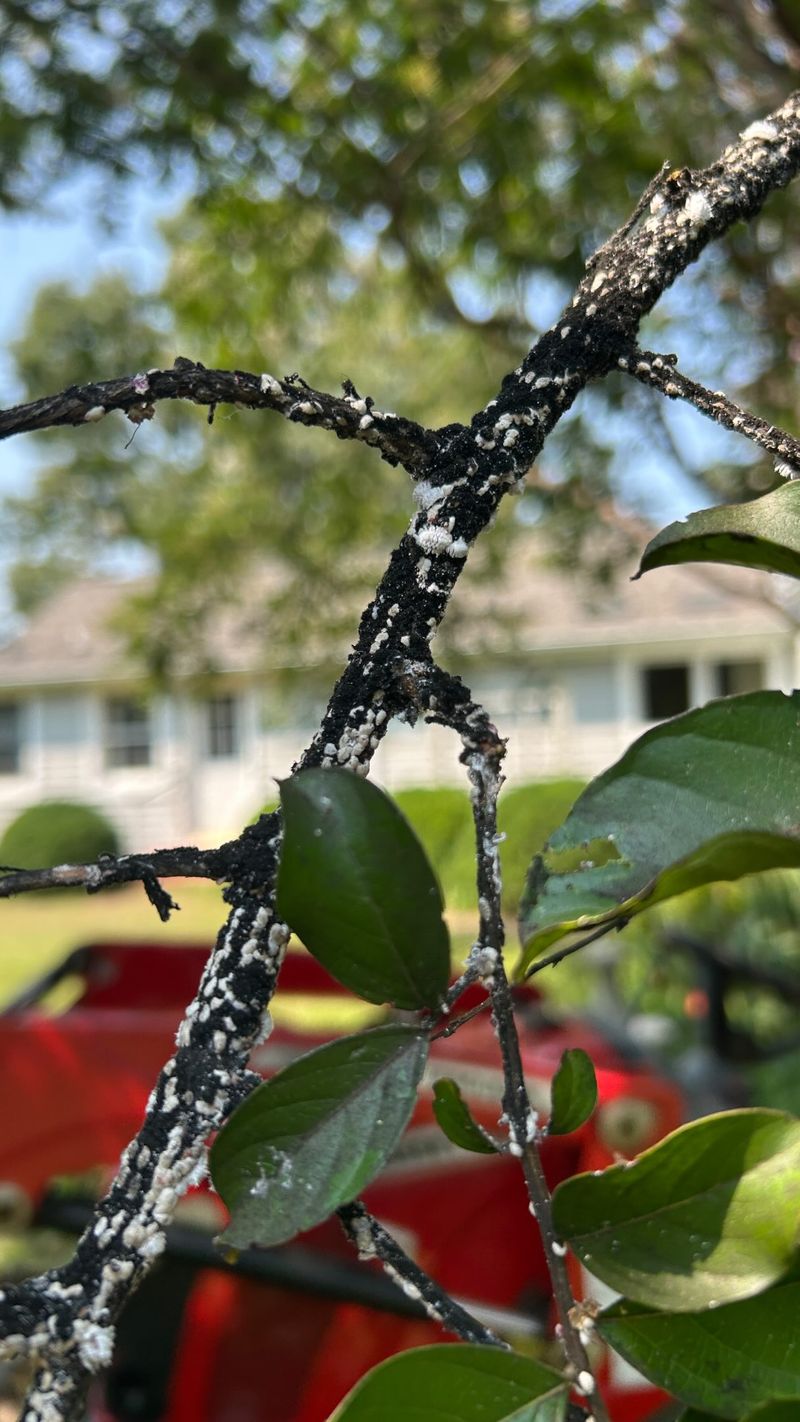
Adult females hide under a white or gray felt coating that shields them and their pink eggs. Crushing one leaves a pink streak on your finger, which is the giveaway gardeners remember.
The pest showed up in Texas around 2004 and has since spread across the Southeast, Georgia included. Metro Atlanta, Macon, and Savannah neighborhoods now report heavy trunk colonies most years.
Colonies gather in bark cracks, around old pruning cuts, and along branch crotches where shelter is best. From a distance the trunk looks dusted with flour or smeared with sloppy white paint.
Each insect pierces the bark and drinks sap, then releases sugary waste called honeydew onto everything below. Sticky railings, glossy leaves, and busy ants usually show up within a few short weeks.
Fungus does not feel bumpy under a thumbnail, and it rarely bleeds pink when you press it. Learning that one difference saves Georgia homeowners from buying fungicides that do nothing here.
Trees can carry scale for years while still leafing out, which makes the pest easy to ignore. Catching it early keeps the trunk cleaner and the summer flower show much fuller.
Neighbors often compare notes because scale moves down a street, hitching rides on wind, birds, and tools. One infested crapemyrtle on a corner lot can seed an entire cul-de-sac.
The Fungus Mix-Up Behind The Sticky Black Film
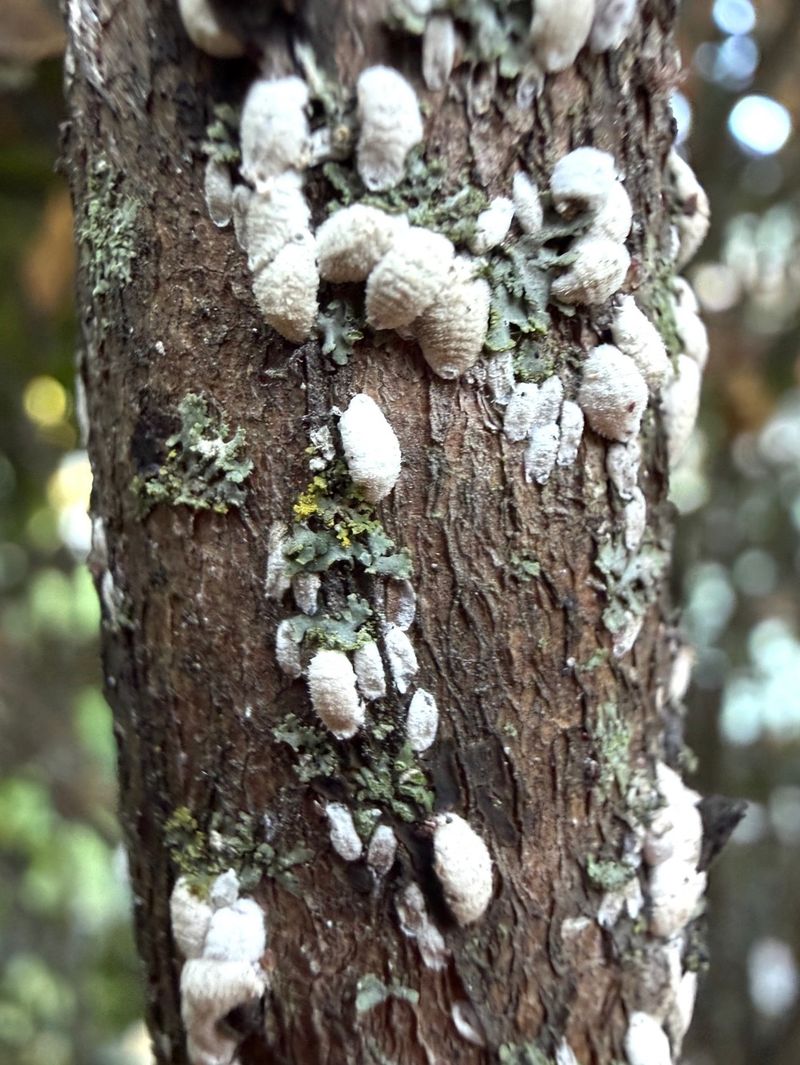
Black, soot-stained bark convinces plenty of Georgia homeowners that some aggressive fungus is attacking their favorite tree. That dark film is genuine fungus, yet it acts more like a passenger than a cause.
Sooty mold feeds on honeydew, the sugary liquid raining down from sap-sucking insects hidden above it. Clear out the insects and the black coating slowly weathers away over the following months.
Fungicide sprays feel like the obvious answer, so many people buy one and soak the whole trunk. Weeks later the tree looks identical, the wallet is lighter, and frustration sets in.
Pressure washing gets tried next, which strips soft crapemyrtle bark and injures living tissue underneath. Scale tucked into deep crevices usually survives that blast and rebuilds colonies quickly.
Your Georgia Garden Changes Every Week. Your Plan Should Too.
Gardening in Georgia changes quickly throughout the season. Every Friday you’ll receive a simple weekly plan showing exactly what to plant, prune, fertilize, harvest, and protect so you never miss the right timing.
A better first step costs nothing, just a close look with reading glasses or a phone camera. Zoom in on the white fuzz and hunt for bumps, pink eggs, and crawling specks.
Powdery mildew, a true fungus, also hits crapemyrtles, but it coats leaves and flower buds instead. Bark stays clean with mildew, while scale builds crusty white patches right on the wood.
Extension agents in Georgia field these calls constantly, especially once late-summer honeydew makes porches sticky. Sending them a clear photo beats guessing, and county offices answer questions for free.
Getting the diagnosis right changes the treatment plan, the timing, and the money involved. Trees do bounce back, though they respond to insect control rather than more fungicide.
September Warmth And Late-Season Crawler Waves
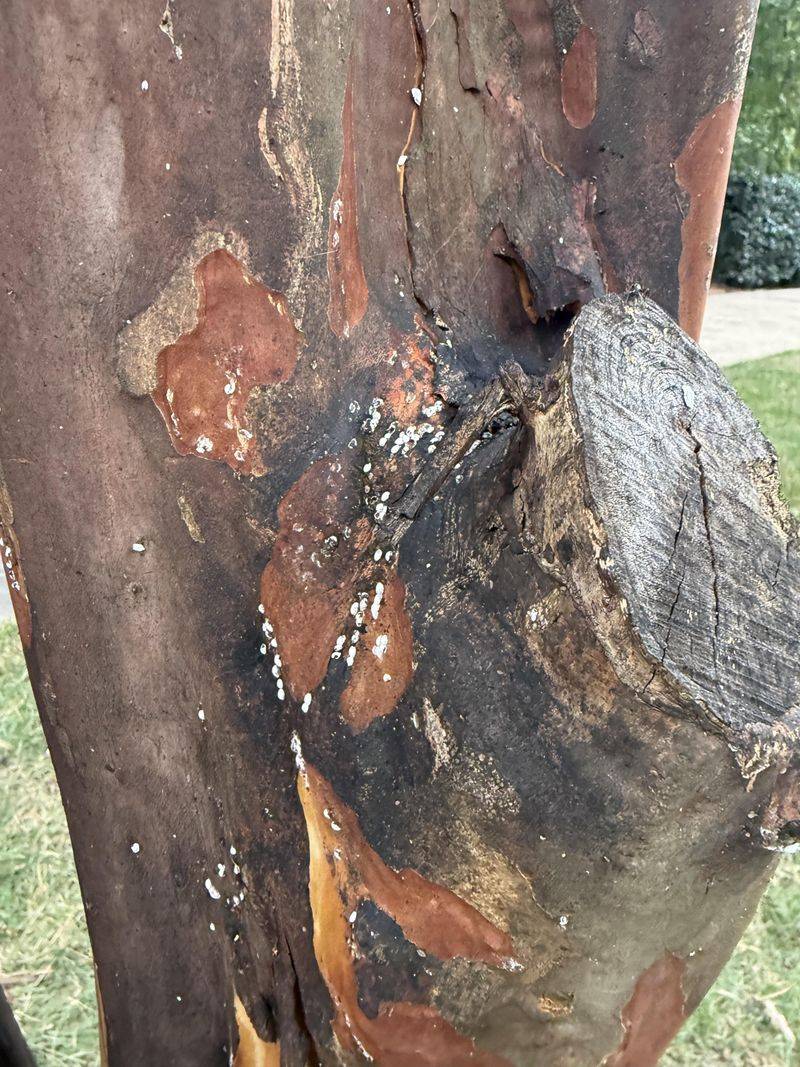
Late September in Georgia still feels like summer, and these insects take full advantage of the warmth. Second and third generations stay active now, spreading while gardeners think about football and pumpkins.
Crawlers are the newly hatched babies, soft and pinkish, about the size of a dust grain. They wander the bark for a day or two, then settle down and build white armor.
Treatments land best during crawler stages because the young insects carry no waxy shield yet. Miss that window and sprays mostly bounce off the felt coating the adults wear.
Checking weekly helps, and double-sided tape wrapped around a branch makes crawlers easy to spot. Tiny pink dots stuck to the tape mean the clock has started on treatment.
Cooler October nights slow feeding, and the insects tuck in for winter under loose bark flakes. Populations do not vanish, they simply wait quietly until spring temperatures climb again.
Fall is also when honeydew peaks, coating driveways, patio chairs, and anything parked nearby. Wasps and ants swarm that sweetness, which is often the first thing families notice.
Georgia’s long growing season lets this pest squeeze in extra generations compared with cooler states up north. More generations mean more spread and more reason to start control before winter.
Marking a calendar reminder for February or March pays off, since dormant treatments shine then. Bare branches make thorough coverage simple, and no blooms or pollinators are around yet.
Soft Brushes, Soapy Water, And Well-Timed Treatments
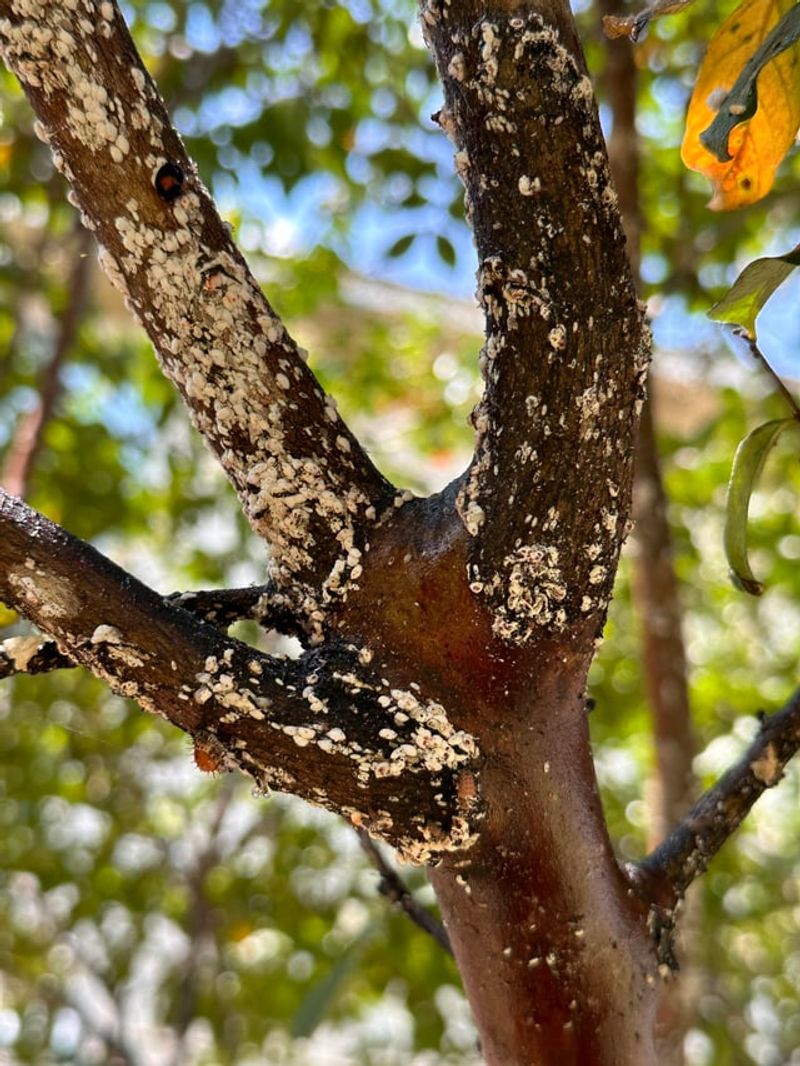
Scrubbing sounds too simple to work, yet a soft brush and soapy water remove huge numbers of scale. Mix a little dish soap into a bucket and wash the trunk and reachable limbs.
Gentle pressure matters because crapemyrtle bark peels naturally and tears under rough handling. Work with the grain, rinse well, and expect the wood to look startlingly clean afterward.
Dormant horticultural oil applied in late winter smothers insects hiding in bark crevices and old wounds. Coverage decides the result, so spray until trunk and branches drip from every side.
Systemic soil drenches with dinotefuran or imidacloprid move upward and reach feeders you cannot see. Apply them in spring, follow label directions closely, and water the root zone well.
Timing around blooms protects bees, so keep systemic products away while flowers are opening heavily. Many Georgia gardeners treat early, then let helpful insects handle stragglers through summer.
Lady beetles, lacewings, and tiny parasitic wasps genuinely feast on scale when broad sprays stay away. Leaving those allies alone often cuts populations without another dollar spent.
Skip heavy pruning as a cure, since topping crapemyrtles creates wounds and floppy weak regrowth. Scale loves those stubby knuckles, where sheltered cracks give eggs a cozy home.
Patience helps, because bark stains linger long after the insects are gone for good. Rain, sun, and natural peeling clean that trunk gradually across a season or two.
Fewer Blooms And A Slow Return To Health
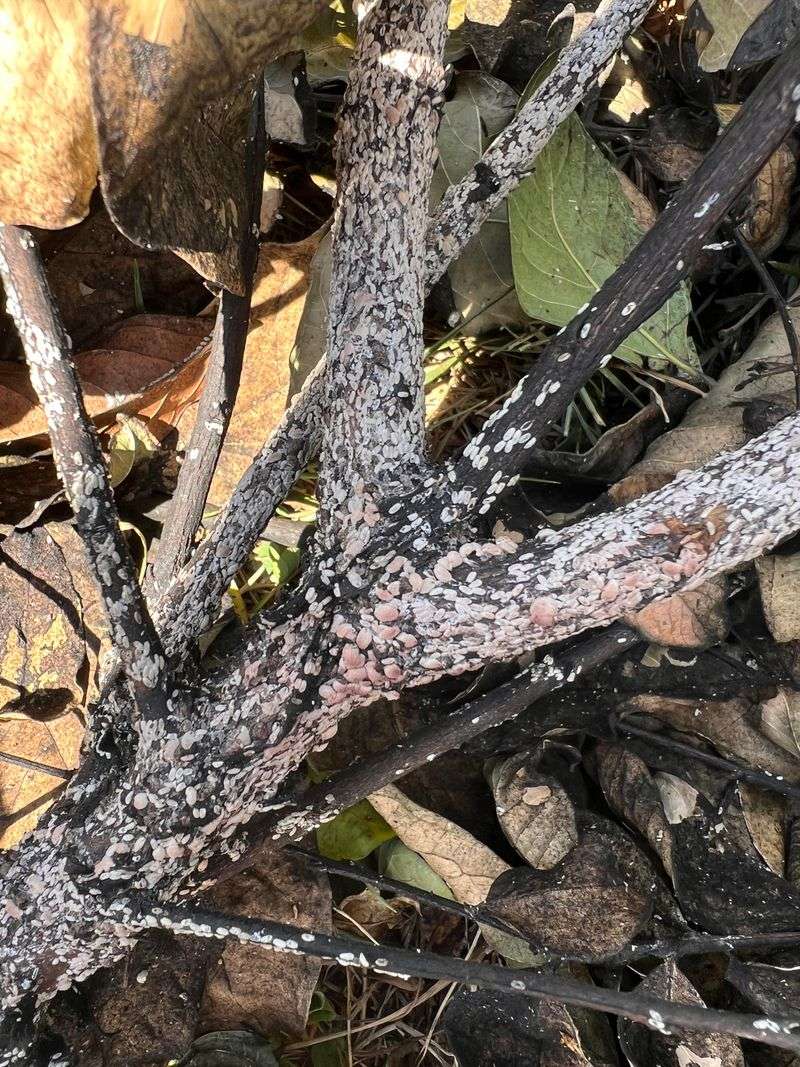
Heavy infestations rarely take a crapemyrtle out, but they do steal the show it puts on. Blooms shrink, flower clusters thin, and that famous hundred-day display gets noticeably shorter.
Sap loss drains energy the tree would otherwise spend on flowers, new shoots, and thicker wood. Twig growth slows, and branch tips often look sparse by the end of summer.
Sooty mold blocks sunlight from the leaves, which cuts down the food a tree can make. Less food means weaker roots, and weak roots handle Georgia droughts poorly next year.
Property owners notice the mess before the plant decline, honestly, because honeydew coats everything below. Sticky sidewalks, spotted car hoods, and shiny deck rails start the complaints most seasons.
Recovery happens, and it happens faster than people expect once the feeding finally stops. Treated trees usually flower normally again within one or two growing seasons.
Bark keeps gray shadows for a while, a sort of scar left by the old colony. New peeling layers eventually reveal the smooth cinnamon color everyone plants these trees for.
Stressed crapemyrtles also invite other trouble, including aphids and occasional cankers on weakened limbs. Solving the scale problem stops that domino effect before it picks up speed.
Curb appeal counts too, since Georgia streets lined with crapemyrtles look magnificent in July. A clean, blooming tree simply reads as care, and visitors notice things like that.
Nursery Inspections And Smart Yard Habits
Most new infestations arrive by truck, tucked on nursery stock that looked fine in the parking lot. Inspect trunks and branch crotches for white felt before a crapemyrtle rides home.
Pass on plants with crusty bumps, even discounted ones, because the savings turn into years of scrubbing. Ask the garden center whether their crapemyrtles were treated, and when that happened.
Quarantine works well for gift plants and roadside buys, so park them away from established trees. Watching for crawlers during those first weeks beats finding them later on prized specimens.
Tools spread trouble as well, especially pruners moved between infested and healthy crapemyrtles. Wipe blades with disinfecting solution, and bag clippings instead of piling them beside clean trees.
Healthy trees shrug off stress better, so water deeply during dry Georgia Septembers and mulch generously. Skip heavy nitrogen fertilizer, which pushes soft growth that scale insects apparently adore.
Resistant selections exist, and several newer cultivars from breeding programs show much lighter scale pressure. Asking about those varieties before planting saves work for the next twenty years.
Walking the yard once a month builds the habit that catches problems while they stay small. Check trunk bases, old pruning wounds, and the shady side of every crapemyrtle.
Sharing what you learn matters more than it sounds, since this pest travels street by street. One informed neighbor with a soapy bucket can protect a whole block of trees.