A Strange Silk Is Spreading Through Iowa’s Black Walnut Trees
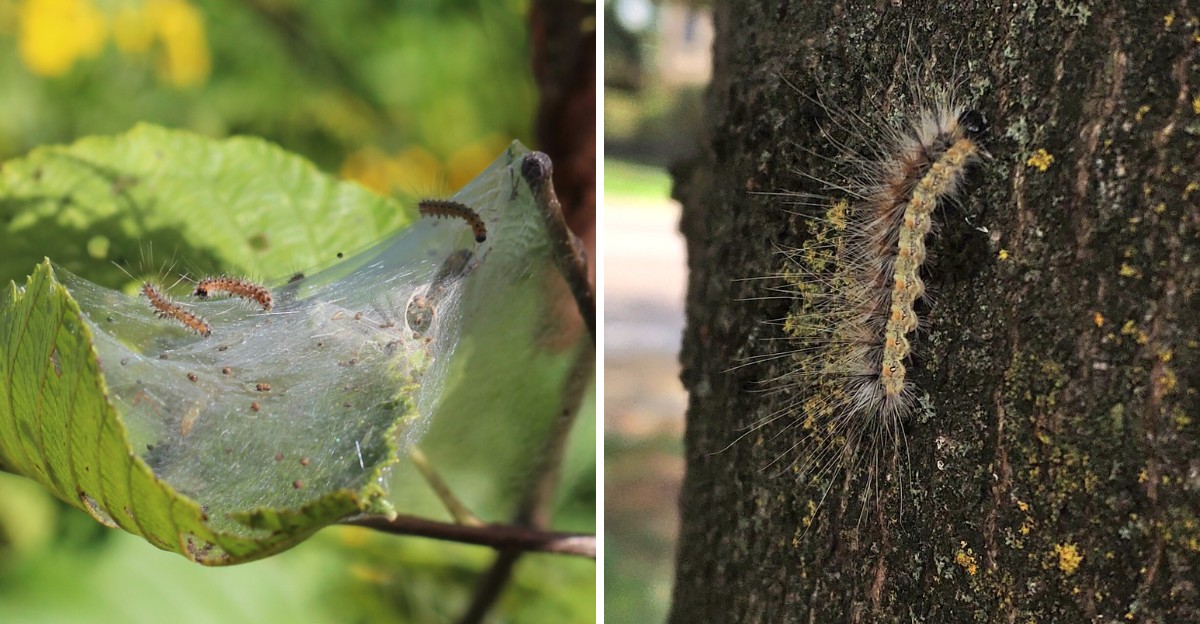
Pale silk pockets are covering walnut branches right outside your window. You notice it instantly from the far end of your driveway. Nobody warned you how fast these bundles could spread through branches.
Branch tips near you disappear beneath webbing like crumpled tissue paper. Farmers driving slowly past your fence line spot it before you do. Iowa canopies near you look calm at dawn and strange by dusk.
Neighbors start texting you photos, asking if your walnut tree is changing. Curiosity turns into interest fast once silk covers your entire limb. Ladders come out fast, and you start asking much bigger questions.
Unease feels natural, yet you still deserve the real story here. Truth rarely matches the story spreading through your quiet Iowa evening.
Understanding what’s spinning above you changes how you see that tree. That silk hides a stranger story than you expect, and you need it right now.
The Tiny Architect Behind The Webbing
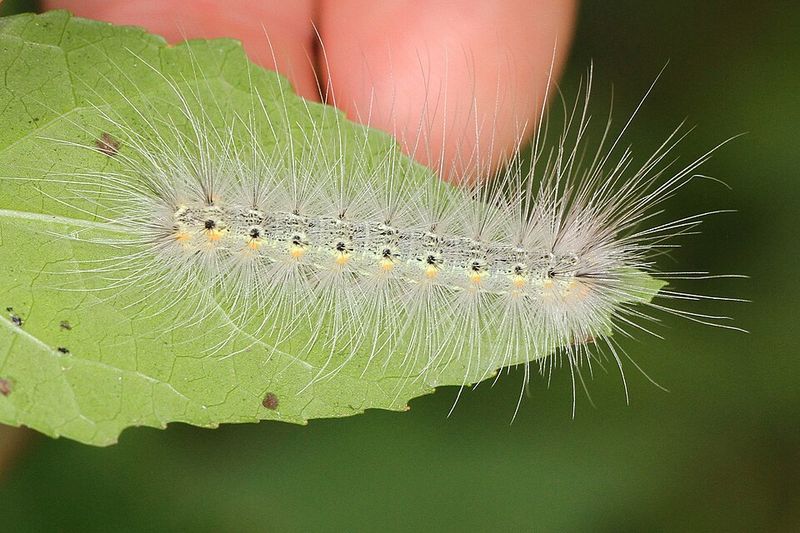
Peel back a corner of that silk and you will find the source: a fuzzy caterpillar barely an inch long, covered in long white hairs. Fall webworms feed on dozens of tree species, but black walnut, wild cherry, hickory, and crabapple sit near the top of their menu.
The moth that lays the eggs is a snowy white beauty, sometimes speckled with dark dots on her wings. She glues clusters of several hundred eggs to the underside of a leaf in early summer.
When those eggs hatch, the tiny caterpillars immediately begin spinning silk around the leaf they are standing on. As they grow and eat, they expand the tent outward, wrapping more leaves inside their portable dining room.
The silk is a shelter, not a trap for other insects. Inside, the caterpillars stay protected from birds, wasps, and weather while they munch away in relative peace.
A single colony can wrap several feet of branch by the time September rolls around. That is why the webs seem to appear suddenly, even though the insects have been working since July.
Fun bit of history: fall webworms are native to North America, but they hitchhiked to Europe and Asia in the 1940s and are now considered an invasive nuisance overseas.
Here in Iowa, they are simply part of the local cast of characters, doing what they have done for thousands of years.
Why Black Walnuts Are A Preferred Host
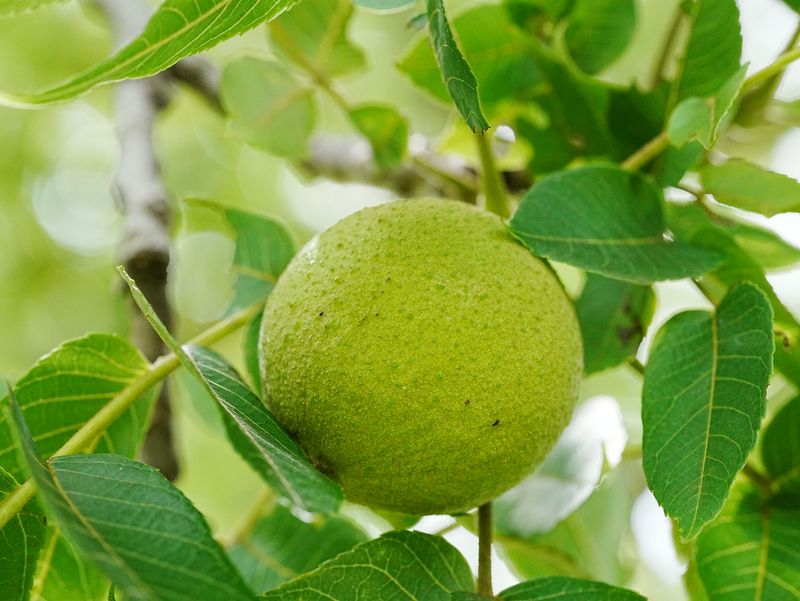
Walnut trees seem to collect these silk bundles like magnets, and there is a reason for that. Their leaf structure and open growing habit make them an easy target compared to denser, shade-grown species.
Iowa is widely known for its abundance of black walnut trees. Fencerows, creek bottoms, and old farmsteads across the state are full of them, often growing in open sunlight where female moths can easily find the outer branches.
Those sunny edge trees are exactly what the moths look for. Shaded forest interiors see far fewer nests than a lone walnut standing beside a pasture gate.
Your Iowa Garden Changes Every Week. Your Plan Should Too.
Gardening in Iowa changes quickly throughout the season. Every Friday you’ll receive a simple weekly plan showing exactly what to plant, prune, fertilize, harvest, and protect so you never miss the right timing.
Black walnut leaves are compound, meaning each leaf has many small leaflets along a central stem. That structure gives caterpillars plenty of anchor points for silk and plenty of food packed into a small space. Timing plays a role too.
Walnuts naturally begin shedding leaves earlier than many Iowa hardwoods, sometimes starting in September, so the tree is already winding down when the webs get big. Landowners who manage walnut for lumber sometimes worry about growth loss.
University extension research generally points to minimal long-term impact on healthy trees, though repeated heavy infestations combined with drought can slow a young tree down.
If your walnut looks lacy this month, look around. Odds are the neighboring cherry tree has a nest or two as well.
Telling Silk Tents Apart From Their Springtime Cousins
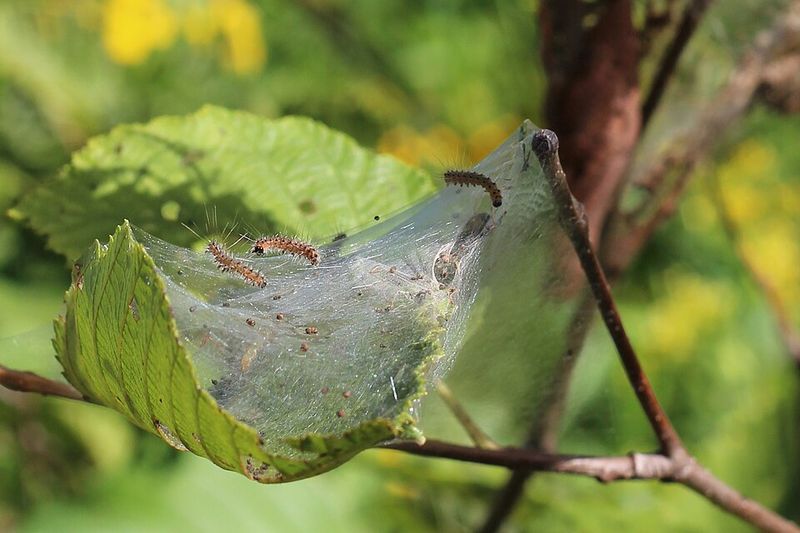
Plenty of Iowans mix up two very different silk makers, and the confusion leads to unnecessary worry. Eastern tent caterpillars build in spring, fall webworms build in late summer.
Location gives away the difference fastest. Tent caterpillars spin their nests in the crotch where two branches meet, then crawl out to feed.
Webworms wrap the tips of branches and eat everything inside the tent. Season is the second clue. If you spot silk in April or May, that is tent caterpillar season. Silk that shows up in August and September belongs to webworms.
Host trees differ as well. Tent caterpillars favor wild cherry, apple, and crabapple, while webworms spread across a much wider list that includes walnut, hickory, and mulberry.
There is a third look-alike worth knowing about. Bagworms build small cone-shaped cases from bits of foliage and hang them on evergreens and many deciduous trees alike, and those are a genuinely different situation requiring different timing.
Getting the identification right saves money. Sprays timed for spring pests do nothing useful in September, and treatments aimed at evergreen bagworms have no bearing on walnut webbing.
Here is a quick memory trick passed around by Iowa extension folks: tents in the fork, webs on the tip. Say it once while standing under the tree and you will remember it next year. Once you can name what you are looking at, deciding what to do becomes far simpler.
How Much Harm Actually Happens
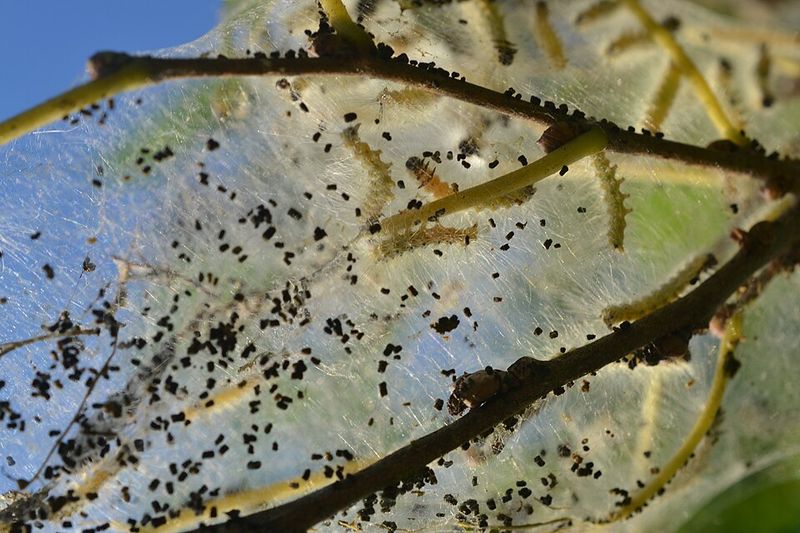
Here is the good news that surprises most people. Webbed branches look rough, but the tree underneath is usually in fine shape.
By September, a black walnut has already banked most of the sugars it needs for winter. Leaves lost this late in the season have done the bulk of their work already.
The damage stays cosmetic in the vast majority of cases. Brown, skeletonized leaflets hang inside the silk while the rest of the canopy carries on normally.
Even trees that look half-wrapped tend to leaf out just fine the following spring. Established hardwoods carry impressive reserves in their roots and trunk.
Young or newly planted walnuts deserve a closer look. A sapling with limited leaf area and a small root system has less cushion, especially during a dry Iowa summer.
Stress stacking is the real concern. A tree already struggling with drought, construction damage, or root compaction handles extra leaf loss less gracefully than a vigorous one.
Nut production can dip slightly during heavy years, which matters if you gather walnuts for hulling. Squirrels will still find plenty.
Arborists across the Midwest generally file fall webworms under nuisance rather than threat. The webbing is a seasonal eyesore more than a warning sign.
So before you climb a ladder with a garden hose, step back and look at the whole tree. Green leaves outside the silk tell you the story is a mild one.
Nature’s Cleanup Crew Is Already On It
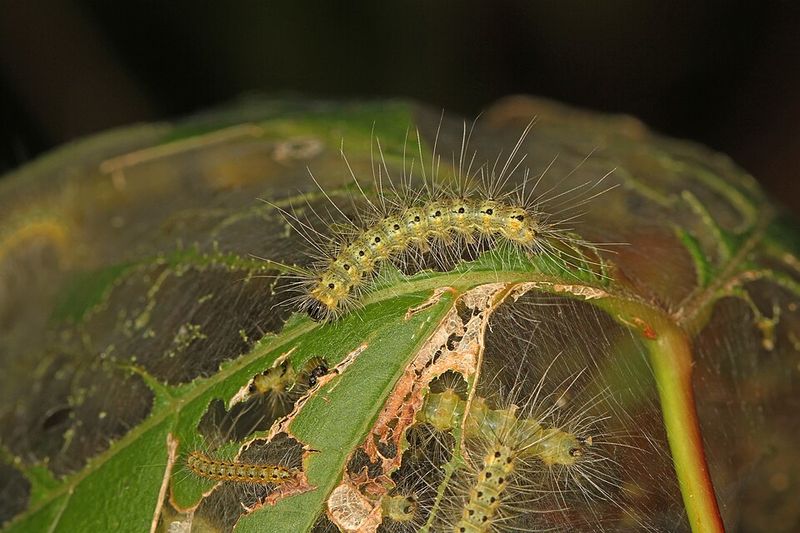
A wide range of predators and parasites treat webworm colonies as a buffet. Iowa’s backyards commonly host them.
Yellow-billed cuckoos are famous for it. Nicknamed rain crows by old-timers, they specialize in hairy caterpillars that other birds refuse to touch.
Paper wasps and yellowjackets tear into the silk to carry caterpillars back to their own nests. Watching a wasp work through a web is oddly satisfying.
Parasitic wasps and tachinid flies take a subtler approach, laying eggs in or on the caterpillars. Those larvae develop inside and reduce the next generation before it arrives.
Ground beetles, spiders, stink bugs, and assassin bugs join in from other angles. Even chickadees and vireos poke around the edges of nests.
Populations swing wildly from year to year because of this pressure. A heavy webworm summer is often followed by two or three quiet ones as predator numbers catch up.
Broad-spectrum insecticides can actually work against you here. Wiping out wasps and beneficial insects in a yard removes the very helpers keeping caterpillar numbers in check.
Gardeners who plant native flowers like goldenrod, boneset, and mountain mint give parasitic wasps a nectar source. Those small blooms support a surprising amount of pest control.
Leaving the webs alone is a legitimate strategy. In a lot of Iowa yards, nature handles the situation without anyone lifting a finger.
Smart Ways To Handle Webs You Cannot Ignore
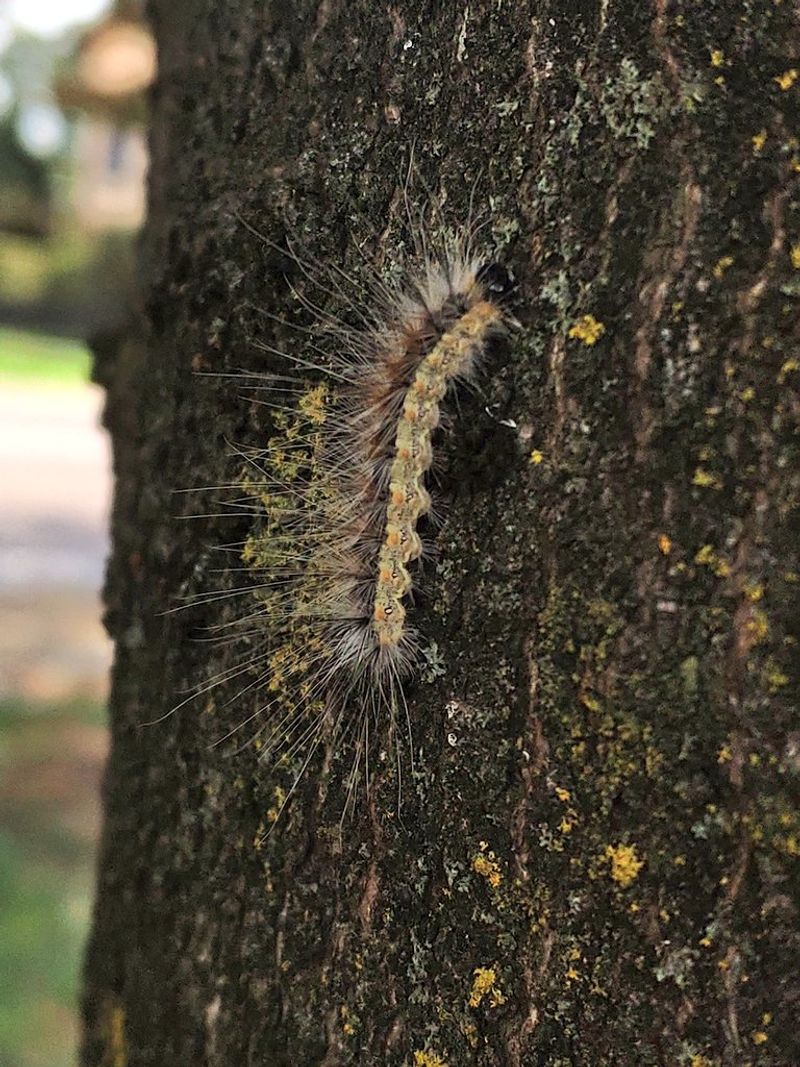
Sometimes a nest hangs right over the patio and patience runs thin. Reasonable options exist, and none of them involve fire.
Burning webs with a torch is not a safe option. Scorched bark opens the door to decay and injury far more serious than chewed leaves.
Pruning works well for low nests. Clip the affected branch tip, drop it in a bucket of soapy water or a sealed bag, and the colony is handled.
A broom handle or long pole can simply tear the silk open. Once the shelter is shredded, birds and wasps finish the job quickly.
A strong blast from the garden hose does the same thing on branches within reach. Aim across the nest rather than straight up into the canopy.
For larger colonies on accessible limbs, products containing Bacillus thuringiensis work best on small caterpillars early in the season. Spray coverage has to reach inside the web, which gets tricky once the silk thickens.
Timing matters more than product choice. July applications beat September ones because young caterpillars feed more readily and webs are still thin.
Tall trees are generally not worth treating. Reaching the upper canopy requires equipment few homeowners own, and the payoff is mostly visual.
Come winter, the silk weathers away on its own. By the time spring arrives, those papery tents are shredded remnants and the walnut is pushing out fresh leaves.