Something Is Spinning Massive Silver Webs Across Iowa Porches This Week
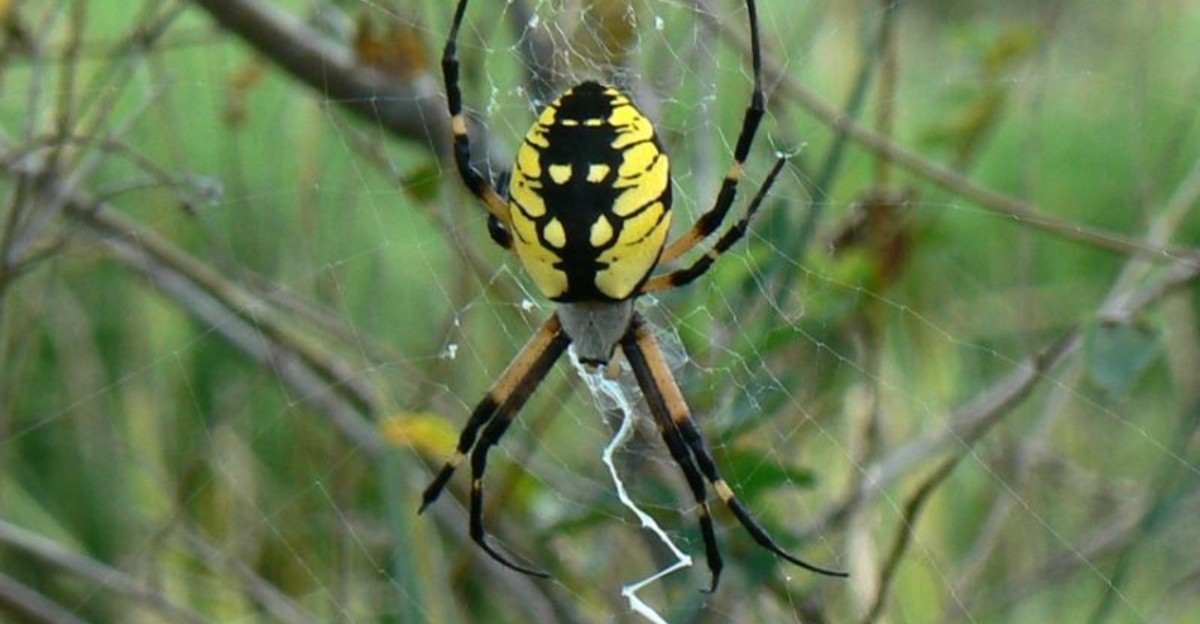
You step onto your porch and pause at a glittering web overhead. Dew has turned an ordinary web into a silver net across your railing. Iowa mornings in September push these webs onto your porch.
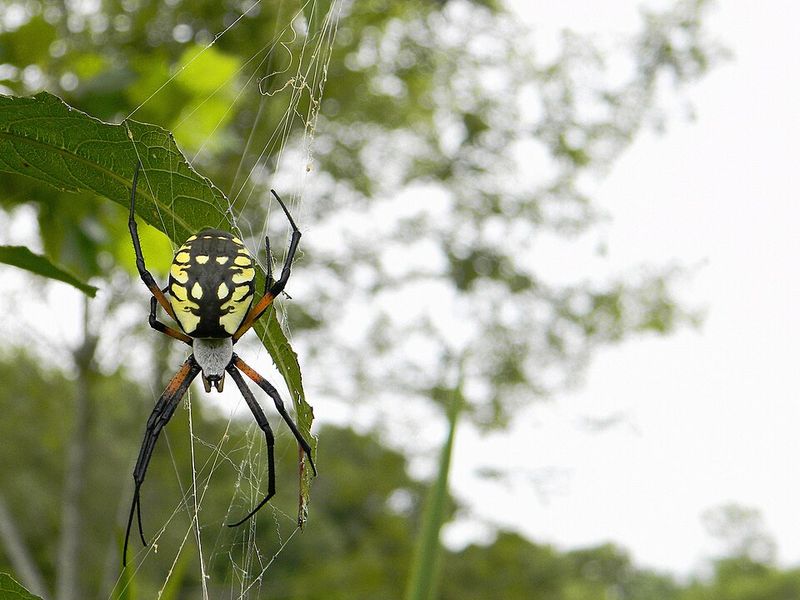
She sits center in your view, bold in gold and black. Neighbors across Iowa are snapping photos and swapping nervous questions. Panic sends many of them reaching straight for a broom.
Curiosity, though, deserves priority here, not fear. Understanding why she chose your porch shifts how you react next. Her timing, her size, her boldness point somewhere specific.
Spiders like her rarely grow this large before cold weather sets in. Farmers notice her early each fall near barns, fences, and porches. Size alone explains why she draws stares from passing drivers.
Location matters, since damp late-season air favors these builders. Answers await you, and that porch web is not going anywhere.
The Golden Weaver Behind the Silver Curtain
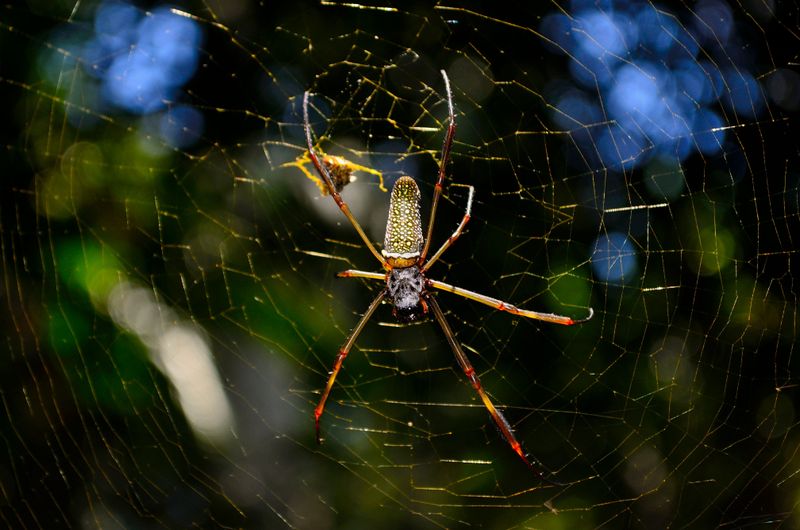
Bright lemon-yellow splashes on a glossy black body, legs banded like candy canes, and a body roughly the size of a quarter. That is the yellow garden spider, known to scientists as Argiope aurantia.
She goes by plenty of nicknames around the Midwest. Writing spider, zipper spider, corn spider, and black and yellow garden spider all point to the same creature.
The females are the ones you notice. Males are small, brownish, and spend their short season wandering the edges of a female’s web, hoping to be welcomed rather than mistaken for lunch.
Iowa porches, garden fences, and tomato cages make ideal real estate because they offer sturdy anchor points and a steady parade of flying insects. She wants sun, a bit of shelter from wind, and something to bridge with silk.
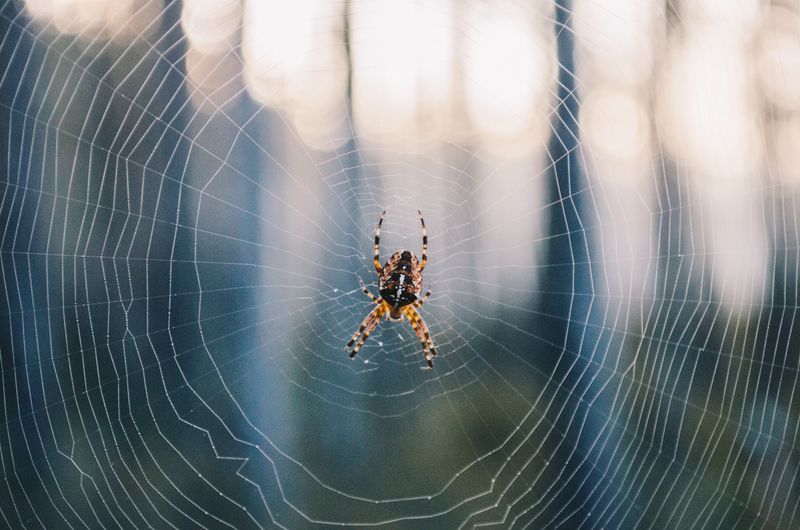
Her web can span roughly two feet across, and the silk is strong enough to feel when you walk through it. That thick, zigzag ribbon running down the middle is called a stabilimentum, and researchers still debate its purpose.
Some think it warns birds away so they do not crash through. Others suspect it reflects ultraviolet light that draws insects closer, or helps camouflage her outline.
Fun bit of trivia: this species belongs to the same spider family that inspired Charlotte in Charlotte’s Web, though the real-life model was a barn spider, not a garden spider. Once you know her name, the porch feels less unsettling and more familiar.
Why September Is When She Finally Reaches Full Size
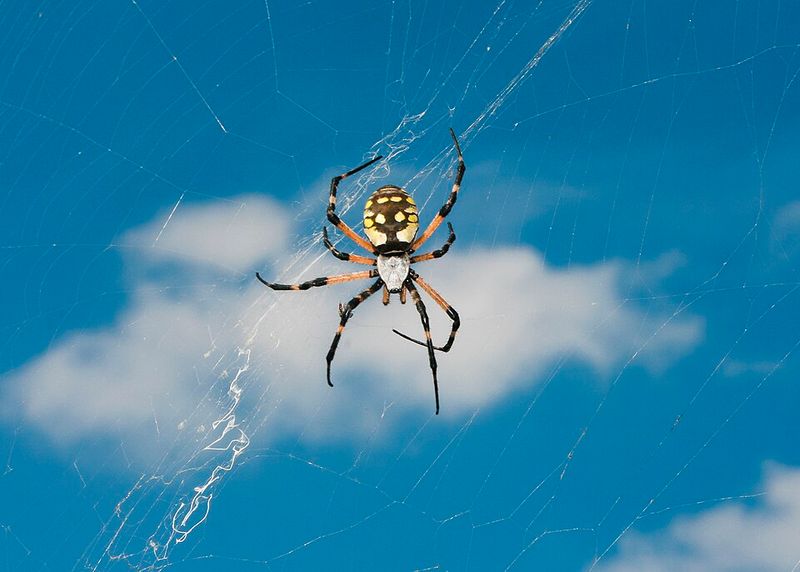
Here is the twist that surprises folks: she did not arrive this week. She hatched back in spring as a speck barely bigger than a pinhead and has been quietly growing in your yard all summer.
Spiders grow by molting, shedding their old shell and stretching into a bigger one. After a season of grasshoppers, moths, and flies, she finally hits full size right around late August and September.
Timing matters for another reason. Autumn is mating season, so females build larger, more visible webs in open spots where males can find them.
Your Iowa Garden Changes Every Week. Your Plan Should Too.
Gardening in Iowa changes quickly throughout the season. Every Friday you’ll receive a simple weekly plan showing exactly what to plant, prune, fertilize, harvest, and protect so you never miss the right timing.
Iowa weather plays a role too. Cool nights and heavy dew coat the silk in water droplets, turning webs that were invisible in July into glittering sheets you cannot miss at 7 a.m.
Insect numbers peak in late summer as well, especially near gardens, soybean edges, and porch lights. More prey means a bigger, hungrier spider willing to build a wider net.
She also tends to relocate as the season shifts, abandoning a tattered web and rebuilding somewhere with better traffic. That is why a railing that was clear on Sunday has a two-foot web by Wednesday.
Many orb weavers rebuild the sticky spiral each night, eating the old silk to recycle the protein. So the masterpiece you admire today may be a brand new version of yesterday’s.
Once frost settles in, the adults fade out naturally and the next generation waits inside egg sacs.
How Worried Should You Actually Be
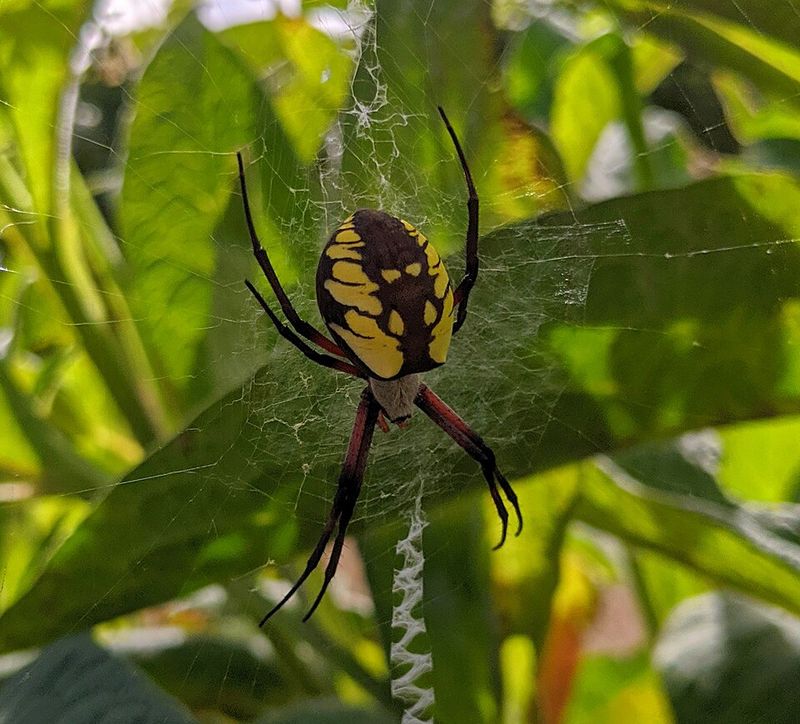
Let us settle the big question. Argiope aurantia is not considered medically dangerous to people or pets in Iowa.
She has venom, as nearly all spiders do, but it is tuned for grasshoppers rather than humans. Bites are uncommon and happen mainly when a spider gets squeezed against skin.
Reported reactions compare to a bee sting: a pinch, some redness, mild swelling, and then it settles down. Washing the spot and applying something cool is usually enough, though anyone with allergies or unusual symptoms should call a doctor.
Her real defense is not biting at all. Disturb the web and she often bounces it rapidly, blurring her outline, or simply drops on a silk line and hides in the leaves below.
Iowa is also home to the black widow, which is rare and shy, and possibly the brown recluse in some areas, though its presence in the state is debated among experts. Neither builds a big, tidy wheel-shaped web on your porch rail.
Curious kids and dogs generally get a startled spider, not an aggressive one. Teaching children to look without poking keeps everyone comfortable.
She also stays outdoors. This species does not wander into houses to set up shop, so you will not find her behind the couch in November.
Think of her as a seasonal neighbor with excellent manners. She pays rent in mosquitoes and asks only that you use the other door for a few weeks.
The Free Pest Control Service On Your Railing
Picture hiring a tireless bug catcher who works dawn to dusk, never asks for a raise, and cleans up after itself. That is the arrangement you just stumbled into.
A full-grown female can take down grasshoppers, moths, flies, wasps, mosquitoes, aphids on the wing, and the occasional beetle. Anything that blunders into that sticky spiral gets wrapped in silk and saved for later.
Gardeners in Iowa often treat her as a good-luck sign near tomatoes, peppers, and squash. Fewer chewing insects means less damage to the harvest you have been babying since May.
Her appetite scales with her size. Studies of orb weavers show a large female can consume a substantial number of insects over the course of a season.
She is also part of a bigger food web. Birds, wasps, and lizards rely on spiders, so a healthy spider population supports the songbirds you enjoy watching.
Compare that to reaching for a spray can. Chemicals hit pollinators and beneficial insects along with the pests, and they do nothing about the mosquitoes hovering by your ankles.
If you garden organically, she is basically a volunteer employee. Leaving a few webs intact around the vegetable beds costs you nothing and pays you back in produce.
Some Iowa farmers call her the corn spider for good reason. She has been patrolling field edges here far longer than any of us have owned porches.
Moving A Web Without Harming The Architect
Sometimes a web really is in the wrong spot. Right across the back steps where you haul groceries counts as the wrong spot.
Patience solves most of these standoffs. Clear the web in the evening with a broom while the spider is off to the side, and she will often rebuild a few feet away in a calmer corner.
Repeat gently for two or three nights and she generally takes the hint. Orb weavers rebuild constantly anyway, so a removed web is a minor inconvenience rather than a disaster for her.
To relocate the spider herself, hold a wide-mouth jar under her and nudge her in with a piece of cardboard. Carry her to a shrub, fence line, or garden bed at least twenty feet away and let her walk out on her own.
Wear garden gloves if handling makes you jumpy. Move slowly, because sudden jabs are what make any spider defensive.
Porch lights are the real culprit worth addressing. Bright bulbs pull in moths and flies at night, turning your railing into a reliable food source.
Switching to warm yellow bulbs or a motion sensor cuts the insect crowd, and the spiders drift toward better hunting grounds. Trimming shrubs back from the house and clearing the corners of the eaves helps too.
A quick pass with a broom handle along the porch ceiling each week keeps things tidy. No sprays required, and the neighborhood keeps its bug patrol.
Egg Sacs, Baby Spiders, And What Comes Next
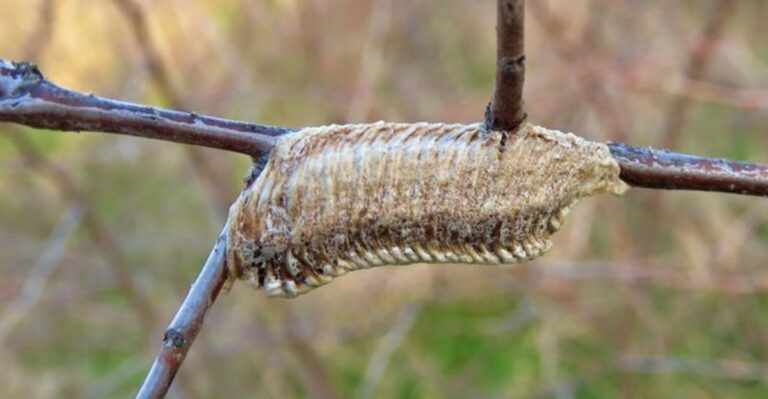
Around now, keep an eye out for what looks like a small brown paper balloon tucked under the eave. That is her egg sac, a carefully built structure.
Each sac is roughly an inch wide, shaped like a lopsided pear, and built from tough layered silk that sheds rain and blocks cold. A single female may produce one to four of them before the season ends.
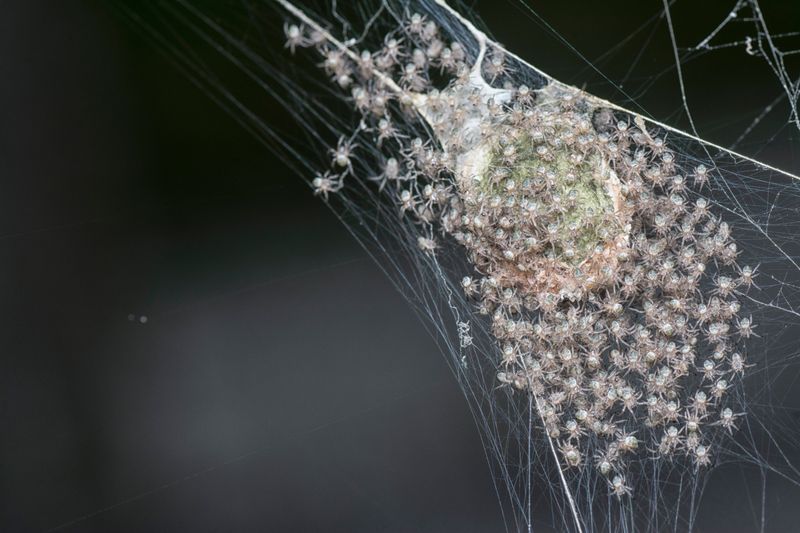
Inside sit hundreds, sometimes over a thousand, tiny eggs. The spiderlings hatch in fall but stay tucked inside through the Iowa winter, huddled together and waiting.
Come spring warmth, they pour out and do something remarkable called ballooning. Each one climbs to a high point, releases a strand of silk, and lets the breeze carry it away to a new home.
Only a handful survive to adulthood, which is exactly why she lays so many. Birds, wasps, and weather take care of the rest.
If a sac is somewhere inconvenient, you can snip the attached twig or silk anchor and tie it to a shrub. Keep it outdoors and exposed to natural temperatures, since a warm garage confuses their timing.
The adult female fades out after the first hard frosts, her season complete. She will not overwinter in your house or come back in January.
Leave the sac alone and next summer’s grasshopper patrol takes care of itself. That is a pretty good deal for doing absolutely nothing.