10 Native Trees That Give New York Yards The Most Stunning Fall Color
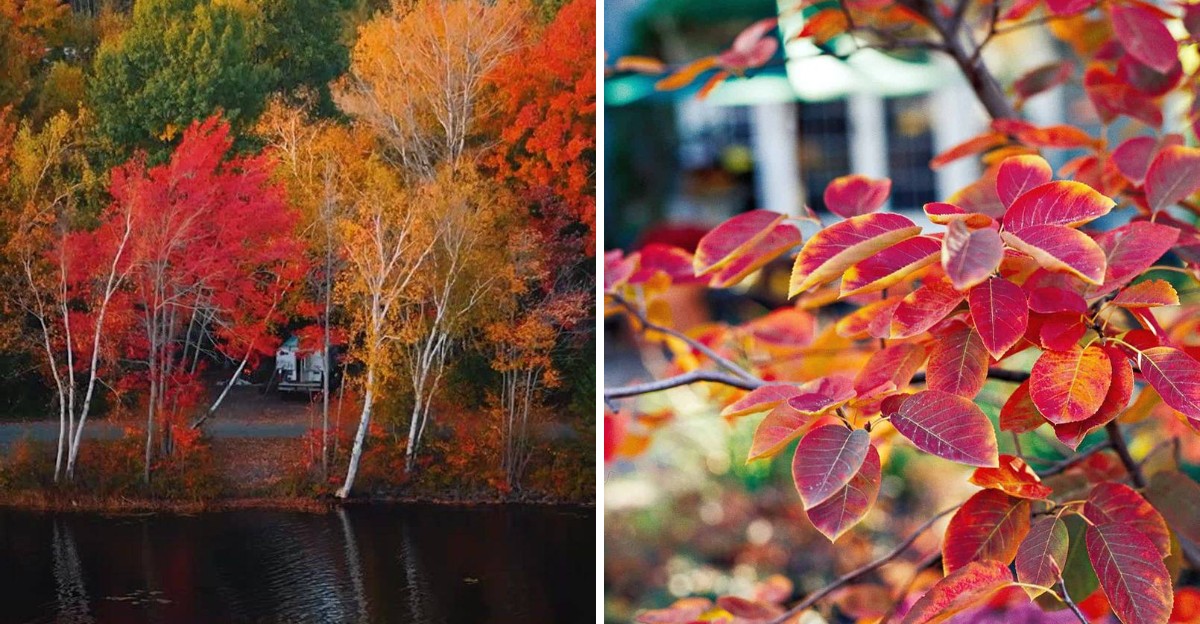
October changes the way a New York yard looks and feels. Cool mornings arrive, leaves begin to glow, and some landscapes suddenly burst with color while others fade into beige.
The difference often starts with the trees planted years ago. Many of the most striking fall-color trees are native species that already fit the state’s climate and growing conditions.
They can handle cold snaps and a range of soils. Some even tolerate tough spots near roads and driveways.
Choose the right tree, and your yard can become one of the brightest stops on the block each fall.
1. Red Maple Brings Brilliant Red And Orange Foliage
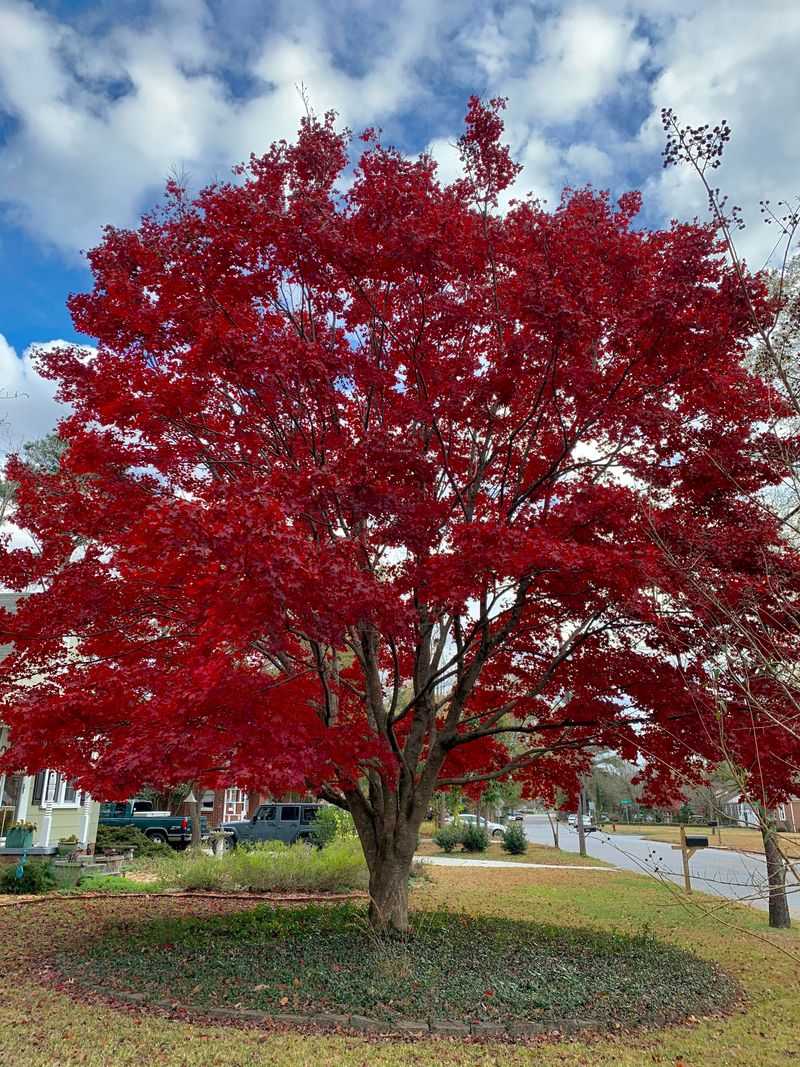
Ask anyone in New York to picture a fall tree, and odds are good they are imagining this one. Acer rubrum shows up in swamps, roadsides, and backyards all across the state.
Color arrives early with this species, sometimes teasing red tips as soon as late August. By peak season the canopy glows bright red, scarlet, deep maroon, or a rich burgundy.
Soil flexibility is the real superpower here. Red maple handles both moist ground and occasional dry conditions, making it useful in a range of landscapes.
Expect a mature height of roughly 40 to 60 feet with a canopy spreading 30 to 40 feet wide. That means giving it room away from the house, the driveway, and any power lines overhead.
Full sun produces the most intense color, though partial shade still delivers a respectable show. Planting in fall or early spring gives roots time to settle before summer heat rolls in.
Water deeply once a week during the first two growing seasons. A ring of mulch a few inches deep keeps moisture steady, but keep it off the trunk itself.
Fun detail worth knowing: the red maple earns its name three times over, with red flowers in spring, red leaf stems in summer, and red twigs in winter. Autumn is simply the loudest performance.
For a quick payoff, this tree grows at a moderate pace and rarely disappoints. New homeowners often pick it first for exactly that reason.
2. Sugar Maple Delivers Classic Gold Orange And Red
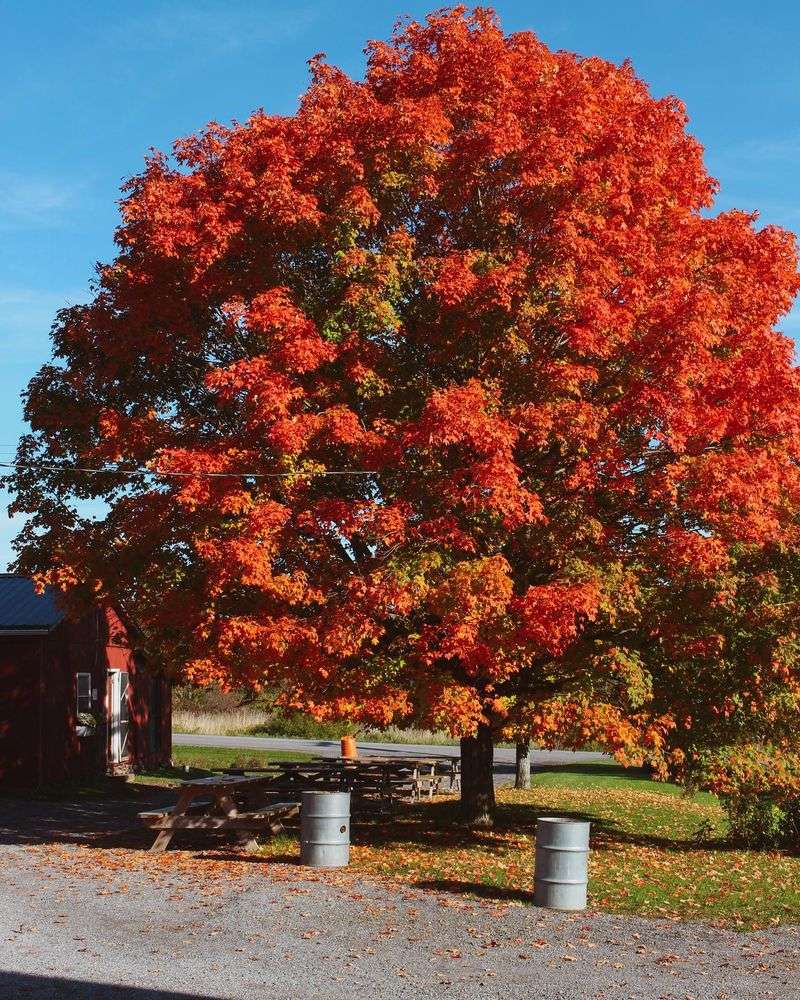
Postcard season in New York basically belongs to Acer saccharum. It is the tree behind syrup buckets, leaf-peeping bus tours, and about a million phone wallpapers.
What makes it special is the color range packed into one canopy. Brilliant yellow, vibrant orange, and fiery red often appear on the same tree at the same time.
Certain cultivars push into soft peachy tones that look almost painted. The show usually peaks in early to mid October depending on how far north you live.
Size deserves serious thought before planting. Mature trees reach 55 to 75 feet tall with a spread of 30 to 50 feet, so this is not a small-lot choice.
Soil matters more here than with many natives. Well-drained, slightly acidic ground keeps it happy, while heavy clay tends to cause slow decline and weak color.
Road salt is another weak spot, so skip planting right along a plowed street. A spot in the middle of the lawn or toward the back of the property works better.
Your New York Garden Changes Every Week. Your Plan Should Too.
Gardening in New York changes quickly throughout the season. Every Friday you’ll receive a simple weekly plan showing exactly what to plant, prune, fertilize, harvest, and protect so you never miss the right timing.
Patience pays off since growth is slower than red maple. Deep watering during dry August stretches helps the roots stay strong through fall.
Here is a bit of trivia for the kids: it takes roughly 40 gallons of sap to make one gallon of syrup. The same trees that give us maple syrup also put on a spectacular fall show, as changing pigments turn their leaves yellow, orange, and red.
Plant one and you basically inherit the family photo backdrop.
3. Black Gum Holds Onto Brilliant Red Fall Color
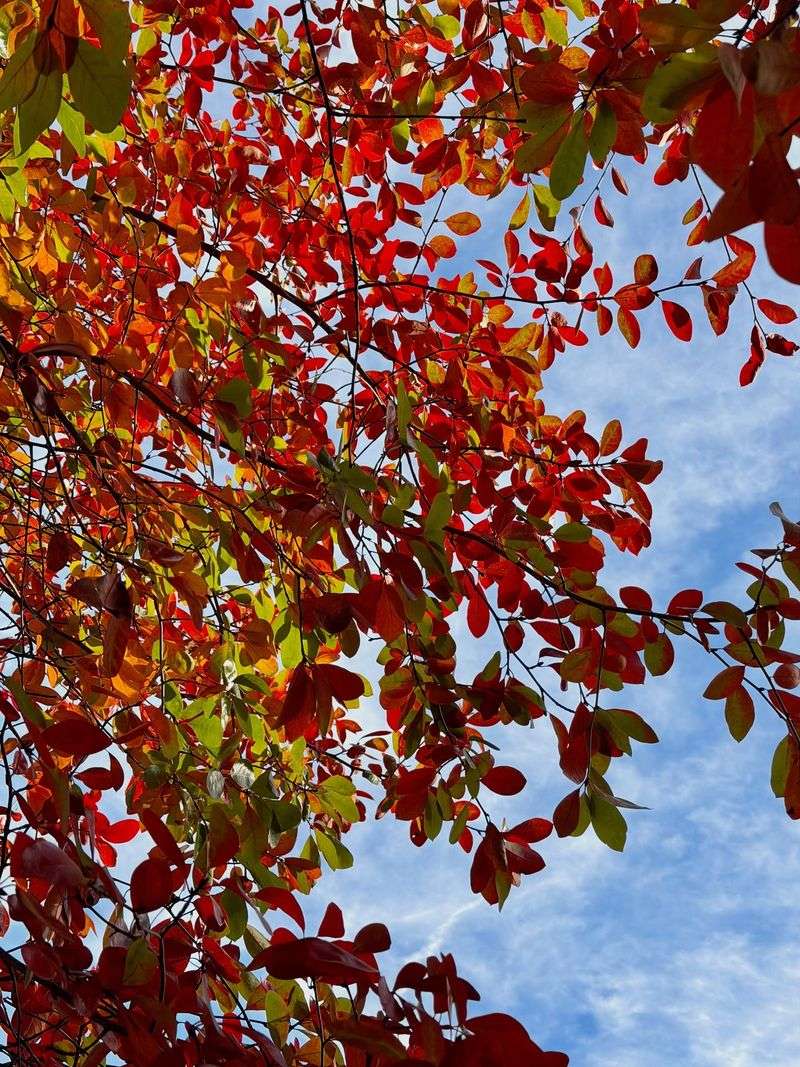
Underrated is the word most arborists reach for when talking about Nyssa sylvatica. Homeowners walk past it at the nursery, then spend October asking what that blazing tree down the street is.
Glossy summer leaves set up the whole performance. Come late September they ignite into scarlet, red, orange, yellow, and even deep purple, sometimes all at once.
Staying power sets it apart from flashier neighbors. The display can hold for a month or more, outlasting maples that drop everything after one windy night.
Branch structure adds winter interest too. Horizontal limbs fan out from a straight trunk, giving the tree a tidy, layered silhouette even when bare.
Damp soil is welcome, which makes black gum a smart pick for low spots that stay soggy after storms. Rain gardens use it for exactly that reason.
Mature size stays manageable at 30 to 50 feet tall and 20 to 30 feet wide. Most suburban lots can handle one without crowding the roofline.
Transplanting young trees works best since older specimens resent root disturbance. Buy a container-grown sapling and plant it in spring for the smoothest start.
Bees love the small spring flowers, and the resulting blue-black fruit feeds robins, thrushes, and woodpeckers. Wildlife watchers get a bonus season of entertainment.
Give it full sun for the brightest color, then step back and let it steal the show. Neighbors will ask, guaranteed.
4. Sassafras Turns Shades Of Yellow Orange And Red
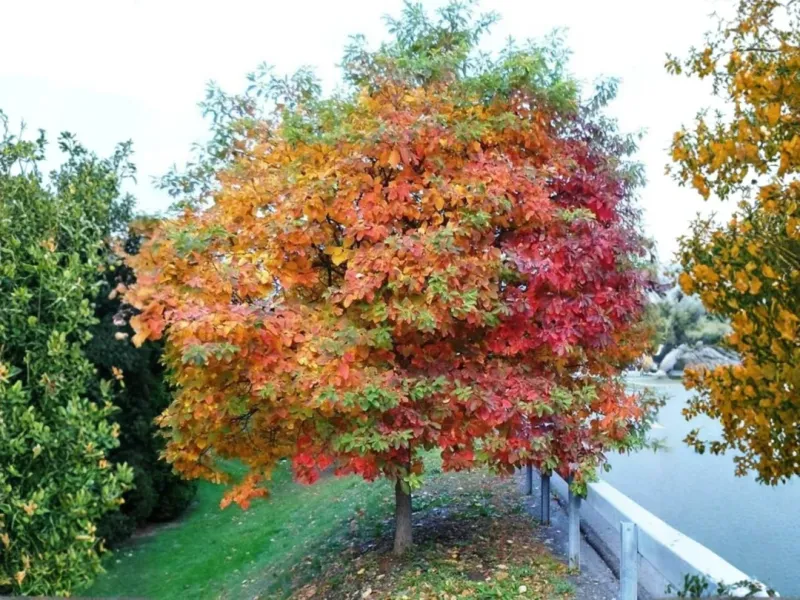
Crush a sassafras twig between your fingers and you get a spicy, root-beer scent that sticks with you. Kids discover this once and then check every tree in the yard.
Leaves come in three shapes on the very same plant. Mitten-shaped, three-lobed, and plain oval leaves share branches, which makes identification a fun little puzzle.
Autumn turns that mixed foliage into a painter’s palette. Reds, oranges, yellows, crimson, and occasional pink tones layer together across the canopy.
Timing is generous compared to many natives. Color often begins in early September and keeps going well into October across much of the state.
Sunny spots with well-drained soil produce the strongest color, though the tree tolerates some shade without complaint. Sandy or rocky ground rarely bothers it.
Sassafras tends to send up suckers and form small colonies over time. Mow around the base if you want a single trunk, or let it spread into a naturalized thicket.
Plant young trees since the taproot makes older transplants tricky. Container stock under six feet tall establishes much more reliably.
Wildlife value runs high here. Spicebush swallowtail caterpillars feed on the leaves, and birds go after the dark blue fruits in late summer.
Historically, the roots flavored early American root beer and folk teas. Modern gardeners mostly grow it for the aroma and the fireworks display it puts on every October.
Odd, fragrant, and colorful describes it perfectly.
5. Serviceberry Adds Orange And Red To Small Yards
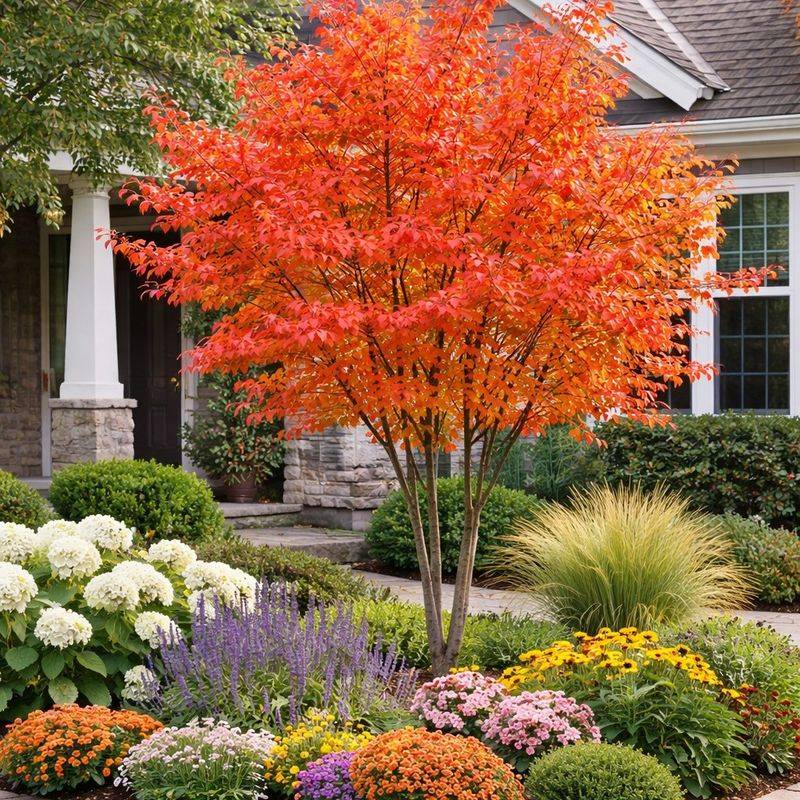
Small yards deserve big color too, and Amelanchier handles that assignment beautifully. Many homeowners squeeze one beside a patio or near the front walk.
Fall foliage shifts into vivid orange, red, and yellow, often blending on a single branch. The cultivar called Autumn Brilliance is famous for its orange-red and burgundy tones.
Four seasons of interest come standard. White flowers open in early spring before most trees wake up, followed by sweet purple berries in June.
Those berries taste something like blueberries with a hint of almond. Bake them into muffins if the catbirds leave you any, which is honestly a big if.
Mature size varies by species, but many serviceberries reach roughly 15 to 25 feet tall and 10 to 30 feet wide. They can still work well in smaller yards when given enough room to mature.
Full sun to partial shade both work fine. Moist, well-drained soil that leans acidic to neutral keeps the roots content through hot stretches.
Multi-stem forms look graceful near a porch, while single-trunk versions read more formal. Pick whichever matches your landscape style.
Pruning needs are light, mostly removing crossing branches in late winter. Skip heavy shaping since the natural shape is the whole appeal.
Also worth knowing: the common name comes from old traditions of holding spring funeral services once the ground thawed and the blooms appeared. A bit somber, but the tree itself is pure cheer.
6. Flowering Dogwood Shows Off Bright Red Leaves
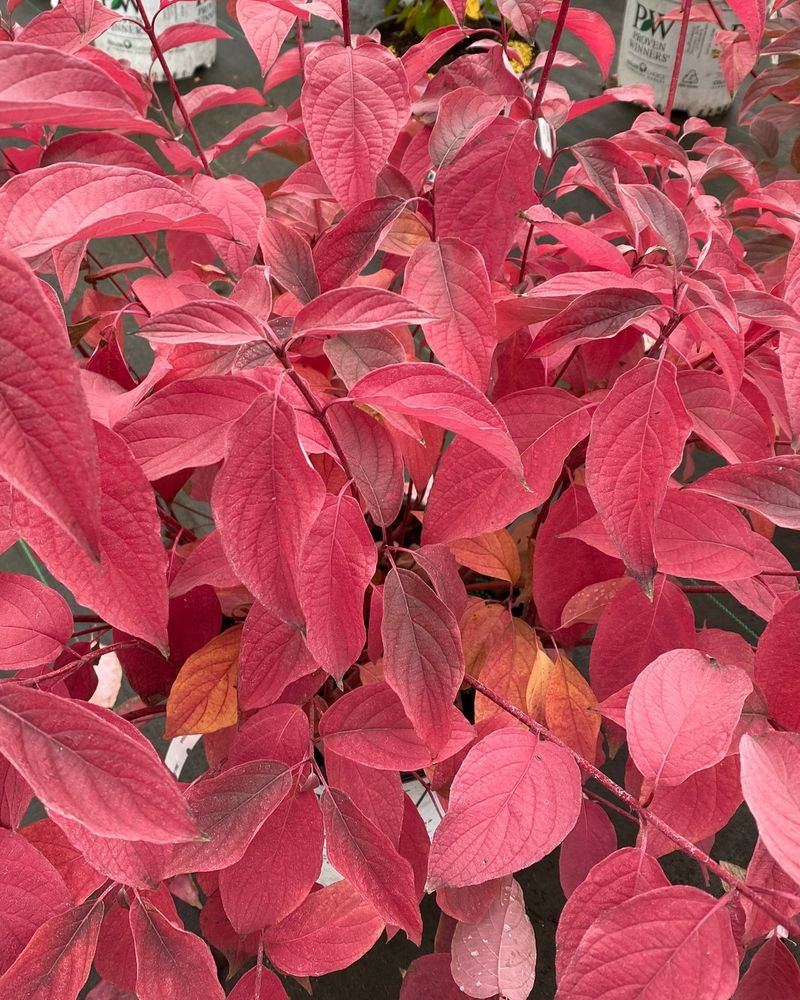
Spring gets all the credit with Cornus florida, but autumn might be the better season. Those dark green oval leaves flip to scarlet, burgundy, and brick red almost overnight.
Clusters of glossy red fruit ripen at the same time. The contrast of red berries against red leaves looks almost deliberately styled.
Size stays friendly for most properties at 15 to 30 feet tall. Low, horizontally tiered branches give the tree a layered, sculptural look year round.
Understory life is what it knows best. In woodlands it grows beneath taller oaks and maples, which is a strong hint for placement.
Light shade during the hottest part of the day suits it well. Morning sun with afternoon protection tends to produce healthy leaves and solid flowering.
Soil should be moist, fertile, well-drained, and ideally a bit acidic. Compacted clay and soggy spots lead to stress and disappointing color.
Good air circulation helps prevent common leaf spot troubles. Avoid crowding it against a fence or wedging it between dense shrubs.
Mulch a wide ring around the base because the roots sit shallow. Mowers and string trimmers cause more damage to dogwoods than most pests do.
Birds count on the fruit heading into winter, with cardinals and cedar waxwings among the regulars. Plant one near a window and you get a free wildlife channel every November afternoon.
7. Scarlet Oak Brings Deep Red Autumn Foliage
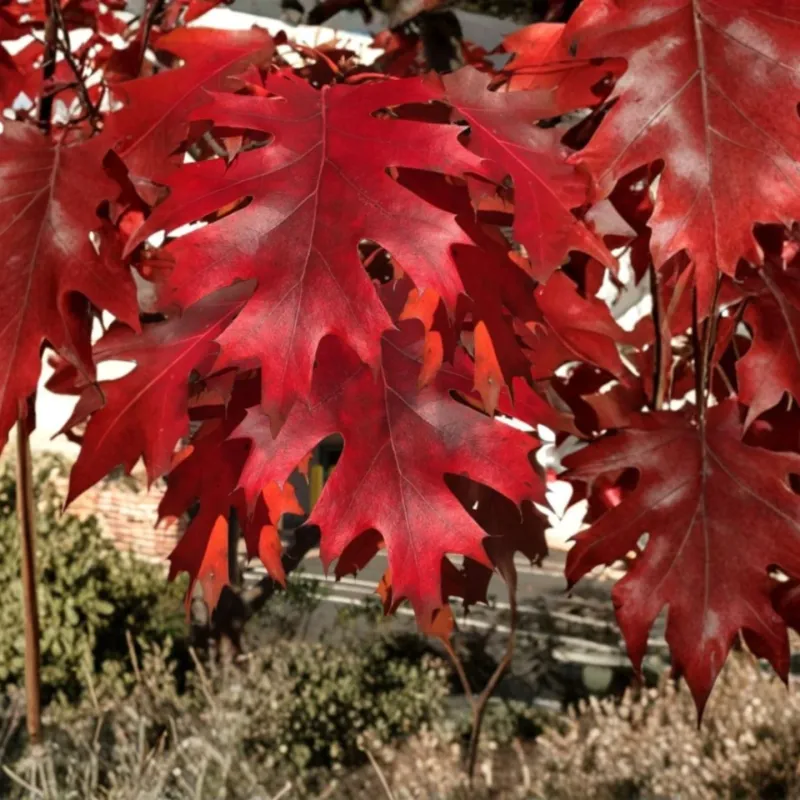
Among the oaks, Quercus coccinea usually takes the trophy for best fall color. The name is not marketing, it is an accurate description.
Foliage ranges from soft russet brown to intense scarlet and crimson. Late autumn often deepens those tones toward a red-purple that catches low evening light.
Leaves are deeply cut with sharp, bristle-tipped lobes. Even the shape looks dramatic once the color arrives.
Brown leaves tend to cling into winter on younger branches. Some gardeners love the rustling sound, others grumble about raking in March.
Dry, sandy ground suits this oak, especially on ridges and slopes where drainage is fast. Areas of New York with gravelly soil are a natural fit.
Full sun is non-negotiable for good color. Shaded scarlet oaks turn a dull brown and skip the whole party.
Large properties, parks, and open lawns make the best homes since mature trees get tall and wide. Cramming one into a tight corner leads to regret.
Acorns arrive every two years and feed squirrels, blue jays, wild turkeys, and deer. Oaks also support hundreds of caterpillar species, which in turn feed nesting songbirds.
Plant a young tree and water it consistently for the first few years. Growth is moderately quick for an oak, so the wait is shorter than you might expect.
Consider it a long-term investment that pays annual dividends in red.
8. Red Oak Adds Brick Red And Golden Fall Tones
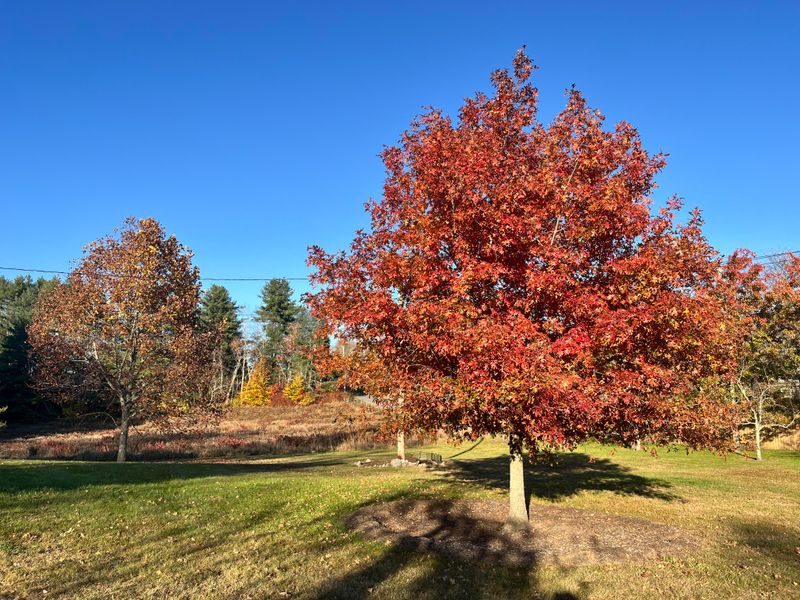
Speed and size rarely go together in oaks, but northern red oak manages both. It is the largest and fastest-growing oak native to New York State.
Autumn brings brilliant crimson, golden orange, or warm russet depending on the year. Some seasons deliver an unusual antique red that looks faded in the best possible way.
Yellow, brown, and red often mix across a single canopy. Weather in September has a lot to say about which tone dominates.
City conditions barely faze it. Compacted ground, pollution, and street-side exposure are handled better than most large shade trees manage.
Mature height runs 60 to 75 feet with a canopy around 45 feet across. Sidewalk strips and small lots are not appropriate spots.
Loose, slightly acidic soil produces the healthiest growth. That said, red oak adapts to a wide range of conditions without much fuss.
Plant in spring for the best establishment rate. Stake only if the site is windy, and remove supports after the first year.
Shade from a mature red oak can noticeably cool a house in July. Placing one on the southwest side of the property is a classic energy-saving move.
Wildlife benefits stack up fast, with acorns feeding deer, turkeys, and squirrels through late fall. Plant one now and some future family will thank you while sitting in its shade.
9. Shagbark Hickory Creates A Golden Fall Display
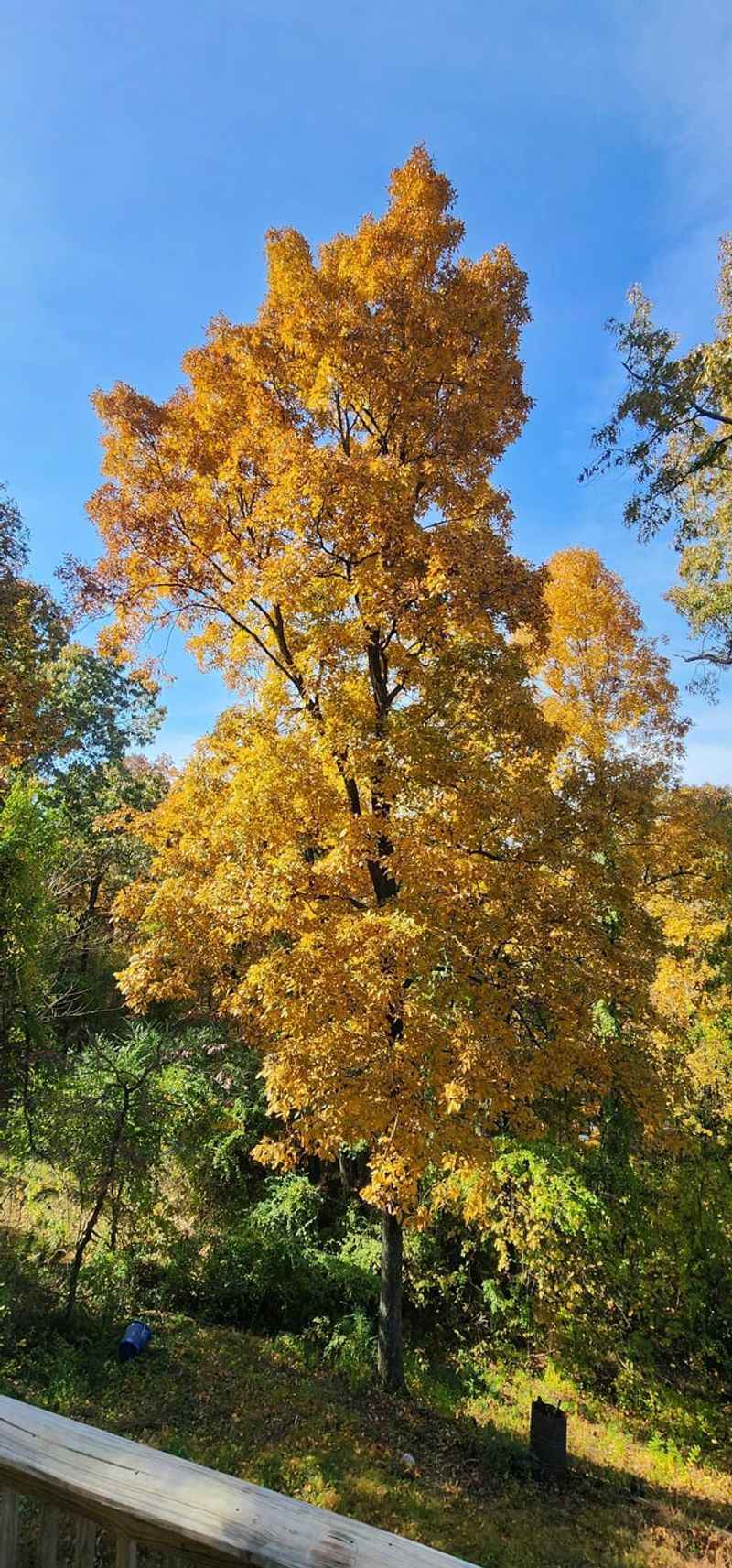
Shaggy strips of gray bark peeling away from the trunk make Carya ovata impossible to confuse with anything else. Bats sometimes tuck themselves behind those loose plates during summer.
Fall foliage glows a rich golden yellow that lights up gray November mornings. Some trees lean toward topaz orange or a mustard-brown gold instead.
Brightness ranks near the top among hickories. Against a blue autumn sky the effect is genuinely striking.
Growth is slow and life is long, so this is a legacy planting rather than a quick fix. Trees commonly reach 60 to 100 feet over many decades.
Well-drained, fertile soil gives the best results. Partial sun through fairly shaded spots are tolerated, which suits wooded properties.
A deep taproot means young trees transplant best. Buying a small tree, or even planting a nut, often beats wrestling with a large balled specimen.
Nuts are sweet and edible, and they were a staple food for Indigenous communities across the region. Squirrels will race you to every single one.
Falling nuts can dent cars and sting bare feet, so keep the tree away from driveways and patios. That is really the only downside worth mentioning.
Hickory wood also smokes some of the best barbecue in the country. Your yard tree comes with serious cultural credentials attached.
10. American Beech Adds Warm Yellow Foliage
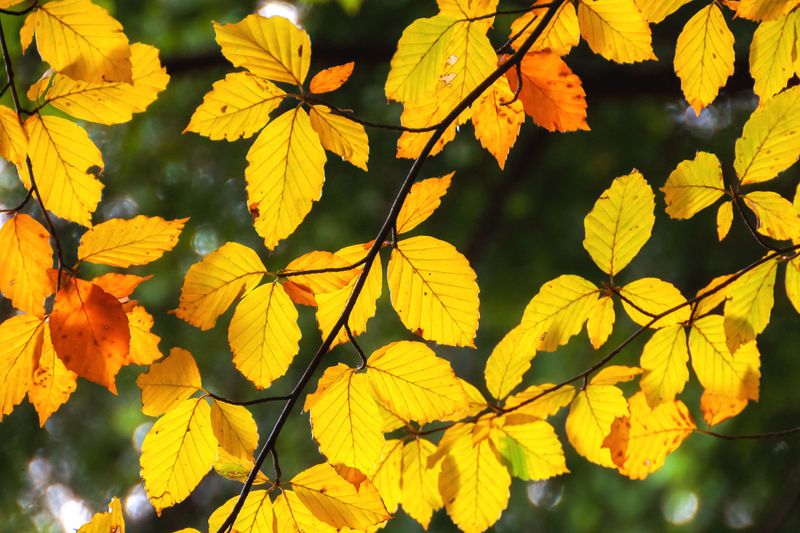
Smooth silver-gray bark gives American beech the look of a stone column standing in the woods. Adirondack forests are full of them, often growing alongside sugar maples.
Autumn color leans warm rather than flashy. Leaves shift to golden bronze and copper, hitting bright golden yellow around mid October.
By late October those leaves deepen to rich brown, then fade toward a pale tan. The change happens slowly enough to enjoy for weeks.
Marcescence is the fancy term for what happens next. Young trees hold onto their papery leaves through winter, rattling in the wind like something out of a storybook.
Mature height lands around 50 to 70 feet with a broad, rounded crown. Well-drained upland sites suit it far better than soggy bottoms.
Roots sit shallow and dense, which means grass struggles underneath. Plan on mulch, shade-tolerant groundcover, or simply a bare, swept look.
Beechnuts feed bears, turkeys, deer, and woodpeckers across northern New York. Good nut years bring noticeable wildlife traffic.
Protect the trunk carefully since that thin bark damages easily. Carving initials into beech bark opens the door to real problems for the tree.
Give it space, avoid disturbing the root zone, and water during long droughts. In return, you get a smooth-barked giant with warm yellow fall color.