That Clover You Keep Spraying In Your Arizona Yard Is Free Fertilizer That Feeds The Bees
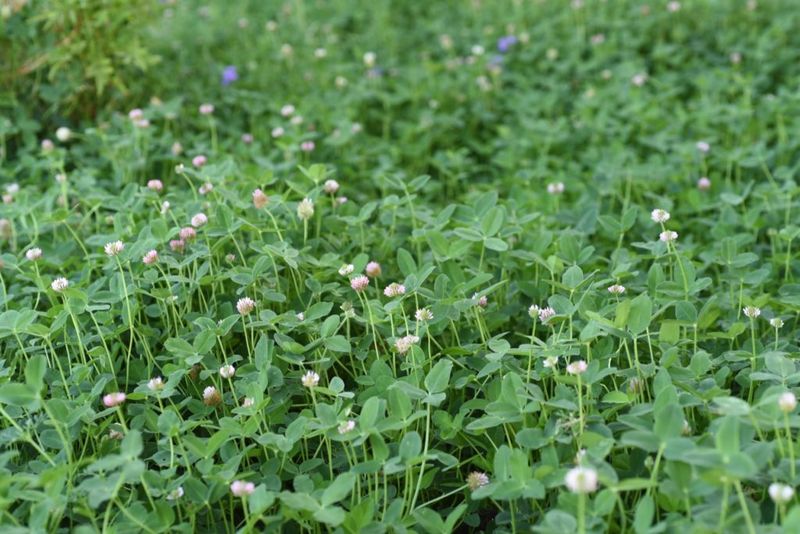
Most Arizona homeowners reach for the spray bottle the moment they spot clover creeping through their lawn, never suspecting the plant might actually be doing something useful. If that low-growing plant with three rounded leaves and small white flowers is white clover, Trifolium repens, it can offer real but limited benefits worth understanding before you eliminate it.
A small, well-placed patch in an irrigated yard can feed bees and contribute a modest amount of nitrogen to the soil over time. The story is more complicated than the headline suggests, and knowing the difference changes how you manage your yard.
First, make sure that clover is white clover
Before any decision gets made about keeping or removing a clover patch, the plant needs a name. Arizona has multiple plants that go by “clover” or look clover-like, and they differ enough in origin, water needs, and growth habit that advice for one does not automatically transfer to another.
The recommendations in this article apply specifically to white clover, Trifolium repens.
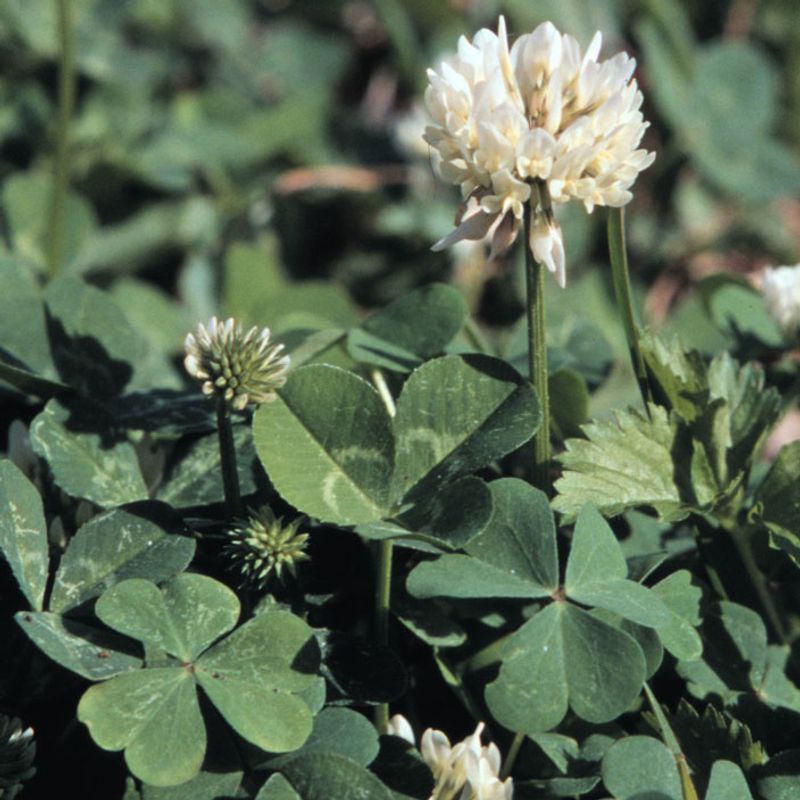
White clover has a recognizable set of features. Each leaf is made up of three rounded leaflets, often marked with a pale crescent or chevron pattern near the center.
The stems creep along the ground and root at nodes wherever they touch moist soil. Flower heads are rounded, about the size of a large marble, and typically white with a faint pink blush at the base.
According to University of Arizona Extension’s Yavapai plants database, white clover is an introduced, perennial species commonly found in Arizona lawns, urban landscapes, pastures, and disturbed sites. That introduced status matters: it is not a native desert plant, and treating it as one leads to poor decisions about water and placement.
Other Arizona clovers, including burclover, red clover, and native prairie clovers, have different leaf shapes, flower colors, growth habits, and ecological roles. Burclover, for example, produces small yellow flowers and spiny seed pods, nothing like white clover’s round white heads.
Confirming the species first is not a formality; it is the practical first step that makes the rest of this article useful to you.
The fertilizer claim needs a much smaller promise
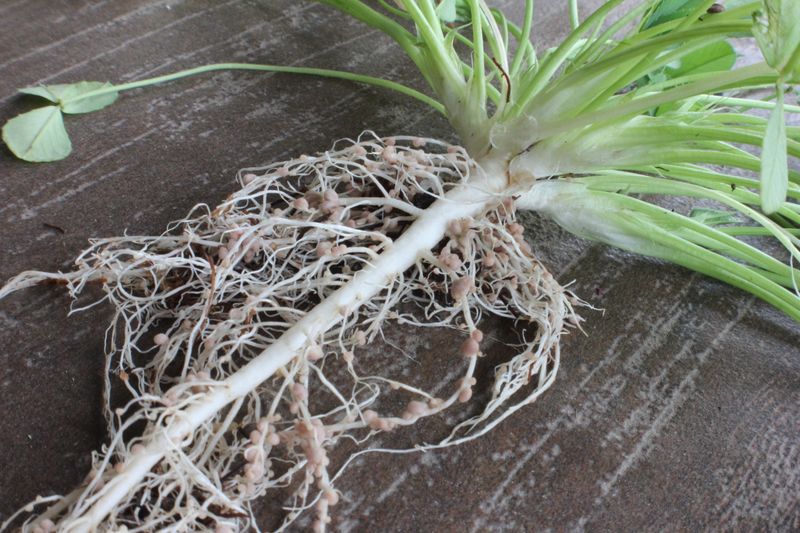
White clover belongs to the legume family, which means it can form a partnership with soil bacteria called rhizobia that live in small nodules on its roots. Those bacteria pull nitrogen out of the air and convert it into a form the plant can use.
That biology is real, and it is the origin of the “free fertilizer” idea.
The important qualifier is where that nitrogen actually goes. The fixed nitrogen primarily supports the clover itself, fueling its own growth and spread.
Neighboring grass or garden plants do not receive a direct transfer. What they may eventually get is a secondary benefit: when clover roots die back, when mowing leaves clippings on the surface, or when plant tissue decomposes in the soil, some of that nitrogen becomes available to other plants over time.
Arizona Extension’s guidance on winter cover crops describes this process as green manure, where legume biomass breaks down and contributes to soil fertility. That is a meaningful benefit in a managed system, but it is not the same as fertilizing your entire yard for free.
Your Arizona Garden Changes Every Week. Your Plan Should Too.
Gardening in Arizona changes quickly throughout the season. Every Friday you’ll receive a simple weekly plan showing exactly what to plant, prune, fertilize, harvest, and protect so you never miss the right timing.
The amount of nitrogen released depends on how much clover is growing, how well it is nodulated, how moist the soil stays, and how the plant material is handled after mowing or removal.
A clover patch should not be treated as a substitute for soil testing or a reason to skip fertilizer entirely. Think of it as a modest, slow-release contribution to soil health in the area where it grows, not a whole-yard solution.
White clover can provide useful bee forage
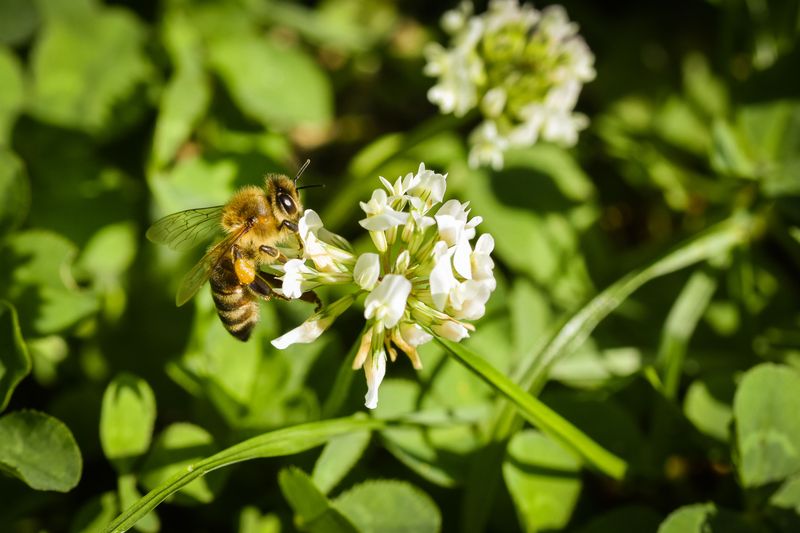
Walk past a patch of blooming white clover on a warm morning and you will likely hear it before you see the activity. Honey bees are strongly attracted to the flowers, drawn by both nectar and pollen.
The USDA’s pollination reference describes white clover as highly attractive to honey bees, noting that bees actively seek out the blooms when they are available.
Some wild bees also visit white clover flowers, though the benefit is not equal across all bee species. Flower structure, foraging range, and seasonal timing all affect which bees a plant can serve.
White clover is one useful source, not a complete solution for every pollinator in the low desert.
For a lawn setting, the practical implication is straightforward. Raising the mowing height allows flower heads to develop instead of getting cut before they open.
Bee-lawn guidance from University of Minnesota Extension recommends mowing at a higher setting and avoiding pesticide applications where possible to let blooms persist and support foraging. Even a short window of flowering each week adds up for local bee populations.
White clover supplies one floral resource at one point in the season. For more durable pollinator support across the year, University of Arizona’s low-desert pollinator guidance recommends a varied mix of Arizona-adapted flowering plants that provide nectar and pollen across different seasons and serve a wider range of bee species.
Clover fits into that picture as a supplement, not a substitute for diverse native plantings.
Low-desert irrigation determines whether the tradeoff works
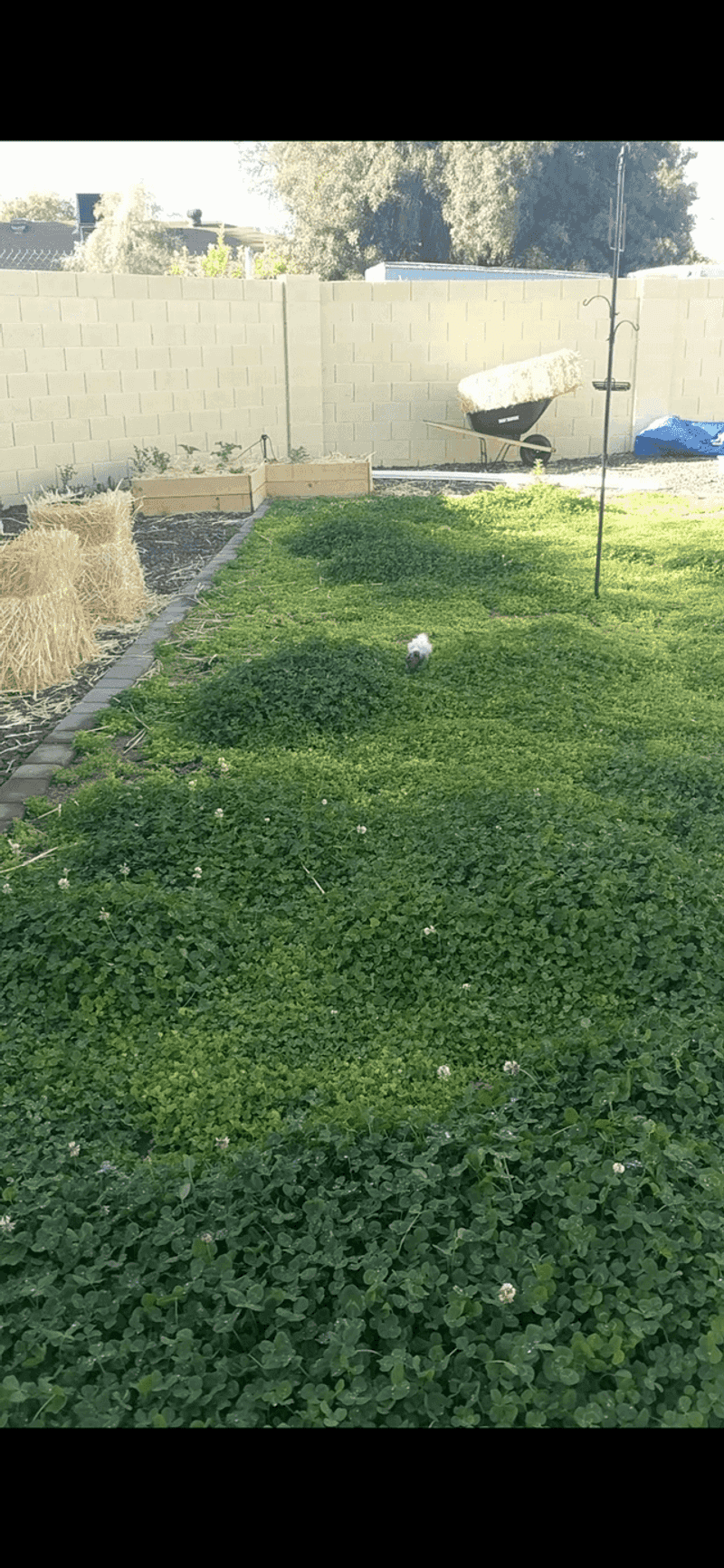
White clover’s reputation as a tough, self-sufficient plant does not hold up well under Arizona’s summer conditions. The low desert regularly pushes past 110 degrees Fahrenheit, and the soils in Phoenix and Tucson yards are often alkaline, compacted, or sandy, none of which favor clover’s preferred growing conditions.
Arizona Extension’s irrigated pasture guidance flags specific white clover types, including Ladino, a large-leafed variety, as shallow-rooted, poorly tolerant of drought and heat, and dependent on frequent irrigation to survive. That does not mean every white clover plant fails in every Arizona yard, but it does mean performance varies considerably with the type of clover, the specific site, the soil, and how consistently water is applied.
A clover plant persisting in an irrigated lawn or along a seasonally moist garden edge is working with an advantage that most of the yard does not have. Move that same plant to an unwatered gravel area or an exposed south-facing slope, and it will not survive the summer.
Treating white clover as a water-wise ground cover or a xeriscape replacement for native plants is a mistake that leads to wasted irrigation and dead patches by July.
White clover is also an introduced species in Arizona, as confirmed by Extension records, which means it should not be framed as a native desert plant that naturally belongs in the landscape. Native and Arizona-adapted plants are better anchors for a low-water yard.
Where white clover does appear and thrive, it is most likely doing so because the site already receives enough water to support it, not because it has adapted to the desert on its own terms.
Use the location of the patch to decide whether it belongs
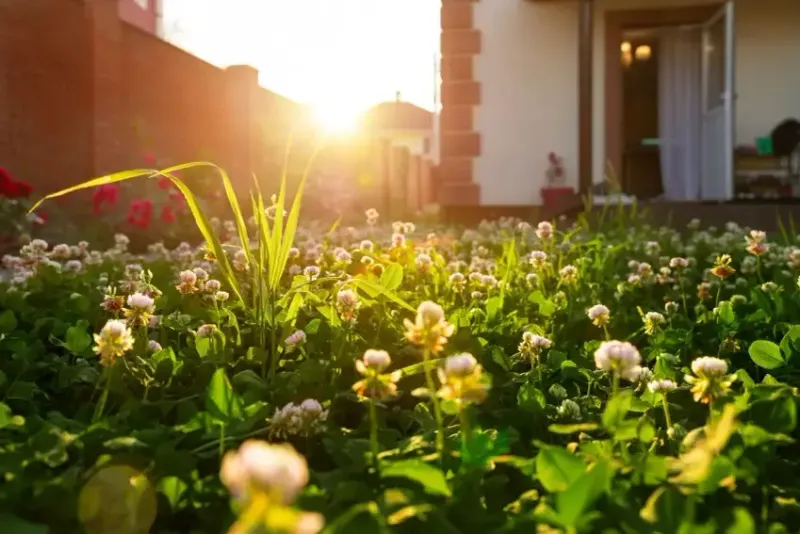
Location does most of the decision-making work when it comes to white clover. A plant that is genuinely useful in one spot can be a genuine problem three feet away, and the difference has nothing to do with the plant itself.
A small, healthy patch earns its place when it is flowering in an irrigated lawn or along a moist garden edge, not competing aggressively with valued plants, and positioned away from doors, patios, play areas, and walkways where regular foot traffic brings people close to foraging bees. In that context, the forage benefit is real, the nitrogen contribution is possible, and the patch is not creating problems it cannot justify.
The calculation shifts when the clover starts creeping into formal planting beds or vegetable gardens, where it can compete for water and root space. White clover spreads through creeping stems that root at nodes wherever they contact moist soil, so a manageable edge patch can become an unwanted colonizer if it is not watched.
That spread can be useful as low ground cover in the right space and genuinely disruptive in the wrong one.
Bee activity near high-traffic areas is worth considering separately. Honey bees visiting clover are not aggressive, but they are present and active.
University of Arizona guidance on wild honey bees in community environments recommends managing highly attractive flowering plants near areas where bee encounters are unwanted, particularly for households with members who have serious bee-sting allergies or young children who may not recognize the risk. A useful plant can still be poorly placed, and recognizing that distinction is what makes a thoughtful yard decision different from an automatic one.
Do not spray a flowering patch automatically

Reaching for a spray bottle is the default move for most homeowners who spot an unwanted plant, but that reflex skips several steps that matter when bees are actively foraging on a patch of flowers.
The first step is confirming what the plant actually is, which this article has already covered. The second step is deciding whether removal is actually necessary given the location and the patch’s behavior.
If the answer is yes, nonchemical options, hand-pulling, physical removal of creeping stems, or adjusting mowing height and frequency, are worth trying first, especially for a small patch in a lawn.
When a chemical treatment is genuinely needed, the product label is not optional reading. Arizona Extension’s herbicide guidance stresses that correct weed identification comes before any application and notes that nonselective herbicides can injure or kill every plant they contact, not just the intended target.
That matters when clover is growing mixed into grass or near garden plants you want to keep.
Applying any pesticide to a blooming plant or nearby flowering weeds puts foraging bees at risk. The level of risk depends on the specific product, how it is applied, whether drift carries it onto other flowers, and what the label says about pollinator protections.
A product that is registered for use on lawns is not automatically safe for bees on blooming plants in that lawn. The EPA’s review of certain insecticides has documented high toxicity to bees when products are applied directly to blooming vegetation.
Timing applications for early morning or evening when bees are less active, avoiding drift, and following label restrictions on flowering plants are all concrete steps that reduce that risk.
Keep clover in perspective
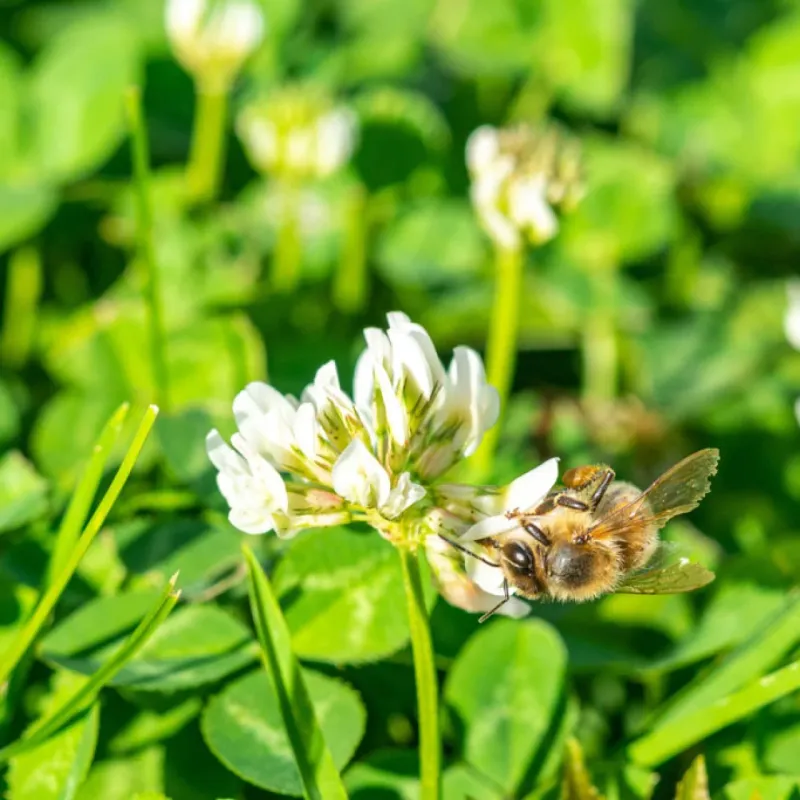
White clover is a useful plant in the right situation, and it is also a plant that gets oversold in both directions. Treating it as either a miracle ground cover or a weed that needs immediate elimination misses what the evidence actually supports.
What white clover can genuinely do: provide nectar and pollen that attract honey bees and some wild bees, and contribute a modest amount of nitrogen to the soil over time as plant tissue decomposes. Arizona Extension’s cover crop guidance confirms that legume biomass breaking down into green manure is a real soil benefit, and the USDA’s pollination handbook documents the plant’s strong attractiveness to honey bees.
Those are worth something in an irrigated yard where the plant is already established and well placed.
What white clover does not do: guarantee lower fertilizer bills, serve every bee species equally, control scorpions, mosquitoes, ticks, or any other household pest, or replace a diverse planting plan built around native and Arizona-adapted species. Introduced status, the potential for spread, real water requirements in the low desert, and the limits of its pollinator value all add up to a plant that belongs in a supporting role, not a starring one.
A yard that relies on clover alone for pollinator support will fall short across most of the year, particularly in summer and fall when other floral resources matter most for local bee populations. Clover’s documented functions are real but specific.
Placing it alongside native flowering plants rather than instead of them is the approach that holds up in Arizona’s climate.
Make a deliberate keep-or-manage decision
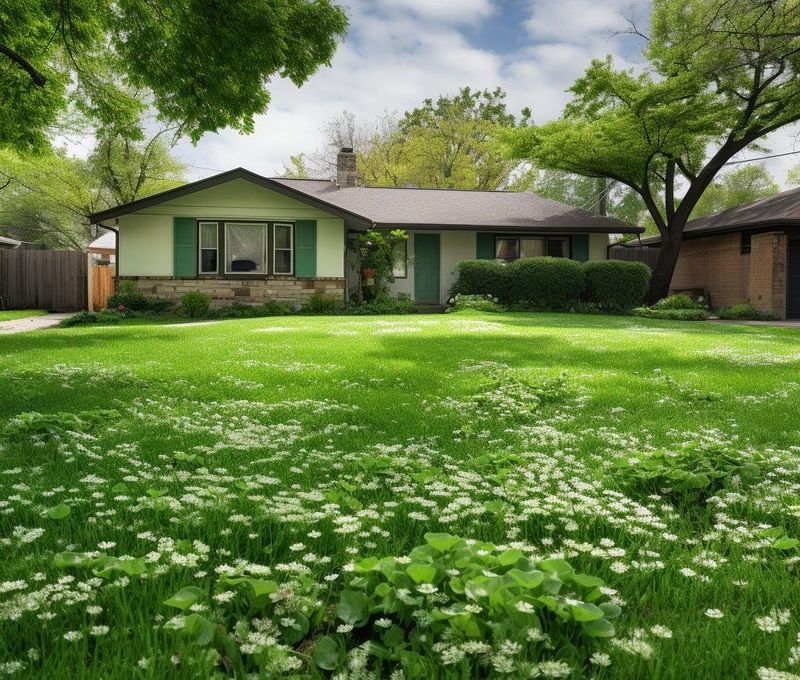
The decision comes down to a short checklist. Confirm the plant is white clover by checking for three rounded leaflets, possible pale crescent markings, creeping stems that root at nodes, and rounded white-to-pink flower heads.
If the identification holds, work through the location questions: Is the site irrigated and moist enough to support the plant through summer? Is the patch away from high-traffic areas, formal beds, and vegetable gardens?
Is the spread currently contained?
A patch that passes those questions is worth keeping while it flowers. Raise the mowing height to let blooms develop, skip pesticide applications near the flowers, and treat the nitrogen contribution as a slow, modest bonus rather than a fertilizer replacement.
When the patch starts creeping where it is not wanted or competing for water that other plants need more, hand-pull the stems before they root further and reassess the site.
For broader pollinator support across Arizona’s seasons, native and Arizona-adapted flowering plants carry the load that white clover cannot. The University of Arizona’s low-desert pollinator plant list and irrigated pasture guidance both point toward a diverse planting strategy as the more durable foundation.
White clover can be a small, functional piece of that picture in an irrigated yard. It is not free fertilizer for the whole yard, and it is not complete bee habitat on its own.
What it can be, in the right place with the right management, is quietly useful.