What Florida Citrus Trees Need In September While Fruit Is Still Developing
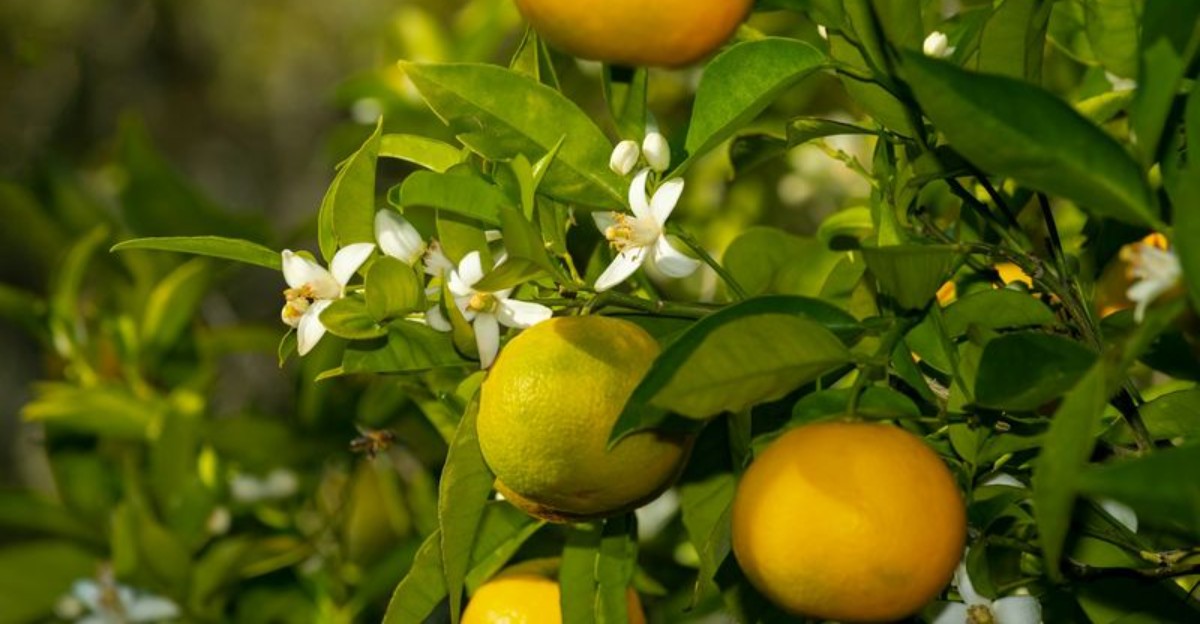
Your citrus tree is quietly deciding right now how sweet its fruit will taste in a few months, and most Florida homeowners have no clue they’re part of that decision.
Fruit hanging on the branch pulls resources from everywhere else on the tree, and September sits right in the middle of that tug of war. Ease off too soon and you shortchange size and flavor before harvest even starts.
Push too hard with feeding this late and you risk the opposite problem entirely.
Water and nutrients both need a different touch than what worked back in June, and most people never adjust, running the same routine on autopilot straight through fall.
Give your tree what this specific month calls for instead of what’s easiest. What ends up on your table later starts with what you do right now.
1. Keep Young Citrus Fed While Fruit And Canopy Grow
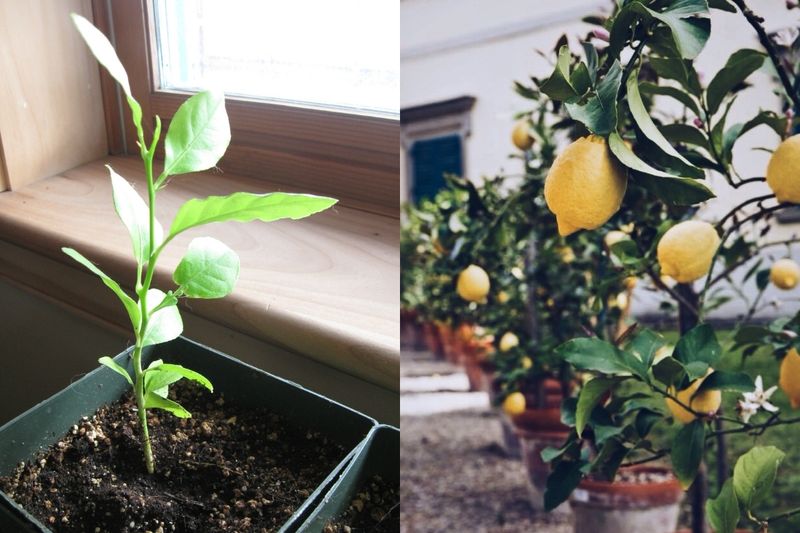
Little trees are hungry trees. During their first two or three years, a citrus sapling is busy building branches, leaves, and roots all at once, and that takes steady fuel.
Florida’s fertilizer window runs from February through September, so this month is the last call of the season. Young plants do best with light feedings roughly every six weeks inside that window, starting about two weeks after planting for established nursery stock.
Newly planted trees are the exception. Give them six to eight weeks in the ground before that first application so tender roots can settle in.
A basic garden blend like 6-6-6 or 8-8-8 works fine, though a dedicated citrus mix makes life easier. Look for a nitrogen-to-phosphorus ratio near 2:1 or 1.5:1, and follow the label rate rather than guessing.
Spread granules in a circle about three feet across around the trunk, keeping material off the bark itself. Frequent small doses beat one heavy dump, especially in sandy ground that lets nutrients slip past roots.
Once a tree reaches the size you want, you can level off the inputs since you are no longer pushing canopy growth. UF/IFAS also suggests micronutrients such as manganese and zinc three times yearly, in March, May, and September, which supports denser foliage and better yields on stressed trees.
2. Give Developing Fruit Steady Moisture Without Waterlogging Roots
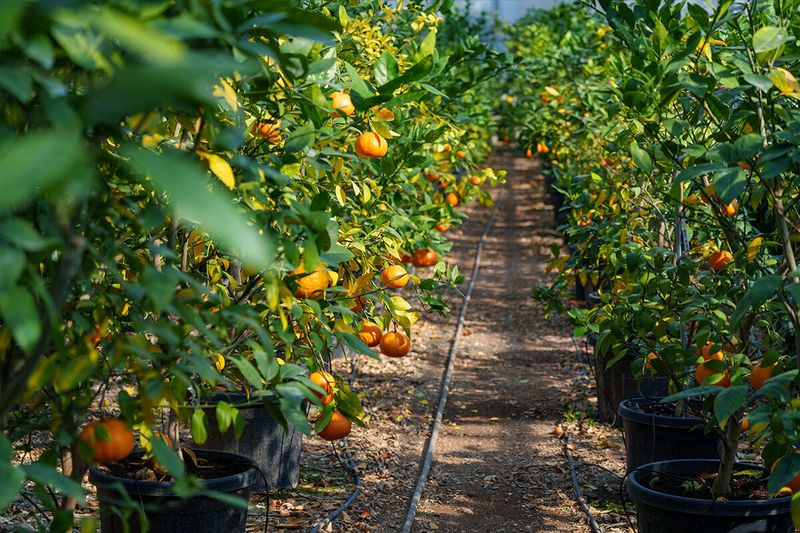
Sandy Florida soil drains like a colander, which is both a blessing and a headache. Water disappears fast, yet standing water around roots causes its own set of problems.
Fruit enlargement is one of the thirstiest stages of the whole season, so this is not the month to let trees coast on luck. Supplemental irrigation fills the gaps between storms and keeps fruit sizing on track.
A simple rule helps: let the top three inches of soil dry before watering again. Poke a finger in or use a soil moisture sensor if you prefer numbers over guesswork.
Deep and infrequent beats shallow and constant. A thorough soaking that reaches the whole root zone encourages roots to grow downward instead of hovering near the surface.
Your Florida Garden Changes Every Week. Your Plan Should Too.
Gardening in Florida changes quickly throughout the season. Every Friday you’ll receive a simple weekly plan showing exactly what to plant, prune, fertilize, harvest, and protect so you never miss the right timing.
Early morning is the sweet spot for watering. Leaves dry quickly, and aiming water at the root zone rather than overhead reduces the spread of certain leaf ailments.
For trees already under stress, try shorter runs more often instead of one long flood. With microsprinklers, aim for 25 to 50 percent soil water depletion and keep the wetted area slightly moist throughout.
Avoid excessively long irrigation runs that leave the root zone saturated or send water beyond the active roots. Smart controllers that read weather data can fine-tune all of this automatically.
3. Watch Potassium When Fruit Size Starts Mattering More
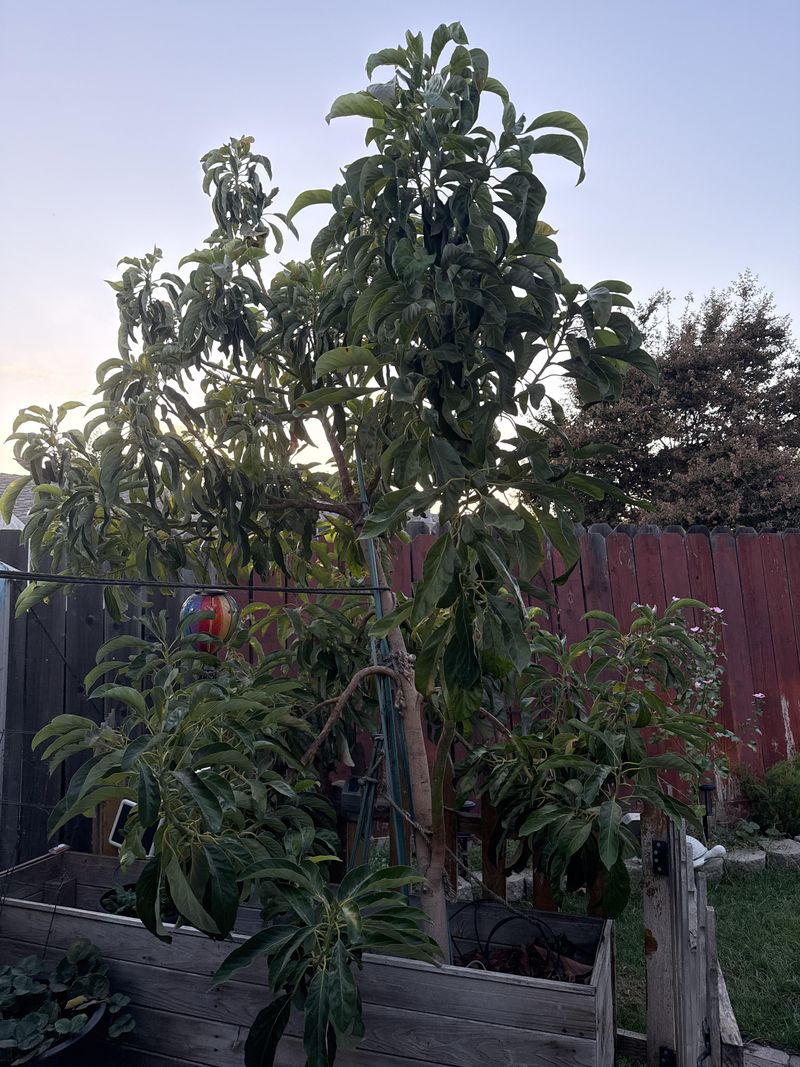
Potassium is the quiet workhorse behind plump, flavorful fruit. It influences size, peel thickness, acid balance, color, and the overall taste you notice months later at the kitchen counter.
Here is the catch with Florida ground: sandy soils start out low in potassium, and the nutrient does not stockpile from year to year. That means annual applications are part of the routine, not an optional extra.
Demand climbs as fruit swells, with the heaviest pull running from August through December. September lands right in the middle of that stretch.
Timing applications alongside irrigation helps potassium reach roots instead of washing past them. Fall is considered a suitable window for the potassium portion of your fertilizer plan.
Foliar sprays are worth knowing about too. Potassium combined with boron has improved yield, fruit size, sugar-to-acid ratio, and peel color in several mandarin types, and fall foliar potassium has increased Marsh Grapefruit size in Florida sand.
Shortage shows itself in small fruit and older leaves turning yellow or yellow-bronze, often appearing on spring flush leaves during late summer and fall.
Needs vary by tree. Sweet oranges generally want more potassium than grapefruit, and alternate-bearing tangerines can call for up to 300 pounds of K2O per acre during heavy years.
4. Ease Up On Nitrogen As Fruit Moves Toward Maturity
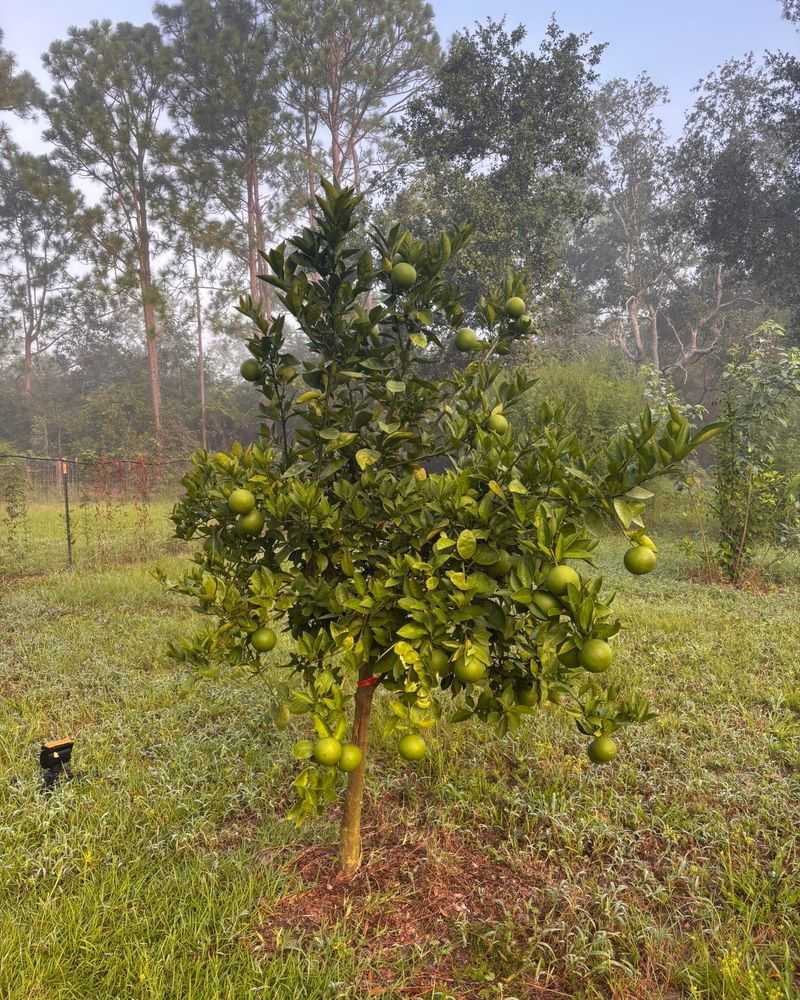
More is not better once fruit starts heading toward harvest. Pushing nitrogen late in the year tells the tree to grow leaves when it should be finishing fruit.
As fruit approaches maturity, avoid excessive late nitrogen that can encourage unnecessary vegetative growth. Tree demand drops as growth slows, so extra nitrogen mostly wanders off into the water table.
Trimming nitrogen during September and October also discourages tender new shoots right as cooler nights approach. Soft late-fall growth tends to be the first thing damaged by a chilly snap.
Fruit quality feels the effect as well. Too much nitrogen can shrink fruit size at later stages, delay maturity, thicken peels, and lower sugar content, which nobody wants after months of waiting.
Match your final application to harvest timing. Early-season varieties benefit from summer feedings, while mid- and late-season types can take their last dose into early fall.
Research on satsumas offers a useful model: roughly 200 pounds of nitrogen per acre split five ways across March, May, July, August, and September produced strong fruit weight and soluble solids.
For a backyard tree, scale that thinking down. Think of September as the tapering point, a gentle handoff from growing season to ripening season rather than one more big meal.
5. Let September Rain Change Your Irrigation Schedule
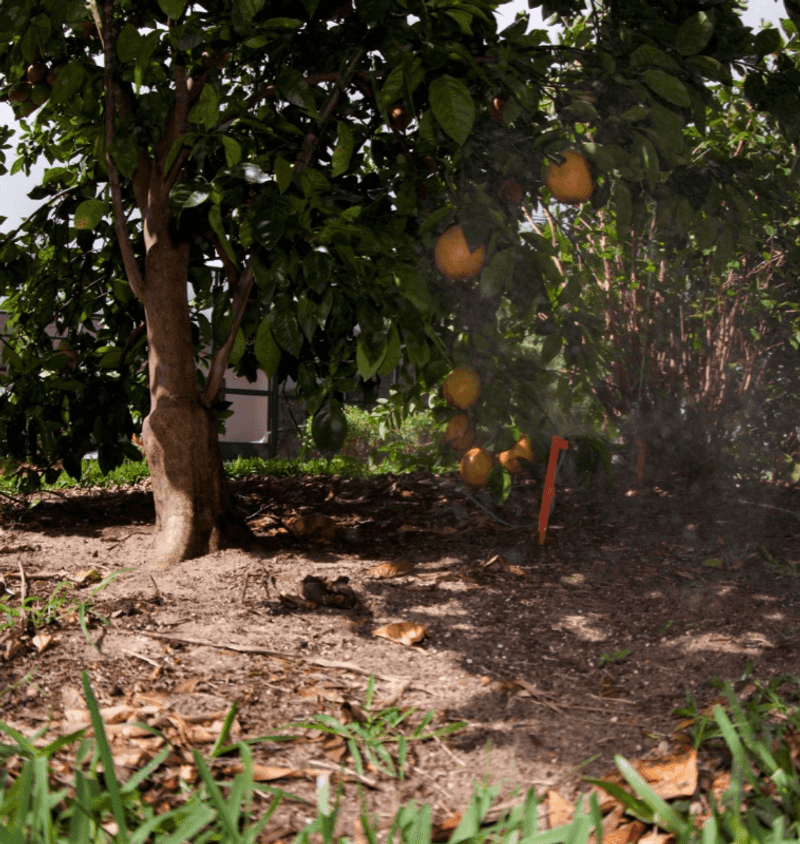
Anyone who has lived through a Florida summer knows the daily storm clock. Most of the state’s rainfall arrives between June and September, which makes running sprinklers on autopilot a waste of water and money.
A rain gauge costs a few dollars and saves plenty. When half an inch or more falls in a single day, pause irrigation for a few days and let nature handle the shift.
Frequency should taper as the calendar moves forward. Hot summer weeks call for more watering, but cooling fall temperatures mean trees simply drink less.
During the rainy season, allowable soil water depletion can rise to somewhere between 50 and 66 percent. Letting soil dry a bit more gives it room to absorb the next downpour instead of shedding it, which keeps nutrients where roots can reach them.
If you run microirrigation, an old-fashioned timer with a manual override earns its keep. Short, frequent cycles suit sandy ground, and the override button handles those weeks when the sky does all the work.
Heading into fall, shift toward deep and infrequent watering. Allowing the surface to dry slightly between sessions encourages sturdier roots and reduces the soggy conditions that make trees look tired for no obvious reason.
6. Check Yellow Leaves Before Adding More Fertilizer
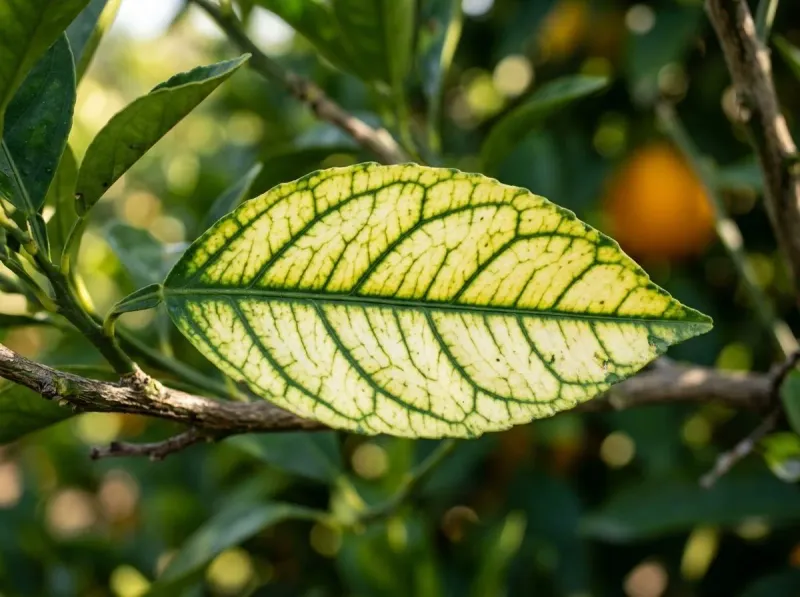
Yellow leaves send gardeners running for the fertilizer bag, and that reflex sometimes makes things worse. Discoloration can point to nutrients, watering habits, soil chemistry, or insects, and each one calls for a different fix.
Read the pattern before you act. Nitrogen shortage usually turns older leaves a uniform pale green to yellow while veins stay greenish, and it shows up often in container-grown trees.
If magnesium deficiency is confirmed, a magnesium-containing fertilizer may be appropriate; a soil or tissue test can help determine whether supplementation is actually needed.
Iron shortage flips the age pattern, striking younger leaves first with green veins standing out against pale tissue. Alkaline soil makes it more likely.
Water problems mimic all of the above. Overwatering stresses roots and yellows foliage broadly, and cold or soggy soil slows the microbes that help trees take up nutrients.
Soil pH deserves a look too. A range of 6.0 to 7.0 supports good nitrogen uptake, with roughly 6.5 considered the sweet spot for citrus.
When guessing gets tiresome, a soil test settles the argument. Twenty dollars and a little patience beat months of throwing products at a mystery.
7. Protect Citrus Roots From Nutrient Leaching After Heavy Rain
Picture pouring a glass of orange juice through a strainer. That is roughly what happens to fertilizer in Florida sand when a big storm rolls through.
These soils hold little water, move it quickly, and let dissolved nutrients slide below the root zone. Heavy June-through-September rainfall makes the problem seasonal and predictable.
Timing helps more than any product. Lining up potassium applications with irrigation needs keeps nutrients moving into roots rather than past them.
Letting soil dry to that 50 to 66 percent depletion range during the rainy months gives the ground extra storage capacity. More rainfall gets absorbed, and fewer nutrients and chemicals wash away.
Splitting nitrogen between foliar sprays and fertigation is another smart tactic, since leaves take up some of it directly and less nitrate ends up leaching downward.
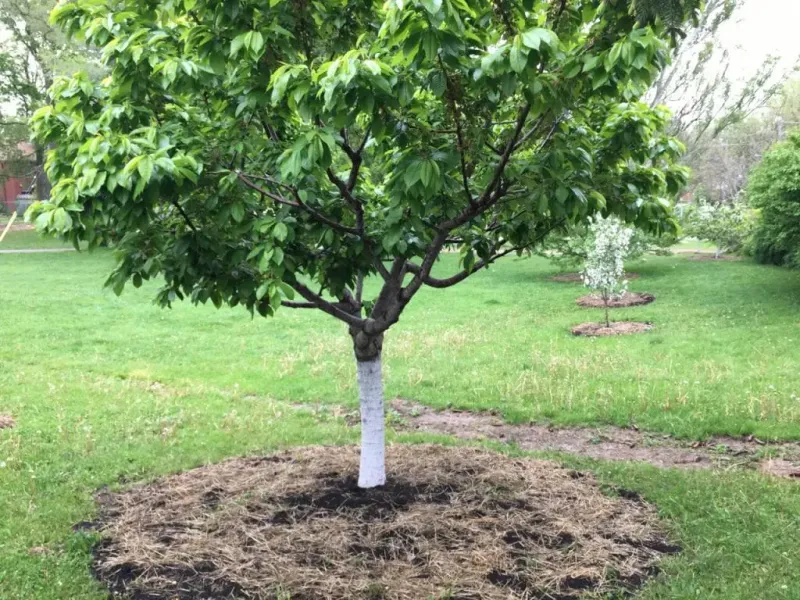
Mulch earns a spot in the routine as well. A layer around the base holds moisture, evens out soil temperature, and suppresses weeds that would otherwise compete for whatever nutrients remain.
Keep it pulled back a few inches from the trunk.
Placement matters long term. Avoid low spots where water pools after storms, and on heavy or slow-draining ground, set trees on a raised mound so roots stay out of standing water.
8. Keep An Eye On Pests While Fruit Is Still Developing
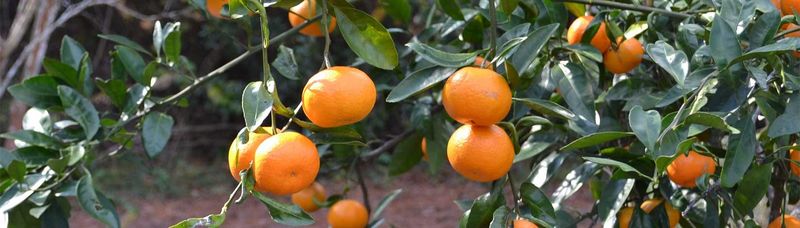
Late summer heat throws a party for tiny troublemakers. Mite populations often spike during hot, dry stretches in late summer and early fall, and developing fruit is exactly what they target.
Fresh growth flushes act like a welcome sign. Asian citrus psyllids and citrus leafminers both head straight for tender new leaves, which is one more reason to go easy on late nitrogen.
Lebbeck mealybug bounces back in fall when warmth and humidity line up for reproduction. Damage during early fruit set can trigger noticeable fruit drop, and heavy soft-bodied infestations may cause twig decline on young trees.
Thrips deserve a mention too. Orchid and greenhouse thrips feeding on developing fruit leave rind blemishes that show up at harvest.
Walk your trees weekly and turn leaves over. Look for leafminer squiggles, cottony mealybug clusters, scale bumps, and the sticky honeydew that invites sooty mold.
For some small, early infestations, insecticidal soap or a labeled horticultural product may be appropriate when used according to the label.
Worth knowing: storms can scatter juvenile pests across neighborhoods. Florida researchers are also testing gene-edited CarriCea T1 rootstock to boost resistance against citrus greening.
9. Match September Care To Your Citrus Variety
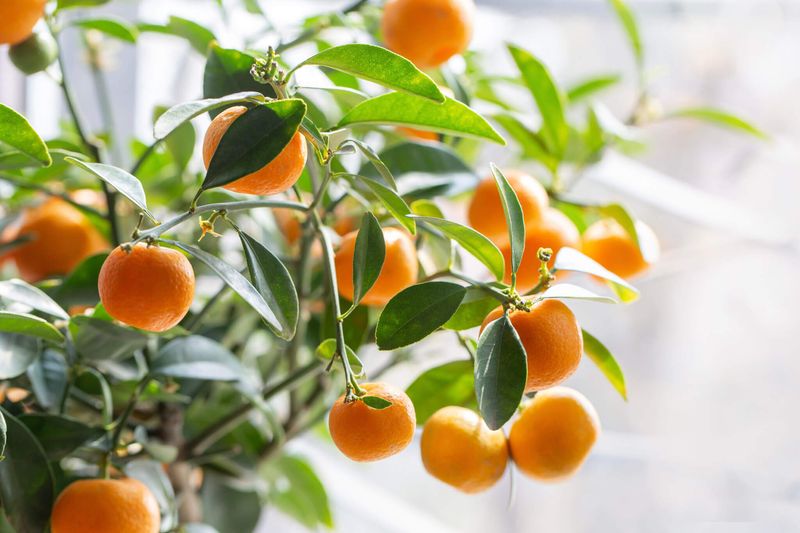
A satsuma and a Valencia share a family tree but keep very different calendars. Treating them identically in September means one gets rushed and the other gets shortchanged.
Harvest timing drives most of the differences. Satsuma mandarins typically ripen October through December, with Owari being the favorite across the southern states, while navels usually deliver from November into January and Valencias hold out much later.
Nitrogen timing should follow that schedule. Early-season types want their final feeding earlier in summer, while mid- and late-season varieties can accept a last application into early fall without hurting quality.
Appetites differ too. Sweet oranges generally pull more potassium than grapefruit, and alternate-bearing tangerines in a heavy year may require up to 300 pounds of K2O per acre.
Cold tolerance varies as well, which matters once you start planning for winter. Kumquats rank among the hardiest citrus, so they shrug off chilly nights that would bother a lime.
Rather than guessing which camp your tree falls into, write down the variety and its expected harvest month. That single note makes every fertilizer and irrigation decision simpler.
For precise numbers, soil testing paired with leaf nutrient analysis gives you real data instead of folklore passed along the fence line.