What California Gardeners Should Know About Fall Leaf Drop
A homeowner in Walnut Creek stands under her coast live oak this October, staring down at a thick carpet of curled leaves scattered across the ground.
She swears this tree was sold to her as evergreen. Leaves piling up on the patio feel like a broken promise, or maybe a warning sign nobody explained ahead of time.
Here’s what almost nobody tells you at the nursery, though. Healthy California trees shed leaves in all kinds of patterns, and most of what happens in fall is completely normal.
Some drops follow a strict internal calendar. Others happen quietly, spread across the whole year without anyone noticing. A few, though, actually mean something is wrong.
Learning which pile of leaves to ignore and which one deserves a second look saves real worry, water, and money down the line.
Eight patterns explain almost everything happening under your trees right now. Curious which one is unfolding in your own yard this week? The answer starts with a tree that never actually meant to be leafless.
1. Deciduous Natives Drop Leaves On Cue
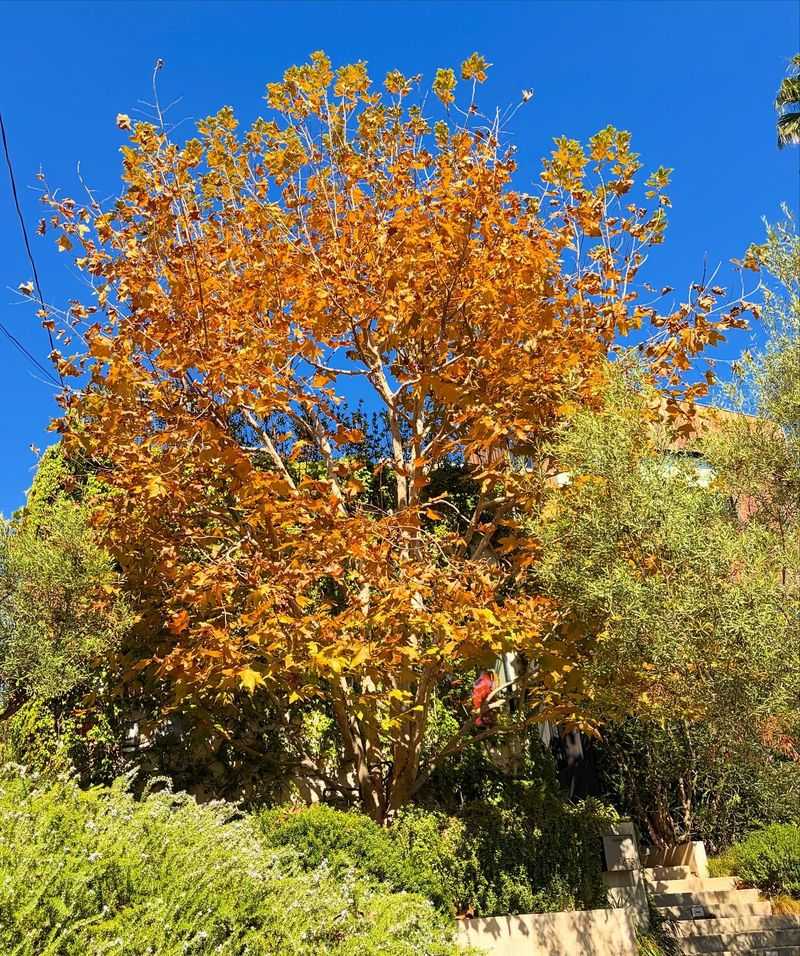
Western sycamores, valley oaks, and big-leaf maples all run on an internal calendar, and when the days shorten, that calendar says it’s time to let go.
Cooler nights and less daylight trigger a chemical signal at the base of every leaf stem. A thin layer of cells forms there, seals off the connection, and the leaf drifts down on its own schedule.
Deciduous California natives are doing exactly what keeps them alive through the lean months ahead. Shedding leaves cuts water loss during cold weather when roots work slowly.
Rather than feeding thousands of thirsty leaves, the tree rests until warmth and rain return in spring.
Plenty of gardeners panic when a young valley oak turns crispy brown in November. Brown autumn leaves on a deciduous tree are routine, not a warning sign worth losing sleep over.
Check the twigs instead. Plump, firm buds mean next season’s growth is already packed and waiting patiently.
Exact timing shifts a bit from year to year depending on heat and rainfall. A scorching September can push leaves off early, while a mild fall can stretch color into December in cooler inland valleys.
Seasonal drop in deciduous species counts as expected behavior that needs no treatment at all.
Clear leaves off walkways and driveways where they get slick, then leave the rest right under the canopy. That loose blanket shields roots from cold snaps and holds moisture in the soil below.
2. Evergreen Oaks Still Shed Leaves Gradually
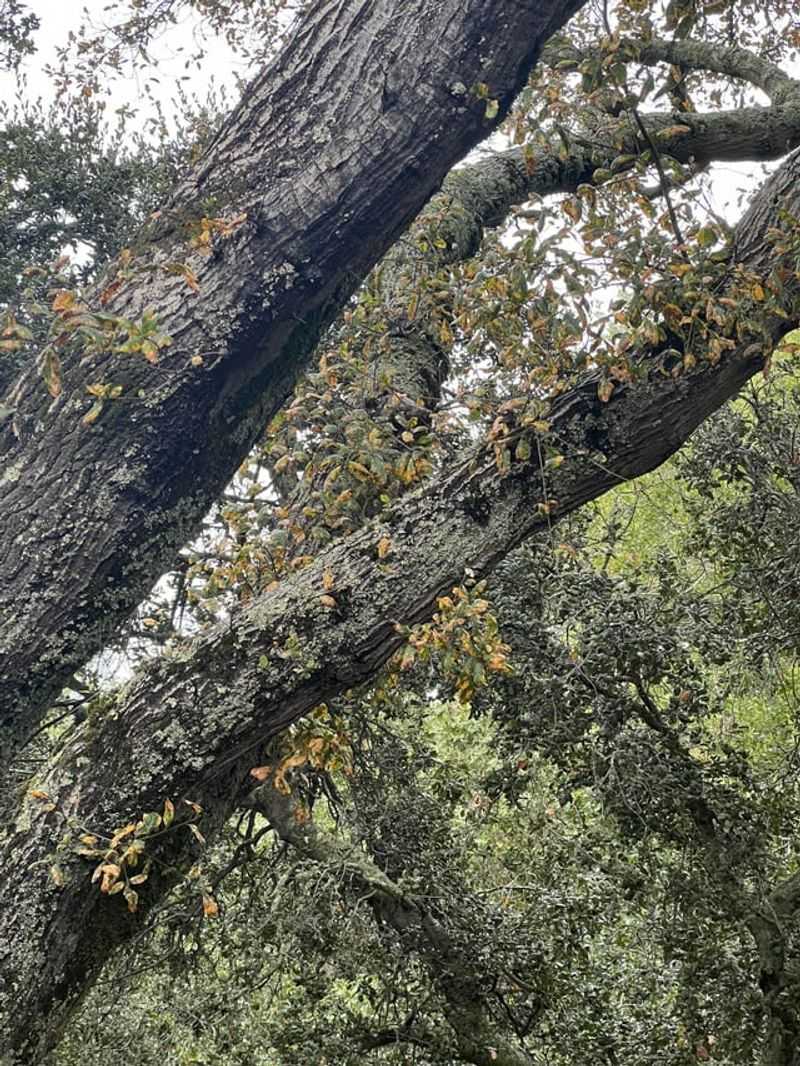
Here’s the fact that surprises the most people every single time. Evergreen never meant leafless-never. Coast live oak, holly oak, and canyon live oak swap out their foliage continuously, replacing older leaves while new ones expand.
The canopy stays green because the tree never empties itself all at once like a maple would.
Each leaf on a coast live oak typically lasts about a year or so before it gets discarded. That means an entire canopy’s worth of leaves eventually hits the ground, just spread across the calendar instead of dumped in a single week.
Your California Garden Changes Every Week. Your Plan Should Too.
Gardening in California changes quickly throughout the season. Every Friday you’ll receive a simple weekly plan showing exactly what to plant, prune, fertilize, harvest, and protect so you never miss the right timing.
Many evergreen oaks show a noticeable peak shed, often in spring as fresh growth pushes out, with smaller waves during fall and hot spells.
Homeowners who assumed evergreen equals zero cleanup are the ones who call arborists in a panic. This steady turnover counts as normal, healthy behavior rather than any kind of symptom.
How can you tell the difference between turnover and real trouble? Look up first. If the canopy still holds a full, even layer of green leaves while older, yellowed ones fall from the interior, the tree is simply housekeeping.
Interior leaves get shaded out as the crown thickens, so they get shed first, which is why the drop often looks heaviest from inside the canopy looking out.
Sweep the patio, shrug it off, and enjoy the shade your oak provides year-round without a second thought.
3. Timing Varies By Species And Site
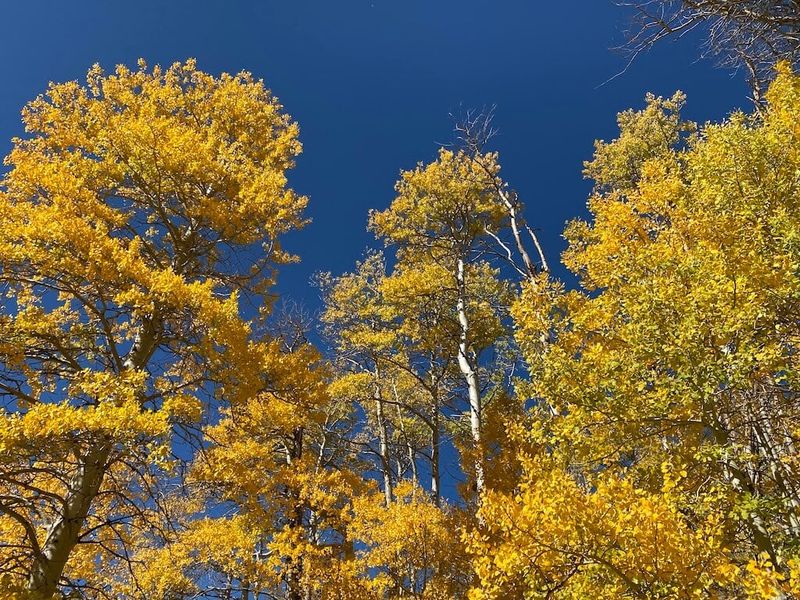
Two identical trees planted forty miles apart in California can drop their leaves weeks apart, and neither one is doing anything wrong at all.
Species genetics set the general schedule, but local conditions fine-tune it considerably. Elevation, fog, reflected heat from pavement, wind exposure, and irrigation all nudge the date forward or back a bit.
Along the foggy coast, mild temperatures can delay color change until well into December some years. In the Central Valley, where September afternoons routinely bake past 100 degrees, the same species may look tired by early October instead.
Mountain gardens in the Sierra foothills usually turn earliest because cold nights arrive first there.
Microclimates inside one yard matter too, sometimes more than people expect. A tree planted near a south-facing wall or a wide driveway soaks up stored heat and may hold leaves longer, or scorch and drop them sooner if water runs short.
Lawn sprinklers hitting a native oak can keep it greener into fall while creating other problems entirely elsewhere.
Rather than comparing your tree to a neighbor’s, keep a simple garden journal instead. Jot down the week each tree starts turning and the week it finishes up.
After two or three seasons you’ll know your own baseline, which makes real changes easy to spot going forward. A shift of a couple weeks means nothing. A shift of two months, paired with sparse growth, is worth investigating further.
4. Drought Stress Can Trigger Early Drop
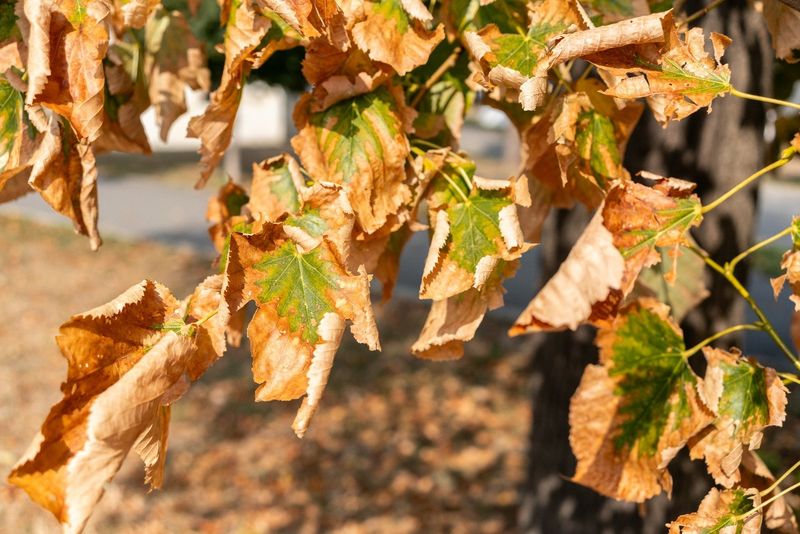
Thirsty trees have one emergency lever they can pull, and they pull it without hesitation when things get bad enough. Dump leaves, save water. That’s the whole strategy in a nutshell.
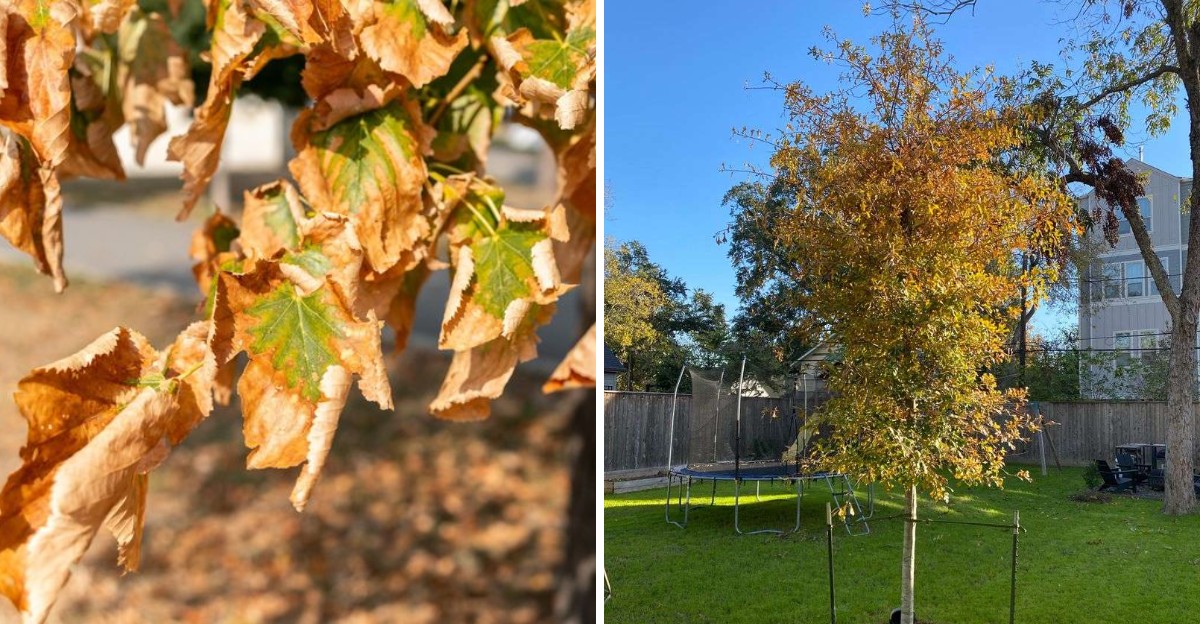
During a long dry stretch or a brutal heat wave, you may see leaves yellow and fall in August or early September, long before true autumn arrives. That premature shed counts as a survival move, not a serious setback.
Drought-stressed leaves often look different from normal fall leaves too. Edges scorch brown and crispy while the center stays green, or whole leaves wilt and drop still partly green on the branch.
Trees on shallow soil, in containers, or surrounded by hardscape suffer first because their roots have less reservoir to draw from during a dry spell.
Newly planted trees are the most vulnerable group by far in this scenario. Roots from a nursery container need two or three years to spread into surrounding soil, so they dry out fast even when the yard looks moist overall.
Deep, infrequent watering beats daily sprinkles every single time here. Soak the root zone slowly so moisture reaches a foot or more down, then let the top few inches dry before repeating the cycle.
Native oaks are the exception worth memorizing carefully. Established coast live oaks and valley oaks prefer dry summer soil near the trunk and can develop root disease from frequent summer irrigation.
Water them well away from the trunk, rarely, and only during extreme drought.
5. Fallen Leaves Make Useful Mulch
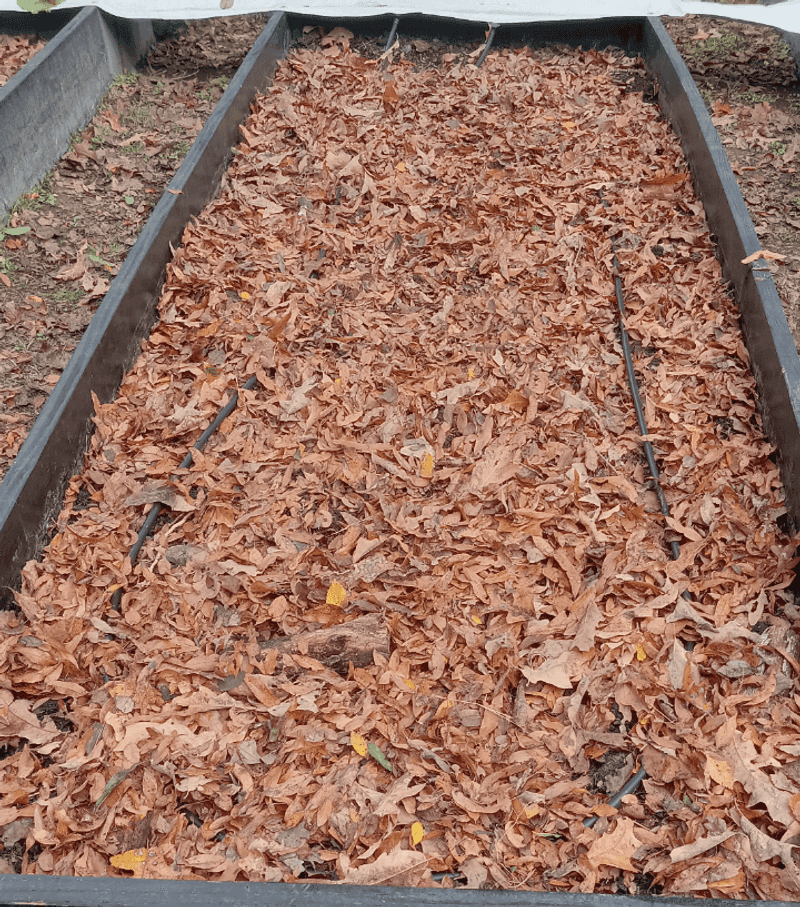
Bagging leaves and hauling them to the curb is basically paying to throw away free fertilizer sitting right in your own yard.
Leaf litter is what forests have used for millions of years to feed soil, and your garden beds respond the same way given the chance. As the leaves break down, they release nutrients, feed earthworms and fungi, and build the crumbly texture plants love.
A two to four inch layer of leaves around shrubs and under trees blocks weeds, slows evaporation, and buffers soil temperature during cold snaps and heat waves alike. Under an oak, natural leaf litter also supports the soil fungi that oak roots depend on for the long haul.
Shredding helps with big, flat leaves like sycamore that can mat down and shed water instead of soaking it in. Run a mower over a pile a couple of times, then rake the pieces where you want them spread.
Keep mulch pulled back three to six inches from trunks and stems. Piled against bark, damp leaves invite rot and give rodents a cozy tunnel right against your tree.
Leaves also balance a compost pile beautifully all on their own. They supply the dry, carbon-rich material that keeps kitchen scraps from turning slimy and smelly.
One caution worth remembering. Skip leaves visibly covered in fungal spots or mildew on beds where you grow the same plant. Bag those separately or send them to municipal green waste instead, where hotter processing handles the problem properly.
6. Sudden Total Leaf Loss Deserves A Closer Look
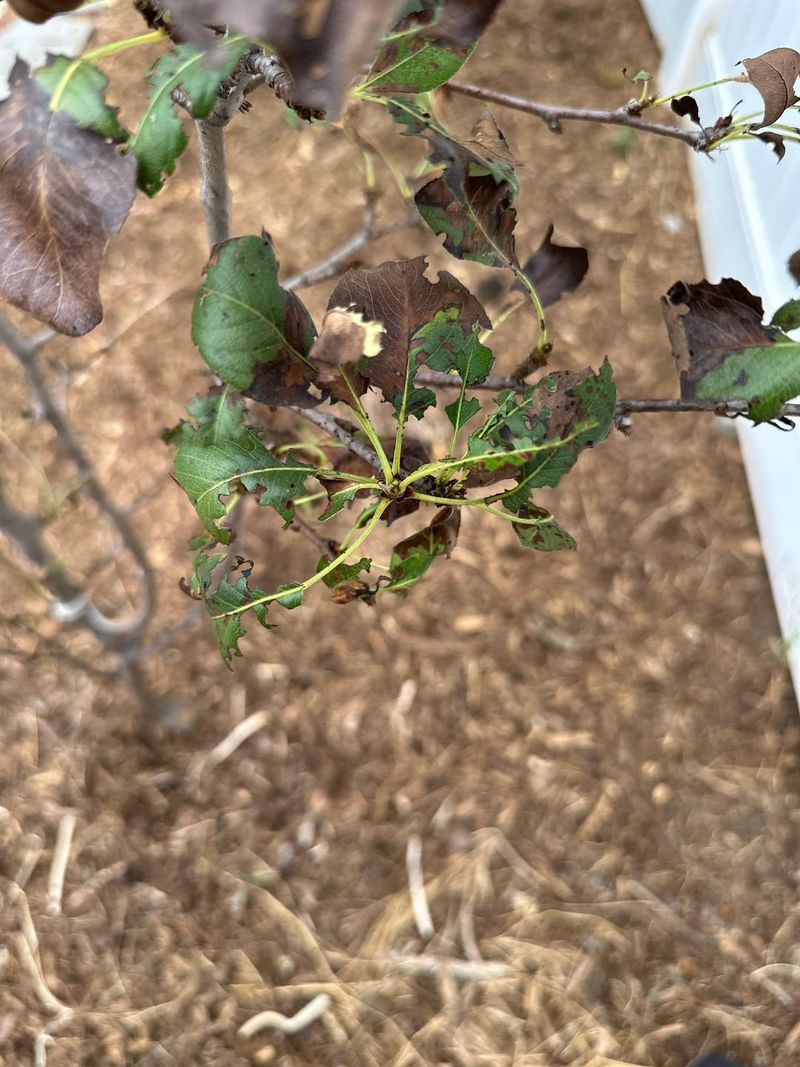
Gradual and scattered is normal. Sudden and total is a message worth paying attention to. When a tree that should be leafy strips itself bare over a week or two, especially outside the usual season, something is interfering with water movement, roots, or the trunk itself.
Warning signs worth noting include wilting that never recovers overnight, branch tips that decline first, leaves that brown but cling instead of falling naturally, mushrooms at the base, oozing sap, cracked bark, or sawdust-like frass near small holes.
Any of those paired with rapid leaf loss moves the situation from curiosity to genuine concern.
Common culprits in California landscapes include root rot from overwatering or poor drainage, severed roots from nearby trenching or construction work, boring insects, and herbicide drift from a neighbor’s weed spray.
Timing helps you narrow things down considerably. Think back a few months. Was a fence installed, a driveway poured, or an irrigation schedule changed recently? Root damage often shows up in the canopy months after the actual injury occurred.
When a large tree loses everything quickly, call a certified arborist rather than guessing on your own. Local extension offices and Master Gardener help desks also answer homeowner questions and can point you toward reliable diagnosis.
Acting early usually means a treatable problem instead of a removal bill down the road.
7. Most Fall Drop Needs No Response
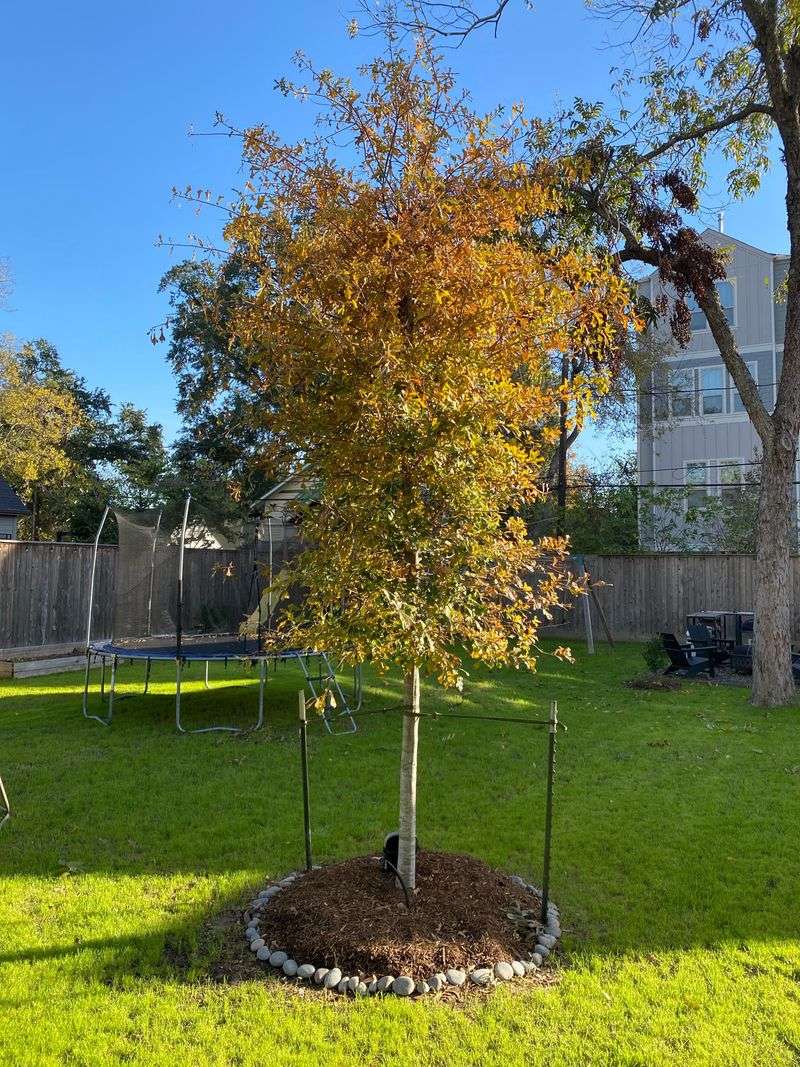
Put the fertilizer bag down for now. The vast majority of fall leaf drop in California gardens, from bare sycamores to steadily shedding live oaks, calls for zero intervention on your part.
Trees are not asking for rescue. They’re following a seasonal rhythm that predates every garden hose in the state by a long shot.
Skip heavy pruning right now, since cuts made in fall can encourage tender growth at the wrong time and expose wounds during wet weather ahead. Hold off on feeding too, because pushing new leaves as a tree winds down wastes energy and money for no real benefit.
Avoid ramping up irrigation just because leaves are falling, especially near established native oaks that prefer things dry.
What actually helps is simple upkeep instead. Clear slick leaves from steps and paths, keep gutters flowing before the first storms arrive, refresh mulch out to the drip line, and check that young trees still have room in their stakes and ties.
Everything your plants do this season sets up next spring in ways you won’t see right away. Roots keep growing through mild California winters, storing the sugars and starches that fuel bud break, new leaves, and flowers.
A tree that finished fall well watered, properly mulched, and unpruned has a full tank ready for March.
Watch, sweep, and let nature handle the rest from here.
8. Neighboring Trees Can Confuse The Diagnosis
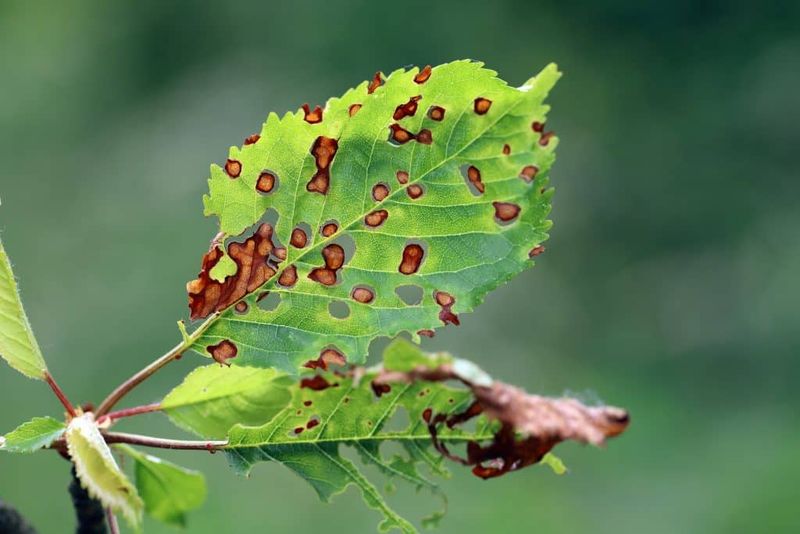
Standing under one tree, it’s easy to blame it for a mess that actually belongs to the tree next door entirely.
Wind carries leaves a surprising distance, especially with California’s dry fall gusts pushing them across yards, over fences, and onto patios that sit nowhere near the source. A carpet under your coast live oak might be half sycamore leaves that blew in from three houses down.
Overlapping canopies make this even trickier to sort out. Two trees planted close together drop leaves into the same space, and untangling whose leaf belongs to whom takes a closer look than most people bother with.
Leaf shape and size settle the question fast once you know what to check. Oak leaves tend to be smaller, leathery, and lobed, while sycamore and maple leaves run larger, flatter, and more star-shaped by comparison.
A quick walk around the property helps too. Note which trees sit upwind, since prevailing breezes in most of California blow from the coast inland during the day, and that pattern often explains why one side of a yard collects far more debris than the other.
This matters for more than curiosity alone. Misreading a mixed leaf pile as one tree’s problem can send a worried homeowner searching for disease symptoms that were never actually there in the first place.
Before assuming the worst about a specific tree, rake a small area and sort what you find by leaf type. A pile that turns out to be forty percent someone else’s leaves changes the whole picture.
Keep an eye on the tree itself instead of just the ground beneath it. Canopy fullness, twig health, and bud condition tell the real story, while a pile of mixed leaves on the patio tells you mostly about the wind that week.