An Invasive Backyard Predator In New Jersey Has Been Caught Hunting Hummingbirds
Quiet settles over your feeder before sunrise fully appears. Wings you counted yesterday seem to have disappeared overnight. Green stillness now claims the perch you cleared for hummingbirds.
Nobody mentions that a garden helper can turn predator. Patience keeps it motionless while you glance away for seconds. Gardeners once welcomed it into your beds for pest control.
New Jersey embraced this insect long before you noticed change. Roses thrived under your care, and pest counts dropped fast. Few ever warned you this same ally craves something smaller.
Hummingbirds visiting your feeder weigh barely more than a coin. Speed alone will not protect them from your garden guest. Instinct drives this creature, and your feeder becomes its stage.
Curiosity now pulls at you each time New Jersey mornings turn quiet. You will want to see exactly what waits at your feeder.
The Green Insect Turning Up At Feeders
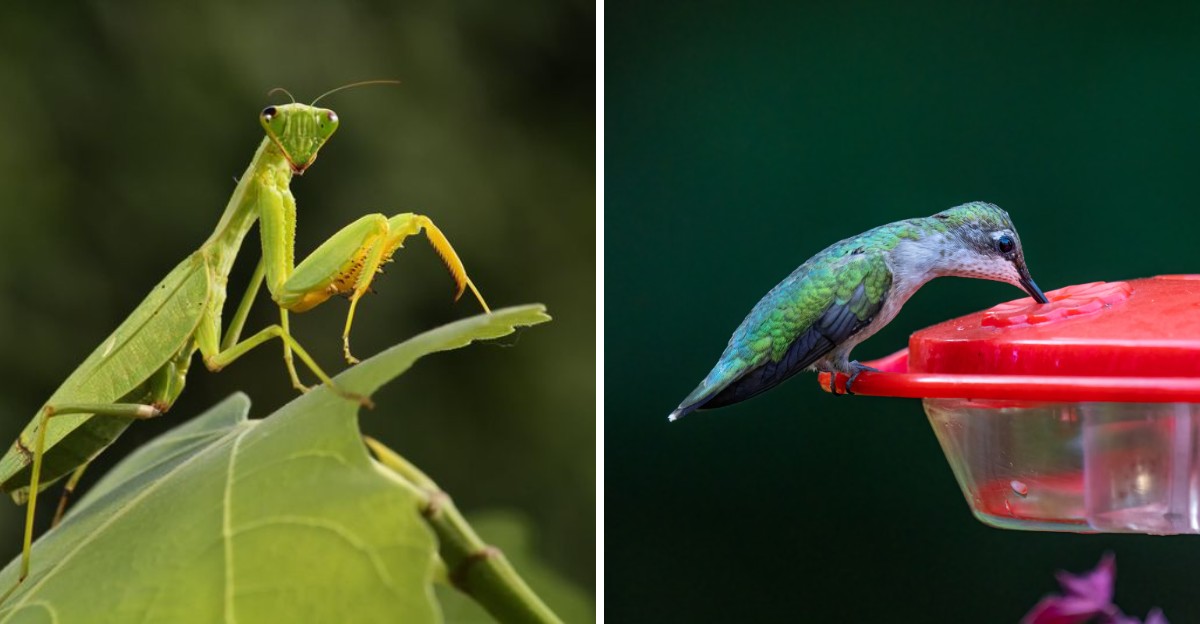
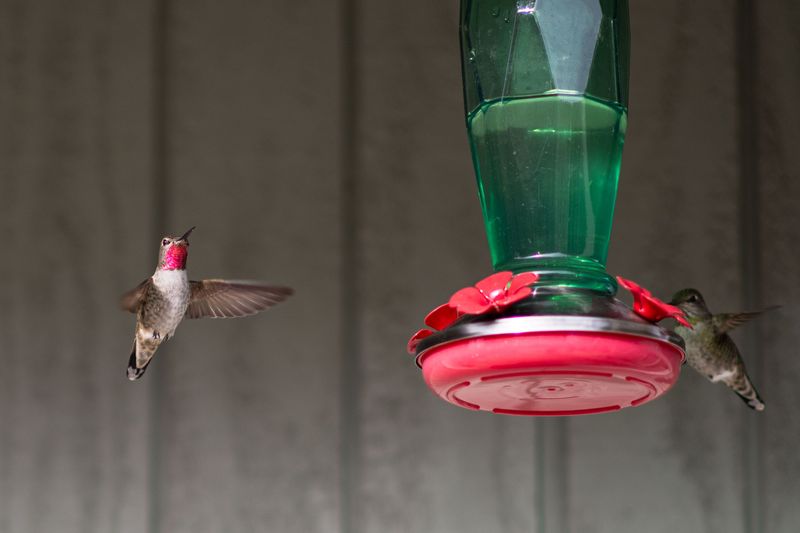
Backyard birders across New Jersey keep describing the same unsettling scene at their bright red sugar water feeders. A long green insect sits motionless beside the ports, front legs folded like a closing pocketknife.
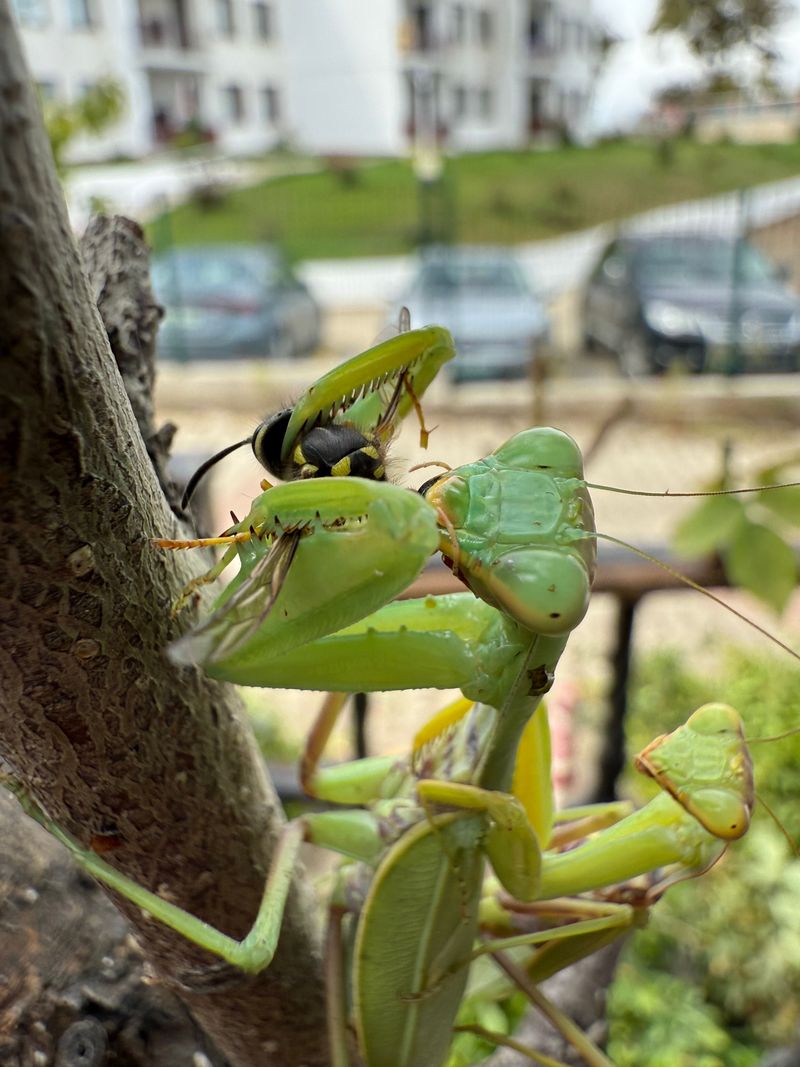
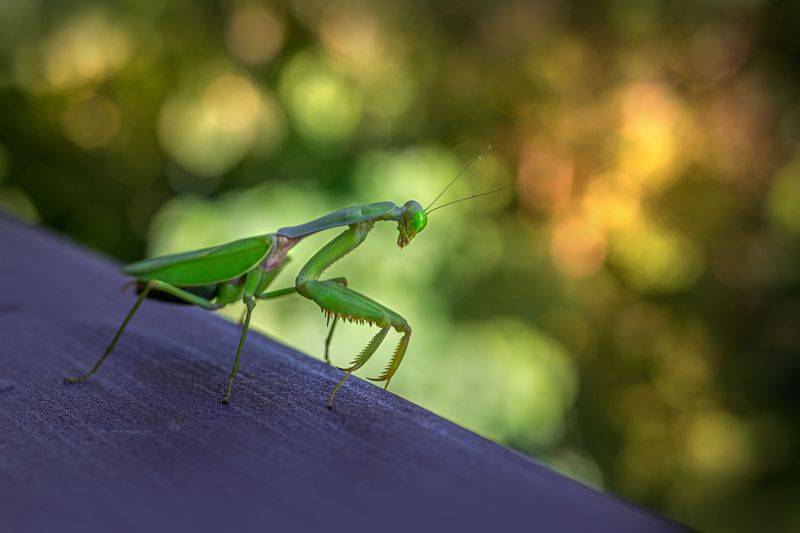
The visitor is the Chinese mantis, Tenodera sinensis, an introduced insect that can stretch past four inches. Females grow largest, and their grabbing forelegs carry rows of spines that hold prey firmly.
Hummingbirds weigh roughly as much as a penny, which puts them within range of such a patient hunter. Documented cases from several states show mantises seizing these birds by the head or throat.
Researchers reviewing bird predation reports found more than one hundred documented cases involving mantises at feeders around the world. Most victims were hummingbirds, and large introduced species appeared again and again in those records.
Ambush is the whole strategy here, because a mantis cannot chase down anything quick or clever. It parks near a reliable food source and waits for movement to drift close.
Feeders turn that waiting game into easy work, offering a predictable crowd of tiny visitors each morning. A hunting insect cannot tell the difference between a fat bee and a hovering bird.
Gardeners once welcomed these giants as helpful allies, which makes the feeder reports feel especially strange. Nature rarely bothers reading the labels we stick on our favorite helpers.
Finding one perched on your feeder feels alarming, though it does not doom your whole hummingbird crowd. A few small changes usually convince the ambush hunter to set up shop elsewhere.
Origins Of An Accidental Garden Import
Blame a shipment of nursery plants that reached the Philadelphia area in 1896. An egg case tucked among the stems went unnoticed until it hatched.
From that one accident, the species spread through the eastern states over the decades that followed. New Jersey sat squarely inside the path of that slow, quiet green expansion.
People sped the process along, because mantis egg cases were soon sold on purpose. Garden catalogs advertised them as natural pest fighters for vegetable rows and rose beds.
The sales pitch held some truth, since mantises do eat grasshoppers, crickets, moths and beetles. Trouble is, they feel no loyalty whatsoever to the menu a gardener prefers.
Your New Jersey Garden Changes Every Week. Your Plan Should Too.
Gardening in New Jersey changes quickly throughout the season. Every Friday you’ll receive a simple weekly plan showing exactly what to plant, prune, fertilize, harvest, and protect so you never miss the right timing.
Anything that fits inside those spiny arms counts as food, including honeybees, butterflies and smaller native mantises. Appetite drives every decision, not any tidy sense of garden usefulness.
Our native Carolina mantis stays under three inches and rarely threatens anything wearing feathers. The imported giant carries far more bulk, and extra size changes what becomes possible.
Egg cases still appear for sale online every winter, usually marketed as friendly garden helpers. Each case can hold up to four hundred eggs waiting for spring warmth.
History matters here, because this insect did not slip into New Jersey on its own. We shipped it, sold it, and eventually handed it a hummingbird feeder.
Late Summer And Early September Feeder Ambushes
Timing explains a lot about these reports, since September is when mantises reach full adult size. Hatchlings from spring have spent months eating, molting and growing into formidable adults.
Female mantises also need serious protein right now, because they are building egg cases for winter. A heavy, hungry female takes far bigger gambles than a slim young male.
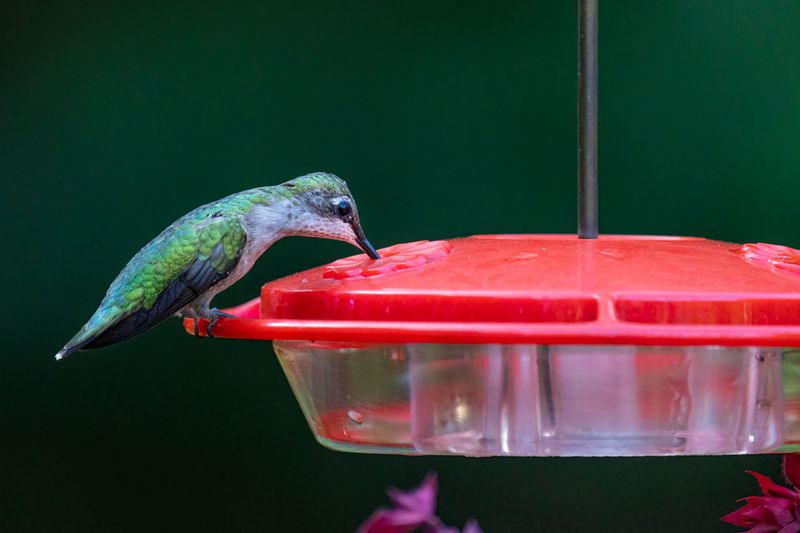
Hummingbird timing lines up badly with that schedule, which is the truly unlucky part of the story. Ruby throated hummingbirds fuel up heavily through September before their long flight toward Central America.
Feeder traffic peaks during those same weeks, with individual birds visiting dozens of times each hour. More visits simply mean more chances for a patient insect to connect.
Flowers fade as autumn settles in, pushing both mantises and hummingbirds toward the same reliable feeders. Competition for that single sweet spot gets surprisingly crowded by mid September.
Warm afternoons bring the most action, since mantises move sluggishly when mornings turn cool. A quick midday check often reveals a lurker that breakfast inspection missed.
By late October, cold weather closes the mantis season, and the risk fades without your help. Their tan egg cases stay behind, glued to stems, fence rails and siding.
September and early October therefore deserve your closest attention as a New Jersey feeder owner. Roughly six weeks of watchfulness covers nearly the whole seasonal problem.
Feeder Habits That Quietly Invite Trouble
Most feeder setups accidentally roll out a welcome mat for ambush hunters without the owner noticing. Hanging a hummingbird feeder deep inside dense shrubbery ranks as the classic mistake.
Mantises fly poorly, so they need branches, vines or trellises to climb aboard a feeder. A feeder brushing against leaves offers a free staircase straight to the buffet.
Decorative perches, wide flat tops and hanging hooks create ideal waiting platforms beside the nectar ports. Comfortable seating helps the hunter far more than the birds you wanted to support.
Potted flowers crowded beneath a feeder attract bees, and those bees attract hungry mantises. One tidy garden arrangement quietly stocks the ambush site with tempting appetizers.
Skipping regular cleaning adds another layer, because sticky nectar spills attract wasps, ants and flies. Those insect crowds advertise your feeder to every hungry predator in the neighborhood.
Buying mantis egg cases for the vegetable garden counts as the biggest mistake of all. Releasing a hundred hatchlings twenty feet from your feeder hardly qualifies as pest control.
Leaving a single feeder as the only nectar source concentrates every bird into one small spot. Predictable crowds are precisely what an ambush specialist hopes to find.
None of these habits make anyone a careless host, so please skip the guilt. They just stack odds in the insect’s favor, and odds can be shifted quickly.
Safer Placement And Simple Yard Fixes

Here is the cheerful part, because these fixes cost almost nothing and take roughly ten minutes. Hang feeders from open shepherd hooks, positioned well away from shrubs, vines and branches.
Aim for at least three feet of clear space on every side of the feeder pole. Mantises seldom cross bare metal or open air to reach a distant target.
Inspect feeders each morning and again during the afternoon, especially through warm September weather. A ten second glance across the top, hook and ports catches most lurkers.
Relocating a mantis is simple with a sturdy stick, a wide jar or thick gloves. Carry it thirty feet away toward the vegetable patch, where its appetite actually helps.
Removing built in perches helps too, since hovering hummingbirds do not really need them anyway. Fewer flat surfaces mean fewer comfortable ambush seats around the nectar ports.
Spreading two or three feeders across your yard splits the crowd into smaller, calmer groups. Scattered traffic makes any single ambush position far less rewarding for a hunter.
Skip sprays and pesticides here, because chemicals harm the very pollinators and birds you love. Physical distance solves this problem better than any product sitting on a store shelf.
Wipe spilled nectar off the feeder body weekly so wasps and ants lose interest fast. A clean feeder attracts hummingbirds and almost nobody else worth worrying about.
Egg Cases And Long Term Prevention
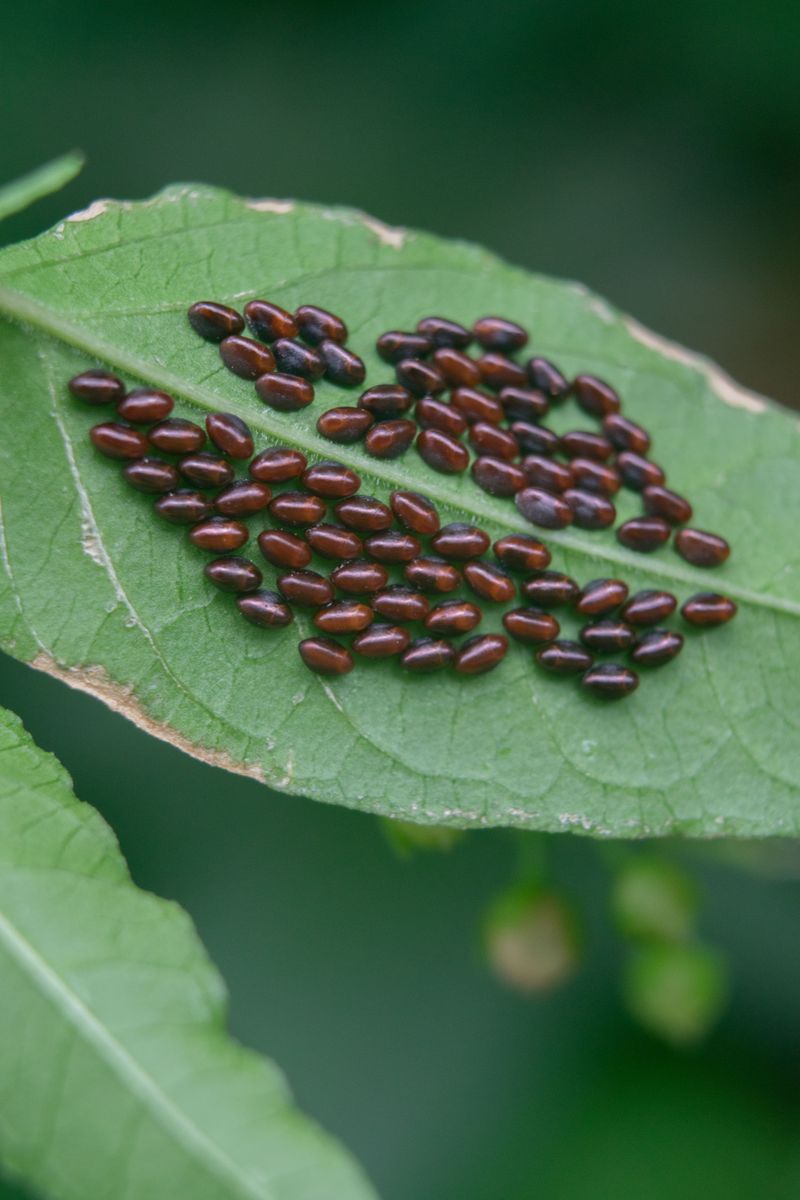
Prevention begins in winter, long before the first hummingbird returns to New Jersey in April. Chinese mantis egg cases look like tan foam blobs, about the size of a walnut.
Look for them on shrub stems, tall weed stalks, fence rails and even house siding. A single case can pack in as many as four hundred eggs.
Snipping cases from branches near your feeder during February reduces next season’s crowd dramatically. Clip the twig, bag the case and move it far from the yard.
Some folks prefer relocating cases to a distant wild field rather than destroying them outright. That choice respects the insect while still protecting the birds at your window.
Telling the two species apart matters, because native Carolina mantis cases look long, slim and flat. Chinese cases appear rounded and puffy, resembling hardened sand colored marshmallow stuck on bark.
Resist buying egg cases advertised as helpful garden allies, no matter how charming the packaging looks. Ladybugs, lacewings and native plantings handle pests without threatening your smallest birds.
Planting native nectar flowers spreads bird traffic across your whole yard through late summer weeks. Bee balm, cardinal flower and trumpet honeysuckle hand hummingbirds plenty of safer choices.
One backyard cannot fix an introduced species, but yours can stay a genuinely safe stop. Hummingbirds travel thousands of miles, and they deserve a calm lunch break.