Why More Oregonians Are Putting Native Grasses Along Front Walkways This Fall
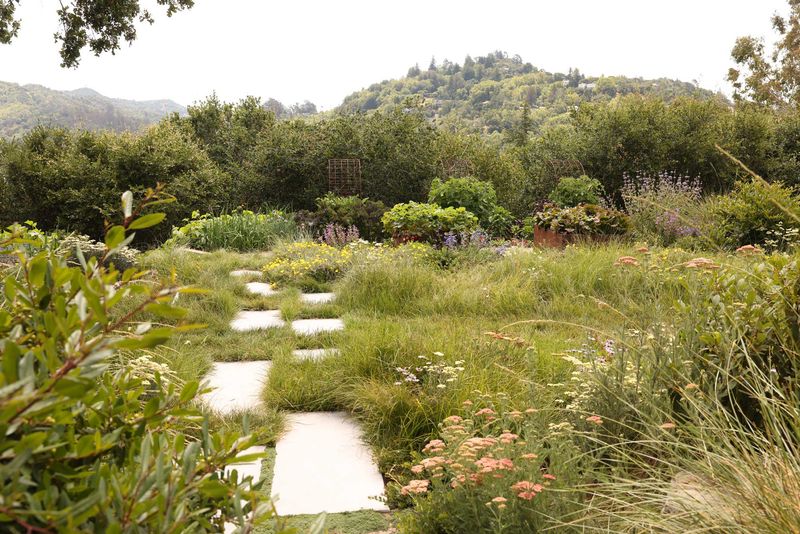
Gardeners across the Portland area have been swapping out thirsty lawns for native plants, and the shift has a certain quiet logic to it. Native bunchgrasses, with their arching blades and year-round structure, are showing up in parking strips and front borders where turf used to rule.
Whether you’re curious about joining that movement or just want a lower-fuss border beside your front path, fall can be a genuinely good time to get started in western Oregon. The trick is matching the right plant to your actual strip of ground, keeping the path clear, and going in with honest expectations.
Portland interest is real, but a statewide trend is unproven
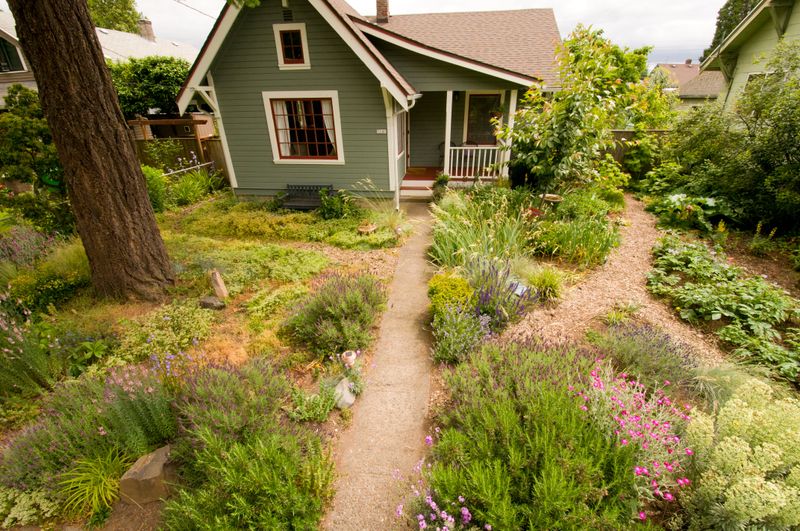
Imagine walking up to a front door flanked by tufts of arching grass and a scatter of late-blooming wildflowers instead of a flat carpet of turf. That picture is becoming more familiar in some Portland neighborhoods, where homeowners have been experimenting with native, low-mow plantings in place of conventional lawns.
A June 2025 story from Axios Portland covering no-mow, native-plant yards captured that local enthusiasm, drawing on individual examples and a landscaper’s observations from the area.
That reporting is worth knowing about, but it describes interest in one city, not a measured wave sweeping every corner of Oregon. There are no household counts, no statewide survey, and no data specifically tracking grasses beside front walkways.
Calling it a verified Oregon trend would be overstating what the evidence actually shows.
So this article takes a different angle. Instead of chasing a trend, it tries to answer the practical question underneath it: if you garden west of the Cascades and you’re thinking about planting native grasses along your front walk this fall, what do you actually need to know?
Which grasses suit your specific strip of ground? How do you keep a path usable?
What care will the plants need before they’re truly settled in? Those are the questions worth working through, and the answers are more useful than any trend headline.
Fall rain can give western Oregon grasses a head start
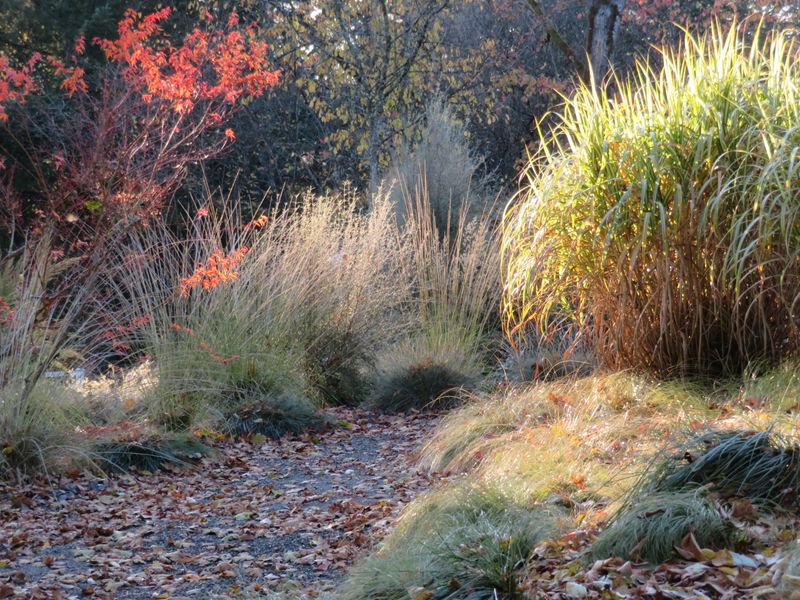
Western Oregon runs on a reliable rhythm: wet, mild winters followed by long, dry summers. That pattern is actually an asset for gardeners who want to establish native plants, because roots that go in the ground during the wet season have months to spread before summer heat arrives and rain disappears.
Planting after the fall rains begin, rather than during the dry stretch of September, gives new grasses a gentler start. OSU Extension’s guide to gardening with native plants west of the Cascades notes that the wet season, from fall through late winter or early spring, is a useful window for establishing native plantings in this climate.
The soil is still workable, temperatures are cooler, and natural rainfall can do a lot of the watering work.
The catch is that fall rains don’t always arrive on schedule. If October stays dry or rainfall is spotty, newly planted grasses will need you to water them.
Your Oregon Garden Changes Every Week. Your Plan Should Too.
Gardening in Oregon changes quickly throughout the season. Every Friday you’ll receive a simple weekly plan showing exactly what to plant, prune, fertilize, harvest, and protect so you never miss the right timing.
Don’t plant and walk away assuming the clouds will handle it. Check the soil around new plants every few days, and water when the top inch or two feels dry.
Also worth noting: this timing advice applies to the maritime west side of Oregon. Gardeners in Bend, Klamath Falls, or other parts of the state east of the Cascades are working with a fundamentally different climate, and the fall-planting logic doesn’t transfer directly.
More on that in a later section.
Choose a grass for the actual strip, not just its native label
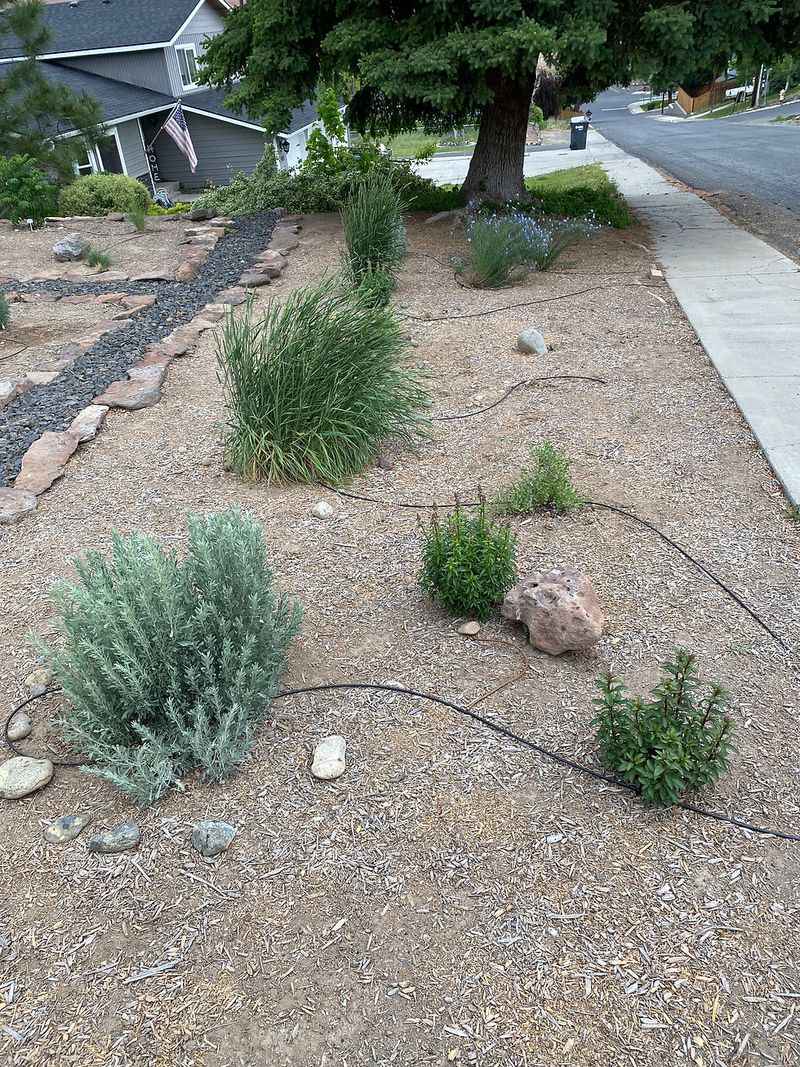
“Native grass” is a broad category, not a single plant. Oregon is home to species that thrive in wet meadows, dry rocky slopes, shaded forest edges, and everything in between.
A grass that grows naturally along the coast has no obligation to be happy in a hot, dry parking strip in the Rogue Valley, and a species suited to the Willamette Valley may not be the right call for a yard in Sisters. The native label tells you something about a plant’s origins, but it doesn’t tell you whether it fits your specific patch of ground.
Before picking a species, take stock of what you’re actually working with. How much direct sun does the strip get each day?
Does water pool there after rain, or does it drain quickly? How wide is the space between the sidewalk and the street, or between the path and the lawn edge?
Honest answers to those questions matter more than a plant’s reputation.
For Portland-area gardeners, the City of Portland’s Green Street Stewards plant guide lists fescues as options for local strips, including Idaho fescue and Roemer’s fescue, with listed mature sizes of roughly 12 by 12 inches and 24 by 12 inches, respectively. Those are genuinely useful local examples to investigate, but treat them as a starting point rather than a universal prescription.
The Portland Plant List is another local resource for checking which species are considered native to the Portland area specifically.
If you’re gardening outside Portland, look for regional native plant resources or talk to a local nursery that specializes in Oregon natives. The OSU Extension guide for west-of-Cascades gardeners is a solid reference for understanding which species suit the maritime climate, and it can help you match sun and moisture needs to what your yard actually offers.
A front walk needs room to stay a front walk
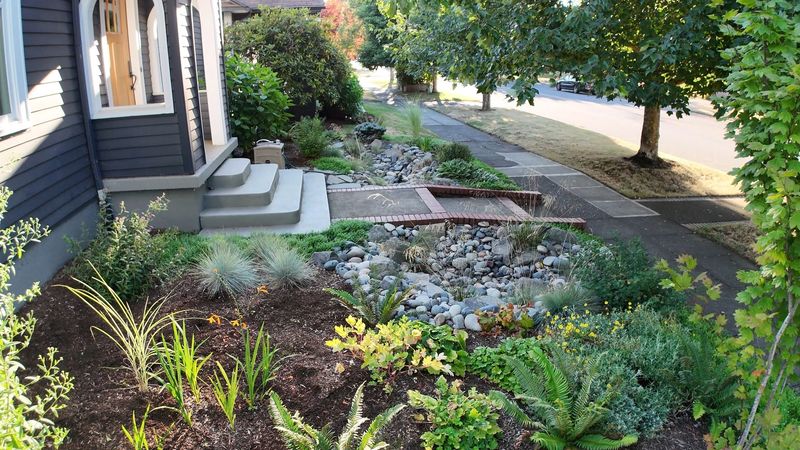
A plant that looks tidy in a four-inch nursery pot can become a generous mound of foliage in two or three years. That’s a feature in a meadow garden, but beside a front path it can turn a pleasant walk into an obstacle course.
Planning for a grass’s mature spread before you dig the hole saves a lot of frustration later.
The Portland Green Street plant guide’s listed dimensions offer a practical reference for the fescues it recommends: Idaho fescue at about 12 inches wide and Roemer’s fescue at about 24 inches wide at maturity. If your strip is only 18 inches across, a plant that spreads to 24 inches will eventually flop over the path, regardless of how tidy it looked at planting.
Measure the usable width of your strip or border before you buy anything. Then subtract the mature spread of your chosen grass from that width, and make sure what’s left is enough for a comfortable walkway.
Spacing plants back from the path edge by a few inches gives foliage somewhere to go as the plant fills in. Choosing a smaller species or fewer plants is always easier than cutting back an overgrown border every season.
A path that’s genuinely easy to use is one of the best things a front garden can offer.
Grasses offer shelter, while flowers supply pollinator food
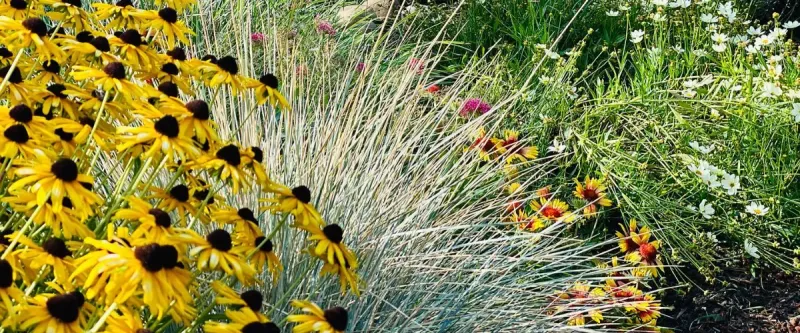
Native bunchgrasses bring something genuinely useful to a garden: physical structure that sticks around all year. The dense tufts and dried seed heads can provide potential nesting sites for ground-nesting bees and overwintering spots for other beneficial insects.
That’s a real contribution, and it’s worth planting for.
What grasses don’t provide is pollen and nectar. Bees and butterflies need flowering plants for food, and a strip planted only with grass won’t feed the pollinators you’re hoping to support.
OSU Extension’s guide on providing habitat for native pollinators recommends pairing native bunchgrasses with a variety of flowering plants that bloom across different seasons, so there’s food available from early spring through fall.
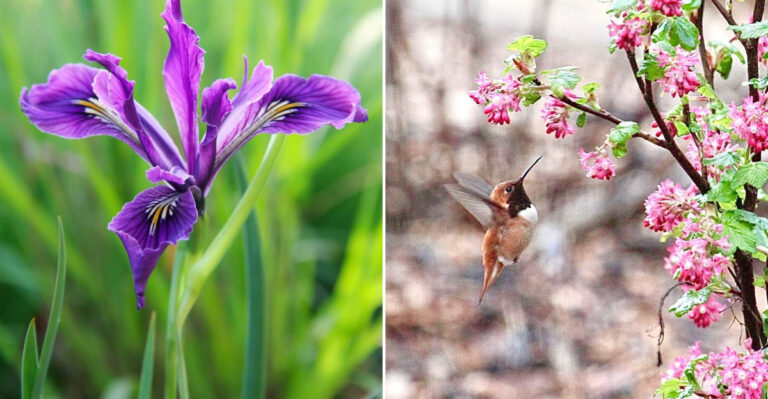
In a front-walk border, that might look like clumps of bunchgrass anchoring the planting, with native flowering plants tucked in between. Oregon sunshine, camas, red flowering currant, and native asters are examples of flowering plants that suit west-of-Cascades gardens and bloom at different times of year.
The grasses hold the structure together and offer shelter; the flowers keep pollinators coming back.
Think of the grass as the bones of the planting rather than the whole meal. A mix of grasses and flowers, chosen to match your site’s sun and moisture, gives you a border that looks good, supports wildlife in multiple ways, and changes interestingly across the seasons.
Native does not mean no-care during establishment
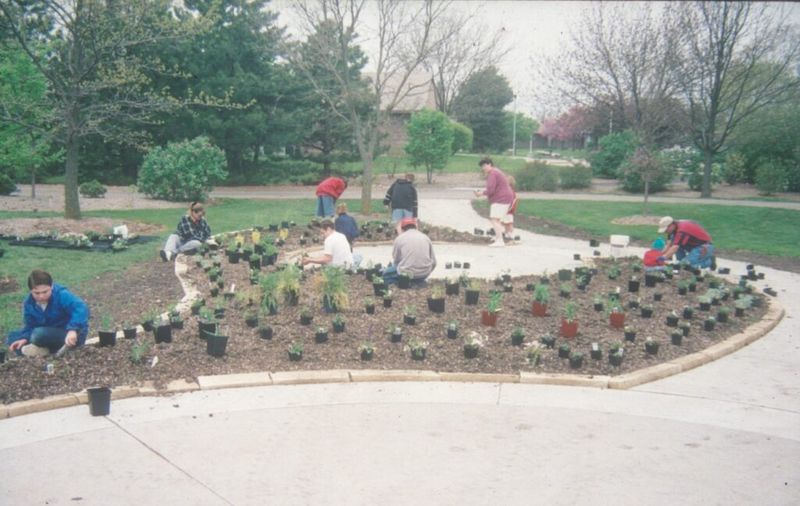
One of the most persistent myths about native plants is that they take care of themselves from day one. The reality is a bit more patient.
Native grasses are well-suited to Oregon’s climate once they’re established, but getting to that point takes time, water, and some attention to weeds.
Both the OSU Extension native plants guide for west-of-Cascades gardeners and the OSU pollinator habitat guide are clear that establishment watering and weed control may be needed, and that the establishment period can stretch across multiple growing seasons. Fall rain helps, but it won’t always be enough, especially if the wet season gets off to a slow start or you’re planting in a site with fast-draining soil.
Plan to check new plantings regularly through their first fall and winter. Water when rainfall is sparse or the soil dries out more than an inch deep.
Pull weeds before they get established, because young grasses don’t compete well against aggressive invaders when their roots are still getting settled.
Mulching around new plants, while keeping mulch away from the crown of each grass, helps hold moisture and suppresses weeds at the same time. A two- to three-inch layer of wood chips or bark works well in most west-side gardens.
The payoff for that first-year attention is a planting that genuinely earns its low-maintenance reputation in year two or three, when the roots are deep and the plants are confident.
Regional climate and defensible space can change the plan
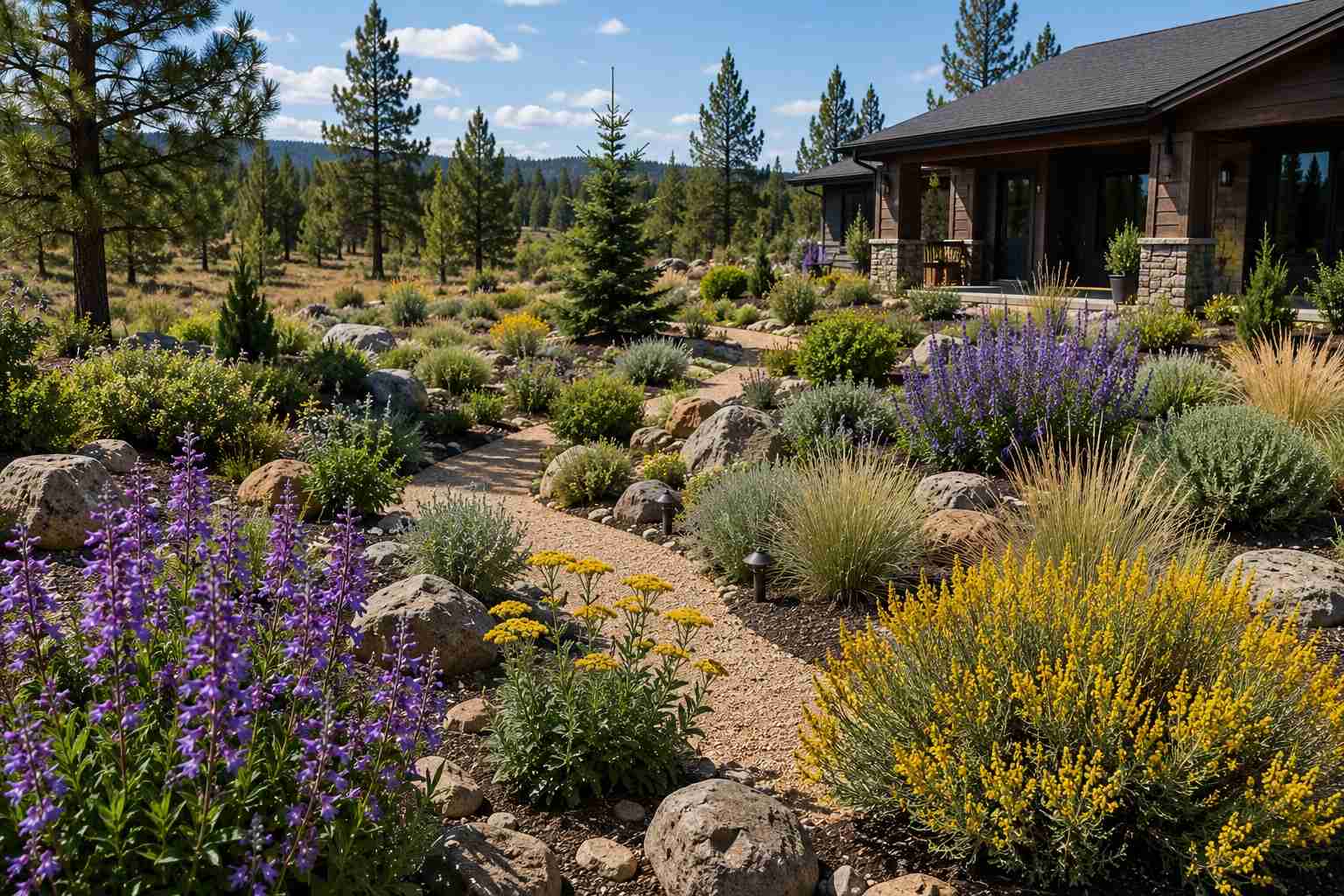
Everything covered so far applies most directly to gardeners west of the Cascades, where maritime winters do a lot of the establishment work. Move east of the mountains and the rules shift considerably.
In Central Oregon, winters can be cold and dry rather than mild and rainy. OSU Extension’s waterwise gardening guide for Central Oregon advises that new plantings may need supplemental watering every six to eight weeks during winter, on days when the ground can actually absorb water, particularly in dry winters.
Assuming that autumn will take care of establishment is a reasonable bet in the Willamette Valley; in Bend or Prineville, it could mean losing plants to desiccation before spring arrives. East-side gardeners also need region-specific plant lists, since many west-of-Cascades natives won’t tolerate the colder, drier conditions.
Wildfire risk adds another layer of planning for gardeners in fire-prone areas, whether east or west of the Cascades. A walkway border is not the same as the immediate zone around your house.
The Oregon State Fire Marshal’s defensible space guidance calls for noncombustible materials within five feet of the structure itself, and OSU guidance on plants within five feet of a home emphasizes limiting combustible material in that zone. Dry grass and dead vegetation can act as fuels.
A native grass planting beside a front path that sits well away from the house is a different situation from the same planting right against the foundation. If you’re in a wildfire-risk area, check your local defensible-space requirements before planting and factor those rules into where and what you plant.
Start small with a well-chosen grass
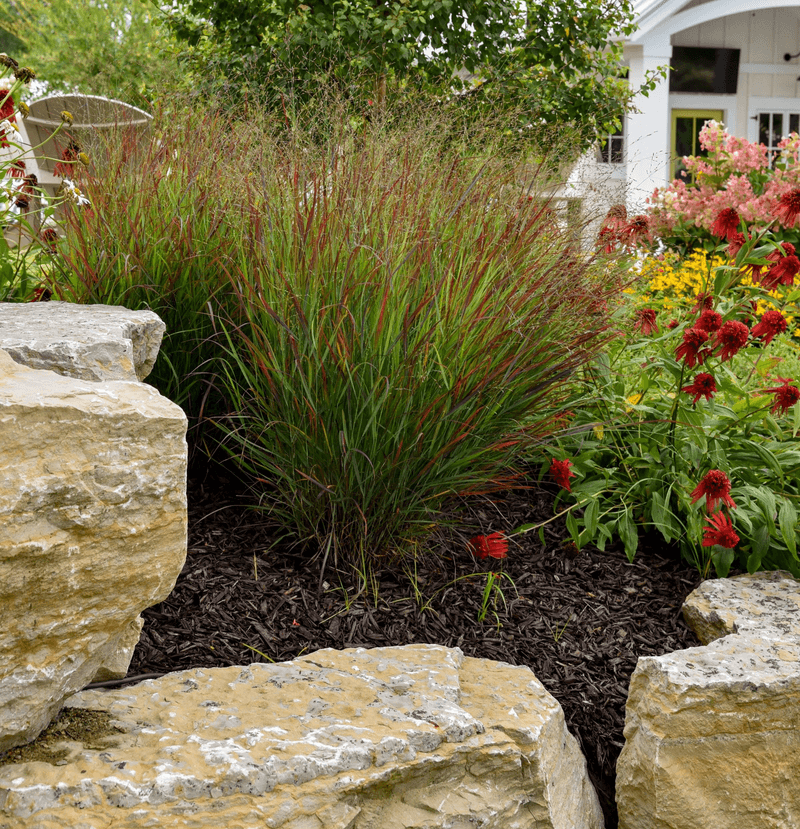
You don’t need to rethink your entire yard to try this. Planting one or two well-chosen native grasses beside your front walk is a genuinely satisfying place to start, and it lets you learn what works on your specific site before committing to a bigger redesign.
Pick a species whose mature size fits your available space, whose sun and moisture needs match what your strip actually offers, and whose native range includes your part of Oregon. Wait for fall rains to begin before planting, water if the weather doesn’t cooperate, and pull weeds while the plants get settled.
Add a few flowering natives nearby to round out the habitat value. OSU’s native plants guide for west-of-Cascades gardeners is a practical companion for that selection process.
A single grass clump that’s genuinely right for its spot will do more for your garden, and for the insects that visit it, than a dozen plants chosen in a hurry.