The Arizona Yard Cactus That’s Prettier Than Bougainvillea but Just as Painful to Prune
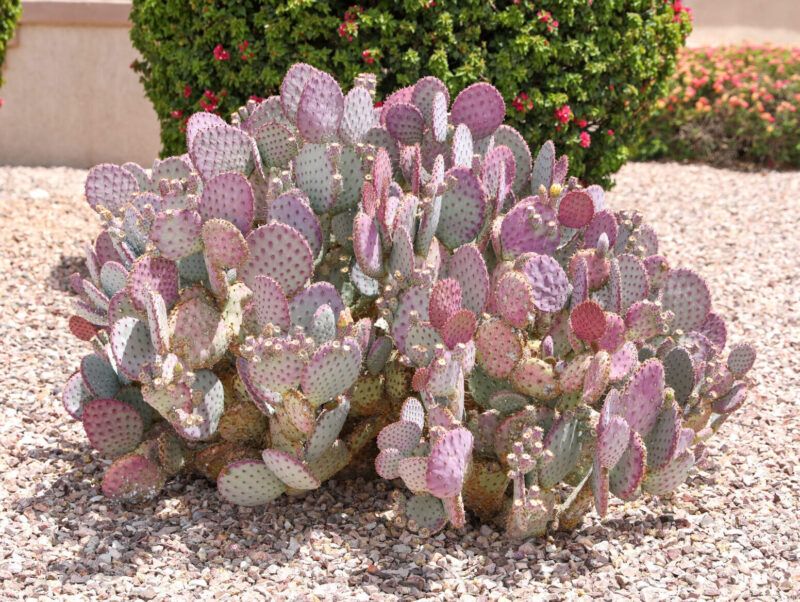
Santa Rita prickly pear (Opuntia santa-rita) is one of those plants that stops people mid-stride in an Arizona yard. Its pads can shift from blue-gray to rich purple depending on the season, and come spring, it puts out bright yellow flowers that draw a second look.
Whether you find it prettier than bougainvillea is entirely up to you, but as a low-water, heat-adapted native, it earns a serious look from any homeowner trying to build a yard that works in the low desert.
Its color show comes from pads as well as flowers
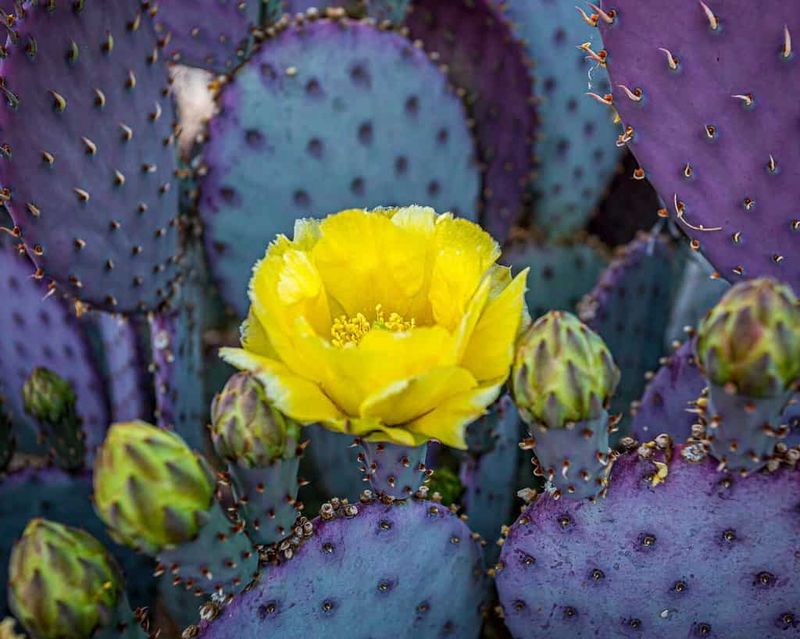
Santa Rita prickly pear earns its reputation from two separate sources of color: the pads themselves and the flowers they eventually carry. According to the Arizona-Sonora Desert Museum’s plant-care guide, the pads are blue-gray during warm weather and can turn violet or purple when temperatures drop in winter or when the plant experiences drought stress.
That shift is not guaranteed to be deep purple year-round, so expect variation.
The yellow flowers typically appear in April or May, adding a burst of warm color against the blue or purple pads. That spring display is genuinely striking, though it is a different kind of show from bougainvillea’s long season of vivid bracts.
Whether one is prettier than the other is a matter of personal taste, not a measurable fact.
The University of Arizona Campus Arboretum lists Santa Rita prickly pear as a landscape accent worth considering for its color. What makes it stand out in an Arizona yard is the combination: colored pads that change with the season and yellow flowers that arrive each spring, all on a plant native to southern Arizona and adjacent Sonora.
Low-water does not mean water-free at planting
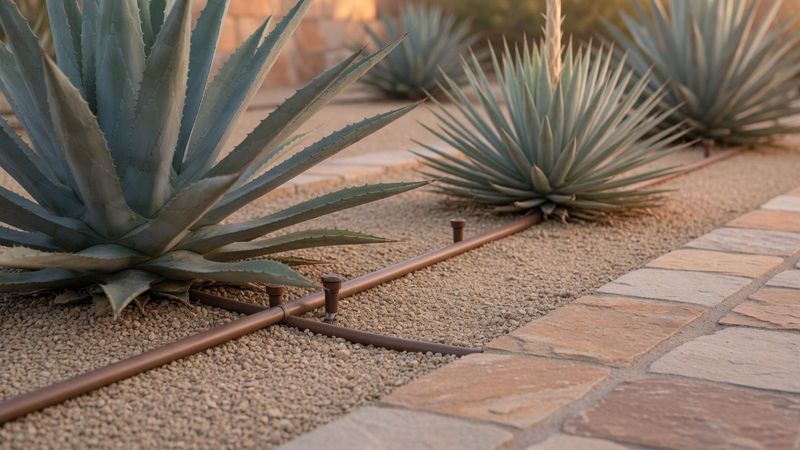
One of the most common mistakes with drought-tolerant plants is skipping establishment care. Santa Rita prickly pear is listed as a low-water plant, but that label describes a mature, rooted specimen, not a plant you just put in the ground last week.
The Arizona-Sonora Desert Museum recommends watering every week or two during the first growing season. Once the plant is established and its roots have spread into surrounding soil, it can generally get by on Arizona’s rainfall.
That transition from regular watering to rainfall-dependent survival takes time, and the exact timeline depends on your soil, your location, and how hot the season runs.
Site conditions matter more than most people expect. Well-drained soil is important because prickly pear roots do not tolerate standing water.
If your yard has clay soil or drains slowly, the plant is still workable, but it needs more attention during establishment to avoid root problems. Treat “low-water” as a description of its long-term potential, not a promise that you can walk away from it on day one.
Give a mature plant room and well-drained soil
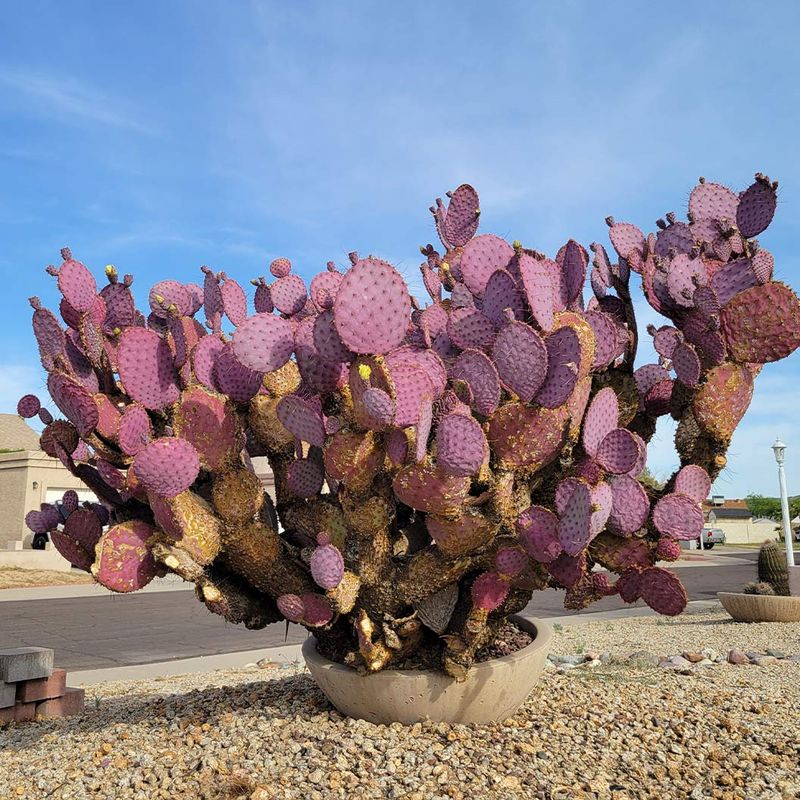
Before you pick a spot, plan for where this plant ends up, not where it starts. Santa Rita prickly pear can reach roughly 6 feet tall and 6 feet wide at maturity.
Your Arizona Garden Changes Every Week. Your Plan Should Too.
Gardening in Arizona changes quickly throughout the season. Every Friday you’ll receive a simple weekly plan showing exactly what to plant, prune, fertilize, harvest, and protect so you never miss the right timing.
A young plant looks manageable, but it will fill its space over time, and you do not want it crowding a walkway, a gate, or a spot where a dog or child regularly passes.
Keep it away from paths and any area where people or pets might brush against it. The glochid hazard, covered in a later section, makes accidental contact genuinely unpleasant.
Distance from high-traffic areas is the simplest way to reduce that risk before it ever becomes one.
Soil drainage is the other placement factor worth getting right from the start. This cactus prefers well-drained soil, and University of Arizona guidance on transplanting cacti recommends planting on a raised mound if your site has clay soil or poor drainage.
A mound does not need to be large, just enough to lift the root zone above any water that pools after monsoon rains. Getting both location and drainage right at planting saves a lot of trouble later, since moving a mature prickly pear is its own project entirely.
It can offer habitat value
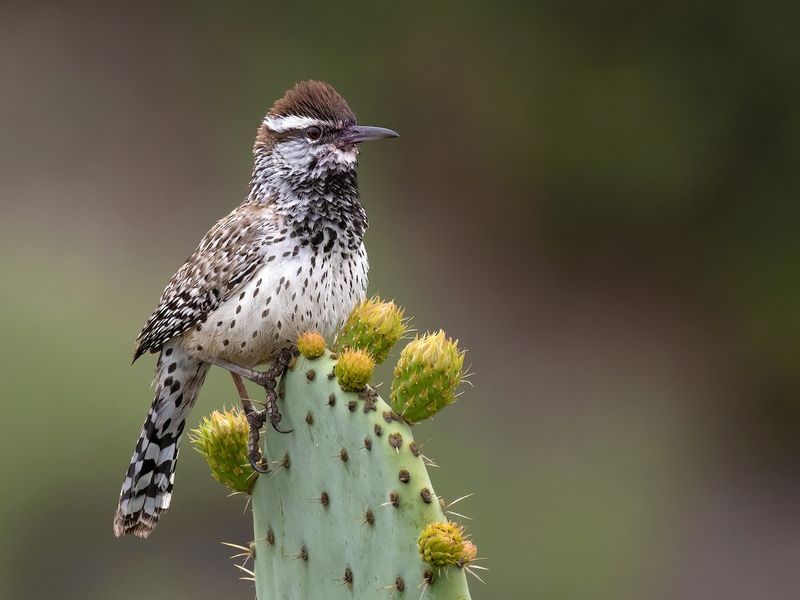
Prickly pear cacti have a functional role in Arizona yards that goes beyond appearance. Native birds use the dense pad structure for cover and as escape habitat when predators are nearby.
That kind of shelter matters in a low-desert yard where large open spaces can leave wildlife exposed.
Audubon’s native plant resources for central Arizona note that prickly pear cacti generally support birds through cover opportunities. The University of Arizona Campus Arboretum also lists habitat as one of the landscape functions for Santa Rita prickly pear specifically.
That is a qualified benefit, not a promise that planting one guarantees a particular species will show up.
Spring flowers can attract pollinators during bloom, though outcomes vary by location, season, and what else is growing nearby. What the plant reliably offers is structure: year-round cover in a form that birds recognize and use.
If your goal is a yard that does more than look good, adding a native cactus with documented habitat value is a practical step in that direction. Just do not expect a single plant to transform your yard into a wildlife sanctuary on its own.
Prune only when you need to control its size
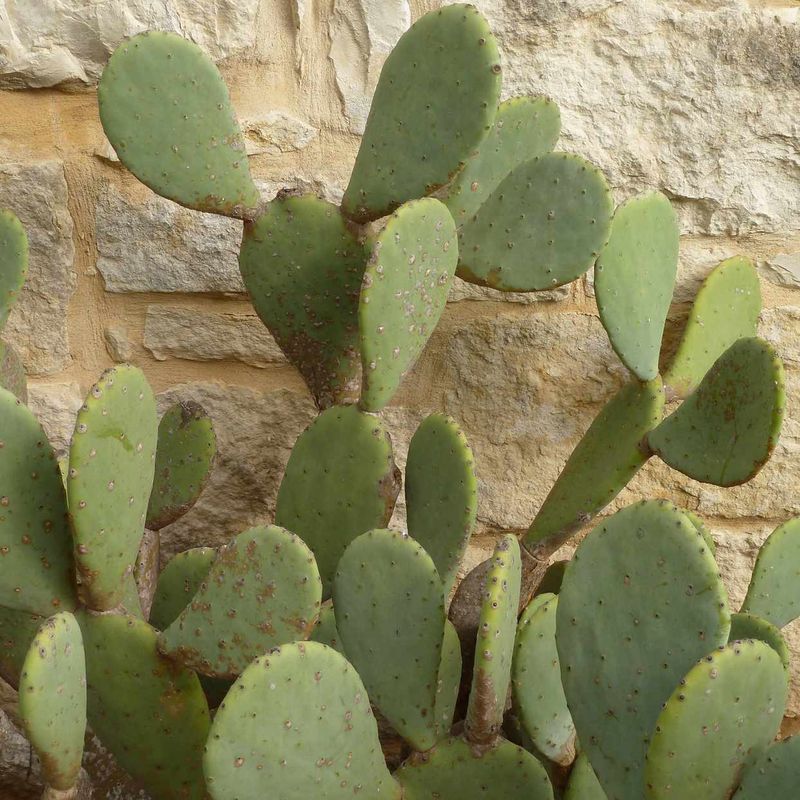
Santa Rita prickly pear does not need regular shaping the way a hedge or flowering shrub does. Left alone, it grows at its own pace and holds its form without intervention.
Most homeowners will find they rarely need to touch it at all once it is established and placed correctly.
When size control does become necessary, the Desert Museum recommends focusing on new pads as they emerge in spring. Removing them while they are small and still soft is easier than cutting older, thicker pads.
University of Arizona propagation guidance specifies that Opuntia pads should be removed at the joint, meaning the point where one pad connects to another. Cutting mid-pad leaves an unclean wound and is harder to manage safely.
Think of this as occasional maintenance rather than a regular task on your yard calendar. If the plant is growing into a path or crowding a neighboring plant, removing a new pad or two in spring is the right response.
If it is staying within its space, there is no reason to prune it at all. Routine shearing, the kind you might do to a bougainvillea to keep it tidy, is not appropriate here and creates unnecessary handling risk every time you attempt it.
Glochids make careful handling important
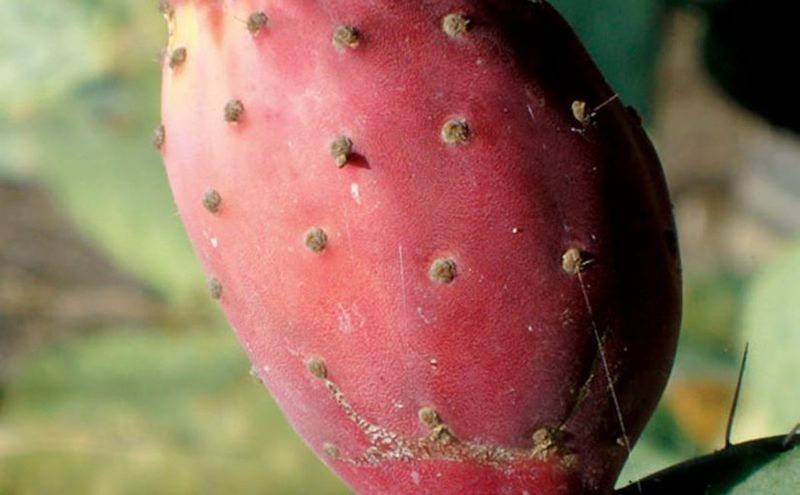
Santa Rita prickly pear may have few or no long spines, which can make it look easier to handle than other cacti. That appearance is misleading.
Every pad is covered in glochids, which are tiny, barbed bristles that are difficult to see with the naked eye. They detach on contact and can lodge in skin, where they are hard to locate and harder to remove.
University of Arizona guidance on transplanting cacti calls prickly pears out for requiring extra caution specifically because of glochids. The recommended approach is to use strong metal tongs or sections of old garden hose rather than relying on gloves.
Standard gardening gloves are not a reliable barrier because glochids can work through fabric or enter at the cuff. Bare hands are not an option.
When you do handle pads, whether during planting, transplanting, or size-control pruning, move deliberately and keep your face and arms away from the pad surface. If glochids do get into skin, tweezers and good light help, but fine glochids can be stubborn.
The practical takeaway is straightforward: treat every pad as something that requires a tool between it and your hand, regardless of how few long spines you can see. Careful placement, as covered earlier, is the best way to reduce how often you need to handle the plant at all.
Choose it for its color and give it space
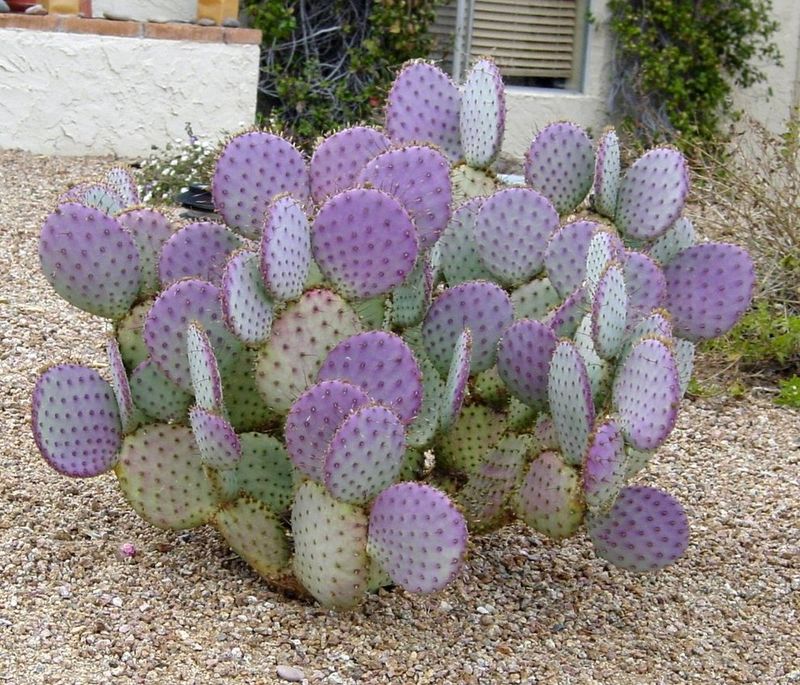
Santa Rita prickly pear suits homeowners who want variable pad color, yellow spring flowers, low-water potential once established, and possible habitat value in a single native plant. The University of Arizona Campus Arboretum and the Arizona-Sonora Desert Museum both support it as a legitimate low-desert landscape option for those reasons.
The main conditions are simple: give it room, put it in well-drained soil, and keep it away from spots where people or pets pass regularly. Size-control pruning is optional and should be approached with the right tools and genuine caution when it does come up.
Whether it outshines bougainvillea is your call to make. What it offers is a distinctly Arizona kind of beauty, one that changes with the seasons and asks relatively little in return.