15 Arizona Desert Shrubs That Produce Food for Wildlife for 30 Years or More
Picture a single shrub that feeds quail, hummingbirds, and butterflies in your yard long after your kids have grown up and moved out. In the low desert, some native plants do exactly that, handing out seeds, berries, nectar, and bugs season after season for decades.
Picking the right ones means less watering, less fuss, and a yard buzzing with life that works for you. Here are 15 tough Arizona shrubs built to keep the wildlife buffet open for 30 years or more.
1. Ironwood
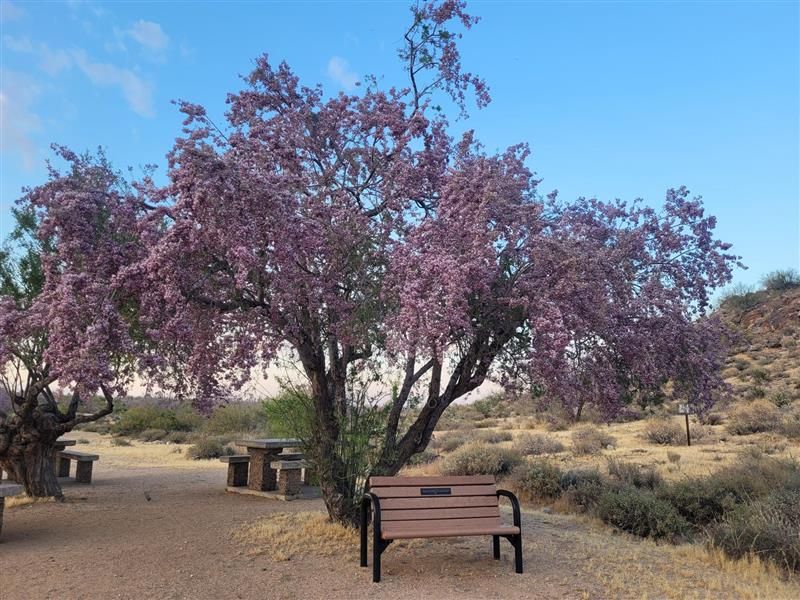
Some plants measure their lives in centuries, and ironwood is one of them. Out in the Sonoran Desert, old specimens have been sheltering wildlife since long before Phoenix had freeways.
Plant one now, and your great-grandkids could still be watching birds in its branches.
Each spring, lavender pea-like blossoms cover the gray-green canopy, pulling in native bees by the hundreds. Those flowers turn into pods packed with protein-rich seeds that Gambel’s quail, mourning doves, and cactus wrens happily gobble up.
Insects that live on the foliage become snacks for lizards and songbirds, too.
Nearly 150 bird species use ironwood for cover or nesting. That dense crown also offers dappled shade during brutal 110-degree afternoons, which your patio will appreciate as much as the wildlife does.
Growth is slow, so patience is part of the deal. Plant in fall, from October through November, in a sunny spot with good drainage, and water deeply every couple of weeks during the first two summers.
After that, rainfall handles most of the work.
Frost can nip young plants, so pick a warm spot near a south-facing wall if you live in a colder pocket of town. Once settled, it rarely asks for anything.
2. Velvet Mesquite
Ask any old-timer in the desert which plant fed the most creatures, and mesquite will come up fast. Long before grocery stores, people ground its sweet pods into flour.
Wildlife still treats those pods like a pantry that never closes.
Velvet mesquite can be pruned as a large multi-trunk shrub, and it lives for generations. In spring, fuzzy yellow catkins attract bees and other pollinators.
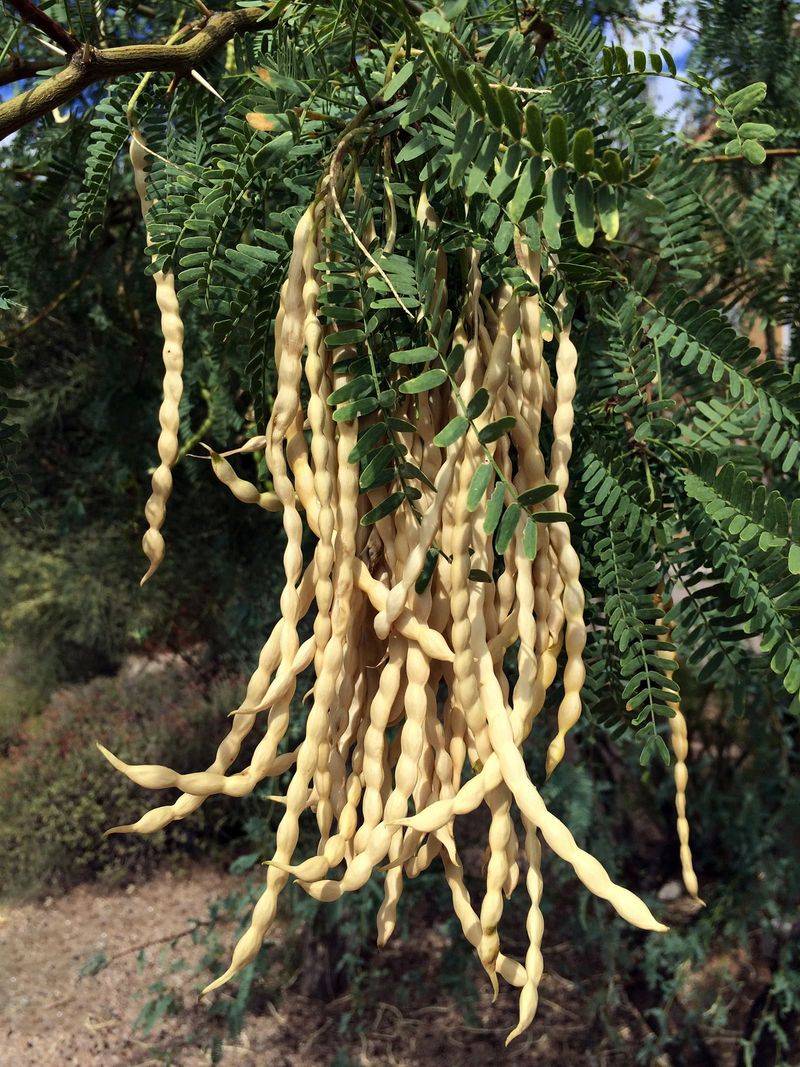
By summer, clusters of tan pods dangle from the branches, and doves, quail, rabbits, and even coyotes come calling.
Insects living in the bark and leaves draw in verdins, Abert’s towhees, and flycatchers. Those same busy birds may help keep bug populations in balance around your home.
Roadrunners also love patrolling mesquite thickets for lizards and, now and then, a scorpion.
Deep roots let it tap water far below the surface, so a mature plant rarely needs irrigation. Water deeply and infrequently while it gets established, and avoid shallow daily sprinkling that encourages weak roots.
Honey mesquite works similarly if you want a softer, weeping look. Either way, give it space, since the canopy can spread wide.
Light thinning in late spring helps it handle monsoon winds without splitting.
3. Prickly Pear
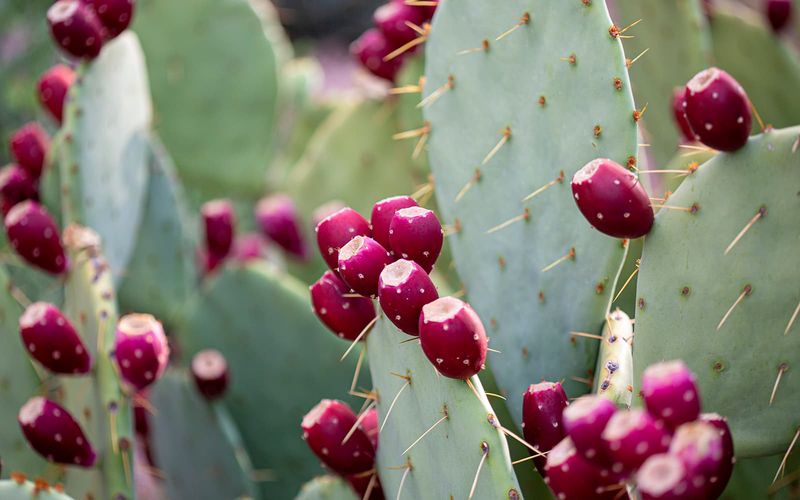
Magenta fruit glowing against green pads in late summer is one of the desert’s best dinner bells. Birds, javelinas, ground squirrels, and tortoises all show up for a taste.
Your Arizona Garden Changes Every Week. Your Plan Should Too.
Gardening in Arizona changes quickly throughout the season. Every Friday you’ll receive a simple weekly plan showing exactly what to plant, prune, fertilize, harvest, and protect so you never miss the right timing.
Even people turn the fruit into jelly and syrup.
Prickly pear technically counts as a cactus, but in landscapes it fills the role of a sturdy, spreading shrub. Engelmann prickly pear and similar native types can keep growing for decades, rooting new pads wherever old ones fall.
Spring brings big yellow or orange blooms that pull in bees and butterflies. By July and August, ripe fruit feeds curve-billed thrashers, cactus wrens, and house finches.
The spiny pads create a fortress where small birds can dodge hawks and neighborhood cats.
Honestly, few plants demand less. It shrugs off 115-degree heat, poor soil, and months without rain.
Too much water is the real danger, so skip it on drip lines that run every day.
Plant pads in late spring or early summer, letting cut ends dry for a week before setting them in gravelly soil. Keep it away from walkways where little hands might brush the spines.
Within a few years, a single pad can become a thriving wildlife snack bar.
4. Desert Hackberry
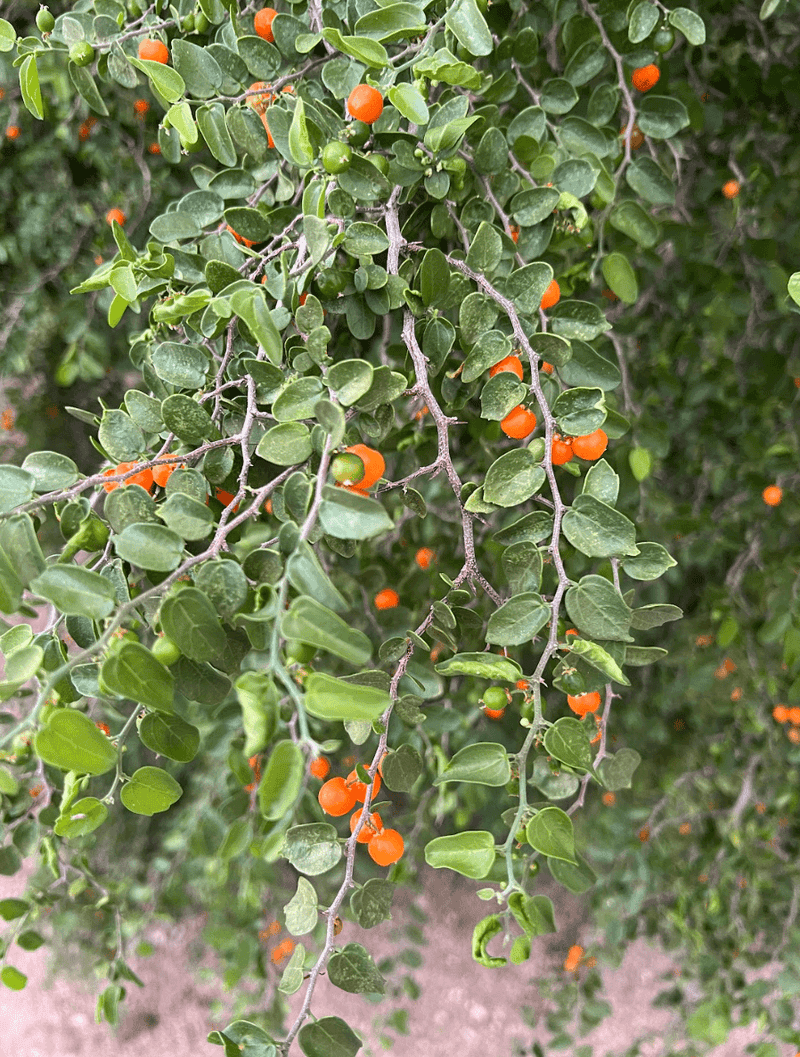
Birdwatchers have a secret: if you want a crowd, plant desert hackberry. When those tiny orange berries ripen, the shrub turns into a noisy cafeteria full of cardinals, thrashers, phainopeplas, and migrating warblers.
Native to washes and arroyos across southern Arizona, this tough evergreen shrub keeps producing fruit year after year for decades. Berries usually appear in late summer and fall, right when migrating birds need fuel for their long trips south.
The thorny, zigzag branches are part of its charm. They create a tangled safe zone where quail can raise chicks and small birds can escape predators.
Lizards hunt insects in the leaf litter below, adding even more life to the space.
Growing up to ten feet tall and wide, hackberry makes a fantastic natural screen along a back wall or property line. It tolerates alkaline soil and caliche without complaint and needs only occasional deep watering once established.
Plant in fall to give roots a head start before summer. Because of those thorns, keep it away from paths and play areas.
Pruning is rarely needed, and frankly, the birds prefer it a little wild. Leave some fallen leaves underneath for a natural mulch that holds moisture.
5. Chuparosa
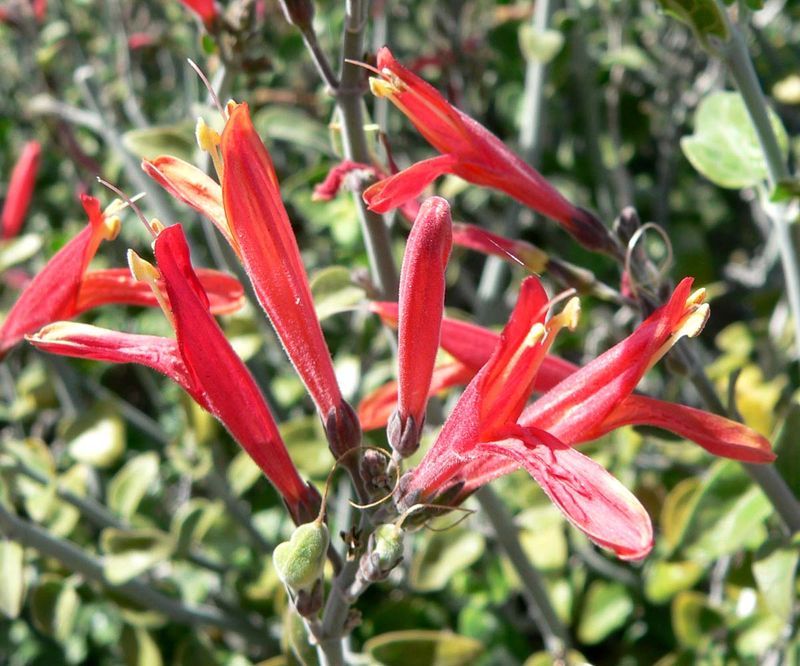
Chuparosa means hummingbird in Spanish, and the name fits perfectly. Stand near a blooming plant for five minutes, and you’ll likely hear the zip of tiny wings before you see them.
Red, tube-shaped flowers cover the bright green stems in waves, often from fall through winter and again in spring. That timing matters, because winter nectar can be scarce, and resident Anna’s and Costa’s hummingbirds rely on steady food.
Verdins and orioles sometimes sneak sips, and even finches nibble the blossoms.
Leaves are sparse, but the stems stay green and handle photosynthesis during dry spells. So even when it looks bare, it’s quietly working.
Plants can last well over 30 years in the right spot, growing about three to five feet tall and wide.
Full sun or partial shade both work, and poor soil is no problem. Water every week or two the first summer, then cut back to occasional soaks.
A hard freeze below the mid-20s can damage tips, but it usually rebounds in spring.
Tuck it near a window or patio so you can enjoy the hummingbird show. A trim after spring bloom keeps it tidy without cutting off the next flower flush.
6. Baja Fairy Duster
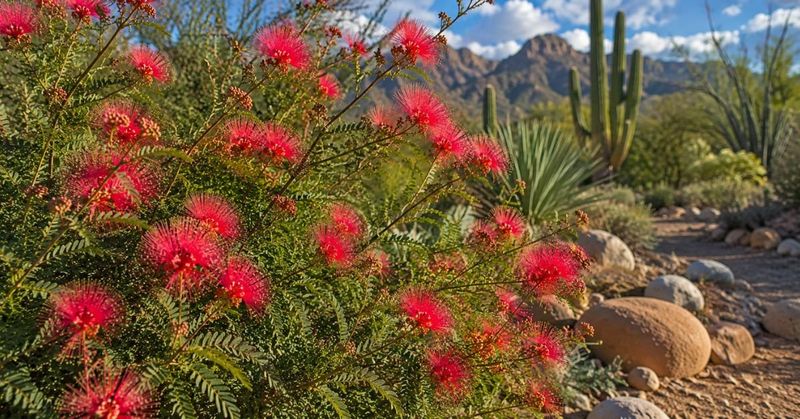
Little red pom-poms that look like they came from a craft store? Meet the Baja fairy duster, a shrub that seems almost too playful for the harsh desert.
Behind the whimsy hides a serious survivor.
Its brush-like flowers are made of long stamens, and hummingbirds find them irresistible. Blooms show up most of the year in warm spots, with peaks in spring and fall.
Butterflies drop by as well, and after flowering, seed pods provide small snacks for birds and rodents.
Native fairy duster, Calliandra eriophylla, offers pink, puffy blooms on a lower, smaller frame. Both types can stick around for decades with barely any care.
Mixing the two gives you a longer nectar season and a burst of color at different heights.
Baja fairy duster grows about five feet tall and wide, so it fits nicely along walls or in medians. Plant it in full sun, where it flowers most heavily, and water deeply every week or two during the first summer.
Once rooted, it handles long dry stretches like a champ. Avoid shearing it into boxes, since that removes flower buds.
A light shaping in late winter is all it really needs.
7. Desert Willow
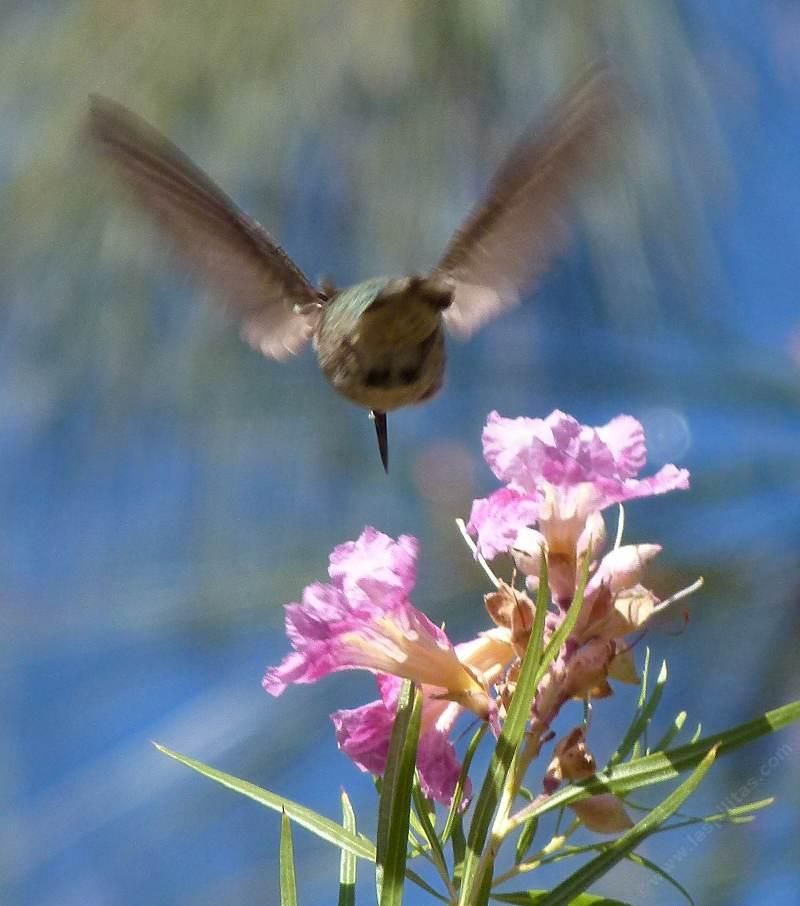
Despite its name, desert willow isn’t a willow at all. It’s actually related to catalpa trees, and its orchid-like blooms prove it has a fancy side.
From April through September, pink, lavender, or deep burgundy flowers open along slender branches. Hummingbirds, verdins, and native bees work those blossoms all summer long.
Later, skinny seed pods feed finches, sparrows, and small rodents through the cooler months.
Here’s a fun bonus: desert willows growing near moist washes can provide habitat for fireflies. Yes, the desert has them, mostly in wetter pockets during monsoon season.
A plant near a rain garden or low basin may help create the right conditions for these glowing visitors.
Trained as a multi-trunk shrub, it reaches 15 to 25 feet and offers airy shade that won’t block winter sun. It loses leaves in winter, which lets warm light reach your windows when you actually want it.
Plant in fall or early spring in full sun. Deep watering every couple of weeks in summer keeps flowers coming, though established plants survive on much less.
With decent care, a desert willow can grace your yard for 30 years or more.
8. Wolfberry
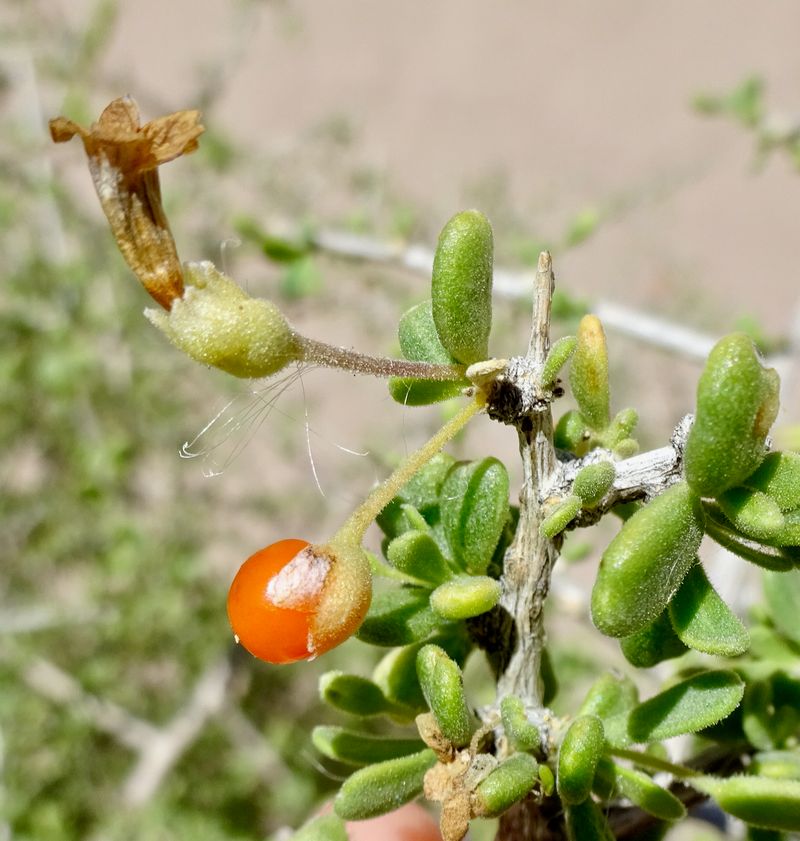
Small but mighty, wolfberry proves that a plain-looking shrub can be a wildlife hero. Most people walk right past it in the desert.
The birds and lizards definitely don’t.
Several Lycium species grow wild in the Sonoran Desert, including Anderson’s wolfberry and Fremont’s wolfberry. In late winter and spring, they produce tiny tubular flowers in white or lavender, loved by bees and hummingbirds.
Those turn into bright red berries that look like mini tomatoes.
Quail, thrashers, cactus wrens, and even box turtles and ground squirrels feast on the fruit. Because berries often ripen early in the year, they fill a gap before many other shrubs start producing.
Thorny, twisting branches make great nesting cover for birds and a shady hideout for lizards. Those lizards may help keep insect populations in check, which is always a win near the house.
Wolfberry drops its leaves during extreme drought, then leafs out again after rain. Don’t panic when it looks bare in June.
It’s simply resting. Plant it in a sunny spot with good drainage, water occasionally the first year, and let nature take over.
Long-lived and nearly carefree, it’s a quiet workhorse for decades.
9. Creosote Bush
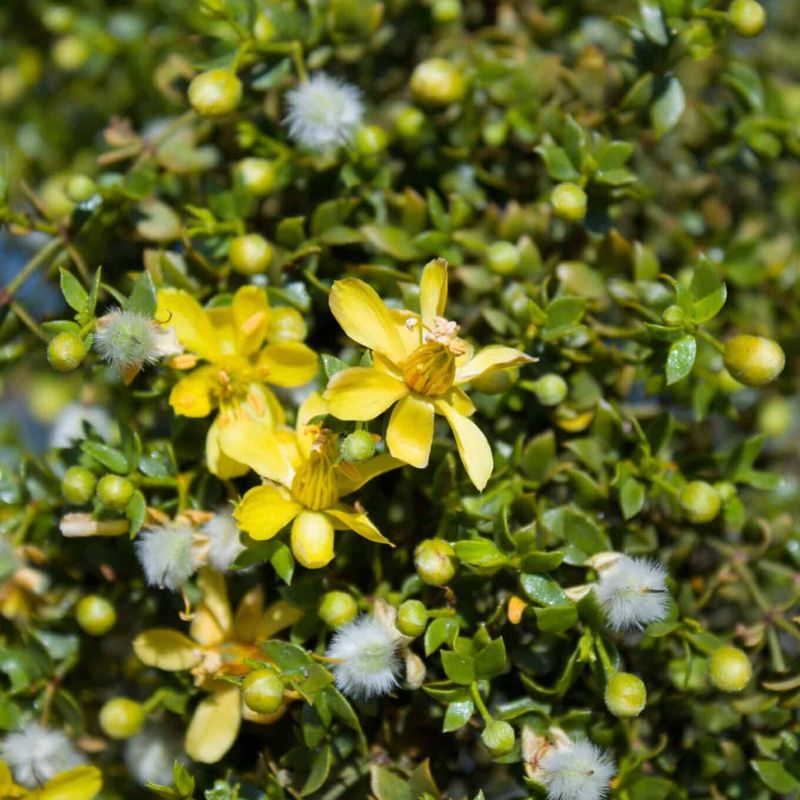
That fresh, earthy smell after a monsoon storm? Thank creosote bush.
Many Arizonans say that scent is what rain smells like, and it’s one of the most beloved aromas in the desert.
Creosote might be the ultimate long-timer on this list. Some clonal rings in the Mojave are estimated to be thousands of years old.
Even a single backyard plant can easily outlast your mortgage.
Small yellow flowers appear after rain, sometimes several times a year, attracting dozens of specialist native bees. Fuzzy white seed balls follow, feeding kangaroo rats and other rodents.
Grasshoppers and beetles that live on creosote become meals for lizards, roadrunners, and insect-eating birds.
Roadrunners especially enjoy hunting around creosote stands. Since they eat scorpions and other critters, a creosote patch might help make your yard a little less inviting to unwanted pests.
Care is almost nonexistent. Once rooted, it survives on rainfall alone and handles blistering summers and cold winter nights.
Avoid overwatering and heavy shearing, which ruin its natural airy shape. Plant in fall, water lightly through the first summer, then step back and enjoy one of the desert’s true legends.
10. Quailbush
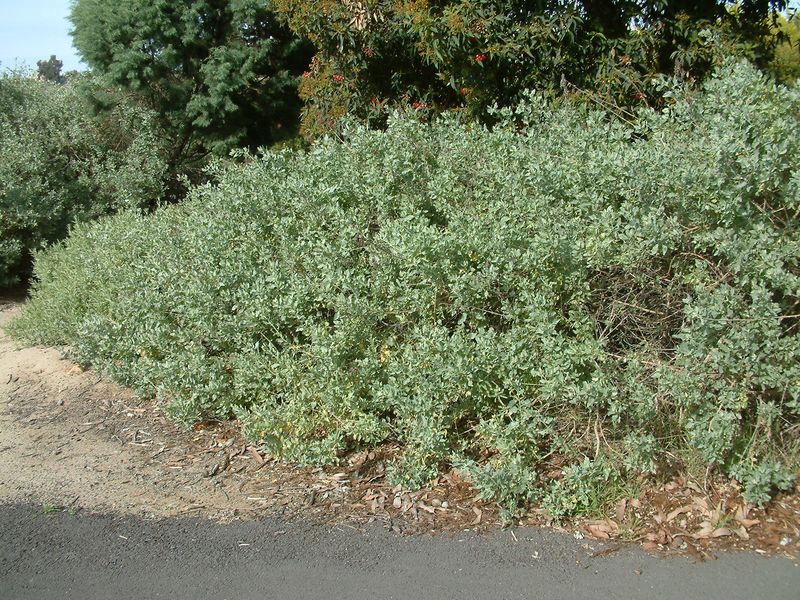
Some plant names are poetic. Quailbush is just honest.
Plant one, and Gambel’s quail with bobbing topknots may soon become your daily entertainment.
Native across the Sonoran Desert, this silvery-gray saltbush grows fast and thick, reaching up to ten feet tall and wide. That dense mound gives quail a safe place to hide, roost, and raise their fuzzy chicks away from hawks.
Female plants produce clusters of papery seeds in fall and winter that quail, sparrows, and towhees eagerly pick through. The foliage also feeds rabbits and hosts insects, and it serves as a host plant for small butterflies like the pygmy blue.
For homeowners, quailbush is a problem solver. It handles salty, alkaline, and poor soils where many shrubs struggle.
It grows quickly into a screen along fences, blocking views and wind without needing much water.
Once established, it typically survives without extra irrigation, though occasional summer soaks keep it looking fuller. It can live for decades, so give it room to spread rather than squeezing it next to a walkway.
Plant in fall and enjoy watching your own covey settle in. Few shrubs pull their weight quite as cheerfully.
11. Sugar Bush
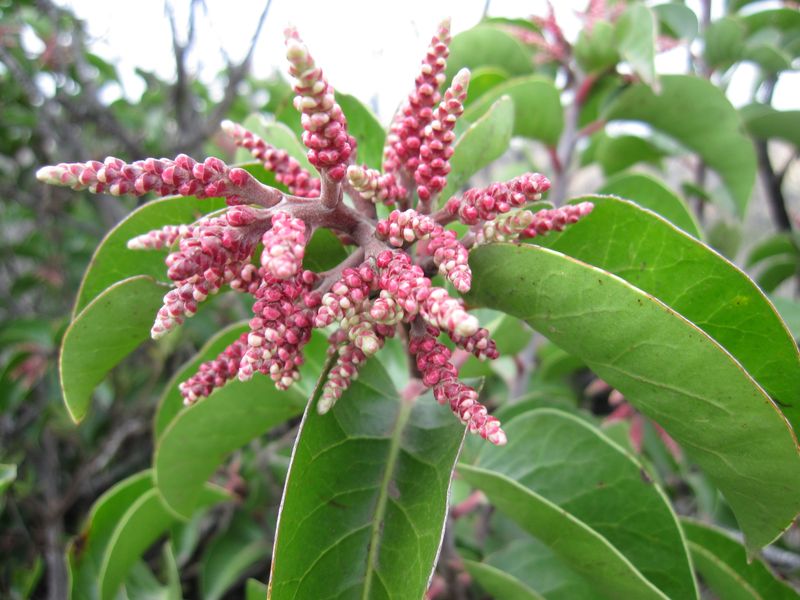
Glossy, dark green leaves make sugar bush look almost out of place in a desert yard, like it wandered in from a lusher neighborhood. Don’t let that fool you.
It’s a native of Arizona’s chaparral and a tough, long-lived performer.
Clusters of pink and white flowers open in late winter and early spring, drawing bees and other pollinators early in the season. Female plants then produce small, reddish, sticky fruit coated in a sweet, tangy residue.
Birds and small mammals enjoy it, and people once used it to make a lemonade-like drink.
Evergreen year-round, sugar bush offers steady shelter for songbirds even in winter when other shrubs look bare. Over time, it can grow to the size of a small tree, living for many decades.
Its growth speed shifts with water and temperature, speeding up with a little extra moisture and slowing during stress. In the low desert, afternoon shade in summer helps it look its best.
Higher areas around Tucson foothills suit it especially well.
Plant in fall with excellent drainage, since soggy roots cause trouble. Deep watering every few weeks in summer keeps it happy.
Pruning is rarely needed.
12. Jojoba
You might already have jojoba in your bathroom cabinet. Its seeds hold a liquid wax used in shampoos and lotions.
Out in the yard, those same seeds feed wildlife for decades.
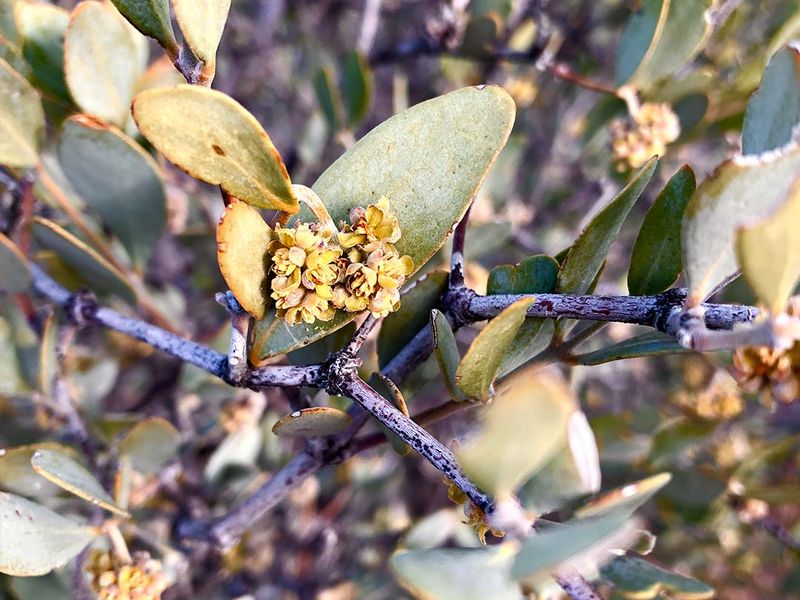
Jojoba is a native evergreen shrub with thick, gray-green leaves that tilt upward to dodge the harsh midday sun. Clever, right?
Plants can live over 100 years, making them one of the longest-lasting options you can plant.
Male and female flowers grow on separate plants. Females produce acorn-shaped seeds that ground squirrels, pocket mice, and some birds rely on, especially in lean seasons.
Deer and rabbits browse the leaves, and the dense branches give quail and small birds a place to rest.
If you want seeds, plant a few together so you get both males and females. Nurseries often sell them unsexed, so buying three or more improves your odds.
Jojoba grows slowly but steadily, typically reaching three to six feet in landscapes. It handles full sun, reflected heat from walls, and poor rocky soil.
Water every couple of weeks while young, then cut back to occasional summer soaks. It also takes clipping well, making it a sturdy native hedge option.
13. Arizona Rosewood
Need privacy without giving up wildlife value? Arizona rosewood may be the answer your backyard has been waiting for.
It’s the native that quietly outperforms many imported hedge plants.
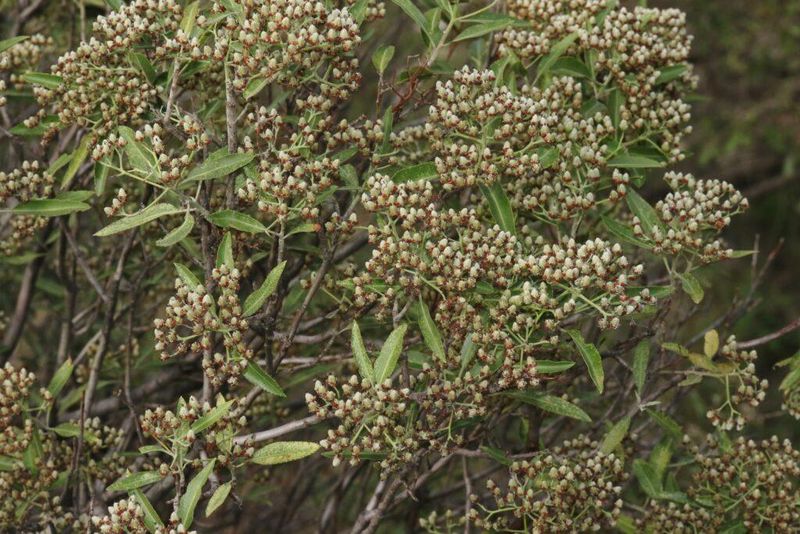
This dense evergreen grows up to 12 feet tall and 9 feet wide, with narrow, leathery leaves that stay green through heat waves. In late spring and summer, flat clusters of tiny white flowers cover the tips, buzzing with native bees, butterflies, and beneficial insects.
After flowering, small seed capsules form and provide food for finches and other seed-eating birds. The thick foliage makes excellent nesting cover for cardinals, mockingbirds, and thrashers.
Birds that nest nearby may also help keep insect populations down around your patio.
Arizona rosewood is slow to moderate in growth, but it’s built to last for decades. Once established, occasional deep irrigation in summer is enough.
It handles full sun and reflected heat, making it great for blocking a neighbor’s second-story window or a hot west wall.
Plant in fall for best results. Resist the urge to shear it into a tight box.
A natural shape looks better and keeps more flowers, which means more food for visitors.
14. Texas Sage
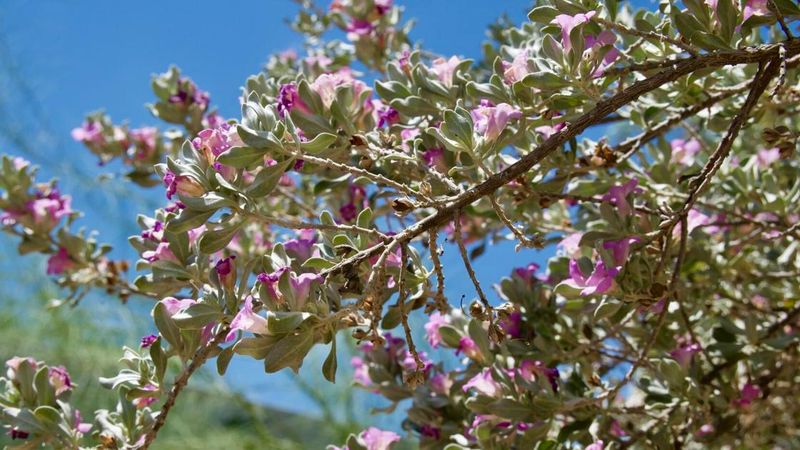
Locals call it the barometer bush, and for good reason. Right before or after monsoon humidity rolls in, Texas sage suddenly explodes in purple, pink, or lavender blooms almost overnight.
Technically native to Texas and northern Mexico, it’s so well adapted to Arizona that you’ll spot it in nearly every Phoenix neighborhood. Plants commonly live 30 years or more with barely any attention.
Those sudden flower flushes feed native bees, butterflies, and hummingbirds, especially during late summer when little else is blooming. The dense, silvery foliage gives small birds and lizards shade and cover from predators.
It’s even a host plant for the theona checkerspot butterfly.
Here’s a common mistake: heavy shearing into round balls. That habit removes flower buds and weakens the plant.
Let it keep its natural shape, and it’ll reward you with more blooms and healthier growth.
Full sun is a must, along with good drainage. Too much water or shade leads to leggy, floppy plants.
Water deeply every few weeks in summer once established, and almost never in winter. Varieties like Rio Bravo and Green Cloud offer different sizes and colors, so it’s easy to find one that fits your yard.
15. Blue Palo Verde
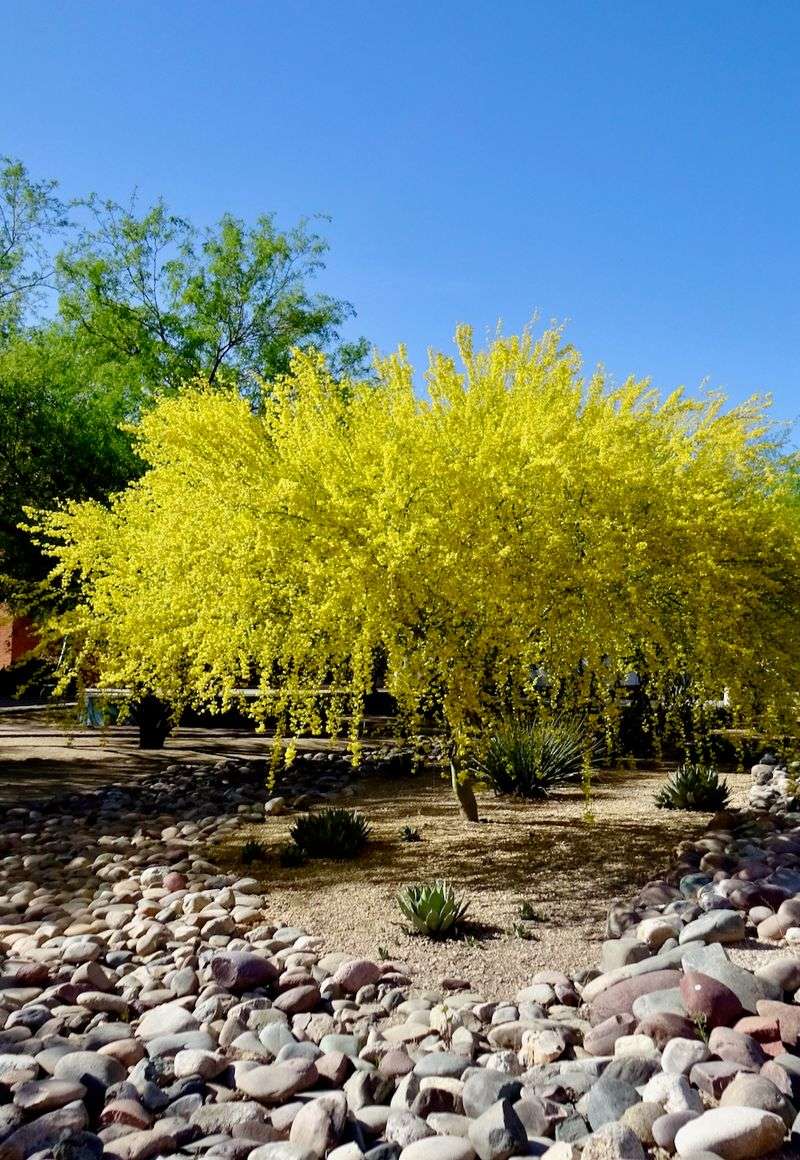
Every spring, blue palo verde puts on a show that stops traffic. Branches vanish under a blanket of bright yellow flowers, and the air hums with bees.
It’s hard to believe such a tough plant can look so cheerful.
Arizona’s state tree can also be grown as a large, multi-trunk shrub, reaching up to 20 feet tall and 25 feet wide. Its blue-green bark does most of the photosynthesis, so leaves come and go with the seasons.
Those spring blossoms feed native bees and butterflies by the thousands. Seed pods follow in summer, supplying doves, quail, rodents, and even javelinas with a hearty meal.
Verdins often tuck nests into the thorny twigs, where predators have a hard time reaching.
Young cacti like saguaros often sprout beneath palo verdes, which act as nurse plants. That filtered shade helps seedlings survive brutal summers, a neat bit of desert teamwork.
Plant in fall or early spring in full sun with good drainage. Deep water every couple of weeks the first few summers, then let nature handle most of it.
With decent care, this beauty can shade and feed your yard for 30 to 50 years or more.