What Arizona Homeowners Are Planting Instead Of Lantana For Year Round Color
Lantana is a fantastic plant and nobody is here to say otherwise. It blooms reliably, it handles Arizona heat like a total professional, and the pollinators absolutely love it.
But if lantana is basically doing all the heavy lifting in your yard right now, you might have noticed some gaps. A stretch in winter where things look a little sparse.
A lull between bloom cycles where the landscape loses its energy. A general feeling that your yard is a one-plant show.
Arizona’s wild temperature swings and intense seasonal shifts actually create a really interesting opportunity for gardeners who know how to work with them.
Layer in the right mix of low-water bloomers, evergreen textures, and plants with staggered bloom windows and your yard can look genuinely alive and colorful every single month of the year.
Lantana included, obviously.
1. Blackfoot Daisy Brings Low, Bright Color
Sunny planting beds along Arizona driveways and walkways seem made for a low-growing, cheerful bloomer like blackfoot daisy.
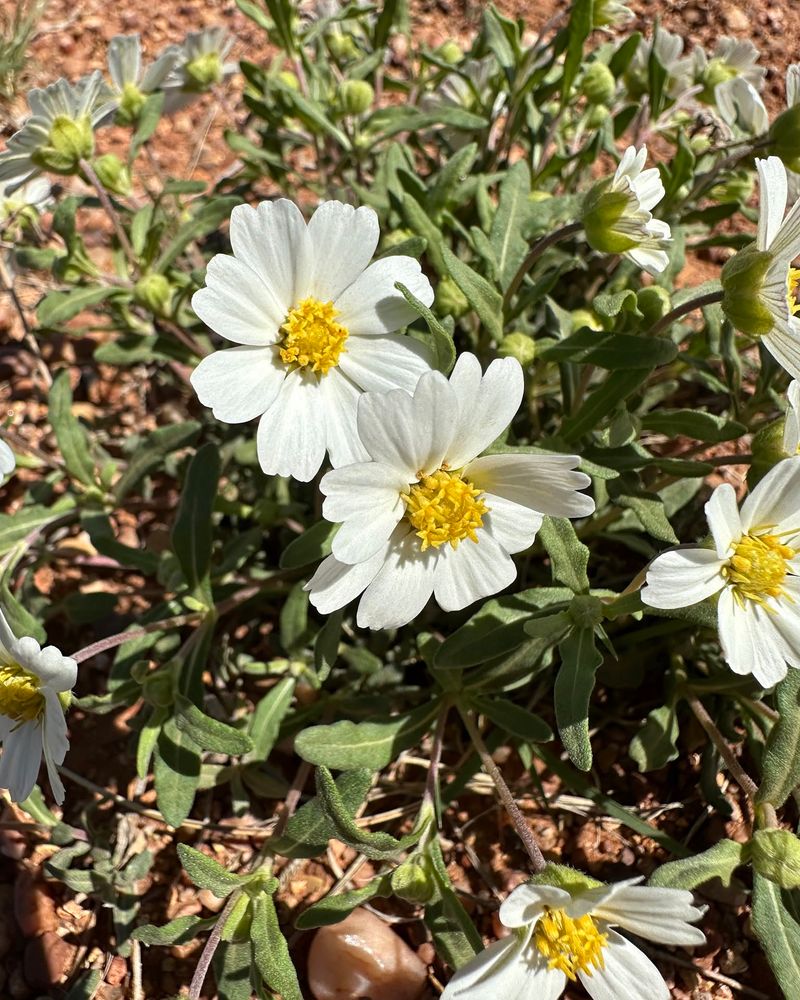
This native wildflower produces small white blooms with bright yellow centers, and it tends to flower heavily in spring and fall when temperatures are mild.
During summer heat, blooming may slow, but the plant stays green and holds its tidy mounding shape.
Blackfoot daisy typically grows about one foot tall and spreads up to two feet wide, making it a natural fit for low borders, rock gardens, and the front edges of desert planting beds.
It handles full sun and well-drained soil well, and once established, it needs very little supplemental water in Arizona’s low desert.
Overwatering is one of the most common issues homeowners run into with this plant.
Bees and butterflies are drawn to the blooms, so it adds pollinator value alongside its color. Planting blackfoot daisy near plants that bloom in summer or winter can help fill in the color calendar throughout the year.
It pairs naturally with desert zinnia and desert marigold for a wildflower-style Arizona border that stays interesting across multiple seasons.
2. Angelita Daisy Keeps Small Spaces Cheerful
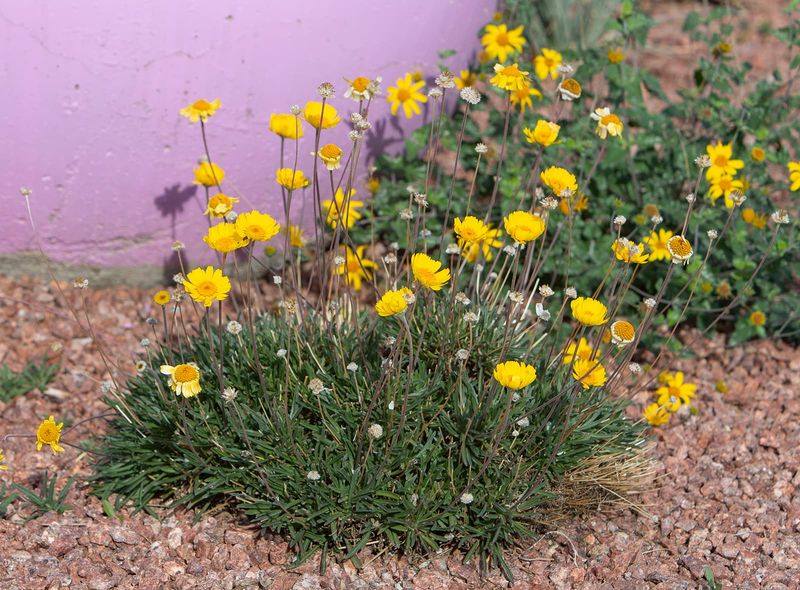
Front yards with limited space can be tricky to plant well in Arizona, and that is where angelita daisy earns its place.
This compact, fine-textured perennial produces cheerful yellow flowers nearly year-round in warmer parts of Arizona’s low desert, making it one of the more dependable bloomers homeowners can add to a small bed or container planting.
Angelita daisy stays fairly small, usually under one foot tall and about one to two feet wide, which makes it easy to tuck into tight spots near entryways, along walkways, or at the base of larger desert shrubs.
The foliage is dark green and thread-like, giving it a delicate look that contrasts nicely with coarser desert plants.
It handles full sun and reflected heat well, which is a real advantage in Arizona’s toughest planting locations.
Water needs are low once the plant is established, though young plants benefit from regular moisture during the first season.
Deadheading spent blooms can encourage continued flowering, but the plant often reblooms on its own with minimal fuss.
Your Arizona Garden Changes Every Week. Your Plan Should Too.
Gardening in Arizona changes quickly throughout the season. Every Friday you’ll receive a simple weekly plan showing exactly what to plant, prune, fertilize, harvest, and protect so you never miss the right timing.
For homeowners who want consistent color in a small footprint without a lot of maintenance, angelita daisy is a strong and reliable choice for Arizona landscapes.
3. Desert Marigold Adds Long-Season Yellow Blooms
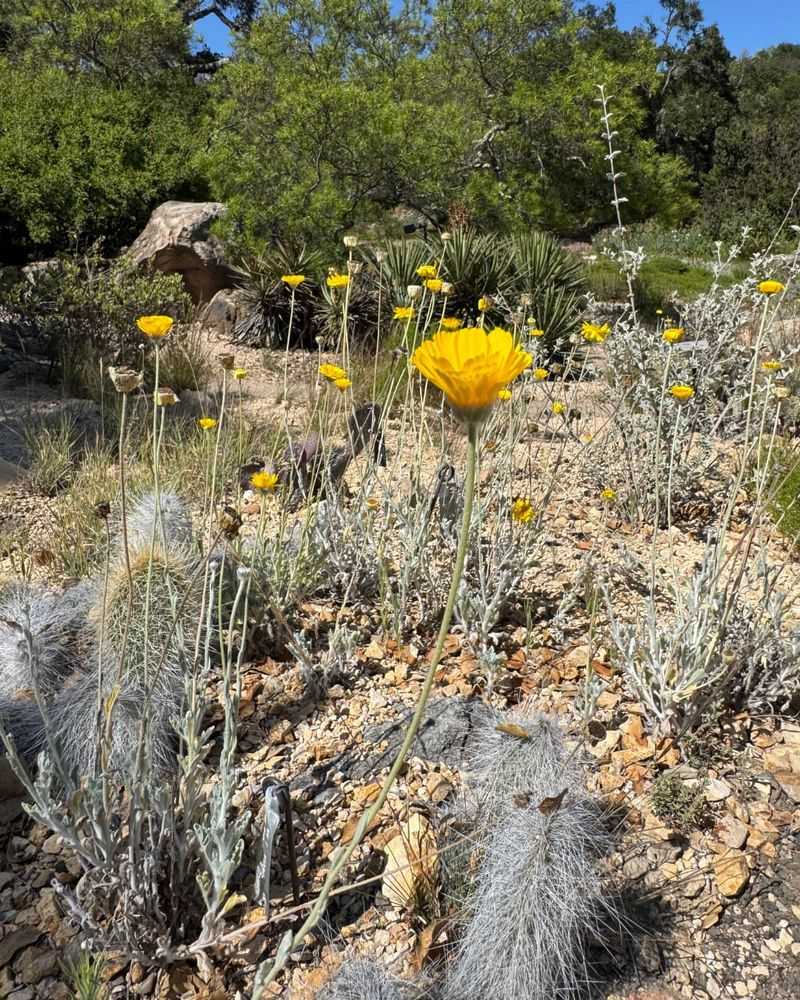
Few plants deliver as much yellow color for as long a stretch as desert marigold in an Arizona landscape.
This native perennial begins blooming in early spring and often continues through fall, putting on a cheerful show that few other low-water plants can match for sheer duration.
The bright golden blooms sit above silvery-gray foliage, creating a color contrast that looks striking in desert beds.
Desert marigold grows roughly one to two feet tall and wide, fitting comfortably into mid-border plantings or grouped together for a bold sweep of color.
Full sun and excellent drainage are important, as the plant can struggle in heavy clay or consistently moist soil.
In Arizona’s low desert, it tends to reseed naturally, which means homeowners may find new plants popping up around the original without any extra effort.
Pollinators, including native bees and butterflies, visit the flowers regularly throughout the long bloom season. The silvery foliage also provides visual interest even when the plant is between bloom cycles.
Pairing desert marigold with plants that offer winter or early spring flowers helps round out a year-round color plan. It is one of the most reliable warm-season bloomers available for residential landscapes on a low-water budget.
4. Desert Zinnia Creates A Tidy Desert Flowering Look
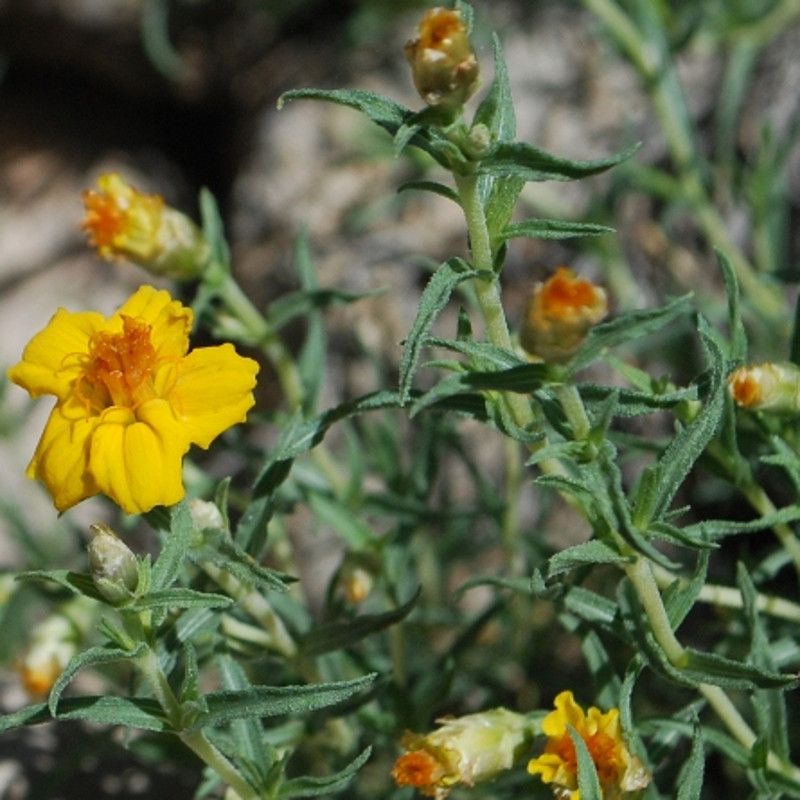
Not every Arizona homeowner wants a wild or sprawling look in their front yard, and desert zinnia offers something a little more refined.
This low-growing native perennial has a naturally tidy, mounding form and produces small white flowers with yellow centers that bloom from spring through fall.
It stays compact, usually under one foot tall, and fits neatly into formal or structured desert landscapes.
Desert zinnia handles full sun and rocky, well-drained soil with ease, which makes it well-suited to Arizona’s harshest planting conditions. It is notably drought-tolerant once established and does not need a lot of fuss to perform well.
In fact, too much water or rich soil can actually work against it, causing the plant to look leggy or less floriferous than it would in leaner conditions.
The flowers attract native bees and small butterflies, adding quiet pollinator activity to a bed without overwhelming the space. Desert zinnia works well along walkway edges, in rock gardens, or as a low front-of-border plant in pollinator-friendly yards.
Combining it with taller bloomers like desert marigold or Arizona yellow bells creates a layered look that keeps the landscape interesting from spring through the end of summer into fall.
5. Arizona Yellow Bells Brings Bold Warm-Season Color
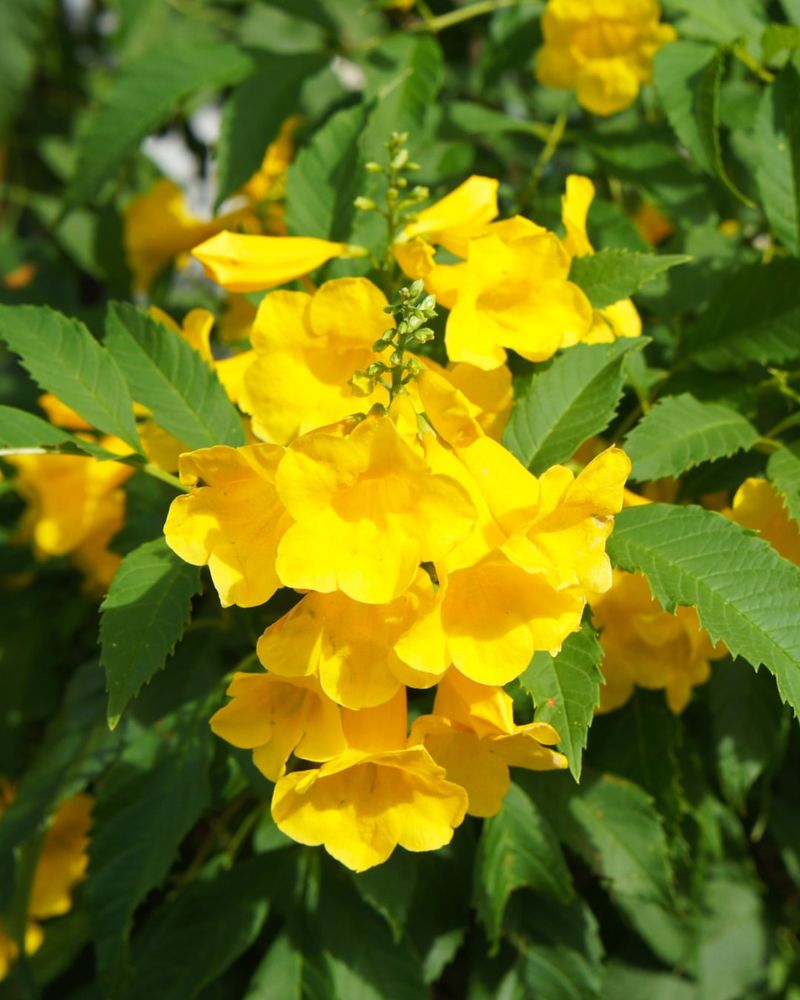
Walk past a yard with Arizona yellow bells in full bloom during summer and it is almost impossible not to stop and look.
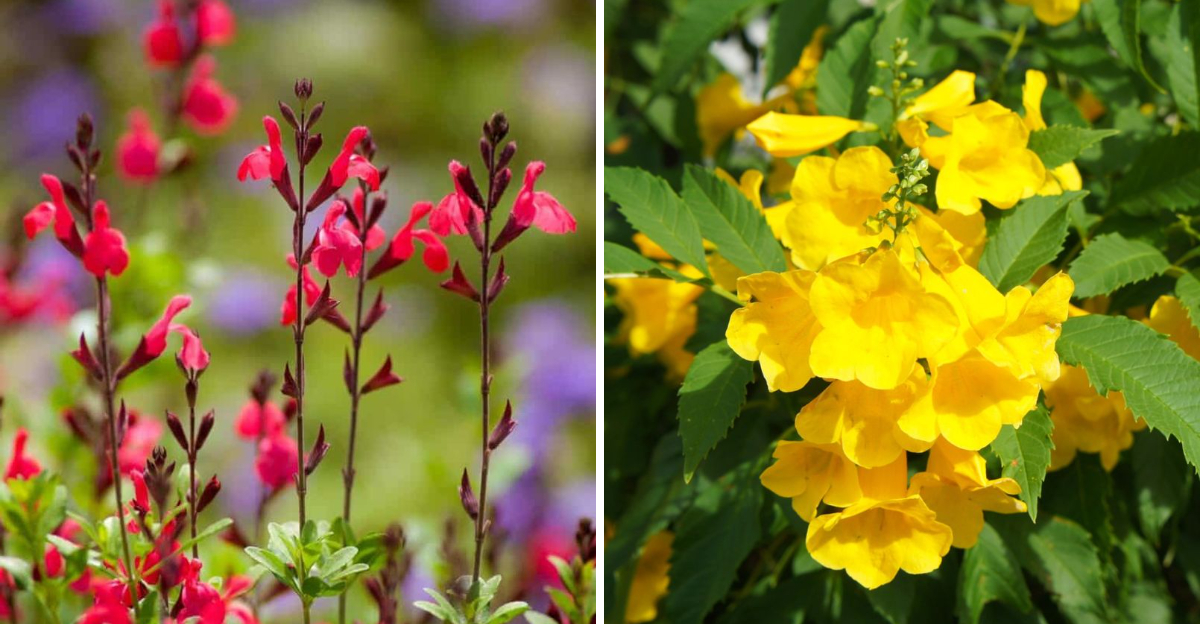
This large shrub bursts into clusters of big, golden-yellow trumpet flowers from late spring through fall, delivering some of the boldest warm-season color available in residential landscapes.
It fills a similar visual role to lantana but on a much larger, more dramatic scale.
Arizona yellow bells can grow six to eight feet tall and wide, so it works best as a background shrub, a corner anchor, or a tall screen rather than a small border plant.
It thrives in full sun and well-drained soil, and established plants handle Arizona’s intense heat and dry conditions with minimal supplemental water.
Hummingbirds visit the flowers regularly, which adds lively movement and color to the yard throughout the bloom season.
During winter, the plant may drop some or all of its leaves depending on how cold temperatures get, so pairing it with evergreen plants nearby helps maintain visual interest through the cooler months.
In frost-prone parts, it may experience some cold damage but generally recovers well as temperatures warm in spring.
For a bold, high-impact warm-season color statement, few plants outperform Arizona yellow bells.
6. Texas Sage Adds Color After Summer Humidity
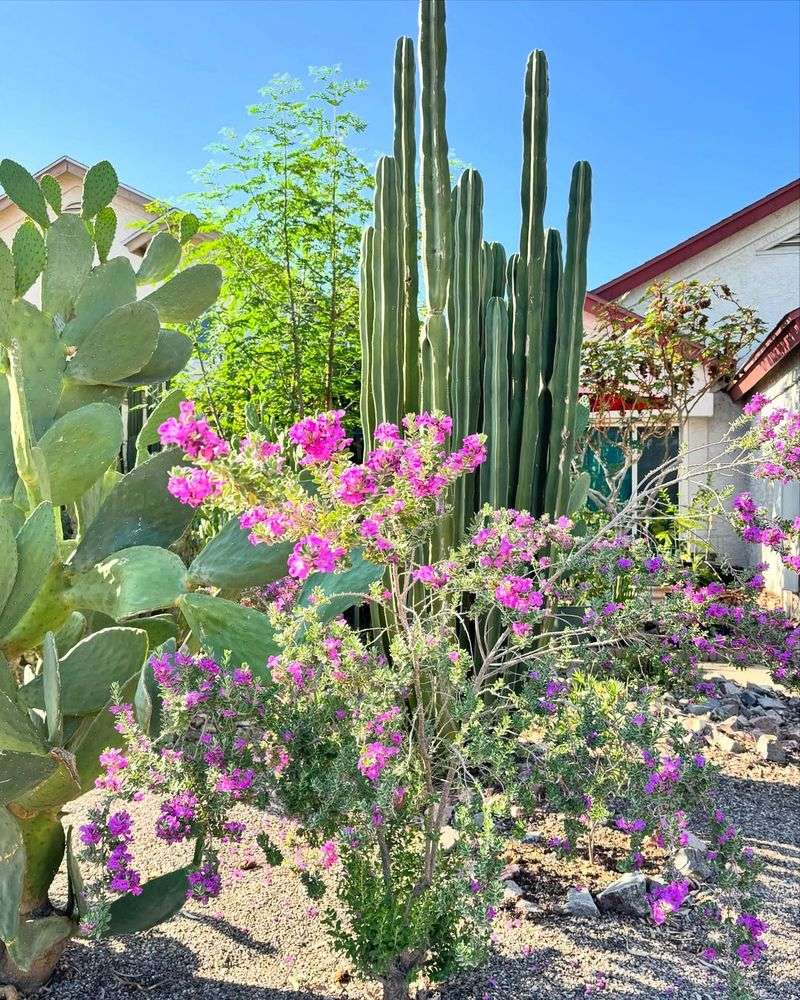
One of the most satisfying moments in an Arizona summer garden happens right after a monsoon rain rolls through and Texas sage suddenly erupts in purple blooms.
This tough, silvery-leafed shrub is famously responsive to humidity and rainfall, often flowering within days of a good summer storm.
That seasonal bloom burst adds unexpected color to yards during the monsoon season when many other plants are just trying to survive the heat.
Texas sage is an evergreen to semi-evergreen shrub that typically grows four to eight feet tall depending on the variety, so there are options for smaller spaces as well as larger landscape backdrops.
The silvery-gray foliage provides year-round texture and a soft, cool visual tone that pairs beautifully with green or blue-gray desert plants.
It handles full sun, reflected heat, and dry conditions extremely well once established.
Water needs are very low, making it one of the most water-wise shrubs available for Arizona landscapes. Occasional shaping helps keep it tidy, but it does not require heavy pruning to look attractive.
Texas sage pairs naturally with red yucca, desert marigold, and other plants that offer complementary colors and different bloom timing.
For homeowners building a monsoon-season color plan, this shrub is a reliable and low-maintenance choice for Arizona yards.
7. Red Yucca Offers Flowers And Evergreen Structure
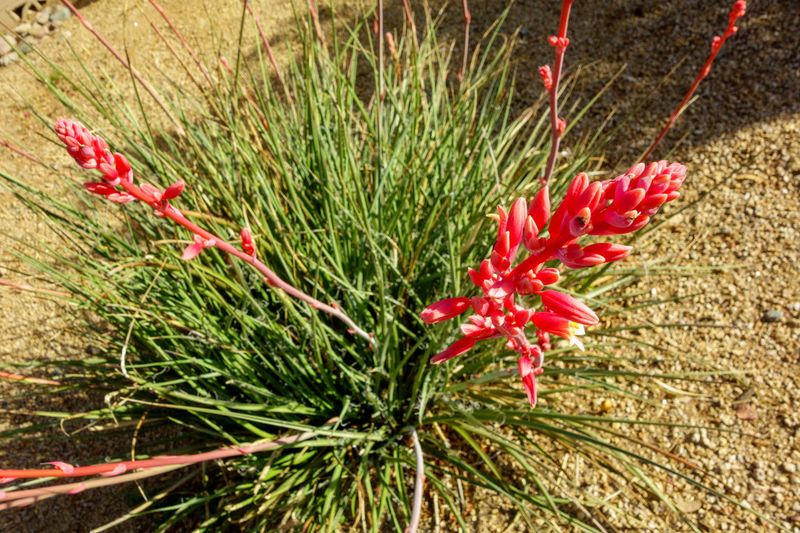
Structure matters just as much as blooms when building a year-round color plan, and red yucca delivers both in a way that few other Arizona-friendly plants can match.
The long, arching, grass-like foliage stays evergreen throughout the year, giving planting beds a defined anchor even during months when little else is in flower.
When spring arrives, tall spikes rise above the foliage and open into tubular coral-pink to red flowers that hummingbirds find irresistible.
Red yucca typically blooms from spring through early summer, and some plants may push a second round of flower spikes later in the season.
The plant grows about three to four feet tall in foliage, with flower stalks reaching considerably higher, creating a dramatic vertical element that adds height and movement to a desert bed.
It handles full sun, rocky or sandy soil, and low water conditions very well once established in Arizona landscapes.
Unlike true yuccas, red yucca has soft, flexible leaves without sharp tips, which makes it a more friendly option near pathways or in family-oriented yards.
It works well as a specimen plant, grouped in clusters, or mixed into pollinator beds alongside desert marigold and Texas sage.
The combination of evergreen foliage, seasonal flowers, and hummingbird appeal makes red yucca a smart multi-season addition to Arizona residential landscapes.
8. Chuparosa Brightens The Cooler Season
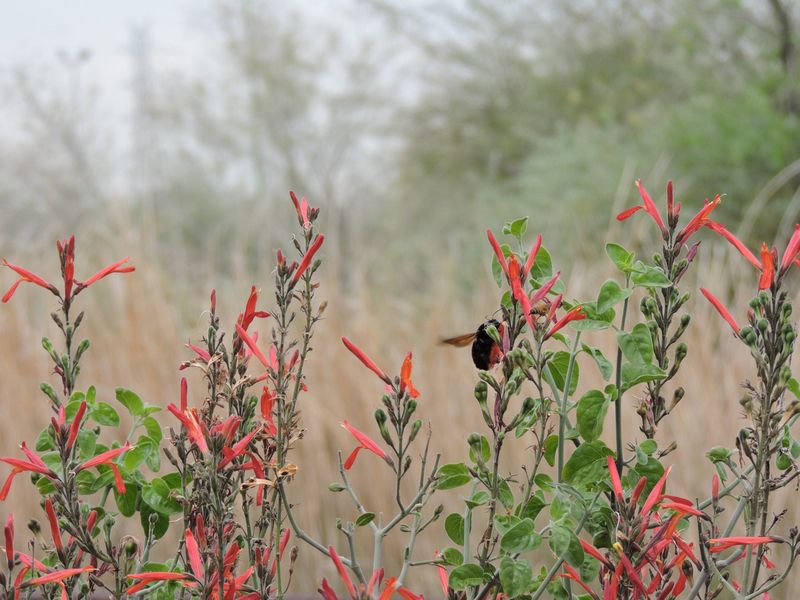
Most flowering shrubs take a break during the cooler months, but chuparosa does the opposite, often putting on its best show from late fall through early spring when the rest of the landscape is quiet.
The bright red tubular flowers appear on arching, gray-green stems and attract hummingbirds throughout the winter season, bringing movement and vivid color to Arizona yards during months when lantana is completely dormant.
Chuparosa is a native Sonoran Desert shrub that grows about three to five feet tall and wide, forming a loose, open mound of slender stems.
It can be semi-deciduous during extreme cold or drought, but it recovers quickly and resumes flowering as conditions improve.
In frost-protected spots in warmer parts of Arizona’s low desert, it may hold foliage and bloom for an extended season.
Full sun and excellent drainage suit it best, and established plants need very little supplemental water once they are settled into the landscape. Chuparosa fits naturally into naturalistic desert plantings, pollinator gardens, and backyard bird habitats.
Pairing it with plants that bloom in spring and summer creates a seasonal relay of color across the full year.
For homeowners who want winter color with almost no maintenance, chuparosa is a genuinely rewarding choice in Arizona landscapes.
9. Bush Dalea Adds Purple Winter-To-Spring Blooms
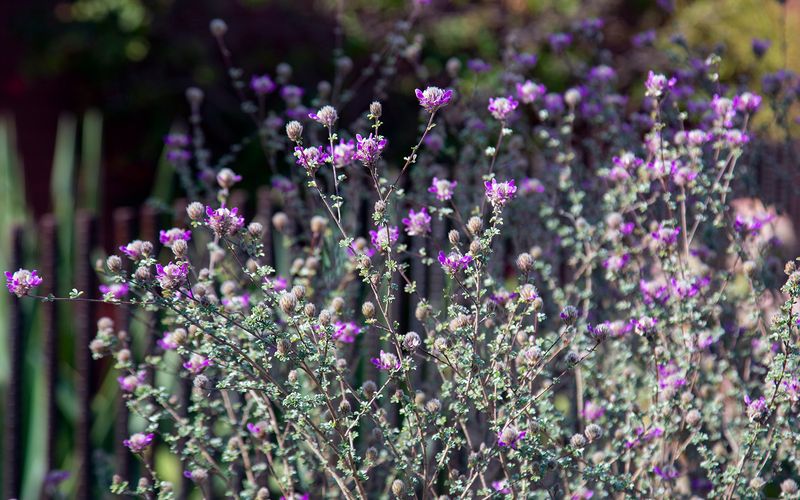
Purple blooms are not always easy to find during the cooler months in Arizona, which is one reason bush dalea stands out as a genuinely useful landscape plant.
This fine-textured native shrub produces clusters of small purple flowers from late fall into spring, filling a seasonal color gap that few other low-water plants can cover.
The bloom timing alone makes it worth considering for any homeowner building a year-round color plan.
Bush dalea typically grows three to five feet tall and wide, with delicate gray-green foliage that gives it a soft, airy appearance even when it is not in flower. It handles full sun and lean, well-drained soil well, and once established, it is quite drought-tolerant.
Bees are especially attracted to the flowers, making it a valuable addition to pollinator-friendly landscapes throughout the winter and early spring months.
The plant may look somewhat sparse in summer, so pairing it with plants that carry warm-season color, like desert marigold or Arizona yellow bells, helps keep the surrounding area looking full.
Bush dalea works well in backyard borders, along fences, or tucked into naturalistic desert plantings where its fine texture adds contrast against coarser plants.
For cool-season purple color on a low-water budget, it is one of Arizona’s more underused but rewarding native shrubs.
10. Autumn Sage Brings Soft Spring And Fall Color
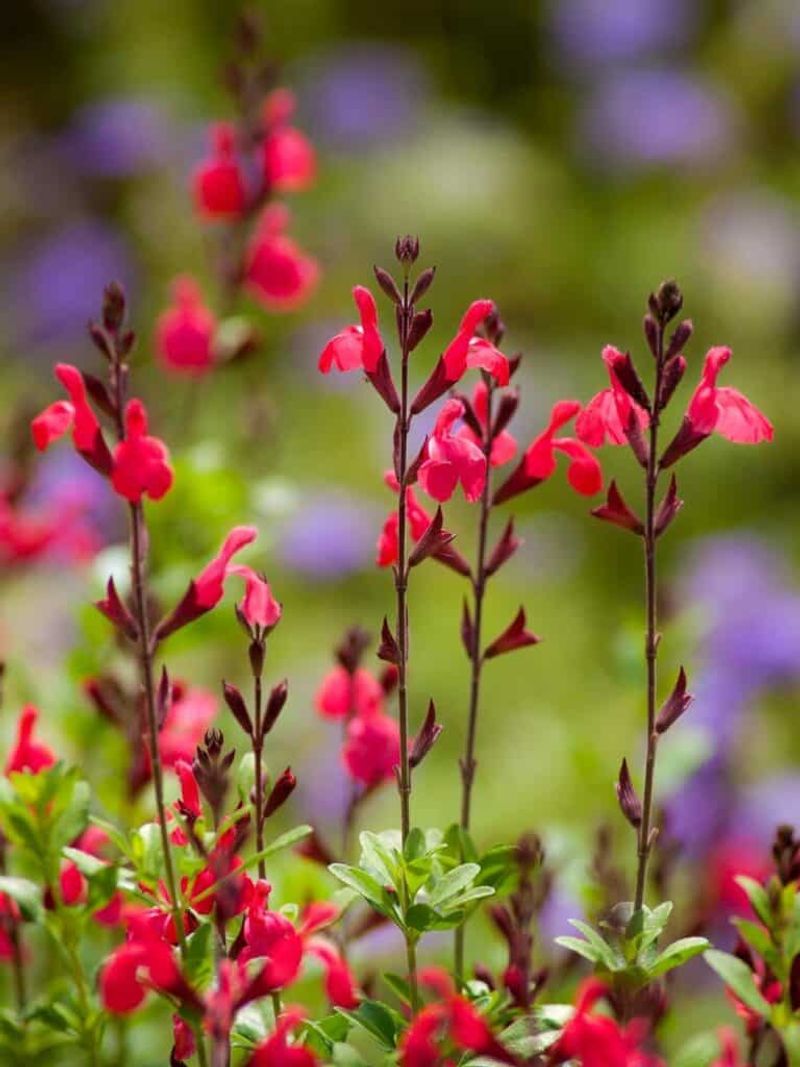
Spring and fall are the seasons when Arizona landscapes have the best chance to shine, and autumn sage makes the most of both windows.
This compact, reliable perennial produces tubular flowers in shades of red, pink, coral, and white from early spring through late fall, with its heaviest bloom pushes happening when temperatures are mild.
The plant tends to rest during the most intense summer heat but rebounds reliably as conditions cool.
Autumn sage grows about two to three feet tall and wide, fitting nicely into mid-border spots, pollinator beds, and container plantings in Arizona yards.
The aromatic foliage stays semi-evergreen in warmer parts of the low desert, providing green texture even during winter.
Hummingbirds and butterflies visit the flowers regularly, and the plant has a long track record of performing well in Arizona residential landscapes across a range of conditions.
It does best in full sun to light afternoon shade, and while it needs reasonable drainage, it tolerates a wider range of soil types than some other desert plants.
Cutting the plant back lightly after each bloom cycle encourages fresh growth and continued flowering.
Pairing autumn sage with chuparosa for winter interest and desert marigold for summer color creates a well-rounded, multi-season planting combination that reduces dependence on lantana as the sole color source in Arizona yards.