Your Florida HOA Wants That Tree Trimmed Before A Storm – Don’t Let Anyone Top It
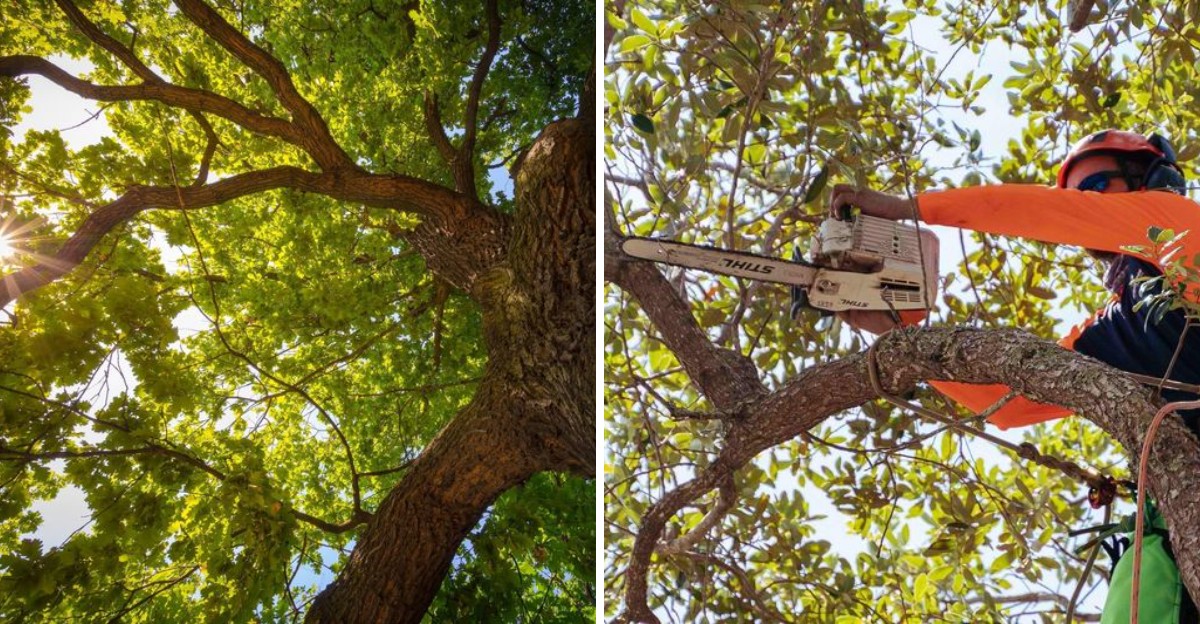
HOA notice in hand, shears in the other, and you’re about to make a mistake that costs you the whole tree.
Topping looks like the obvious fix when a storm’s on the way, chopping a tree down to stubs so it can’t fall on anything important.
That method backfires hard in Florida’s climate though, weakening the tree’s structure in ways that make it more likely to snap during the next storm, not less.
You end up trading one risk for a bigger one down the road.
HOAs pushing for trimming rarely specify how, which leaves plenty of room for a landscaping crew to take the fastest, cheapest route instead of the one that actually protects your tree long term.
Ask for proper pruning by name before anyone touches that tree. A little pushback now could save a tree that survives decades of storms instead of one that barely makes it through the next season.
1. Know Why Tree Topping Creates Bigger Problems
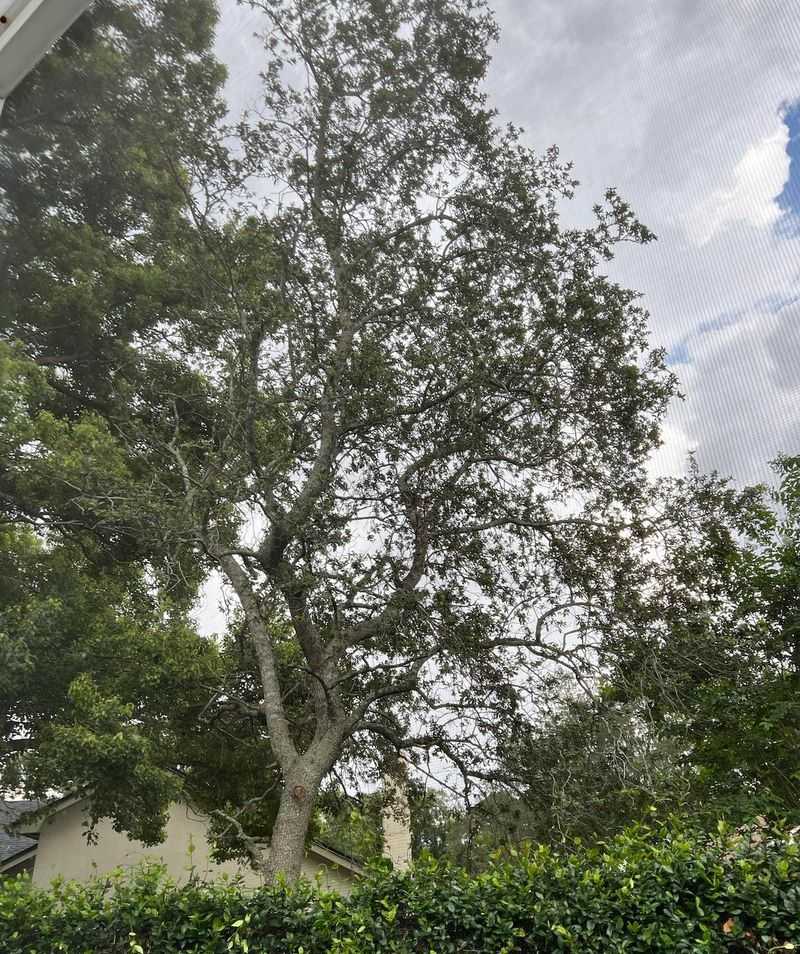
Picture a tree with its top chopped flat, like a bad haircut. That look is called topping, and tree experts across the country warn against it.
Topping means cutting big branches back to blunt stubs just to make a tree shorter. It can strip away half or more of the leafy crown.
Leaves make food for the tree, so losing them leaves it hungry and stressed.
The tree fights back in a messy way. It pushes out lots of skinny shoots, often called water sprouts, right below each cut.
Those shoots grow fast, but they hang on loosely.
Here is the scary part for Florida homeowners. Loose sprouts snap off easily in strong wind, sending branches toward cars, fences, and roofs.
So a topped tree can become more dangerous during a storm, not less.
Big open cuts cause trouble too. They let in rot, disease, and bugs, and the weakened tree may lack the energy to seal those wounds.
Bare bark can also get sunscald from our intense sunshine.
Over time, topping shortens a tree’s life and ruins its natural shape. Industry standards like ANSI A300 and the International Society of Arboriculture both reject it.
When someone offers to top your tree, politely say no and keep reading for better choices.
2. Ask For Proper Crown Reduction Instead
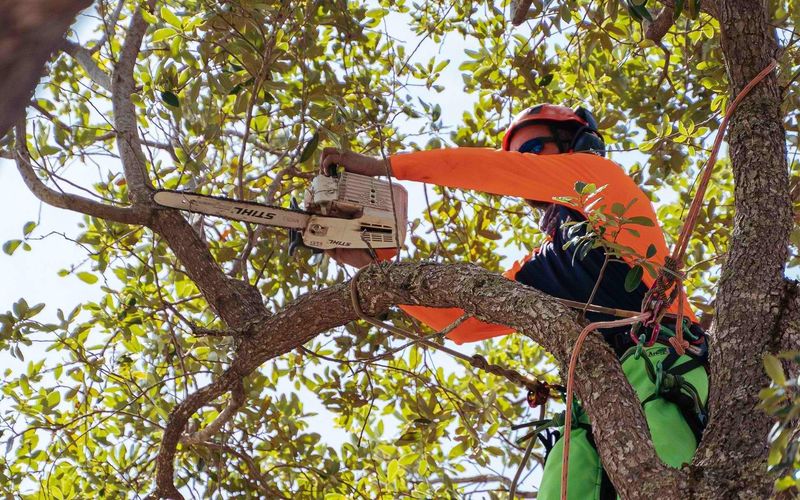
Good news: you can shrink a tree without wrecking it. The method pros prefer is called crown reduction, and it works like a careful trim instead of a buzz cut.
With crown reduction, a trained worker picks certain branches throughout the canopy. Each one gets cut back to a healthy side branch, not to a random stub.
That side branch should be at least one-third as thick as the piece being removed.
Why does that detail matter? The remaining branch keeps growing and feeding the tree, so the cut heals better.
Smaller wounds close faster and let in less rot.
Most crews remove no more than 20 to 30 percent of the canopy at one time. Taking less keeps the tree from going into panic mode.
Your Florida Garden Changes Every Week. Your Plan Should Too.
Gardening in Florida changes quickly throughout the season. Every Friday you’ll receive a simple weekly plan showing exactly what to plant, prune, fertilize, harvest, and protect so you never miss the right timing.
It stays calm, recovers well, and holds onto its natural shape.
You also get bonus perks. More sunlight can reach your lawn, and better airflow moves through the branches.
That airflow helps the tree handle gusty weather.
When you call a tree company, use the words crown reduction by name. Ask how they plan to make their cuts and how much they will remove.
A skilled crew will explain it happily, while a sloppy one may dodge the question.
3. Remove Weak Branches Before Hurricane Season
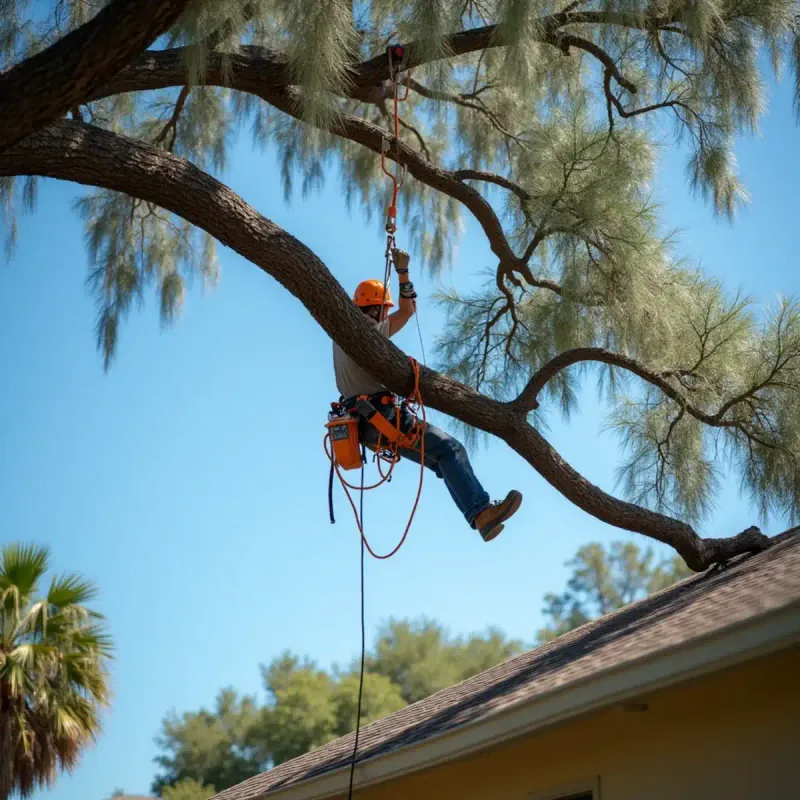
Mark your calendar, because timing is everything here. Hurricane season starts on June 1, so tree work fits best between March and May.
Spring pruning gives crews time to spot trouble before the wind shows up. They look for brittle wood, cracked limbs, and branches that stretch out way too far.
Each of those weak spots could snap and fly during a storm.
A smart crew also thins the inside of the canopy a bit. A packed crown acts like a sail, catching wind and pushing the whole tree.
Thinning lets air slip through instead of shoving against a solid wall of leaves.
Watch for branches nearly as thick as the trunk itself. Those heavy limbs put extra stress on the tree, so shortening them helps.
It spreads the weight more evenly.
Palms need a gentler touch. Only fully brown fronds and loose palm boots should come off.
The old hurricane cut, where workers strip away green fronds, weakens the palm and leaves it more exposed.
Fun fact: green fronds actually help a palm bend and flex in the wind. So a full, leafy palm tends to ride out a storm better.
Keep those green fronds where they belong.
4. Keep A Healthy Tree Structure Intact
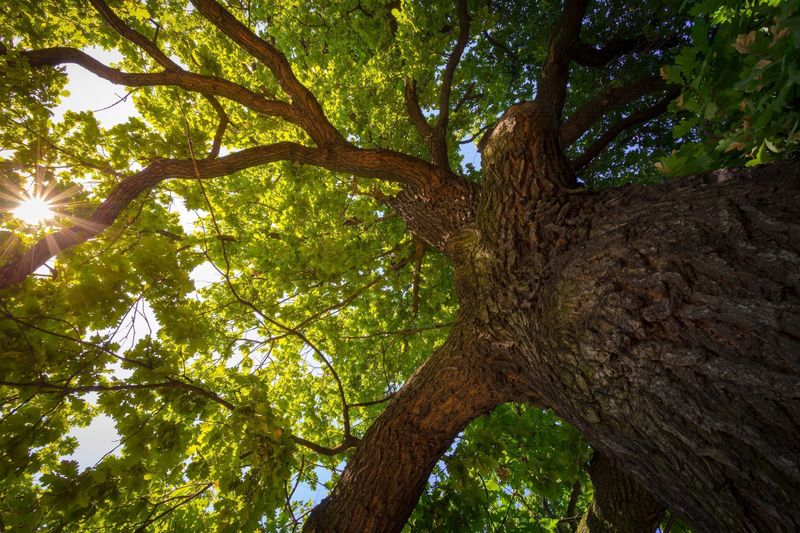
Think of a tree like a house frame. When the beams are strong and well spaced, the whole thing stands tall through rough weather.
A healthy tree usually has one main trunk leading the way. Side branches spread out from it at steady spacing.
That setup keeps the weight balanced so the tree is less likely to split.
Branch angles tell you a lot. Look for limbs that grow out like the hands of a clock at 10 or 2 o’clock.
Tight, narrow angles can hint at weak spots later.
Size matters too. Strong branches are usually no more than half the trunk’s thickness, and often closer to one-quarter.
Smaller limbs attach more firmly and carry less risk.
Roots play a big role that you cannot see. A deep, even root system and a low center of gravity help anchor the tree.
That grip makes uprooting less likely when the ground turns soggy.
Young trees are the easiest to shape. A little training while they are small builds a sturdy frame that lasts for decades.
Older trees still benefit from pruning that improves balance.
So whenever you plan tree work, protect that framework. Good structure is like free storm insurance growing right in your yard.
5. Watch For Codominant Stems And Narrow Crotches
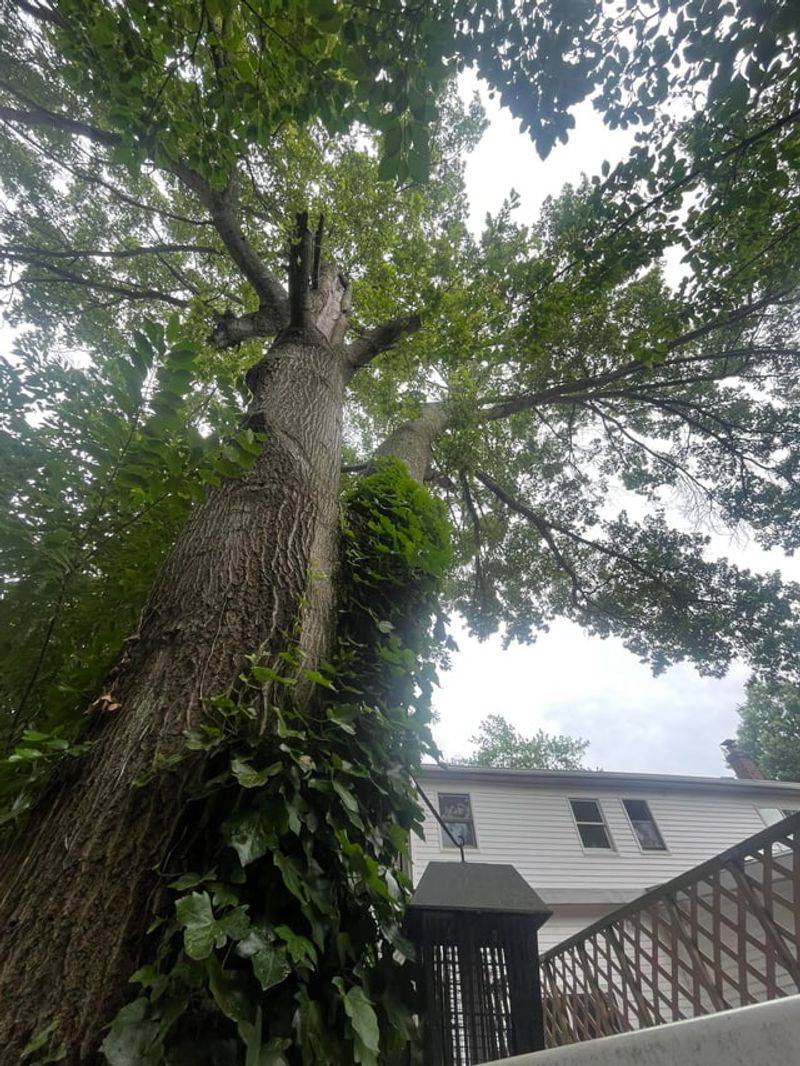
Take a walk around your tree and look up. Do you see two trunks of about the same size rising side by side in a tight V?
Arborists call those codominant stems. They might look charming, but they often hide a weak link.
The spot where they meet is called a crotch, and narrow ones cause trouble.
Inside a tight crotch, bark can get trapped between the two stems as they grow. This is called included bark.
It lacks the strong wood fibers that normally hold branches together.
In calm weather, you may never notice a problem. Add hurricane winds, though, and those stems can pull apart like a wishbone.
Half the tree could land on your roof or car.
Here is the upside. Structural pruning can guide the tree toward one strong main trunk.
An arborist may shorten one stem over time so the other takes the lead.
Catching this early makes the fix much easier. On young trees, a few simple cuts can solve it.
On older trees, a pro may suggest cabling or other support.
Snap a photo of any V-shaped unions you find. Show it to your tree expert during your spring check.
That small step could prevent a big mess later.
6. Hire An Arborist For Large Or Risky Trees
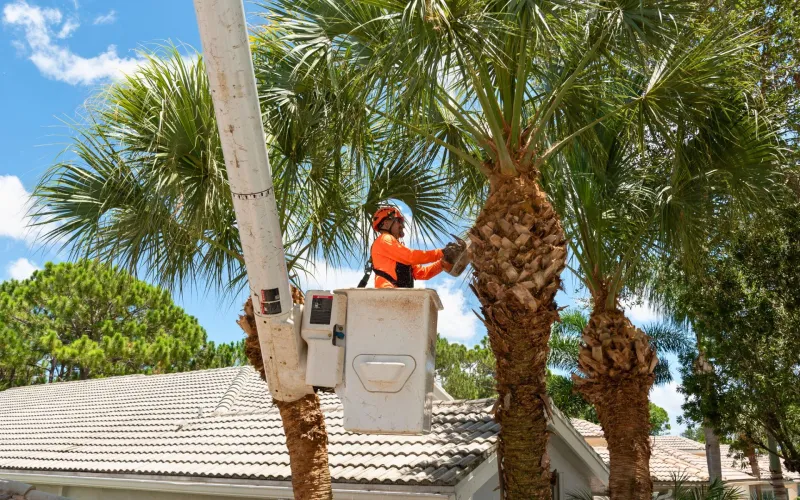
Grabbing a ladder and a pole saw might feel brave. For big trees, though, it is a job better left to trained hands.
Experts suggest hiring a certified arborist for trees taller than about 15 feet. The same goes for any tree near power lines, your house, or a busy sidewalk.
Height and nearby targets raise the stakes quickly.
Arborists study both the science and the art of tree care. They can spot hidden decay, root problems, and cracks that most of us would miss.
Those clues help them decide what to cut and what to leave alone.
They also bring the right gear. Climbing ropes, harnesses, and bucket trucks let them reach high limbs safely.
They know how to lower heavy branches without smashing your patio.
Cost worries many homeowners, and that makes sense. Still, cheap work can lead to expensive repairs, emergency removals, or insurance headaches.
Paying for skill upfront often saves money over the years.
A good arborist will walk your yard with you and explain their plan. Ask questions, and expect clear answers.
You should feel informed, not rushed.
Think of it like seeing a doctor instead of guessing online. Your tree deserves a real checkup from someone who knows the job.
7. Check HOA Rules Before Scheduling Tree Work
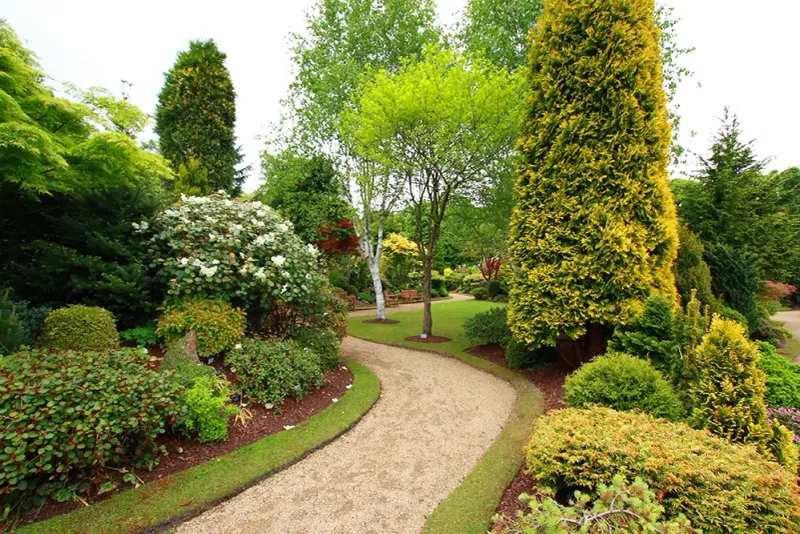
Before any saw touches bark, pull out your HOA paperwork. A few minutes of reading can spare you a painful fine.
Florida HOAs get their power from a few places. These include the community’s covenants, conditions, and restrictions, often called CC&Rs.
Written landscape rules and Florida Statute 720 also play a part.
Many associations require trees to stay safe and tidy. Some spell out how often to prune, which methods are allowed, and what kind of contractor you must use.
A number of HOAs even ban topping outright.
Removing a tree is a bigger deal. You may need approval first, especially for large, mature trees visible from common areas.
Certain protected species can come with extra city or county rules too.
So what should you do? Read the documents, then email your board or property manager with your plan.
Keep a copy of their reply in writing.
Share those rules with your tree company as well. A good crew will respect them and may already know common HOA requirements in your area.
Friendly communication goes a long way. Boards usually appreciate homeowners who ask first.
Plus, you can point out that proper pruning protects the whole neighborhood.
8. Look For ISA Credentials Before Hiring A Tree Company
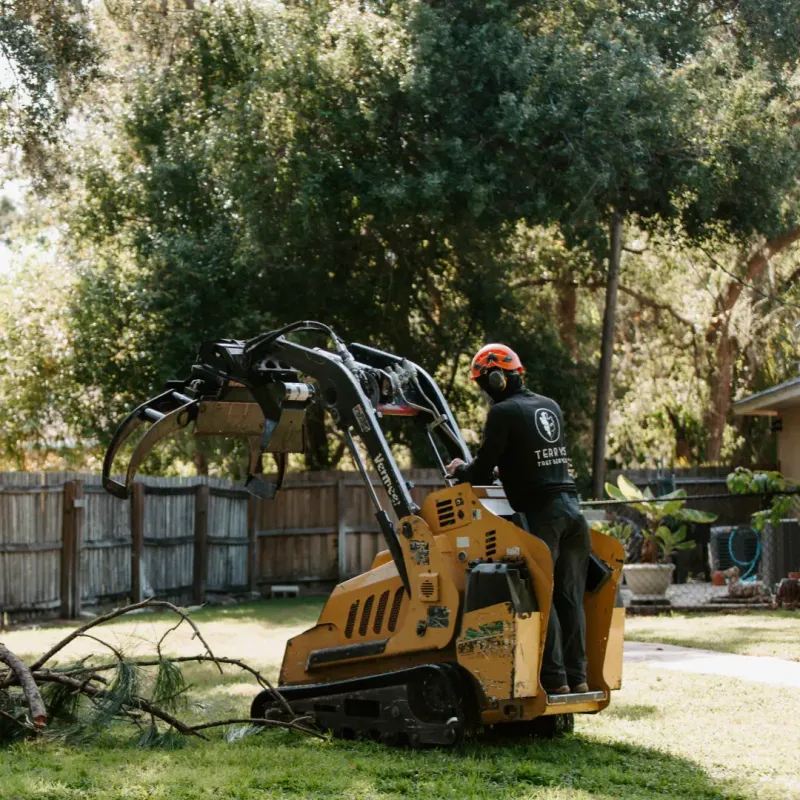
Anyone can print business cards and buy a chainsaw. An ISA certification, on the other hand, takes real effort to earn.
ISA stands for the International Society of Arboriculture. To become an ISA Certified Arborist, a person needs hands-on experience and must pass a tough exam.
The test covers tree biology, pruning methods, soil, pests, disease, and safety.
The learning keeps going after the test. Certified arborists must take ongoing classes to keep their credential active.
That means they stay current on new research and better techniques.
They also follow a code of ethics. Tree health and safety come first, not just quick cash.
That mindset tends to produce longer-lasting results and can protect your property value.
So how do you check? Ask the company for the arborist’s name and certification number.
You can verify it on the ISA website in just a minute or two.
While you are at it, ask for proof of insurance. A certified, insured pro protects you if something goes wrong on your property.
Skipping this step can leave you on the hook.
In Florida, local know-how matters a lot. Our storms and unique trees call for someone who truly understands them.
9. Keep Storm Pruning Focused On Real Hazards
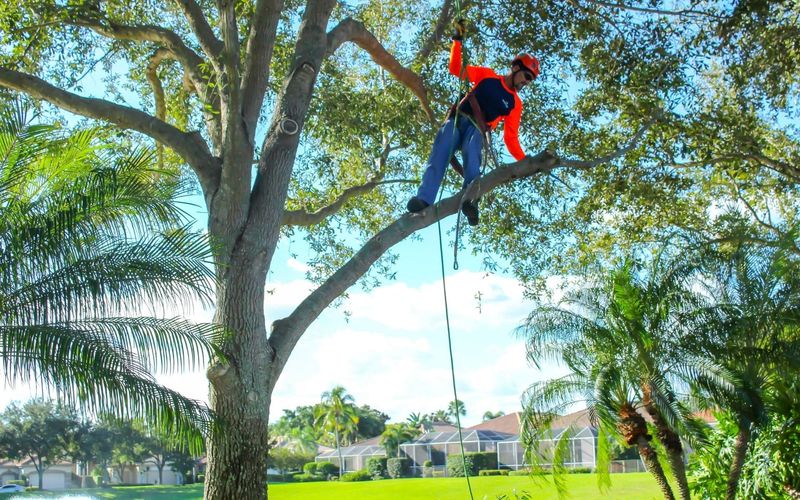
More cutting does not equal more safety. Smart storm pruning is about aiming carefully, like a surgeon rather than a lumberjack.
The goal is simple: fix the real weak spots and leave the healthy parts alone. Over-pruning stresses a tree and can leave it weaker.
A light, targeted trim usually does the best job.
So what counts as a real hazard? Look for broken or hanging limbs, cracked branches, and long, overextended arms.
Codominant stems with included bark belong on the list too.
Light interior thinning can help wind pass through. Heavy removal of healthy branches, though, goes too far.
Topping falls in that harmful camp and raises long-term failure risk.
Palms follow the same rule. Remove only fully brown fronds and loose boots, and keep the green ones.
Healthy fronds help the palm stay strong.
After a storm passes, take a careful walk around. Check for new leans, cracked or lifted soil near the base, hanging limbs, and split unions.
Stay clear of anything near power lines.
When you spot damage, call a professional for cleanup. Trying to wrestle a broken limb yourself can be risky.
A calm, focused plan keeps your trees standing and your family safe.